fbpx

November 2, 2021

My Visit to a School in Harlem that Teaches Hebrew and Israeli Culture

Harlem is a place known for its rich history—from Black music, literature, and culture, to Jewish artistry and community. On these streets walked Langston Hughes, James Baldwin and, once upon a time, more than 175,000 Jews—the third largest Jewish neighborhood in the world, coming close behind Warsaw and the Lower East Side (my current abode.) Those numbers dwindled significantly as the twentieth century dragged on, but one could still find clues as to just how many storm-tossed Yiddish-speaking immigrants once called Harlem home by the sight of shuttered synagogues and delis scattered throughout. And yet, a heart of Jewish culture still beats, not comprised of Jews and made for Jews, but of the diversity of modern Harlem. Harlem Hebrew Language Academy is the quintessential example of this diversity: a majority Black school nestled in between soul food restaurants and jazz clubs that mandates its students study Hebrew and the State of Israel. 

Naturally intrigued, I hopped on the nearest uptown train to see for myself. 

Upon entry, HHLA looked and felt like a normal K-8 school. There were children in the gymnasium dancing to “Can’t Stop the Feeling,” there were children on the basketball court, there were children in math class writing in their notebooks. But upon venturing into hallways,  I noticed each classroom was named after a different Israeli city, complemented by student work and projects written in Hebrew decorating the walls. My guide, an administrator named Valerie, told me that since the school opened in 2013, another grade of students has been added each year, the entire class ready to learn how to write and speak modern Hebrew and become literate on Israeli culture and society. 

All students study Hebrew for forty-five minutes per day in a completely secular environment. The school is “for those who want diversity, who are interested in Israel as a pluralistic society, with no religious inclusion.” I asked how it was that six-year-olds, who obviously are not expressing a passion for Hebrew, find themselves enrolled in such a place. “There is no one right answer,” I was told. “One, is that if you live in the South Bronx, this is a better option than any public school in your area. So, you’re willing to put your kid on a bus because it’s simply a better choice. Some families want a foreign language education to open their child’s mind. And some families specifically want Hebrew. We, as Jews, are so surprised, but I hear often that Israel is a startup nation, and so parents want their children to have the opportunity to work in Israel because it’s such an innovative place. Next, we have a religious group, who believe that if their children learn Hebrew, they can better read the Bible. And then, we have families who want their children in a diverse socio-economic environment. ”

The goal of Harlem Hebrew is not to indoctrinate students into a specifically pro-Israel political mindset, but rather to illuminate one corner of the earth as a “case study” for how the rest of the world operates.

As I walked past ceilings covered in the flags of the world, I learned that the goal of Harlem Hebrew is not only to instruct in modern Hebrew, but also to shape “global citizens of the world,” hoping that through Israel education, children will be exposed to environments outside their own and become more worldly, more curious and more inclusive in their thinking. Packed into lessons throughout the day are units on Israeli singers, Israeli religious minorities, Israeli food, Israeli geography and more. The goal of Harlem Hebrew is not to indoctrinate students into a specifically pro-Israel political mindset, but rather to illuminate one corner of the earth as a “case study” for how the rest of the world operates.

“We are not representatives of the State of Israel,” said one administrator I met on my tour. “We are here for our community, we are here for our kids. When we teach about Israel, we don’t say ‘We Celebrate Hanukkah!’ We say there are people who celebrate Hanukkah in Israel, and others who celebrate Ramadan, and others who celebrate Christmas. From a young age, these kids know that Israel is a complicated place with many different people, not so different from any other country in the world. ” 

Each year, students from the eighth grade class venture to Israel—a trip that for some will be their first time on a plane, and for some others, their first time out of New York City. “For these kids to hike Masada or Mount Carmel is a huge milestone,” Valerie tells me. “I see kids come out of the hiking experience a completely different person, because they know they can actually do it—they’re exposed to something they’ve never done before.” Valerie added how impressed many Israelis are upon discovering these young, American, non-Jewish young people can speak Hebrew so well, which does well to boost the student’s self-confidence.

Like New York City, Israel is constantly reinventing itself, constantly birthing new ideas for the rest of the world to use. 

Once a year, the school holds an “Israel day,” where classrooms are turned into shuks and restaurants one could find in Tel Aviv, and several months later is “Harlem Day,” where students are immersed in the character and history of their current stomping grounds. Holidays like Rosh Hashanah and Tu Bishvat are discussed, but not celebrated, so as to not distract from HHLA’s central mission. Through their programming, curriculum and field trips, Harlem Hebrew perfectly amalgamates the spirit of Israel with the spirit of New York City—spirits I believe to be kindred. Like Israel, New York City is a tapestry of immigrants from all corners of the earth. Like New York City, Israel is constantly reinventing itself, constantly birthing new ideas for the rest of the world to use. 

One of my final questions was how the community of Harlem responded to this cultural addition to their neighborhood. “We only go into a community that wants us,” I was told. “And if we’re here, that means we’re welcomed here.” 

I thanked my tour guides, smiled at various students and teachers, and stepped back into the world of New York. I picked up a cup of coffee at Columbia University, a petri dish of anti-Israel ideology that sits on the border of Harlem, knowing that many of the busy students walking past me were convinced that Israel was an apartheid and racist entity. I wondered how many were aware that a community that resembles all they claim to champion—diversity, equity, inclusion—was celebrating Jewish self-determination in their ancestral homeland just blocks away.


Blake Flayton is New Media Director and columnist at the Jewish Journal.

My Visit to a School in Harlem that Teaches Hebrew and Israeli Culture Read More »

How Ilhan Omar Can Help the Jews

If you’re reading this, you don’t need me to tell you that Representative Ilhan Omar (D-Minn.) has accused defenders of Israel of dual loyalty and blamed American Jews of buying support for Israel through large political contributions. You already know that she has argued that Israel “has hypnotized the world” and compared the actions of the U.S. and Israel to those of Hamas and the Taliban. And you remember that earlier this year she fought against funding for Israel’s Iron Dome missile defense system, whose only use is to protect Israelis from rocket attacks by Islamist militants. 

So why am I telling you all this again? Because I am going to suggest that we — the American Jewish community and supporters of Israel — endorse legislation that Representative Omar has introduced. 

Omar has actually positioned herself to do something positive for the American Jewish community. And we should take advantage of it.

Along with her fellow Democrat, Jan Schakowsky of Illinois, Omar recently introduced legislation that would create a State Department special envoy who would monitor and combat Islamophobia globally. The office would record instances of Islamophobia, including violence against and harassment of Muslims and vandalism of their mosques, schools and cemeteries worldwide. 

A similar office was created in 2004 both as a clearinghouse and a watchdog in the fight against antisemitism. While Omar herself has seemed more interested in encouraging antisemitism than in fighting it, the parallel efforts of empowering the State Department to protect Jews and Muslims against prejudice and bias opens a window for the Jewish community to join with potential allies who share similar and overlapping goals. 

It’s tempting to simply dismiss anything with which Omar is associated, but there are longer-term goals at stake here. The Jewish community is increasingly isolated, both on the right and the left, and many of our traditional progressive allies have turned their backs on us. There is now a rapidly growing belief among many young people, minority voters and other progressives that Israel is a force of oppression in the Middle East and that American Jews who support Israel have become unacceptable partners even on issues having nothing to do with foreign policy.

Pointing to the hatred that we have faced is of little use unless it is accompanied by sustained efforts to assist others who confront similar prejudice of their own.

There’s no question that Israel has become a more formidable presence on the world stage — economically, diplomatically and militarily. Similarly, many American Jews have achieved notable academic, economic and political success. But this has led to a growing envy and hostility from some who have still not yet reached similar levels of accomplishment. And pointing to the hatred that we have faced is of little use unless it is accompanied by sustained efforts to assist others who confront similar prejudice of their own.

There is no shortage of opportunities to work with other minority communities in this country to confront this shared threat.  But like the worst forms of antisemitism, Islamophobia is a worldwide phenomenon as well. Muslims have been the targets of mass killings and other forms of violence against the Uyghurs in China, the Rohingya in Myanmar, and of their faithful populations in India and Sri Lanka. Those who worry about rising levels of hostility against Jews in Europe, Great Britain, Africa and the U.S. might see the potential for a joint effort to push back.

In addition to the potential real-world protections that could develop from such an arrangement, American Jews can also use support of Omar and Schakowsky’s bill to demonstrate our commitment to helping those who face persecution. Omar and the other most virulent haters will not be swayed, but there are many other members of Congress and leaders of underrepresented communities who would welcome such a step. 

The Jewish community needs more friends, and offering our help to others who must overcome similar challenges can help us begin that process. Rather than opposing the special envoy proposal to spite Omar, we can instead enjoy the irony that she is unintentionally giving us the tools we need to build bridges to others in need.


Dan Schnur is a Professor at the University of California – Berkeley, USC and Pepperdine. Join Dan for his weekly webinar “Politics in the Time of Coronavirus” (www/lawac.org) on Tuesdays at 5 PM.

How Ilhan Omar Can Help the Jews Read More »

Rosner’s Domain: The Battle of the Consulate

In the modern era, an embassy or consulate is much more a symbol than an essential office. When the U.S. moved its Israel embassy from Tel Aviv to Jerusalem, the goal was not an improvement in servicing Israelis; the goal was to make a statement: Jerusalem is Israel’s capital. When the U.S. decided to close the separate consulate in Jerusalem—a consulate that served as a kind of “embassy” to the Palestinians—the ire of Palestinians wasn’t about getting lesser services (they get them at the embassy), but rather about the symbolic nature of the move.

So, when the Biden administration says it wants to reopen the Jerusalem consulate, it’s not because a consulate is needed for any practical reason. A reopening is a statement. In fact, it is two statements. Statement one: “We reverse the policies of Donald Trump.” Statement two: “We see Jerusalem as the capital of a future Palestine (in addition to Israel)”.  

Israel opposes this move, also for two reasons. One, because it will highly complicate its ability to keep a stable coalition. Right wing members of the coalition have already stated that such a move is going to be a casus belli.  Two, because most Israeli leaders see Jerusalem as the capital of Israel, period. 

Having laid down the background, three questions emerge:

Does the U.S. need Israel to agree to such a move? (The answer is yes, as U.S. Deputy Secretary of State for Management and Resources Brian McKeon explained in the Senate a week ago.) 

Is Israel going to agree to such a move? (The answer is no, unless it has no choice –namely, only under great pressure, protest and possible crisis.)

Is the U.S. going to apply great pressure on Israel to achieve this goal? (The answer is maybe, mixing sticks and carrots, details to follow).

So why would his administration chase this dream of insignificance? The answer is politics. There is no explanation other than politics.

President Biden does not need a consulate in Jerusalem and does not need the headache involved in fighting such negligible battle. He knows, as everyone else does, that the Israeli-Palestinian arena is not ripe for breakthroughs; he knows, as most others also do, that the world, and the U.S. (and Israel) have problems more urgent than the plight of the Palestinians; he knows that making a move such as this could have disruptive unintended consequences. So why would his administration chase this dream of insignificance? The answer is politics. There is no explanation other than politics. Biden must keep the progressives of his party close and must throw them a bone to chew on. Jerusalem is that bone. 

Life could have been easier, had Israel not had its own political considerations and complications. Israel lived with a Jerusalem consulate for many years; it could live with a consulate for many more years—especially so if a significant reward is attached to this move. But the Biden administration doesn’t seem ready to reward Israel in a way that could uncomplicate the subject (imagine “Give us a consulate and we will apply much more pressure on Iran.”). And so, to achieve a small political triumph at home, Biden must deal with the possibility of having a political defeat abroad. He might win AOC in New York by losing Naftali Bennett in Jerusalem. He might please Bernie Sanders in Vermont by handing Benjamin Netanyahu the wild card he needs to get back to the PM’s office. To ease his path, he could offer Israel a few carrots. It is not a coincidence that the two countries emphasize the feasibility of Israelis getting an exemption from the need for a U.S. Visa. But ultimately, this is a high-risk little-reward situation for both governments. 

You might ask: Well, what about the essence? What about long-term considerations of policy toward Israel and the Palestinians? To which the answer is: there is very little essence, there is only a pretense of essence. A consulate in Jerusalem isn’t going to expedite a peace process, isn’t going to determine the future of Jerusalem, isn’t going to contribute anything that counts in the real world of policy and action. Maybe it would signal to the Palestinians that they aren’t yet abandoned by the U.S. Maybe it would signal to Israel that it must calculate future plans for Jerusalem more cautiously. Is it worth the headache, the possible ramifications, the fight?   

Here the answer is: We don’t know. Such things often have a life of their own. Such things often begin as a small disagreement and turn into a battle that no one really wanted.

Something I wrote in Hebrew

Here’s something I wrote about the unpopular Finance Minister, Avigdor Lieberman:

What kind of politician is not bothered by his public status? Lieberman has two main reasons not to be bothered, which differentiate him from a great many other politicians. First, he has a stable voter base. Not huge. But stable. Naftali Bennett can be asked if he will pass the electoral threshold in the next election. But not Lieberman. The chairman of Yisrael Beiteinu has a degree of confidence that he will also be a member of the next Knesset. Second, if you have not noticed, from the last election onward it is possible to be prime minister of Israel even with a small number of seats in the Knesset. That is, if until a few years ago the dream of becoming prime minister was limited to someone who could collect twenty seats in the Knesset or more, which Lieberman probably cannot do at the moment, now it is permissible to dream of becoming prime minister even when the number of seats is more modest. 

A week’s numbers

Israel’s Bureau of Statistics proving once more that in Israel, like every western country, television is losing ground to the web as a main source of information:

A reader’s response

Following my last week’s article, Avi Mitrani tweeted: “I’m with you… but you don’t give in the article any example from experience to base the credence on.” So, why would I put more credence on Israel telling the truth than Palestinians human rights organizations? Rather than giving one example out of many, I’ll recommend the publications of NGO Monitor. Go to their website to find dozens of reasons. 


Shmuel Rosner is senior political editor. For more analysis of Israeli and international politics, visit Rosner’s Domain at jewishjournal.com/rosnersdomain.

Rosner’s Domain: The Battle of the Consulate Read More »

Rabbis of LA | Tarlan Rabizadeh: The Persian Female Rabbi of Hillel at UCLA

Rabbi Tarlan Rabizadeh didn’t exactly take the path her parents envisioned for her. The child of Iranian immigrants, they expected her to become a lawyer, work in hospitality or own a business. They didn’t think she’d gravitate towards religion or take it so far as to become a rabbi.

“I really grew up in the insular Persian community and broke out to become a rabbi,” she said. “In Iran, being someone who was religious was sort of backwards. You wanted to hang out with the Muslim elite. Judaism was done in the house and it wasn’t something you brought into the public sphere if you wanted to be a high-class citizen of the world.”

But Rabizadeh couldn’t help it; she was drawn to Judaism since a young age and wanted to learn more. When she was a sophomore at Milken Community High School, she took a class with Rabbi Sharon Brous of IKAR that sparked her interest to learn more. 

“[Rabbi Brous] helped me find all the roads and chiseled them together in a way,” she said. “I’m not sure where I’d be without her and that class.”

One of Brous’ teachings that stuck with Rabizadeh was a story about Hillel and Shammai, who disputed over halacha. The two rabbis weren’t talking to one another, and Rabizadeh said the female voice of God came down from the heavens and asked both of them to argue their cases. In the end, it was decided that Hillel was right.

“The only way we can ever come into a relationship with someone else is hear their case and try to learn and grow from it. If you only respond, you are not listening.” 

“The question is, why does one side win?” said Rabizadeh. “The answer is because when Hillel argues, he explains Shammai’s side first. Shammai only argues his case. To me that’s internalized. It’s who I am. The only way we can ever come into a relationship with someone else is hear their case and try to learn and grow from it. If you only respond, you are not listening.” 

This teaching is especially important in Rabizadeh’s current position as director of student life at Hillel at UCLA. After becoming ordained at Hebrew Union College-JIR, where she was the only non-Ashkenazi Jew, working as a Jewish Emergent Network Fellow at The Kitchen in San Francisco and teaching at Milken, she started at Hillel this past August. 

One of the issues she grapples with on campus is bridging the divide on Israel. She said that many of her students are from Persian or Mizrahi backgrounds, and they have a strong love for Israel because the Israeli government saved their parents. Other students from different backgrounds, however, take more of a critical view of Israel. She encourages students on both sides to get together and share their personal stories so they can understand each other’s perspectives. 

“I’m trying to create moments where everyone can listen,” she said. 

Rabizadeh also wants to ensure that the Persian and Mizrahi communities have more visibility at UCLA. Hillel is holding Mizrahi Month in November, for starters. She also invites students from Persian and Mizrahi backgrounds to join Hillel for Shabbat dinner, and she hopes that the board becomes more inclusive of all types of Jews.  

“Our Hillel board is very Ashkenormative,” she said. “I talked with the board about why everyone is white. I asked, ‘Why are we not reaching out to diverse groups?’ How can we include representatives from the Persian and Mizrahi groups?”

With her work, her overall goal is to continue to create bridges between the Ashkenazi, Persian and Mizrahi communities so that everyone has visibility.

 “As someone who grew up in a Persian community and went into the Ashkenazi community and was the only non-Ashkenazi Jew there, I’m trying to understand why we aren’t talking to each other more.”

“Communities are siloed,” she said. “As someone who grew up in a Persian community and went into the Ashkenazi community and was the only non-Ashkenazi Jew there, I’m trying to understand why we aren’t talking to each other more. Working at Hillel and seeing all those humans in the building, I want to find a way to have us speak to each other. I think we’ll be stronger together.”

Rabbis of LA | Tarlan Rabizadeh: The Persian Female Rabbi of Hillel at UCLA Read More »

Our Birthday Parties in Tehran Didn’t Include Goodie Bags

One afternoon, my mother and father sat at the kitchen table in our house in the peace capital of the world, Tehran, to discuss my upcoming sixth birthday. 

“Let’s do Monday,” my father said. 

“I think there’ll be a curfew and air raids,” responded my mother. 

“Tuesday?”

“Air raid.”

Fine, Wednesday then.”

“I have to stand in the ration line at 5:30 a.m. Thursday morning,” complained my mother. “I can’t entertain guests the night before.”

The conversation continued like this for another few minutes, until it was decided that dozens of family members would be invited to our home Friday night. 

“That’s actually better,” said my mother. “If the Sepah (paramilitary police) think we’re having some sort of forbidden party, we’ll tell them the truth: Everyone’s here for Shabbat dinner.”

“We’re having a party for me?” I squealed. 

“We’re having family over for dinner, and it’ll coincide with your birthday,” clarified my mother while stroking my hair. “Here, you can start descaling the trout for appetizers.”

That year, amid the final year of the Iran-Iraq War (1988), food rationing, hideous inflation and whatever genocidal sermon our Supreme Leader, Ayatollah Ruhollah Khomeini, was spouting against the “Zionists and Americans” every Friday morning, I had a birthday party at home. It featured cassette tapes that played gloriously forbidden Persian music (recorded by self-exiled artists in Los Angeles), deep fried trout, and my mother’s patented homemade cake, topped with white frosting and giant red grapes. It looked like a big face with pimples.

Very few guests brought me presents. Instead, they brought my mother Chinese-made crystal bowls as hostess gifts and told me my greatest present was getting to say I was still alive. In hindsight, they were right. 

And there were no goodie bags; only a few relatives who stuffed some pistachios into their coat pockets upon leaving our house. For some reason, no one asked to take home a slice of the pimple cake.

I’ve more or less taken on a part-time job by trying to plan my son’s fourth birthday party at a local park. 

Over 30 years later, I’ve more or less taken on a part-time job by trying to plan my son’s fourth birthday party at a local park. I first cross-checked the date with other parents (there are at least two other parties taking place the same day), then secured all of their emails so I could send them an online invitation. I searched for a cute theme and messaging for the invitation, since “Let’s celebrate that we’re alive!” no longer applies (or, in a pandemic, does it?).

The party will be fish-themed because my son is going through a clownfish phase. I’m making detailed lists of everything from how many paper plates will be needed to what songs a lovely children’s entertainer should sing. I even bought a giant, inflatable whale costume for my husband, complete with a little battery-operated fan near the rear-end that will ensure the costume is properly plump and tall (the head reaches over seven feet). If the giant whale terrifies any children, I’ll show them a picture of Saddam Hussein and say, “Now this is the real face of terror.”

I don’t know if I’ll secure everything that’s needed for this birthday party. I have a job, household responsibilities, a family, an emotionally-demanding guinea pig, and a pile of laundry on which my kids have placed a makeshift flag and declared as their own sovereign territory. 

But the real bane of my existence is the demand for something I find truly noxious: the goodie bag. 

Yes, I must prepare 50 bags containing all sorts of “goodies” for children to take home. Thankfully, Amazon has many options for fish-themed items that will be used once and discarded by other adorable four-year-olds. Unfortunately, I am fantastically, inflexibly cheap. 

Is it an indescribable blessing to have kids and to plan their birthday parties? Of course. It’s also a blessing to be able to afford everything from a birthday cake to boxes of kosher pizza ($23 per box). If you see me slightly choking on all that rennet-free, overpriced kosher cheese, you’ll know why. 

Do I love my child’s friends (as well as my own) and truly want to offer them a few hours of love, play, togetherness and refined sugar? Of course. This is the first year my son is having a birthday party for his friends (we normally celebrate with a small family gathering at home) and I want him to have a whale of a time.

Decades ago, someone started offering take-home bags at birthday parties and made everything harder for the rest of us. I wonder if this person also had a job and a mound of laundry with its own geographic coordinates.

But I feel ambivalent about the expectation to provide goodie bags at the end of the party. Who is expecting these bags? Not the parents, but the kids. Decades ago, someone started offering take-home bags at birthday parties and made everything harder for the rest of us. I wonder if this person also had a job and a mound of laundry with its own geographic coordinates. 

I can’t help but ask, “Isn’t spending time with friends at a park its own gift (or goodie bag)?” If not, how about attending a party with pizza, a singer and an inflatable whale that will probably trip over its own fins on the grass? Can the kids take these memories and put them in a metaphorical goodie bag for years to come?

No, no they can’t. One of the reasons my mother and father lost everything and escaped to America is so that, 30 years later, I would have the freedom and resources to stuff plastic toys and bubble wands into goodie bags at their grandson’s birthday party. With great redemption comes many Amazon packages. 

And my mother continues to ask me about the planned cake. Before she could head to the market for massive red grapes, I informed her that at least one guest would most likely be allergic to the fruit. 

“Remember when you made me descale a whole trout for my sixth birthday?” I asked my mother recently.

“No, but no one could rip apart fish quite like you,” she responded. “Your work was very precise.” 

I was flattered. “What a difference from the birthdays I had as a kid,” I observed. 

“Not really,” said my mother as she cut a tangerine open for my kids. “Both parties include some sort of fish.”


Tabby Refael is a Los Angeles-based writer, speaker, and civic action activist. Follow her on Twitter @RefaelTabby

Our Birthday Parties in Tehran Didn’t Include Goodie Bags Read More »

Trump Says Israel Used to “Rightfully” Control Congress

Former President Donald Trump said during an October 29 radio interview that Israel used to “rightfully” control Congress.

Jewish Telegraphic Agency (JTA) reported that Trump was speaking with conservative radio host Ari Hoffman, who is Jewish, and said: “The biggest change I’ve seen in Congress is Israel literally owned Congress — you understand that. Ten years ago, 15 years ago, and it was so powerful, it was so powerful and today it’s almost the opposite.” Trump argued that Representatives Ilhan Omar (D-MN) and Alexandria Ocasio-Cortez (D-NY), who he accused of being Israel haters, now control Congress.

“Israel had such power, and rightfully over Congress, and now it doesn’t,” he added.

The Anti-Defamation League (ADL) and American Jewish Committee (AJC) both criticized Trump for his remarks to Hoffman.

“The accusation that Israel *ever* controlled Congress is despicable and reeks of antisemitism,” ADL CEO Jonathan Greenblatt tweeted. “No friend of our community or the country speaks this way. This wasn’t a lapse of judgment or a misstatement. It’s a disturbing window into a bigoted worldview.”

The AJC similarly tweeted: “Mr. Trump should know better than to fuel pernicious stereotypes about Jews. Israel never ‘owned Congress.’ Both parties—under successive U.S. administrations, including Trump’s—have long supported Israel because it’s an ally that shares our values.”

JTA reporter Ron Kampeas tweeted, “If you thought this was bad when Ilhan Omar said it, the reaction now can’t be ‘well Trump thinks it’s a good thing,’ because if that’s ok, the reaction when Omar said should have been ‘so what’ – and it wasn’t.” In 2019, Omar had tweeted “it’s all about Benjamins” in response to House Minority Leader Kevin McCarthy’s (R-CA) call for action against Omar and Representative Rashida Tlaib (D-MI) over their Israel statements.

A Twitter user named “Heimish Conservative” tweeted a differing view. “The audio is pretty clear that he meant [C]ongress understood a decade ago pretty much unanimously how important the US strategic partnership with Israel is. Trump says pretty clearly this is the way it should have continued to be.”

The user added in a subsequent tweet: “The choice of words is a bit odd, but only without context. And Trump has never been much of a nuanced carefully-chosen-words kind of guy.”

Ron Demeter, a former journalist, tweeted, “Trump loves Israel, is prone to hyperbole (understatement), and is uncareful with his words so this will probably blow over. Having said that, saying Israel ‘literally owns’ Congress is an antisemitic canard.”


Trump Says Israel Used to “Rightfully” Control Congress Read More »

Israel Reopens: Country Sees Slow Return of Foreign Visitors

(The Media Line) Under the entrance policy for foreign nationals that took effect on November 1, international visitors (beyond a few pilot groups) can once again enter the Jewish state. For the first time since the beginning of the COVID-19 pandemic, individual tourists can enter. Israel is opening its gates to vaccinated or recovering tourists, who will have to supply the results of a PCR test before entry.

Still, the policy, created jointly by the Health and Tourism ministries, places considerable limits on entry. Those twice vaccinated cannot be more than 180 days away from their second shot. However, for Israel’s battered tourism industry, the country’s reopening is a ray of hope.

“We are certainly very happy that the skies are reopening. We’ve waited for this for a long time,” Yaron Burgin, co-owner and CEO of Abraham Hostels and Tours, a company that has hostels in four locations in Israel, told The Media Line.

“We are beginning to see a ‘light drizzle’ of orders. … The first major rain day [of winter] is preceded by [days of] light rain, and this is the same. The numbers aren’t large, and certainly not what they were before, but things are beginning” to move,” Burgin says.

He estimates that two to three years will pass before Israel experiences the same numbers of incoming tourists as entered in 2018 and 2019. However, looking to the Christmas season, Burgin expects to see significant improvement.

At present, Burgin says, the daily reservations per location are in the single to double digits, but he expects them to rise quickly. The visitors are mainly Europeans, who also constituted the majority of independent visitors to Israel before the pandemic, he explains, especially among Abraham Hostels’ clientele. “At the end of the day, they are the ones whose vaccination certificates are recognized and it’s easiest for them to fit within the limitations.”

To encourage tourists to choose Israel as their destination, Abraham Hostels has taken it upon itself to help visitors navigate the regulations and bureaucracy surrounding entry to the country.

“The interest in traveling is strong but there is a lot of uncertainty,” says Burgin. “We are trying to minimize that uncertainty by detailing the regulations exactly, creating ‘Q&As’ … and by saying, ‘Come and we at Abraham’s will help you with coping with the authorities if that is needed.”

Burgin says he is feeling “careful optimism.” There is no talk of again reclosing the borders and reinstating harsher limitations. “This is how the world works at present, we accept and understand that, and are happy that we’re at the point where things have reopened,” he says. “I can tell you that my team here is very excited to all of a sudden receive questions in English and hear a little bit of English and other languages in the hallways. That’s something we haven’t had for almost two years and for us was very, very unusual.”

Katerina Brokhes, vice president of sales at Alrov Luxury Hotels, which has two major hotels in Jerusalem’s city center, is more cautious.

“The moment they opened the first pilot in the summer we were among the first to welcome tourists and returning guests. Orders are definitely increasing at present but we are still guardedly optimistic, if only because we’ve learned that things change during this period and also, the limitations on children are still a challenge,” she told The Media Line.

Israel began to gradually reopen during the summer, starting with a few groups of foreign visitors, but the fourth wave of COVID-19 put a crimp in the program. And since few children under the age of 12 have been vaccinated against the novel coronavirus, few are eligible to enter the country.

However, the fast-paced changes in policies have not deterred the Alrov hotels. “Once the government allowed hotels to reopen, we opened the Alrov hotels as usual” and fully, says Brokhes. She adds that the hotels have hosted guests of embassies and of the Israeli Foreign Ministry throughout the pandemic, and so have had foreign guests continuously.

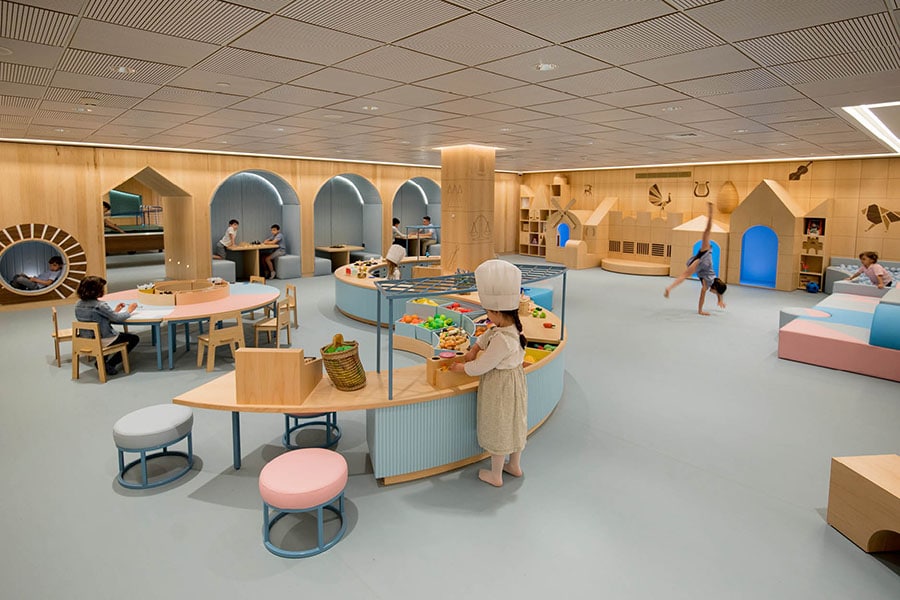
New children’s area at the Alrov Group’s David Citadel Hotel in Jerusalem, Israel. (Roni Cnaani)

To attract visitors, Brokhes says that Alrov took the opportunity to renovate and open a new restaurant and children’s area.

“We’re maintaining high standards and so are ready for all kinds of tourists, domestic and international,” she says.

Israel Reopens: Country Sees Slow Return of Foreign Visitors Read More »

The Elijah Problem

Many years ago, a good friend attended the 100th anniversary of a synagogue in a small town in Canada. It was a festive occasion with much fanfare and celebration. Local people were joined by other community members and Jews from around the country. My friend returned to Toronto and was elated.

That synagogue is now on life support. He recently reflected that what he witnessed was not a celebration but an obituary.

His experience reflects the situation in many towns in Canada. In the U.S., the Conservative movement has gone from a majority of American Jews to only 18% in one generation. In Canada, Conservative Jews are the majority, but very large synagogues are in merger talks in order to cope with dwindling numbers. The difference between large cities and small towns is only a matter of scale.

In times of disruptive change, it is instructive to look to our past. In the first Book of Kings, the prophet Elijah exposes the prophets of the god Ba’al as frauds by way of a test. Each side prepares an offering, and the one to Baal is left intact, rejected by God, while Elijah’s offering is consumed by a heavenly flame in a dramatic affirmation of Elijah as a real prophet. In spite of Elijah’s great feat, the Jewish idol-worshipping king Ahab and his queen, the notorious Jezebel, threaten Elijah’s life and he flees.

In one of the most thought-provoking episodes of the Hebrew Bible, God then instructs Elijah to bear witness as He has a powerful wind smash mountains, followed by an earthquake and then a great fire. After each one, He tells Elijah that God is not in the wind, not in the earthquake and not in the fire. He resides, instead, in the still, small voice.

The great spectacle of Elijah’s offering may have been awe-inspiring in the moment, but, in the end, it was fleeting. The king and the people reverted to idol worship because, like all spectacles, it was an external show that did not engage the inner self, the soul.

Elijah was dejected after the failure of his grand gesture, because he knew that his victory was short-lived, and he had lost the battle for the future. He was forced to realize that the only transformative experience of the Divine that can be sustained is one that involves an internal encounter with the still, small voice of God.

The “Elijah Problem” is the challenge that Jews and people of all religions face today. How can the religion of the past become the religion of the future?

The “Elijah Problem” is the challenge that Jews and people of all religions face today. How can the religion of the past become the religion of the future? All “outreach” organizations would give anything to be able to answer that question. Young people, now mesmerized by modern culture, do not turn to religion for stimulation or engagement or meaning. In Elijah’s time, God makes him aware of the need to cultivate an inner quest to seek a personal connection with the Divine. But where is that still, small voice today? Who is guiding people toward an inner search for the sublime and the ineffable?

There was no solution to Elijah’s problem then, but society carried on with periods of renewal and rededication. They, too, had their challenges, but the culture was essentially religious.

The modern age is a secular one and organized religion may be facing its greatest crisis in history. The distractions of our age have driven most people to opt out of religion, often by default. In the “sound and fury” of our era, it is increasingly hard to hear the still small voice of God, or even to know that it is there waiting, if sought. You cannot find what you’re not looking for.


Dr. Paul Socken is Distinguished Professor Emeritus and founder of the Jewish Studies Program at the University of Waterloo.

The Elijah Problem Read More »

Governments Must Stop Supporting Terror if They Care About Human Rights

Last week the Israeli Ministry of Defense designated six Palestinian NGOs as terrorist organizations. The internet immediately exploded with articles and tweets accusing Israel of trying to criminalize Palestinian civil society, while antisemitic activists like Rep. Ilhan Omar and Rashida Tlaib called for “immediate consequences” for the Jewish State.

Even the State Department jumped on the empty virtue signaling bandwagon, with spokesperson Ned Price claiming, “We believe respect for human rights, fundamental freedoms, and a strong civil society are critically important for responsible and responsive governance,” before adding that the U.S. will “be engaging our Israeli partners for more information regarding the basis for these designations.” For the record, Israel also believes in respect for human rights and fundamental freedoms, which is why they made these designations in the first place.

For the record, Israel also believes in respect for human rights and fundamental freedoms, which is why they made these designations in the first place.

The six NGOs were included on the list because of their strong ties to the Popular Front for the Liberation of Palestine, a U.S., EU, Canada and Israel designated terrorist organization. Among the problematic ties, these organizations have employed PFLP terrorists, diverted humanitarian funds from European donors to the PFLP, recruited members to the terrorist group, and hosted meetings for senior leadership including actual convicted terrorists. Far from being hidden or classified, much of the evidence is readily available, compiled over years by organizations like NGO Monitor, and it is important to note that the PFLP has not even bothered denying these connections.

Here is a small sample of that evidence: On August 23, 2019, PFLP terrorists detonated a roadside bomb and murdered innocent 17-year-old Rina Shnerb while she was hiking with her father and brother, who were also injured. Shortly thereafter, three PFLP members were arrested; all three were employed in senior financial roles at the Union of Agricultural Work Committees, one of the newly designated NGOs. In an official statement, the PFLP referred to one of those terrorists, who had led the operation, as a “commander, comrade, and hero.” The Bisan Center, another of the newly-designated NGOs, was headed by another one of the operatives on that very attack. As to the other organizations: Three Addameer employees appeared on the PFLP’s 2021 election slate; Defense for Children-Palestine is headed by two senior PFLP members; Al-Haq by a third (and a convicted terrorist to boot); and the Union of Palestinian Women’s Committees Vice President openly refers to it as the PFLP’s “feminist framework.”

Israeli law allows the Minister of Defense to declare an association a “terrorist organization” if it is: perpetrating or intentionally promoting the perpetration of terrorist acts; conducting training or providing guidance for executing terrorist acts; engaging in a transaction involving a weapon with the goal of perpetrating terrorist acts; or assisting or acting with the goal of advancing the activities of such a group.

It is hard to imagine that anyone is truly baffled by the idea that a humanitarian NGO—which may legitimately do some very good things­—could also be engaged in providing some material support for terrorists on the side. It is especially surprising for the State Department to express confusion about such a determination, given the nature of their own obligations under U.S. counterterrorism law. Moreover, 8 U.S.C. §1189 authorizes the Secretary of State to designate foreign terrorist organizations as such if they engage in terrorist activities. The statutory definition of “engage in terrorist activity” includes affording material support to a terrorist or terrorist organization even if such support is confined to non-terrorist activities. In addition, under 18 U.S.C. §2339, it is a federal crime to “knowingly provide material support or resources to a foreign terrorist organization”—even if you happen to be a human rights organization that also does some good. Sadly, that happens not infrequently, and in 2014 the Financial Action Task Force, an inter-governmental money laundering and terror financing watchdog, issued a report specifically warning against the special risks proposed by non-profit organizations in this context. In fact, the leading U.S. case in this area, Holder v. Humanitarian Law, is literally and explicitly about human rights groups providing material support to terrorist orgs.

Price also claimed that Israel did not give the U.S. advance warning of the changes, but Israeli officials dispute this, saying they did give the Biden administration notice and proof, and are happy to do so again, with Israeli officials preparing to fly to Washington with evidence including “footage and receipts.”

The evidence that these six NGOs (at the very least) provided material support for terrorism is readily available and yet to be refuted; tellingly, none of the statements released by the various NGOs and activists condemning Israel bothered to actually address the underlying issue.

To recap: The evidence that these six NGOs (at the very least) provided material support for terrorism is readily available and yet to be refuted; tellingly, none of the statements released by the various NGOs and activists condemning Israel bothered to actually address the underlying issue. Despite how it is being painted by reflexively anti-Israel groups and activists, including some members of Congress, the legal process Israel followed is not in any way unique. In fact, it is very similar to our own well-established practice. And if any of these organizations really do believe that a mistake has been made, there is an appellate procedure available, with claims to be submitted to the Advisory Committee regarding designations on Terror Organizations. Not surprisingly, none of the groups has yet appealed.

In the meantime, if all of those wringing their hands at the thought of these poor NGOs getting in trouble are really that concerned about their welfare, or even about human rights generally, there is one ready solution. The quickest way to solve this problem would be to stop focusing on how these groups ended up getting caught, and start pressuring them to actually stop supporting terror.


Dr. Mark Goldfeder, Esq. is Director of the National Jewish Advocacy Center. He served as the Founding Editor of the Cambridge University Press Series on Law and Judaism.

Governments Must Stop Supporting Terror if They Care About Human Rights Read More »

You Are What You Seat: The Quiet Battle for California’s New District Maps

Roughly one in eight Americans live in California. The 2020 census showed a 6.1% increase in the state’s population—now over 39 million, which is more than that of the twenty smallest states combined.

Yet for the first time in history, the state is set to lose a congressional seat. California will go from 53 seats in the U.S. House to 52 this year. The question is: which one?

One of the 18 seats representing parts of Los Angeles County will most likely end up on the chopping block. As the most populous county in the state and with the highest number of seats, it can absorb the loss of political power better than other regions. But that’s just in theory. The reality is set to be far messier, with the potential to disenfranchise already-vulnerable communities. At stake are billions in federal funding for vital services like infrastructure, public education and public health. LA County is being considered for the seat loss because it has strong representation already, but it also has “the largest hard-to-count population in the nation,” meaning unhoused and undocumented residents that need better public services, but will instead be getting less.

One of the 18 seats representing parts of Los Angeles County will most likely end up on the chopping block.

Thankfully, for those who care about who their state and congressional representatives are (which in a perfect world would be all of us), or whether their community is merged with and subsequently overshadowed by another with differing political views, there is a clear course of action: reach out to the state’s independent redistricting commission and weigh in before the new political districts are completed later this year.

There is undeniably a case for apathy. Even with the downgrade from 53 to 52, California still has the most seats in the House by a wide margin. Furthermore, the state will almost assuredly regain that seat with the next census. The number of congressional seats is fixed at 435, which means that one state’s loss is another’s gain.

And California is set to gain: Population growth is achieved through birth rates and immigration, and while the U.S. birth rate overall has steadily declined in the face of rising costs of living and lack of parental leave policies, California has a definite edge when it comes to attracting new residents. The Trump era significantly eroded immigration: between 2010 and 2016, the U.S. averaged 70,000 refugees and asylum seekers per year, a number that dropped to 32,000 in 2017 and a historic low of just 18,769 in 2019. Similarly, overall immigration went from averaging a 2% population increase per year under Obama to roughly 0.5% per year under Trump. With Trump-era policies now lifted, immigration is likely to center on, and benefit, California. Moreover, the COVID-19 epidemic continues to rage, but California’s relatively high rate of vaccinations and widespread precautions means that the state has suffered fewer deaths per capita, at 0.27% versus Texas’ 0.65% or West Virginia’s grim 1.76%. And per capita population shifts are what the Census Bureau cares about.

But clinging to a future recovery doesn’t fix the issue facing us here and now. Opining on potential political redistricting is hardly at the top of anyone’s to-do list, especially in a state in which the Democratic Party dominates politics. But it’s precisely that complacence that carries risk—since there are so few Republican seats to lose in California, a Democratic one will likely be eliminated instead. And on a national scale, Republicans only need a net gain of five seats to seize control of the House.

But it’s precisely that complacence that carries risk—since there are so few Republican seats to lose in California, a Democratic one will likely be eliminated instead.

In short, the question of California’s vanishing congressional seat is too important to be left to political operatives, who have a historical tendency to gerrymander. Take Texas, where Latinos accounted for nearly half the population increase but actually lost representation in this year’s redistricting maps, prompting a lawsuit against the state. Thankfully, California is one of the few states in which the once-a-decade process of redrawing congressional and state legislative political districts is conducted in public by a nonpartisan independent commission rather than by elected officials or their appointees. Nonetheless, the only way that said independent commission will take into account the will of the people is if residents speak up.

This is only the second time that a California Citizens Redistricting Commission has been convened since it was established by voters in 2008 under Proposition 11, so the body is still a relative unknown to everyday Angelenos. Yet public input is more crucial than ever, due to the COVID-19 pandemic’s effect on U.S. census data, which means the commission only recently received the data it needs to draw new maps by December 27. Similarly, the pandemic means public outreach has been slow-going, and though hearings have been going on all year, public comments number only about 3,200.

There won’t be draft maps until mid-November, but there are visualizations, or tentative districts, on the commission’s websitenow. That website’s comment form, as well as emails or letters sent to commission headquarters, are hard-won rights that are going unused and ignored. Voting reform advocates in other states use California as a model, and our system of independent redistricting is one of the key reforms in the Freedom to Vote Act (HR 1) currently stalled in Congress. What does it say, then, that Californians already have this freedom and simply aren’t using it?

Granted, redistricting is not a matter of majority rules, so public comments alone won’t decide the end result. The commission, by law, must produce districts that are of equal population, geographically compact, and that “comply with the Voting Rights Act to ensure that the power of minority groups is not diluted; and respect the boundaries of cities, neighborhoods and the like to the greatest extent possible.” But public comments are still valuable; they will still be taken into account as California maps its political future. And those who don’t speak up won’t be heard at all.


Seth Jacobson is the founder and principal of JCI Worldwide, a Los Angeles-based communications and research firm. He spent several years in the Carter and Clinton administrations in positions focused on economic development, foreign policy, and media relations. He is a frequent lecturer on policy and public affairs at Pepperdine University and UCLA.


You Are What You Seat: The Quiet Battle for California’s New District Maps Read More »