fbpx

September 15, 2021

It Took 50 Years For Father and Son to Tell This Story Together

On an autumn day in 1998, Joel Poremba waited in a bedroom with his wife and infant son as his father sat in his Southern California living room with an interviewer from USC Shoah Foundation. This was the first time Nathan Poremba was talking about how he survived the Holocaust as a child.

Restless and curious, Joel snuck out and poked his head into the living room doorway.

“I said to my mother ‘I want to go back to Miechów.’ I said to her ‘I want to live. I don’t want to die,’” Joel heard his father tell the interviewer. Then silence, as his father swallowed, trying to push past the tears. “My mother had a tear in her eyes … She called my sister. She said, ‘here is the money, go.’” Joel waited as his father wiped his eyes and gulped back sobs.

“This was the last time I saw my mother,” he finally said.

It was the first time Joel had ever seen his father cry.

For Joel’s entire childhood, his father, Nathan Poremba, had deflected Joel’s persistent questions about World War II. As a young adult, Joel obsessively studied the Holocaust, reading books and seeing films. But after hearing that short snippet from his father—two minutes out of a four-hour interview—Joel could hear no more. He didn’t think he could absorb such sadness. He could not carry the knowledge that his father—a successful businessman, a loving husband and father of two, a seemingly happy person—had borne such trauma.

But the interview had the opposite effect on Nathan, who, after speaking of his family and his survival for the first time, was eager to further release the stories and emotions he had suppressed for half a century.

It would take Joel another 22 years to watch the tape and then talk with his father for the first time about his experiences during the Holocaust.

In July 2021, Joel, an attorney and a father of two, published “My Name is Staszek Surdel: The Improbable Holocaust Survival of Nathan Poremba, the Last Jew of Wieliczka” (Sunbury Press).

The transformation for Joel came in 2018 on his first trip to Israel, a tour organized by a Jewish spiritual outreach group that focused on living a robust Jewish life as a positive response to national trauma.

A speaker on the tour, Charlie Harary, shared an anecdote about an emotional conversation he had been having with his grandfather, when his son interrupted the old man because he needed help building a Lego set. Charlie’s grandfather stopped to play with his great-grandson before continuing his story.

“Charlie’s message was clear: Remember the horrors of the Holocaust, yes, but when called upon, be available to live life to the fullest without suffering the past,” Joel wrote in the epilogue to his book.

Joel came home from Israel determined to hear, and tell, his father’s story.

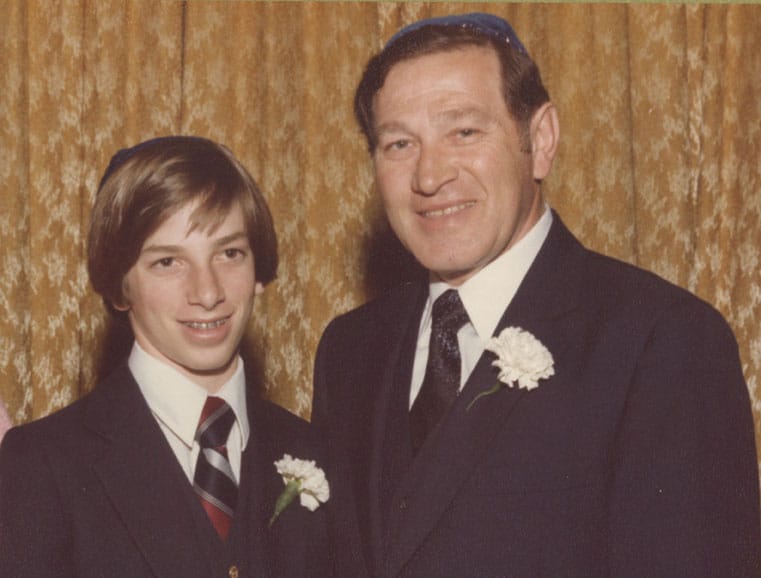
Nathan Poremba in 1946 in Brussels, at the age of 16

Nathan’s first moments of being able to speak about the Holocaust had come in 1993, a full 25 years before Joel’s trip to Israel. It happened as the Poremba family was leaving a movie theater after seeing “Schindler’s List,” and Nathan shared that when he was 12, he had snuck in and out of the Krakow ghetto to get food, taking cover amid the crowd of Jews going to Oskar Schindler’s enamel factory every day.

It was the first time Nathan had volunteered any personal information about his experience, but after that he shut down again, until finally agreeing to sit for the interview with USC Shoah Foundation, which was founded by Steven Spielberg in 1994 after he filmed “Schindler’s List.”

Nathan was nine years old in 1939 when he watched the Nazis cart his father away from their Polish town of Wieliczka in the second week of the war. Later that day he learned that the Nazis had executed his father and dozens of other Jewish men in a nearby forest. For the next few years, Nathan, along with his mother and four older sisters, scrambled to stay alive, refusing to wear the Star of David armband so that he could sneak around the city to buy food for the family. But when deportations to concentration camps began in 1942, Nathan fled with the youngest of his sisters.

Sometimes together, sometimes apart, they lived in several ghettos, including in Krakow. Nathan took on the identity of a gentile boy, Staszek Surdel, and worked as a shoemaker’s apprentice. Then, after the Gestapo arrested a fellow shop employee, he found work on a farm in the countryside, where it seemed safer.

But an altercation with a German soldier at the farm landed him in the Bergen-Belsen Concentration Camp and then in Plazsów Labor Camp—still under his false identity. The farmer for whom he had worked secured Nathan’s release after a few weeks, and he stayed on the farm until the end of the war in 1945. Nathan was 15 when the war ended. His parents, three of his sisters, and many other relatives had been killed.

Joel watched the tape of his father’s USC Shoah Foundation testimony in 2018, alone on his couch with a box of tissues. As he prepared to interview his father for his book, he worried that Nathan would be as emotionally broken up as he had been during much of his taped testimony.

“But the Shoah Foundation interview had liberated him. It was therapeutic, and he was able to get through the interview with me without a tear and revealed much more than he had in that first interview 20 years before,” Joel said.

Joel still finds it emotionally draining to talk about his father’s experience, so he’s glad he can just hand the book over to anyone who is interested.

Joel still finds it emotionally draining to talk about his father’s experience, so he’s glad he can just hand the book over to anyone who is interested. “My Name is Staszek Surdel” is available through most booksellers and at libraries and Holocaust museums around the world.

Joel’s wife, Sari, and children, Noah and Gabi, read the book and understood, for the first time, the full picture of their father-in-law’s and grandfather’s tenacity, resourcefulness, and outright heroism. And Joel’s mother learned things about her husband that she had never known.

Nathan is now on hospice and has not been able to read the book.

But, in 2019, he talked about how meaningful it was to have his son write this book.

“I never told the complete story of my survival until 2019 when I shared it with my son, Joel, who was ready to hear it. Why did I hold it for so long? I will tell you. To share this painful part of my life is to reveal a period where I lost my family, was victimized, hunted and left without power over my life. To talk about it exposes me at my lowest. But as I look back today, I realize I did have power and I used it to stay alive. In telling my entire story, I no longer feel a victim’s shame and instead know I have made proud my parents, sisters, and the Jews of Wieliczka, Poland.”

To learn more about Nathan Poremba’s Holocaust story, please visit www.joelporemba.com.


Julie Gruenbaum Fax, former senior writer at the Jewish Journal, is a communications and community outreach associate at USC Shoah Foundation. She is currently writing a book about her grandmother’s Holocaust experience.

It Took 50 Years For Father and Son to Tell This Story Together Read More »
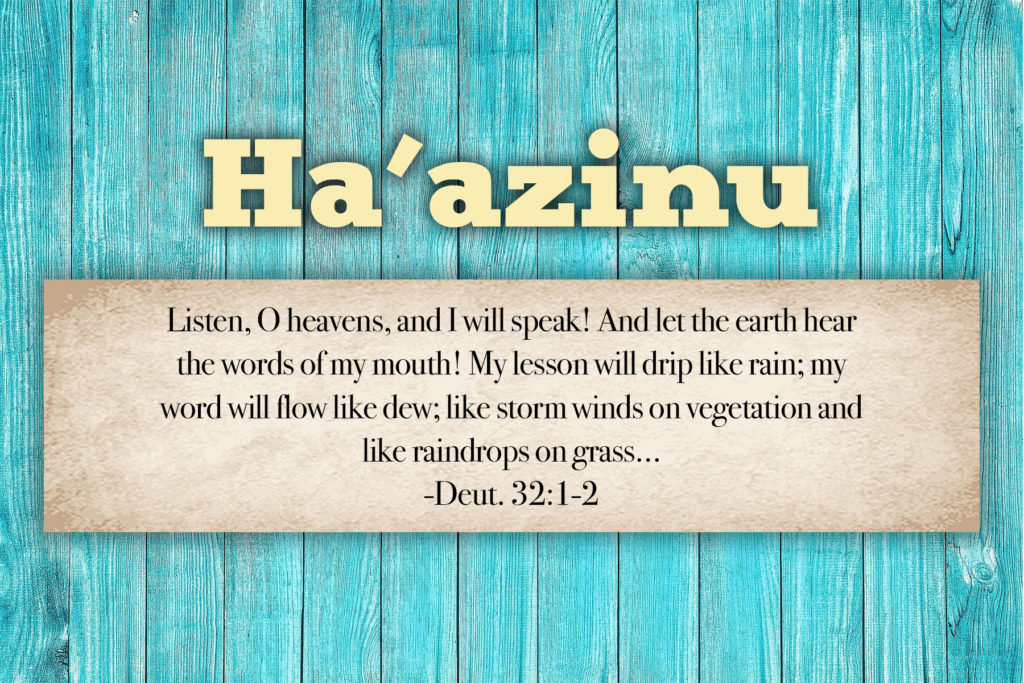
Table for Five: Ha’azinu

One verse, five voices. Edited by Salvador Litvak, the Accidental Talmudist

Listen, O heavens, and I will speak! And let the earth hear the words of my mouth! My lesson will drip like rain; my word will flow like dew; like storm winds on vegetation and like raindrops on grass…

-Deut. 32:1-2


Bracha Goetz
Author of 40 spiritual children’s books

I joined a friend to watch a TV show with her named, “Married at First Sight.” In this reality program a couple is getting married with a partner they never met before. In this episode, the father advises his son to treat the relationship with his new wife like a bank account. “You want to put in more than you take out. Your deposits should be greater than your withdrawals. That is how you develop relationship savings for a rainy day.” A smart father! 

Unetaneh Tokef is a Piyut, religious poem, that we chant during the High Holy Days. It is chanted with such awe and fear that even the heavenly angels are trembling and running around in terror. Why? Because during the Ten Days between Rosh HaShanah and Yom Kippur our “bank account” is put on the scale of THE accountant, God. 

Are my deposits of good deeds going to be enough? Am I withdrawing too much of my account by my wrongdoings? Am I able to look at myself in total honesty and take responsibility for my revealed and hidden deeds? At the Neilah service at the end of Yom Kippur is my balance zero? Am I ethically bankrupted? 

May we be able to build a loving and nourishing relationship with our accountant, God. Amen. May our “deposits be greater than our withdrawals.” Amen. And may we all be able to put into our spiritual bank accounts above and beyond that which we take out. Amen. 


Rabbi Elliot Dorff
American Jewish University

The Torah’s image of Moses’ lesson being like rain seems especially poignant for us in the West as we live through a serious drought. We deeply crave rain to put out the many fires that are destroying forests, homes, and full communities and also to nurture nature back to life. 

If that is true for us literally at this time, it is also true metaphorically, which is undoubtedly how Moses meant these verses. He is asserting that living by the beliefs and actions he is about to proclaim can put out the fires in our souls that lead us to do bad things to ourselves or others by worshipping other gods (money, fame, drug induced highs, etc.). Conversely, his lessons can nurture the better parts of us, as rain does the soil, enabling us to flourish as both individuals and as a community. 

What are those lessons? They begin with understanding God, the source of our being, as moral and demanding morality of us. They also include recognizing our long history of a covenanted relationship with God, one that we spurned at times, turning to other gods and values, and we suffered for that. In the end, though, that relationship will survive, for forgiveness is part of what it means to be in a marriage with God. 

In the year to come, may the lessons of this poem indeed be the rain that extinguishes our destructive fires and nurtures what is best in us. 


Romain Hini-Szlos
Photographer, rhsgallery.com

Ha’azinu is the last parsha of the last book of the Torah (Devarim) that we read on Shabbat. This is Moshe going over the laws of the first four books. 

I believe there are two reasons for this fifth book: First, Moshe can be compared to a mother who is sending her children on a long trip. As they are about to leave, the parent calls the children back, giving them more advice or warning before they go, as an excuse to delay their departure. He simply wants more time with them. 

The second reason is that throughout the last book, Moshe tries to hint to the Jewish people that he won’t be able to enter Israel because of Hashem’s decree, unless all of Bnei Israel decides to pray to Hashem on his behalf. Sadly, that would be the only way that Hashem would annul His decree against Moshe entering the land. 

In this quote, Moshe is again hinting something to Bnei Israel: He is praying that the words he is about to say will touch every person as easily as the rain that touches everything in its path. Perhaps Moshe hopes that the flow of his words will help the Jewish people gently and clearly understand his subtle request that they pray on his behalf, like a dew drop that gently appears on the surface of a leaf on a clear night. And perhaps, the idea of a nation praying for Moshe would grow into something big, like storms and winds that help vegetation grow.


Rabbi Janet Madden PhD
Fountainview at Gonda Westside

The exquisite exordium that opens Moses’ final song thrills me. Every year, I am both stunned and moved—as I am intended to be—by its literary elements: its parallel structure, elevated language, and the string of evocative similes about everyday natural miracles that transcend their literalness. 

Calling on the cosmic energy of the heavens and the earth to listen and hear, following as it does the custom of the ancient Near East of summoning two witnesses, bespeaks the urgency of Moses’ last message, imparted on the last day of his life. In image after image of generative energy, the man who once described himself as slow of speech and tongue calls to us across time and space to understand the power of this final lesson: just as water gives life, so does Torah. 

The effects of rain are not immediately noticeable. Even in drought-stricken California, we do not always appreciate the slow absorption of dew, miraculous raindrops, the unseen process of unfolding seeds and the small miracles of emerging grasses. So, too, we do not always perceive the impact of Torah on our lives. 

Moses’ words at the end of his life’s journey and the beginning of this Shmita year remind us to open our hears to the harvesting of his wisdom and to acknowledge our vulnerability. And they call us to acknowledge this Divine gift: Torah offers life itself—if only we will receive it.


Rabbi Avraham Greenstein
AJRCA professor of Hebrew

Although on the face of it these verses constitute an introduction to Moses’ words of last will and testament, many commentaries understand them to also refer to the words of Torah that Moses teaches. In this sense, Moses is asking the Nation of Israel to heed his teachings of God’s Torah just as the heavens and the earth heed the command of God. This understanding of these verses is given weight on account of their use of the word “lekach” (lesson) which also notably appears in Proverbs 4:2, “For I have given you a good ‘lekach;’ do not abandon my Torah.” Likewise, the imagery of nourishing rain and dew evokes the midrashically significant metaphor of Torah as life-giving water. 

Moses poses a paradox: how is it that in pursuing life, the Nation of Israel can neglect the very source of their life, God’s Torah? After all, God has given Himself to His people, “For God’s portion is his people” (Deut 32:9). How can we disregard such a gift? Notably, the word for portion is “chelek,” a Hebrew word possessed of the same root letters as “lekach.” God threw in his lot with Israel by giving us a portion of His very self, His “lekach,” His Torah. 

In accordance with the theme of this parasha, let us take some time to find renewed gratitude for the Torah and to rededicate ourselves to it. Let us find purpose and vitality in the gift of a God who shares His wisdom with us. 

Table for Five: Ha’azinu Read More »

A Bisl Torah: Outside Respite from the Outside World

As the Talmud explains, a kosher sukkah provides more shade than sun. Rashi teaches that the sukkah’s shade is meant to be a respite from the heat.  Imagine wandering in the desert. The less shade, the more susceptible one is to the outside elements. The beating of a sweltering sun is slightly mitigated with a few branches overhead.

And yet, there is false security within a sukkah. One large gust of wind, a downpour of rain, a terribly hot day, even an earthquake in California…the “roof” can only provide so much relief. The shade becomes less about a literal sense of safety. Instead, we sit around a table challenged to think, “Am I someone that provides relief for others?” When someone sees you, do they feel safe? Comforted? Do you symbolize embrace and a sense of ease? Are you like a sukkah? In which, being with you, everything seems to feel a little bit better.

Sukkot is a time of gratitude, recognizing the people in our lives that serve as our walls, roof, and foundation. Those that hold us up when everything else comes crashing down. Acknowledging those that provide shade when the sun feels awfully hot, and the rain feels particularly cold.

A sukkah is an outside respite from the outside world, reminding us to give thanks for the slivers of shade that protect us even for a moment. Sukkot urges us to not a waste a moment thanking those that embrace us, every single day.

Chag Sameach and Shabbat Shalom


Rabbi Nicole Guzik is a rabbi at Sinai Temple. She can be reached at her Facebook page at Rabbi Nicole Guzik. For more writings, visit Rabbi Guzik’s blog section from Sinai Temple’s website.

A Bisl Torah: Outside Respite from the Outside World Read More »

The Orthodox PM and Shabbat

For 2000 years, the Jewish People did not have a state to run. That is, until Israel was established. For 2000 years and then some seventy more, the Jewish People did not have to worry about a Prime Minister who wants to observe the Shabbat according to halachic rules. That is, until Naftali Bennett became our PM. 

The meaning of Shabbat in a Jewish State is an issue Israel deals with on a constant basis. Should stores be opened, should we have public transportation, should Shabbat be just a day of rest or maybe a day of rest with an extra meaning. The government is not supposed to work on Shabbat, except when it’s necessary. Well, what do we mean by necessary? In the mid-seventies, the first government of Yitzhak Rabin crumbled when F-15 airplanes arrived at Israel and were received by officials, including the PM, on a Friday after sundown. The religious party Mafdal used this opportunity to abandon the coalition. A few months later, a historic election planted Menachem Begin at the PM’s office and strengthened the power of the religious and traditional sectors of Israel’s Jewish society to make rules. 

How Shabbat is supposed to be in a Jewish State is a serious question, and a challenging one, as there is no precedent to follow. And no less challenging is the question about the PM’s mode of operation. Last week, Bennett was criticized by opponents from the religious-right for “desecrating shabbat”. He was in the situation room to follow the forces that were hunting six Palestinian terrorists who fled from an Israeli prison in a daring escape. 

Did he have to be there? That’s one question Orthodox Israelis began debating. A Haredi commentator, Israel Cohen, argued that “Bennett did not have to command any operation. He was literally desecrating the Sabbath.” The Minister of Religious Affairs, Matan Kahana, who is  Orthodox and a Bennett ally, responded by saying that “a religious prime minister and a Sabbath-keeper must be in charge of the operation on Shabbat or any other day of the year.”

Of course, this dispute was first and foremost political and, in many ways, silly. Bennett’s opponents weren’t worried about his conduct – they just saw an opportunity to attack his behavior and portray him as not loyal to his camp and ideology. And to be honest, I was also not convinced that it was truly essential for Bennett to be in the situation room when the race to capture the fugitives was under way. I assume they would have been captured without him. 

And yet, the questions are real and interesting. An Orthodox PM of a secular state must grapple with it. Let’s examine a few options: One: Bennett says “I do not have to be here, and it’s Shabbat, so I’m going home.” Is that a proper way for a PM who cares about the Shabbat to handle himself – leaving other people to work on Shabbat while he gets to rest? Two: Bennett says, “I don’t have to be here, but since you’re here I’ll also be here.” Is this not basically saying that as long as one person must work on Shabbat the PM also must work on Shabbat? Three: the PM calls a rabbi and asks “should I stay here for Shabbat?” – do we really want to add this to the already-complicated governmental process? And what if one rabbi says yes and one says no? Does it have to be the Chief Rabbi – whose relations with Bennett’s party are quite shaky  – or can Bennett call a rabbi more to his liking?

Clearly, there are at least two issues at play here. One concerns the role of the PM as a public servant, the other one concerns the personal tendencies of a certain religious person who must decide how to navigate his life. In many cases, the result will be clear-cut: If there’s an all-out war, the PM is needed in full capacity, and no one is going to say otherwise. But in many other cases, it will be vague and more open to interpretation. 

All previous PMs were secular, or traditional – not observant Orthodox – and thus didn’t have to worry neither about appearances (do I seem hypocritical) nor about personal conflicts (do I behave properly). They just needed to make sure that they did not cross a line that could annoy religious coalition partners (the way Rabin did with the F-15 crisis).

Bennett is navigating in unchartered territory. He must prove that an Orthodox leader can run a country. 

Bennett is navigating in unchartered territory. He must prove that an Orthodox leader can run a country. He must prove that a leader of a country can keep being Orthodox. He must do both without any precedent, without clear instructions, to guide him. Add this to his long list of challenges.

Something I wrote in Hebrew

Here I will share paragraphs from what I write in Hebrew (mostly for themadad.com). Last week, I wrote on the state’s request of the Court for another six-month grace period before razing the illegal Bedouin village of Khan al-Ahmar.

Former Prime Minister Benjamin Netanyahu repeatedly postponed the excavation of the Khan al-Ahmar archaeological site. His critics on the right have attacked him for this, and that includes the leader who currently serves as Prime Minister. Considering his current move, his past critique seems a bit hollow and a bit shabby. Never mind: It’s better to look a little stupid, than to make a stupid move.

A Week’s Numbers

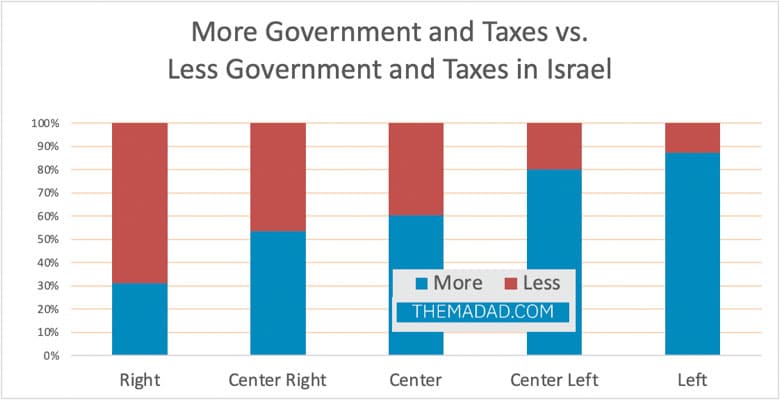
We were somewhat surprised to see these numbers from a poll by the themadad.com. In Israel we tend to think about “right” and “left” not as camps divided by economic agenda but rather divided by issues such as the Israeli-Palestinian conflict, or Supreme Court authority. But as you can see here, right and left in Israel are (also) much like right and left all over the world. Just take it with a grain of salt. Israelis aren’t Americans, and when right-wing Israelis say “less” they don’t intend to go as far as no-national-health-care. 


Follow Shmuel Rosner on Twitter.

The Orthodox PM and Shabbat Read More »

What Educators Can Learn from Gen Z

In the middle of a meeting with my colleague, the talented Adam Teitelbaum, he paused and looked at me on Zoom, and said, “I just miss being a kid.” 

Indeed, there has been a search for the mythical Fountain of Youth, which Herodotus mentioned 1,500 years ago. The pursuit to return to our youth can be perceived as shallow and superficial: we don’t want our skin to wrinkle, and we get anxious when our hairline begins to recede or our hair greys. This version of the Fountain of Youth is enticing, but it is not the one I am referring to, and I am positive this is not what Adam had in mind either. 

Rebbe Nachman of Breslov tells the following famous parable:

A prince once became mad and thought that he was a turkey. He felt compelled to sit naked under the table, pecking at bones and pieces of bread, like a turkey. All the royal physicians gave up hope of curing him of this madness. 

A sage arrived and said, “I will undertake to cure him.” The sage undressed and sat naked under the table, next to the prince, picking crumbs and bones. “Who are you?” asked the prince. “What are you doing here?” “And you?” replied the sage. “What are you doing here?”

“I am a turkey,” said the prince. “I’m also a turkey,” answered the sage.

They sat together like this for some time, until they became good friends. One day, the sage signaled the king’s servants to throw him shirts. He said to the prince, “What makes you think that a turkey can’t wear a shirt? You can wear a shirt and still be a turkey.” With that, the two of them put on shirts.

After a while, the sage again signaled and they threw him pants. As before, he asked, “What makes you think that you can’t be a turkey if you wear pants?”

The sage continued in this manner until they were both completely dressed. Then he signaled for regular food, from the table. The sage then asked the prince, “What makes you think that you will stop being a turkey if you eat good food? You can eat whatever you want and still be a turkey!” They both ate the food.

Finally, the sage said, “What makes you think a turkey must sit under the table? Even a turkey can sit at the table.” The sage continued in this manner until the prince was completely cured.

In his new magnificent book, “Baderech,” Rabbi Judah Mischel writes that this is a story of “intervention, healing, restoration, and fixing.” This young prince “lost his most precious belonging: his identity, his soul — himself.” 

Prior to the wise man bending down and going under the table, all the doctors were lost, despairing they had no idea how to relate to this young prince. The wise man, however, did something very simple. He bent down and joined him under the table.  

5782 is a new year, and all of us in education need to think about how we are going to meet our students “under the table.” Let me explain.

In Beresheet 22:12, the angel of God commands Abraham, “al tishlach yadcha el hanaar,” “do not raise your hand against the boy.” “Do not kill the youth,” referring to Isaac, his son. The Baal Shem Tov offers a profound insight about what this verse means.

He suggests a new meaning of, “Al tishlach yadcha el hanaar.” “Do not raise your hand against the boy (naar)” means, “Don’t get rid of your naarut, your youthfulness. Don’t let go of who you were growing up. How you were raised and who you were then is who you still are. You are still Avraham Avinu, the man of hesed and of dreams.”  Even though you went through all this, don’t get rid of your youth and ignore the value of hesed! In this reading, the verse is not referring to Isaac. It is about himself! Don’t obliterate your personality. Don’t obliterate the values of your youth.

And, I would argue in 5782, we can all reacquaint ourselves with our naarut a little more.  

How many spouses struggle to retain their youthhood and forget the romance of their relationship? They used to go to sleep cuddling and saying “I love you,” but now their backs are to one another and they barely acknowledge the other. 

How many of us see the Torah being passed around the synagogue and ignore it, yet when we’re children, we make a beeline to the Torah just to give it a little kiss before the Torah returns to the ark? 

The Baal Shem Tov’s insight of the need to stay in touch with our own youthfulness is a powerful one. Like Abraham, we have all experienced traumatic events. When we get older, we tend to think we’re more mature and more serious. Too often we can have a disposition of looking down on the values and choices of generations that come after us. But, we can avoid falling into this trap.  We can remember that there is always something we can learn from the new generation.

Instead of complaining about young people for spending so many hours each day on social media, let’s consider what we can learn from them. The reality is that 51% of Gen Z gets their news from TikTok, as opposed to 26% of millennials.

What does this mean in practice? From a media perspective, instead of complaining about young people for spending so many hours each day on social media, let’s consider what we can learn from them. Let’s think about the benefits of social media and of all the opportunities we have to connect with one another because of these tools. The reality is that 51% of Gen Z gets their news from TikTok, as opposed to 26% of millennials. TikTok  has about 700 million users per month, and YouTube has an estimated two billion monthly users.

We have a choice. We can either be the doctors who could not figure out what was wrong with the prince, or we can be like the wise man who went down under the table.

To be sure, there are remarkable dangers to social media. Watch “The Social Dilemma” or consider the question about the link between social media and loneliness. But let’s not lose sight of the benefits and possibilities social media offers as well.

From an educational standpoint, let’s consider the potential advantages of the 30-second TikTok video. “Don’t raise your hand against the youth” means, “Don’t think that learning just looks like a 90-minute lecture anymore.” This isn’t about whether social media is “right” or “wrong.” Whether we accept the world of social media or not is irrelevant. It is where young people are. Our tradition has always taught us, “Hanoch li’naar al pi darko,” meaning, “Teach the youth according to their ways.”  We must accept and embrace it. Let’s not talk down to young people or tell them they are “wrong”; rather, let’s seek to learn from them.

G. K. Chesterton, the 19th century British philosopher and writer, vividly explains: “Where a six-year-old is excited if someone opens a door in a story and finds a dragon on the other side, a two-year-old is excited enough if someone opens a door.”

As 5782 is ushered in, we can be like the two-year-old that Chesterton describes and allow ourselves to feel the elation of a surprising and meaningful moment. We can reclaim and activate our youthfulness. 

Let’s embrace our relationships with our spouses and remember what it felt like under the chuppah. 

Let’s embrace our optimistic youthful selves. Let’s go under the table and spend time with our young people, meeting them where they are. 

Let’s follow in the path set forth by God to Abraham and never “strike the youthfulness within ourselves.” To my colleague Adam, I say, we can still be kids too. We just need to spend a little more time under the table.


Dr. Noam L. Weissman is the Senior Vice President of OpenDor Media, which seeks to explore Israel and the Jewish story in all its complexity.

What Educators Can Learn from Gen Z Read More »

Independent Filmmaker Day Recap

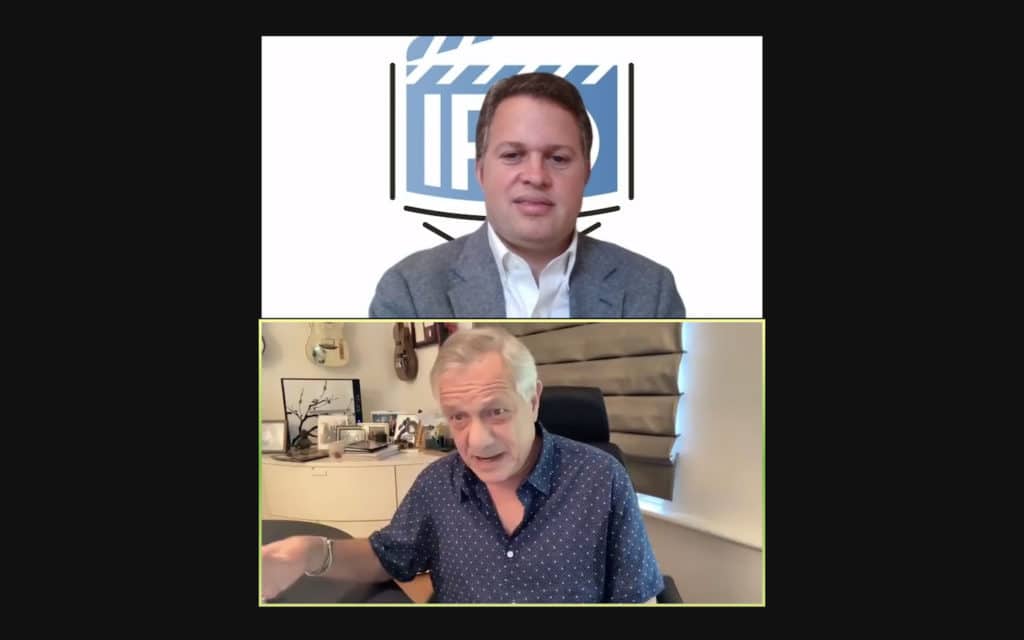
This weekend I attended via Zoom the wonderful and informative Independent Filmmaker Day event, and was delighted to do so.  It was jam packed with tips, advice, training, and general good sense about the magic and craft of filmmaking, including shorts, television shows, and everything in between.  From conception to writing to funding to finding cast and crew to distribution and selling your project, this is one of the best resources for filmmakers I’ve come across.

David Rubenstein, a formidable entertainment lawyer and producer (1917), and his associate Eric Vollweiler, of the Vollweiler Agency, have been putting on the event since 2019.  For the pandemic, they pivoted to a completely on-line Zoom experience, which worked quite well.  They even have a virtual After Party later on today!  It was not too crowded, so you didn’t get lost in the shuffle.  Everyone had plenty of opportunities to ask questions and network with the experts and each other, which is so important, especially in today’s environment.

One of the highlights was Kevin Bright, producer and director (Friends TV series).  He talked about how he got started in the industry, his projects before and after Friends, and his current and upcoming projects.  One of my favorite things he said was “creative relationships are very tender, and have to evolve naturally.”  His formed a close long-term friendship and partnership with Marta Kauffman and David Crane to form Bright/Kauffman/Crane Productions to produce Friends.  Ten years and 236 shows later, Friends remains one of the most popular and successful series of all time.

The next day, David Rubenstein headed a seminar called “Master Your Pitch!”  This was packed with tons of tips and advice on how to perfect your three minute pitch to get potential investors, cast and crew, and others interested in your dream project.  Some things to remember — three things that must be included in a successful pitch:  1) the type of film/genre/plot, 2) your personal connection to the material and 3) the business side, what are your goals and budget for the project.  These all must be smoothly combined into a compelling, outstanding, memorable brief speech.  Hopefully it will make potential investors, cast, directors, etc. sit up and take notice, and support you and your project.

There were many other panels, workshops and talks throughout the weekend. It culminated in a pitch fest where filmmakers each had a chance to practice their pitches.  The winner was awarded $40,000 of in-kind services to help produce their project.

All in all, a fascinating, most informative weekend that was tremendously helpful to anyone in the independent filmmaking industry.   For more information about the event and future programs, visit ifilmday.com. You can also find them on Facebook, Instagram, etc.

With today’s opportunities to make films even on your iPhone, and lots of streaming outlets desperate for quality material, there has never been a better time to pursue your filmmaking dreams.  They also emphasized the importance of your on-line presence, especially LinkedIn and IMDB for networking, finding opportunities, and team building.

Thank you to the organizers for giving me the opportunity to join in, I enjoyed it very much.

Independent Filmmaker Day Recap Read More »

The Abraham Accords Are Spurring More Normalization, But Not Where You’re Looking

(Israel Policy Forum) — This week has been one to celebrate Israel’s regional relationships. On Monday, Prime Minister Naftali Bennett made the first official prime ministerial visit to Egypt since 2010, meeting Egyptian President Abdel Fattah el-Sisi in Sharm el-Sheikh. Today marks the first anniversary of the signing of the Abraham Accords, and retrospectives with various ministers and ambassadors from the countries involved have been held in Washington and New York. While not publicly feted or commemorated in the same way, Monday was also the twenty-eighth anniversary of the Oslo Accords signing ceremony, and it falls this year amidst a resurgence in relations and cooperation between Israel and the Oslo-created Palestinian Authority.

It is appropriate that these three relationships—Israel-Egypt, Israel-region, Israel-PA —were front and center at the same time this week, and that there was a U.S. thread running through all of them. Looking back at the Abraham Accords and the regional normalization process one year later, a few things have become clear. Notwithstanding the numerous and tangible economic, security, cultural, and reputational benefits that Israel and the states with which it recently normalized relations are now enjoying, the Abraham Accords have so far proved resistant to the predictions that they would quickly herald a new wave of normalizers. What the Abraham Accords have done in part, however, is improve Israel’s existing relationships with Egypt and Jordan and perhaps even with the PA, proof of which was on display this week. Normalization has also established a widespread perception that was evident this week, that the road to Washington runs through Jerusalem, which may be the Accords’ most significant legacy one year in.

It is worth reflecting on how Bennett’s visit to Egypt was both a legacy of the Israel-Egypt peace agreement and an effort to move beyond it. When Israel and Egypt signed their peace treaty in March 1979, it garnered a different reaction than the Abraham Accords did four decades later. It was controversial with the Egyptian public, led to Egypt’s condemnation and isolation by most of the Arab League states, and even Prime Minister Menachem Begin’s first post-treaty visit to Egypt was downplayed by both the Egyptian government and press. Echoes of the cold peace that has waxed and waned but still reigned for decades could be seen on Monday with the invitation to Sharm el-Sheikh rather than Cairo, or the announcement that EgyptAir will now operate scheduled direct flights between Tel Aviv and Cairo after decades of unmarked aircraft and flights scheduled by request. On the other hand, it was impossible not to notice that the Bennett-Sisi meeting included a public display of the Israeli flag, a greeting for Bennett on the tarmac by the Egyptian foreign minister, and video and pictures on Egyptian state television of the meeting itself. The publicity from the Egyptian side looked more like what we have become accustomed to over the past year between Israel and the UAE than past Israeli-Egyptian interactions.

There is an element here of Sisi wanting to establish a strong and productive relationship with Bennett from the outset of Bennett’s term, and ensure that the cooperation that existed under Netanyahu is not downgraded. But there is also an element here of not wanting to be left behind. Unlike the 1979 peace treaty, the Abraham Accords have been more publicly celebrated and embraced, with great pains taken to highlight the benefits that go beyond military-to-military cooperation. Normalization seems to have sparked a fear of missing out in Egypt and Jordan, who were the pioneers when it comes to relations with Israel but have not capitalized on those relations to the fullest extent. More robust and more public economic and societal ties with Israel, something that has not been on the Egyptian menu through the decades of Israeli-Egyptian peace, is one of the things that the Abraham Accords has inspired in a positive way.

It is also clear though that Egypt’s desire to upgrade its relationship with Israel is not only about Israel, and the Abraham Accords has contributed to this dynamic as well. To a nearly complete extent with Sudan, a large extent with Morocco, and a smaller but significant extent with the UAE, normalization with Israel was about what the U.S. was willing to exchange in order to get it. The Trump administration was not bashful in communicating how far it was willing to go to get normalization agreements with Israel, and the fact that more states did not sign on is almost certainly a reflection of lingering reticence on the part of potential normalizers rather than a reflection of Trump reticence to increase the payout. Much like Saudi Arabia though not to the same extent, Egypt faces an uphill battle in the Biden administration’s Washington, and it is gambling that the best thing it can do to improve its standing—short of actually ending its human rights abuses—is demonstrating its value as a partner of Israel and as a helpful interlocutor on Gaza. Were Egypt in a better position with the White House and Congress, it may not have felt the need to roll out the red carpet for Bennett in such a public way. Whether or not Egypt’s assessment is correct is up for debate, but there is little question that it is driving Cairo’s calculus.

Even the PA is not immune to this dynamic. As betrayed as the PA felt when the Abraham Accords were first announced, it also does not want to be left out in the cold, and seems to be doing a better job of swallowing its disappointment and trying to build better relations with Israel. As with Egypt, some of this is about a new Israeli prime minister and government, but that is not the entire story. It was the Palestinian side that first leaked the news about the Mahmoud Abbas-Benny Gantz meeting, including pictures of the men together, and there is a clear effort to play up meetings with Israeli officials. The calculations on the Palestinian side are obviously more complex, but the PA also knows that getting a hearing from President Biden requires taking a more moderate tack toward Israel and being more responsive to U.S. concerns over Palestinian behavior as it pertains to Israel.

It took fifteen years for peace with Egypt to progress to peace with Jordan, and another quarter century for it to spread to other Arab states in the form of the Abraham Accords. While it would be genuinely shocking if the next wave takes a quarter century, or even a decade, the immediate impact of the Abraham Accords has not been to break down all of the barriers between Israel and those states that still do not recognize it. The more immediate impact has been on those who preceded the Abraham Accords, and for whom the dynamic in the region and the dynamic with the U.S. has been altered as a result. Irrespective of how many more states normalize with Israel and when, the various perceptions that the Abraham Accords have shaped about capitalizing on existing relations with Israel and how the U.S. connects to this picture are benefiting Israel in myriad ways.


Michael Koplow is Israel Policy Forum’s policy director, based in Washington, DC. To contact Michael, please email him at mkoplow@ipforum.org.

The Abraham Accords Are Spurring More Normalization, But Not Where You’re Looking Read More »

Seeking Connection in Disconnected Times

When Jews across the United States and around the world ushered in the High Holidays – the 10 Days of Awe that begin by ringing in the new year at Rosh Hashanah and culminate on Yom Kippur in atonement for our transgressions – it marked for most the second consecutive year of worship taking place predominantly in outdoor spaces and online.

During the past 18 months, the pandemic has triggered a profound sense of disconnectedness, exacerbating feelings of remoteness that seem even more pronounced during the High Holidays, when synagogue attendance historically peaks in must-attend prayer by even the casually observant.

Faith can add meaning and purpose to our lives, irrespective of religion, and in-person worship is an expression of these ideals.  Our pivot to lives spent on Zoom and streaming – while essential to business continuity plans – is exhausting and impersonal.  The resulting fatigue and isolation are genuine. In fact, the Centers for Disease Control identifies social isolation and loneliness as contributory factors to mental-health issues, as well as decline in cognitive function, particularly in seniors.

The devastating impact of COVID-19 – and now its Delta variant – underscore not just the fragility of life, but also how much of it is simply beyond our control. Most of us have sought ways to regain a modicum of control, add meaning to our lives, and bridge these feelings of remoteness.

From my perspective, after nearly four decades leading several charitable foundations, what I have observed during the pandemic is that people of all faiths are seeking ways to make a difference and purpose in their lives during these tumultuous times.

Frontline responders – the healthcare workers caring for our infirmed and clerks who’ve kept our grocery store shelves stocked – make a continuous, daily contribution in the battle to beat back COVID-19.  For the rest of us, tzedakah – charitable giving – has provided the touchpoint for making that difference and assuaging this disconnectedness.

Tzedakah  – along with a commitment to the precept of tikkun olam, repairing our broken world – is emblematic of our shared humanity and the quest for closeness and contact in separated times.

The numbers speak for themselves, too.  A report on philanthropy in 2020 by Giving U.S.A. showed that Americans contributed more than $471 billion to charitable causes last year, an increase of 5.1 percent from about $448 billion in 2019.  While a sharp upswing in giving by charitable foundations accounted for the lion’s share of that increase, contributions from individuals ticked upward by more than 2 percent, as well.

Certainly, the pandemic had an uneven impact and an even more irregular recovery.  Wealthier households, insulated from the effects of COVID-19 and resulting economic shocks, had a greater capacity to give than families and communities that were disproportionately affected financially.

This pattern proved consistent with giving at the Jewish Community Foundation of Los Angeles (The Foundation), which I proudly lead. Our family of 1,300 donors responded generously to this need by recommending millions of dollars in grants to pandemic-related causes from their charitable funds at The Foundation. 

In countless discussions with donors over the last year, my colleagues and I have heard a similar refrain: Tzedakah binds us to one another and strengthens our sense of community in the midst of the pandemic. Donors and community members have been engaging with us in a different way, by asking deeper, more probing questions, in even more forthright ways. Folks have reached out to us as they search for more, and we are working closely with them in their quest for philanthropic fulfilment.

The pandemic has, as well, brought younger donors – Millennials and Gen-Z – closer to philanthropy. These demographic groups have begun engaging philanthropically for the first time and are seeking causes that both align with their personal values and where they can see their contributions making a difference, 

As my colleague Naomi Strongin, who directs The Foundation’s Center for Designed Philanthropy, recently noted: “When the pandemic hit, many young donors for the first time saw millions of people lose their jobs, homes, and access to food. They witnessed overcrowding of hospitals, inequitable healthcare, racial injustice, and systemic economic and social inequities. This inspired many to take action and donate meaningfully for the first time to a wide range of pandemic-related causes.” 

As the Jewish New Year 5782 commences, although we still largely worship apart, our shared humanity, a world facing vast pockets of need, and a common desire to make a meaningful difference, are binding us together in ways like never before.

Just as Millennials and Gen-Z have found connection and a way to make a difference by engaging in philanthropy, so too have Jews across all age brackets.  As the Jewish New Year 5782 commences, although we still largely worship apart, our shared humanity, a world facing vast pockets of need, and a common desire to make a meaningful difference, are binding us together in ways like never before.


Marvin I. Schotland is president and chief executive officer of the Jewish Community Foundation of Los Angeles (The Foundation) which manages more than $1.4 billion in charitable assets on behalf of 1,300 donor families.

Seeking Connection in Disconnected Times Read More »

AFT Head Says She’s “Troubled By Aspects” of San Diego Chapter’s Anti-Israel Resolution

American Federation of Teachers (AFT) President Randi Weingarten told the Times of San Diego that she’s “troubled” by some of the passages the San Diego affiliate’s passage of an anti-Israel resolution.

On September 6, the AFT Guild Local 1391 union representing San Diego and Grossmont-Cuyamaca community college district teachers passed a resolution condemning “the forced removal of Palestinian residents in West Jerusalem, the bombing of civilian areas in the besieged Gaza Strip, and the continued human rights violations committed by the Israeli government during its 73-year occupation of this land.”

“I’m troubled by aspects of this resolution, which I have already conveyed to the local leadership, including its refusal to acknowledge the right of Israel to exist or to defend itself,” Weingarten told the Times of San Diego. “The national union advocates for the right to self-determination and justice for both Israelis and Palestinians—two states for two peoples. This resolution falls far short of that commitment.”

Jewish groups have also criticized the resolution. Anti-Defamation League San Diego released a statement on September 13 calling the resolution “problematic and based on biased assumptions with an extremely one-sided view” and warned that it could “cause Jewish and non-Jewish students and staff who are supportive of the state of Israel – and for whom a connection to Israel is part of their Jewish identity – to feel isolated and may lead to a negative impact on school campus climate.” “We fear that when people demonize Israel, denigrate its government, negate its fundamental legitimacy, and hold it to double standards, it can be antisemitic and can spawn anti-Jewish violence, as we saw happen in recent weeks, including on the streets of Southern California.” In May, members of a Palestinian caravan assaulted multiple patrons in front of the Sushi Fumi restaurant in the Beverly Grove area after asking them if they were Jewish.

Stop Antisemitism criticized the part of the resolution accusing Israel’s “advanced weaponry and indiscriminate bombing” of killing a “disproportionate amount of Palestinians.” “BILLIONS in Palestinian aid go to terror tunnels vs. sheltering/safety of their own people,” the watchdog group tweeted, asking how that is “Israel’s fault.”

StandWithUs, the Simon Wiesenthal Center and the American Jewish Committee have all also criticized the union over the resolution. The union did not respond to the Journal’s September 13 request for comment. The Times of San Diego reported that the union declined to comment on their inquiries.

AFT Head Says She’s “Troubled By Aspects” of San Diego Chapter’s Anti-Israel Resolution Read More »