fbpx

March 11, 2021

These New Haggadah Options Will Spice Up Your Seder

(JTA) — The pandemic has altered the experience of the Passover Seder, but one thing hasn’t changed: It’s a golden age for creative Haggadahs.

Artists, comedy writers, a range of clergy and more have given the ancient text a modern spin in recent years and disseminated them widely online with the help of self-publishing platforms and aggregation hubs such as Haggadot.com, which also allows users to customize their own.

But the sheer number of Haggadahs — and their various topics, which range from political issues to playful humor — can make choosing a fresh one a bit overwhelming. Here are a few new notable examples to try if you’re attempting to give your Seder a makeover, whether it’s held on Zoom or in person.

For those mentally afflicted by the pandemic

Bari Mitzmann, a Jewish blogger with a sizable Instagram following, for the second year has spearheaded a joint Haggadah project she calls “HaKol B’Seder” — in Hebrew it can mean either “everything in the Seder” or “it’s all good.”

Her thorough Haggadah and broader guide to the holiday weaves in an array of female voices — ranging from chefs to moms to therapists — who either talk about how a specific part of the Seder resonates with them or provide tips on how to fruitfully get through the Passover season. It’s aimed at those feeling overwhelmed by the COVID pandemic, all of the preparations that a Seder entails, the pressure to intellectualize the holiday’s themes or all of the above.

There are “wellness check-ins” throughout — one, for instance, discusses the “mental slavery” of loneliness and isolation, and of the drudgery of modern life (think cellphones, long work hours, etc.). There’s a guided meditation session accessible through a QR code. Then there are several recipes and food ingredient checklists to help the busy crowd with meal prep (including a couple of fun cocktail suggestions, like the Nile Sour, which includes cognac and honey).

For those who exhaled when Trump left office

Dave Cowen has contributed to humor sites such as McSweeney’s Internet Tendency, and that flavor of humor — intelligent, knowledgeable about politics and current events — shines through in his latest work, “The Biden-Harris Haggadah: Thank G-d!

Cowen imagines how various figures, ranging from those in the White House to others such as Dr. Anthony Fauci and Merrick Garland, Biden’s attorney general nominee, would narrate a Seder, if all brought together in one room.

“Well, thank G-d it’s over,” former President Barack Obama begins the introduction, speaking about the Trump years.

“Last year was tough. Who else needs a drink?!” Fauci says before reciting the blessing for the first cup of wine.

“We did it! A Jew is sorta in the White House! Well, in the neighborhood,” Doug Emhoff, Vice President Kamala Harris’ Jewish husband, says before leading the candlelighting.

Cowen had published “The Trump Passover Haggadah: ‘People All The Time They Come Up And Tell Me This Is The Best Haggadah They’ve Ever Read, They Do, Believe Me’” in 2018.

For the “Seinfeld” superfan

The Seder is definitely not “about nothing,” as the iconic ’90s sitcom “Seinfeld” is often described. Beyond a retelling of the Exodus story, which Jews have looked to for inspiration for millennia, the holiday meal’s guiding text is loaded with symbolism and ways to connect the biblical tale to contemporary times.

As Rabbi Sam Reinstein writes in the introduction to his “Seinfeld”-themed “The Haggadah About Nothing,” his goal is to use the series’ characters and storylines as a foil to show how not to experience the holiday. The Seder, he argues, is supposed to help transform its participants, to make them feel change in their lives. Part of the humor — and frustration — that surrounds Jerry, Elaine, George and Kramer on the show is that they never change, no matter how clear a moral lesson they are handed.

But the real appeal of “The Haggadah About Nothing” is its constant specific “Seinfeld” references. Reinstein is creative in finding connections and often cites multiple episodes at once to make his points.

Perhaps unsurprisingly, this is not the first “Seinfeld” Seder guide to hit the market — Cowen published a parody “Yada Yada Haggadah” in 2019, and Martin Bodek published a “Festivus Haggadah” last year.

(Watch Reinstein speak about his Haggadah in an event with MyJewishLearning here.)

For the kids who can’t wait for the food already

No matter one’s religious observance, the Seder can feel a bit long when the smells of matzah ball soup and brisket are emanating from the nearby kitchen.

Last year, Rabbi Matt Berkowitz and Dr. Ron Moses conceived a slim, fold-up seven-page pamphlet — aptly named “The Express Haggadah” — not to help families rush through the Seder, but to assist in getting them through the ritual in its entirety.

“‘What if the game ended at half-time?’ ‘What if the movie cut-off in the middle?’ Those would be unfinished stories,” a press statement reads. “‘The Express Haggadah’ enables families to ‘get through it’ before food comas and ‘shpilkes’ cut the seder off in the middle.”

True to form, nothing is left out, from the core prayers to the Exodus story, which is told in a series of quick blurbs.

For the artistically inclined

Some Haggadahs of centuries past were illustrated manuscripts, artist Emily Marbach points out in the introduction to her “Collage Haggadah,” which features her own beautiful pastiche works.

“The Middle Ages were a very fruitful time for new Haggadot. The Birds Head (I have made one collage in homage to that version), The Sarajevo and the Golden Haggadot are just a few of the most well known,” she writes. “There are the Mocatta, Prato, Barcelona, Darmstadt, the Hileq and Bileq — I could go on.”

Marbach, a London-based collage artist and printmaker, intersperses the pages of prayer and storytelling with dozens of stimulating works, some of them a blend of ancient imagery with a pop art sensibility.

Another artful option that could double as a coffee table book year-round is the Asufa Israeli art collective’s Haggadah, available in Hebrew and English. The group has produced a new version each year since 2013.

For the history buff

Next year may we be free men in Palestine,” Nissim Ben Shimon wrote in 1943.

As World War II began to swing in favor of the Allies, Ben Shimon, a Moroccan Jew in Rabat, wrote what has been deemed “The Hitler Haggadah” — a semi-humorous Seder text heavily influenced by the events of the war. Translated this year into English from the local Judeo-Arabic of the time, it offers a running commentary of sorts about the war’s events, cracks Nazi jokes and infuses the Seder prayers with hope for a better future for Europe’s Jews, all from a rare North African perspective.

One early passage starts:

“Wicked Hitler enslaved us
And the Allied Forces rescued us
With a great and mighty outstretched arm …”

For the Reform Jew

The Reform movement in America has published many Haggadahs over the past 130 years, since it first brought to print an English-language version of a Haggadah published in Germany decades earlier. The movement’s latest offering is “Mishkan HaSeder,” which adds contemporary poetry and social justice commentary to the traditional rabbinic text.

Among the poets whose words make the new order are Emma Lazarus, Adrienne Rich and Yehuda Amichai. There’s also art by the painter, sculptor and ceremonial artist Tobi Kahn.

For “curious kids (and their grownups)”

The Kveller Haggadah” isn’t brand new, but it’s still fresh. This Haggadah is full of colorful illustrations, a clear explanation of the Seder’s many complicated parts and short essay inserts by modern commentators on Passover’s past and present. (Kveller is part of 70 Faces Media, like the Jewish Telegraphic Agency.)

These New Haggadah Options Will Spice Up Your Seder Read More »
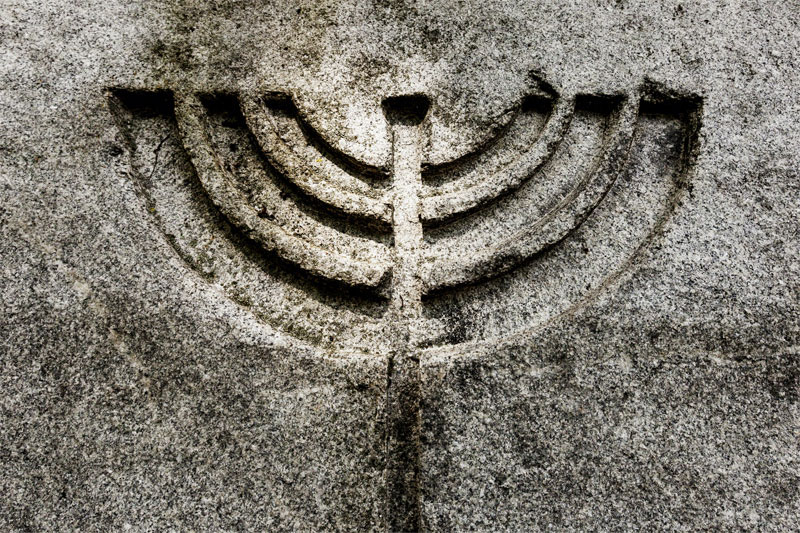
One for the Artists — A poem for Torah Portion Vayakhel-Pekudei

And he made the menorah of pure gold;
of hammered work he made the menorah
Exodus 37:17

He is Bezalel, an artist.
Because the foundation of
any good society is its artists.

The Menorah, our first symbol.
It came before the star. A spot for
every day of the week –

One in the middle for the
day of rest, on which no flame
shall be made.

Most of us confuse this
with the one for Hanukkah
which has nine spots for light

and is spelled in
all the ways you can imagine.
It’s not easy explaining Judaism

when our symbols overlap –
when there’s a different holiday
for every time the wind blows

and an extra one that
comes every week, that,
despite the constant reminders

we keep forgetting to celebrate.
This is why we need the Menorah.
This is why it’s so specific how it looks.

So when Friday comes along
a golden beam will tell us what to do.
And if we forget, and we will forget,

the text will remind us again and again.
He is Bezalel, an artist. What he made
has always given light.


God Wrestler: a poem for every Torah Portion by Rick LupertLos Angeles poet Rick Lupert created the Poetry Super Highway (an online publication and resource for poets), and hosted the Cobalt Cafe weekly poetry reading for almost 21 years. He’s authored 25 collections of poetry, including “God Wrestler: A Poem for Every Torah Portion“, “I’m a Jew, Are You” (Jewish themed poems) and “Feeding Holy Cats” (Poetry written while a staff member on the first Birthright Israel trip), and most recently “The Tokyo-Van Nuys Express” (Poems written in Japan – Ain’t Got No Press, August 2020) and edited the anthologies “Ekphrastia Gone Wild”, “A Poet’s Haggadah”, and “The Night Goes on All Night.” He writes the daily web comic “Cat and Banana” with fellow Los Angeles poet Brendan Constantine. He’s widely published and reads his poetry wherever they let him.
One for the Artists — A poem for Torah Portion Vayakhel-Pekudei Read More »

NBA Suspends, Fines Meyers Leonard for Using Anti-Semitic Slur

The NBA has suspended Miami Heat forward Meyers Leonard after he used an anti-Semitic slur on March 8. Leonard had been playing “Call of Duty: Warzone” when he said, “Don’t f—ing snipe me, you k— b—-.”

In a March 10 statement, NBA Commissioner Adam Silver announced that Leonard will be suspended for a week, has been fined $50,000 and is required to participate in a cultural diversity program.

“Meyers Leonard’s comment was inexcusable and hurtful and such an offensive term has no place in the NBA or in our society,” Silver said. “Yesterday, he spoke to representatives of the Anti-Defamation League to better understand the impact of his words and we accept that he is genuinely remorseful. We have further communicated to Meyers that derogatory comments like this will not be tolerated and that he will be expected to uphold the core values of our league — equality, tolerance, inclusion and respect — at all times moving forward.”

Yahoo sports reporter Chris Haynes noted in a tweet that because Leonard is currently sidelined with a shoulder injury, he’ll still get paid during his suspension. Under the league rules, “$50K and sensitivity training is the extent of punishment league can levy.”

Jewish groups praised the NBA’s handling of the matter.

“Important @NBA & @MiamiHEAT are holding @MeyersLeonard accountable for his use of an #antisemitic slur,” Anti-Defamation League CEO Jonathan Greenblatt tweeted. “After our conversation yesterday, we know he plans to educate himself & work toward combating hate and ignorance. @ADL is ready to work with him as he engages in this process.”


The American Jewish Committee similarly tweeted, “Thank you, @NBA, for your zero-tolerance stance on antisemitism.”


Leonard had apologized on March 10, saying that he didn’t know the meaning of the slur. New England Patriots wide receiver Julian Edelman has offered to host Leonard at a Shabbat dinner and attributed his use of the slur as “casual ignorance,” which Edelman said “is harder to combat and has greater reach, especially when you have influence.” Actor Michael Rapaport, on the other hand, argued that Leonard needed to explain himself on video given the slur is “like a gold antique” that “stabs you in the heart.”

NBA Suspends, Fines Meyers Leonard for Using Anti-Semitic Slur Read More »

NYC Mayoral Candidates Talk COVID-19, Education and Safety

New York City is in crisis. With homelessness at an all-time high, an economy disrupted, anti-Semitic, anti-Asian and anti-Black violence, a national reckoning with race and a devastating pandemic, major reforms are sorely needed.

That was the main takeaway from the March 10 Mayoral Candidate Forum, hosted by the Marlene Meyerson JCC Manhattan and The Forward, which featured a panel of NYC mayoral candidates, including:

  • Eric Adams, Democrat, current Borough president of Brooklyn
  • Shaun Donovan, Democrat, former U.S. secretary of housing and urban development
  • Kathryn Garcia, Democrat, former commissioner of theNYC Department of Sanitation
  • Ray McGuire, Democrat, former business executive at Citigroup
  • Dianne Morales, Democrat, executive director and CEO of Phipps Neighborhoods
  • Scott Stringer, Democrat, NYC comptroller
  • Maya Wiley, Democrat, former board chair of the NYC Civilian Complaint Review Board and current professor at the New School.
  • Andrew Yang, Democrat, former presidential candidate and entrepreneur

The event was moderated by Jodi Rudoren, the editor-in-chief of The Forward, and Jacob Kornbluh, senior political reporter at The Forward, provided commentary on Twitter. Rudoren said she would not ask the candidates specifically Jewish questions because the candidates had already answered many of these questions and because “civic engagement itself is a Jewish value.”

“Civic engagement itself is a Jewish value.”

Rudoren first asked candidates how they will address COVID-19 economic recovery and equity. McGuire, Garcia, Donovan and Wiley pointed to their existing recovery plans, many of which focused on supporting small businesses and infrastructure. Stringer said he would invest in “more community-based clinics” and affordable housing to address health inequity. Morales emphasized saving lives and mentioned a wealth tax as one policy that will steer her recovery strategy. Yang spoke of tourism and verifying vaccinations, noting Israel’s green passport system. Adams focused on combatting hate and gang crimes and cutting red tape for small business.

The candidates then had the opportunity to speak about public safety, education or housing:

Stringer and Donovan focused on housing. Stringer explained that he plans to build low-income housing on unused plots of land and said that 25% of construction should be allocated to affordable housing. Donavan emphasized his unique experience in housing in “ending” veteran homelessness in certain locations.

Morales, Garcia and Yang focused on public safety. Morales proposed defunding the police by $3 billion, reinvesting that money in jobs, education and other resources; she also called for “community first responders department” that could many of the socially-based situations police respond to. Garcia spoke about having a mental health position within the police, increasing the recruit age of police officers and creating accountability measures. Yang suggested having a civilian head of police and having officers live in the city to understand the populations they serve. (Yang and Wiley then had to leave the call.)

McGuire and Adams discussed education. McGuire proposed a “cradle to career” plan that ensured every child in the third grade could read and that sixth graders could obtain summer jobs. Adams would target racial inequities in learning, which he was said was “not K-12; it’s pregnancy through professional.” (Adams then had to leave the call.)

Candidates then participated in a “lighting round” of questions, discussing a book they had just read, an app they couldn’t live without, hobbies they developed during the pandemic and the worst job they ever had. They concluded by explaining which public figure was their role model:

  • Garcia: Eleanor Roosevelt and Ed Koch
  • McGuire: Franklin A. Thomas and Vernon Jordan
  • Stringer: Representative Jerry Nadler and Senator Robert F. Kennedy
  • Donavan: Representative John Lewis
  • Morales: Representatives Shirley Chisolm and Cori Bush.

The mayoral primary will occur on June 22, using Ranked Choice Voting for the first time. The general election will take place on November 2. NYC residents can register for the primary up until June 8.

You can watch the entire event here. The event was also cosponsored by The Center for Jewish Living, AJC New York, Avodah, B’nai Jeshurun, Hebrew Tabernacle Congregation, JCC Harlem, Jewish Alliance for Dialogue and Engagement (JADE), Jews for Racial & Economic Justice, JTS Hendel Center for Ethics and Justice, National Council of Jewish Women New York, Park Avenue Synagogue, Romemu, SAJ — Judaism That Stands for All and West End Synagogue.


Ari Berman is Op-Ed Editor for the Journal.

NYC Mayoral Candidates Talk COVID-19, Education and Safety Read More »

David Crane: California Man On a Mission

At age 50, in 2003, David Crane decided he wanted to do something with his passion for good government. He formally concluded his successful business career and began a path to become, literally, David against the two-headed Goliath of California politics: special interests (corporate and union), and a weak media resulting in an ill-informed electorate.

As a senior advisor to Governor Arnold Schwarzenegger, Crane saw up-close efforts to apply some moderate and sensible reforms to the legislative and electoral process. Some won, many lost. He does applaud the “top-two” primary voting system which he asserts helps elect the more moderate of two Democrats competing in a general election for independent and GOP voters in a safe democrat district.

In the years since, Crane has carefully built up the state’s leading network of donors seeking to contribute to state legislative races as a balance against the millions raised and spent by, among others, The California Teachers Association / California Federation of Teachers / California School Employee Association; The State Prison Guards Union; The California Medical Association and the California Nurses Association; and the SEIU and AFSCME labor union state and local councils.

His organization, “Govern For California has grown to 18 statewide chapters and raises funds from some 1,000 donors who affirm the mission statement : “Liberate California state legislators from the power of special interests — to govern in the general interest.”

Crane is a crafty activist who is passionate about improving the state’s fiscal sustainability and business climate in order to ensure the efficient delivery of services to the citizens of the nation’s most populous state.

Crane is a crafty activist who is passionate about improving the state’s fiscal sustainability and business climate in order to ensure the efficient delivery of services to the citizens of the nation’s most populous state.

A “JFK” Democrat and admirer of the “economic opportunity” teachings of famed professor Milton Friedman, Crane first worked across the political aisle on statewide initiatives and reform measures for school choice and competition, state spending and budget reform, and efforts to control the growth of unfunded state and local liabilities such as lifetime pensions and healthcare benefits promised to retired public employees.

He saw that a lot of powerful corporate insiders and union forces were dominating Sacramento politics. They work quietly in the halls of the State Senate and Assembly, helping to craft legislation and donating to the campaigns of elected officials. They usually get their way. Missing has been an effective counter-balancing organization to promote the small business community, parents, taxpayers and the general citizenry.

With a tough, no-nonsense personality and a focus undistracted by partisan ideology or the culture wars, Crane is intent on getting things done. He preaches “winning, not whining.” As for those fed up with the Democratic party’s supermajority dominance, radical policy agenda, or crony capitalism (see “the train to nowhere“) Crane says, fine, leave the state.

But for Crane, his model is Lyndon Baines Johnson, the legendary U.S. Senator and Democrat President who saw politics as an exercise in power through leverage. Govern For California has now started to move the needle by becoming not just a policy shop but a practical player as a donor to targeted candidates in competitive legislative district elections.

There are some 5,000 bills proposed every year in the California legislature. Some 1,000 are signed into law. And many important California Business and Profession Codes are annually amended, impacting our “public education, jobs, transportation, safety, health, welfare, parks, prisons, the environment and more,” per Govern For California’s website.

As citizens are generally unfocused on state government and distracted by their daily lives, and with limited media coverage of Sacramento politics, California’s regulatory rule over its citizens is deeply influenced by those who show up to lobby and who invest in results that favor their industry, profession or union leadership.

Because of this system, Crane suggests “a big gap has developed between what most legislators say and what they do.” They may pander politically, but they listen to donors. For example, a Democrat might tweet progressive political messages to appeal to woke constituents, but then vote in a very traditional way to serve the interests of powerful lobbyists. A Republican might virtue signal conservative first principles, but back legislation that keeps donations flowing from crony capitalists.

Because of this system, Crane suggests “a big gap has developed between what most legislators say and what they do.”

“Money is the mother’s milk of politics” said former California State Treasurer Jesse (“Big Daddy”) Unruh, (D), who gained power by demanding campaign contributions in return for investing state pension funds into Wall Street.

So Crane actually has two jobs as president of Govern For California. Raise attention to the general interest of the voters, and raise funds to compete in every election cycle to assist legislators willing to stand up to special interests.

A significant challenge to fiscal sanity results from the right of state public employee unions collectively to bargain, raise funds from dues-paying members, and then donate to the campaigns of the very elected officials who vote on their salaries, benefits, and even tenure. This model has encouraged a culture in which public workers seek the most amount possible in wages and favorable employment rules.

Californians might be shocked to learn that their state budget has grown over the past 25 years from some $50 billion to a proposed $227 billion for 2022.

Two examples help illustrate this ballooning state budget.

First, public education receives some $100 billion annually (teachers and administrators have been paid while public schools have been closed during Covid). Only California, Mississippi and three other states grant permanent employment to public school teachers after just 18 months of teaching experience. 45 states wait much longer or never grant tenure. Crane, who notes that student performance has not improved along with rising state spending on K-12 education, argues that “doctors and dentists are not guaranteed jobs for life regardless of performance” and is therefore supporting AB 1284, promoting consumer (parents, students and taxpayers) protection by amending the teacher tenure rule.

And second, state prison guard unions, which have secured some $10 billion a year in salaries and benefits, including generous lifetime state medical subsidies (even for those already benefitting from federal programs like Medicare and ObamaCare). This does not count another $3 – $4 billion spent on state prison maintenance. All of this for some 55,000 guards overseeing some 100,000 prisoners at a cost multiple times what other states or private prisons charge to house inmates.

As a function of even a relatively modest amount of campaign donations, special interests have strongly influenced budget priorities to their advantage.  By competing in the campaign donation race, Crane believes legislators are now listening to constituents who have their own requests for state funding for housing, road repairs, and water and fire and electricity infrastructure.

Crane cites the recent successful effort to liberate nurse practitioners to participate in the healthcare market to serve patients with lower consumer costs as an example of licensing reform that helps the general interest as well as workers without a big lobby behind them. Teacher tenure reform, prison compensation packages, and pension and retiree healthcare reform are other major attempts to free up taxpayer money for the broader public interest.

The business community, including the smaller, hard-working mom and pop shops who are required to be licensed and certified, has long punched well below its weight. And when it does wake up to participate in Sacramento, it is often too late and poorly armed to play against the bigger lobbyists.

Crane believes his organization is critical to creating a sustained and lasting influence on legislators confident that campaign support will be there for them if they stand with the general public interest against the well-funded insiders who have long dominated the playing field in Sacramento.

Crane has been through previous battles as a reformer of the CalSTRS state employee pension system and the University of California. Those experiences have motivated him and prepared him for a tough game that is still based on money ball. He knows his work is cut out for him, but as a man on a mission to help save his beloved California, he aims to win rather than whine.


Larry Greenfield is a Fellow of The Claremont Institute for the Study of Statesmanship & Political Philosophy.

David Crane: California Man On a Mission Read More »

Is Israel A Jewish State, or The Jewish State?

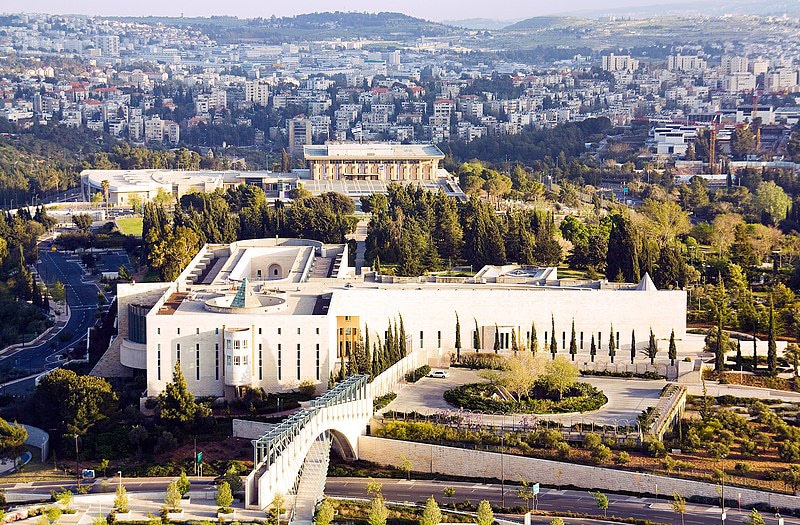
(Israel Policy Forum) — The latest crisis between Israel and American Jews was kicked off last week when Israel’s Supreme Court ruled that people who convert to Judaism in Israel through the Conservative and Reform movements are considered Jewish for the purposes of the Law of Return and are therefore considered Israeli citizens. At first glance, this should not necessarily be an issue that involves Diaspora Jews at all; Israel already recognizes conversions performed by non-Orthodox denominations outside of Israel for people who later make aliyah, so the ruling impacts only those who already live in Israel. Yet in touching off yet another round of Israeli leaders decrying the denominations to which the overwhelming number of American Jews belong, the conversion decision raises the question of what it means to describe Israel as a Jewish state.

Denunciations of recognition of Conservative and Reform conversions came fast and furious from the predictable quarters. The Haredi UTJ party aired a television ad with scenes of obviously tongue-in-cheek “bark mitzvahs” followed by pictures of dogs dressed in kippot and tallitot, sarcastically asserting that they are all considered Jewish according to the Supreme Court and ending with the tagline that only UTJ will protect your Judaism, your kids, and your grandkids. Chief Rabbi David Lau said that anyone undergoing a non-Orthodox conversion is not Jewish, Likud MK Miki Zohar called the decision disastrous for the state, and the Likud Twitter account said that the ruling endangered the foundation of Israel as a Jewish and democratic state.

Being that approximately 90% of American Jews identify as something other than Orthodox, the dismay on this side of the ocean at the reactions from Israeli politicians–some of whom themselves are nowhere near Orthodox observance or belief–denigrating Conservative and Reform Jews is predictable and understandable. Jews don’t like other Jews telling them that they are not really Jewish or sufficiently Jewish, and so even though the debate inside of Israel is theoretically an instance of Israeli Jews reacting to an Israeli court decision impacting policies that take place exclusively inside of Israel and that apply only to Israeli citizens and would-be citizens, non-Orthodox American Jews are going to take this debate personally. Pile on to this the fact that the very notion of Jewish denominations is a foreign concept to most Israelis and thus discussing Conservative and Reform Judaism has a xenophobic tinge to it, which makes Conservative and Reform Jews in the U.S. feel as if they are being told that they have no stake in Israel because they are outside interlopers. Once again, we see the dynamic playing out of Israeli Jews and American Jews being divided not by security policy or political worldview, but on basic questions of Jewish identity.

Jews don’t like other Jews telling them that they are not really Jewish or sufficiently Jewish.

Leaving aside the practical implications for converts in Israel–which are very consequential–there is a larger philosophical question that Israelis should be asking themselves about their position with regard to non-Orthodox conversions. It is a question of what it means that Israel is a Jewish state, and how far those aspirations go. In shorthand, is Israel a Jewish state, or is Israel the Jewish state?

If Israel is a Jewish state, it can mean a number of things. It can mean that Israel has a majority-Jewish population. It can mean that Israel is governed by Jewish tradition and the Jewish calendar, with Yom Kippur a holiday where the country shuts down rather than Christmas and with Purim the holiday featuring costumes and parties rather than Halloween. It can mean kosher food in state institutions, and leaven being proscribed for sale on Passover. And it can even mean ultra-Orthodox domination of the kashrut industry, conversion, and life cycle events such as marriages and funerals. All of this makes Israel a Jewish state, but it does not necessarily give Israel the more universal claim to being the state of all Jews.

Describing Israel not as a Jewish state, but as the Jewish state brings with it a different set of requirements. Doing so means being open to all Jews, no matter the denomination, and accepting that being the Jewish state goes hand in hand with a commitment to worldwide Jewish pluralism. The fact that the Conservative and Reform movements are marginal in Israel compared to their status in the U.S. doesn’t matter, and neither does it matter that secular Israelis largely turn to Orthodox institutions and figures when they require Jewish ritual (whether by choice, by inertia, or by coercion is a separate debate). The question of Israelis’ relationship to Conservative and Reform Judaism is a question about Israeli society, whereas the question of Israel’s relationship to movements that encompass millions of Jews around the world is a question about Israel’s claim to being the sovereign homeland for all Jews. It is difficult, if not outright impossible, to assign that latter status to Israel if the state refuses to accept the legitimacy of all but one strain of Judaism, and assigns that one strain an absolute gatekeeper role. If that is the case, then Israel will be a Jewish state and the Orthodox state, but will not be able to assert that it welcomes and serves as the single homeland for all Jews.

Divisions between Jews are nothing new. The political and religious sectarianism of first century Judea involved competing claims of authenticity, accusations of heresy, and refusal to accept the legitimacy of differences anywhere one wanted to look. The difference is that those sectarian fights were not about a secular state enforcing the policies of one sect on everyone in a way that would determine citizenship or Jewish status. Orthodox and non-Orthodox denominations will continue to argue until the end of time, and Orthodoxy is by definition going to view non-Orthodoxy as falling short in some way. When this spills over into tangible implications for which people Israel views as Jewish or not, however, it goes beyond denominational arguments to Israel’s own self-proclaimed status. If Israel wants to be seen as the Jewish state, there needs to be a rethinking of what that means and what obligations it entails.


Michael Koplow is Israel Policy Forum’s policy director, based in Washington, DC. To contact Michael, please email him at mkoplow@ipforum.org.

Is Israel A Jewish State, or The Jewish State? Read More »

Rosner’s Torah Talk: Vayakhel-Pekudei with Charna Rosenhotz

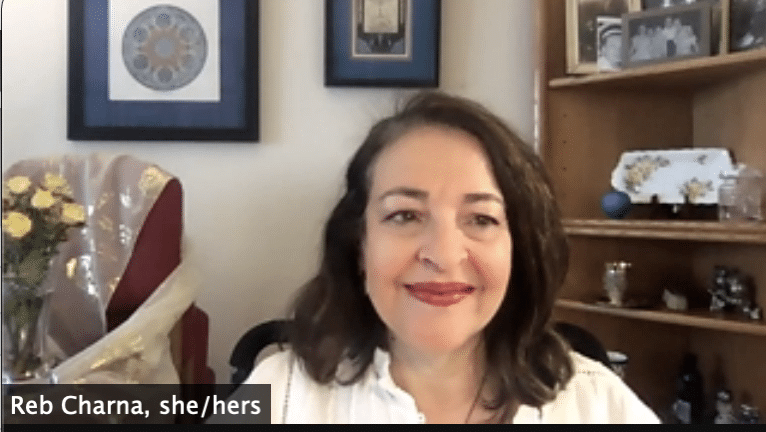
Maggid/Rav Charna Rosenholtz, MA is an accomplished teacher, specializing in psychospiritual growth and applications of spiritual wisdom. Ordained as a Rabbi by Aleph Ordination Program (January 2021) and as a Hebrew wisdom teacher (Maggid) by Rabbi Zalman Schachter-Shalomi and Rabbi Tirzah Firestone, she also holds a Masters Degree in Religious Studies from Naropa University in Boulder, CO. She has mentored with medicine women, clergy, and master teachers in the development of human potential. By utilizing technologies from Matrix Leadership Institute, Hakomi Institute, and Right Use of Power (RUP), she seamlessly weaves content and context, for a holistic educational experience. Charna is currently the Reb Zalman Scholar in Residence at Congregation Nevei Kodesh in Boulder CO and is also on the Board of Directors for RUPI.

We read two parashot this week: The reading of Vayakhel-Pekudei – (Exodus 35:1-40:38) – begins with Moses commanding the people of Israel to observe the Shabbat and continues to tell us in great detail about the building of the Tabernacle. Pekudei, the last reading from Exodus begins with an audit of how the contributions for the Tabernacle (the Mishkan) were used. The portion goes on to describe the completion of the Tabernacle and its assembly and concludes by depicting the glory of the lord entering it.


Previous Torah-Talks on Vayakhel-Pekudei

Rabbi James Ponet

Rabbi Jaquline Mates-Muchin

Rabbi Dan Orenstein

Rabbi Richard Steinberg

Rabbi David Singer

Rabbi Tom Heyn

Rabbi Elissa Sachs-Kohen

Rabbi Analia Bortsz


Rosner’s Torah Talk: Vayakhel-Pekudei with Charna Rosenhotz Read More »

Vision and Detail

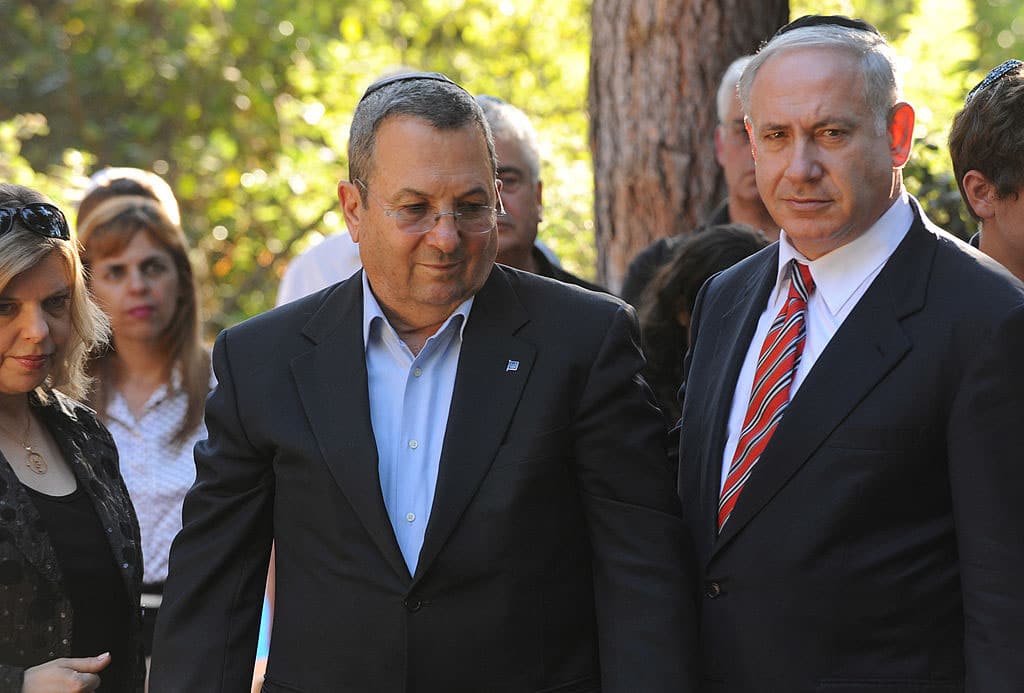
Throughout my life, I have been privileged to meet with three Israeli prime ministers. One of them was Ehud Barak. As I sat down with PM Barak, the first thing I told him was that his eulogy of Yoni Netanyahu, the sole Israeli soldier who died during the raid on Entebbe in 1976, is, in my eyes, one of the greatest Jewish eulogies of the twentieth century. Visibly moved, Barak thanked me for these words.

In his eulogy of Yoni Netanyahu, Barak spoke about belonging to a generation that lived during both the Holocaust and our people’s astounding political resurrection in Israel only three years thereafter. The sheer density of these events, professed Barak, is existentially overwhelming and historically overbearing.

Barak’s eulogy of Netanyahu also drew an analogy between the biological and the political. Barak spoke about how numerous cells in the human body die out throughout the years to preserve the individual human body writ large. In the body politic as well, discerned Barak, the survival of the nation-state necessitates the death of some of its individual members — the soldiers who give up their lives — to enable the survival of the State of Israel.

There is, however, a crucial difference between the cells that organically die and the soldiers who are willing to give up their lives for the preservation of the body politic, observed Barak. For the soldiers who knowingly put their lives in harm’s way are well aware of the prospective risk of perdition, whereas the biological cells in the human body are neither conscious nor choosing to embrace their sacrificial role.

Barak then went on to note that ever since the dawn of Jewish history, from the days of Jonathan the Maccabi in the second century BCE all the way to the days of Jonathan Netanyahu some two millennia thereafter, the preservation of Jewish sovereignty in Israel always hinged upon the sacrificing spirit of a mere handful of altruistic warriors.

Barak also alluded to the profound existential rift inherent in Yoni Netanyahu’s poetic soul. Specifically, Yoni’s underlying inner struggle to balance his Zionist ideals with his “amor intellectualis” — his insatiable love of learning and scholarship at Harvard University.

Yoni Netanyahu died during the opening minutes of the raid on Entebbe, the most audacious and spectacular military raid in the history of modern warfare. And the success of this daring operation, observed Barak, necessitated a delicate balance between vision and detail. On one hand, the people who planned the Entebbe raid needed to conceptualize boldly and “fantasize” about how to bring home Jewish civilians who were held hostage in Africa, thousands of miles away from Israel. On the other hand, the planners of the mission also needed to remain grounded regarding the material and the logistical aspects of the raid.

This precarious balance between vision and detail, between macro and micro, between the pathos and poetry of vision and the somber prose of everyday life is exactly what the Torah expects from us as individuals as we construct our own personal life stories. We are called upon to live with a sense of destiny and vocation while remaining entrenched and grounded in the nitty-gritty of what philosopher Heidegger disparagingly called “everyday-ness” — the monotonous exigencies of practical everyday living.

This precarious balance between macro and micro is exactly what the Torah expects from us as individuals.

And this is all reflected, the Chassidic masters inform us, in the title of this Shabbat’s two Torah portions: “Vayakhel-Pikudey,” which are almost always juxtaposed and read together during the same Shabbat. “Vayakhel” means “to assemble,” to gather everyone to articulate the “big picture” of what our human endeavors and strivings are all about, whereas “Pikudei” discusses the minutiae of raw materials and subtle planning required to bring a worthy and sublime vision into actuality.

The book of Proverbs reminds us that “in the absence of vision, a people withers away.” The same holds true with regard to our own individual lives. Just like the planners and executors of the legendary raid on Entebbe, which symbolizes the very essence of the Zionist ideal, so too are we, as solitary individuals, also summoned and ordained, from on High and from within, to master this elusive dance of formulating a compelling existential vision on the one hand, and meeting with vigor life’s innumerable quotidian demands, on the other hand.

May we achieve just that, and find truth and lovingkindness in the eyes of God and humanity, Amen.


Rabbi Tal Sessler, Ph.D., is the author of four books in philosophy and contemporary Jewish identity. He is the Senior Rabbi of Sephardic Temple Tifereth Israel, and the incoming Dean of the Rabbinical School at the Academy for Jewish Religion in California, where he also teaches Jewish philosophy.

Vision and Detail Read More »

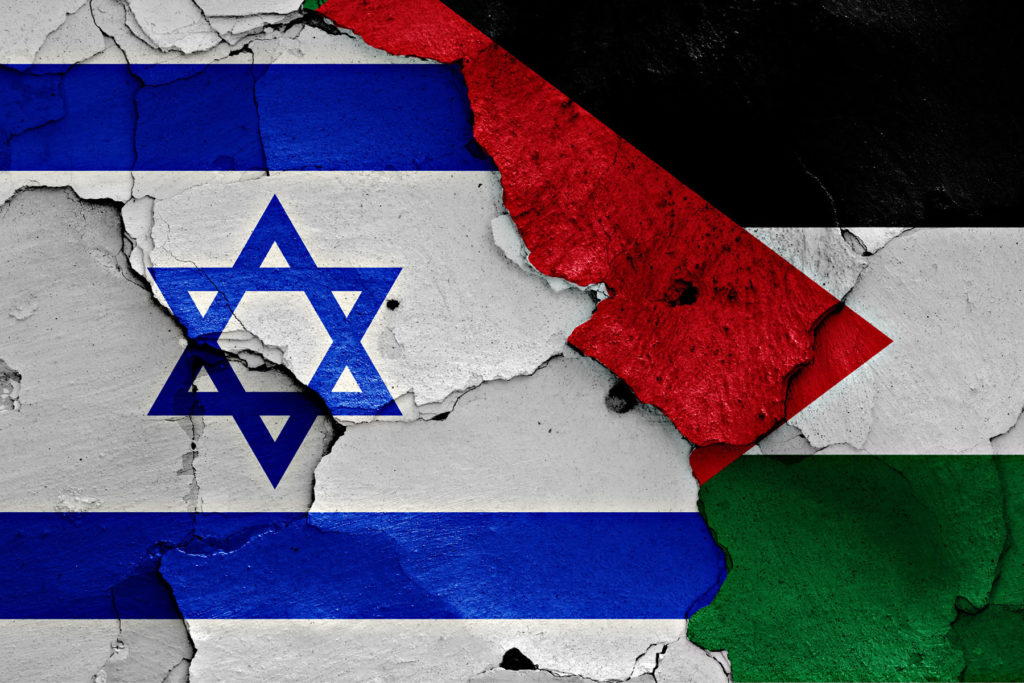
If Israel and Palestine Won’t Separate, Let Them Federate

Peter Beinart’s July 2020 call in Jewish Currents for a one-equal-state solution to the Israeli-Palestinian conflict was heavily criticized for allowing Israel’s electorate to have a non-Jewish majority. However, the alternative advocated by most of Beinart’s opponents — the two-state solution — has major problems of its own. It is seen as a painful concession even by its staunchest supporters: former Knesset Member Einat Wilf (from the Labor Party) wrote in the Atlantic that it is “a divorce” that “would require both parties to make considerable compromises”; Yossi Klein Halevi wrote in “Letters to My Palestinian Neighbor” that the two-state solution was “a self-imposed wound on the Jewish people…doing violence to our most basic sense of Jewish history.”

Furthermore, powerful long-term efforts to build peace at the grassroots level, such as Roots or our own online forum Unity is Strength, are fundamentally based on creating an Israeli-Palestinian reality that is shared rather than separate. Since most peace efforts are based on relationship building, the two-state’s rhetoric of separation ultimately reinforces the perception on both sides that Palestinians are unwanted by Israel. In these venues, the preachiest two-state rhetoric is a call for a breakup even before the first date.

As early as at the 2017 J Street Conference in Washington, D.C., Martin Indyk, former U.S. ambassador to Israel, argued that the two-state solution was dead. Palestinian obstructionism, he claimed, helped hasten its demise, as did successive Israeli governments. Although Prime Minister Benjamin Netanyahu affirmed the two-state solution as a goal of Israel’s policy in a speech at Bar-Ilan University in 2009, his subsequent actions have blocked rather than cleared the way to it. Netanyahu and his supporters, most notably his own Likud party, lacked the political resolve to take the types of steps required for a two-state solution:

In order for an independent Palestine to be reasonably governable, Palestinians argue, the entire Palestinian part of the West Bank would need to be a single territorial unit well-connected with the capital. This would require keeping Jewish settlements limited. Instead, Israel and the United States greenlighted rampant settlement expansion in the West Bank during Netanyahu’s administration, fragmenting many parts of the Palestinian territories. Israel’s recent peace agreements with the UAE, Bahrain, Sudan and Morocco merely delay rather than prevent annexation. After announcing the first Abraham Accords agreement, Netanyahu immediately reassured his base that there is “no change in my plans for annexation.”

Meanwhile, Israel’s once-dominant Labor party — and its entire political left — has become marginal. With a right-wing Knesset majority virtually assured in the upcoming election, the left is unlikely to gain a mandate to pursue a peace process based on two states. Yet even the far-left Meretz Party remains committed to two states along the lines of the Oslo Accords, rather than acknowledging this solution’s difficulties and exploring alternatives.

With a single state likely to be the inevitable reality, it is past time to start imagining how it could be best implemented. One of the main options is federation, regional governments under a larger federal body. The Israeli government is already inclined to grant regions greater autonomy. According to a recent government report, Israel’s excessive centralization, unusual for a developed country, is causing badly uneven growth across localities. The report’s proposal, supported by the current Minister of the Interior and Shas party founder Aryeh Deri, recommended creating and empowering regional authorities.

The West Bank, on the other hand, must rely heavily on regional authorities because of its extreme non-contiguity. Palestinians there may focus their advocacy efforts within the areas where they can easily coordinate, demanding –– and gradually receiving –– local empowerment, up to and including voting rights in Israel. This will nevertheless preserve Israel’s Jewish majority, even in the long term. Israel plus the West Bank is currently 65% Jewish, and birth rates for Jews and Palestinians in this area are almost identical.

The Federation Movement, an Israeli NGO, is one of the few groups currently exploring the political structure for a federation of Israel plus the West Bank. It has developed a detailed map in which this area is divided into 30 cantons, twenty with a Jewish majority and ten with a non-Jewish majority. The number and boundaries of the cantons are designed to reflect the demographics of the federation.

Credit: Rafi Gassel/Yoni Sheinin

These cantons would have their own local governments, laws and directly-elected representatives to the federal government in Jerusalem, roughly based on the Swiss model of governance. The federal government would operate based on a written constitution, which Israel currently lacks. It would be bilingual (Hebrew and Arabic), with restrictions on the role of religion at the federal level. The constitutions of the cantons could be oriented toward the local majority culture while preserving freedoms of all religions and remaining within the bounds of the federal constitution. To stabilize the federation, the Knesset would become bicameral: a new parliamentary body representing the cantons would become the upper house, and the existing unicameral Knesset would become the lower house.

Although the Federation Movement’s proposal keeps two-thirds of the cantons predominantly Jewish, some Israelis will be uncomfortable with the reduction in Israel’s Jewish majority. However, there are advantages that may more than compensate for this issue. Settlements would integrate rather than be dismantled — an important benefit, since no Israelis would be displaced. The federation would also include a united Jerusalem and the entire West Bank. Jewish-majority cantons would cover the Jordan Valley as well. Major concerns of the two-state solution — such as the necessary withdrawal of settlements, the question of whether Arab-majority areas near the West Bank borders should be in Israel or Palestine and the geographic vulnerability of Israel proper at its narrowest point –– would be addressed. The borders of this federation model are more easily defensible than almost any possible with a two-state solution.

The borders of this federation model are more easily defensible than almost any possible with a two-state solution.

Palestinians will likely be concerned about leaving Gaza behind. To address this, Gaza could receive a port, airport and reasonable border and access arrangements. It would remain independent for as long as expedient. In the future, it could be integrated partly or wholly into the federation. One possibility for Gaza is a proposal related to federation, called confederation. Confederation includes elements of the federation model, such as shared Israeli-Palestinian governmental structures. However, it fundamentally preserves the existing national sovereignties, and so is considered a separate-state solution.

Inclusion of the diaspora is another important, if not essential, feature for Palestinians and Jews. Some individuals from both the diaspora and Gaza could be repatriated to the Federation immediately, based on economic or humanitarian criteria. Gazan Christians, for example, are vulnerable to the Islamic government of Hamas and number only a few thousand worldwide. Additional Palestinians could be permitted to enter the federation over time, and others could be accepted into third-party countries with financial compensation.

A federation requires the backing of both the Israeli and Palestinian populations. At the grassroots level, though, the federation proposal sends a more coherent message than classic two-state proposals — of Israelis and Palestinians as constituent groups seeking a larger shared experience. Confederation proposals capture part of this, and are currently supported by about one-third of Israelis and one-third of Palestinians. A recent study by the staunchly two-state advocacy group Israel Policy Forum strongly implied that confederation was the next-best change to the status quo after traditional two-state, but it did not discuss federation. A serious, well-funded campaign could reroute the peace discussions away from strict two-state rhetoric and towards openness to other solutions.

The Federation Movement’s proposal has real political, social and economic advantages to both sides. On the Palestinian side, it gives Palestinians the empowerment they have long sought. On the Israeli side, it opens the West Bank, develops Gaza for trade and improves Israel’s worldwide image. It even has the potential to inspire and rally parts of the Jewish Diaspora that are currently apathetic or polarized. Organic grassroots initiatives can help keep both them and Palestinians on board with the larger Mideast peace process. If we look beyond the failed Oslo peace framework, there are alternatives with the potential to succeed.


Emanuel Shahaf is co-chairman of the (Israel) Federation Movement www.federation.org.il, and a former senior intelligence official in the Prime Minister’s Office serving as head of station in Southeast Asia. Recently, he published “Identity, the Quest for Israel’s Future,” available on Amazon.

Rebecca Sealfon, a Reconstructionist Jewish writer based in New York, NY, founded Unity is Strength, an online discussion forum focused on cooperative solutions to Israel-Palestine that has received over one million views. She has published in the New York Daily News, Smithsonian Magazine, and the Daily Beast.

If Israel and Palestine Won’t Separate, Let Them Federate Read More »

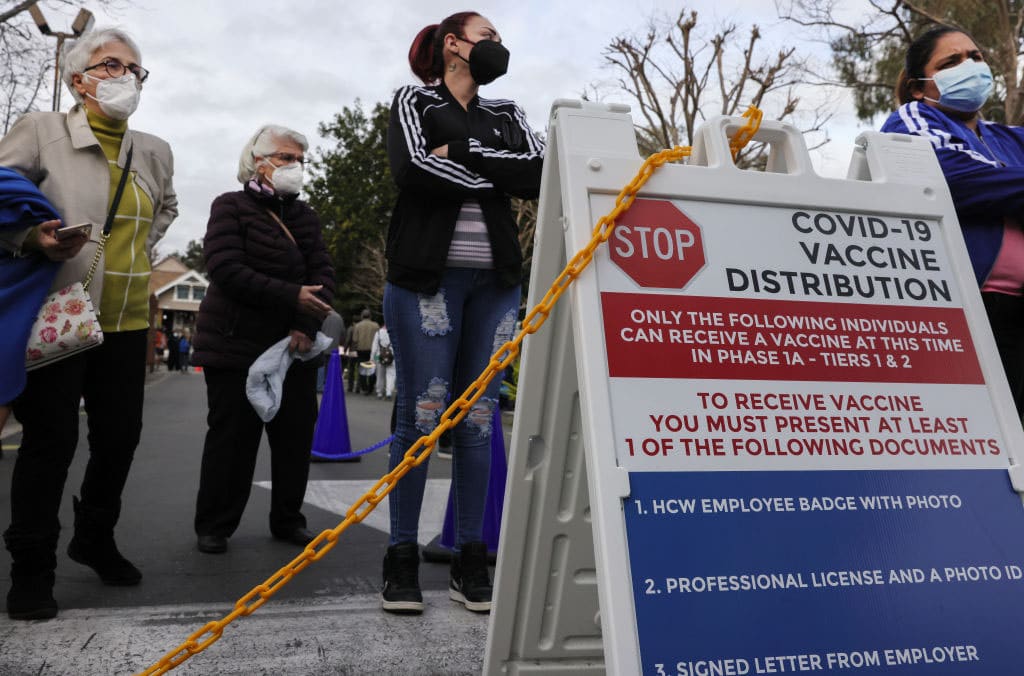
From Herd Resistance to Herd Immunity: One Year of COVID-19

We’ve now experienced a full year with this pandemic. This milestone offers an opportunity to take account of the battle, review our current understanding of the virus and apply that information to assess our future.

We now understand the two viral characteristics that made COVID-19 the nightmare pandemic agent we’ve long feared: its ease of transmission from person to person by ubiquitous respiratory droplets and its astonishing spectrum of symptoms. Spread is enhanced by the 30 to 40% of COVID-19 patients who have no symptoms and can unknowingly spread the disease to others, who may manifest serious illness or even death.

Why some struggle profoundly and even die while others are asymptomatic from the same virus remains mysterious. One explanation is that any substantial preexisting health impairment — occult or known — can prove lethal. The prevalence of such preexisting impairments, plus poor health care access, goes far to explain the disproportionate impact of COVID-19 on minority communities.

Unfortunately, physicians and public health experts tend to avoid extrapolating from this growing knowledge, depriving the public of a perspective on the range of possible outcomes for the pandemic. Health experts may worry that optimistic scenarios could cause over-confidence and impair compliance with public health directives, while pessimistic scenarios might do the same due to discouragement. Finally, experts may wish to avoid personal embarrassment if their prognostications prove erroneous. Both the public and experts should realize that informed speculations are subject to revision based on emerging facts. Though imperfect, they contribute the public’s evolving understanding and its ability to respond to the virus.

The past few weeks have been better for the humans than for the virus. Although “herd immunity” — the level of immunity in the population that prevents further spread — is still a long way off, we have achieved a stage that might be termed “herd resistance,” in which the level of immunity in the population reduces infection rates. For example, California’s current estimated daily case rate, about 4,000, has fallen to less than a tenth of the January peak.

This drop-off in cases indicates that the virus is now less able to find susceptible individuals to infect. Those not susceptible include about 30%-40% of the population who have been previously infected, 10% who were vaccinated and perhaps 10-20% who isolate diligently enough to face no risk of encountering the virus. The current plateau might continue to taper down to a resolution of the pandemic. It might dwindle indefinitely into the future. Or the plateau could prove to be a temporary lull before a resurgence, like the pre-Thanksgiving dip in cases.

The current drop-off in cases indicates that the virus is now less able to find susceptible individuals to infect.

Which scenario plays out depends on several critical factors that influence the percentage of the population that remains susceptible:

  • Durability of immunity: We know that immunity from viral infection lasts for at least three months. We don’t know how long the immunity from vaccination will last. Should either form of immunity prove short-lived, the pool of those susceptible to infection could be gradually replenished.
  • The level of protection afforded by vaccination: Although we know that vaccinated individuals rarely get significant illness in the short run, we don’t know whether they can develop asymptomatic infections that would allow transmission to others. If vaccinated individuals can act as asymptomatic spreaders, the virus would continue to circulate from vaccinated individuals to others.
  • The impact of new variants on transmission and on the reliability of vaccine-mediated protection: These two factors remain unknown. Re-vaccination with updated vaccines could enhance protection against new variants, but routine periodic re-vaccination would prove challenging on a mass scale.
  • The willingness of the public to continue masking and social distancing: Premature abandonment of these crucial practices would allow more contagious emerging strains to become better established and more difficult to eradicate.

If vaccination rates are high and compliance with masking and social distancing remains good, the goal of herd immunity and ultimate eradication of the virus remains possible The alternative would likely be endemic COVID-19 that persists among those who fail to get vaccinated or those whose immunity fades. Endemic COVID-19 would likely require individuals to protect themselves by periodic re-vaccination to boost the immunity provided by the first round and to cover newer strains as they emerge.

Despite the uncertainty, one reassuring likelihood is that those who vaccinate and continue to follow public health directives are unlikely to ever suffer serious forms of COVID-19. In the meantime, we can all mitigate the risks of the pandemic by vaccinating ourselves as soon as we’re eligible, encouraging our friends and relatives to vaccinate and continuing with our masking and social distancing practices. The tide may be turning in our favor. We all need to do our part to maximize the chances of success.


Daniel Stone is Regional Medical Director of Cedars-Sinai Valley Network and a practicing internist and geriatrician with Cedars Sinai Medical Group. The views expressed in this column do not necessarily reflect those of Cedars-Sinai.

From Herd Resistance to Herd Immunity: One Year of COVID-19 Read More »