At age 50, in 2003, David Crane decided he wanted to do something with his passion for good government. He formally concluded his successful business career and began a path to become, literally, David against the two-headed Goliath of California politics: special interests (corporate and union), and a weak media resulting in an ill-informed electorate.
As a senior advisor to Governor Arnold Schwarzenegger, Crane saw up-close efforts to apply some moderate and sensible reforms to the legislative and electoral process. Some won, many lost. He does applaud the “top-two” primary voting system which he asserts helps elect the more moderate of two Democrats competing in a general election for independent and GOP voters in a safe democrat district.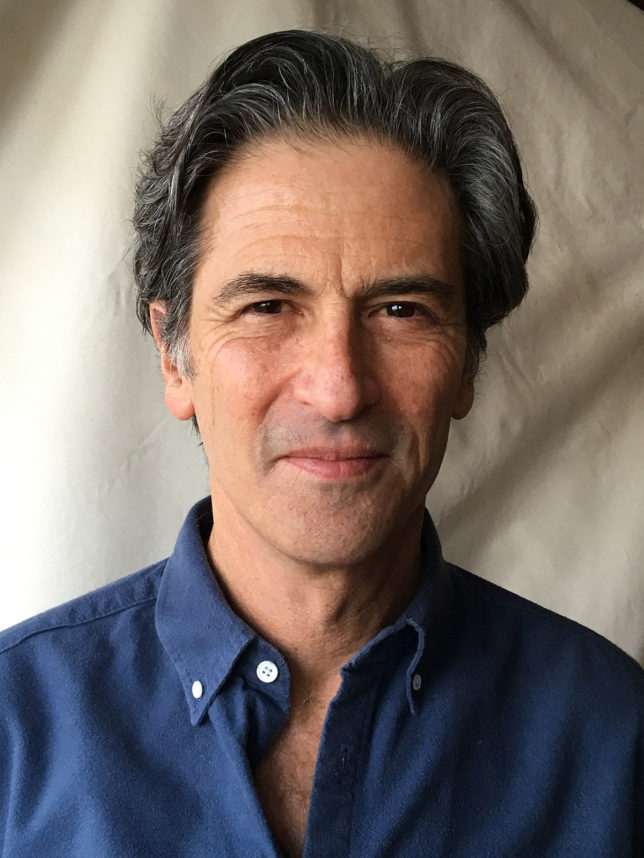
In the years since, Crane has carefully built up the state’s leading network of donors seeking to contribute to state legislative races as a balance against the millions raised and spent by, among others, The California Teachers Association / California Federation of Teachers / California School Employee Association; The State Prison Guards Union; The California Medical Association and the California Nurses Association; and the SEIU and AFSCME labor union state and local councils.
His organization, “Govern For California” has grown to 18 statewide chapters and raises funds from some 1,000 donors who affirm the mission statement : “Liberate California state legislators from the power of special interests — to govern in the general interest.”
Crane is a crafty activist who is passionate about improving the state’s fiscal sustainability and business climate in order to ensure the efficient delivery of services to the citizens of the nation’s most populous state.
Crane is a crafty activist who is passionate about improving the state’s fiscal sustainability and business climate in order to ensure the efficient delivery of services to the citizens of the nation’s most populous state.
A “JFK” Democrat and admirer of the “economic opportunity” teachings of famed professor Milton Friedman, Crane first worked across the political aisle on statewide initiatives and reform measures for school choice and competition, state spending and budget reform, and efforts to control the growth of unfunded state and local liabilities such as lifetime pensions and healthcare benefits promised to retired public employees.
He saw that a lot of powerful corporate insiders and union forces were dominating Sacramento politics. They work quietly in the halls of the State Senate and Assembly, helping to craft legislation and donating to the campaigns of elected officials. They usually get their way. Missing has been an effective counter-balancing organization to promote the small business community, parents, taxpayers and the general citizenry.
With a tough, no-nonsense personality and a focus undistracted by partisan ideology or the culture wars, Crane is intent on getting things done. He preaches “winning, not whining.” As for those fed up with the Democratic party’s supermajority dominance, radical policy agenda, or crony capitalism (see “the train to nowhere“) Crane says, fine, leave the state.
But for Crane, his model is Lyndon Baines Johnson, the legendary U.S. Senator and Democrat President who saw politics as an exercise in power through leverage. Govern For California has now started to move the needle by becoming not just a policy shop but a practical player as a donor to targeted candidates in competitive legislative district elections.
There are some 5,000 bills proposed every year in the California legislature. Some 1,000 are signed into law. And many important California Business and Profession Codes are annually amended, impacting our “public education, jobs, transportation, safety, health, welfare, parks, prisons, the environment and more,” per Govern For California’s website.
As citizens are generally unfocused on state government and distracted by their daily lives, and with limited media coverage of Sacramento politics, California’s regulatory rule over its citizens is deeply influenced by those who show up to lobby and who invest in results that favor their industry, profession or union leadership.
Because of this system, Crane suggests “a big gap has developed between what most legislators say and what they do.” They may pander politically, but they listen to donors. For example, a Democrat might tweet progressive political messages to appeal to woke constituents, but then vote in a very traditional way to serve the interests of powerful lobbyists. A Republican might virtue signal conservative first principles, but back legislation that keeps donations flowing from crony capitalists.
Because of this system, Crane suggests “a big gap has developed between what most legislators say and what they do.”
“Money is the mother’s milk of politics” said former California State Treasurer Jesse (“Big Daddy”) Unruh, (D), who gained power by demanding campaign contributions in return for investing state pension funds into Wall Street.
So Crane actually has two jobs as president of Govern For California. Raise attention to the general interest of the voters, and raise funds to compete in every election cycle to assist legislators willing to stand up to special interests.
A significant challenge to fiscal sanity results from the right of state public employee unions collectively to bargain, raise funds from dues-paying members, and then donate to the campaigns of the very elected officials who vote on their salaries, benefits, and even tenure. This model has encouraged a culture in which public workers seek the most amount possible in wages and favorable employment rules.
Californians might be shocked to learn that their state budget has grown over the past 25 years from some $50 billion to a proposed $227 billion for 2022.
Two examples help illustrate this ballooning state budget.
First, public education receives some $100 billion annually (teachers and administrators have been paid while public schools have been closed during Covid). Only California, Mississippi and three other states grant permanent employment to public school teachers after just 18 months of teaching experience. 45 states wait much longer or never grant tenure. Crane, who notes that student performance has not improved along with rising state spending on K-12 education, argues that “doctors and dentists are not guaranteed jobs for life regardless of performance” and is therefore supporting AB 1284, promoting consumer (parents, students and taxpayers) protection by amending the teacher tenure rule.
And second, state prison guard unions, which have secured some $10 billion a year in salaries and benefits, including generous lifetime state medical subsidies (even for those already benefitting from federal programs like Medicare and ObamaCare). This does not count another $3 – $4 billion spent on state prison maintenance. All of this for some 55,000 guards overseeing some 100,000 prisoners at a cost multiple times what other states or private prisons charge to house inmates.
As a function of even a relatively modest amount of campaign donations, special interests have strongly influenced budget priorities to their advantage. By competing in the campaign donation race, Crane believes legislators are now listening to constituents who have their own requests for state funding for housing, road repairs, and water and fire and electricity infrastructure.
Crane cites the recent successful effort to liberate nurse practitioners to participate in the healthcare market to serve patients with lower consumer costs as an example of licensing reform that helps the general interest as well as workers without a big lobby behind them. Teacher tenure reform, prison compensation packages, and pension and retiree healthcare reform are other major attempts to free up taxpayer money for the broader public interest.
The business community, including the smaller, hard-working mom and pop shops who are required to be licensed and certified, has long punched well below its weight. And when it does wake up to participate in Sacramento, it is often too late and poorly armed to play against the bigger lobbyists.
Crane believes his organization is critical to creating a sustained and lasting influence on legislators confident that campaign support will be there for them if they stand with the general public interest against the well-funded insiders who have long dominated the playing field in Sacramento.
Crane has been through previous battles as a reformer of the CalSTRS state employee pension system and the University of California. Those experiences have motivated him and prepared him for a tough game that is still based on money ball. He knows his work is cut out for him, but as a man on a mission to help save his beloved California, he aims to win rather than whine.
Larry Greenfield is a Fellow of The Claremont Institute for the Study of Statesmanship & Political Philosophy.


David Crane: California Man On a Mission
Larry Greenfield
At age 50, in 2003, David Crane decided he wanted to do something with his passion for good government. He formally concluded his successful business career and began a path to become, literally, David against the two-headed Goliath of California politics: special interests (corporate and union), and a weak media resulting in an ill-informed electorate.
As a senior advisor to Governor Arnold Schwarzenegger, Crane saw up-close efforts to apply some moderate and sensible reforms to the legislative and electoral process. Some won, many lost. He does applaud the “top-two” primary voting system which he asserts helps elect the more moderate of two Democrats competing in a general election for independent and GOP voters in a safe democrat district.
In the years since, Crane has carefully built up the state’s leading network of donors seeking to contribute to state legislative races as a balance against the millions raised and spent by, among others, The California Teachers Association / California Federation of Teachers / California School Employee Association; The State Prison Guards Union; The California Medical Association and the California Nurses Association; and the SEIU and AFSCME labor union state and local councils.
His organization, “Govern For California” has grown to 18 statewide chapters and raises funds from some 1,000 donors who affirm the mission statement : “Liberate California state legislators from the power of special interests — to govern in the general interest.”
Crane is a crafty activist who is passionate about improving the state’s fiscal sustainability and business climate in order to ensure the efficient delivery of services to the citizens of the nation’s most populous state.
A “JFK” Democrat and admirer of the “economic opportunity” teachings of famed professor Milton Friedman, Crane first worked across the political aisle on statewide initiatives and reform measures for school choice and competition, state spending and budget reform, and efforts to control the growth of unfunded state and local liabilities such as lifetime pensions and healthcare benefits promised to retired public employees.
He saw that a lot of powerful corporate insiders and union forces were dominating Sacramento politics. They work quietly in the halls of the State Senate and Assembly, helping to craft legislation and donating to the campaigns of elected officials. They usually get their way. Missing has been an effective counter-balancing organization to promote the small business community, parents, taxpayers and the general citizenry.
With a tough, no-nonsense personality and a focus undistracted by partisan ideology or the culture wars, Crane is intent on getting things done. He preaches “winning, not whining.” As for those fed up with the Democratic party’s supermajority dominance, radical policy agenda, or crony capitalism (see “the train to nowhere“) Crane says, fine, leave the state.
But for Crane, his model is Lyndon Baines Johnson, the legendary U.S. Senator and Democrat President who saw politics as an exercise in power through leverage. Govern For California has now started to move the needle by becoming not just a policy shop but a practical player as a donor to targeted candidates in competitive legislative district elections.
There are some 5,000 bills proposed every year in the California legislature. Some 1,000 are signed into law. And many important California Business and Profession Codes are annually amended, impacting our “public education, jobs, transportation, safety, health, welfare, parks, prisons, the environment and more,” per Govern For California’s website.
As citizens are generally unfocused on state government and distracted by their daily lives, and with limited media coverage of Sacramento politics, California’s regulatory rule over its citizens is deeply influenced by those who show up to lobby and who invest in results that favor their industry, profession or union leadership.
Because of this system, Crane suggests “a big gap has developed between what most legislators say and what they do.” They may pander politically, but they listen to donors. For example, a Democrat might tweet progressive political messages to appeal to woke constituents, but then vote in a very traditional way to serve the interests of powerful lobbyists. A Republican might virtue signal conservative first principles, but back legislation that keeps donations flowing from crony capitalists.
“Money is the mother’s milk of politics” said former California State Treasurer Jesse (“Big Daddy”) Unruh, (D), who gained power by demanding campaign contributions in return for investing state pension funds into Wall Street.
So Crane actually has two jobs as president of Govern For California. Raise attention to the general interest of the voters, and raise funds to compete in every election cycle to assist legislators willing to stand up to special interests.
A significant challenge to fiscal sanity results from the right of state public employee unions collectively to bargain, raise funds from dues-paying members, and then donate to the campaigns of the very elected officials who vote on their salaries, benefits, and even tenure. This model has encouraged a culture in which public workers seek the most amount possible in wages and favorable employment rules.
Californians might be shocked to learn that their state budget has grown over the past 25 years from some $50 billion to a proposed $227 billion for 2022.
Two examples help illustrate this ballooning state budget.
First, public education receives some $100 billion annually (teachers and administrators have been paid while public schools have been closed during Covid). Only California, Mississippi and three other states grant permanent employment to public school teachers after just 18 months of teaching experience. 45 states wait much longer or never grant tenure. Crane, who notes that student performance has not improved along with rising state spending on K-12 education, argues that “doctors and dentists are not guaranteed jobs for life regardless of performance” and is therefore supporting AB 1284, promoting consumer (parents, students and taxpayers) protection by amending the teacher tenure rule.
And second, state prison guard unions, which have secured some $10 billion a year in salaries and benefits, including generous lifetime state medical subsidies (even for those already benefitting from federal programs like Medicare and ObamaCare). This does not count another $3 – $4 billion spent on state prison maintenance. All of this for some 55,000 guards overseeing some 100,000 prisoners at a cost multiple times what other states or private prisons charge to house inmates.
As a function of even a relatively modest amount of campaign donations, special interests have strongly influenced budget priorities to their advantage. By competing in the campaign donation race, Crane believes legislators are now listening to constituents who have their own requests for state funding for housing, road repairs, and water and fire and electricity infrastructure.
Crane cites the recent successful effort to liberate nurse practitioners to participate in the healthcare market to serve patients with lower consumer costs as an example of licensing reform that helps the general interest as well as workers without a big lobby behind them. Teacher tenure reform, prison compensation packages, and pension and retiree healthcare reform are other major attempts to free up taxpayer money for the broader public interest.
The business community, including the smaller, hard-working mom and pop shops who are required to be licensed and certified, has long punched well below its weight. And when it does wake up to participate in Sacramento, it is often too late and poorly armed to play against the bigger lobbyists.
Crane believes his organization is critical to creating a sustained and lasting influence on legislators confident that campaign support will be there for them if they stand with the general public interest against the well-funded insiders who have long dominated the playing field in Sacramento.
Crane has been through previous battles as a reformer of the CalSTRS state employee pension system and the University of California. Those experiences have motivated him and prepared him for a tough game that is still based on money ball. He knows his work is cut out for him, but as a man on a mission to help save his beloved California, he aims to win rather than whine.
Larry Greenfield is a Fellow of The Claremont Institute for the Study of Statesmanship & Political Philosophy.
Did you enjoy this article?
You'll love our roundtable.
Editor's Picks
Israel and the Internet Wars – A Professional Social Media Review
The Invisible Student: A Tale of Homelessness at UCLA and USC
What Ever Happened to the LA Times?
Who Are the Jews On Joe Biden’s Cabinet?
You’re Not a Bad Jewish Mom If Your Kid Wants Santa Claus to Come to Your House
No Labels: The Group Fighting for the Political Center
Latest Articles
The Jewish Grandparents Network Learning Fest to Take Place in January
Democracy Is Built Before Election Day
Au Revoir, France
To Begin Again
Abraham’s God in the Age of Atheism
AJU Reopens Ziegler School Admissions, Seeks to Reimagine Rabbinic Education
Show Us How It’s Done – A poem for Parsha Lech Lecha
This is not the party I want to be at.
Weinberg: The Secret German Life of a Jewish Last Name
It’s no coincidence that American Jews generally don’t know that at some point the German language slithered its way into their last names.
The Anti-Zionist Agenda at the Heart of UC Ethnic Studies
The classroom becomes an instrument for advancing political causes rather than a place where those causes are freely examined and debated.
The Beauty of the Slow and Steady
What could our lives look like if we embraced the infinitesimal as infinite?
Ziegler School Welcomes Prominent Rabbi, O.C. Federation Names CEO, Pico-Robertson Cleanup
Notable people and events in the Jewish LA community.
A Moment in Time: Beyond the Chuppah
A Bisl Torah ~ The Company You Keep
Does the company we keep enable our name to be a blessing? Are we doing enough to make our name as great as God intends?
Because We Can
Print Issue: The View From Israel | October 23, 2026
Three years after Oct. 7, a country trying to heal is still waiting for a full accounting of what went wrong.
Rabbis of LA | Rabbi Taff’s Daughter Follows Her Father’s Footsteps
Second of two parts
‘The Nuremberg Women’: The Untold Stories of Eight Women Who Witnessed History
“These women were pivotal to both the process and the outcome of the trial. Yet they were marginalized on many occasions, literally reduced to footnotes.“
A Very Jewish Stew: Toscano Hamin
This Hamin Toscano recipe reminded us of a Tuscan wedding soup.
Table for Five: Lech Lecha
Shield Of Abraham
The View from Israel
Three years after Oct. 7, Israel is still waiting for a full accounting of what went wrong.
Albie Selznick’s Unlikely Connection to David Bowie Inspires New Solo Show
Selznick saw his idol David Bowie perform live when he was 15 and made up his mind that he wanted to create a show of his own and work with Bowie.
Is the New Facebook Film Equal to the Original?
“The Social Reckoning” isn’t about a power struggle, but shows that powerful companies are reluctant to change unless there is pain.
Larry David Is Spot-on in His Satire of the DSA
In his article about his proposals for the Democratic Socialists of America, he jokes that “The DSA has great respect for religious traditions.”
Remember and Be Grateful
Memory is the mother of gratitude. If we do not remember our past, it is difficult to improve our present or build a better future.
Michael Broukhim’s Journey to a Deeper Judaism
What began as a personal exploration of Judaism eventually became intertwined with Broukhim’s professional life.
Rosner’s Domain | No Surprise Is Also an Election Surprise
It’s worth paying attention to what is – or isn’t – happening to our “large” parties. They are quite small, or at least that’s how they appear in the polls even as Election Day draws near.
More news and opinions than at a Shabbat dinner, right in your inbox.