fbpx

December 10, 2020

A Moment in Time: How Will You Nurture the Light this Hanukkah?

Dear all,
At this season of light, take a moment in time to nurture relationships, memories, traditions, goodness, collegiality, freedom, and hope.
This video is sent with love from Temple Akiba of Culver City. It’s not filled with glitz and glamor. But please receive it as a hug from all of us, because we miss you so very much!
”Light One Candle” by Peter, Paul, and Mary.
With love and Shalom,
Rabbi Zach Shapiro

A Moment in Time: How Will You Nurture the Light this Hanukkah? Read More »

Another Hanukkah Miracle: Morocco and Israel

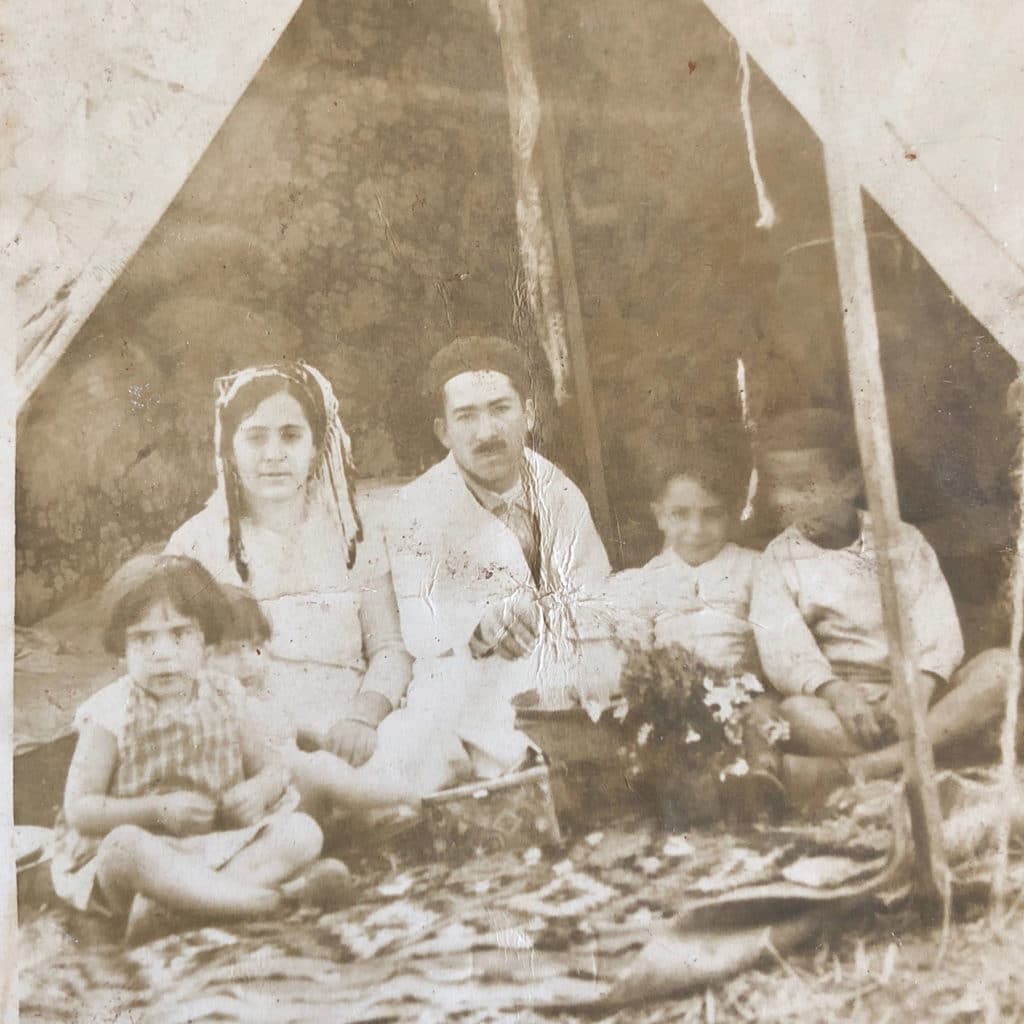
There’s a special place in my heart for Morocco. It’s not just that every scene of the movie “Casablanca” is like an old friend. I grew up there. Memory can play tricks on us — and I confess that my nostalgia for Casablanca may be idealized. But it’s there.

I remember the beaches where my father taught me how to swim. I remember the deserts where we would go on pilgrimages to the graves of holy Jewish sages. I remember our crowded Jewish neighborhood, where neighbors would talk to each other through windows.

I remember the kiosk across the street from where we lived, where an Arab man would make Moroccan donuts called sfhinz. I remember the magazine stand a block away where my brother and I would bargain for cowboy magazines.

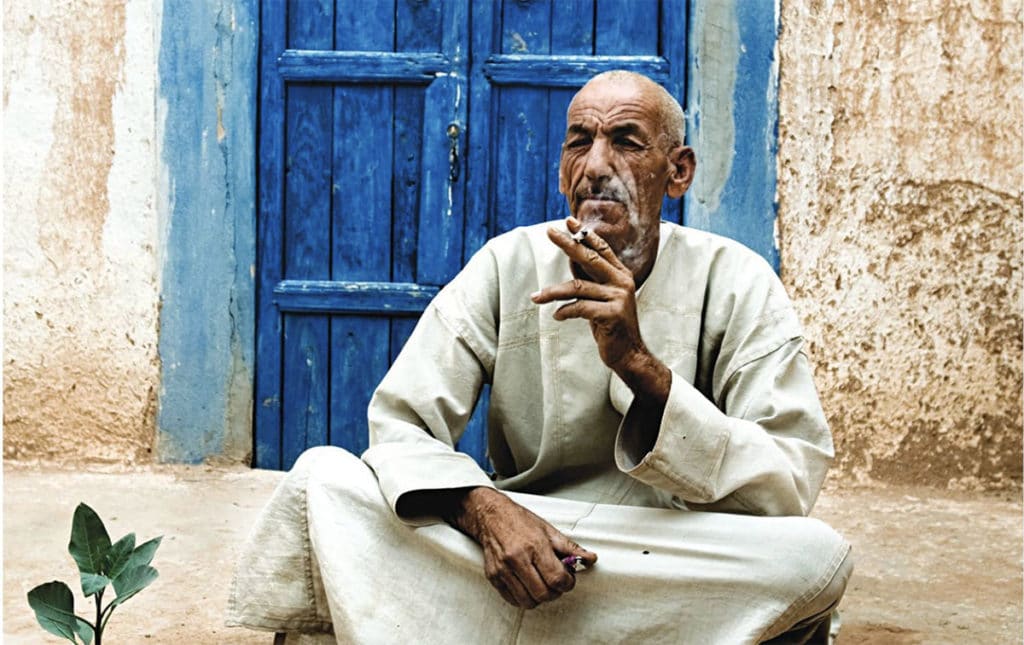
A man sits outside Khmis Arazan synagogue, near the city of Agadir, Morocco. Photo by Aaron El Kiam

I remember the community oven where Jewish families would send their “dafinas” — Moroccan cholent — for cooking and then pick them up right before Shabbat. I remember those magical nights of Mimouna, the last night of Passover, when Arab grocers would help us gather flour, honey, dates and other ingredients for the traditional sweet tables.

And I remember something my parents always told us: The King of Morocco loves the Jews.

Every ethnic group has its mantras. For Moroccan Jews, that is on top of the list: The King loves the Jews. The King protects the Jews. The King protected us during World War II. And the King continues to protect us today.

Throughout instances of tension between Jews and Arabs in Morocco — and they existed —that protection stood the test of time, from one King to another. One of the King’s top advisers is a Jew. It’s a special connection.

Would this connection with Jews ever translate to a connection with the Jewish state? That was more complicated. A Jew in Morocco was much easier to accept than a Jew in the sovereign Jewish state of Israel. The conflict with the Palestinians only reinforced this distance.

That is why today’s announcement that Israel and Morocco have agreed to establish diplomatic relations is an extraordinary moment and means so much to me. I know it wasn’t easy. In that part of the world, accepting the Jewish state so publicly is a risky move. But things are changing. We’ve already seen it this year with the three other Arab countries in the Abraham Accords: the United Arab Emirates, Bahrain and Sudan.

Today’s announcement that Israel and Morocco have agreed to establish diplomatic relations is an extraordinary moment and means so much to me. I know it wasn’t easy.

These accords are a celebration of our common humanity.

When two countries say, “We need each other, we can help each other, we can work together,” that is humanity at work. If we go back far enough, we realize that Jews and Muslims share the same father, Abraham. We worship one God. We live in the same land. We love hospitality. We love music. We want to work and make a living. We love our children.

My friend Aomar Boum, a devout Moroccan Muslim, speaks to my mother not just in French but in Arabic. Her Shabbat food reminds him of the flavors from his childhood home in the south of Morocco. The bonds of culture can transcend the differences of religion.

The Judaism I grew up with in Casablanca was the “Judaism of the sun,” a Judaism inspired by mystical deserts and cozy neighborhoods. In our Jewish enclave, Jewish rituals and holidays kept us bonded to one another. We practiced our tradition in a Muslim land that respected our tradition. It’s no surprise that after centuries, Arab culture came to color our melodies, our foods and our customs.

Moroccan Jews suffered after migrating to Israel in the early 1950s. There was plenty of discrimination against Sephardic Jews, who looked more like Arabs than European Jews. But Moroccan Jewry played a major role in the growth of Israel. Today, it has taken its proper place at the table with over 100 different nationalities populating the Jewish state.

I can only imagine that Moroccan Israelis will gladly take advantage of the new direct flights between the two countries. They will have a chance to visit the land of their ancestors, a land where Judaism flourished and an Arab King looked over us.

We ought to light a candle tonight in honor of this victory for humanity.

Happy Hanukkah.

Another Hanukkah Miracle: Morocco and Israel Read More »

Can We Save the Unity of the Jewish People?

The Torah and Haftorah we read for Vayigash present a stark warning for the Jewish people. Vayigash lifts our spirits with its account of the reunification of Jacob’s fractured family, but the Haftorah quickly dashes our spirits by reminding us that the unity did not last. As we comprehend the contradictions within the readings (for December 26), we must apply their lessons to the current fractures within our family — that between Diaspora and Israeli Jewry. We need major communal actions to prevent a repeat of the disaster that resulted from Jewish disunity.

The parshah tells us of the undoing of the crime that had shattered Jacob’s family — Joseph’s brothers selling him into slavery. It all started with Jacob’s undisguised preference for Rachel as his wife and for Rachel’s firstborn, Joseph, as his son. Their anger turned into hatred when Joseph boasted of his recurring dream that he would lord over them in the future. The breaking point came when Jacob sent Joseph to visit his brothers, who were away herding the family sheep. The brothers determined to kill him, but at the last minute, Judah — Joseph’s chief rival for leadership of the family — persuaded them to sell Joseph into slavery in Egypt instead.

Fortunately, Joseph survived the shocking plunge into the dregs of slavery under a foreign master. He drew upon inner resources to rise within his master’s household and endure sexual harassment and betrayal by his master’s wife. Even after unjust demotion and imprisonment, Joseph was not broken, making himself so useful as to be brought to Pharaoh to interpret his dreams. Joseph not only correctly diagnosed a coming famine but also came up with a plan to prevent starvation. Pharaoh appointed Joseph chief administrator, where he presided over a massive grain collection, successfully enabling the Egyptians to feed their people and all the neighboring nations. 

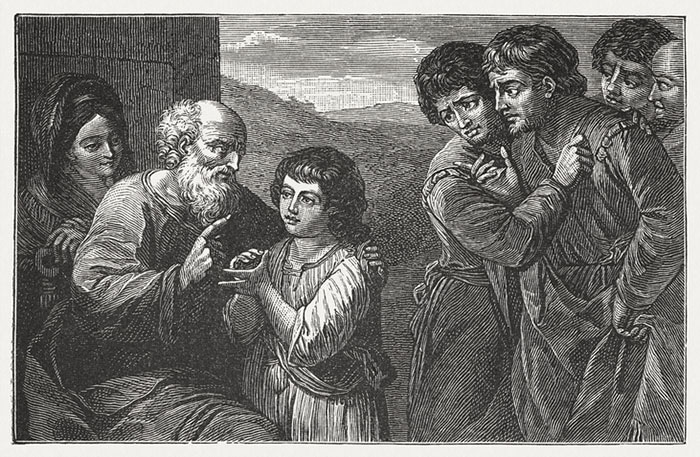
Joseph telling his dream to his Father. Woodcut engraving after a painting by Angelika Kauffmann (German painter, 1741 – 1807), published in 1881.

Despite his successes, Joseph is damaged in only one way: he rejected his family and walled off his past — even his loving father — completely. To me, this iciness is evidenced by the fact that Joseph never sent a message to Canaan or even tried to reconnect with his father — not during the seven years when he was the vizier and second-in-command in Egypt nor during the initial years of the famine. As Joseph said when he named his first son Menashe, “God has made me [helped me] forget all my toil — and all my father’s house.” (Genesis 41:51).

But Vayigash tells us of the surprise happy ending. Joseph meets with his brothers, who came to Egypt to buy food for their hungry households, but does not disclose his identity as their brother. Although Joseph perhaps did want to see his full brother, Benjamin, he has no plan to reconcile with his other brothers, even tormenting them. But to Joseph’s surprise, seeing Benjamin evokes a storm of emotion in him. Maybe this emotion accounts for Joseph’s improvisation — to frame Benjamin for a crime and keep him in Egypt.

But when Judah approaches Joseph and pleads for Benjamin’s release, he finds the one key that unlocks Joseph’s hardened heart. He communicates Jacob’s never-ending heartbreak at his missing beloved son and offers to become a slave in Benjamin’s place. Far from reacting with violence and rejection to Jacob’s possessive love for Rachel’s youngest son, Judah is willing to give up his own life in order not to break his father’s heart again.

Joseph’s emotional wall crumbles. He is flooded with yearning and nostalgia for his father. He even sees that his brothers’ hateful and cruel action to him allowed him to grow up to become a great leader. Joseph, moved to the core, reaches out to his father and family. He brings them down to Egypt and nurtures them lovingly through the famine and its aftermath. This is the inspiring story of the near-miraculous reuniting of Jacob’s broken family.

Some Divides Can’t Be Bridged

The story is almost too good to be true. The Haftorah — the prophetic reading — tells us the sad reality. The competition in Jacob’s family continued below the surface. Jacob’s very mixed blessings and curses on the different sons show that the wholeness is not restored, as does the brothers’ concern that Joseph would take revenge after Jacob’s death (Genesis 49, 50:15-26). And when the children of Israel take possession of Canaan, the various tribal rivalries returned, especially that between the tribes of Ephraim and Judah (Judges, Samuel I and II and I Kings). Under the son of Solomon, Rechavam, who was a rigid and weak ruler, the nation split into two states — the Kingdom of Israel (comprising most of the Ten Tribes) and the Kingdom of Judah (mostly Judah, Benjamin and part of the Levi tribe.)

The Kingdom of Israel was the dominant power in the area for many decades, with Judah as its satellite. This dominance came to a crashing end when Assyria, the new imperial power in the Middle East, invaded and conquered Israel. As was the general Assyrian policy, the conquerors sent the people into exile and brought in other ethnic groups in their place. Tragically, the ten tribes assimilated and were lost to Jewish history.

One hundred and thirty years later, Babylonia, the new imperial power, conquered Judah and exiled many of its people. But the Judeans were able to survive exile and maintain their religious identities due to repeated religious renewals and a prophetic deepening of its religious culture. After Babylonia was overthrown by the Persians and Medes, the Judeans returned to their homeland. But the lack of religious interaction with Judah over the course of centuries left the Israelites weaker in religion and covenantal identity. This led to their assimilation and disappearance.

The Haftorah of Vayigash is a vision of Ezekiel, prophesying in Babylon more than a century after the disappearance of the Kingdom of Israel (37:15-28). He is instructed to take one stick and write on it “for Judah — and the tribe’s companions.” On another stick, he writes, “for Ephraim and the tribes of Israel.” The Lord promises to unite the sticks into one, representing the reunited and restored people of Israel.

But the Haftorah is heartbreaking because you realize the nostalgia and yearning behind the Rabbis’ choice of this portion. Unlike Judah in our parshah, there was no political leader or prophet over the centuries to unify the two kingdoms and produce the reconciliation that could have saved Israel (or, at least, assured the survival of its people in exile). Ezekiel articulates the longing for reunion and profound regret at all the missed opportunities to unite the two main centers of Jewry.

It’s Not Too Late to Mend the Modern Divide

Much like the Kingdoms of Israel and Judah, today there are two major centers of Jewry in the world: Israel and the Diaspora. After a century of solidarity and mutual aid, the two centers have started to splinter due to political differences, geographic distance and religious/cultural divergence. Many say fatalistically that the sociological and cultural trends will run their course and there is nothing we can do.

But the parshah and Haftorah constitute a warning not to repeat the errors of the past. We need to mount a major effort to link Israel and Diaspora Jews in a new consciousness of our deeper unity. This includes more learning with and from each other.

One such effort to link our two communities is Our Common Destiny, a project launched last year by the Genesis Philanthropy Group and the Israeli Ministry of Diaspora Affairs under the auspices of Israeli President Reuven Rivlin. This initiative is dedicated to bringing Jewish communities together by focusing on the values we hold in common. The guiding text of the project is the Declaration of Our Common Destiny, an eloquent document that sets forth the core principles that have connected the Jewish people for millennia. Our Common Destiny crowdsourced the completion of the Declaration, a global effort that garnered the participation of more than 130,000 Jews from all over the world. It’s not too late to go to the website, read the document, offer your own input and join in the process. On December 17, there will be an online celebration of the Declaration in the presence of President Rivlin in a program called “Illuminate: A Global Jewish Unity Event.”

I believe that we need to build on the Declaration and add communal structures to link Israel and the Diaspora. Some standing structure or official channel of exchange and policy deliberation is needed to assure that Israel’s government has a real understanding and responsiveness to Diaspora Jewry and their needs.

We must also expand programs of direct contact between Diaspora Jews and Israelis. The classic programs are Taglit/Birthright Israel, which brings 50,000 young Jews annually to Israel for a free, ten-day intensive educational trip, and MASA, which enables a more extended stay and study program in Israel. There are important internships that bring Diaspora Jews to Israel, too, such as Onward and Tamid. These programs are building a reservoir of Jews who have encountered Israel firsthand. Studies show that Diaspora participants in these programs develop relationships with Israelis so that they can process the divergence between the two centers of Jewry but remain deeply attached.

One exciting new program is Enter: The Jewish Peoplehood Alliance, announced by Charles Bronfman and Irina Nevzlin. This program will focus more on digital connections between our two communities. We have learned from the pandemic and the explosion of Zoom that digital connections can be deep — and easier and less expensive than exclusively in-person engagements. Enter will also emphasize  engaging Israelis and raising the salience of Jewish peoplehood in Israeli education.

My primary recommendation for checking the drift to separation is for Israel to make its decision-making more inclusive. The Haredim have been given free rein to set the government’s religious policies. This leads to policies that alienate many Diaspora Jews, specifically not recognizing the conversions and marriages of the liberal religious movements and torpedoing the compromise presence of liberal prayers at the Kotel. Some people justify the ultra-Orthodox monopoly by claiming it is needed to preserve the unity of the Jewish people and uphold one official standard. But there can be no unity without true recognition of the pluralism and diversity which is dominant in Diaspora Jewry.  One way for Israel to do so is to make a new major investment in liberal, open Orthodoxy — the one force that can challenge Haredim on their halachic turf and open the door to pluralist Israeli government policies.

The famous dictum is that those who do not learn from history are condemned to relive it. We need to make a massive investment in connecting Israel and Diaspora Jewry, lest we end up losing one Jewish center, which would profoundly weaken the other. We need our Judah leadership to speak the right words and focus on the right projects to keep Jewry — in both of its centers — as one people, bound by fate, choice and sustaining each other.


Rabbi Yitz Greenberg is president of the J.J. Greenberg Institute for the Advancement of Jewish Life, which soon will become a division of the Hadar Institute.

Can We Save the Unity of the Jewish People? Read More »

Israel and Morocco to Establish Diplomatic Ties

(JTA) — Israel will establish diplomatic relations with Morocco, which becomes the fourth Arab country to announce it will recognize Israel in the last year.

President Donald Trump announced the development Thursday on Twitter. He also said the United States would recognize Moroccan sovereignty over Western Sahara, a territory to Morocco’s south that the northwest African kingdom has controlled since the 1970s.

“Another HISTORIC breakthrough today!” Trump tweeted. “Our two GREAT friends Israel and the Kingdom of Morocco have agreed to full diplomatic relations – a massive breakthrough for peace in the Middle East!”

Morocco is the fourth Arab country to announce that it will be normalizing ties with Israel after more than 70 years in which Israel was almost completely isolated diplomatically in the Middle East. Israel is in various stages of establishing relations with the United Arab Emirates, Bahrain and Sudan. Israel also has relations with Egypt, the first Arab country to make peace with the Jewish state in 1979, and Jordan, which signed a peace treaty with Israel in 1994.

Like the rest of the Arab world, Morocco opposed Israel’s creation in 1948 and did not recognize it thereafter — though like several Arab states, the kingdom maintained a clandestine relationship with Israeli intelligence.

An adviser to King Mohammed VI, Andre Azoulay, is Jewish, and the country opened a Jewish culture center earlier this year. There are approximately 3,000 Jews in the country, down from the 200,000 who lived there before Israel’s establishment. Morocco also has a centuries-old community of farmers who grow etrogs, the citrus fruit Jews use ritually on the holiday of Sukkot, and have exported them to Israel despite the absence of formal diplomatic ties.

Trump’s announcement came paired with American recognition of Morocco’s claim to Western Sahara, a territory that has been the site of decades-long conflict with local militants seeking to establish an independent state. In a resolution last year, the United Nations called for a solution that would “provide for the self-determination of the people of Western Sahara.”

Trump’s son-in-law and senior adviser, Jared Kushner, said the administration wanted to take a different approach to “break the logjam” in the Western Sahara conflict, according to PBS correspondent Nick Schifrin.

“This is an issue that’s been out there for a long time, and quite frankly there’s been no progress,” Kushner said regarding Western Sahara, according to a tweet by Schifrin. “It’s recognizing an inevitability.”

The recent agreements signal a major shift in Israel’s diplomatic standing in the Middle East, where it was long seen as an enemy interloper. In August, Israel and the UAE, with American support, announced they would be normalizing ties. Similar announcements with Bahrain and Sudan followed. Israeli-Emirati ties have particularly progressed, and Israeli tourists began visiting the Persian Gulf country in November.

Tying the Morocco announcement to Hanukkah, which begins Thursday night, Israeli Prime Minister Benjamin Netanyahu tweeted that the announcement was “a great light of peace, today with Morocco.”

Israel and Morocco to Establish Diplomatic Ties Read More »

Anne Frank Memorial in Boise, Idaho, Vandalized with Swastika Stickers

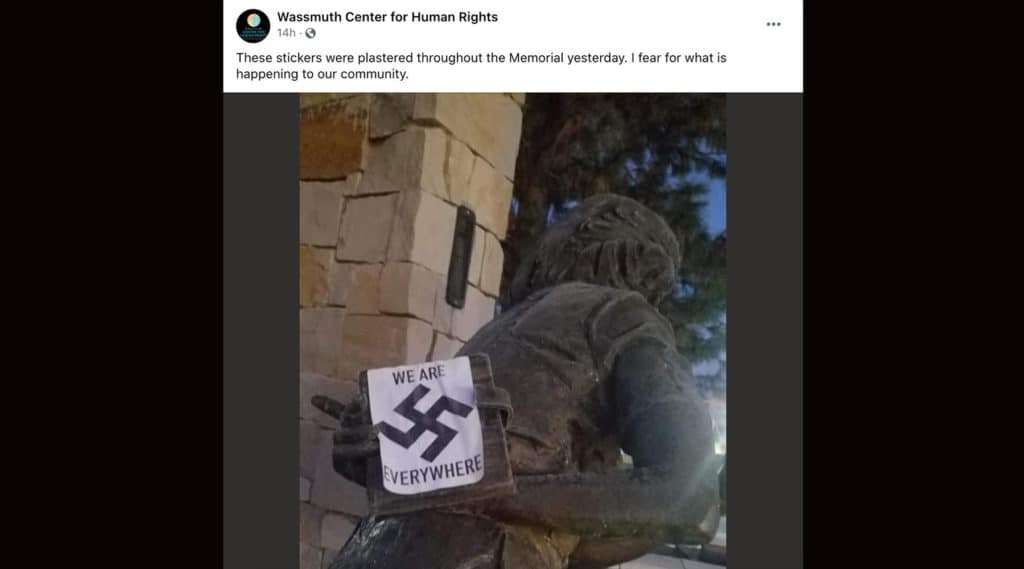
(JTA) — A statue of Anne Frank in Boise, Idaho, was vandalized with stickers bearing swastikas and the message “We are everywhere.”

The Boise Police Department found and removed nine of the stickers from the Anne Frank Human Rights Memorial, according to KTVB, a local station. One of the stickers was placed over the diary held by the sculpture. They were placed there between Monday evening and Tuesday morning. Police are reviewing security footage to find the perpetrators.

“I fear for what is happening to our community,” read a Facebook post by the Wassmuth Center for Human Rights, the local organization that erected the memorial in 2002.

The memorial, until recently the only statue of Anne Frank in the United States, was toppled by vandals in 2007 and vandalized again in 2017.

Later, after an outpouring of support, the center wrote on Facebook, “Let us each stand up in our homes, neighborhoods, schools and places of work when we hear words that demean or marginalize members of our community. Let us each stand up and be a force of goodness.”

A photo posted by the center showed that, by Wednesday evening, bouquets of flowers had been lain at the statue’s feet.

“This is shocking and disturbing, and we know it does not reflect the values of our community,” Boise Mayor Lauren McLean said in a statement.

According to KTVB, the Boise memorial is the country’s only statue of Frank, a Dutch teenager who died in the Holocaust and whose diary of her experiences in hiding has made her a worldwide symbol of the hate and destruction wrought by the Nazis. In fact, a New Orleans museum erected a statue of Frank last year.

Anne Frank Memorial in Boise, Idaho, Vandalized with Swastika Stickers Read More »

“Incredible Generosity” for 2020, But Some Are Fretting– What Will 2021 Look Like?

This article originally appeared in Jewish Insider.

The American Jewish community’s network of approximately 9,500 nonprofit organizations has largely avoided collapse during the COVID-19-spurred slump that has caused many for-profit businesses to shut down or significantly shrink.

The federal government’s Paycheck Protection Program, which allowed businesses and nonprofits to obtain forgivable loans if they kept staff on payroll, ended in August.

Making the difference now, experts say, are the American Jewish philanthropists who have stepped up to support the nonprofit system. Foundations are dipping into their endowments to provide additional funds to support camps, Jewish schools, human services agencies and others — well beyond what they anticipated when originally planning their 2020 budgets.

While the pandemic has led to struggles in the Jewish nonprofit community, including a months-long shut-down of fee-for-service organizations like Jewish community centers and camps, with resulting layoffs, furloughs and re-prioritization of funds, the biggest worries lie ahead.

“The real question is, what is 2021 going to look like? Everyone is making it through 2020. But everyone is very concerned about the impact on 2021. I don’t know where things will be,” said Reuben Rotman, chair and CEO of the Network of Jewish Human Service Agencies, which represents 140 agencies providing food, counseling services, support for those with developmental and physical disabilities, vocational assistance and more.

“There have been reductions in staffing and services. But right now, our agencies by and large are being kept whole” with the help of government resources like PPP, and with aid from philanthropists, Rotman told Jewish Insider.

The worst fears — the collapse of the Jewish nonprofit community — have not come to pass, at least so far. “The catastrophic scenario we feared was averted,” said Andrés Spokoiny, president and CEO of the Jewish Funders Network. “The entire camp system, human services, JCCs, schools, [were] at risk. It suffered a lot but it didn’t collapse. This should not make us complacent.”

No one knows how much, in the aggregate, American Jewish philanthropists have contributed to pandemic relief, experts say, but it is significant.

A new study by the Center for Disaster Philanthropy found that American funders in general donated $11.9 billion overall to coronavirus-related needs so far in 2020. This marks a strong contrast to the impact on nonprofit organizations during the 2008-09 financial crisis.

“If you dial back to the recession 12 years ago, philanthropy took a break. It went down in the short term. Between 2005 and 2010, philanthropy stayed flat,” said Avrum Lapin, president of The Lapin Group, a Philadelphia-based consultancy. “In this crisis, philanthropy has pretty much stood up. Not to say that organizations are not having a tough time. It has not only stayed current but looked at some systemic challenges and risen up to meet them.”

***

The umbrella for North America’s 146 Jewish federations and network communities, each of which is also an umbrella for social services, Jewish education and other agencies in its local area, is the Jewish Federations of North America.

“We’ve had 146 different emergency campaigns,” said Eric Fingerhut, JFNA’s president and CEO. Jewish federations have “raised $175 million above and beyond their regular annual campaigns,” specifically for pandemic assistance, he told JI. “Federations made special allocations to camps and human services agencies to respond to the crisis in the moment. It is a moment of incredible generosity and response.”

Jewish federations generally distribute some $3 billion annually to the agencies they support domestically, as well as overseas programming through the Joint Distribution Committee, the Jewish Agency for Israel and other groups.

Since the early days of the pandemic, JFNA has been an organizer of philanthropy efforts to support Jewish nonprofits through the crisis. On Sept. 1 it announced a new matching grant program totaling $54 million to aid the severely impacted human services field.

The Human Services Relief Fund is the newest of a number of pandemic emergency funds and systems put in place since March by major Jewish funders and the organized Jewish community.

JFNA also oversees the Jewish Community Response and Impact Fund (JCRIF), which has provided approximately $91 million in emergency relief to Jewish nonprofits. More than $10 million of that has been distributed in the form of grants, and about $81 million as zero-interest loans, said Felicia Herman, who directs the grant program. Funding has come from seven foundations including the Aviv Foundation, The Paul E. Singer Foundation, the Lynn and Charles Schusterman Family Foundation and the Wilf Family Foundation.

So far this year, the Schusterman Foundation has spent $400 million addressing COVID-19-related needs and funding its regular grantees, which include civic programs nationwide and Jewish organizations.

Of that, “at least $10 million” has been designated as emergency funds for groups that do direct support, like the Blue Card, which aids Holocaust survivors, said Lisa Eisen, co-president of the Schusterman Foundation. It gave $15 million to JCRIF and overall this year has upped its support to Jewish organizations by about 50 percent over what it had planned, Eisen told JI.

***

The pandemic has still taken a toll on a number of Jewish nonprofit organizations. Income at fee-for-service agencies like JCCs — which employ a total of 40,000 people — took a big hit. Synagogues are currently tallying their High Holy Day renewals. Philanthropic funding is down at some organizations, though generally in the single-digit percentage range, which is in line with national trends. The National Council of Nonprofits published a study showing that individual giving in the U.S. overall was down 6% in the first quarter.

There have been significant layoffs at Jewish community centers around the country. JFNA itself laid off 37 of its 180 staffers in May. In April, Hillel International laid off or furloughed more than 20 percent of its staff.

J Street, the liberal Israel-focused lobbying group, cut its $8 million budget by $1 million, Jeremy Ben-Ami, its president, told JI, having saved a significant amount of money by moving the organization’s conferences online. J Street received a forgivable PPP loan of $660,000 and some tax credits, he said, and has not needed to lay off or furlough any staffers. J Street’s 2020 budget of $8 million is balanced, Ben-Ami said, and he expects it to grow slightly for 2021. But, he cautioned, “I am not ready to declare victory, because we have not seen the full impact” the pandemic will have on philanthropy. “The stock market [strength] has in a way cushioned the blow, and we haven’t quite seen the end of this story yet,” he added.

The Zionist Organization of America, a right-wing organization led by Mort Klein, has not fared as well. The organization pushed its annual gala dinner from December to January 2021, and then to March, and Klein is uncertain if it will be possible to hold the banquet at all.

“A handful” of its approximately two dozen staff positions had to be cut, he said, though he did not provide more specifics regarding the layoffs or the organization’s annual budget. A recent ZOA campaign against the Movement for Black Lives saw the organization receive a number of unanticipated donations, which Klein said has helped to minimize the fundraising downturn.

The left-wing New Israel Fund has experienced a mixed picture, CEO Daniel Sokatch told JI. Unrestricted gifts to NIF were up 18 percent through the end of July compared to the same period in 2019, he said, but the number of individuals donating is down 9 percent. The biggest drop in support has been from supporters in New York City, where COVID-19 hit hard early in the pandemic. A PPP loan of $927,000 allowed NIF to retain its U.S. staff (it also has staff in Israel), though all staff members were forced to take a temporary salary cut and in Israel the entire staff was furloughed for a period. Looking ahead, with everyone continuing to work from home, Sokatch is considering dropping office space leases that are approaching their renewal dates, he said.

Even among organizations that are staying afloat, the big question is how long they will be able to do so. The American Jewish Historical Society (AJHS), whose archives contain some 30 million documents, added an additional staffer, bringing the full-time employee count to seven, said Annie Polland, the organization’s executive director.

AJHS got a $130,000 PPP loan through the Small Business Administration, which helped it retain staff through the spring and summer. The organization received what Polland called a “lifesaver” grant of $205,000 from the National Endowment for the Humanities’ Coronavirus Aid, Relief and Economic Security (CARES) Act fund.

While AJHS, like most public-facing Jewish organizations, quickly shifted to virtual programming in what Polland said was “a whirlwind adaptation to Zoom,” and the foundations that support its work have not lessened their funding, “we don’t know what 2021 is going to look like,” she said.

T’ruah: The Rabbinic Call for Human Rights has also fared relatively well through the pandemic, said Rabbi Jill Jacobs, its executive director. T’ruah has not needed to lay off or furlough staff and has even been able to add a full-time position and a part-time position to its roster of 10 full-time staff and six part-time workers, said Jacobs. “People have been very generous,” she told JI. “Those who are still employed or not dependent on a salary are more motivated than ever to contribute as a moral response to this crisis, as well as to the major threats to democracy. We’ve in particular had a strong response to our efforts to stand up the deployment of federal agents in Portland, OR, and the work of our rabbis who have been on the street there,” she said.

***

With no end to the pandemic in sight, funders and CEOs alike are grappling with the uncertainty of what the next year will look like, both in terms of programming and fundraising.

“We’re dealing with a lot of uncertainty so we in the philanthropic community should continue to be flexible, to dig deeply, maybe deeper than would feel comfortable, and to help nonprofits with scenario planning and other forms of technical assistance,” Eisen told JI. “The uncertainty makes it hard to plan and budget even as fundraising is anticipated to decrease.”

The uncertainty impacts not only planning for programs, but also trying to budget for 2021.

Spokoiny told JI that his biggest concern was the survival of what he called the “second layer” Jewish organizations, like Jewish federations, schools and community centers.

Because the stock market has continued to perform well, foundations whose money is invested have “more money than ever to give,” said Spokoiny. But “more than 80% of the funding in the Jewish community, in dollar terms, does not come from major funders, but by individuals giving $1,000 to the scholarship fund at their day school.”

It is that type of grassroots donor whose ability to give is most vulnerable to job loss, loss of government unemployment assistance, and a possible economic slump.

T’ruah’s Jacobs noted: “If we do see a deep and long recession, and if many donors find themselves out of work in December, we are concerned about a drop in donations, especially as more than half of our gifts come from a broad base of small-dollar donors.”

According to Eisen, “there are a lot more conversations about organizations joining forces in partnerships, or in mergers, of sharing assets, buildings and staff, of synagogues coming together. There are many, many conversations happening at the national level and the local level.”

She noted that the Schusterman Foundation has provided funding through JCRIF, offering technical assistance with a consultant to organizational leaders pursuing mergers.

“Not every institution is going to survive, nor should it,” said Eisen. “This is a moment to look at what our community needs to be sustainable, and that will include some tough and painful conversations.”

“I am optimistic that our community can emerge stronger, but there will be some painful decisions along the way.”

“Incredible Generosity” for 2020, But Some Are Fretting– What Will 2021 Look Like? Read More »

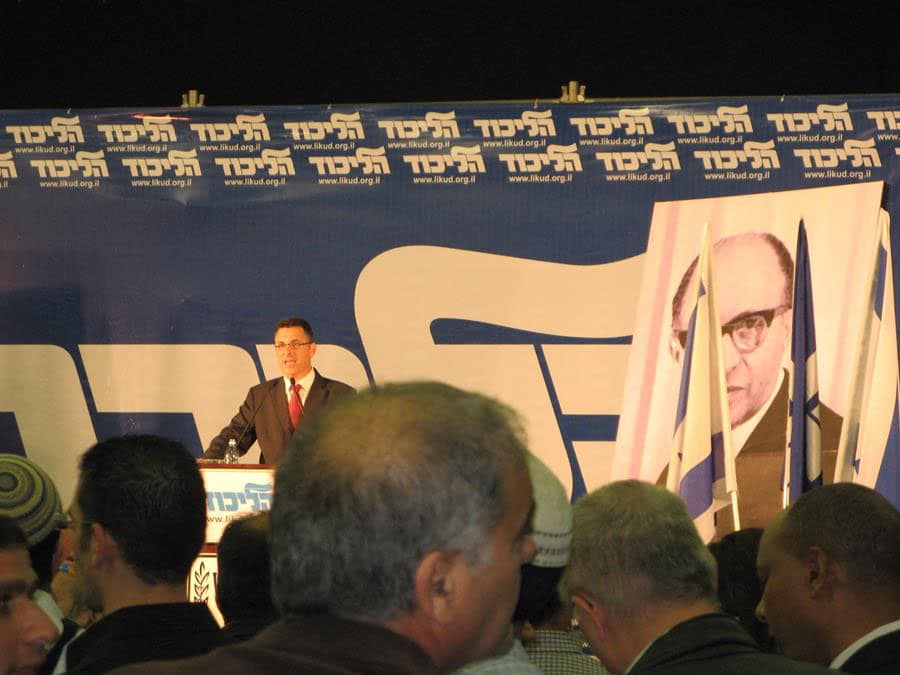
Gideon Sa’ar Reshuffles Israel’s Political Deck

(Israel Policy Forum) — On Tuesday, Prime Minister Netanyahu’s longtime Likud bête noir Gideon Sa’ar announced that he is breaking away from his political home and forming a new party to challenge Netanyahu’s continued rule. Sa’ar has very obviously and publicly chafed under Netanyahu, leaving politics in 2014 reputedly due to friction with the prime minister and unsuccessfully challenging Netanyahu for the Likud leadership after the second 2019 Knesset election last September following his return. Despite finishing fifth in the Likud primary, Netanyahu did not appoint him to the current cabinet or give him a committee chairmanship, choosing instead to humiliate him by relegating him to the Knesset backbenches. It is thus not entirely surprising, even if the timing was unexpected, that Sa’ar finally decided that enough was enough. In his speech on Tuesday, Sa’ar was explicit that his main platform position is that Netanyahu has to go.

While Sa’ar’s stated intentions are clear, what comes next is less so. The obvious immediate reaction is that Netanyahu is the big loser in this exchange. The Likud MK who has sustained high popularity within the party for the longest time alongside Netanyahu and been most willing to speak up against him has broken free of his last restraints, and he may take other Likud MKs with him. This will be viewed as yet another chink in Netanyahu’s previously impenetrable armor, and much of the image as Israel’s irreplaceable and indispensable leader that he has assiduously cultivated depends on his being seen as invincible. Perhaps most saliently, if Sa’ar is able to draw a non-trivial number of seats for his Tikva Hadasha (New Hope) party from Likud, Netanyahu will be down to a right-wing pro-Bibi group that will reliably include only Likud and the Haredi parties and fall well short of a Knesset majority without some major wrangling and maneuvering.

Despite this, I think the biggest loser in the aftermath of Sa’ar’s move is not Netanyahu but Naftali Bennett. Bennett’s Yamina party has rocketed upwards in the polls since Netanyahu formed the current unity government without it, largely on the basis of Bennett working hard to be viewed by Israelis as the most credible voice of reason on how to combat coronavirus. While Sa’ar will draw some Likud support, I see it as more likely that he drastically cuts into Bennett’s share of the vote. Sa’ar and Bennett have similar political and ideological profiles; they are both farther right than Netanyahu on West Bank territorial issues and champion annexation without reservation but are more moderate than Netanyahu on social issues and on the need to respect state institutions. They are both seen as leaders who are comfortable and accommodating of religious parties and voters but who are not in thrall to the Haredi parties. Like Tzvi Hauser and Yoaz Hendel, the chronically restless Derech Eretz duo who are unable to stay in any single place for more than a split second and who announced yesterday that they are joining up with Sa’ar, both Sa’ar and Bennett claim the mantle of the sane and stately right and hope to project a pragmatic image, whether or not it is warranted. The voters who have gravitated to Bennett, either because they view him as credible in the current crisis, because they like their far right-wing policies to be cloaked in more moderate language, or because they are fed up with Netanyahu are the same voters who will view Sa’ar positively.

Sa’ar’s entry into the ring may also extend Netanyahu’s political lifespan by stabilizing the current government just as it is tottering on the cliff’s edge. The thrust of the past month has been Benny Gantz’s newly discovered ability and willingness to make threats without immediately folding, which has led to his insistence that the December 23 deadline to pass a budget – without which the Knesset automatically dissolves – actually remain the deadline. Netanyahu seems to have been resigned to this happening, as he was counting on Gantz’s Kahol Lavan party to be a non-factor after new elections and thus get to form a new coalition in which he does not have to contemplate turning the premiership over to Gantz in November of next year. Now, however, Netanyahu has to determine what is the bigger threat; going to elections now with Sa’ar potentially driving down his margins even further, or caving to Gantz on a budget agreement and buying some more time to figure out a way of wiggling out of the prime ministerial rotation. The advantage to the latter move for Netanyahu is that Sa’ar has resigned his Knesset seat, so the longer elections can be pushed off, the longer Sa’ar is relegated to the sidelines. It raises the question of why Sa’ar made his announcement now rather than waiting until December 23 with the benefit of seeing precisely when elections would occur.

Sa’ar’s entry into the ring may also extend Netanyahu’s political lifespan by stabilizing the current government just as it is tottering on the cliff’s edge.

It is also difficult to take Sa’ar’s anti-Netanyahu rebellion at face value divorced of all recent political context, because we have seen this movie before. The last person to take Israeli politics by storm with the formation of a new party whose animating principle was to remove Netanyahu from Balfour Street was Gantz. He too pledged not to sit with Netanyahu, to protect the state’s core institutions from Netanyahu’s rapaciousness, to advance a saner politics attentive to the needs of ordinary Israelis, and eventually paved the way for Netanyahu’s continued presence in the prime minister’s office with all sorts of justifications for why it was necessary and why he had no choice and how this was actually a fulfillment of his promises save the one about Netanyahu personally. Imagine the plausible scenario in which Sa’ar has to wait the better part of a year for elections, all while no longer having a Knesset platform or a party with any Knesset seats, spends his time warding off attacks from Netanyahu and Likud while his popularity plummets, and then finishes fifth or sixth at best and is no more a candidate for prime minister than I am. Raise your hand if you unhesitatingly think he will choose to be a perpetually glum opposition MK rather than take whatever high profile ministry Netanyahu dangles in front of him, against the backdrop of a constant public relations campaign warning that Sa’ar is threatening the primacy of right-wing governments through his obstinate anti-Netanyahu stance. Furthermore, imagine that Netanyahu is using the exact same script with Bennett, and it is clear that whoever says yes first will get the spoils while the other is left out in the cold. Netanyahu is going to be in a tight position, but he will also be dealing with a set of opponents who are themselves rivals and who will face the same problem Gantz faced in potentially having to choose between joining Netanyahu or joining with the Joint List. The clarity of purpose that Sa’ar demonstrated yesterday will be far harder to maintain when decisions have to be made.

Finally, Sa’ar got his diagnosis absolutely right on Tuesday, but he does not necessarily have the correct prescription. He slammed the current iteration of Likud as a personality cult that is slavishly devoted to Netanyahu in the face of anything and everything and that is bringing the country down with it. His approach is to thus capitalize on Israel’s general right of center politics and his own right-wing bonafides to show Netanyahu the door. But in recognizing the hold that Netanyahu has over his political camp, Sa’ar misses that the ideological right-left dynamic is actually no longer applicable. This is where being an American political analyst provides a distinct advantage, since the situation here with President Trump is a similar one. The actual positions that Trump takes or the behavior he exhibits do not matter in evaluating what is right or left; all that matters is whether one supports Trump’s positions or not. What he says becomes the right-wing position, no matter how heterodox it may be to traditional conservative or Republican ideology, and to oppose him means that you are automatically a RINO and not a real conservative. What Sa’ar is going to quickly learn is that for many voters, Netanyahu – and not what he actually says or does – is the right-wing, and thus opposing him makes Sa’ar automatically left-wing irrespective of his positions on anything. The Haredi parties already understand this, which is why Sa’ar and Bennett can promise them the sun, moon, and stars to no avail if it means Aryeh Deri has to turn his back on the man who is literally featured in Shas ads despite being a Likud prime minister.

The only way in which Sa’ar plausibly accomplishes his goal of replacing Netanyahu is if he is able to form a right-wing, socially moderate, anti-Netanyahu coalition with Bennett, Avigdor Liberman, and Yair Lapid, which will probably work out numbers-wise but will involve enormous clashes of both policy and personality. When all of the bouncing balls finally land, whether that be in three months or one year, we will have a better idea of whether or not this is possible. In the meantime, Israeli politics continues to be more engrossing than any television political drama you will ever stream.


Michael Koplow is Israel Policy Forum’s policy director, based in Washington, DC. To contact Michael, please email him at mkoplow@ipforum.org.

Gideon Sa’ar Reshuffles Israel’s Political Deck Read More »

What Does Being Jewish Teach Us About Resilience During a Pandemic?

I hadn’t thought about the connection between pandemic resilience and my Jewish identity until I was participating in an online faculty meeting for the graduate department at USC (where I teach). As an adjunct professor, I don’t often speak up in these meetings, due in large part to a tacit norm that adjuncts are not “real” university faculty. But this time, I couldn’t hold back.

The meeting was about students struggling with their education and their personal lives during the pandemic and how aware and sensitive professors need to be to these stresses. But about thirty minutes into the meeting, one of the PhDs, sniffling and holding back tears, stated, “I am so sad and disturbed for the stresses the students are facing right now. I feel so terrible for their educational and personal struggles through this pandemic.” Then the tears began to flow, “And it is so difficult for me as well. This is so hard.”

That confession opened the floodgates for what felt like a therapy session for the professors. I don’t deny the feelings and hardships the faculty shared, nor do I deny the need to talk about them. But I was thinking something else. I took the plunge that I never take, and I, the adjunct, contributed. “We’re teaching a new generation. Aren’t we supposed to be the ones projecting positivity, while acknowledging hardship? Isn’t there a value in teaching and modeling human resilience?”

It didn’t go over well. I had forgotten that a few years earlier, when I questioned a department head, I was told by my PhD supervisor that I didn’t understand that academia is a feudal system of kings, queens, princes, princesses, vassals and serfs. “Gary, as an adjunct, you are a serf. You can’t challenge a queen.”

“Well,” one of the PhDs answered me, “if you can figure out how to do that now, during the pandemic, please tell all of us.”

I took the safe route in my response. I answered, “My father fought in Guadalcanal, among the bloodiest battles of World War II. He was in the army for four years. He went on to live a productive life. It has always been a model for me as to what people can endure and recover. We can handle a one-year pandemic.”

Later, I kicked myself for not having also said, “And my mother, who was born in America, lost her grandparents and a huge family in the Holocaust, and my grandparents went on to live productive lives as well.” But I knew that citing examples of the travails of Jewish people may not have been embraced in the academy, especially after the accusations this past June leveled at USC Undergraduate Student Government Vice President Rose Ritch about her Jewish and Zionist identity, which forced her to resign. USC’s response to this incident was tepid, careful and late. (It’s very difficult today on the American campus to identify as a liberal while standing up for your Jewish and Zionist identity. I had already experienced an attack the year before from a student evaluation — “He’s so Jewish” — as well as from a very respected Jewish PhD, who proudly told me he was an anti-Zionist and then later claimed he told me he was a “critical Zionist.” I’m a liberal, critical Zionist, too. That’s not what he said.)

I needed to feel free in that faculty meeting to share my thoughts the way participants from any other culture that represents diversity on campus would have chimed in. But I had intuited that Jews are not considered diverse and Jewish culture did not factor into the conversation on diversity. I now believe that I need to defiantly shake off the stigma that Jewish culture can’t inform that conversation and ask myself, “What do I learn from my Jewish identity about resilience during the pandemic?”

Drawing upon my Jewish identity in no way places me above other peoples and what they learn from their specific identities in dealing with this period. But I am proudly Jewish, and my people’s history, experiences, religious texts and stories speak loudly to me — just as anyone’s family background would be their first and foremost source of enlightenment. Here are some examples of where I draw my strength:

I am proudly Jewish, and my people’s history, experiences, religious texts and stories speak loudly to me.

  1. The ancient Israelites walked out of hundreds of years of slavery to establish themselves in their own land, with their own language, religion and culture. Whether we want to argue about its veracity is immaterial. The story speaks to me of resilience.
  2. Having had our Temple destroyed by the Romans and Babylonians, we became a home, family and communally-based people, finding a way to survive for thousands of years. That story, historically verified, speaks to me of resilience.
  3. Having been exiled from Spain, burned to death through the auto-de-fé, Sephardic Jews re-established themselves into thriving communities from England to Turkey, all while preserving their language and culture. That story speaks to me of resilience.
  4. The arrival of Jews in the United States from the endangered shtetls of Europe and the formation of a textured and complex web of Jewish communal organizations and philanthropies speaks to me of resilience.
  5. The establishment of Israel and the recovery of the Hebrew language, which has led to so much creative output for the Jewish people and the world, speaks to me of resilience.

There are probably at least a thousand more examples.

This pandemic has become a significantly Jewish period for me. My excavation of the depths of my Jewish identity goes beyond the university; I have begun to study Torah weekly, finding the group Zoom process and the learning to be enriching and so relevant to life right now. I’ve pulled out the flashcards that I haven’t looked at in years from the Hebrew Ulpan I took in Jerusalem over several years of business trips. I’ve reconnected with friends all over the Jewish world that I have not been in touch with in years, opening up many Jewish and life conversations between us, so different than the ones we had in our younger days. I’ve taken on a leadership role at my synagogue, something I never would have done before this pandemic.

Without my Jewish identity, I would not navigate this pandemic in the way that I am. Judaism is packed with lessons and paths of resilience. When this pandemic is over, I have promised myself that I will be one of the most visibly identifiable Jewish professors on campus, enjoying the same freedom and pride that any other group would claim, without being intimidated to do so. If I don’t get fired first.


Gary Wexler is an adjunct professor in the master’s in communication program at the USC Annenberg School for Communication and Journalism.

What Does Being Jewish Teach Us About Resilience During a Pandemic? Read More »

A Brief History of Hope

Even those with 20/20 vision could not have foreseen the dramas and traumas of this calendar year, these pandemic times.

As we enter the year-ending religious holiday season, the season of hope, are we becoming hopeful about soon-arriving vaccines and a potential “roaring 20s” relief rally in our lives, or will we remain quite sober and even somewhat hopeless about the suffering in our nation and our world?

Before answering, let’s ponder some deeper understandings of this thing called hope, including its religious and philosophical considerations as well as its role in contemporary debates about our political and personal lives. Unwrapping the many meanings of hope may provide a precious gift of inspiration this year. 

Hope as a Philosophy

The commitment to hope, moving ourselves forward from darkness into light, was one of the big gifts of Jewish civilization to the world. According to Rabbi Lord Jonathan Sacks, who sadly passed away this year, this hope “at the heart of Judaism” was “so fundamental to Western civilization that we take it for granted, yet it is anything but self-evident.” That is, the arrival of the ancient Jews into history moved humanity beyond the mere repeating of ancient patterns to the invention of evolving hope for the future.

Early Western philosophers built upon this idea when they began to contemplate the nature of hope — its types and motivations. They then set to discover the value of hope. The standard account held that hope was a compound attitude, consisting of a desire for an outcome and a belief in that outcome’s possibility.

Importantly, hope is an orientation, not a prediction. It is not the same as optimism, the belief that something likely will happen. “Hoping against hope” is an expression that reveals we may have hope even without optimism. Rather, hope is the opposite of despair — the belief that something can never happen — which is hopelessness. Alternatively, one may experience fear yet maintain hope at the same time.

Photo by Jamie Grill/Getty Images

Hope also is not the same as mere desire. One may desire to do the impossible, like enjoy dinner with Benjamin Franklin, but one doesn’t hope to do so, for hope is best understood as desiring an outcome which is uncertain but possible.

Greek thought dismissed hope as wishful thinking or without basis in knowledge. The famous tale of Pandora, in which evils escape from a jar, leaving only hope behind, has been debated to regard hope as good (“to comfort man in his misery and a stimulus rousing his activity”) or as evil (“idle hope in which the lazy man indulges when he should be working honestly for his living”).

Christian thinkers considered hope a theological virtue, like charity and love, which, when oriented toward the good, was redemptive and ennobling. In “The City of God,” Saint Augustine distinguishes the actual earthly city from the heavenly city, which only exists in the hope placed in God.

Enlightenment philosophers considered hope a passion, related to anxiety (René Descartes), thinking about rational expectations (Thomas Hobbes), countering fear (David Hume and Baruch de Spinoza) or reason and a belief in the divine (Immanuel Kant).

Critics of hope, such as Arthur Schopenhauer, Friedrich Nietzsche and Albert Camus essentially rejected hope not as irrational but as a misguided attempt to avoid the demands of human existence.

Modern secular political theorists promote hope as instrumental to motivation for the public good and as foundational to the self-respect necessary for self-government in a free society. Practical defenders of democracy promote hope as a basis for civil society, while Marxists manipulate the idealistic hope of utopian revolution to remake society.

In his 2002 book, “A History of Hope: When Americans Have Dared to Dream of a Better Future,” NYU historian James Fraser explored the mobilizing movements for social change (revolution, abolition, women’s suffrage, worker rights, civil rights), and the leaders who embraced them, like Abraham Lincoln (“My dream is of a place and a time where America will once again be seen as the last best hope of earth”) and Martin Luther King, Jr.  (“We must accept finite disappointment, but never lose infinite hope”).

Similarly, in his 2019 textbook for American schoolchildren, “Land of Hope: An Invitation to the Great American Story,” Professor Wilfred M. McClay offers both an honest and inspiring account of America, a history lesson that motivates patriots. 

In our times, we’ve seen liberal politics appeal to “hope and change” in the campaign of Barack Obama and in the title of his autobiography, “The Audacity of Hope.” These appeals to emotion are meant to empower political action. We see a similar use of hope on the conservative side. “Make America Great Again” (a campaign slogan of both Ronald Reagan and Donald Trump) not only looks back but forward, with an appeal to brighter days.

Political advocates all seek to place hope, along with “reform,” “greatness” and “the future,” on their side. For example, the great Vaclav Havel, the poet-politician who fought for the freedom of Central and Eastern Europe in the twentieth century, noted:

I am not an optimist, because I am not sure that everything ends well. Nor am I a pessimist, because I am not sure that everything ends badly. I just carry hope in my heart. Hope is the feeling that life and work have a meaning. You either have it or you don’t, regardless of the state of the world that surrounds you. Life without hope is an empty, boring, and useless life. I cannot imagine that I could strive for something if I did not carry hope in me. I am thankful to God for this gift. It is as big as life itself.

And yet, on the other hand, the Iranian Revolutionary Guard Corps named the Iranian nuclear program “Amad,” or “Hope.”

The meaning of political hope, therefore, is certainly in the eye of the beholder.

The meaning of political hope is certainly in the eye of the beholder.

Hope in the Day-to-Day

Of course, beyond the halls of philosophy, hope plays a dominant role in our personal lives. Take hospital patients, for whom hope has been an integral motivator for healing and recovery (the psychological anticipation of better times). It is not coincidental that The City of Hope is a major cancer center. Helen Keller, who famously overcame so many physical challenges, believed in hope not just for the possible, but for the seemingly impossible. “Hope sees the invisible, feels the intangible, and achieves the impossible,” she said.

On the other hand, letting go of “unrealistic” hope may benefit those seeking permission to accept truths, inner peace and meaningful time with loved ones. This reminds us of the Buddhist release of apprehension, a freedom from hope, which offers contentedness or acceptance.

Compare the widely accepted positive role of hope in physical healing to the more debated role of hope in our financial lives. “Hope is not a strategy” is a popular business concept aimed at discarding delusions, illusions and false premises, while demanding focus and practical efforts at improvement.

Alternatively, the Business Innovation Factory annual meetings often feature presenters who affirm realistic hope and lessons learned as a strategy to empower a philosophy of trust and innovative success.

We hear echoes of the positive thinking of Dale Carnegie, who said, “Most of the important things in the world have been accomplished by people who have kept on trying when there seemed to be no hope at all.”

Hope in Our Religious Lives

Finally, for faith believers, and even for casual holiday celebrators alike, as we light candles during Hanukkah and enjoy the lights of Christmas, and as we literally bring light into the darkness, we also philosophically affirm our choice to believe in better days.

This commitment to hope has always been especially true for Jews. Rabbi Sacks, author of two books about hope, “The Politics of Hope” and “From Optimism to Hope,” well summarizes the Jewish roots of our Western ethos:

It is no accident that so many Jews are economists fighting poverty, or doctors fighting disease, or lawyers fighting injustice, in all cases refusing to see these things as inevitable. It is no accident that after the Holocaust Jews did not call it Al Naqba, nursing resentment and revenge, but instead turned to the future, building a nation whose national anthem is Hatikvah, “the hope.” It is no accident that Judaism has been opposed by every empire that sought to deny people the freedom to be equal-but-different. It is no accident that Israel is still today the only free society in the Middle East.

Judaism is a religion of details, but we miss the point if we do not sometimes step back and see the larger picture. To be a Jew is to be an agent of hope in a world serially threatened by despair. Every ritual, every mitzvah, every syllable of the Jewish story, every element of Jewish law, is a protest against escapism, resignation or the blind acceptance of fate. Judaism is a sustained struggle, the greatest ever known, against the world that is, in the name of the world that could be, should be, but is not yet. There is no more challenging vocation. Throughout history, when human beings have sought hope they have found it in the Jewish story. Judaism is the religion, and Israel the home, of hope.

As we contemplate our lives this year — philosophical, political, and personal — the religious season invites a renewed sense of hope even in difficult times. Hanukkah’s heroes, the Maccabees, are meant to inspire us in their fight to maintain their commitment to the Jewish story and to survive as a distinct and contributing culture, believing in the eternal power of the Jewish message of hope.


Larry Greenfield is a Fellow of The Claremont Institute for the Study of Statesmanship & Political Philosophy.

A Brief History of Hope Read More »

The Gift of a Poem for Hanukkah

In these days of the COVID-19 pandemic, with many people out of work or cutting back on expenses, I keep thinking of a story that reminds us of what is important in life.

One of my great joys as a child was snooping in all the possible places in our home for the hidden Hanukkah gifts. I discovered the ultimate location one year behind our laundry room, in a far corner of the basement with electrical and heating cabinets. There they were, peeking out from under an old sheet: a beautiful new doll with a pink wooden crib (for me) and lots more. I kept the secret from my brothers and acted surprised when we actually received our gifts.

After that, I didn’t snoop again because I discovered it was more fun to really be surprised.

In our own nuclear family, we’d give our children one serious gift on the first night of Hanukkah and, sometimes, small items on subsequent nights. In later years, as the children married, were fruitful and multiplied, bli ayin hara, we resorted to the older Jewish custom of Hanukkah gelt (money), as it took less planning and shopping.

In the early 90s, we moved into a new home in Efrat, up the street from where we had rented since 1985. The house’s size was unpretentious, and our renovations were modest, but it put a strain on our finances. Among my splurges were wall-to-wall carpeting in the children’s bedrooms (rare in Israel) and — my dream since childhood — a beautiful bay window.

Both general and religious elementary and high school education in Israel are, theoretically, free, but most schools ask parents to pay additional fees to upgrade what the school can offer, such as smaller classes, additional courses (in addition to the usual books and supplies bought by parents) and so on, and we were big believers in after-school art, drama, dance and sports classes. So with six kids and a few already in (non-free) high schools, money was tight — and that was with my husband teaching the equivalent of a job and a half and me teaching part-time, writing a bit and working at various creative (but not very lucrative) projects.

In short, Hanukkah was drawing near, and we could not come up with a plan for gifts without plunging us into high-interest overdraft.

Hanukkah was drawing near, and we could not come up with a plan for gifts without plunging us deeper into high-interest overdraft.

And then an idea came to me.

A poem.

I wrote a two-page poem in Hebrew, printed it out six times and illustrated each one with small drawings and cartoons, different for each child.

And that was what we gave them on Hanukkah.

Courtesy author

A few excerpts, in translation:

What unspoiled children you are

That after the lighting of candles you don’t ask

“Where are the gifts?”

Only — “Where are the latkes?”


You heard us talking

About our overdraft

So you didn’t ask for

Earrings or toy soldiers and tanks

But I have a suggestion —

That you use your imagination

And think about the things

That make your lives

More pleasant.

When you rise in the morning

And it’s crispy and cold outside

And you put your feet down on a soft, warm carpet

Think —

This is a Hanukkah gift.

Courtesy author

When you sit on the sill of our big bay window

With a book (or without)

And with a hot mug of cocoa (or without)

And look out at the sun sparkling on the red rooftops

Or at the rain washing the mountains

Or at the snow tumbling softly over the treetops

Think –

This is a Hanukkah gift.


And when you sit by the computer

In our small, charming office

(That used to be a laundry room)

Playing, or writing history papers

Or doing homework in language or math

And across from you is a warm, wood-paneled wall

Think —

This is a Hanukkah gift.

When the spring arrives,

And you roll around on the green lawn

And measure the heights of the growing saplings

And smell the honeysuckle

Think –

This is a Hanukkah gift.

And remember

That the light in our hearts

That you have put there

Is the most beautiful gift of all.


Have a joyous festival of lights!

With love,

Abba and Ima


Thank God, I guess we did something right (or raised amazing actors) because the children loved the poem and the drawings and said they were the best gifts they ever got. (And in the end, we also slipped them a bit of Hanukkah gelt.)

Our children grew, went off to college, worked and got married. One day, I got a phone call from our son in the army. He needed a certain document and asked me to get it from his top desk drawer and fax it to him.

“You don’t mind me going through your drawer?” I asked.

“Nope, no big secrets there.”

I found the document, and in the process, I found the poem I had given him about sixteen years earlier. He had saved it along with other papers that he considered important. And I found something else.

His own poetry. Lots of it.

I called him back and told him that I found the document, was touched that he had saved my poem and asked, “When did you start writing poetry?” I vaguely remembered one poem of his in a youth club newspaper — not the reams I saw now.

“Oh, in high school, I think.”

“It’s very good.”

“Thanks,” said the soldier, and he returned to his job.

He went on to become the chief intelligence officer of an elite anti-terrorist unit, and the army awarded him five citations of excellence during the seven years and eight months he served. And he still writes poetry.

While writing this piece, I WhatsApped my kids and asked who still had my poem. Most of them did. One of my daughters — who has moved many times since then and is raising five children in the Negev — knew exactly where to find it, scanned it and sent it to me.

Thank God we are blessed that now we are more easily able to give our children and grandchildren gifts (gelt or otherwise) on Hanukkah. But the light in our hearts that they have put there, is, for us, the most precious gift of all.

Happy Hanukkah!


Toby Klein Greenwald is an award-winning journalist, theater director and the editor-in-chief of WholeFamily.com.

The Gift of a Poem for Hanukkah Read More »