fbpx

December 10, 2020

Israel Receives First COVID Vaccines, Most of Region Still Waiting

The Media Line — The first batch of vaccines from Pfizer-BioNTech arrived in a flourish Wednesday morning as Israel’s Prime Minister Binyamin Netanyahu met the cargo plane at Ben-Gurion International Airport.

Most of the rest of the Middle East and North Africa region is still waiting. Every country is making its own bet for when its chosen COVID-19 vaccine will be ready and when it will arrive. Some, like Israel, Bahrain, Egypt and Qatar, are hedging their wagers by making agreements with more than one manufacturer.

For instance, on December 4, Bahrain announced emergency-use authorization for the Pfizer-BioNTech vaccine. It has also approved Sinopharm’s vaccine for use by frontline workers.

Around the region and the world, testing and regulatory approval mechanisms are moving ahead for current vaccine leaders Moderna, Sinopharm, Sinovac, Pfizer-BioNTech, AstraZeneca, Novavax and Sputnik V.

Still, safety issues due to reported side effects remain a concern. Adverse effects such as fatigue, headaches, chills, muscle pain, fever and joint pain are reported to be some of the most common side effects from the Pfizer-BioNTech vaccine testing. Some receiving the vaccine had more than one reaction.

Studies for this vaccine showed that, in general, older populations suffered less than younger ones.

AstraZeneca’s trials in the UK were held up in early September due to adverse effects in specific cases. And just this week, UK regulators warned that people with a history of significant allergic reactions should not receive the Pfizer-BioNTech COVID-19 vaccine following severe allergic reactions of two health workers.

Prof. Nadav Davidovitch, director of the School of Public Health at Beersheba’s Ben-Gurion University Faculty of Health Sciences, told The Media Line, “There is intense international surveillance of the vaccines.

“Due to what happened this week in the UK where two people had anaphylactoid reactions to the vaccine, new restrictions are to be put in place. People with previous severe allergic reactions to vaccines will not receive the inoculations,” Davidovitch said.

Others not receiving the vaccine will be pregnant women, children under 16 and those with compromised immune systems, he noted. “Until we know more, those groups will not get the vaccine,” he said.

“We still don’t know many things including whether vaccinated people can transmit the coronavirus to others. We also don’t know how long the vaccine will work. We may need booster shots later. These questions will only be answered in years,” Davidovitch concluded.

On Wednesday, the United Arab Emirates Health Ministry registered Sinopharm’s (the China National Pharmaceutical Group Corp.’s) vaccine, saying it was 86% effective and “analysis shows no serious safety concerns.”

Qatar has signed deals with Pfizer-BioNTech and Moderna to receive their vaccines when approved. Assuming the Pfizer-BioNTech gets regulatory approval, Qatar will start receiving vaccine shipments by the end of this year or very early in 2021.

Kuwait has signed a deal with Pfizer-BioNTech for 1 million doses, with the first batch of around 150,000 arriving by the end of 2020, pending regulatory approval.

Lebanon is scheduled to receive the vaccines it purchased from Pfizer-BioNTech in the first quarter of 2021. Lebanon is also a participant in the COVAX global initiative to secure countries with equitable access to vaccines.

Egypt is securing enough vaccines from Pfizer-BioNTech to inoculate 20% of the population, with the AstraZeneca vaccine to meet another 30% of the country’s needs.

Jordan has ordered 2 million doses of the Pfizer-BioNTech vaccine.

Saudi Arabia has registered the Pfizer-BioNTech vaccine, and procedures for import are beginning with vaccines scheduled to arrive in weeks.

Morocco has participated in Sinopharm’s testing.

Oman is negotiating with GAVI (the Global Alliance for Vaccines and Immunization), a public–private global health partnership with the goal of increasing access to immunization in poor countries, to obtain 700,000 doses once a vaccine is approved and produced.

Here are the latest COVID-19 numbers for the Middle East and North Africa as of 4 pm Greenwich Mean Time (UTC±0) on Thursday.

Country

Confirmed cases Deaths Recovered Active Cases
Afghanistan 48,753 1,939 38,221 8,593
Algeria 90,014 2,554 58,146 29,314
Bahrain 88,495 347 86,518 1,630
Cyprus 13,286 68 2,057 11,161
Djibouti 5,717 61 5,599 57
Egypt 119,702 6,832 104,074 8,796
Iran 1,083,023 51,496 778,167 253,360
Iraq 571,253 12,526 501,967 56,760
Israel 351,579 2,937 332,645 15,997
Jordan 253,121 3,250 206,638 43,233
Kuwait 145,204 905 140,989 3,310
Lebanon 140,409 1,156 94,042 45,211
Libya 89,183 1,273 59,222 28,688
Mauritania 10,105 202 7,925 1,978
Morocco 388,184 6,427 341,685 40,072
Oman 125,669 1,463 117,327 6,879
Pakistan 429,280 8,603 374,301 46,376
Palestinian Territories 104,879 910 78,715 25,254
Qatar 140,516 240 138,033 2,243
Saudi Arabia 359,274 6,002 349,624 3,648
Somalia 4,579 121 3,529 929
Sudan 20,468 1,319 11,673 7,476
Syria 8,675 465 4,114 4,096
Tunisia 106,856 3,717 81,204 21,935
Turkey 955,766 15,751 452,593 487,422
United Arab Emirates 181,405 602 161,741 19,062
Yemen 2,079 606 1,383 90
Total 5,837,474 131,772 4,532,132 1,173,570


Israel Receives First COVID Vaccines, Most of Region Still Waiting Read More »
A Maccabean Op-Ed on Roald Dahl

Roald Dahl’s abusive comments made about the Jews
should not be treated by his many readers with impunity,
in contrast to my sympathetic but aberrant views
which I express in comic verse about the same community.

Let not the hateful comments of this crass attacker be
ignored, but counter them while kindling lights on your hanukkiah,
with every Jew who does so fighting like a Maccabee
the hate that’s — than the scary stories of rude Roald — spookier.


Isabella Kawi writes in “Roald Dahl’s Family Apologizes for His Anti-Semitism,” NYT, 12/6/20:

The family of Roald Dahl has apologized for “the lasting and understanding hurt” caused by anti-Semitic comments the author made during his lifetime.

Gershon Hepner is a poet who has written over 25,000 poems on subjects ranging from music to literature, politics to Torah. He grew up in England and moved to Los Angeles in 1976.  Using his varied interests and experiences, he has authored dozens of papers in medical and academic journals, and authored “Legal Friction: Law, Narrative, and Identity Politics in Biblical Israel.” He can be reached at gershonhepner@gmail.com.

A Maccabean Op-Ed on Roald Dahl Read More »

‘Shtisel’ Sneak Peek: Virtual Screening and Cast Q&A

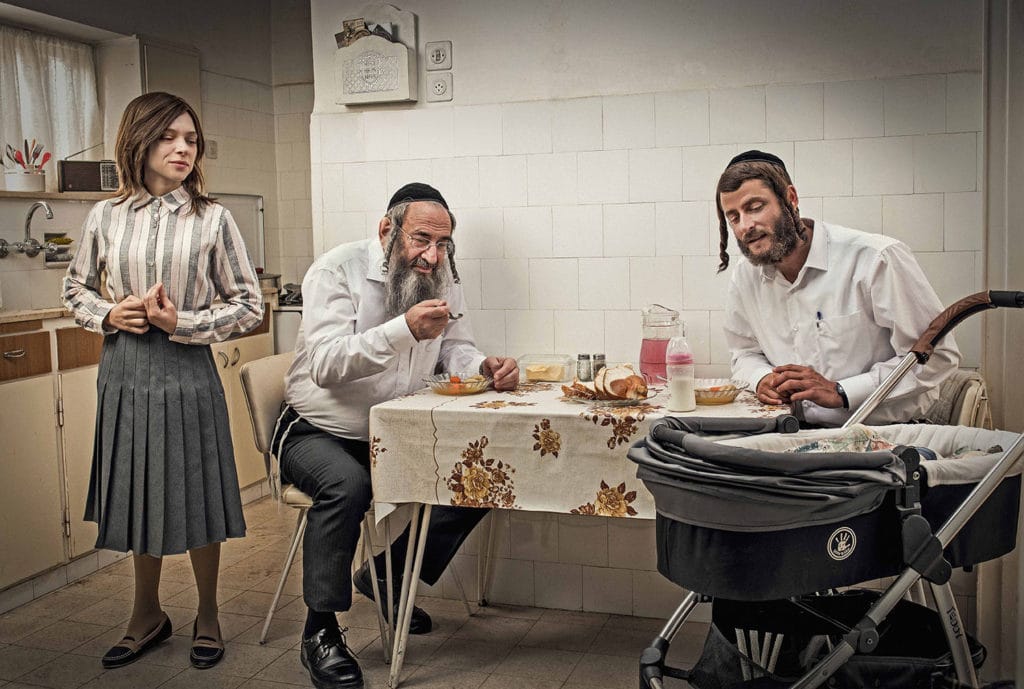
The highly anticipated third season of “Shtisel” won’t premiere on Netflix until spring 2021, but Temple Emanu-El Streicker center has a Hanukkah present for fans of the hit Israeli series. On Dec. 17, it will host a world premiere, virtual advance live screening of the season’s first episode, preceded by a Q&A with cast members Michael Aloni, Shira Haas, Neta Riskin and Doval’e Glickman and a candle-lighting to mark the end of the Festival of Lights.

The Yes Studios series, set in Jerusalem’s ultra-Orthodox community, has been wildly popular since its premiere on Netflix in 2018. “The show is beloved across the world both for the window it provides into a community few of us fully understand and for the realization it evokes about how much we have in common with the ‘Shtisel’ family,” said Dr. Gady Levy, Streicker Center Executive Director. “We are extremely proud to celebrate Hanukkah with the cast and their global community of fans.”

“The new season of ‘Shtisel’ is everything viewers have come to expect: touching, gentle storytelling and characters which we all adore,” added Yes Studios Managing Director Danna Stern. “We are excited to share the first episode with the growing and global community of fans that love and support this show and its incredible cast.”

The event begins at 2 p.m. PST and tickets are available for $36. Click here to register.

‘Shtisel’ Sneak Peek: Virtual Screening and Cast Q&A Read More »

Jewish Agency Emissaries Light Hanukkah Candles In Front of Hollywood Sign

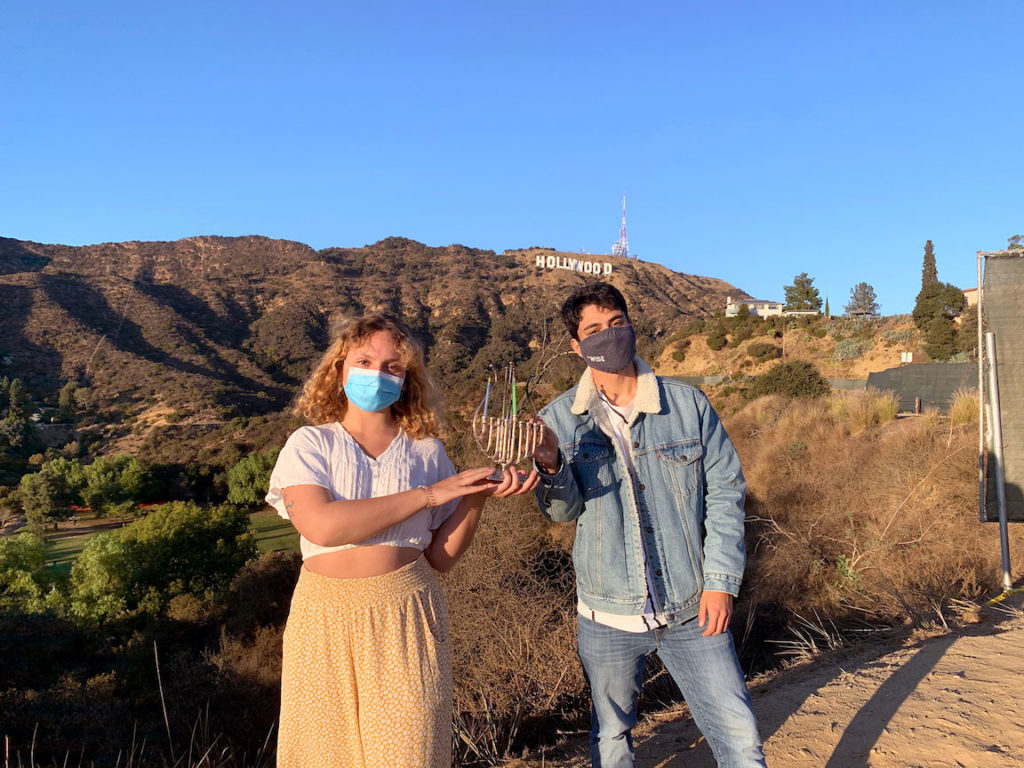
It may not be sundown yet in Los Angeles but on the morning of Dec. 10, L.A. Israeli emissaries (shlichim in Hebrew) from The Jewish Agency for Israel lit Hanukkah candles with the Hollywood sign in the background. This was part of a worldwide campaign, #LightingUpTheWorld to counter the darkness of the coronavirus pandemic by amplifying the lights of Hanukkah.

Approximately 2,000 Israeli emissaries are placed in 150 countries aiming to help different Jewish communities. Due to the pandemic, this Hanukkah, shlichim are holding a variety of virtual events for members of Jewish community such as online candle-lighting ceremonies and sufganiyot (jelly doughnut)-making workshops. Socially distant candle-lightings are the few outdoor in-person events to take place.

Approximately 2,000 Israeli emissaries are placed in 150 countries aiming to help different Jewish communities.

Rom Gvili and Lital Gehman represented Los Angeles and sang the Hanukkah classic “Ma’oz Tzur” (“Rock of Ages”) to celebrate. The Jewish Agency is inviting everyone around the world to share their Hanukkah candle-lighting photos with them with the hashtag #LightingUpTheWorld so they can be featured on their webpage.

“This Hanukkah we will light the darkness together — as a community, with our beloved families even from a distance, and our host families that light each of our days,” Gvili and Gehman said in a joint statement to the Journal. “We look forward to celebrating with our schools, synagogues, camps and more – and our amazing Federation and the outstanding Jewish Agency that brought us all together.”

Shlichim across the globe are lighting and posing with their Hanukkah menorahs at famous landmarks including the Eiffel Tower in Paris, Times Square in New York, Red Square in Moscow, the Tower Bridge in London, the Nybroplan in Stockholm, the National Palace in Mexico City, the Colosseum in Rome and the Menorah center —the world’s largest Jewish center— in Ukraine.


“Happy Hanukkah to the Jewish people all around the globe,” said Isaac Herzog, Chairman of the Executive of The Jewish Agency for Israel. “May the beautiful candles on our menorahs light up our world and cast out darkness in favor of light.”

Jewish Agency Emissaries Light Hanukkah Candles In Front of Hollywood Sign Read More »

Z3 Conference Aims to Bring Diaspora Together During Hanukkah

Since 2015, the Z3 Project— an initiative of the Oshman Family JCC in Palo Alto— aimed to promote a stronger relationship between Diaspora Jewry and Israel through various educational and philanthropic efforts. This year, the Z3 conference that usually attracts thousands of people together will be virtual. From Dec. 10 to Dec. 17, the event is aligning with the eight days of Hanukkah.

Titled, “Visions of a Shared Future,” attendees can expect speakers of all backgrounds to discuss one of the seven unofficial core pillars of the Jewish people each day of Hanukkah. Rabbi Amitai Fraiman, director of the Z3 Project at Oshman Family JCC, calls these pillars TACHLIS: Tikkun Olam; Arts + Culture; Community; Holidays, Rituals and Shabbat; Learning and Education; Identity; and Safety and Security.

“Are these seven a definite list? No. I don’t think anyone has a definitive list,” he said. “It’s a guiding framework and a grounding framework for what we are discussing. [These are the] broad buckets we share…as a common peoplehood.”

The MainStage events all fall under one of the TACHLIS pillars. Events include “Zoom, Zionism, and the Fiction of Promised Lands;” “Judaism in the COVID Era;” “The Tensions that Connect Us;” “Israel in Movies;” “Chanukah Stand-up Show with Comedian Benji Lovitt;” “The New Town Square: Talking Israel and Identity in the Media,” and “New Notions of Identity,” to name a few. For a full lineup visit the website.

Noam Weissman, senior vice president of global media non-profit OpenDor Media said their team collaborated with Z3 this year to create multi-media content to enhance the virtual conference.

Each day of Hanukkah will bring panel events around the world. Speakers include athletes Sue Bird, Alysha Clark, Zach Banner and entrepreneur Ben Orbach; Israeli author Micah Goodman; White House speechwriter Sarah Hurwitz, author Yossi Klein Halevi, author and podcaster Abby Pogrebin, Labor Party Knesset member Merav Michaeli, Pulitzer prize-winning journalist Anne Kornblut and journalist Bari Weiss, to name a few. Altogether, Z3 is putting on 60 events all week long in 30 communities worldwide.

This is Zach Banner’s first time attending a Z3 Conference. The offensive tackle for the Pittsburgh Steelers told the Journal via email that it was an honor to be invited. Especially, having the opportunity to speak alongside Sue Bird and Alysha Clark (both Israeli-American WNBA basketball players who play for the Seattle Storms) for their panel “Athletes, Advocacy, and Tikkun Olam” which kicked off the conference Dec. 10. In July, Banner called out Philadelphia Eagles’ wide receiver DeSean Jackson for misquoting Adolf Hitler. Since then, he has devoted his platform to tackling anti-Semitism in addition to racism and all forms of hate.

“When I learned that ‘Tikkun Olam’ means ‘repairing the world,’ that really spoke to me,” Banner said. “This year when I spoke up against anti-Semitism, and really all my work through my B3 Foundation, [it] is about community. We heal the world through community, through listening, through seeing all the things we have in common. I’m looking forward to joining these women as we discuss how athletes are using their platforms for change.”

Activism is a major force of this year’s conference. Fraiman believes the Diaspora not only needs to join in worldwide social justice causes once but actively find ways to incorporate it into their daily lives. One of the ways Z3 is doing is this is by letting attendees decide where  Z3’s ticket sale proceeds should go.

Fraiman believes the Diaspora not only needs to join in worldwide social justice causes once but actively find ways to incorporate it into their daily lives

“They will vote on how to allocate that money to organizations in the real world. This exercise in direct democracy is other people take content that they are consuming throughout the week and then they get to vote on behalf of the content on how to allocate this pot of money that belongs to everybody. It is shared peoplehood. It doesn’t matter if we align religiously, geographically or politically. We are making these decisions based on needs.”

So much has changed globally since their last conference in Los Angeles back in January. Fraiman said that the Jewish people need to “lean into change” to better evolve as a people.

He hopes multiple conversations take place throughout the eight-day conference  that helps build on the understanding that all Jews are different and should be celebrated as well as the similarities. Allowing room for discomfort and important conversations is essential so the Jewish community can grow stronger.

“We’re all connected regardless of where we are from,” he said. “The pandemic accelerated that. We need to lean into the changes and challenges of this moment. Let’s talk about it all. There are problems everywhere including Israel. Let’s address the problems.”

The Z3 director said it’s inherently Jewish to argue and engage in discussions and to stop now would be highly unrealistic. Rather than avoiding them altogether, he hopes Z3 becomes a central meeting place for conversation, engagement and activism.

There’s a sovereign state of Jews. That’s a fact. There’s a lot of fixing that needs to be done but how does that impact your life?” he asks. “What does that mean living as a minority in one of the most powerful nations in the world? How does it impact your identity? How do I define my [Jewishness] and how do I define that for myself?… There isn’t one right answer for everything so we keep on studying and arguing with ourselves and others. That tension brings out the best in others.”

The Z3 Conference is taking place virtually now until Dec. 17. For more information on tickets, panels and times, visit the website here.

Z3 Conference Aims to Bring Diaspora Together During Hanukkah Read More »

You Can’t Choose Your Family – A poem for Parsha Vayeshev

And they took him and cast him into the pit

I grew up without a sibling
so never had the young impetus
to throw mine into a pit.

I say mine because
decades into my existence
a brother and sister came along.

Plus the one I married into.
Not quite the baker’s dozen
that Jacob produced

but a lot to love when
my entire youth was spent
in rooms alone.

I try not to show off,
like Joseph, but sometimes
I fail and greet them with

multi-colored coats
hanging out of my hellos.
It’s a wonder I haven’t

been in a pit so many times.
I should have my furniture
sent directly to the pit.

They say you can’t choose
your family and I say, sometimes,
It feels like we’re actively

not choosing each other.
I know there’s no choice here.
There are forever bonds that

legal documents can’t break.
There may be more pits.
I foresee tests and groveling.

But like Jacob and Esau
and Joseph and his many brothers
our future is always intertwined

with embraces and blood
with airplanes and celebration
with love and loss

with every hope
of the ones who
gave us life.


God Wrestler: a poem for every Torah Portion by Rick LupertLos Angeles poet Rick Lupert created the Poetry Super Highway (an online publication and resource for poets), and hosted the Cobalt Cafe weekly poetry reading for almost 21 years. He’s authored 25 collections of poetry, including “God Wrestler: A Poem for Every Torah Portion“, “I’m a Jew, Are You” (Jewish themed poems) and “Feeding Holy Cats” (Poetry written while a staff member on the first Birthright Israel trip), and most recently “The Tokyo-Van Nuys Express” (Poems written in Japan – Ain’t Got No Press, August 2020) and edited the anthologies “Ekphrastia Gone Wild”, “A Poet’s Haggadah”, and “The Night Goes on All Night.” He writes the daily web comic “Cat and Banana” with fellow Los Angeles poet Brendan Constantine. He’s widely published and reads his poetry wherever they let him.

You Can’t Choose Your Family – A poem for Parsha Vayeshev Read More »

What Can History Tell Us About Recovering From a Crisis?

With the news of a COVID-19 vaccine being rolled out as soon as this week, many are rightfully dreaming of the day when we can finally exit our quarantines.

The “coming out” process no doubt will be slow, somewhat disjointed and likely to include a number of unexpected challenges. Longer term, lifestyle behaviors and choices may have changed permanently during the pandemic, just as they have transformed during prior moments in American history.

How well our federations, synagogues and agencies plan for and execute these transitional stages will be the most challenging venture our communal system has ever faced. Fortunately, earlier moments in American history may offer some insights as to how the public sphere and the communal sector can and will respond.

The Spanish Flu

Although we have limited information on how the Jewish community collectively responded to the 1918 pandemic, we do have specific examples of heroic actions taken by Jewish physicians and public servants in seeking to contain and treat the “Spanish flu,” as it came to be known. Various Jewish community histories, including New York, San Francisco and Dayton, reference Jewish physicians and caregivers providing their expertise and assistance. In San Francisco, for example, a number of Jews, including Lawrence Arnstein, helped organize the Red Cross response. Congregation Emanu-El Sisterhood president, Matilda Esberg, was involved in helping to mobilize the community.

1st March 1919: Two men wearing and advocating the use of flu masks in Paris during the Spanish flu epidemic which followed World War I. (Photo by Topical Press Agency/Getty Images)

Just as they did in 1918, Jewish frontline workers around the world, including physicians, researchers and care providers, are playing critical roles in managing this pandemic and developing vaccines and drugs in response.

After the pandemic of 1918 ended, there was no “moment in time” when conditions warranted a uniform “coming out” mobilization. Instead, services and activities rolled out gradually over time. There were, however, communal efforts to create “check in” moments, where the government united with civic and Jewish organizations to assist the jobless, homeless and hungry. With COVID-19, too, we are likely to see a slow reopening.

The Great Depression

Historian Beth Wenger argues that New York Jewish life also experienced a transformation after the Great Depression. During the Great Depression, Jews not only worried about their financial stability and their security as a minority but also questioned the usefulness of their educational endeavors and viability of their communal institutions. According to Wenger, the Great Depression set in motion new forms of Jewish adaptation and acculturation in the United States:

Jewish families pooled their resources … Children remained in their parents’ homes to pursue education when jobs were scarce and postponed marriage and childbearing. Jewish neighborhoods nurtured a sense of Jewish community and provided support networks for working-class families.

Based on a 1936 survey of 456 congregations in the Metropolitan New York City area, the synagogue community reported a collective debt of $14 million. Wenger reports that New York’s Temple Emanu-El witnessed a 44% decrease in its membership, and the Brooklyn Jewish Center reported the loss of half of its 1,500 families.

The financial parallels between the Great Depression and 2020 are undeniable: Although the Jewish community has yet to assemble information on the fallout from the current crisis, synagogues across the country are citing the loss of congregation members, indications of unbalanced budgets and the necessity for budgetary and program reductions.

The financial parallels between the Great Depression and 2020 are undeniable.

The Depression era also sparked a religious renewal in America. In response, synagogues of that period, joining with churches, created a national Drive for Religious Recovery, paralleling the federal government’s National Recovery Act. Congregations instituted “Loyalty Days” designed to attract synagogue participation, using the slogan “Every Jew Present and Accounted For.”

According to Wenger, the changes in Jewish communal life that the Great Depression spurred “decisively shaped the character of American Jewish life in the twentieth century.” In particular, the American rabbinate saw a unique opportunity to galvanize Jews to engage in volunteer service. Employing radio broadcasts and newspaper advertisements for the first time, the rabbinate attempted to encourage Jewish learning and synagogue involvement and speak out on public policy and social justice issues. Nearly a century later, COVID-19 has ushered Zoom programming as a new form of engaging Jewish audiences.

Although fundraising by Jewish charities in the 1920s achieved extraordinary results, during the Depression, Jewish social service agencies acknowledged that they could no longer meet the needs of the community’s most vulnerable (a 40% increase in caseloads of families in crisis). This new reality fostered a debate among charities over whether they could continue to uphold the “Stuyvesant Promise” — a promise that the first arrivals of Jews to New Amsterdam (New York) declared to Dutch Governor Peter Stuyvesant that they would take care of their own. Many Jewish social service institutions eventually decided in the 1930s that they needed to partner with government agencies to provide relief services.

We can see parallels between the 2020 government funding initiatives and the policies introduced in the 1930s. Based on a survey carried out by the JFNA (Jewish Federations of North America), some 579 groups reported that their applications for assistance from the April 2020 federal stimulus package had been accepted. Loans ranging from $5000 to $5 million were awarded to these institutions, with the median being $256,000. JFNA estimated that more than $500 million in loans have been provided to the Jewish community.

The War Years

Jonathan Sarna and Jonathan Golden argue that the World War II American Jewish community “presented a mixed picture. It was a community at home in America and proud of its achievements, but still uncertain of its identity or its position vis-à-vis other Jewish communities in the world.” Sarna and Golden acknowledge that Jews still faced discrimination, “yet under President Franklin D. Roosevelt more Jews had entered public life than ever before.” 

By the time the war concluded, some 550,000 Jews had joined the armed forces, accounting for 4.23% of all soldiers in the United States military. The total number of Jewish war casualties was 38,338. Approximately 26,000 Jewish men and women in uniform would receive citations for valor. Although the number of Jewish deaths from the coronavirus is likely not as high (an August report issued by the Jewish Agency indicated that an estimated 2,200 Jews around the world — outside North America and the former Soviet bloc countries — have died from the coronavirus), World War II and COVID-19 shared an environment dominated by loss.

But unlike the 1918 pandemic or the Great Depression, public celebratory expressions took place once the war was over, as Americans collectively rallied on V-E (Victory in Europe) Day and V-J (Victory over Japan) Day. The immediate years following the end to the war saw American families, including Jews, moving to suburbia, returning to school and opening new businesses. Officially, the Servicemen’s Readjustment Act of 1944, known as the GI Bill, served as the impetus by providing low-interest mortgages and offering stipends covering tuition for veterans attending college.

We are likely to see similar recovery stimulus packages after COVID-19 passes, and once the new president is in place, additional proposals to assist with economic development and recovery will likely be proposed.

The Year Ahead

In moving forward after COVID-19, the Jewish community has an opportunity to launch new initiatives, just as it did after the 1918 pandemic, the Great Depression and World War II. Drawing upon our history of early health, economic and political challenges, what are some ideas we can adopt from crises past?

  • Creating a check-in moment (group hug)
  • Inviting folks to choose to continue with online programming and/or in-person access
  • Ritualizing this experience, memorializing our losses and welcoming folks back
  • Developing a reflective moment: What did we learn about ourselves, others, and our society during this pandemic? Mapping these memorable experiences will be particularly significant for future generations!
  • Organizing ways to thank “front line workers”
  • Pre-planning so we will be ready the next time such a situation faces us

The year 2020 represented a unique experience in which many of us learned to live creatively in isolation. The year before us will represent a different type of personal and public challenge as we successfully reintegrate into the public square. Fortunately, we can rely on some historic wisdom to address the array of operational, financial and social considerations of institutional reentry.


Steven Windmueller is the Rabbi Alfred Gottschalk Emeritus Professor of Jewish Communal Studies at the Jack H. Skirball Campus of HUC-JIR, Los Angeles. Dr. Windmueller’s writings can be found on his website, www.thewindreport.com.

What Can History Tell Us About Recovering From a Crisis? Read More »

Warnock Accused Netanyahu of Endorsing “Occupation Forever”

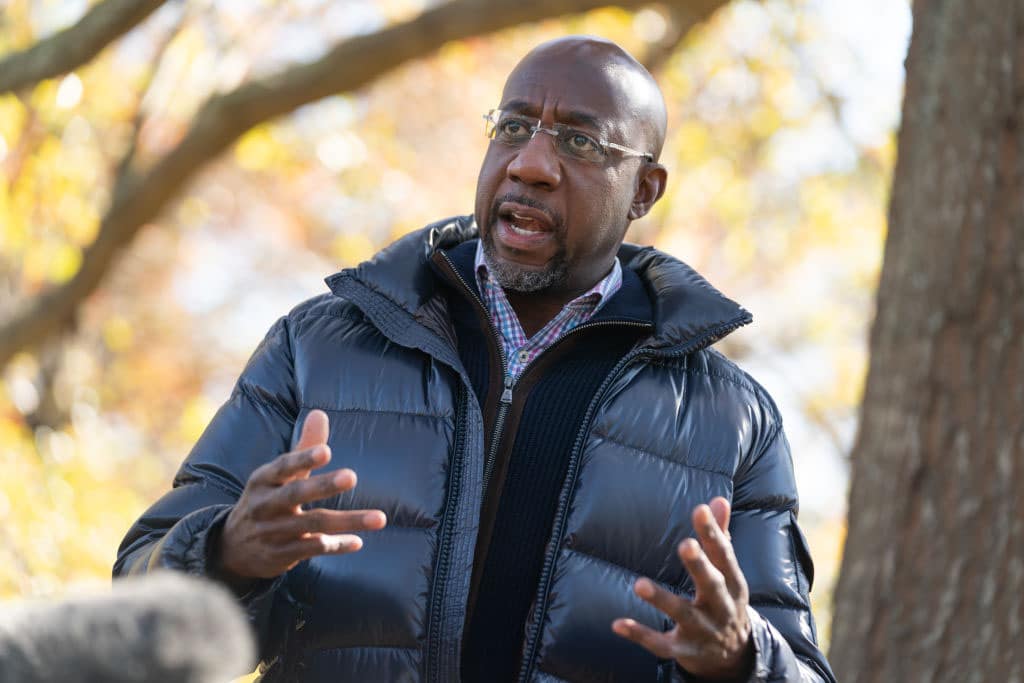
Georgia Senate candidate Revered Raphael Warnock accused Israeli Prime Minister Benjamin Netanyahu in a 2015 sermon of endorsing “occupation today, occupation tomorrow, occupation forever.”

Warnock said in the sermon that both Israeli and Palestinian children have been “caught in the crossfire” in “a land of violence and bloodshed and occupation.” He proceeded to call Netanyahu, who was running for re-election at the time, a “clever politician” and said that Netanyahu’s opposition to a two-state solution at the time amounted to Netanyahu supporting “occupation today, occupation tomorrow, occupation.”

The reverend proceeded to argue that without a Palestinian state, Israel will cease to exist as a Jewish democracy because the Arabs would eventually outnumber the Jews in Israel if the Israeli government were to forgo a two-state solution. “You will have to have apartheid in Israel that denies other citizens, sisters and brothers, citizenship or you will have a democracy that is not a Jewish state,” Warnock said.

He then pointed out that Netanyahu had warned about Arabs coming to the polls in that election, which Warnock called a “racist and vicious” statement. Netanyahu later apologized for that remark.


Republican Jewish Coalition Executive Director Matt Brooks argued in a statement that Warnock had compared Netanyahu to segregationist George Wallace, who said “segregation now, segregation tomorrow and segregation forever” during his 1963 inaugural address as the then-governor of Alabama. Brooks called this apparent comparison “simple hatemongering,” pointing to the fact that Linda Sarsour agreed with Warnock’s apparent comparison of Netanyahu to Wallace.

“Warnock claims to have recently come to understand that Hamas is a violent enemy threatening Israel,” Brooks said. “There is a great deal more that he needs to learn about the Palestinians’ goal of genocide and Israel’s history of sacrificing for peace, before the Jewish community could ever begin to trust his newly announced ‘support’ of Israel. The preponderance of anti-Israel statements in his past argues that he will side with Israel’s opponents in the Democratic Party and against Israel at every opportunity.”


Democratic Majority for Israel, a pro-Israel Democratic group that recently endorsed Warnock, accused the RJC of “engaging in purposeful misreading & demagoguery” of Warnock’s sermon.


A spokesperson from the Warnock campaign told Fox News that Warnock “does not believe Israel is an apartheid state.” Warnock had previously been under fire for his name appearing on a letter that drew a comparison between Israel’s treatment of Palestinians in the West Bank and “apartheid South Africa,” as well as for accusing Israel of shooting “unarmed Palestinian brothers and sisters” in 2018 during the riots at the Israel-Gaza border after the Trump administration moved the U.S. embassy to Jerusalem.

The controversy prompted Warnock to write an op-ed for the Jewish Democratic Council of America (JDCA) on November 10 stating that he doesn’t believe that Israel is an apartheid state and that while he supports “our current partnership with Israel,” he believes that a two-state solution is the only way for there to be peace between Israel and the Palestinians. He also announced his opposition to “the BDS [Boycott, Divestment and Sanctions] movement and its anti-Semitic underpinnings, including its supporters’ refusal to acknowledge Israel’s right to exist.”

Warnock reiterated these remarks in a December 8 virtual event with JDCA, stating that he believes in Dr. Martin Luther King’s sentiment that Israel’s security and right to exist is “uncontestable.” He also said he is having an “increased recognition” about the threat Hamas poses to Israel and that his past comments on Israel were out of concern for Palestinian rights.

Warnock Accused Netanyahu of Endorsing “Occupation Forever” Read More »

Stephen Wise Temple Hosts Drive-Thru ‘LIT Hanukkah’ Light Show Experience

When writer and producer Michael Lam was a kid, he asked his dad, Stephen Wise Temple’s Cantor Nathan Lam, why they didn’t decorate their house with lights for Hanukkah when it was supposed to be the Festival of Lights.

“Hanukkah is supposed to be fun, it’s a party,” Lam, now 45 said, remembering the yearly discussion. “I always thought, ‘we should be allowed to put lights up.’”

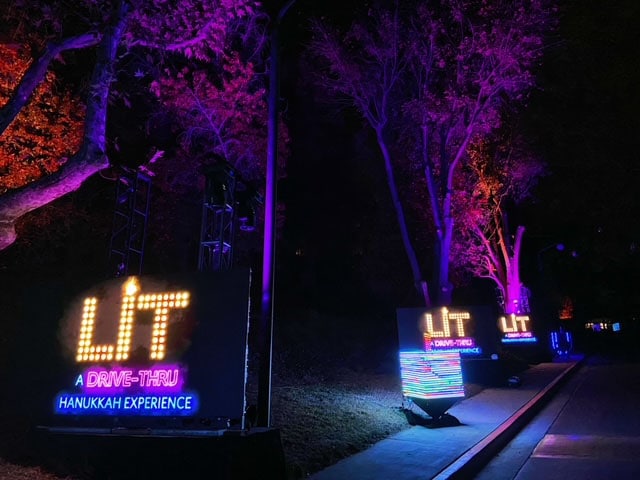
Decades later, Lam is lighting up the neighborhood and lifting L.A. spirits with “LIT Hanukkah,” a drive-thru light show experience for everyone to enjoy all eight nights of Hanukkah.

Photo by Molly Marler

The light spectacle spans the entire Stephen Wise campus and is put on through The Lam Media Center, a Stephen Wise initiative founded in honor of Nathan and Donna Lam in celebration of the cantor’s 40 years of service. The center serves as a production studio for audio, video and animation aiming to transform the way future generations experience Jewish tradition.

Michael, who is also the director, wanted this year’s Hanukkah celebration to be special since the coronavirus pandemic devastated so many communities this year. Always thinking big, he realized the scope of the project—which was imagined two years ago— was a bit ambitious for the non-profit Media Center.

“In September [2020] I said, ‘what if we did it as a drive-thru?’ Then my stomach dropped,” Lam said. “It’s all about creating a sense of community when everyone has to be isolated and in your cars.”

Inspired by his six-year-old and 10-year-old kids, who love hip-hop, technology and art exhibitions, “LIT Hanukkah” is a hybrid of Hanukkah themes, digital laser mapping, music and light installations. Lam told the Journal he wanted this light experience to not just be a Hanukkah parade or small party for kids but an event people of all ages can get excited about.

“LIT Hanukkah” is a hybrid of Hanukkah themes, digital laser mapping, music and light installations.

Now open to the public, groups of seven cars at a time enter the 30-minute immersive experience. Using FM radio or an audio app provided to you upon entering, members inside the car will be able to hear what’s going on without rolling down their windows. The exhibitions feature LED screens, 50 infinity mirrors, disco balls, synchronized lights, four-foot-tall dreidels, an animated short film, musical playlists, new original Hanukkah music and a tunnel of lights designed by immersive artist VJ Jeff Tortorice. When cars drive through the projection tunnel, they will see a mosaic-light show on 200 foot-long panels. It all leads up to the grand finale, “Story of Light” which is a giant glass projection wall designed by world-class projection artist Bart Kresa.

Photo by Molly Marler

“It’s like [Disneyland’s] ‘It’s A Small World’ meets a projection mapping park,” Lam said. “We really tried to make it a celebration of light.”

Since everyone must remain masked in their cars for the entirety of the experience, the LIT Hanukkah experience is also compliant with the recent COVID-19 restrictions placed in Los Angeles, which started on Dec. 6.  Construction for the colossal drive-thru installation began on Dec. 4 with early test runs of the experience starting on Dec. 6. Lam said they want to make sure everything runs smoothly with limited technical difficulties since everything relies on technology to run efficiently.

While the Maccabees are only referenced twice, the miracle of Hanukkah is referenced throughout each exhibition.

“It’s sick. I can’t believe how beautifully it came together,” Lam said. “The whole experience is meant to be holistic from start to finish. Each exhibition builds on it so we are telling a story throughout.”

The clergy team at Stephen Wise —including his parents—is also excited to share this experience with the community.

“We are delighted to have LIT as the inaugural event of the Lam Media Center, lighting up the world at a time when it needs that light the most,” Donna and Cantor Nathan Lam said in a joint email to the Journal. “It gives us great joy to see the faces of young and old alike as they experience this unique and awe-inspiring Jewish celebration.”

Those who attend “LIT Hanukkah” will also witness the premiere of Hanukkah short-film, “The Broken Candle,” a part of the exhibition located at the mini drive-in theatre at the top of Wise’s campus. The original animated short film was written by Lam, and follows a box of Hanukkah candles chosen for the hanukkiah each night of the holiday. Starring Tiffany Haddish, Eugenio Derbez, Tom Kenny, Vanessa Marshall, Dave Boat, Keili Lefkovitz and Mark Feuerstein, the candles learn that even if a candle is broken, it doesn’t mean their spirit is.

Stephen Wise Senior Rabbi Yoshi Zweiback told the Journal via email that this is the perfect time to do an event like this. The resilience that comes with the story of Hanukkah is something that many Jews and non-Jews alike can relate to during this difficult year.

“Hanukkah is about bringing light into the world in the midst of the deepest darkness,” Zweiback said. “We are very excited to be able to safely bring some light to our community right now in the midst of this dark time for our world.”

LIT Hanukkah is open until Dec. 20 at Stephen Wise Temple. Each ticket is $75 per car and tickets are required upon entry. Hours vary. For more information on time slots and tickets, visit the website.

Stephen Wise Temple Hosts Drive-Thru ‘LIT Hanukkah’ Light Show Experience Read More »

Learning to Not Run Away

On a Thursday afternoon in early March, I was sitting in my dining room, working at my computer as usual, when my daughter’s babysitter walked in from the other room. With her phone in her hand and a shocked look on her face, she told me the news.

“The city is locking down,” she said. “I don’t know what to do.”

Ever the optimistic person, I tried to reassure her. “Oh don’t worry,” I said. “It’ll be OK. It’ll probably be over before you know it. We’ll be just fine.”

Two days after the lockdowns started, I didn’t feel so confident anymore.

My pit bull Juno, my best doggy friend for the past 10 years, turned yellow from kidney failure. Her gums were pale white. Motzei Shabbat, she died at the animal hospital.

The news about COVID-19 was becoming increasingly grim — and increasingly confusing at the same time. Nobody knew what was going on.

One week in lockdown went by, and then another. And then another. My husband Daniel and I followed the news closely. We’d stay up until five in the morning checking Facebook and looking for updates on the virus’s spread.

I quickly turned to escapism. For me, that’s always been food. I went off my healthy diet and ate lots of sugary KIND bars and fried foods and tortilla chips. I gained weight but even worse, I felt terrible.

In May, when the lockdown restrictions eased up, we started going to the beach every week, maybe even twice a week. I wanted to get as far away from my house and from Los Angeles as I could.

Then, the riots happened just a few hundred feet from us. I heard helicopters circling in the sky at all hours of the day. The curfews felt like a whole new kind of mental torture. I checked the Citizen app constantly and felt like I was living in a war zone. I had several crying, screaming red-faced breakdowns.

And I felt like I was going crazy. When the fireworks started going off every few minutes and the government shut down the beaches for the Fourth of July, Daniel and I packed up and went to San Luis Obispo, the closest place where the beaches were open. Then, we spent a month in Big Bear, where it was quiet and we could be surrounded by nature and, best of all, silence.

I learned a harsh lesson pretty fast though: Wherever you go, there you are. My mood didn’t get much better in the mountains. I was still upset. And on top of it, I felt isolated because we didn’t know anyone there.

One Shabbat in August, I felt more depressed than I had in years. We were the only observant Jews in town and had no one to celebrate with. My soul hurt.

To make matters worse, when I got back to Los Angeles, I felt like nothing had changed. I was still scared to be there. A homeless man had come up on our lawn and screamed and emptied out our trash. A shootout happened at the gas station down the block. Lockdowns were still in full effect.

So, my husband and I went to Arizona to try to get some peace of mind again. Daniel wasn’t as affected as I was, but being the good husband he is, he went along with it. We had a beautiful Rosh Hashanah in Scottsdale, and I tried to convince Daniel that we should move there.

“But you’re not any better here,” he said.

He was right. I wasn’t doing the work on myself. Again, I was just trying to escape reality. I couldn’t keep doing it forever. It was unhealthy and impractical. I had to learn how to cope.

So I made a decision: I contacted a therapist and started working on my issues. She taught me how to do deep breathing. She told me to shut off the news if it was bothering me. She helped me realize that I was safe and I could deal with anything that was coming my way.

For instance, I was scared that I’d be walking down my street and a homeless person would attack me, since that’s what I saw happen on the news. My therapist helped me realize that a random homeless person was in their own head and probably didn’t even notice me. I thought about all my interactions with homeless people over the years and most of them were positive. And If G-d forbid something did happen to me, I could fight back. I wasn’t some weak and helpless being. I was strong. I was powerful.

I wasn’t some weak and helpless being. I was strong. I was powerful.

The turning point came in October when the work started to pay off. In September, I’d booked another trip to Big Bear for the week of the presidential election just in case riots broke out in Los Angeles. Even as businesses were boarding up and people were lining up to buy guns, I insisted to Daniel that we needed to cancel our reservation. He was worried, but I knew that no matter what happened, we’d be OK.

And, of course, we were.

This year has been difficult. All of my bad habits suddenly emerged at once. I thought they could protect me, but I discovered that they were just hurting me. It took me a while to learn that, and I admit that I still have a ways to go.

But right now, I’m ready to stop running. I’m dealing with the present and with reality, no matter how challenging it may be. And I know that when I look back on this year, I’ll be able to say it was one of tremendous growth, when I gained the strength I never knew I had and learned how to deal with the worst possible scenario. I hope you find the strength to do the same.


Kylie Ora Lobell is a writer for the Jewish Journal of Los Angeles, The Forward, Tablet Magazine, Aish, and Chabad.org and the author of the first children’s book for the children of Jewish converts, “Jewish Just Like You.”

Learning to Not Run Away Read More »