fbpx

October 10, 2019

Israel Bonds, Temple Aliyah, Refugee Panel

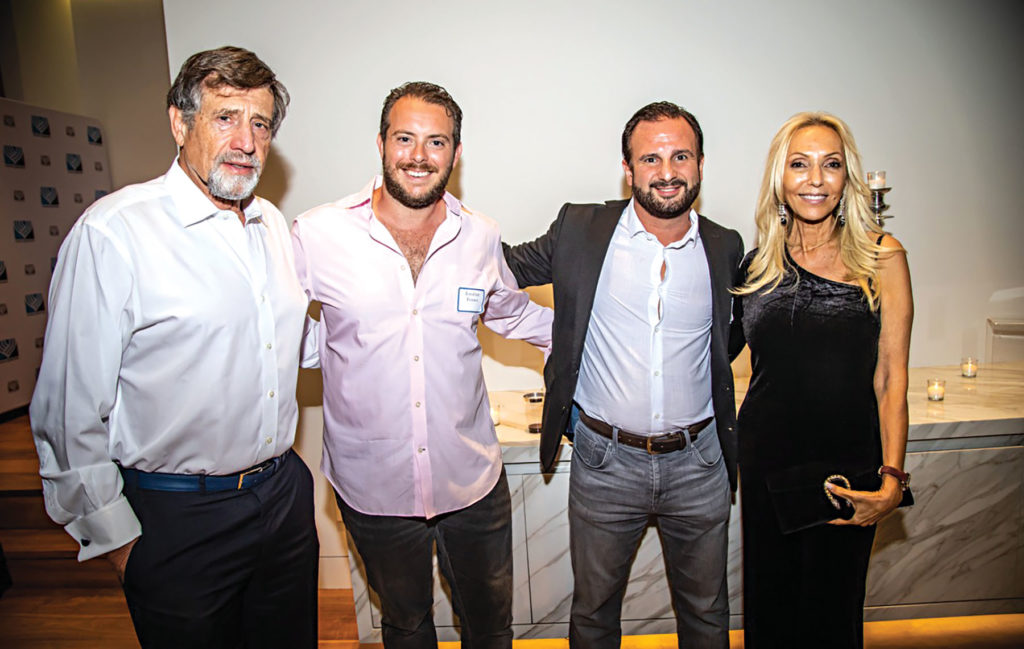
Development Corporation for Israel/Israel Bonds’ Platinum Society held an event at the home of local real estate, investment and philanthropy leaders Debbie and Naty Saidoff in Los Angeles on Sept. 25. 

The reception brought together members of Israel Bonds’ Platinum Society, which includes premium-level investors, as well as the Platinum Young Professionals, which includes those younger than 45 who also invest in high amounts.

Consul General of Israel in Los Angeles Hillel Newman delivered welcoming remarks saying, “It is through your efforts and support that we are able to witness and take part in celebrating a thriving Jewish state. I thank you all and say to you, l’shanah tovah tikateyvu.” Newman also recently participated in a welcome reception organized by Israel Bonds’ Western Region celebrating his appointment as consul general.

After Newman, Christopher Wolfe, chief investment officer of First Republic Private Wealth Management, and Mike Selfridge, chief banking officer of First Republic Bank, were featured in a conversation on “Trade Wars, Tariffs and the Great Divide: Investment Strategies for Today’s Economy.”

Scott Beiser, chief executive officer of Houlihan Lokey, and his wife, Nancy, both of whom were in attendance, chair the Israel Bonds’ Platinum Society. Their leadership of the Platinum Society — and a central tenet of the event — has focused on creating mentorship opportunities by bringing younger investors together with more seasoned business leaders. Steve Tarrab, chair of the Platinum Young Professionals, was also in attendance, as was Gina Raphael, local campaign chair, along with a number of others representing the next generation of leadership.

The private gathering was one of several recent high-profile Israel Bonds events in Los Angeles under the leadership of Erez Goldman, executive director for the Western Region, including the recent Newman reception and the Los Angeles Women’s Division’s annual Golda Meir Luncheon.


Ben Vorspan, the new creative director at Temple Aliyah. Photo courtesy of Temple Aliyah.

Temple Aliyah has announced that Ben Vorspan has taken on the new role of creative director at the Conservative congregation in Woodland Hills. 

Vorspan, who formerly served as the synagogue’s director of communications, will continue to oversee all marketing and communications as well as produce creative videos and innovative campaigns. Additionally, he will work closely with Temple Aliyah clergy, staff members and lay leaders to develop new ideas and experiences that keep the community engaged.  

“During the coming year, in partnership with our Visioning Committee, Ben will help lead the charge to reenergize Temple Aliyah,” a synagogue statement said.

Over the past three years, Vorspan has refreshed the Temple Aliyah branding and marketing materials, brought energy to the campus with bright, friendly signage and displays, created the online “Be The Light” campaign, written, filmed and edited numerous videos and instituted meetings to challenge the clergy and staff to think outside the box.

Vorspan is the son of Rabbi David Vorspan, the founding rabbi-in-residence at de Toledo High School and the founding rabbi at Congregation Shir Ami, and Bonnie; grandson of the late Rabbi Max Vorspan, who was a major leader in the L.A. Jewish community; and husband of Elana Vorspan, director of communications at Valley Beth Shalom.  

According to Temple Aliyah, the congregation is now one of the few synagogues in the country with a dedicated creative director position, reinforcing its commitment to being one of the leaders in innovation within the Conservative movement.


From left: Veteran Earl Roth, Brent’s Deli owner Ron Peskin and CFO Brent Peskin

Earl Roth, commander of Jewish War Veterans Post 603 San Fernando Valley, presented a certificate of appreciation to Brent’s Deli owner Ron Peskin and CFO Brent Peskin.

According to Roth, Brent’s Deli has been immensely helpful at both the Northridge and Westlake Village locations in allowing the post volunteers to solicit Red Poppies around the holidays of Veterans Day and Memorial Day, the proceeds of which benefit hospitalized veterans at Sepulveda VA Medical Center as well as veterans, widows of veterans and patrons of Post 603.


The panel discussion, “Welcoming the Stranger: A Jewish Call to Action for Refugees & Asylum Seekers,” was held at Beth Shir Shalom, on Sept. 18.

“Welcoming the Stranger: A Jewish Call to Action for Refugees & Asylum Seekers,” a Sept. 18 discussion organized by HIAS and held at Beth Shir Shalom, drew a packed room with nearly 150 people.

Speakers included Melanie Nezer, senior vice president for public affairs at HIAS; Rabbi Neil Comess-Daniels of Beth Shir Shalom; Robyn Samuels, a board of trustees member at Leo Baeck Temple; and Kimberley Plotnik, who serves as civil rights counsel at the Anti-Defamation League (ADL).

According to the HIAS website, the speakers “shed light on HIAS’ advocacy and grassroots organizing at a time when so many people in the Jewish community and beyond are appalled by what’s happening and are looking to learn and do more.”

HIAS is a nonpartisan Jewish refugee-aid organization that addresses the modern refugee situation, which, according to its website, “has mushroomed into a global humanitarian crisis.” There are more than 70 million refugees and displaced people across the globe — “more than any time in history,” the ADL website says.


From left: Christians United For Israel (CUFI) City Director Ricardo Escobedo, Parham Soroudi, Elahe Borokhim, CUFI National Diversity Coordinator Pastor Dumisani Washington, Frank Ariel, Laura Younai and Susan Eshaghian.

More than 500 Latino and African American Christian supporters of Israel from the Christians United For Israel (CUFI) organization gathered for “A Night to Honor Israel” at the Love & United Christian Fellowship Church in Compton on Sept. 26.

Blowing their shofars, dancing, waving American and Israeli flags and singing Israeli songs, the Christian Zionists on hand said they came to the event to voice support for Israel and speak out against the wave of growing anti-Semitism in the country.

“We are modern-day Mordecais and Esthers advocating both spiritually and socially for Israel and the Jewish people, and we will shine our pro-Israel light on the darkness of anti-Semitism,” CUFI National Hispanic Outreach Coordinator Peter De Jesus said.

Also speaking at the event and thanking the attendees for supporting Israel were Los Angeles County Undersheriff Timothy Murakami and Eitan Weiss, deputy Chief of Mission for the Consul General for Israel in Los Angeles. Likewise, more than a dozen local Iranian Jews attended the gathering to express their appreciation to CUFI members for supporting Israel.

“We find comfort in knowing that we can count on the friendship and support of our evangelical Christian brothers and sisters and the might of CUFI to support the Jewish people and Israel,” Frank Ariel, a member of the West Hollywood-based Iranian American Jewish Federation, said.

— Karmel Melamedoc

Israel Bonds, Temple Aliyah, Refugee Panel Read More »
Mazon’s ‘This Is Hunger’ Exhibition Now Available Online

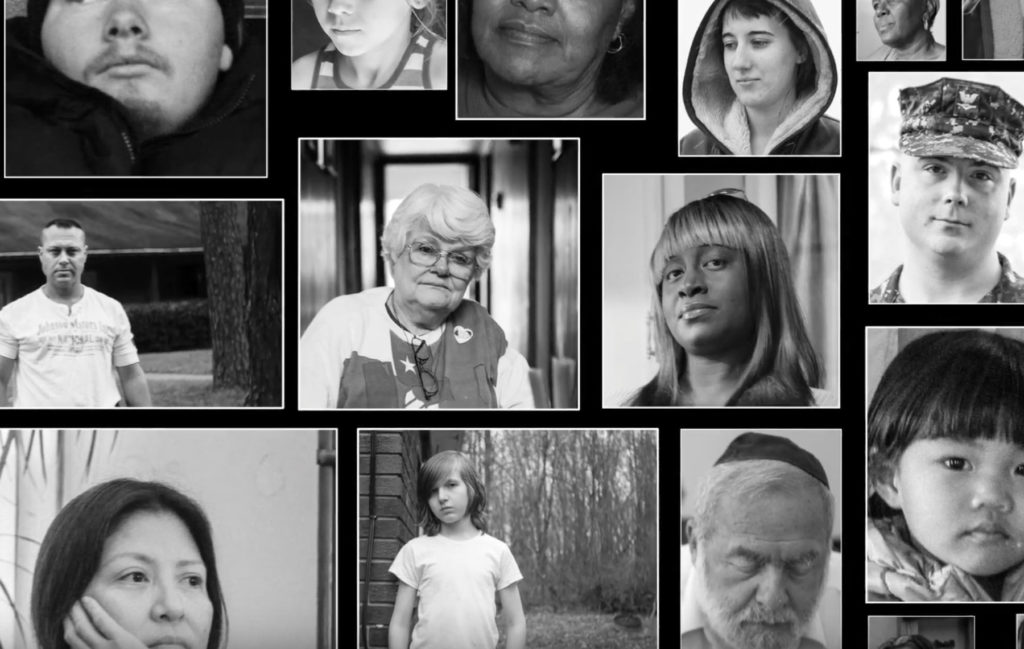
Three years ago, the national advocacy organization Mazon: A Jewish Response to Hunger debuted the exhibition “This Is Hunger.” It opened in Los Angeles, generating lots of attention, and introduced Angelenos — via an immersive and audio visual experience — to just a few of the millions of Americans who are food insecure. 

Then the exhibition hit the road — literally — as it was mounted in a converted semitruck and traveled the country. Now, for the first time, Mazon has made “This Is Hunger” available online.

The traveling exhibition was, by all accounts, a success. Over the course of 17 months, it made 70 extended stops in 30 states and the District of Columbia, mainly at synagogues and other community organizations, and garnered plenty of media coverage. 

Liz Braun-Lilenfeld, Mazon’s deputy director of community relations, said that during this period, 15,535 individuals saw the exhibition. But the plan was never to have a permanent traveling exhibition. It simply wasn’t tenable because the logistics were complicated (you can’t park a semi just anywhere). And since admission was free, there was no ticket revenue to offset the costs. But it was clear there was still significant, ongoing interest in “This Is Hunger.”

“We knew we were going to create a permanent space for it once we had seen the response,” Mazon President and CEO Abby Leibman told the Journal. The trick was finding the right space.

“We had certain needs to duplicate the experience in the truck,” Braun-Lilenfeld, added. “Finding a giant room in Los Angeles where you could get a 30-foot table inside is not as easy as it sounds.” 

Fortunately, last year Mazon found an ideal space in Encino, and it also checked a second box. 

“We wanted to create a vibrant Jewish center in the [San Fernanco] Valley where there hasn’t been a very physical presence for the larger Jewish community outside of synagogues,” Leibman said. “It’s like a community space.” 

Since the permanent exhibition opened last December, close to 500 additional people, many of them students, have experienced “This Is Hunger.” Currently, the in-person experience is open by appointment only to groups of up to 30. But there is talk of maintaining limited but set hours in the future, perhaps once a quarter on a Sunday, for drop-in visitors.

“We couldn’t extend our tour any longer. But we knew we wanted to make this resource available to people. Doing something digital seemed like a natural next step.” — Liz Braun-Lilenfeld

But what about people in other parts of the country? There were calls asking if the truck could come back. There were also communities that had very much wanted the exhibition to visit when it toured, but whether because of scheduling issues or lack of space to accommodate the truck just couldn’t make it work. 

“What we found a lot on the road, we would be finishing up in a city and some educator would come through and say, ‘If I had only known, I would have brought my class here,’ ” Braun-Lilenfeld said. “We couldn’t extend our tour any longer. But we knew we wanted to make this resource available to people. Doing something digital seemed like a natural next step.”

And so, a few weeks ago, Mazon made “This Is Hunger” available to anyone at any time on its website. Users are required to register prior to downloading the 14-minute film, a simple process put in place so Mazon can track engagement. In addition, Braun-Lilenfeld said, “We want to use it as an opportunity to be in touch with folks [to offer them support].”

A variety of complementary educational resources are available on the website, including a facilitator’s guide, activities appropriate for young people and a document titled “What Can You Do?” that includes a range of activities such as “Distribute Thanksgiving dinner at local senior center” and “Approach your local Veterans Administration to create a program that assists homeless veterans.”

Watching “This Is Hunger” on a personal computer, even on a large screen in a dimmed room with community members, is not the same as the fully immersive in-person experience. You don’t sit across the table from 14-year-old Dylan as he talks about going to bed hungry, for example. But it is still incredibly powerful. Some 150 registrations have already come through to access the new digital resource.

Braun-Lilenfeld said she is is excited about “reaching out to new partners and finding great opportunities for both Jewish day schools and secular schools that have robust social justice programs to use this resource.”

Leibman urges locals to come to Encino. “If you’re in L.A., you have the privilege of being able to experience [‘This Is Hunger’] in its original iteration, in its incarnation as an immersive experience,” she said. “I don’t think people should pass on that opportunity.”


To access the video, visit mazon.org and click on the “This Is Hunger” tab at the top of the homepage.

Mazon’s ‘This Is Hunger’ Exhibition Now Available Online Read More »

IAC’s Israeli-Flavored Sukkot and Skirball’s Harvest Festival

With the High Holy Days
behind us, it’s time to shift our focus from the solemnness of Yom Kippur to the celebration of Sukkot.

Sukkot With an
Israeli Flavor

The Israeli-American Council (IAC) Shepherd Community Center in Woodland Hills will host its annual family-friendly Sukkot festival from 10 a.m. to 2 p.m. on Sunday, Oct. 13, The theme of this year’s festival is “Sukkot with an Israeli flavor.” 

“Since the event is taking place at the beginning of Sukkot, I wanted people to start feeling the holiday spirit,” IAC Special Events & Outreach Senior Manager Shiri Vaserman told the Journal. “The main purpose of the IAC is to bring people together and connect them to Israel, so I think the festival is something that serves this purpose. We are [expecting] an attendance of around 1,500 people and not all of them are connected to the IAC or have participated in any past events, so for us it’s also for people to get to know the IAC and get familiar with what we are doing. And obviously have fun.”

In keeping with the Israeli flavor, visitors will be met with scenery right out of the Israeli desert and Tel Aviv beach. There will also be a selection of kosher food trucks offering Israeli delicacies such as falafel. There will be a ton of activities for kids including camel rides, a climbing wall and a carousel.

“The main purpose of the IAC is to bring people together and connect them to Israel, so I think the festival is something that serves this purpose.”

In addition, the IAC has teamed up with 15 organizations from the community, each of whom will have a sukkah-style booth with palm fronds on top and offering arts and crafts activities related to Sukkot and to Israel. 

On the main stage, there will be dance performances by IAC Zumba and IAC Hip-hop; a dance performance from the Adat Ariel School and kids entertainment by Tamari. The main performance will be by Naama Super-Al, an Israeli superhero for kids.


The event is free, however registration is required because of security reasons. For more information, visit israeliamerican.org/LA/event/sukkot.

The Skirball Harvest
Festival

Bring in the fall harvest season and celebrate Sukkot at the Skirball Cultural Center from 11 a.m. to 4 p.m. Oct. 13. 

“Our goal is to connect themes of the fall harvest season to the holiday of Sukkot and we love to have people come and kick off the celebration of the fall harvest so the timing was really perfect,” said Adele Lander Burke, Skirball’s vice president of public programs. 

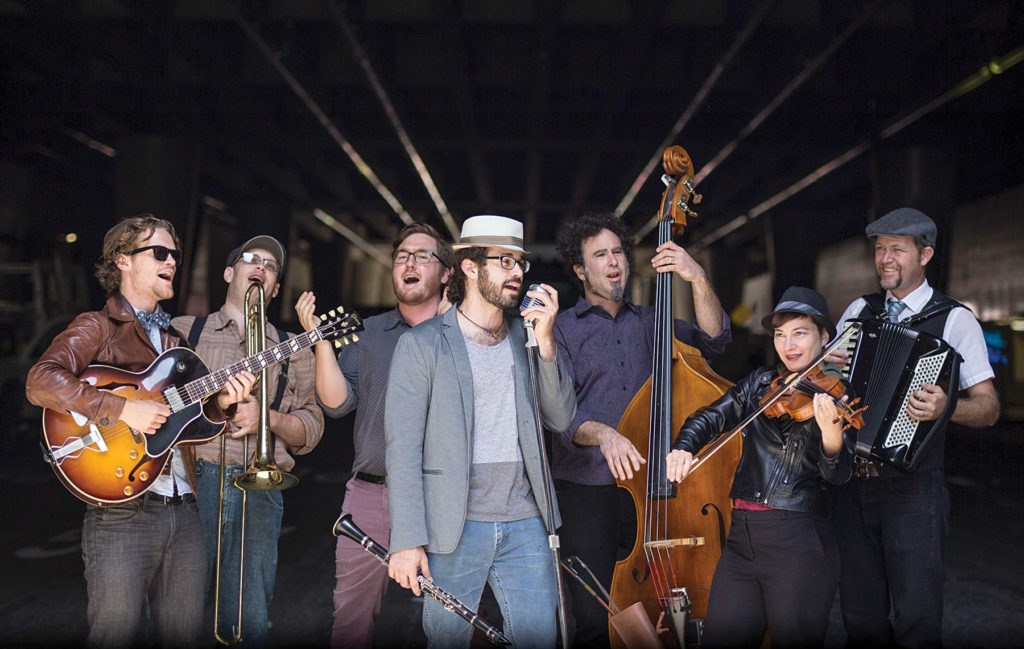
The festivities will begin with a performance by Daddy Differently, a DJ and a pseudonym used by Spencer P. Velasquez. He will play a set featuring a contemporary take on music about the harvest. Following him is locally  acclaimed Klezmer gypsy-rock band, Mostly Kosher. As they play, Bruce Bierman and Gilberto Melendez will lead Israeli dances. The instructors, who live in the Bay area, are being brought in for the event. 

There will also be a spoken-word performance. “It’s been created by our internal family and Noah’s Ark staff, as they are professional performers. They will be telling the stories behind the holiday, the meaning of the holiday and of the High Holy Days in general,” Burke said.

This year, the Skirball decided to partner with Creative Ways, a husband-and-wife team, who will oversee all the workshops. 

“Shari Davis and Benny Ferdman have put together an amazing set of workshops that people can drop into,” Burke said. “We are doing a DIY herbal kitchen where people will learn how to make vinegars and salves. There will be other workshops on making your own tea bags and making dream pillows. Everything that is made in the workshops is with something that is actually grown and harvested.”

Visitors also can take part in a program called World Café. Designed for ages 12 and older, stories will be shared around tea and snacks. The program will include prompts and a facilitator for getting people to talk about the meaning of the harvest and what’s happening in our world. 

There will also be an olive oil tasting at the Skirball archeology dig. “The themes we really try convey to the guests in the workshops deal with the changing seasons, the fragility of nature, the idea of the harvest,” Burke said. “Then we talk about shelter because the holiday is about a temporary shelter; the fragility of shelter and how important shelter is in our lives.”

She added, as part of the Skirball’s mission, “we want to welcome the stranger and welcome everyone to enjoy what we have here. We encourage people to have conversations and get to know one another. We always say you may be a stranger when you come in the door but you won’t be one when you leave.”


$12 general; $9 seniors, full-time students and children over 12; $7 children 2–12; free to members and children under 2. For more information, visit skirball.org/programs/festival/skirball-harvest-festival. 

IAC’s Israeli-Flavored Sukkot and Skirball’s Harvest Festival Read More »

Breaking Down the Sukkah Business

Once Sukkot begins, observant Jews will spend the eight-day festival in outdoor huts that remind us of the fragility of our existence. If that sounds heavy, Avi Lazar, founder of Luxury Sukkahs, is here to remind everyone that Sukkot is all about joy. 

“It’s a beautiful holiday, the happiest of all the Jewish holidays,” the 38-year-old told the Journal. “It’s called zman simchateinu — the time of our happiness.” 

For those ambitious enough to construct a sukkah, Lazar, the founder of the high-end, Israel-based sukkah business serving clients throughout North America, helps people reimagine the aesthetic possibilities of the temporary shelters.

“We take the idea of a sukkah and transform it from a not-so-fun wooden kind of box into something that can really make your home look way cooler — literally an addition onto the home,” Lazar said. “Some people believe a sukkah should be a temporary shack. We have a different take on it. We take the idea of a sukkah and say, ‘Temporary doesn’t have to be horrible. Temporary can be amazing.’ ”

Whether constructing a luxury sukkah or opting for something modest, detailed construction guidelines are available on websites including myjewishlearning.com and chabad.org. And it’s actually the schach, the vegetation covering the roof of the sukkah, that is the most important element.

“The sukkah can be made of anything— the weirdest materials — but the schach has to be a natural fiber with zero other purpose in the world other than to be schach,” Lazar said.

But when it comes to materials for the sukkah’s walls and frame, there’s a certain amount of leeway. This is where Lazar gets creative. His luxury sukkahs have see-through polycarbonate walls, an idea inspired by a past client.

“The sukkah can be made of anything — the weirdest materials — but the schach has to be a natural fiber with zero other purpose in the world other than to be schach.” — Avi Lazar 

“We had a client who said, ‘Wouldn’t it be cool if the panels were made of glass?’ and I said, ‘Why not?’ and we searched for the right type of plastic, did a little trial and error, looked for things that were shatterproof, things that aren’t too expensive.” 

Varying in length and width, Lazar’s sukkah dimensions include 12-by-12 feet, 12-by-16 feet and 24-by-12 feet. Options include the Diamond Edition, “bound to make a statement in your neighborhood,” and the Crystal Edition,” an “elegant finished product,” according to the Luxury Sukkahs website. 

Lazar said his company hires subcontracted carpentry workers, but he declined to specify the costs of building his sukkahs, revealing only, “They can climb extremely high.”

A more practical option is Sukkah Depot, the self-described “largest and most recognized sukkah manufacturer and seller in the Jewish world.” While most Sukkot Depot sales are online, for the first time the company opened a temporary storefront on West Pico Boulevard in Pico-Robertson, offering easy-to-assemble sukkahs made from wood panels, tarps and poles. 

On Oct. 7, Yisroel Mishulovin, a Los Angeles representative for Sukkah Depot, was busy with customers scrambling to purchase sukkahs ahead of Yom Kippur. Mishulovin told the Journal he was “doing an experimental gig to see how this goes and to see what [potentially] happens [in] the future.”

While Sukkah Depot sells schach made from bamboo and reed mats, local businessman Moshe Levis sells and delivers schach made from palm and date trees. He said that while bamboo mats are cheaper as they are reusable, his customers prefer the more traditional, more natural option of actual trees.

“People still buy those palm branches,” he said. “It’s what they are used to. It’s what they grow up with. It’s the tradition. Some people use both.”

Customers are keeping the sukkah sellers hopping. As Lazar explained, “This specific business, it has such a small yet gigantic explosion of time during the period of one week before Rosh Hashanah or two weeks maximum before Rosh Hashanah and a week and a half after Sukkot. That is the entire business.” 

Just as families hurry to have a sukkah up in their homes before Sukkot begins, they are just as eager to remove the sukkah once the holiday is over.

“Our clients love the product but they hate having a sukkah up,” Lazar said. “They want the beauty and the event of Sukkot but as soon as Sukkot is over, we have a very lengthy list of [people saying], ‘Take us down first.’ ”

Breaking Down the Sukkah Business Read More »

The Great Geneticist in the Sky – A Poem for Parsha Ha’azinu

My lesson will drip like rain;
my word will flow like dew

The sky is talking
the earth is listening
Let’s get wet with education,
Let words cover us like moss.

Shout out the Best Name you know!

The rocks were here long before us
and we have to assume they
know what they’re doing.

Our backs are gotten.
No One is cheating on us
with another people.

If something breaks
rest assured it ain’t His fault.
Look in the mirror and

you’ll get a sense of
who blew this whole thing.
You and all the other boomers

and x’ers and y-ers and z-ers.
We’re running out of cocktail ice.
The air is burning away.

This wasn’t part of the plan.
This DNA didn’t have phracking
in mind when the great

geneticist in the sky pulled
the earth away from the waters
and built us a garden which

we hardly remember.


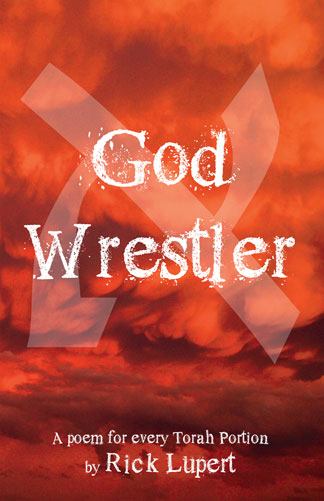
God Wrestler: a poem for every Torah Portion by Rick LupertLos Angeles poet Rick Lupert created the Poetry Super Highway (an online publication and resource for poets), and hosted the Cobalt Cafe weekly poetry reading for almost 21 years. He’s authored 23 collections of poetry, including “God Wrestler: A Poem for Every Torah Portion“, “I’m a Jew, Are You” (Jewish themed poems) and “Feeding Holy Cats” (Poetry written while a staff member on the first Birthright Israel trip), and most recently “Hunka Hunka Howdee!” (Poems written in Memphis, Nashville, and Louisville – Ain’t Got No Press, May 2019) and edited the anthologies “Ekphrastia Gone Wild”, “A Poet’s Haggadah”, and “The Night Goes on All Night.” He writes the daily web comic “Cat and Banana” with fellow Los Angeles poet Brendan Constantine. He’s widely published and reads his poetry wherever they let him.

The Great Geneticist in the Sky – A Poem for Parsha Ha’azinu Read More »

A Confluence of Food and Art in Los Angeles

The citywide monthlong current: LA Food triennial is here, with more than 75 free events and 15 commissioned installations in public parks in 15 Los Angeles City Council districts.

Produced and curated by the L.A. Department of Cultural Affairs in partnership with the Institute of Contemporary Art, Los Angeles (ICA LA), ICA LA Lead Curator/Director of Learning and Engagement Asuka Hisa calls the event “a confluence of food and art.”

Hisa spoke with the Journal recently at Pershing Square while artist Nancy Lupo added finishing touches to “Open Mouth” — a collection of scaled-down benches arranged in the shape of a jaw. 

Each Current: LA Food site features an original piece by a contemporary artist, as well as a public programming element. They all share a sense of what Hisa called “simpatico. People are enjoying the food richness of L.A., and the diversity and the culinary excellence that’s coming to town,” she said, “but it’s really not about that with this project. It’s looking at issues. You stand to learn from the art in a big way, because there’s already an access point where you connect to it.”

The roster is a mix of local and international artists who approach food as an inspiration and jumping off point. The results showcase diverse perspectives, concepts and materials. Despite the wide geographical territory covered, Current: LA Food is feasibly mapped out for participants who want to see as many of the 15 installations as possible.

“People are enjoying the food richness of L.A., and the diversity and the culinary excellence that’s coming to town, but it’s really about … looking at issues.” — Asuka Hisa

Emily Marchand’s “A Thousand Lunches” events welcomes participants to help prepare meals to be distributed to the homeless at Roger Jessup Park in Pacoima. 

The multimedia installation “Mussel Beach” by Cooking Sessions is at the Venice Beach Recreation Center, while Adrià Julià’s “A Very White Flower” is at the L.A. State Historic Park in Chinatown, and Torolab’s Watts Cookbook project is located at Ted Watkins Memorial Park in Watts.

Meanwhile, at Pan Pacific Park, Chicago-based artist Michael Rakowitz explores the historical relationship with Iraq and that region’s history and date production in “Beneath the Date Palms.” His recent exhibition, “Dispute Between the Tamarisk and the Date Palm,” was held at Redcat. 

The three temporary structures that comprise “Beneath the Date Palms” reconstruct Room F of the Northwest Palace of Nimrud destroyed by the Islamic State (ISIS) in 2015. 

The predominance of missing panels in Rakowitz’s piece creates a conspicuous absence, and the artist traces the artifacts’ fates. Rakowitz uses repurposed materials including newspapers and food wrappers to construct the panels.

The Coachella Valley’s prolific date production lends a natural tie between Southern California and Iraq. California-grown dates will be featured in Rakowitz’s events, including a Sukkot dinner co-presented with IfNotNow on Oct. 13. A second dinner, titled “A House with a Date Palm Will Never Starve,” will be hosted in collaboration with Iraqi American chef Sara Ahmad on Nov. 2.

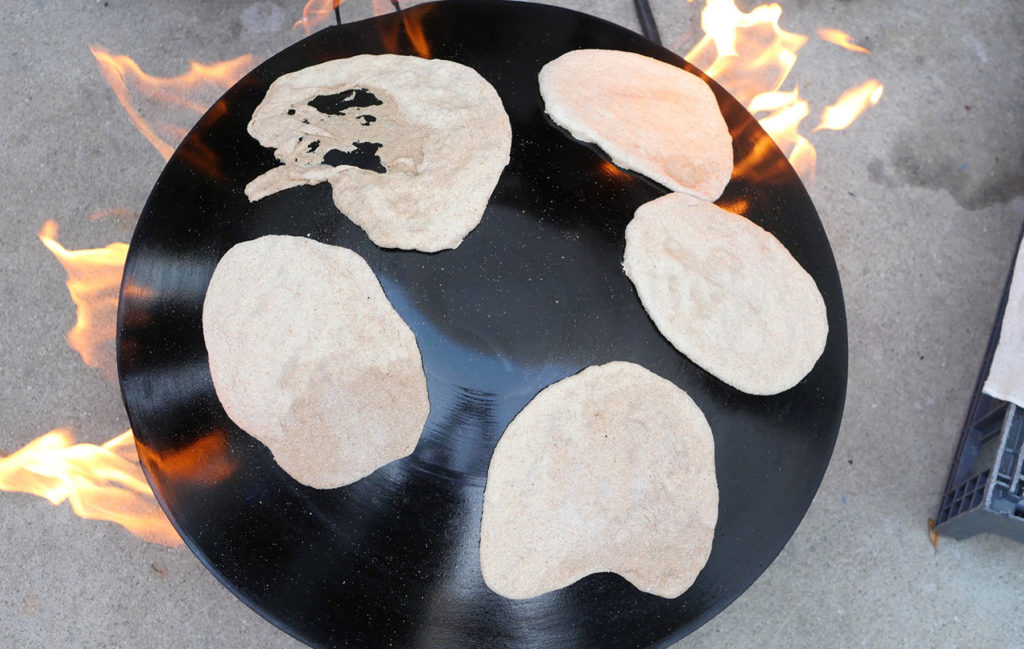
For the complementary programming component at Pan Pacific Park, curator and activist Leyna Lightman has planned at least four bread-baking gatherings focused on different international regions, including Ethiopia and Armenia, using a dedicated adobe oven.   

With other newly opened food-centric art exhibitions on view in L.A. — Consume: Handcrafting L.A. Restaurant Design at the Craft in America Center on West Third Street and Supershow by art collective Fallen Fruit at the Pacific Design Center’s PDC Design Gallery in West Hollywood — the original concept for Current: LA Food proposed about five years ago has proved prescient. 

The undertaking is more topical today, given ongoing crises related to hunger and homelessness  in L.A. and beyond. 

“It’s in the news, and here you are experiencing it through art and the art lens, which is incredible,” Hisa said. “I know for a fact that the artists are learning as much about their city as the city is standing to learn from these works.”


Jessica Ritz is a freelance journalist whose writing has appeared in the Los Angeles Times, C Magazine, Sunset, Coastal Living, Tablet and ArchitecturalDigest.com.

A Confluence of Food and Art in Los Angeles Read More »

Yom Kippur and the Lamb Chop

I knew the Kol Nidre crowd at the Beverly Hills Hotel was probably expecting me to talk about big issues. Since I deal with such issues all week long, I could have spoken about the alarming rise in anti-Semitism, the complicated relationship with Israel, the challenge of Jewish continuity, the need to fulfill our responsibility to the world, and so on.

But instead, I spoke about a lamb chop.

More specifically, I spoke about public humiliation.

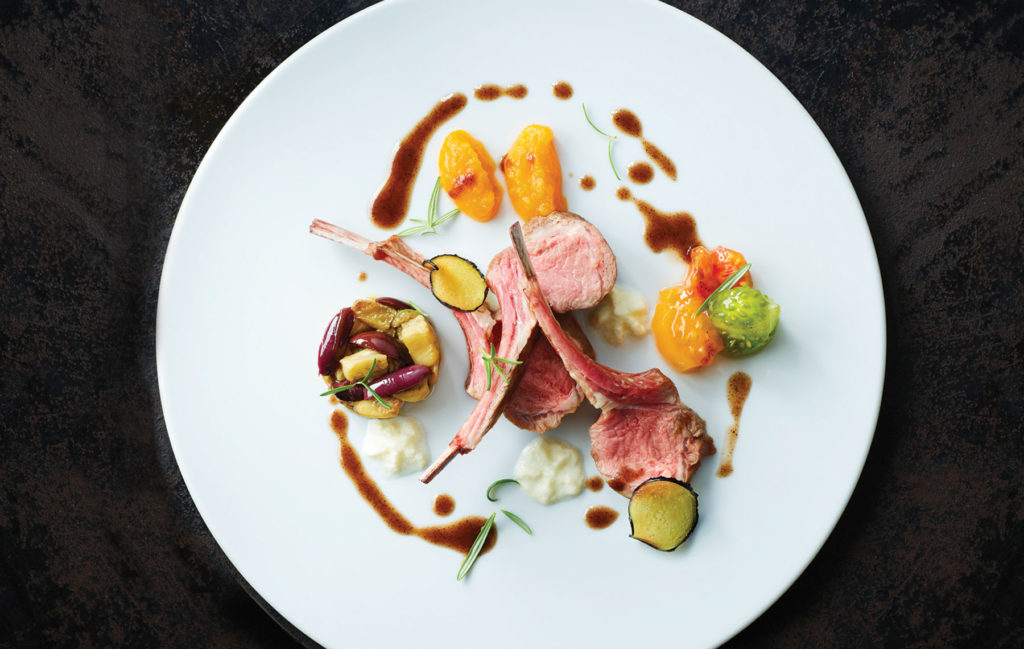
At a family wedding I attended recently, after the initial salad dish, the guests were served a single lamb chop as the next “appetizer.” Because lamb chops are usually part of the main course, there was confusion among some of the guests: Could this be the main course? Is this one of those hip, minimalist chefs who’s trying to impress us? Are we done with real food until dessert?

Meanwhile, my mother, who was sitting at another table, decided she wouldn’t take a chance. So, in full entrepreneurial mode, she convinced one of the waiters to bring her more lamb chops.

Guess what she planned to do with them?

That’s right — bring them to her son, as if I were 8 years old.

At Kol Nidre, I spoke about a class on Chassidut I took years ago, when my teacher used a memorable phrase to describe the ultimate benefit of the class: The refinement of character.

By then, lamb chops were the last thing on my mind. I was up and milling around, schmoozing with old friends and relatives, enjoying the incredible music.

Imagine, then, my discomfort when my beloved mother interrupted my schmoozing to hand me a plate with three lamb chops. In front of everyone, she proudly said, in French: “Tiens, mon fils” (Here, my son).

My initial reflex was: No way! There’s no way I’m going to embarrass myself feasting on three lamb chops in front of people who had only one. (In case you’re wondering, there was plenty of more food on the way.)

But I didn’t say anything. Within a second or two, I did a million calculations in my head and came to this conclusion:

There’s no way I will embarrass my mother.

I just couldn’t see myself rejecting her and forcing her to walk back sheepishly to her table with a plate of food she managed to procure for her beloved son.

So I decided I would take the embarrassment instead of her.

One of my proudest moments of the year was when I refused to embarrass my 87-year-old mother at a family wedding.

I accepted the plate, went back to my seat and started eating, trying not to notice if people were watching me during this awkward moment (of course, she was keeping an eye on me from her table, evidently pleased with herself).

Why did I bring this story up at Kol Nidre?

Because I was trying to make a point about big stuff versus small stuff. All year long, I deal with big stuff. As editor of a community newspaper, I try to elevate the communal conversation, create a big tent with diverse voices, etc. I’m proud of what we’ve accomplished professionally over the past year.

But as a human being, you must believe me that one of my proudest moments of the year was when I refused to embarrass my 87-year-old mother at a family wedding.

At Kol Nidre, I spoke about a class on Chassidut I took years ago, when my teacher used a memorable phrase to describe the ultimate benefit of the class: The refinement of character. This refinement is the work we do every minute of our lives, when we are constantly mindful of our power to hurt or to heal.

It’s a refinement that thrives in the micro, not the macro.

It’s in not rolling our eyes to subtly embarrass someone. It’s in not looking at our smartphones when we talk to our parents or our kids. It’s in making that little phone call to check in on a lonely relative. It’s in accepting a plate of food even when we don’t feel like it. 

The media doesn’t care much about our personal relationships. As far as they’re concerned, they’re quite happy if all we do is worry about Donald Trump, gun violence, climate change, the elections, and so on. Sure, all of that is important, and we should never stop trying to improve the world.

But if we get too caught up with the big world, we can easily overlook our immediate world. 

The great advantage of the immediate world is that we can make an instant impact. Reach out to a family member you rarely see, dig up amazing family stories, be mindful of little gestures that can hurt people, look for little gestures that can help others — all of those micro moments make an immediate impact.

If we do more of it during the year, we can come to Kol Nidre next year with a lighter load; with fewer requests for forgiveness; with a simple message to the Almighty: “God, this year, I’ve been really good with your children.”

That’s big stuff.

Yom Kippur and the Lamb Chop Read More »

Oct. 11, 2019

Click here for fullscreen.

Read our archives here. 

Oct. 11, 2019 Read More »

On Sukkot, Look Up and Be Grateful

When you weave through the clumsy or wonderful (depending on your religious identity and aesthetic) accoutrements of Sukkot, when you observe every ritual and say every word, you can reduce this once-humble biblical holiday, now a massive logistical and financial observance, to the following: Be aware, grateful and truly in awe for the shelter above your heads. All else is commentary.

My Sukkot story, and my connection to rituals and observances both beloved and confounding to me, is a somewhat meandering one. In retrospect, the moment that reinforced to me the importance and wonder of this holiday is the same moment that taught me my childhood family sukkah was most likely unkosher — perhaps retroactively invalidating (at least from a halachic/legalese perspective) all the moments our family tried to sanctify Jewish time by eating and being there.

It is on Sukkot — and really, only on Sukkot — that the Torah actually commands joy.

The year was 1985 and I was in eighth grade. Hurricane Gloria bore down on New England and took nearly direct aim at southern Connecticut. Predictions indicated my hometown, Woodbridge, would get walloped. Gloria made landfall on Sept. 27. On the Hebrew calendar, that was 12 Tishrei, two days after Yom Kippur and three days before Sukkot. By the time Gloria hit, our sukkah was on our back porch. I remember being in the kitchen when some combination of a lightning strike and powerful winds split the twin oak tree in our backyard. One of the “branches” of the “Y”-shaped tree broke off and flew toward our kitchen while I was watching. It landed inches from our home.

In that part of Connecticut, most homes’ water comes from wells that run on electricity. We lost electric power for eight days, which means we had no running water. We had to drive 15 minutes to my father’s office or to a local community center to use the bathroom or shower. I remember an hourslong drive with my father in search of a single bag of ice to keep food fresh in our cooler. Price-gouging elevated by tenfold the cost of the bag we finally found. While I was relieved, not to mention fortunate, to still have a roof over my head and abundant non-perishable food in the cabinet to eat, it was the first time in my life I felt vulnerable and exposed. It also was the first time I was aware of how reliant I was on societal systems we too often take for granted.

We should be joyful we made it through the crucible of the Days of Awe.

All this meant that even as a 13-year-old, I had instant and poignant identification with the Israelites in the desert, whose protection and very roofs are what we commemorate, and celebrate, as we Jews put up the very temporary booths of Sukkot. Jewish law commands that for the eight days of the holiday, we exit our permanent dwellings to re-create (without truly exposing ourselves to the elements as our ancestors did) the experience of our forebears in the desert. Some observe this by eating all meals in the sukkah. Some go further and do most if not of all the things one would normally do in one’s house, such as read, play, sleep and entertain guests, in the sukkah. On Sukkot, the permanent, the stable and the firm yield to the temporary, the vulnerable and the flimsy. In 1985, thanks to Gloria, I learned the truth of Sukkot.

Despite and because of the hurricane, that Sukkot was the best, and certainly the most memorable, Sukkot our family ever celebrated. It was not until nearly 10 years later, when studying in a yeshiva and learning the minutiae of the laws of the holiday, I learned that while a kosher sukkah should be able to withstand a ruah m’tsuyah, or common wind, it ought not withstand a ruah lo m’tsuyah, an uncommon wind. Why? The structure is intended to be flimsy enough that its inhabitants are in touch with their vulnerability in nature. Yet, it if is stable enough to remain standing after a hurricane, it must not be flimsy enough. Our sukkah remained standing. Which means it was halachically unkosher.

Sukkot can expose, and distinguish, which seemingly odd things we are willing to do for our religion, for our God.

At the time, I didn’t know. Even if I knew, I’m not sure I would have cared. Sukkot that year was rich, even as it reinforced how vulnerable we all are to being instantly impoverished. All we had to cook on was a gas grill. Somehow, my mother was like a magic genie with that simple appliance. We had guests to our sukkah every night and served sumptuous meals. The brownies I cooked in a Pyrex dish on the grill were overly crispy at the bottom but chocolatey and delicious. For a week, the holiday’s ancient origins and contemporary overlap with a natural disaster could not have been more apt. We were raw, yet we created joy. We wondered about God’s protection. We beckoned God, along with biblical and modern guests, into our not-so-temporary booth. I was angry at Mother Nature but more connected to her than I had ever been.

One does not need a near catastrophe for Sukkot to matter in a deep way. The holiday is one of our most tactile observances. So many of the senses are stimulated, from the redolent odors of the four species we wave as part of the lulav/etrog ritual to the sacred blisters, splinters and pokes we suffer as we try to harvest loose greenery for the roofs of our sukkah. (While the all-too-easy bamboo mat is kosher and ubiquitous, no self-respecting New Englander would cover a sukkah with anything other than that which was present in nature.) I learned to operate an electric screwdriver while putting up my first sukkah as an adult, and a significant percentage of my personal trips to Home Depot relate to this holiday. Sukkot is a celebration of hands and olfactory bulbs, and pushes sedentary project-averse Jews to be intrepid DIYers.

Sukkot also may push against our sense of what is normal. Sukkot can expose, and distinguish, which seemingly odd things we are willing to do for our religion, for our God. A member of my first congregation (let’s call her Nancy) in upstate New York was a regular on Shabbat, at the weekday services we held on Rosh Chodesh and the intermediate days of Sukkot and Pesach. During every day of Sukkot services, there is a processional referred to as “hoshanot.” One Torah scroll is removed from the ark and held at the bimah. The rest of the congregation marches around the bimah while holding lulav and etrog, and reciting a liturgical poem. For years, Nancy volunteered to be the one to hold the Torah. Every single time. She never joined the processional, nor did I see her participate in shaking the lulav/etrog during its traditional spot in the service. One day, I asked her, “Nancy, why don’t you join in the hoshanot or shake the lulav? Someone else can easily hold the Torah the next time, if you’d rather participate in the circular perambulation!” She responded, succinctly, rationally and compellingly: “Rabbi, I love my Judaism. And the rituals. But I have limits. And I don’t wave fruit.”

Nancy’s response makes sense as it speaks to the odd yet wonderful zone where rational, modern aesthetics and culture hit up against primal, ancient and retro ritual. Think bris. Or blowing the shofar. Or tefillin. Or any Jewish ritual that, if viewed by an outsider, might seem bizarre at best — archaic or cruel at worst. The nexus of the ancient and the modern invites us to cross that threshold over and over again.

Theology plays a part, too. If I believe God specifically expects me to perform a specific act, then the act’s bizarre quotient is mostly irrelevant. If I have a relationship with God, even a commanding God, but I doubt whether a divine being or reality really cares about punctilious observance, then a ritual’s oddness might carry more weight in my decision. For some, even in that second category, the more primal the ritual, the more authentic and spiritually pleasing it might feel — be it hanging a mezuzah on a doorpost or waving fruit in the autumn. For others, rituals that hearken back to an agricultural era from which we are almost comprehensively (and, perhaps, tragically) divorced and which are not seen to be directly appeasing the Almighty might fall by the wayside.

I understand the reticence that those who don’t hold an absolutist theology regarding the provenance of Torah and its commandments have toward some aspects of Sukkot and other Jewish rituals. However,  I — a modern, American, traditional-while-progressive rabbi who believes that the greater import one puts to any individual ritual act, the smaller one’s notion of God must be — am in love with Sukkot. Nancy’s hesitations understood and notwithstanding, I believe Sukkot has much to offer the individual Jew, the Jewish community and society at large.

In preparing to write this story, I spoke to many friends and colleagues about their Sukkot associations. What draws them to this holiday? One of them praised the holiday for pulling the individual Jew back into relationship with the natural world, its bounty and splendor, along with its terrible power. A simple review of news headlines would highlight how relevant such a holiday could be. A colleague who grew up in Chicago and now lives in L.A. focused on exposure to frigidity by Lake Michigan, and wishing air-conditioning was commonplace in the SoCal sukkah. In other words, if you lean into Sukkot, you cannot escape your locus on this earth; you are exposed, and connected, to your world.

Another mentioned Sukkot is a mitzvah that breeds other important mitzvot. She spoke about the satisfying sense of accomplishment in erecting the structure from scratch. That satisfaction builds a stronger investment in having guests to that sukkah, to help celebrate the achievement. So following the Torah’s command to build a hut galvanizes the obligation to hakhnasat orchim, welcoming guests to our abode.

Why is Sukkot so special? For all of the reasons above. And for at least one more: It is on Sukkot − and really, only on Sukkot — that the Torah actually commands joy.

One of Sukkot’s nicknames is “z’man simhateinu,” “the time of our rejoicing.” We should be joyful we made it through the crucible of the Days of Awe. Joyful we withstood the intensity of self-reflection and hopefully achieved a form of self-renewal. The holiday can be, and should be, fun. And why shouldn’t religious life be fun?

But there is an aspect of the simcha/joy commanded on Sukkot that deserves attention. The Torah issues a two-word command to be joyful: v’hayita sameach. Yet, it adds a short word between those two that is hard to translate: “ach.” Some translate this word as “but.” What does that little word add to or subtract from our Sukkot joy?

This Sukkot, leave your home. Observe the huts. Bring joy to others — those you know and those you do not. 

My friend and teacher, Rabbi Barry Dov Katz, interprets that little “ach” as a reminder that joy is never perfect. Even if ours is, momentarily, a Sukkot-based joy obligates an awareness that others’ don’t have that same happiness. While in the process of writing this story, a sukkah went up adjacent to our synagogue’s property. No, it was not some overly eager Jew erecting the obligatory booth weeks before the holiday. This “sukkah,” humble and bent-over like its occupant, was put up by a homeless person in our neighborhood. Our schach, made of bamboo or palm fronds, are symbolic roofs. This person’s schach, made of a weathered blanket and some cardboard boxes, was an actual roof. Our sojourn in the sukkah is temporary, somewhat ersatz, exposed to the elements — but only somewhat. This person’s sukkah was an actual dwelling. Our sukkah is a short-term downgrade in our domiciles. This person’s sukkah was likely a hard-earned upgrade from sleeping on a bench with no covering.

Our sukkot are filled with joy. But because so many others in our world, in our city, in our neighborhoods, likely would surrender everything they own to live in a sukkah full time, our observance of sukkot must be filled with mitigated joy.

Could such lessons be learned without kids’ decorations, ubiquitous paper chains draping the walls and recitations of the blessing leshev basukkah, referencing the commandment to dwell in the sukkah? Yes. Could our societal awareness, including the gaping delta between those who have and those who have not, be properly agitated without myrtle twigs, willow branches, citrons and palm fronds? Without a doubt. Do we still need Sukkot in our religious and human consciousness, observing it in such a way that returns us to the world that birthed us all, and which still damns so many of our brethren? I think we do.

This Sukkot, leave your home. Observe the huts. Bring joy to others — those you know and those you do not. Generate a hurricane of care, so powerful it can knock down the heartlessness in our society. See, feel and touch why Sukkot matters.


Rabbi Adam Kligfeld is the Senior Rabbi of Temple Beth Am in Los Angeles. 


On Sukkot, Look Up and Be Grateful Read More »

We Stand Divided, But Why?

While sitting in Rosh Hashanah services, I spent the better part of my time reading Daniel Gordis’ new book “We Stand Divided,” about the split between American Jews and Israel. Gordis’ basic argument is that the angst American Jews feel about Israel is not new, and it is not intimately connected to Israel’s actions. Instead, Gordis argues, the rift between American Jews and Israel is a reflection of the fact that the U.S. and Israel are fundamentally different countries created for different purposes and with different values.
Gordis applied this argument to Israel’s recent election in the pages of The New York Times in making the case that American Jews aren’t likely to be any more satisfied with a Benny Gantz premiership than they have been with Prime Minister Benjamin Netanyahu’s tenure. While forecasting that some of the policies that Gantz, should he become prime minister, might adopt will ease tensions in the short term, Gordis warns that “any new Israeli prime minister might ultimately make matters worse between Israel and American Jews. That’s because American Jews will discover that some of the policies they detested and associated with Netanyahu are actually supported by a wide spectrum of Israelis. What they thought they disliked about Netanyahu they may find that they dislike about Israel itself.”

On all of these fronts, I think that Gordis is unquestionably correct. The U.S. and Israel are fundamentally different; American Jews and Israeli Jews have fundamentally different values and see their Judaism differently; and American Jews who lay all of their hang-ups about Israel at Netanyahu’s feet are destined for serious disappointment when Israel is one day run by someone else. We need to be honest about the fact that American and Israeli Jews don’t see eye to eye on things large and small, from what it means to be a Jew to how to engage with the world. We also need to be historically literate and understand, as Gordis demonstrates, that arguments and divisions between Israeli and American Jews have been present since before the creation of the state, and that this is not an unprecedented phenomenon driven by a new generation of millennials. The imagined halcyon days of the relationship between Israeli and American Jews are largely a myth, even if things now are particularly fraught.

As always, however, the devil is in the details, and that is where Gordis advances an argument that does not hold up quite so well to scrutiny. He hints at this in his New York Times op-ed about Gantz when he writes that American Jews may discover that what they dislike is Israel rather than its current leadership. Without the more extensive argument that he lays out in his book, one can easily read that to be referring to Israeli government policies that would be pursued by Gantz or any other plausible candidate for prime minister in Israel’s current political environment. Yet Gordis’ theory in his book is that American Jews have a problem with the very concept of Israel as a Jewish state, and that American Jews’ politics and worldview will never be comfortable with nation-states of any kind. In his formulation, the fact that Israel is a state rooted in the particularist idea of benefiting one distinct group of people is embarrassing and even (in his words) loathsome to American Jewry.
This is, to say the least, a controversial argument, but the fact that it is controversial does not make it wrong. What makes it wrong is that Gordis’ evidence for this claim is thin and overly reliant on a historical record from before Israel’s establishment that doesn’t comport with today’s landscape. Gordis does an adept job of demonstrating the ambivalence that many American Jewish leaders had toward the establishment of a Jewish state in the first half of the 20th century, and convincingly argues that the combination of American universalism and the historically anomalous safe haven that universalism provided to Jews gives American Jews a unique perspective. But when you are citing Michael Chabon and IfNotNow as representative of American Jewry writ large, or referring to a 1946 exchange between Hannah Arendt and Gershom Scholem to support a claim about the predilections of American Jews in 2019, it is a sign that your line of reasoning has gone off the rails.

American Jews do indeed support Israel as a Jewish state, and to describe the relationship between American Judaism and Israel as one in which the former is embarrassed by the latter’s Jewish character is contradicted by mountains of easily observable data.

To look at the deeply Zionist American Jewish community, where every major American Jewish organization of any significance supports Israel not only in practice but specifically as a Jewish state and where over 90% of American Jews say they have favorable feelings toward Israel, and to posit that the real problem is a rejection of the concept of Israel’s Jewish nature is a puzzling leap. Gordis contends that a refusal to endorse Jewish statehood is endemic to American Judaism because it is a natural outgrowth of American universalism. In this theoretical framework, the debate over Zionism that consumed American Jewry in the 1930s, 1940s and even 1950s is more relevant to understanding American Jewish problems with Israel than the fact that today, anti-Zionism is a fringe position within American Judaism. Adopting this understanding of American Judaism meant that a hypothetical Prime Minister Gantz inevitably will run into a wall of American Jewish opposition not because he is right of center on security policy and views no partner on the Palestinian side, but because he believes in Jews’ right to have a state of their own while American Jews reject any and all forms of ethnic nationalism.
This is not a debate that is confined to the realm of academic theory. If one accepts Gordis’ premise, not only does it mean that Israel can never satisfy American Jewish concerns, but that actual Israeli policies make no meaningful difference when it comes to this rift. If Israel somehow manages to separate from the Palestinians and execute a successful two-state outcome, it won’t matter. If Israel withdraws from the West Bank entirely, it won’t matter. If Israel ends its blockade of Gaza and turns a blind eye to anything that goes on there, it won’t matter. 

None of this will matter unless Israel drops any pretense to wanting to preserve a Jewish state and becomes a single bi-national state. American Jews who argue that their discomfort is with Israeli government policies are either being disingenuous or do not truly understand their own deep-seated psychological misgivings about Jewish statehood. The policy implications of this argument are immense, and it can easily lead to a scenario in which the Israeli government thinks that nothing it does ultimately matters so it may as well throw all caution to the wind when it comes to holding onto American Jewish support.

Gordis gets a lot right, and to his enormous credit, he is not trying to artificially paper over the deep divisions that exist between Israel and its American Jewish cousins. But IfNotNow is no more a bellwether of American Jewry than Breaking the Silence is of Israeli society, even if both groups do represent distinct constituencies that should be heard and understood. American Jews do indeed support Israel as a Jewish state, and to describe the relationship between American Judaism and Israel as one in which the former is embarrassed by the latter’s Jewish character is contradicted by mountains of easily observable data.

To the extent that American Jews are embarrassed by or uncomfortable with Israel, it is generally because of Israeli behavior rather than its metaphysical status. Gordis makes an admirable and critically necessary plea for greater understanding on both sides of the ocean, but that first requires a more accurate diagnosis of the malady.


Michael J. Koplow is the director of Washington, D.C.-based Israel Policy Forum’s Policy. He can be reached at mkoplow@ipforum.org.

We Stand Divided, But Why? Read More »