fbpx

October 10, 2019

Working Toward Peoplehood

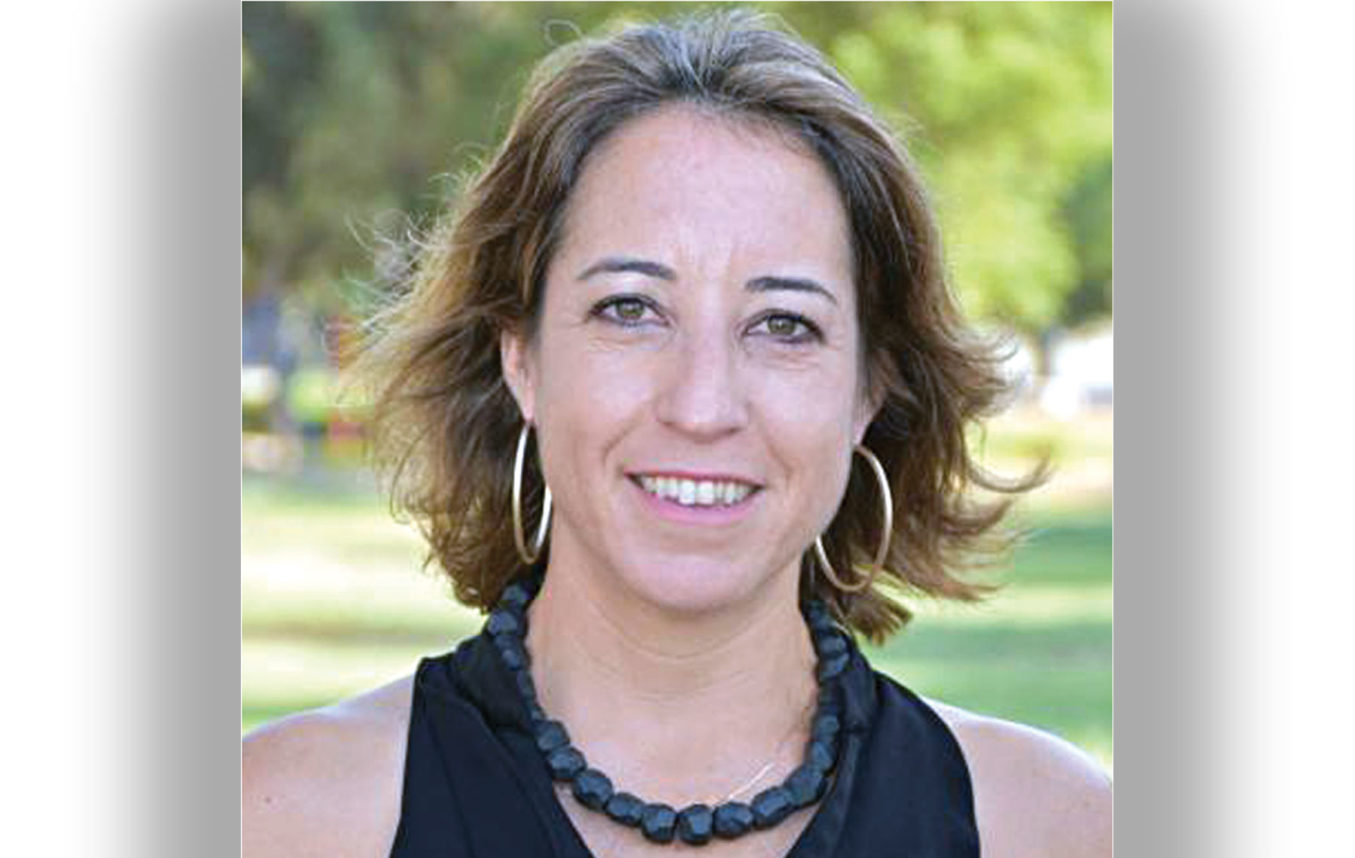
Michal Ben Dov has one word on her mind: peoplehood. And she believes you should be thinking about it too. You feel like you’ve heard it before. Maybe your rabbi spoke about it from the pulpit, or your niece posted about it on Facebook or a Jewish organization used it to elicit feelings of connectedness in its most recent email solicitation. But what does it really mean? 

Ben Dov recently spoke with an American foundation looking to invest in agritech hubs as an engine for socioeconomic development in the Galilee. But how does an organization ignite the development of a new industry in an underserved region in order to expand employment opportunities, better social welfare and further develop infrastructure? How do they bring in national and local governmental stakeholders, other nongovernmental organizations, donors and professionals to make such large scale changes? 

Ben Dov said the way to do this is to shift the lens from the old model of a one-directional flow of resources and information to a closed loop of mutual cooperation among and benefit to Jews in Israel and around the world. And that word, again, is peoplehood.

“The whole notion of peoplehood is that we have so much to learn from each other. I want to learn from the American Jewish community about their creativity.”

As the director of Strategic Partnership and Board Relations for the American Jewish Joint Distribution Committee, Ben Dov works with lay leaders and funders on “providing better services for every Israeli by making the system work better.” 

With an optimism that is tempered with a true understanding of the complicated relationship between Diaspora Jewry and Israel, and the realities of the Israeli public sector, Ben Dov believes we can do better. “The whole notion of peoplehood is that we have so much to learn from each other,” she said. “I want to learn from the American Jewish community about their creativity — how they create ways to connect and belong to the Jewish community.”  

As an American and Israeli, spending her formative years in Berkeley, and Haifa, Ben Dov believes she is able to help us share our knowledge to maximize our potential. Instead of following the state-building model of world Jewry writing checks to support a struggling Israel, she believes we need to see one another as partners, with our own experiences, perspectives and expertise to share. “When we work together,” Ben Dov said, “we’re stronger and have much more assets and can make this a better world — not just a better Israel.”

Putting her vision into action, Ben Dov recently taught a course on peoplehood at her children’s school. “We need to be ‘or l’goyim’ (a light unto the nations),” Ben Dov said. “I don’t even like that term but we have the capacity to be that, if we build on this.”

Working Toward Peoplehood Read More »

Our Homeless Should Not ‘Wander in the Desert’

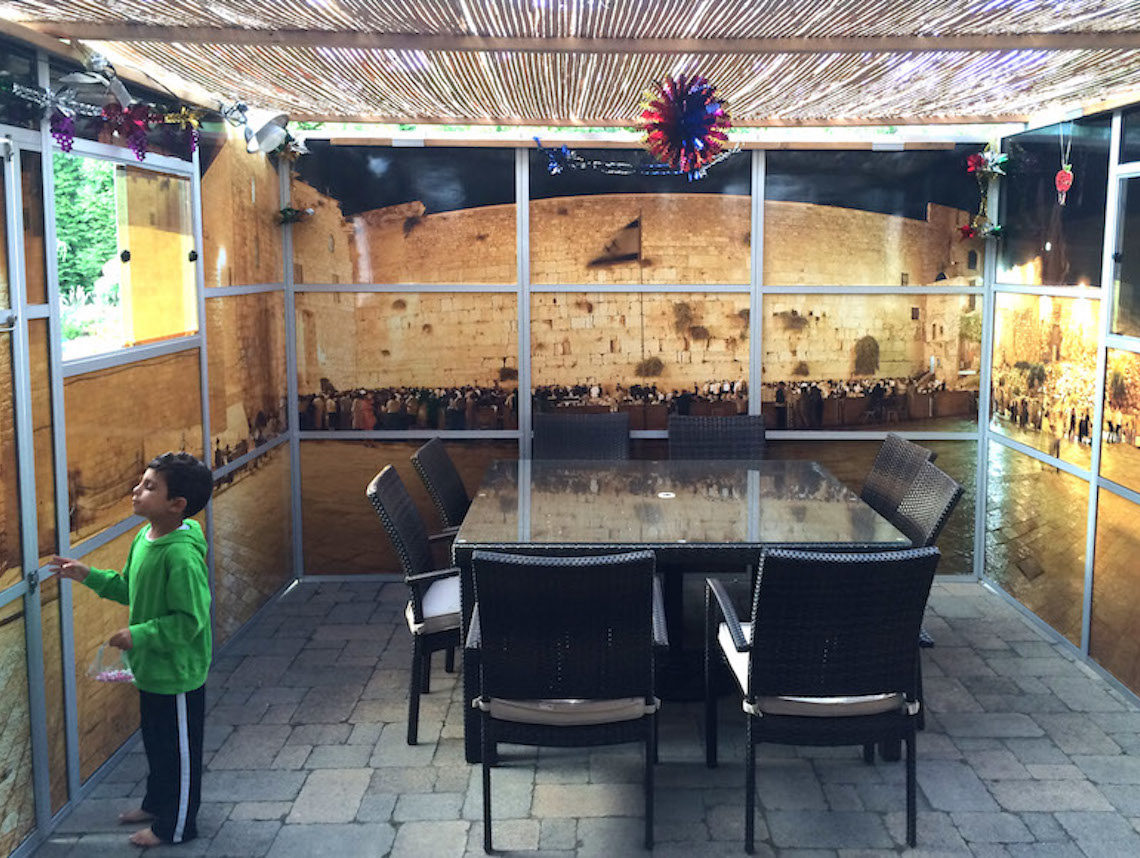
There are profound parallels between today’s homelessness epidemic and the seven-day Jewish holiday of Sukkot and recalls the ancient Israelites’ 40 years of wandering in the desert. We observe the holiday, in part, by erecting a sukkah, a temporary dwelling or hut that typically has walls of palm fronds and a roof partially open to the sky. We eat our meals in the sukkah, and some even sleep there.

The Torah references Sukkot twice. In the Book of Exodus, Sukkot simply commemorates the harvest, during which farmers in the land of Israel would reside in their sukkot and celebrate the festival. The Book of Leviticus, though, offers a deeper meaning. It recounts the rootlessness of the Israelites after their escape from slavery in Egypt, when they lived in fragile dwellings during decades of wandering in the desert en route to the Promised Land. The sukkah reminds us of those hardships and the fragility of life.

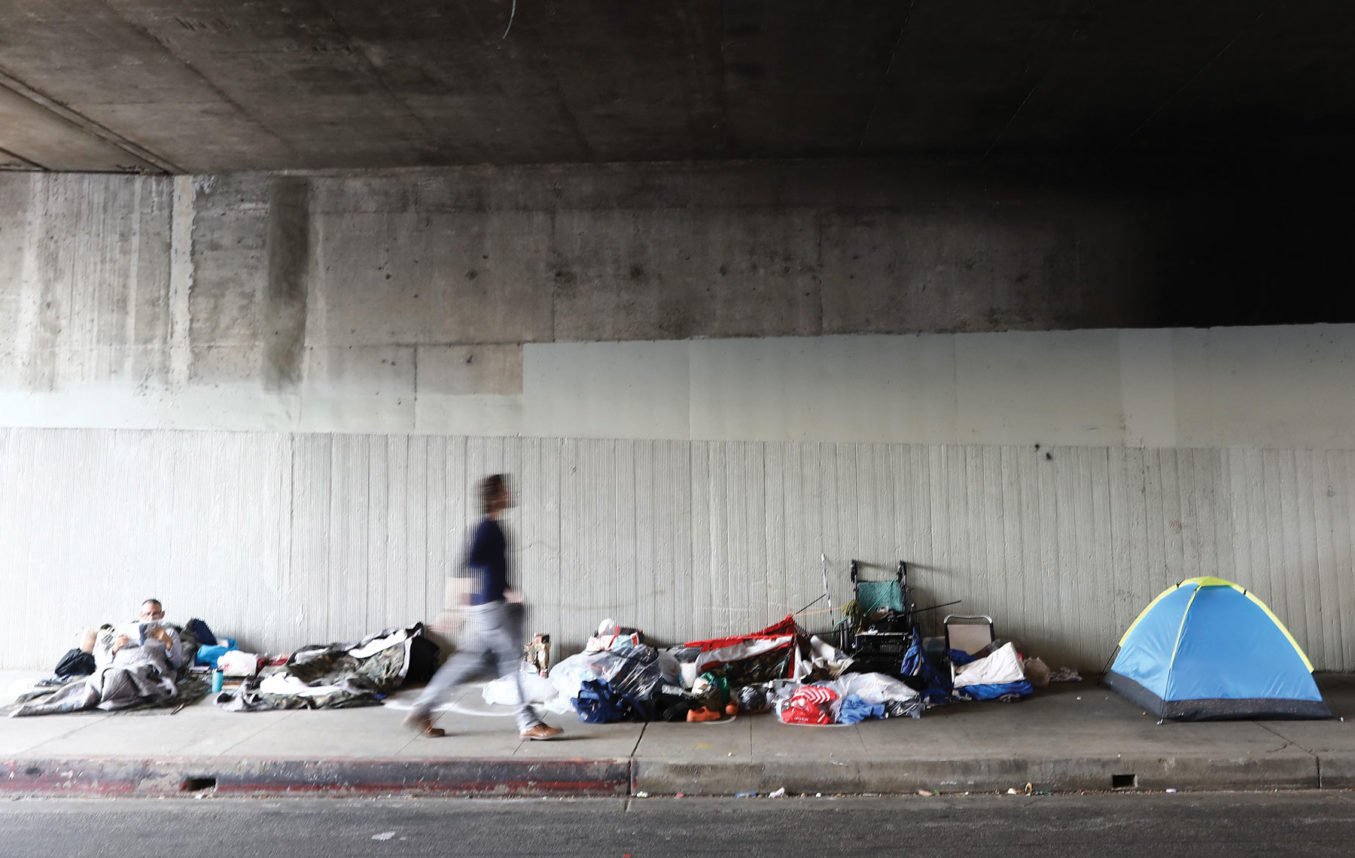
For much of our homeless population, a sukkah would be a step up. Los Angeles has the nation’s second-highest number of homeless — approximately 60,000 — with a staggering 75% unsheltered and living with no roof over their heads every night.

The issue of homelessness triggers impassioned responses both from advocates for those living on the streets as well as from residents and business owners frustrated at the impact of ad-hoc encampments that can blight a neighborhood.

A humanitarian crisis such as this is precisely what the community foundations across the country exist to address.

At a time when the homeless population in many California cities and nationally is rising by double-digit percentages annually, our overextended municipal agencies cannot solve this pressing social issue alone. We need collaborative solutions from all sectors of our communities.

When the Los Angeles City Council in July voted to reinstate a ban on sleeping overnight in vehicles parked on residential streets, it imposed yet another obstacle for homeless Angelenos forced to live in their cars. According to the Los Angeles Homeless Services Authority, the estimated number of those living in their cars is more than 16,000.

That is why Safe Parking L.A.’s launch of IKAR’s Jewish Community Safe Lots program is an encouraging step forward. The nonprofit organization will engage with synagogues throughout the city to provide off-street parking for people living in their vehicles, with security and social service resources. The initiative builds on work combating homelessness that Safe Parking L.A. began with IKAR, a spiritual community noted for its social-justice brand of Judaism.

The Jewish Community Foundation of Los Angeles (The Foundation) recently awarded a $300,000 grant to this program because it recognized our homelessness epidemic will not be solved by a single “magic bullet.” We need to explore a range of social innovations like that of Safe Parking L.A.

Why has a Jewish foundation taken such a keen interest in the city’s homeless crisis? We believe those with resources that can help ameliorate this problem must step up, get involved and lead by example. A humanitarian crisis such as this is precisely what the community foundations across the country exist to address; our Foundation’s actions are governed by the Jewish precept of tikkun olam — “healing the world.”

Underscoring the need for innovation beyond the public sector is the slower-than-expected impact of two government initiatives here: Los Angeles County Measure H, which increased sales taxes to generate funds for homeless services; and the city’s Proposition HHH, which earmarked $1.2 billion to build 10,000 housing units for the homeless. In late August, City Controller Ron Galperin released an audit of the Los Angeles Homeless Services Authority that excoriated the agency for its operational failure to hit minimum performance benchmarks.

Despite these stumbles, there are numerous local bright spots of innovation addressing this daunting problem. In fact, Los Angeles was recently lauded at a national conference on homelessness as being at the forefront of solutions to this crisis, thanks to groundbreaking programs that may not make headlines but which offer genuine promise. These include:

• Brilliant Corners’ Motel Conversion Project. Under provisions of Los Angeles’ 2018 Interim Motel Conversion Ordinance, Brilliant Corners will renovate a mid-city motel to provide housing for dozens of homeless individuals. This is a pilot project; more than 380 local motels have 10,000 rooms that could prospectively become permanent supportive housing — far faster and cheaper than new construction.

• The Shared Family Interim Housing effort of LA Family Housing will purchase and renovate three homes in the San Fernando Valley to provide interim housing for homeless individuals and families, in neighborhoods with schools, parks, supportive services and a sense of community — all critical to minimizing the disruptive impact of homelessness on children.

• The People Concern’s Scalable Permanent Supportive Housing initiative is in partnership with FlyawayHomes. The program will leverage private investment dollars and modular-building techniques to reduce the time and cost to develop housing. Their ambitious goal is 10 to 15 facilities within two years to house up to 300 homeless individuals.

Each of these initiatives — all supported by Foundation grants totaling $600,000 — demonstrates bold thinking but also another key element: scalability. Great programs — those that can make a real difference and integrate the efforts of public-sector and private solution providers — require the ability to build upon their successes. Because they are testing new approaches, they must not be afraid to try and fail … and learn from that failure as they try again.

Homelessness is a complex, large-scale problem requiring bold interventions from organizations such as those highlighted above, in addition to and in partnership with the public sectors in cities across the nation. The success of these efforts may encourage other funders and community leaders to work together to improve circumstances for these modern-day wanderers and to make Los Angeles a better place for all of us.


Marvin I. Schotland is president and chief executive officer of the Jewish Community Foundation of Los Angeles.

Our Homeless Should Not ‘Wander in the Desert’ Read More »

Jewish Groups React to Germany Synagogue Shooting on Yom Kippur

Myriad Jewish groups have condemned the Oct. 9 shooting near a synagogue in Halle, Germany, on Yom Kippur, resulting in the deaths of two people.

The suspected gunman, who German Justice Minister Christine Lambrecht has identified as 27-year-old Stephan Balliet, posted a live stream on Amazon’s Twitch platform in which he could be seen attempting to enter the synagogue. He shot at the lock at the door and lit an explosive on it, but the door remained closed, barring the suspect from entering. Authorities said the suspect shot and killed a woman outside the synagogue as well as a man inside a nearby kebab shop.

Anti-Defamation League CEO Jonathan Greenblatt tweeted, “On the holiest day of the year for Jewish people, a synagogue was attacked in Halle, Germany. This is both heartbreaking & enraging. We mourn the two victims & vow to continue to fight this hate.”

The American Jewish Committee is urging people to sign a message that reads, “We, the undersigned, express our full solidarity with Germany and its Jewish community at this difficult time. We fervently pray for the victims and their families and the Halle, Germany, Jewish community. This assault should become a wakeup call for Germany to the dangers of rising Jew hatred. German authorities must do more to combat the scourge of anti-Semitism.”

The Simon Wiesenthal Center noted in an Oct. 9 tweet that the shooting comes shortly after German police on Oct. 8 released a “knife-wielding Muslim [who was] stopped from [allegedly] attacking [a] Berlin synagogue Friday night.” “Germany must move beyond words: hold Jew-haters accountable or community won’t survive,” the Wiesenthal Center tweeted.

StandWithUs CEO and Co-Founder Roz Rothstein similarly said in a statement that the shooting was “reprehensible” and that “German police believe this was an act of far-right terrorism, reminding us once again that our governments and societies must do much more to fight back against this rising and increasingly deadly form of anti-Semitism.”

Germany’s Central Council of Jews President Josef Schuster questioned why there wasn’t a police presence at the synagogue, telling the German public radio station Deutschlandfunk, “If police had been stationed outside the synagogue, then this man could have been disarmed before he could attack the others.”

Hillel International announced in an Oct. 10 statement that 20 participants and three professionals from Hillel’s Berlin Base program were in the synagogue at the time of the shooting; none of them was injured.

“We are immensely proud of our Hillel Germany staff and participants and their courage in responding as the events unfolded, leading the community in closing prayers of Yom Kippur in the hospital cafeteria as they were evaluated after being led out of the synagogue,” Hillel International Interim CEO Adam Lehman said. “Our team at Hillel International remains in regular contact with our colleagues in Berlin and continues to offer them support and resources as they ensure the physical and emotional well-being of the students involved and their broader community.”

Jewish Groups React to Germany Synagogue Shooting on Yom Kippur Read More »

Sukkot: Joy and Strength Within Fragility

Yom Kippur is over. After focusing on repairing our relationships and cleansing our souls, we are filled with optimism and hope, and much more aligned with the true meaning of life. Having tasted Divine grace, we leave services renewed and strengthened, ready to begin Sukkot.

Torah teaches “There shall be the Feast of Booths to the Lord, seven days …  so future generations may know I made the Israelite people live in booths. …  You ‘shall rejoice’ before the Lord your God.” We also call Sukkot “Chag HaAsif,” Festival of the Ingathering; and “Z’man Simchateinu,” the Time of Our Rejoicing. Sukkot is the third pilgrimage festival, after Passover and Shavuot. It is seen as occurring at the end of the year but since it follows Rosh Hashanah and Yom Kippur, we also associate it with the year’s beginning. Jews celebrated Sukkot when Solomon dedicated the Temple, highlighted by an incredible water ritual while men juggled lit torches, performing somersaults. Along with instruments and a choir, the event was one of joy.

Sukkot represents the final harvest before the winter months; our people traveling in the desert with the Mishkan (the portable sanctuary for the Divine Presence); and once in the land, the booths the people slept in while gathering the harvest in the fields. It is a time of gratitude for the gift of sustenance.

Sukkot calls us to find joy in simple moments.

Sukkot calls us to find joy in simple moments. The sukkah is a reminder of the fragility of our world yet focuses on the gift of our lives and the breaths connecting us to the Divine. It reminds us that resilience resides within, not from the outer trappings of our lives such as material possessions, sturdy houses or the titles and honors we believe bring meaning. While dwelling in a sukkah, a fragile temporary structure with flexible walls, a roof made of organic materials, and the interior adorned with foliage and autumn bounty, we tap into how little we need to feel comforted, secure and joyful. 

The sukkah also is symbolic of the Clouds of Glory that covered the Mishkan, accompanying and leading the Israelites to the Promised Land. The roof, made of bamboo poles or large palm fronds, protects us from the elements yet reveals the sun, moon and stars. Sukkot occurs mid-month, so the moon is full, representing Shekhinah, the feminine indwelling of God, radiating light upon us. We share meals with family and friends, and even imagined guests — ushpizin. The souls of our ancestors represent each of the seven lower sefirot (emanations of Divine attributes) of the kabbalistic tree of life and their spiritual character: Abraham/Sarah (chesed-loving-kindness); Isaac/Rebecca (gevurah-strength); Jacob/Rachel/Leah (tiferet-beauty); Moses/Miriam (netzach-accomplishment); Araon/Deborah (hod-humility); Joseph/Hannah (yesod-bonding); and David/Esther (malchut-sovereignty). Each of the seven days is an opportunity to explore these aspects in ourselves.

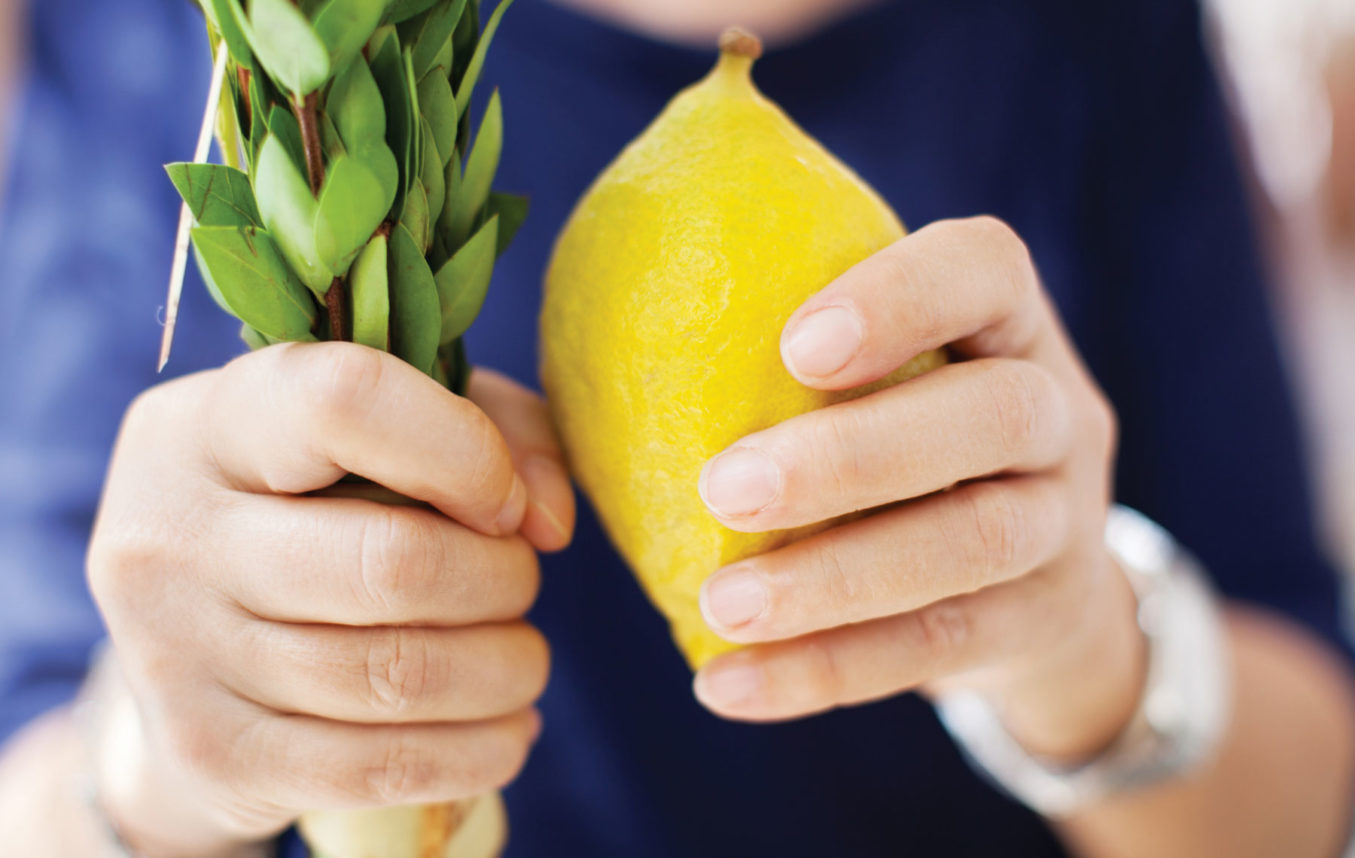
This seven-day holiday represents completion, especially God’s works of Creation. We say a blessing for the mitzvah of sitting in the sukkah and take four elements of nature — a palm branch, myrtle, willow (together called lulav) and an etrog (citron) — and shake them three times in six directions. We connect with the presence of God in every part of the world: “The whole world is filled with His/Her glory.”

There is a deeper meaning as well. God’s most awe-inspiring name, YudHayVavHay, spelled with four letters, connects with each of the four elements. Kabbalah views these elements as representing wo/man: the palm fronds for the spine, the willow for the mouth, the myrtle for the eye, and the citron for the heart. We unify these natural creations of God with our own physicality, creating shaleym, wholeness, which is an essential message of Sukkot. God and all that exists in Creation are one.

Each aspect of this experience is a humble, simple expression connecting not only our history but the joy of being surrounded by the beauty of nature and God’s fullness in our lives.

In our unification with the Divine, Sukkot reminds us we can be joyous and secure in the midst of fragility.


Rabbi and Cantor Eva Robbins is co-spiritual leaders with her husband, Rabbi Stephen Robbins, of N’vay Shalom, expandedspirit.org.

Sukkot: Joy and Strength Within Fragility Read More »

One Man’s Long, Inspiring Walk to Jerusalem for Sukkot

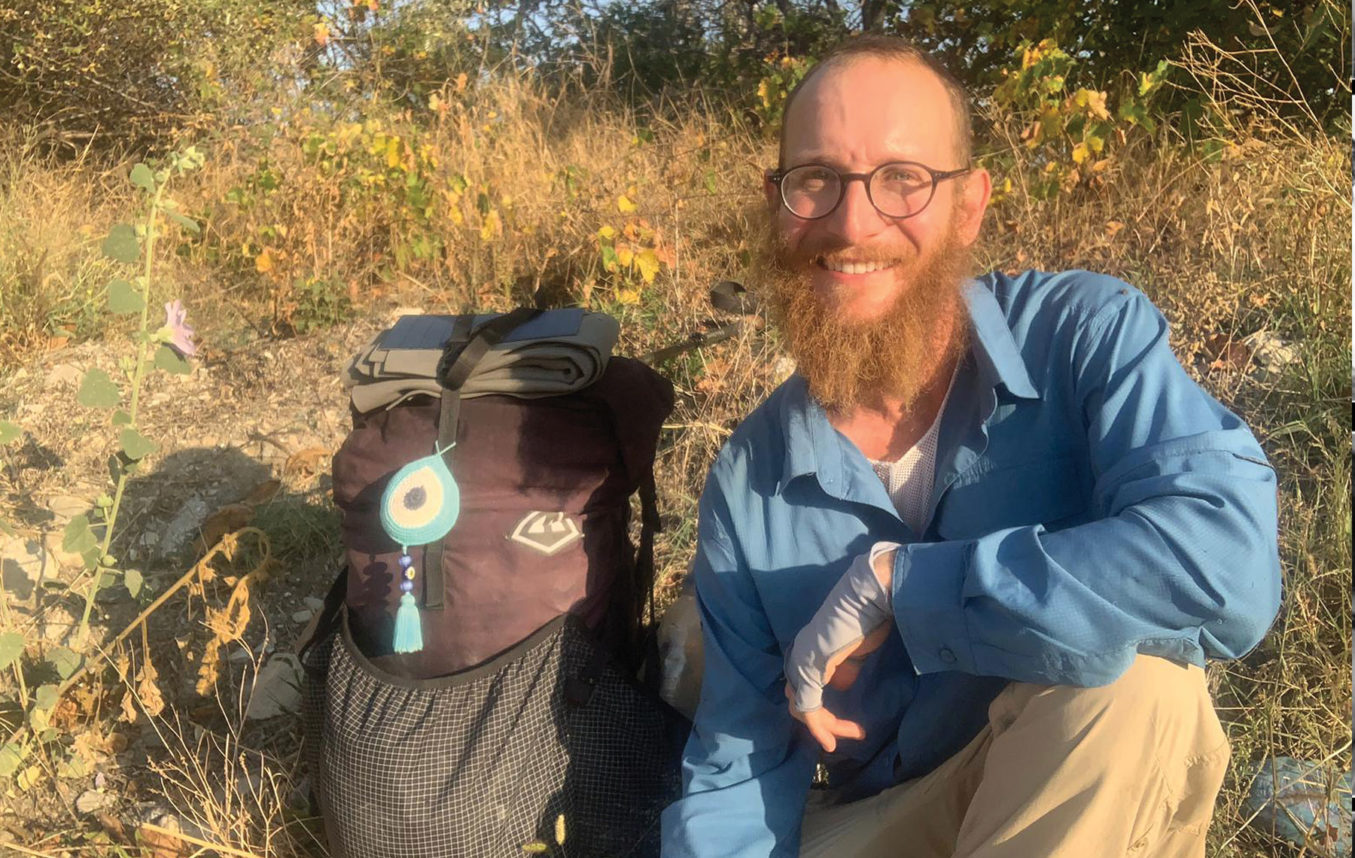
There’s an ancient Chinese proverb that a journey of a thousand miles begins with a single step. For Elan Margulies, a six-month trek from Portugal to Jerusalem, where he hopes to arrive on Sukkot, started that way. By the time he enters Israel’s capital, he will have walked more than 3,200 miles. 

Margulies, 34, is an environmentalist who most recently worked as Hazon’s director of education. His family owns Pushing the Envelope Farm, a Jewish farm west of Chicago on the site of what was once an envelope manufacturing plant.

We spoke while he walked — of course. It was his 5,000th kilometer, he said, as he trekked just north of Antalya, a town on Turkey’s southern coast, heading to where he would spend the Day of Atonement.

He plans to dip in the Mediterranean as a mikvah and spend the fast day in Antalya. Early the next morning, he intends to board a flight to Ben Gurion Airport. When he lands, he hopes to immediately start walking, all the way to Jerusalem, where he plans to stay. That last segment should take about a day and a half, he said.

“I started this trip wanting to be alone, to do my own thing and be immersed in nature. But now I see that people are generally good and doing what they can. For me, what’s changed most is my outlook toward humanity.” — Elan Margulies

Margulies started in April and will have walked through a dozen countries: Portugal, Spain, France, Italy, Croatia, Montenegro, Albania, Kosovo, North Macedonia, Bulgaria, Turkey and Israel. He encountered some trouble along the way, including a visa issue, which blocked him from walking through part of Italy and Slovenia within the E.U.’s Schengen Area. He circumvented the issue by going to Croatia. 

In Macedonia, he learned that his grandmother had died. “I wasn’t sure if I should stay on the trip or go home. Last time she and I spoke, she said it was the trip of a lifetime and I would meet her in Jerusalem,” he recalled. After talking it through with family, “I decided to hike faster and interpret it as God pushing me forward on the trip to get me to Jerusalem for Sukkot.”

There have been a few other hiccups — a scorpion crawled into his tent one night. Wild and shepherd dogs didn’t like him on their turf. There was a heat wave in France, with temperatures above 95 degrees, leaving him dangerously dehydrated.

Then there has been being Jewish in places not known to be hospitable. “A few times when I’ve mentioned I’m Jewish, there’s a political pause, mostly in Turkey, but on a personal level there has been no tension,” Margulies said.

Positive encounters have far outweighed the negative, he said, like while he walked through Kosovo.

“I had a home hospitality stay that was one of the most profound acts of charity I’ve experienced,” he said. “When I was passing this town at night, some guys invited me to sit. When they learned that I camped every night, one volunteered to bring me home to his rural family. His cousin could speak English. They drew a bath for me with buckets of water. When I said I was hungry, they brought me plates of food, apples from their orchard, clean clothes to change into. They insisted I take a crocheted blue evil eye, which is on the back of my backpack now. The next day, the guy filled my backpack with apples and took me out for coffee. They aren’t a wealthy family, but it was one of the most generous evenings I’ve ever had.” 

After several years of working in environmental education — first at Eden Village Farm, the National Park Service, then running Teva and ultimately as Hazon’s director of education — he was ready for something different. It has been a journey of personal growth, as well as physical endurance. Margulies is now walking 35 miles a day, he said, significantly faster than when he began.

“I started this trip wanting to be alone, to do my own thing and be immersed in nature,” he said. “[But now] I see that people are generally good and doing what they can. For me, what’s changed most is my outlook toward humanity. I’ve tried to take the lesson of Hillel the Elder to heart. He greeted people even before learning anything about them. I’m trying to do the same.”


Debra Nussbaum Cohen is the Jewish giving maven at Inside Philanthropy and is a freelance journalist in New York City.

One Man’s Long, Inspiring Walk to Jerusalem for Sukkot Read More »

The Sukkah Challenge

This is the time of year when I envy my friends and family living in Southern California. A few years ago, I had the pleasure of spending Sukkot in the Pico-Robertson neighborhood. The weather was so nice that you could pretty much live in the sukkah (if it had a toilet and running water).

I remember having all of my meals under the shade of beautiful palm-tree fronds that served as schach, the patchwork of leaves that function as the sukkah’s roof. The Los Angeles Jewish community genuinely seems to enjoy the holiday, as friends and family get together for food, drink and lulav shaking in their little huts. They are truly blessed to have such a hospitable climate.

Contrast this with Sukkot in Canada. Because 5779 was a leap year in the Hebrew calendar, the first day of Sukkot is Oct. 14. This is considered a late start for the holiday, and autumn will have had its grip tightly around us. The air is brisk, with the average daytime temperature ranging from 45 to 55 degrees. These numbers rapidly plummet as the sun sets. The only good thing about climate change is that today, it’s rare to see a snowflake until after Halloween. Only a few years ago, our sukkah was covered with snow before the eve of Shemini Atzeret.  It’s not unusual for our sukkah guests to be bundled in snowsuits, wool scarves and mittens while reciting the Kiddush.

Although they smelled wonderful, the pine needles kept falling into the brisket, so we replaced the roof witha roll of bamboo.

When Rabbi Moshe Jablon became leader of our congregation, he was disappointed that only a handful of his congregants bothered to erect sukkahs. He devised a plan to help families install sukkahs in their backyards. He engaged the services of a shul member who owned a company that manufactured canvas car shelters. Our member created a design that was easy to assemble and disassemble, if you’re a mechanical engineer. The kit featured 27 steel polls of various lengths, a bag of bolts and wingnuts, and, for the walls, a large piece of canvas with a zipper. In addition, construction required a gross of plastic zip ties to attach the canvas to the frame. The price was right and the model came in two sizes.

To help Jablon in his campaign, about 20 young volunteers learned how to build one sample sukkah. They were tasked with teaching each homeowner who had purchased a kit how to assemble it. This led to a number of challenges, such as fitting a 10-foot sukkah on a 9-foot deck, getting the sukkah to stand up evenly on a wet lawn, and changing the location of the doorway to align with the owners’ kitchen.

Our youth director, Rev. Amiel Bender, organized a sukkah “hop” so members of the congregation and their children could walk around the neighbourhood and visit the new sukkahs. The hosts would set up tables laden with candies, cookies and potato chips. Some families had a little l’chaim for adult visitors. The family with the nicest sukkah won a prize. It was a very successful program and, despite inclement weather, many families reassembled and decorated their sukkahs year after year.

My family was one of the beneficiaries of the Jablon sukkah project. Growing up, our family never had a sukkah, and I never knew very much about the holiday so it was with a lot of trepidation that I joined the sukkah builders in trying to figure out what pole goes where. It took a few years, but now my sons and I can put up that sukkah in less than two hours. We started by using pine branches for schach. Although they smelled wonderful, the pine needles kept falling into the brisket, so we replaced the roof with a roll of bamboo. 

Our sukkah has become the envy of the neighborhood. In addition to a hanging fixture, we have LED lighting, dangling electric fruit ornaments, family photos on the walls and most important, a heater that makes the sukkah a little more comfortable on those chilly nights. Friends and family members enjoy coming for dinners in our sukkah, but despite their long underwear and double hoodies, they rarely make it to dessert.

Chag sameach and keep warm.


Paul Starr is a recently retired systems analyst living in Montreal. He belongs to a Modern Orthodox congregation.

The Sukkah Challenge Read More »

Columbus Day Lives

My wife and I met for the first time 52 years ago at a Columbus Day party on an October evening. We will celebrate again this year, but not with a Columbus Day dinner. Thanks to the Los Angeles City Council’s action two years ago, our dinner will be on Indigenous Peoples Day.

The rationale for that alteration is that Christopher Columbus and the generations of people who came to the Americas after the Italian explorer set foot in the New World were responsible for many evils, from the conquest and displacement of the Native Americans, to slavery and colonialism, to the projection of American power and interests around the world. As one advocate put it, “We did not want to be the center of a national celebration of imperialism and colonialism and genocide.”

Columbus, in short, was the first cause of our many evils, and the indigenous peoples the first victims of what would be America’s success. It is because theirs is a dark side of the American story that, even though the indigenous population became American citizens some 100 years ago, it is not Indigenous Americans Day. And it is why this new holiday cannot be on some other date. Instead, it must replace — eradicate —  Columbus Day.

The goal to be a “city upon a hill” has never been abandoned.

Like every other nation and culture, ours is not without grievous faults. The indigenous peoples, after all, brutally enslaved, tortured and murdered one another. We honor them, therefore, with this new holiday, not to celebrate their virtue but to condemn our faults. The lesson being taught by this substitution is that those faults outweigh the good, that the American adventure that followed Columbus’ discovery has brought more evil than benefit, that our shame should outweigh our pride. 

This same thesis can be seen in the Ethnic Studies Model Curriculum that recently was  considered — and rejected — by the California State Board of Education. That proposed curriculum described capitalism as a “form of power and oppression” equivalent to white supremacy and racism, ignored or rejected as bigoted or selfish America’s assimilationist ethos, and critiqued American foreign policy as responsible for the rise of Islamist radicalism. Many evils; little or no good.

The thesis that America’s history and endeavors are more blameworthy than praiseworthy should give pause to liberals and conservatives. Both are witness to America’s efforts, though sometimes flawed, to better the lives of its own people and people around the world through ideology and action, whether implementing constitutional democracy, protecting the free exercise of religion, permitting unpopular speech, encouraging diversity, welcoming millions of immigrants over the years (including the more than 47 million who presently call America home), fighting a terrible war to free its slaves, expanding economic opportunity, prevailing in the fights against Nazism and Communism, resisting terrorist ideologies and much more. Certainly not always perfect, but the goal to be a “city upon a hill” has never been abandoned. Those who take pride in America’s overwhelming accomplishments should be concerned that, with the replacement of Columbus Day by Indigenous Peoples Day, America’s failures are becoming the dominant narrative.

This is no small matter. A nation’s sense of self-worth is vital to its well-being and, ultimately, to its health. If we ignore our historic accomplishments while being overwhelmed by self-doubt and shame, we will lose the energy to pursue our national goals — liberty, equality, inclusiveness, justice under law — framed by our founders and nurtured over the years by American toil and blood. 

There is, for Jews, a further cause for concern. Israel’s enemies often describe Palestinians as a people who have been brutally expelled from their homes while being the victims of genocide. It takes little imagination on their part to equate Palestinians to indigenous Americans, arguing that the eradication of Columbus Day is a model for the dishonoring of Israel. Just as Americans must reemphasize their pride as Americans, the answer for Jews is to take pride in the accomplishments of the Jewish state and the Jewish people, and to make clear — to ourselves and to others — that these accomplishments outweigh any faults. 

So I’ll continue to call the day I met my wife “Columbus Day,” as we do in much of America, honoring the achievements that flowed from Columbus’ discovery, believing firmly that they outweigh the harms, and thankful that we are able to enjoy their fruits.


Gregory R. Smith is a retired appellate attorney living in Los Angeles.

Columbus Day Lives Read More »

The Work of Sukkot Is Worth It

My favorite Jewish holidays are the ones that require the most work: Pesach and Sukkot. They are two of the three pilgrimage holidays — Shavuot being the third and by far the easiest to celebrate — and they are probably the most frequently complained about. 

I get it. On Pesach, we turn our homes (and seemingly, lives) upside down. For Sukkot, we build a hut in our backyard and eat in it (sleep in it too, if you’re hard core) whether it’s boiling hot outside and thousands of flies are attacking us, or it’s cold and rainy and those signature SoCal mosquitos are on the prowl.

I’m not judging the people who have hassle-free sukkahs but I find meaning in the work of the holiday.

Because erecting the sukkah and taking it down can be a hassle, one year, my husband, Daniel, and I left ours up seven months after Sukkot had ended. Seeing it every day, I felt like someone who leaves their Christmas lights hanging up year-round. 

To avoid this, some people buy a home with a pre-built sukkah structure in the backyard, while others have special roofs on their houses that they can roll back for the holiday, turning their dining room into the sukkah.

I’m not judging the people who have those hassle-free sukkahs but I find meaning in the work of the holiday. Hauling all of the stuff out of the garage after breaking my Yom Kippur fast, building the sukkah with Daniel, decorating it, and then making a large meal to enjoy with my family and friends is my idea of pure happiness. 

Every year, Daniel and I buy new schach for our sukkah along with more panels and poles to expand it. Our friends gifted us a sukkah the year we moved to L.A., in 2012. It fit only six people. We figured out the next year that we could have made it much bigger, so then we kept expanding it. Now, it comfortably can fit 30 (and, uncomfortably, a few more). 

We also buy new decorations to hang up each holiday. Last Sukkot, we had just returned from Morocco, where we purchased Moroccan lamps and other gorgeous wares in a market in Marrakesh. We always try to give our sukkah a magical feeling not only by inviting in guests but also by decorating it as beautifully as our home. 

Daniel and I have a running joke that we have a fertile sukkah, because every year we invite a couple who gets pregnant soon after the holiday. Last year, Daniel and I hosted his childhood friend and his wife. This year, I’m due to give birth on Shemini Atzeret to our first child, and the friend and his wife are expected to become first-time parents one week after that. 

I love Sukkot because it’s a complete change-up from the everyday. I feel like I’m more in tune with the natural world and that I truly have to trust that HaShem is there to protect me from the elements. It’s just like how, on Pesach, I have to have faith that I’ll be able to get through cleaning without going nuts and be able to afford all those expensive groceries. 

Both holidays require you to have emunah that things are going to be all right, as tough as they are at the moment. We need emunah that the black widow spiders won’t bite us, that the food is going to be warm enough for guests, that the wind won’t blow away our decorations. Every year, Daniel and I go bigger because we’ve grown spiritually and trust more and more in HaShem.

It is said that the sukkah signifies a giant, forgiving embrace from God. This Sukkot, I encourage you to embrace the holiday back, and experience the wonderful lessons in faith it can teach you and the joy it can bring.


Kylie Ora Lobell is a Journal contributing writer.

The Work of Sukkot Is Worth It Read More »

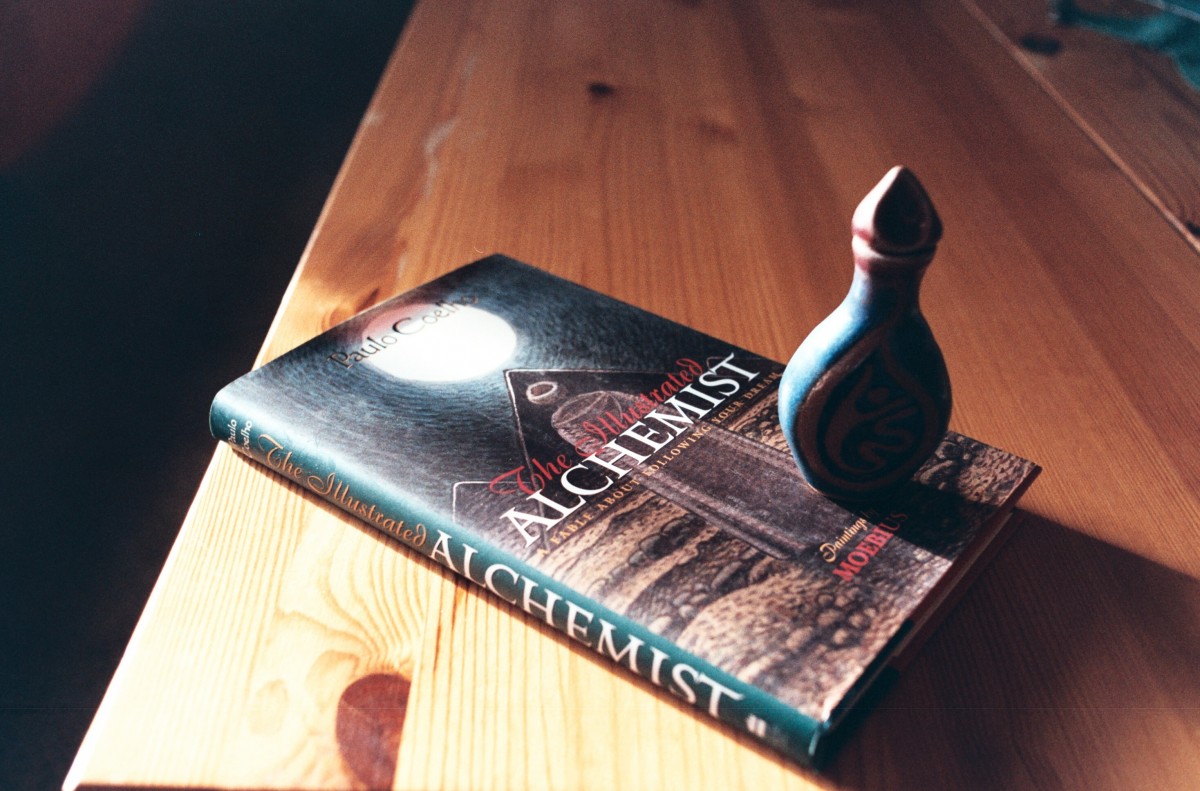
The Alchemist

Every Rosh Hashanah, I entreat God for a happy year. Like most people, I just want to be happy.

This Rosh Hashanah, something strange happened: I begged God to make me an alchemist.

Not happy. Not a source of pride for my family. But an alchemist.

Alchemists have one goal: to transform the inferior into the superior, the lowest into the highest.

Whether pseudoscience or historical lore, alchemists were said to turn lead into gold. But I would surmise that even the ones who dropped out of alchemy junior high school could turn lemons into lemonade, and that’s good enough for me.

In terms of mental lemons — or negative thoughts — no one cultivates more bitter trees than I do.

“Make me an alchemist,” I begged God, “because I won’t pray that negative thoughts not enter my mind; they do, and very frequently. All I ask is that after those thoughts arrive, that my mind can turn them into positive, productive thoughts, especially about other people.”

We all know that one person who, even on their best day, is an annoying lump of lead. How much richer we could be if only our minds could see that person as a nugget of gold. 

That friend who calls only when she needs something but doesn’t ask how you’re doing? Maybe she’s a new mother who’s exhausted and overwhelmed. That self-righteous friend-of-a-Facebook-friend who just called you a racist?  Maybe he grew up feeling helpless over a racist parent. The ayatollah who wants to annihilate Israel? Hey, I have my limits.

We all know that one person who, even on their best day, is an annoying lump of lead.

I didn’t ask God to eradicate bad thoughts from my mind. No alchemist ever sat in a deep, dark valley and asked that the inferior stones disappear altogether. Without all that lead, there would be nothing to turn into gold.

I used to contemplate undergoing hypnotherapy, which has helped people shed unwanted habits ranging from too many negative thoughts to smoking.

After decades of struggle, imagine having my dark thoughts eradicated in a few sessions of hypnotherapy?

So why haven’t I seen a hypnotherapist? Amazingly, I don’t want to stop negative thoughts from entering my mind.

Without these dark thoughts, I wouldn’t be me; I’d be like couscous without harissa; coffee without caffeine, and yes, Chinese food without MSG. As with everything, moderation is key.

There’s also something else: The sheer effort I use to transform negative thoughts into positive ones is a crucial source of pride; in fact, the effort, however unending, is its own reward.

I can’t imagine waking up tomorrow with nary a negative thought. What would I do? What hardships and basic human inclinations, however destructive, did I have to overcome to wake up as chipper as a bird in a Disney movie? None.

What are we in life without our tests?

I’m starting to see why the witches and sorcerers in fairy tales always appealed more to me than the happy princesses: They had depth, struggles and above all, there was a story behind all that darkness. If only we didn’t kill off fairy tale villains before giving them a chance at hard-earned clarity and renewal, however slow-paced. That sounds more Jewish to me.

If we navigate them well, our bad thoughts don’t have to be our enemies. “Come in,” we can offer sincerely. “Have some jasmine tea and watch me transform you.”

Author Elizabeth Gilbert once wrote an informal “Letter to Fear,” in which she concluded, “Your fear should always be allowed to have a voice, and a seat in the vehicle of your life. But whatever you do — don’t let your fear DRIVE.”

I’m working to get my bad thoughts buckled up. It’s the season for “Zman Simchateinu,” or “the time of our rejoicing,” and I’ve got some sukkahs to visit and lemonade to prepare.


Tabby Refael is a Los Angeles-based writer and speaker. 

The Alchemist Read More »

The Holiday That Touches You Back

The Jewish tradition, for all of its philosophical ideals, loves the concrete. We love to touch and hold things. We light candles, we hold Kiddush cups, we bake challahs, we eat matzo around seder tables with countless rituals, we dance with Torah scrolls, we put on Purim costumes, and on and on. The concrete makes the values real.

During the High Holy Days, when we contemplate ideals such as atonement and repentance, the concrete ritual is the blowing of the shofar, an instrumental primal scream to awaken the soul.

Perhaps the most concrete and quirky of all Jewish holidays is the one that folows Yom Kippur, the festival of Sukkot, when, among other things, we hold etrogs and lulavs and build outdoor sukkahs. The idea of holding holiday meals inside a hut takes ritual to a whole other level.

Just as a Passover seder connects us to the story of our ancestors, so does the sukkah. As Rabbi Adam Kligfeld writes in our cover story:

“Even as a 13-year-old, I had instant and poignant identification with the Israelites in the desert, whose protection and very roofs are what we commemorate, and celebrate, as we Jews put up the very temporary booths of Sukkot. Jewish law commands that for the eight days of the holiday, we exit our permanent dwellings to re-create (without truly exposing ourselves to the elements as our ancestors did) the experience of our forebears in the desert. Some observe this by eating all meals in the Sukkah. Some go further and do most/all the things one would normally do in one’s house, such as read, play, sleep and entertain guests, in the sukkah.

I rediscover that lesson every Sukkot — the powerful permanence of a timeless table inside a fragile booth.

“On Sukkot, the permanent, the stable and the firm yield to the temporary, the vulnerable and the flimsy.”

Kligfeld personalizes his connection to the holiday by weaving in a childhood story dating back to 1985,  when Hurricane Gloria hit his hometown in Connecticut two days after Yom Kippur. 

“By the time Gloria hit,” he writes, “our sukkah was on our back porch. I remember being in the kitchen when some combination of a lightning strike and powerful winds split the twin oak tree in our backyard. One of the ‘branches’ of the ‘Y’-shaped tree broke off and flew toward our kitchen while I was watching. It landed inches from our home.”

This childhood memory helped give him that “instant and poignant identification with the Israelites in the desert.”

This is the value of the concrete — it sticks with us. It creates indelible images. Just as the concreteness of a hurricane creates devastating memories, so does a sukkah in a backyard create powerful childhood memories.

Oddly enough, the concrete thing that especially moves me on Sukkot is the table inside the sukkah.

This is one of the paradoxes of Sukkot — we are commanded to rejoice, but, as Kligfeld writes, because the joy cannot be shared by everyone, it’s a joy that is “never perfect.”

The frail sukkah may be impermanent, but the table is solid and forever; it’s where we sit, commune and commit to a shared experience. Whether one lives in a mansion or a humble abode, it is the table that has kept Jews going for millennia. While I was growing up in Montreal, it was the glorious Friday night Shabbat table inside our humble apartments that kept our family together.   

I rediscover that lesson every Sukkot — the powerful permanence of a timeless table inside a fragile booth.

But as Kligfeld reminds us, there are other, no less important, lessons of Sukkot, such as remembering those who are constantly humbled by fragile booths. He writes about a frail “sukkah” he saw recently: “It was put up by a homeless person in our neighborhood. Our schach, made of bamboo or palm fronds, are symbolic roofs. This person’s schach, made of a weathered blanket and some cardboard boxes, was an actual roof.”

For those with no homes, symbols are a luxury. Everything is all too real, all too concrete. This is one of the paradoxes of Sukkot — we are commanded to rejoice, but because the joy cannot be shared by everyone, as Kligfeld writes, it’s a joy that is “never perfect.”

As we feel this imperfect joy emanating from our humble sukkahs and our sturdy tables, let us not forget those for whom living in frail huts is not a holiday symbol, but an everyday ritual.

We ought to touch them, too.

The Holiday That Touches You Back Read More »