
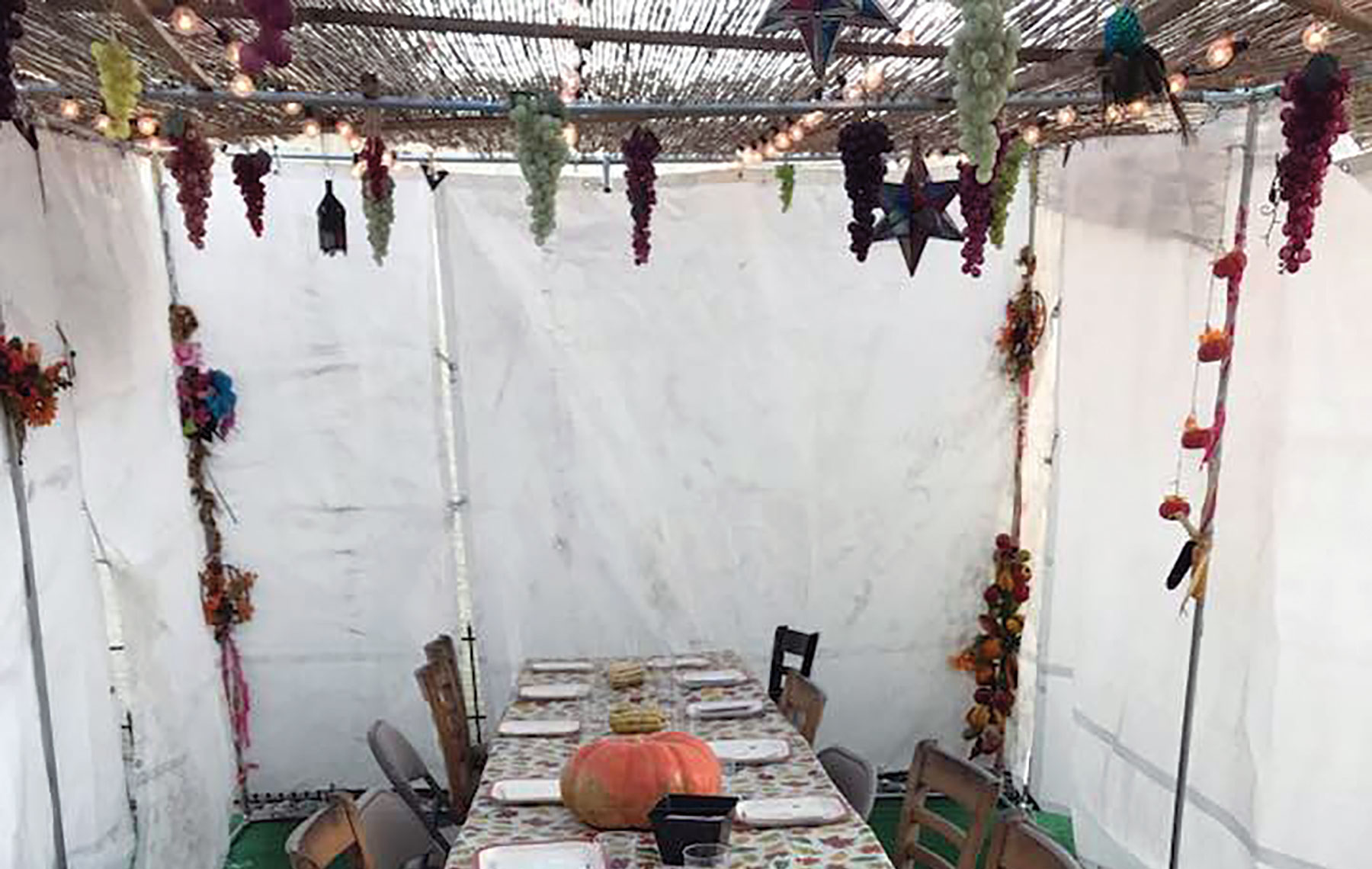
 Photo courtesy of Kylie Lobell.
 My favorite Jewish holidays are the ones that require the most work: Pesach and Sukkot. They are two of the three pilgrimage holidays — Shavuot being the third and by far the easiest to celebrate — and they are probably the most frequently complained about.
I get it. On Pesach, we turn our homes (and seemingly, lives) upside down. For Sukkot, we build a hut in our backyard and eat in it (sleep in it too, if you’re hard core) whether it’s boiling hot outside and thousands of flies are attacking us, or it’s cold and rainy and those signature SoCal mosquitos are on the prowl.
I’m not judging the people who have hassle-free sukkahs but I find meaning in the work of the holiday.
Because erecting the sukkah and taking it down can be a hassle, one year, my husband, Daniel, and I left ours up seven months after Sukkot had ended. Seeing it every day, I felt like someone who leaves their Christmas lights hanging up year-round.
To avoid this, some people buy a home with a pre-built sukkah structure in the backyard, while others have special roofs on their houses that they can roll back for the holiday, turning their dining room into the sukkah.
I’m not judging the people who have those hassle-free sukkahs but I find meaning in the work of the holiday. Hauling all of the stuff out of the garage after breaking my Yom Kippur fast, building the sukkah with Daniel, decorating it, and then making a large meal to enjoy with my family and friends is my idea of pure happiness.
Every year, Daniel and I buy new schach for our sukkah along with more panels and poles to expand it. Our friends gifted us a sukkah the year we moved to L.A., in 2012. It fit only six people. We figured out the next year that we could have made it much bigger, so then we kept expanding it. Now, it comfortably can fit 30 (and, uncomfortably, a few more).
We also buy new decorations to hang up each holiday. Last Sukkot, we had just returned from Morocco, where we purchased Moroccan lamps and other gorgeous wares in a market in Marrakesh. We always try to give our sukkah a magical feeling not only by inviting in guests but also by decorating it as beautifully as our home.
Daniel and I have a running joke that we have a fertile sukkah, because every year we invite a couple who gets pregnant soon after the holiday. Last year, Daniel and I hosted his childhood friend and his wife. This year, I’m due to give birth on Shemini Atzeret to our first child, and the friend and his wife are expected to become first-time parents one week after that.
I love Sukkot because it’s a complete change-up from the everyday. I feel like I’m more in tune with the natural world and that I truly have to trust that HaShem is there to protect me from the elements. It’s just like how, on Pesach, I have to have faith that I’ll be able to get through cleaning without going nuts and be able to afford all those expensive groceries.
Both holidays require you to have emunah that things are going to be all right, as tough as they are at the moment. We need emunah that the black widow spiders won’t bite us, that the food is going to be warm enough for guests, that the wind won’t blow away our decorations. Every year, Daniel and I go bigger because we’ve grown spiritually and trust more and more in HaShem.
It is said that the sukkah signifies a giant, forgiving embrace from God. This Sukkot, I encourage you to embrace the holiday back, and experience the wonderful lessons in faith it can teach you and the joy it can bring.
Kylie Ora Lobell is a Journal contributing writer.



















 More news and opinions than at a Shabbat dinner, right in your inbox.