fbpx

March 6, 2019

A Ballad in the Key of ‘4G’

This is deeply personal. But what I have experienced should resonate with the entire Jewish community — the one we know and the one to come. In the whirlwind that seizes me and all who are communally aware, I have reached a new and stunning personal location, wedged between the searing past and the uncertain future.

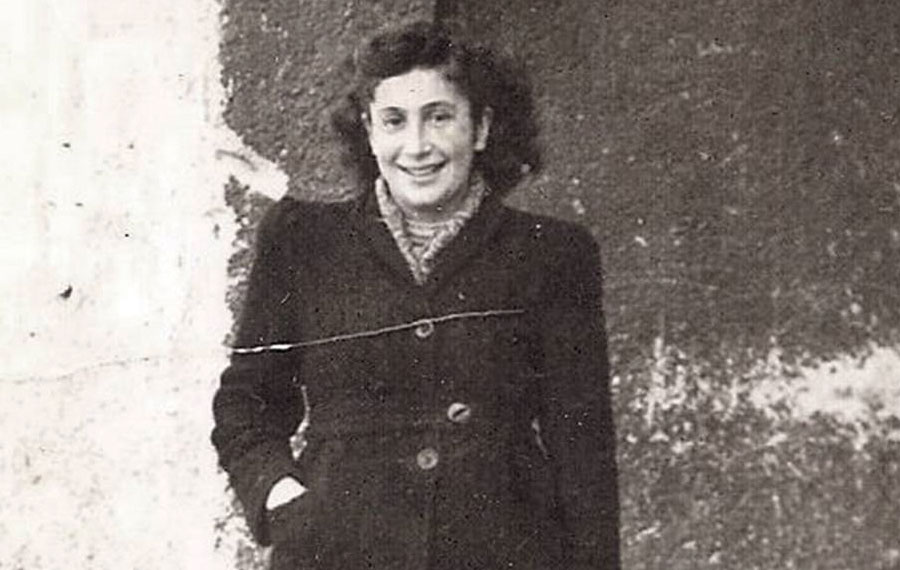
My story begins before I was born, when my grandmother Fanya seized her slender teenaged daughter — my future mother — Edyka, and pushed her out of a small vent at the top of a suffocating boxcar rumbling inexorably from Bialystok, Poland, toward the Treblinka death camp. Together, they made the split-second decision that at least one person should escape. My mother became a “jumper.” That day, she jumped into a hostile and dangerous Polish forest, was shot by local forces, and then buried in a hastily arranged mass grave in the snow. Buried, yet one nearly lifeless limb protruded. 

Teenage Herschel, an audacious forest fighter, came upon the area. Spying Edyka’s leg moving, he pulled her out of the grave. For two years, under cloak of night and by raw courage, they lived in the woods as brave partisans. They survived. After the war, believing millions of Jews had been killed, they decided to continue living as Jews precisely because so many tried to kill our people. After two years in a displaced persons camp, Herschel and Edyka immigrated to the U.S., settling in Chicago. Their courage and determination enabled me to be born.

While growing up, I eagerly inhaled my Jewish heritage and love of Israel. With imbued purpose, I devoted my life to unmasking and addressing the hidden players and hidden hands behind the darkest evils and injustices. I adopted the identity of a second-generation author long before the larger second-generation movement developed its national identity.

Among the disparate generation of unique survivors that immigrated to the U.S., many parsed themselves into two types. One group was determined to boldly keep the memory of Nazi crimes intensely illuminated as a warning beacon to all humanity — that was my family’s group. This group robustly fought for commemoration, investigation and compensation. Its members demanded unending X-rays and dissection of the international body politic that perpetrated, facilitated and tolerated the Holocaust. My eye was focused on corporate complicity by those too big to be exposed, such as IBM, Ford Motors, GM, the Carnegie Institution and Rockefeller Foundation.

“It will be the third and fourth generation’s challenge that we “Never Forget,” for ourselves and for the world.”

A second group of survivors preferred not to talk about the unspeakable experience except among themselves — the so-called “sha-sha” survivors. Perhaps, while some were proud to have survived, they also felt shamed by the degradation they had overcome. Some felt guilty that they lived while their loved ones had perished by gas, gunshot or other gruesome means. Each had deeply personal reasons for their reticence. But all were protective of their American-born children. Many wanted to shield their sons and daughters from their traumatic experiences as a further act of conquest over their anguish. Even so, by this century, many “sha-sha” survivors had found their voices, and sought rooftops to climb and vociferously proclaim their identity. But by now, a new generation had grown up with far fewer nightmares.

During those postwar decades, the “sha-sha” mindset among survivors was accompanied by the nonchalance of comfortable, non-refugee Jews who felt no threat to their safety in fortress America, the land of equality, freedom and personal protections. Too many saw the bond with Israel to be a cultural encumbrance to their assimilated American existence. Family traditions were replaced with internet communities.

Like many in the corridors of the communally aware, I repeatedly have been shocked by the eruption of open anti-Semitism and anti-Jewish violence in Europe, the mainstreaming of anti-Semitism in the United States, and the eroded position of Israel within certain flanks of the Jewish community. Like many who worry about such matters, I had a bleak outlook.

Then two things happened to me. 

Last year, my operatically trained, rock-pop singer-songwriter and cantorial soloist daughter Rachel Black — without notifying me — wrote a haunting Holocaust ballad. 

I was astonished to learn that it was titled “Edyka,” named for my mother. In piercing rhythms and searing lyrics, “Edyka” retold the story of my grandmother in that ghastly boxcar, saving my mother, which made my existence and hence, my daughter’s existence, possible, thereby keeping the memory alive. When we live beyond our days, it is only because we live in memory. My mother is dead, but her inspiring struggle lives on.

I have repeatedly written about my parents, and now my daughter has ignited a new vector of remembrance in song.

Then, Rachel was invited to sing and deliver a keynote address at her state’s official Yom HaShoah commemoration in 2018. At the last minute, she received permission to sneak preview her song in a solo performance, evoking a rousing, emotional reception. 

Soon, Rachel performed “Edyka” elsewhere in Kansas, where she lives, now with accompanying musicians, attracting followers who connected with the message. Crowds teared up and stood in applause when she chanted the song’s pulsing injunction to survive. The Kansas City Star learned of the buzz and published an extended Mother’s Day feature about my daughter, her grandmother, her great-grandmother and the song linking them all. The newspaper also videoed a performance of the song for its website. Quickly, the Kansas City Star’s coverage was syndicated, and then picked up by the Associated Press. Within days, the feature had been published by several dozen American newspapers including The Washington Times and Miami Herald.

A few weeks later, Rachel and her group of accompanying musicians found themselves in a recording studio. Shortly after the CD was released, Amazon issued a big order, and it briskly sold as a single. Last October, Rachel flew to Washington, D.C., to perform her song at the National Press Club in front of a gathering at a Holocaust Legacy ceremony. A few weeks later, she rendered a house-chilling performance at a large commemoration of the 80th anniversary of Kristallnacht, held at Temple Israel in Manhattan, sponsored by the Suzanna Cohen Legacy Foundation.

I said two things happened to me. One was my daughter writing a song about my mother and grandmother.

The second was learning that Rachel would be bringing into the world another descendant, made possible by my grandmother and mother, eternalized in song by my daughter, now giving birth to my granddaughter as the generation-to-generation, slow-motion staccato trumpet ceaselessly blasts. Second generation, third generation, now fourth generation.

The new “4G” arrival is baby Cora Edyka. Korach gave rise to the original cantors who sang at the Ark of the Covenant. Edyka was in the boxcar. Thus comes Cora Edyka, fit and fighting to take her place in the legacy of survival. I received a video of Cora Edyka’s first moments in the world as her mother gently sang to her in Hebrew — Hinei Mah Tov. “How good it is … to dwell together.”

Hence, the first sounds Cora Edyka heard weren’t “Sesame Street” cheeps or baby doll squeaks, but the very sounds the Nazis worked so hard to extinguish. 

Whether “sha-sha” or fiery activist, the generations of Holocaust survivors have been determined to fortify and protect the ones to follow. Quite soon, all the survivors will be gone. The second generation, including me, will also soon be gone. The third generation has the duty to ensure that the fourth generation will carry the torch.

Sha-sha is no more. It will be the third and fourth generations’ challenge that we “Never Forget,” for ourselves and for the world. This challenge will be immeasurably more difficult in the decades to come than it was for me over the past half century.

At issue is the question of whether the next generation of Jews will walk furtively looking over their shoulder, or boldly toward a gleaming horizon. I know Rachel and Cora will be among the bold. But they will need plenty of strength and help.


Edwin Black is The New York Times best-selling author of “IBM and the Holocaust” and many other books. His website is edwinblack.com. 

A Ballad in the Key of ‘4G’ Read More »
The Power of Community

Once when I picked up my son Leo, now 6 years old, from preschool, his teacher asked to have a word with me — in private. I immediately felt sick. The part of me that needs everything to be perfect was riddled with anxiety. What now, I thought? 

My son is wild, but also an old soul, always questioning everything he’s told. He’s always been … different. I remember his little voice, coming from the backseat of my car when he was 3: “My home is not here. My home is in the sky.” Sure, it was a little creepy. But it hurt me because I felt that it was true — that he wasn’t fully mine. Like I said, he’s always been different, and society isn’t always kind to those who are different.

So when his teacher asked to speak with me, I was certain it was another instance of him correcting someone’s grammar or talking about the angel of death again (in a secular school).

“A friend bit Leo today,” she said. 

Friends don’t bite friends, I thought to myself. I asked, “Who? Who bit him?”

“A friend,” she said, “but he’s OK.” This must have been my son’s cue to emerge from the playground, smiling and laughing, waving his bandaged arm. I said a few things about how biting was unacceptable, and then walked my smiling son out of the school. I wasn’t smiling.

I sat him on a bench. I was going to get to the bottom of this. And whoever bit him — that kid’s family was going to pay. In a split second I had rehearsed the threatening conversation I would have with the kid’s parents, the glares I would give the kid for the rest of his life. In my brief fantasy, I was like a 1950s gangster: “Why, I oughta …”

“Who bit you? Tell me now,” I pressured him, my face close to his. He looked puzzled at first, and then how he looked at me — it was like he was shaming me.

“Oh, it was just Ari! I’m OK, Mama!”

My ears began to ring. I was ready to let some unsuspecting parent of a psychopath kid who had bitten my son have it. But it was Ari who had bitten my son. Ari, one of his best friends and the child of two of our favorite parents at the school — a family with whom we had begun to forge a deep friendship.

I was deflated. But it was an important lesson about community and a critical moment of self-reflection for me. I realized that when we take the time to get to know others in our orbit — when we build community — we are less likely to respond to minor grievances with rage. We are more inclined to work through issues with people we consider one of our own than we are with people outside of our circles.

I realized that when we take the time to get to know others in our orbit — when we build community — we are less likely to respond to minor grievances with rage.

It’s like the difference between how we respond to someone in a store who almost runs into us with a cart, as opposed to how we react when someone cuts us off while driving. We see the face of the person pushing the cart, and when two shoppers nearly avoid bumping into each other, the usual response from each party is a smile and casual apology.

But on the road it’s a different story. We see vehicles, not faces, and so we get angry, perhaps shout an expletive or two. We don’t see other drivers as part of our community, but rather faceless entities that deserve neither patience nor understanding.

It’s been a few years since Ari bit Leo, but I think of it all the time, and it reminds me to reach out to people with whom I come into contact and to get to know them. It reminds me that the responsibility is mine, and it forces me to pause when I’m about to get angry about a comment on social media or about a story my son tells me about something an unknown child did or said at school. Being part of a community can feel good, but it’s about more than simply giving us a sense of belonging. In an increasingly divided society, it might literally be the thing that holds us together.


Monica Osborne is a scholar of Jewish literature and culture. She is the author of “The Midrashic Impulse and the Contemporary Literary Response to Trauma.”

The Power of Community Read More »

Will We Have a Choice for President in 2020?

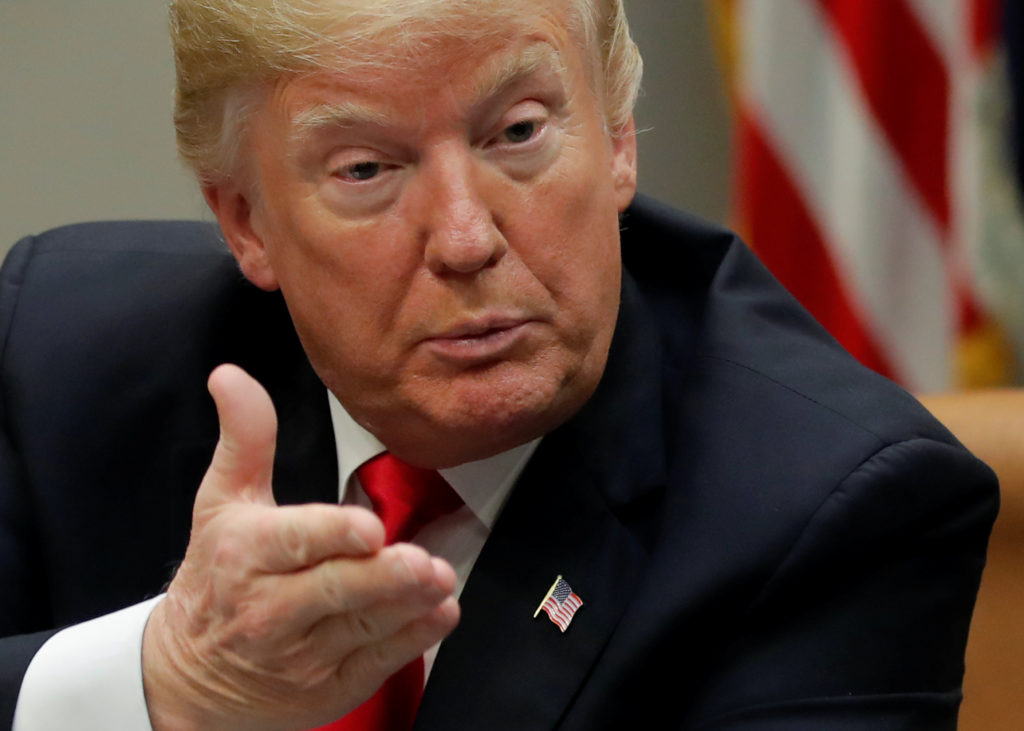
If ever a case could be made for a third party in American politics, it would be from the specter of next year’s presidential election being between Republican incumbent Donald Trump and a Jeremy Corbyn Democrat.

Events of the past few weeks remind us yet again that the same noxious brand of anti-Semitism infecting the British Labour Party led by Corbyn is strengthening its foothold in this country’s progressive circles. The Democratic presidential hopefuls’ failure to condemn Rep. Ilhan Omar’s most recent statements of intolerance toward the Jewish people speaks volumes about their party’s rapidly changing and increasingly worrisome dynamic.

Let’s be clear: None of the current or prospective Democratic presidential candidates is an anti-Semite. But when Omar, a Minnesota Democrat, launched yet another hateful screed February 27th — saying lawmakers and activists who support Israel hold “allegiance to a foreign country” — it was notable that none of them condemned her comments. Rather, it was House Foreign Affairs Committee chair Eliot Engel (D-N.Y.) who had the courage to object to her “vile anti-Semitic slur” and demand an apology.

Engel’s objection was followed by similar statements from a handful of pro-Israel congressional Democrats as well as a House resolution that offered a generic denunciation of anti-Semitism. But by the time this column went to press, there was only silence from the presidential aspirants. 

To be fair, political cowardice in the face of naked bigotry has become a bipartisan pastime. When a hateful anti-Omar poster was hung recently in the West Virginia capitol during a Republican program, no member of the GOP congressional leadership was willing to denounce the perpetrator. (Local Republican officials deserve credit for condemning the attack.) And it’s common knowledge that Trump has no interest in calling out the haters on his side of the aisle, so much so that no Republican member of Congress did anything substantial to refute Michael Cohen’s testimony last week that Trump routinely used racist language to belittle African-Americans and other minorities.

“Voting for a bigot in either party is an appalling concept. Supporting a candidate who is unable or unwilling to stand up to anti-Semitism is only slightly better.”

The minority of American Jews who support Trump rarely try to defend the president’s personal behavior, pointing to his record on taxes or Israel as a reasonable tradeoff for his lack of character.

And now we see that Trump’s opponents are just as willing to look past the timidity of their party’s leaders in the face of anti-Semitism. Democratic presidential candidates don’t want to voice disapproval of Omar because they must balance their relationships within the Jewish community against their need to avoid alienating the growing number of party activists whose hostility toward Israel is now a progressive badge of honor.

Polls show that liberal Democrats sympathize with the Palestinians rather than Israel by almost a 2-to-1 margin, and no presidential hopeful can succeed without securing a portion of these votes. The result is that every one of the party’s candidates stays quiet when fellow Democrats suggest that American voters who support Israel are guilty of treason. But Democratic White House hopefuls should remember that John F. Kennedy confronted similar prejudice during his 1960 presidential campaign, when his opponents suggested the nation’s first Catholic president would prioritize his loyalty to the Vatican over his allegiance to the U.S. Constitution.

Voting for a bigot in either party is an appalling concept. Supporting a candidate who is unable or unwilling to stand up to anti-Semitism is only slightly better. The majority of American Jews consider Trump an unacceptable alternative. But until a Democratic presidential candidate chooses to follow Engel’s example, the question of who deserves the backing of pro-Israel voters will remain uncomfortably unanswered.


Dan Schnur is a professor at USC’s Annenberg School of Communication and Journalism, UC Berkeley’s Institute of Governmental Studies and Pepperdine University. He is the founder of the USC-L.A. Times statewide political survey and a board member of the Los Angeles Museum of the Holocaust.

Will We Have a Choice for President in 2020? Read More »

Hard Lessons Before Steps Toward Peace

War and conflict are a messy business that rarely corresponds to the tidy accounts taught in schools. That certainly can be said about Israel’s struggle to be born and exist. Intellectual honesty demands a hard look at all aspects of the turmoil and its effects on Israelis and Palestinians.

Conflicts are always messier when opinions are fueled by religion. For many Jews, resettling the land of Israel after an absence of 2,000 years marked by wandering, persecution and near annihilation represents the attainment of a safe haven and the chance of becoming a “normal” nation.

From childhood, Palestinian children are taught that their ancestors had been living on the land for thousands of years and were uprooted by a European-Asiatic people with no valid claim to the land, displacing their parents and grandparents. The world stood idly by, they are told, and allowed this to happen because of guilt over the Holocaust. It is a sacred duty of every Palestinian to devote their lives and perhaps even to be martyred to drive out the “Crusader imperialist Jews,” they are taught.

The Arab-Israeli conflict is exceedingly complex. To couch it simply in terms of “an occupation of a land by a people who have no claim to it and the subjugation of its native people who have the sole rights to that land” completely negates the possibility that the other side has a narrative that ties them to the land, or even the possibility that the other side has a right to a narrative.

Lost in the war of ideas that underlies the conflict is the simple notion that this is simply a land dispute between two peoples who lay claim to all of the area referred to by some as Israel and by others as Palestine.

“Each side is taught to regard the other as stereotypical evil, the ultimate “other,” people to fear and loathe.”

In my view, the Israeli-Palestine conflict will never be resolved at its root cause until each side reaches a profound conclusion that the other has a valid narrative that binds them to that land.

Each side eventually must come to the realization that the other side “isn’t going anywhere.” Only then can the process begin toward true mutual respect, coupled with the understanding that in no way, shape or form can one side hope to exert total control over all of the land. After that is understood, both sides are left with three options: unending conflict, division of land where each side must compromise deep-seated religious beliefs, or living as equal citizens in one multiethnic society.

Teaching students only one side of the story, something that is becoming increasingly prevalent in American universities today, is not only intellectually dishonest but will ultimately perpetuate the conflict indefinitely.

At the root of this conflict is prejudice in its purest form. Each side is taught to regard the other as stereotypical evil, the ultimate “other,” people to fear and loathe. Very little effort is expended to bridge the gap by trying to meet as people on a large scale in good faith.

Much ink has been spilled over the years on the terrible cancer that is prejudice, which we all experience to a greater or lesser extent. Mostly, we read about the victims of prejudice and rightfully so, but not enough is said or written about the corrosive effect that being the target of prejudice has on its perpetrators. There are many forms of bigotry and the terrible cost that is paid by all involved. Most of us, when asked what prejudice is, describe racial prejudice. Although that is the most pervasive form of prejudice, especially in the United States, prejudice, in general, is about judging a  person without having sufficient facts about that person.

Studying the effects of prejudice is becoming increasingly important during a time when there’s an upsurge of its ugly impact all over the world. Until both sides in the Arab-Israeli conflict move beyond their prejudice, the shootings, stabbings and bombings will never end.


Leo Rozmaryn is a reconstructive hand and microvascular surgeon and author of “Lone Soldier,” a historical fiction novel of romance, mistaken identity, war and politics set during the tensions between the U.S. and Israel during the early 1970s. For more information, visit lonesoldierbook.com. 

Hard Lessons Before Steps Toward Peace Read More »

Religious Zionism and the Specter of Racism

“Words from a broken, loving and hopeful heart:

The recent explosion in anti-Semitic expression, including acts of anti-Semitic violence in numerous quarters around the world, is not only frightening and alarming, it is eerie and perhaps even ominous. The inevitable and logically necessary descent of rabid anti-Zionism into the exclusion and even hatred of Jewish people is in plentiful evidence, and rabid anti-Zionism continues to provide an obscene, self-righteous veneer to anti-Semitism. We are living in a time when we need to be vigilant, to be unflinching in calling out anti-Semitism, to be strengthening old friendships and actively cultivating new ones. It’s a serious time.

Human nature is such that when a particular group feels besieged and targeted, when it feels that the world has abandoned its ethical and civil codes in its behavior toward it, that this group then responds by loosening its own commitment to these very same ethical and civil codes — not out of the belief that “two wrongs make a right” or that “you have to fight fire with fire.” Rather, out of the belief that the rules just aren’t the rules anymore, that we have entered an amoral jungle, a time and space which simply exists outside our normal ethical commitments. This is a very human response. It is the way of human nature.

And this is precisely the reason that God gave us religion. Religion’s revolutionary and radical claim is that there is no such time and there is no such space, that there is no such thing as the amoral jungle, that human beings — even when engaged in a state of warfare — are always accountable to the norms of God-fearing, God-loving, God-revering behavior.

“Frankly, it renders its claim to be a Zionist party at all to be a mockery and a sham.”

Last week’s appalling decision by HaBayit HaYehudi  (Jewish Home), the political party representing Religious Zionism, to join electoral forces with Otzma Yehudit, the Kahanist political party whose platform is rooted in and founded upon racial hatred, is a precise manifestation of this awful tendency of human nature that religion was intended to correct. (Much has been written in recent days about Otzma Yehudit’s ideology and politics. I think that Yossi Klein Halevi’s essay in The Times of Israel summarized it best. The defense that HaBayit HaYehudi is offering is that the State of Israel and Zionism itself are under siege from enemies within and outside the state, and electoral victory must be assured even at the cost of bringing the racists out from the political cold and into cabinet-level power. This represents, of course, nothing less than the utter rejection of the mantle and responsibility of religion, rendering HaBayit HaYehudi’s claim to be the “Religious Zionist” party a mockery and a sham.

And frankly, it renders its claim to be a Zionist party at all to be a mockery and a sham.

It is heartening that numerous important and influential thinkers within the Religious Zionist community have condemned this turn of events. Rabbi Moshe Lichtenstein and Rabbi Benny Lau have been among the most public and courageous. And it is heartening that many American Jewish organizations, including the American Israel Public Affairs Committee and the Conference of Presidents of Major American Jewish Organizations (through Malcolm Hoenlein, its executive vice chairman) have expressed their grave concern, in particular over the Prime Minister Benjamin Netanyahu’s catalytic role in the political merger. (The National Council of Young Israel is one of the few organizations that has expressed its support for what has happened, and individual Young Israel synagogues must now express outrage at their leadership.) More voices of ethical and religious clarity are still needed, absolutely including yours. Perhaps the worst outcome can still be averted.

There’s no underestimating the importance of this political moment in the history of our beloved Medinat Yisrael, and even in the history of Judaism as a great world religion. Yes, we must love and support Israel, and confront anti-Semitism, but לא כך — not this way. For the sake of all that we hold sacred, never this way.


Rabbi Yosef Kanefsky is the rabbi of B’nai David–Judea Congregation.

Religious Zionism and the Specter of Racism Read More »

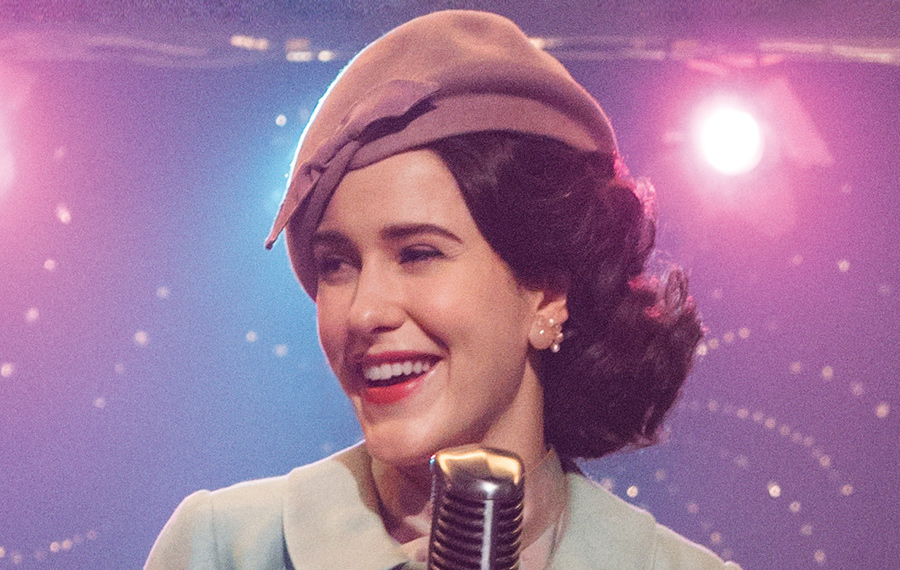
Rep. Ilhan Omar Meets Mrs. Maisel

Mrs. Maisel: Thank you so much for taking the time to meet with me!

Rep. Ilhan Omar (D-Minn.): Of course.

Maisel: I mean, I know how busy you are. First few months in a new job, adoring fans, intense scrutiny. … But since we often use the same material …

Omar: What do you mean?

Maisel: Well, I talk about the Jews, you talk about the Jews …

Omar: I’m sorry, maybe this wasn’t a good idea. I don’t talk about the Jewish people.

Maisel: Oh, right. Sorry. Wrong decade. You talk about Zionists, Israel, AIPAC …

Omar looks at her warily.

Maisel: But such great lines! “It’s all about the Benjamins, baby” — I’m totally stealing that. These Upper East Siders come into B. Altman — you know, I’m at the makeup counter — and they want me to give them free samples of everything. And if I don’t have samples, they try to haggle the price down. Can you believe it? Where are we, back in the shtetl?

Omar looks confused.

Maisel: Oh, I’m sorry, you talk about us so much, sometimes I forget you’re not Jewish. Shtetl is Yiddish. You know, that language we had to speak in other countries, when no one wanted us. But we’re here now, and I mean, well, most people are OK with us. Or at least they put up with us. So we really don’t need Yiddish anymore, but it really is such a great language. I mean, what language has 25 words for someone who says stupid things all the time?

Omar: I think I should be going.

Maisel: I’m rambling, and you’re a very busy woman. What I really want to talk about is our beloved Israel. I mean, not your beloved Israel but our — the Jews’ — beloved Israel. You see, we waited patiently — OK, not so patiently, but a long time — to get our homeland back. You know, like 2,000 years. And even if many of us don’t live there right now, we’re just so happy to know it’s there, thriving — a miracle in the desert!

Omar stares at her icily.

Maisel: Oh, I’m not saying there aren’t other miracles in the desert! The pyramids — what a miracle those slaves created. And, of course, Hanukkah. See, that’s the thing. Israel has brought so much light into this world — freedoms for Muslims, for women — you could call it a mecca of freedom and diversity! 

Look, you guys really know how to get the numbers up — there are like 2 billion Muslims, right? The Jews, after the Holocaust, we just have, like, a few million — OK, maybe we’re up to 14 million, but still. You guys have lots of countries — like 50 countries — and we just have this tiny one, smaller than New Jersey. We’re just so proud of her. She’s our jewel. And we just want to be left alone. Do you understand?

Omar says nothing.

Maisel: Yes, of course, you want to be left alone, too. I get it. We Jews are a passionate, intense people. We make up for size with intensity. If you use that, can you please credit me? I’m still trying to develop my audience, like you. Oh, I didn’t mean to compare a comedian to a congresswoman! Now that would be offensive, right? You are so insanely qualified. I mean, that line about the Benjamins, you have to be pretty shrewd to come up with that! Oh, wait, is it offensive if I call you a word that people call us? This new system is so confusing.

They call us shrewd because they think we’re good with money — if they only knew how much I spend every week on hats! Look, I know it’s not your fault, you’re just reading from the script. And the script keeps changing. It’s hard to keep up. I mean, are Jews white this week? Maybe I should give you a guidebook to anti-Semitic slurs.

Omar stands up.

Maisel: I truly hope this wasn’t a waste of your time. I just wanted to show you that we’re not satanic. But we do control the weather. I’ll send you a hat.


Karen Lehrman Bloch is an author and cultural critic living in New York City.

Rep. Ilhan Omar Meets Mrs. Maisel Read More »

March 8, 2019

March 8, 2019 Read More »

Two Nice Jewish Boys: Episode 129 – The Right Wing Israeli Arab that Fights for Gay Rights

Being an Arab living in Israel brings about many dilemmas, internal conflicts and possibly a very serious identity crisis. While some Israeli Arabs prosper, man other Arabs are living in Gaza in debilitating poverty, and suffering under the brutal, murderous dictatorship of Hamas.
Most Israeli Arabs support the Joint List of Arab parties, a minority actually support right-wing, Zionist parties like the Likud, Benjamin Netanyahu’s party.

Some Israeli Arabs work in industrial areas in the occupied territories, whereas others support the BDS movement that does everything within its power to shut down the very same industrial areas, rendering thousands of Palestinians jobless.

Anyway, you get the point. Being an Arab Israeli is complicated. And now imagine what it means to be an Arab Israeli fighting BDS around the world, a supporter of Zionism, and a son of an ex-South Lebanon Army general who fled to Israel in the year 2000.

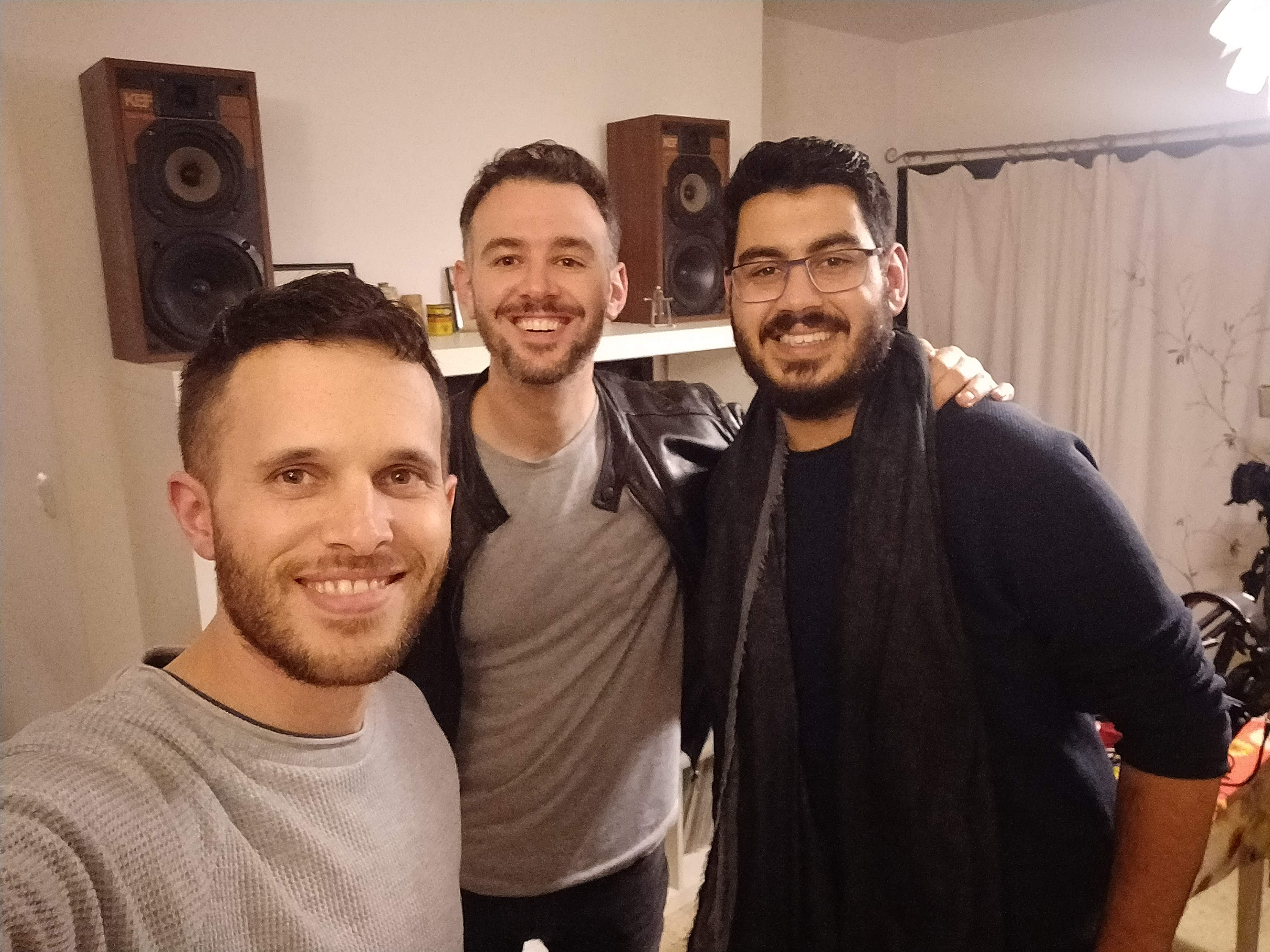
Jonathan Elkoury was one of our first guests, in episode 21 titled 2001: A Lebanese Odyssey with Jonathan Elkhoury. If you wanna hear Jonathan’s story, you gotta check it out. Now, two years later he’s back to talk about his courageous journeys defending Israel’s right to exist, his political and personal struggles here in Israel, and yes, also the nation-state bill.
We’re very honored to be joined today by Jonathan Elkoury.

Reservists on Duty NGO website

RSS Subscribe

Direct Download


Two Nice Jewish Boys: Episode 129 – The Right Wing Israeli Arab that Fights for Gay Rights Read More »