fbpx

May 26, 2017

Here are 5 places you can pray outdoors this summer

What better place to find the Tree of Life than in nature? And what better spiritual guidebook than a siddur?

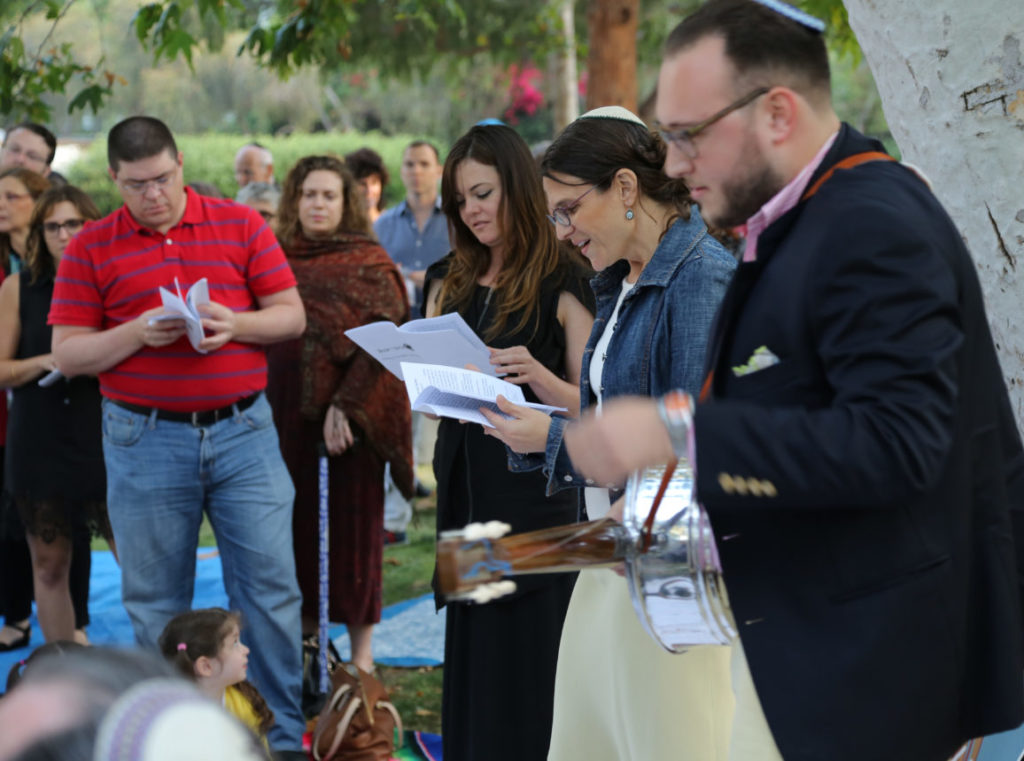
A number of congregations in the Greater Los Angeles area take Friday night services outside during the summer — singing nigunim on the sand in Malibu, shul-hopping on bicycles in Venice and picnicking before prayers at public parks. And if you’ve ever wanted to bring your dog to shul, this is probably your best opportunity.

Holding services outdoors has become a popular way for local synagogues to reinvigorate the prayer experience. With services stripped of the formality and physical constraints of a sanctuary, congregants can more vividly experience the wonders of God’s creation — or simply enjoy the Southern California weather in a Jewish context.

“Experiencing God in all the manifestations of nature, we find we are connected with the Creator,” said Cantor Marcelo Gindlin of Malibu Jewish Center & Synagogue, which will meet at Westward Beach every Friday night from July 14 through Sept. 8.

The Friday night services with Gindlin include a live band, and usually more than 100 people attend, bringing picnics, blankets and beach chairs. The cantor begins at around 7, though many arrive earlier to set up and eat. “The dolphins show up when I sing ‘Shalom Aleichem,’ ” Gindlin said.

The Malibu congregation is not alone in taking advantage of the beach. Open Temple practices hitbodedut, a meditative form of prayer, at Venice Beach in August. The proceedings include traditional prayers, contemplative moments, and what Rabbi Lori Shapiro called “sound baths on the beach.” There’s also a gong.

Leonard Atlas, 54, said Open Temple’s outdoor programming is its most authentic.

“Being in nature is the purest form of prayer,” Atlas said. “With the sand under our feet, it feels like we’re in Sinai — but not quite in the desert.”

Open Temple also does a communal bike ride that makes stops at several area synagogues for different parts of the Friday night service. The riders sing nigunim on the road. This year’s Bike Shabbat Shul Crawl will be on July 21.

Other synagogues venture into the wilderness — or at least to the park.

On June 9 and July 14, Valley Outreach Synagogue will hold “Shabbat in the Park” at Oak Canyon Community Park in Agoura Hills. A crowd of 400 to 600 people, along with their pets, create a Hollywood Bowl-style amphitheater effect, says Rabbi Ron Li-Paz.

No beautiful sanctuary is as beautiful as the sky and the mountains and the trees,” he said.

Li-Paz also heralded the informality of the natural setting for its appeal to interfaith families. “A synagogue might be challenging for some families to walk through the doors, just as a church might be,” he said. The casual, kibbutz-like atmosphere of Shabbat in the Park can be more inviting to non-Jewish family members.

But the appeal of praying outdoors is universal, says Loren Witkin, 50. He and his family have come to Shabbat in the Park for several years. Witkin noticed that his sons, who had had difficulty connecting to Judaism in their early adolescence, enjoyed a more laid-back presentation of the religion.

“The kids — they’re building memories and an experience that will draw them back in,” he said. “It gives you optimism for the future because we know how disengaged [young] people are becoming from their congregations. Seeing all these young people having a good time together reinforces some sense that this is going to continue.”

The spiritual appeal of praying in nature goes beyond the pleasure of a good view. There are actual references to nature in the liturgy, explained Rabbi Naomi Levy of Nashuva, a prayer community that meets once a month in Brentwood.

“We sing so many songs about nature [in regular prayers], but you say them inside a building,” Levy said. “The re-creation of each day, and seeing God in the heavens and the sky — to take all those prayers and put them where they were probably written, by someone who was in nature, experiencing the majesty of God in nature … [one can] really feel the power of the words.”

Nashuva holds services at the beach on the first day of Rosh Hashanah, and in a Temescal Canyon meadow on the second day. There’s a band, and members are encouraged to bring their own instruments.

“It just feels like nature is waking us up from all the enclosures of our lives,” Levy added.

IKAR holds an outdoor service at Roxbury Park in Beverly Hills on the first Friday of each summer month. An abridged Kabbalat Shabbat starting at 6:15 p.m. is preceded by a communal picnic (bring your own), followed by a group discussion led by Rabbi Nate DeGroot that is targeted for a young professional audience.

Convening outdoors eases a lot of the social pressures of praying that are inherent to more conventional settings, said Matthew Weintraub, assistant executive director at IKAR.

“When you walk into a room, it’s easy to look around and see who’s sitting where and who are the people who you know,” Weintraub said. “But when you go outside and people are socializing informally, laughing and connecting, and then going right into a service from [that place of] comfort, it prevents barriers to entry from forming. It doesn’t feel so closed off.”

The bottom line, as it often is in California, is the weather.

“People want to get out and enjoy the summer months and it being light outside for longer,” Weintraub said. “Being able to come in shorts and flip-flops and have a meal and a prayer experience — it just feels different.”

Here are 5 places you can pray outdoors this summer Read More »

For our faith to grow, we must celebrate its roots in nature

When our ancestors received the Torah, they stood at a mountain. When we celebrate receiving the Torah on Shavuot, we will stand in the pews. They looked at the sky; we will look at the ceiling. They were warmed by the sun; we will be cooled by the air conditioning.

I am a rabbi in a synagogue. But before I am a rabbi in a synagogue, I am a rabbi in the world.

Increasingly, our Judaism is walled in, confined to the fixed seats in the standard rooms designed with vaulted ceilings and an elaborate ark. There are variations — some sanctuaries have windows of clear or stained glass, seats that move or are fixed and bolted, men and women sitting separately or together. Nonetheless, they are resolutely indoor spaces. We invoke the stars as we look up to the lighting fixtures. As Churchill said, we shape our buildings and thereafter they shape us.

But outside is the world. Essayist E.B. White once wrote that everything changed the day man walked on the moon because instead of going outside to see the moon, people watched it inside on their television sets. That peculiar reversal afflicts Jewish worship, as well. We bless the natural world without being in it. We praise God’s creation as we sit in concrete boxes fashioned by human beings.

For generations, this was accepted and understood. Today, I believe we will lose young Jews if we do not take Torah to the streets — and to the beaches, to the mountains and to the forests.

Nearly three centuries ago, Chasidism revitalized the spiritual life of Jewry. There is a reason Chasidism grew up in the forest, as there is a reason why Jewish camping is the most successful modern movement in Jewish life. If you live in a city, at night you see the magnificence of the lights — a testament to the grandeur of humanity. If you go to the country, you see the canopy of constellations — a testament to the grandeur of God.

Which is more likely to inspire the devotion that is the wellspring of Torah?

This is hardly a new idea. Judaism was born in the desert; we are a people of tents and star-sewn nights. Wandering by fire and smoke, we scraped manna from the ground. As we entered the Promised Land, crops and harvests shaped the cadences of life.

Today, numerous groups are recalling our origins, such as Wilderness Torah, synagogues that create trips and experiences, and groups like Chabad that consciously practice outdoor worship. In Los Angeles alone there is Nashuva in Temescal Canyon, Open Temple, the Malibu Jewish Center & Synagogue with beachside services, and others. And when at Sinai Temple we inaugurated our millennial initiative earlier this year, it was understood that it had to focus outside our walls. Inspiration lives more in clouds than in concrete.

As the rabbi of a mainstream congregation who understands all the challenges of parking and building maintenance, I want those of us comfortable in our seats to start pushing the walls outward. We have to send our clergy and train our laypeople to initiate prayer anywhere and everywhere. There should be minyanim at the mall, blessings in the bar and Torah under the trees. Even large synagogues must increasingly create small, organic experiences particularly focused on the outdoors: shabbatonim at camps and retreats, morning minyan hikes, Shabbat services in the park as we now do for families on Friday evenings. Grander possibilities, too, may take hold: worship cruises or Shabbat at the Hollywood Bowl.

Younger people are not drawn to the spaces their elders have created. They are drawn to the world — to the bustle of people in the market and the stillness of solitude on the mountaintop. “The heavens declare the glory of God,” as the Psalmist wrote. Our love of nature looks beyond the beauty to its Source. It is a therapeutic value and a spiritual imperative.

The Torah begins with human beings in a garden, and cultivating nature is part of our tradition, as well. Planting and reaping and sowing are the rhythms of the Jewish year. This holiday of Shavuot is the culmination of the harvest. This was the first day when Israelites would bring fruit from the “seven species” of the Land: wheat, barley, grapes, figs, pomegranates, olives and dates (Deuteronomy 8:8). Having grown the food, offering it was a product of their labor and their love.

We are accustomed to study on the holiday, but surely we also should touch the soil and understand anew that the Torah began not in urban structures but on hills and pastures. On this holiday of Shavuot, we stood at Sinai, amid thunder and lightning. The power of the natural world enfolded Israel and prepared them for the spiritual peak of history. The Torah may be studied, cherished and taught indoors, but it was given in the immensity of open space.

The return to Eretz Yisrael, to the land of Israel, was a renewal of the Jewish connection to the earth. We in the Diaspora more fully embrace our tradition and our past when we cleanse our souls by dirtying our hands.

There are great advantages to buildings — the gathering together, the fixed place for community, the facilities and, of course, dryness and comfort. Many are artistically and sensitively rendered. No one would advocate abandoning our structured communities. The place of spaces for worship, as for all sorts of gatherings, is certain and secure. Buildings give us classrooms, opportunities to memorialize, a sense of fixed and settled places.

But we have to grow past the walls, to create flash mobs of Torah, where spontaneous and genuine learning happens.

When I first went to Camp Ramah as a child, I came home and asked my father, the rabbi of a large congregation in Philadelphia, why we needed a building. I had just prayed all summer long next to a tree, and it had a power beyond what I found in my home synagogue. My father told me that when he was growing up, neither he nor his friends felt as accepted as the Irish Catholics of Boston. The non-Jewish community worshipped in magnificent churches and the Jewish community believed, all across America, that if one day our synagogues could be as grand, we would be equal. So when his generation grew to adulthood, they wanted buildings as beautiful as the Christian churches, to show they had arrived. The fact that you don’t need them, my father said, means we succeeded.

Jews have long since arrived. The structures of modern Jewish life are stolid, imposing and sometimes genuinely magnificent. But we inhabit a rich, blooming garden of a world. To live in Los Angeles and never pray on the sand, or while hiking a trail, is to turn one’s back on so much that God has given.

When my niece, a rabbinical student, was married, we celebrated Kabbalat Shabbat in the forest. We sang “Lecha Dodi,” and it was possible to envision the mystics of Safed, where the prayer was written, watching the sun setting over the mountains. I saw the shadow tracery of the branches dance on the ground as the sky darkened. Shabbat did not come through the window; it came through the world.

I cannot move our Saturday morning service to the middle of Wilshire Boulevard or to Will Rogers State Historic Park. There is no place for a thousand congregants or the various accommodations that must be made in a modern city. But it is time to begin to think about when we can step out of our building. As we do taschlich by the ocean, we should create regular opportunities to touch the earth, to pray on a mountaintop or by a beach, to walk and learn, to remember that God’s first and greatest act is creation.

The story is told of Rabbi Samson Raphael Hirsch, the great 19th century Jewish thinker and leader, that late in life he told his students he was off to hike in the Alps. When they asked him why, at his advanced age, he would undertake such a difficult trip, he answered: “Because I am soon to come before God. And when I do, I know God will say to me, ‘So, Shimshon, did you see My Alps?’ ”

When God asks if we offered praise in the beautiful corners of his world, let us be able to answer “yes.” Take your prayer to the park, your minyan to the mountain and your blessings to the beach.

Will returning to nature “save Judaism”? Who knows. But it will certainly save some Jews.

There is a blessing in our tradition for seeing natural wonders — oseh ma’aseh bereshit  the One who accomplished the work of creation. Let us step out from behind the walls, throw our arms and voices up to the sky, and bless God, whose miracles fill the earth. 


David Wolpe is the Max Webb Senior Rabbi at Sinai Temple. His most recent book is “David: The Divided Heart” (Yale University Press).

For our faith to grow, we must celebrate its roots in nature Read More »

Moving & Shaking: Lakers hoop for hope; Mayim Bialik book tour

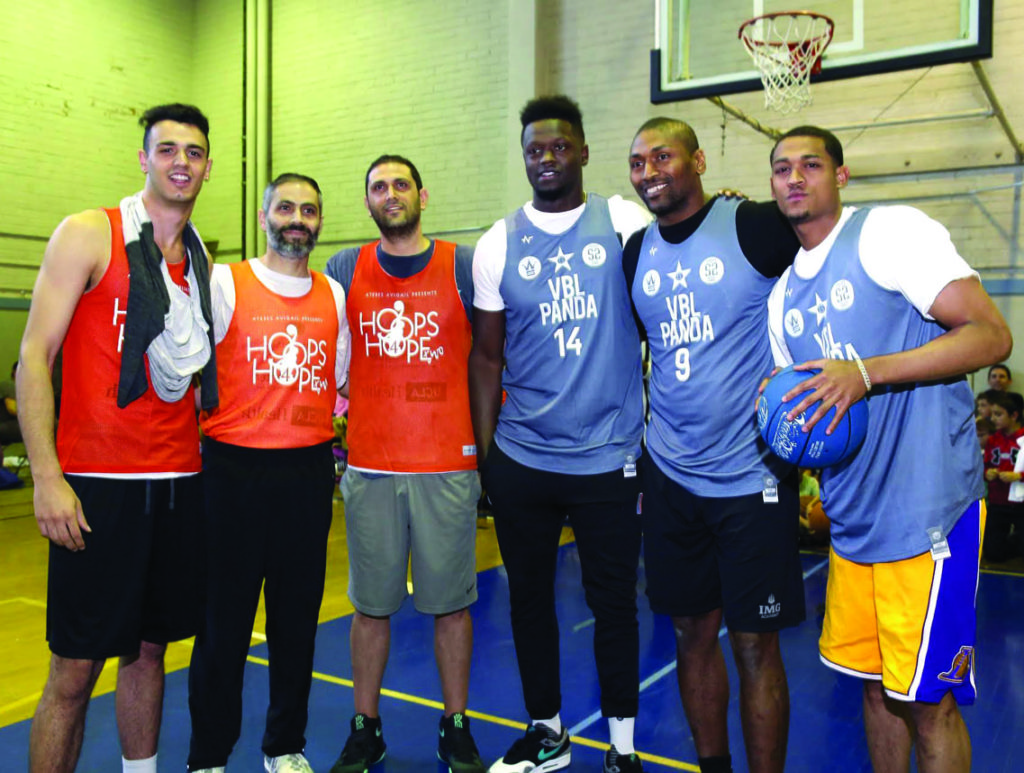
Los Angeles Lakers Jordan Clarkson, Julius Randle and Metta World Peace delighted fans, many sporting purple and gold, at this year’s Hoops4Hope charity basketball tournament at the Westside Jewish Community Center.

The May 7 event benefited the Jewish medical organization Ateres Avigail, whose more than 200 volunteers provide services to people in need, including preparing kosher meals, transportation to medical appointments, affordable medical equipment and access to the consulting services of physicians from all over the country.

Steve Rechnitz, president of Ateres Avigail, took the reins of the organization 3 1/2 years ago after his wife, Avigail, the former president, died of cancer. The organization, formerly called Ladies Bikur Cholim, was renamed for Avigail after her death.

About 115 players paid the $100 entry fee to take part in the three-on-three tournament, vying for prizes such as courtside Lakers tickets and vacation packages. Players of varying skill sets and backgrounds participated, with many local Jewish high school players and alumni represented.

High-fliers from the Venice Basketball League — a Venice Beach-based, invitation-only summer league with top amateur talent — wowed the 300 spectators with a jaw-dropping dunk contest.

Per tradition, the winning team — Malachei 26, comprising Isaac Aftalion, Isaac Gabai and Idan Eythan — got to play the Lakers trio in a largely ceremonial, half-speed game. The contest included a nasty crossover from Clarkson that sent a Malachei 26 defender tumbling to the ground.

Ateres Avigail’s director and lone employee, Rabbi Avraham Hirschman, said fundraising totals were still being tallied, but he deemed the day a slam-dunk success.

“I think people really want to come out and support our work helping Jewish families facing medical crises,” Hirschman said. “It’s a high-energy environment and people like tapping into that energy, doing what they love to do — playing basketball and benefiting an organization like ours.”

— Oren Peleg, Contributing Writer


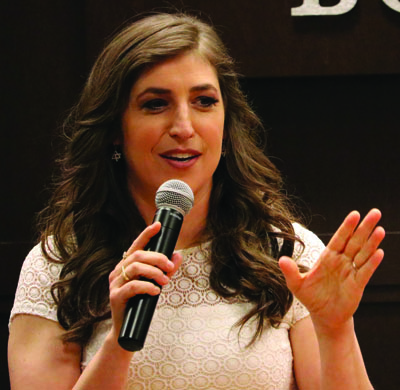
Mayim Bialik discusses her book, “Girling Up: How to Be Strong, Smart and Spectacular,” at The Grove. Photo by Tess Cutler

“Oh, I see her!” said a mother, pointing forward to a mass of people. “Oh, yeah!” a girl squealed, “I see her arm, I think!” Actress Mayim Bialik was the center of that attention on May 16, when she appeared at The Grove’s Barnes & Noble store.

Bialik, an actress known for her supporting role on “The Big Bang Theory,” was unveiling her new book, “Girling Up: How to Be Strong, Smart and Spectacular,” intended as a guide for girls ages 10 to 18. More than 100 people showed up, filling a cordoned-off area.

“This book is as eternal as the Torah,” Bialik joked.

Comedian Iliza Shlesinger, Bialik’s good friend — the two met years ago at a comedy event — moderated the gathering. While being introduced to the audience, an emcee butchered Shlesinger’s last name.

“If I had a dollar every time an emcee brought me onstage and messed up my last name, I would have, like, $50,” Shlesinger said to a laughing crowd. “Fifty anti-Semitic dollars.”

“Girling Up,” published May 9 by Philomel Books, is Bialik’s third book, following her vegan cookbook, “Mayim’s Vegan Table,” and her parenting handbook, “Beyond the Sling.”

The book covers topics including mental health, bullying and the birds and the bees. Bialik, who has a doctorate in neuroscience, incorporated some biological and chromosomal lingo into the book, as well.

During lighthearted banter between Bialik and Shlesinger, an audience member asked Bialik, “How do you balance your religion with your science?”

Bialik was quick to quip, “The snarky answer is: I just do.”

— Tess Cutler, Contributing Writer


The UCLA Y&S Nazarian Center for Israel Studies hosted a May 4 panel on “Six Days/Five Decades: 1967 and Its Significance for Israeli Security,” ahead of the 50th anniversary of Israel’s June 10, 1967, victory in the Six-Day War.

The panelists, representing a range of policy expertise on challenges facing Israeli society, were Gilead Sher, former chief of staff to Israeli Prime Minister Ehud Barak; Motti Inbari, a University of North Carolina at Pembroke professor of religion, focusing on Jewish fundamentalism; Elie Rekhess, a visiting professor at Northwestern University and an expert on the Arab minority in Israel; and Paul Rivlin, a senior fellow at the Moshe Dayan Center, specializing in Middle East economics. Nazarian Center Director Yoram Cohen introduced the speakers.

“The Six-Day War resulted in a profound, overwhelming identity crisis,” Rekhess said, pointing to the solidification of Palestinian identity that followed.

Sher emphasized how Israeli control of the Palestinian territories threatens its long-term stability. Inbari talked about how Jewish messianism evolved in response to Israeli conquests in 1967 and 1973.

Rivlin spoke about the economic miracle after the war that transformed Israel’s economy, with 14 percent growth in 1968.

“Confidence is the key factor in investment, and this is what the war resulted in,” Rivlin said.

The event drew students, faculty and UCLA community members, including Hillel at UCLA emeritus director Rabbi Chaim Seidler-Feller, UCLA computer scientist Judea Pearl and UCLA student body President Danny Siegel.

— Eitan Arom, Staff Writer


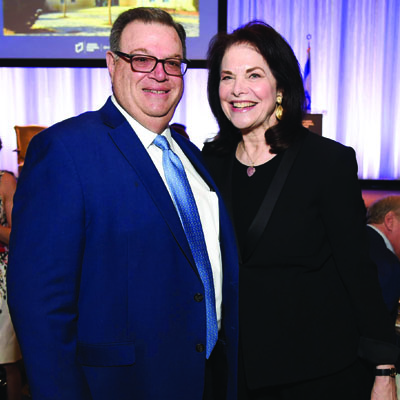
Entertainment attorney Martin Singer and Sherry Lansing, the former studio head of Paramount Pictures, attend the Jewish National Fund’s Women for Israel luncheon. Photo courtesy of Jewish National Fund

Sherry Lansing, the former head of Paramount Pictures and the first woman to helm a major Hollywood studio, was honored May 4 at the Jewish National Fund’s Women for Israel luncheon.

About 250 people attended the event at the Beverly Wilshire hotel, where Lansing treated guests to an intimate interview conducted by entertainment attorney Martin Singer.

“I am busier than I’ve ever been, and I’m so happy with what I’ve been doing because it all comes from my heart,” Lansing, 72, told the Journal before the event.

Since retiring from Hollywood, Lansing has devoted herself to supporting philanthropic projects in medical research and education through her Sherry Lansing Foundation. She serves on the University of California Board of Regents and co-founded the nonprofit Stand Up to Cancer, which has distributed about $500 million to cancer research.

Lansing also is the subject of a new, authorized biography, “Leading Lady,” by Stephen Galloway. The book details her career in Hollywood, from actress to studio executive. Over her 30-year career, Lansing had a hand in developing an estimated 200 films, including “Forrest Gump,” “Braveheart” and “Titanic,” each of which reaped huge profits and numerous awards.

Today, Lansing is a mentor to young women. Although she lamented Hillary Clinton’s loss in the presidential election, she said she was heartened by the resurgent feminism that has since been ignited.

“Ten years ago, when I would talk to career women, there was a feeling that the word ‘feminist’ was a dirty word, and there was a lack of respect for people like Gloria Steinem, who was my idol, without whom I would not be here today,” Lansing said. “Women believed that none of these rights could be taken away and that they were there forever. When I would talk to college kids about Roe v. Wade, they would look at me like I was a hysterical old lady. Now, that has changed because these very rights are now being threatened, and that has turned people [toward] the same activism that I [engaged] in during my 30s.”

Lansing said she is aware of both the gifts and deficits of aging. “The losses are more,” she said. “But there is also more gratitude, more determination not to let the small stuff bother you. You learn to only do what’s important and meaningful. The only thing that matters at the end of the day is love and human connections.”

— Danielle Berrin, Senior Writer


Moving & Shaking highlights events, honors and simchas. Got a tip? Email ryant@jewishjournal.com. 

Moving & Shaking: Lakers hoop for hope; Mayim Bialik book tour Read More »

The pharmacist who couldn’t throw anything away

In the years before Obamacare, health insurance and even penicillin, there was a health care provider of a more personal and community-based kind — the corner mom-and-pop drugstore where you could buy a cure for whatever ailed you. 

Feeling nervous and dyspeptic? Buy a roll of Carter’s Little Nerve Pills. Feet hurt? Try the bunion plasters. Irregularity? Then a tin of Cocomint Laxatives might make you right as rain. And if you needed a prescription filled and someone to confide in about aches and pains, then you could go to Colonial Drug in Highland Park, an establishment owned by pharmacist George A. Simmons, a Jewish immigrant from Latvia.

In the 1920s, Simmons’ drugstore, a converted bank building at the corner of Pasadena Avenue (now North Figueroa) and Avenue 57, was a place of spotless black-and-white tiled floors, wood-and-glass display cabinets packed with bottles, boxes and tins of patent medicines, many of which contained alcohol and some even cocaine. Along one side was a long marble counter where you could be served an ice cream soda.

Although Colonial Drug closed in 1942 (Simmons opened a new store on West Adams Boulevard), it has re-emerged through the persistence of the Simmons family and a unique arrangement with a local museum. The drugstore now is located in the Heritage Square Museum, a collection of mostly late-19th-century structures north of downtown, just off the 110 Freeway. A visitor can examine the same ointments, tonics, salts and powders that Simmons was buying and selling, along with a collection of more than 80,000 pharmaceutical-related items that Simmons acquired throughout his career.

As mom-and-pop drugstores closed because of the Great Depression and the introduction of chain drugstores such as Thrifty Cut Rate, which was started by Jewish brothers Harry and Robert Borun and their brother-in-law Norman Levin in 1929, Simmons needed to find a way to stay in business. He discovered that he could bid at auction on the store’s contents.

“He could buy distressed merchandise for less than from a supplier,” said Dorothy “Dotty” Simmons, George’s daughter-in-law. With the auctioned merchandise, he could maintain his margins, even in the face of cut-rate competition. “It helped him to stay in business,” she said.

The only problem was, when he bid, he had to buy everything, including old patent medicines that were no longer moving off the shelves.

“He would box them up and put them in the basement,” she said. “When I entered the family in 1946, I went to this large house in Highland Park. The basement was this huge area. We used to call it the catacombs. It absolutely blew my mind. Cartons on top of cartons, floor to ceiling. He never threw anything away.”

In addition to Simmons, other Jewish families either worked in or owned Los Angeles-area pharmacies, including the Schwab brothers, known for their Sunset Boulevard location, and the parents of Rosalind Wiener Wyman, the youngest person ever elected to the Los Angeles  City Council. Although not intended as a display of Jewish life, Simmons’ Colonial Drug stands as a kind of museum of the life of mom-and-pop enterprise that many Jewish immigrants lived upon coming to L.A. in the 1910s and ’20s.

“Family life revolved around the drugstore,” said Simmons’ granddaughter, Barbara Lazar. “All [four of] the sons worked there. Grandpa believed in starting by sweeping the floor and working your way up.”

From the shtetl of Preili in eastern Latvia in 1895, Simmons, born Avrom Gregorovich Simmonovitch, had worked his way up, too. His father was Chasidic, the family was Yiddish-speaking, and George attended yeshiva through age 14.

He left Preili at 14 for Vladivostok on the Trans-Siberian Railway to apprentice to a feldsher, an unlicensed medical practitioner. Moving to Shanghai, Simmons worked for J. Llewellyn & Co., where his first job was to sell packets of opium, used for pain relief, to the local Chinese population.

By around 1909, he had become the company’s senior pharmacist. While in Shanghai, he also met his future wife, Renee Begelman. With the Russian draft reaching into China for conscripts in 1916, “he left Shanghai on the first available ship,” Dotty said.

Landing in Vancouver, British Columbia, Simmons crossed the border into the United States illegally and settled in Seattle in 1917, when he began working at various day jobs. Also that year, he enlisted in the U.S. Army, where he was assigned to the medical corps. In 1918, he was honorably discharged, and as a result of his service, earned his U.S. citizenship. Renee joined him in the U.S., and the two were married. As newlyweds, they moved to Los Angeles, where Renee’s brother was living.

The 1920 census shows the family living on Cummings Street in Boyle Heights and George listing his occupation as “pharmacist” at a drug company.

“He never went to pharmacy school,” Dotty said. Nevertheless, through self-study and his training and experience he passed the licensing test and, in the early 1920s, opened Colonial Drug in Highland Park.

By 1930, the Simmons family was living on Gage Street in the East L.A. community of Belvedere, a neighborhood with Russian Jews, according to the census. Around the early ’30s, the family moved to Highland Park. There, George filled the basement and the garage with his bargains, then built another garage.

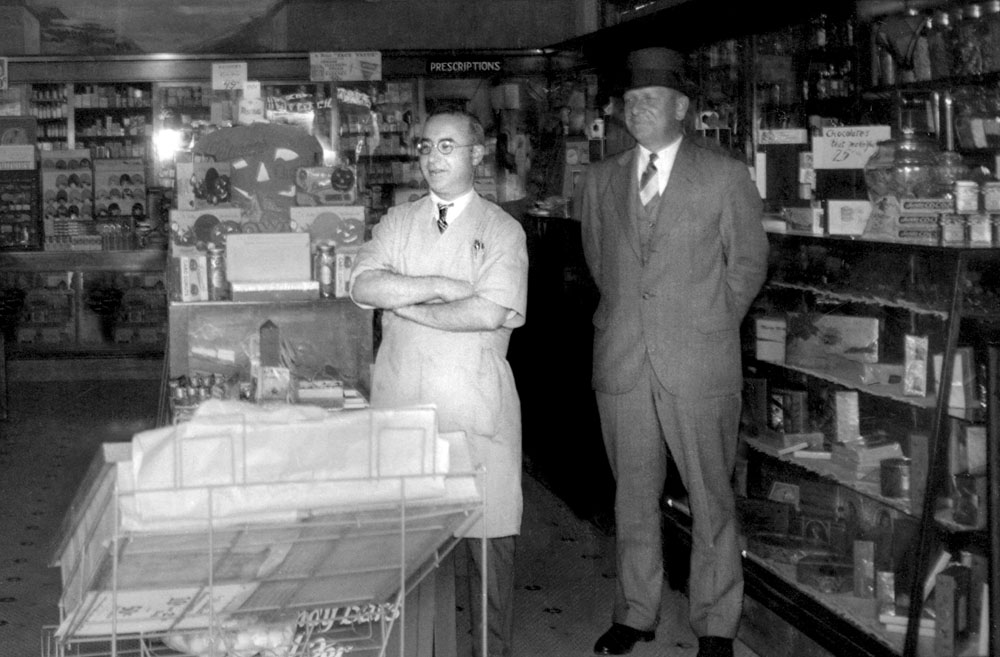
George Simmons (left) at Colonial Drug in Highland Park in the early 1920s.

At the various locations of his pharmacy over the years, a group of customers the family referred to as “pigeons,” because they flocked to George, sought him out for his supply of over-the-counter remedies that were unavailable elsewhere and for his pharmaceutical knowledge.

George died in 1974, leaving behind the contents of the catacombs.

The collection stayed in storage in the San Fernando Valley. The 1994 Northridge earthquake destroyed about a third of the collection, prompting George’s son Sidney, also a pharmacist, to inventory and photograph the remaining items.

As that work progressed, another of George’s sons, Fred, an attorney, approached the Heritage Square Museum with a proposal to take the collection and house it in a re-creation of Colonial Drug Store that the family would build and donate in George’s honor. The museum agreed to take the collection but balked on the building.

“It was inconsistent with the museum’s normal mission,” said Philip Simmons, Sidney and Dotty’s son, a real estate attorney and development manager, who managed the construction of the building.

By 2008, the museum came around, and a design was agreed upon: The building housing the period medicines and pharmaceuticals would be a reproduction of the original structure. As the building was under construction, the family pitched in to sort through and curate the collection, pulling out such gems as Karnak Stomach Tonic, Kuke’s Dandruff Exterminator and Ingram’s Complexion Tablets.

In 2012, the Colonial Drug exhibit opened. Today, almost 100 years since the store’s opening, the family is still in the pharmacy business, with Valley Drug and Compounding in Encino.

George supported much of his extended family with his drugstore, Dotty said.

Even with his vast collection, George never undervalued the healing power of the patient. Said Philip: “He believed that the individual’s belief in the treatment was as much a part of its effectiveness as the treatment itself.”

Have an idea for a Los Angeles Jewish history story? Contact Edmon J. Rodman at edmojace@gmail.com. 

The pharmacist who couldn’t throw anything away Read More »

A Moment in Time: When You Are #93 in Line

Dear all,
#93 … Each of us has been there at the deli counter.  Mind you, the ticket display was at 55 when I chose my number, so it wasn’t starting from zero.  But I still had a long wait before me.
It was nerve-wracking.  There were many, MANY places I would have rather been, and I was not happy.
But then something extraordinary happened.  The truth is, it really wasn’t all that extraordinary.  In fact, what unfolded was pretty normal and routine.
I heard a baby laugh.
I heard another baby cry.
I saw a man reach for something on a high shelf for another man.
I smelled the fresh bread baking at the next counter.
I tasted the free samples of cheese.
I spoke with the person, the stranger, next to me in line.
I focussed on my breathing.
Sure, these are all everyday things.  But for a moment in time, I was receptive to the world unfolding before me!  And it changed my focus.  Thank you, God, for reminding me the treasures that come with being #93
With love and Shalom,
Rabbi Zach Shapiro
 

A change in perspective can shift the focus of our day – and even our lives.  We have an opportunity to harness “a moment in time,” allowing our souls to be both grounded and lifted.  This blog shows how the simplest of daily experiences can become the most meaningful of life’s blessings.  All it takes is a moment in time.
 
Rabbi Zach Shapiro is the Spiritual Leader of Temple Akiba, a Reform Jewish Congregation in Culver City, CA.  He earned his B.A. in Spanish from Colby College, and his M.A.H.L. from HUC-JIR.  He was ordained from HUC-JIR – Cincinnati, in 1997.

A Moment in Time: When You Are #93 in Line Read More »

Judaism, neuroscience and the free will hypothesis (Part 1)

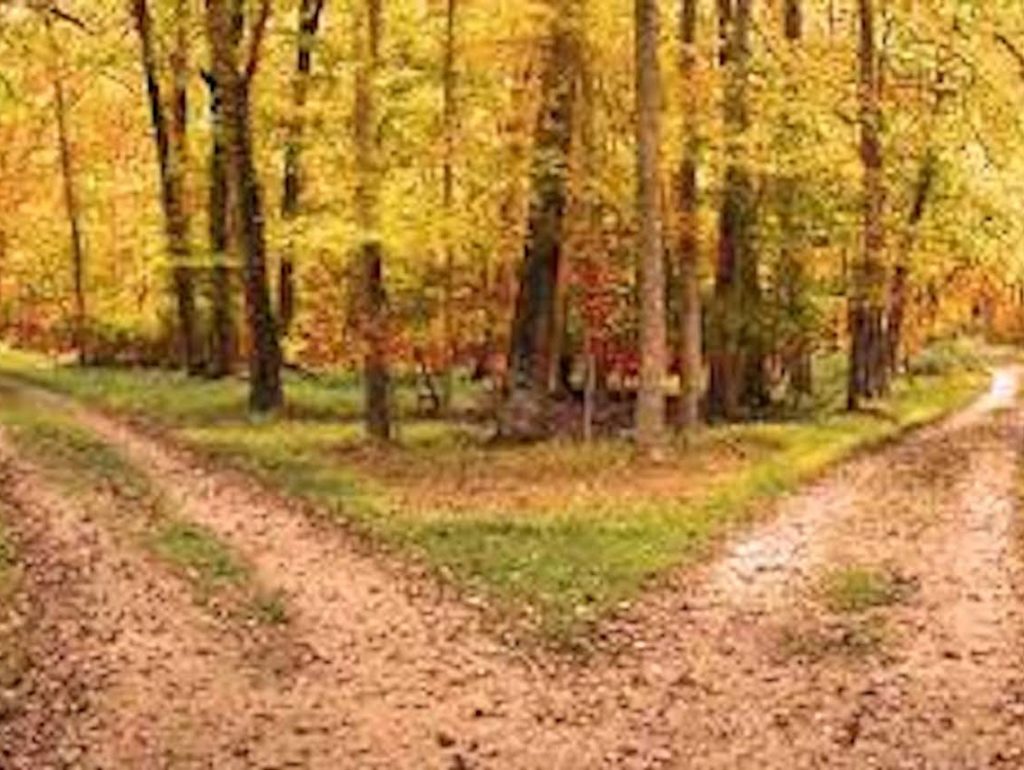
Forget Moses’s impassioned plea to the Israelites concerning their choices among the many blessings and curses that God reportedly set before them as they were about to cross the Jordan river into their promised land. (See Deut.  11:26-28, 30:15, 19.) Evolutionary biologist Jerry Coyne claims we have no ability to choose freely among alternatives. According to Coyne, “we couldn’t have had that V8, and Robert Frost couldn’t have taken the other road.” Presumably, the Israelites in the story had not much choice either.

Coyne argues that the free will we sense when we make a decision, the feeling that we are choosing among available alternatives, does not exist. In reality, he contends, our conduct is predetermined by physics. This result follows, he says, because our brains and bodies, the “vehicles that make ‘choices,’ are composed of molecules, and the arrangement of those molecules is entirely determined by (our) genes and (our) environment.” The decisions we think we make are, in his opinion, merely “the result from molecular-based electrical impulses and chemical substances transmitted from one brain cell to another.”

Coyne’s view is shared by his friend author and philosopher Sam Harris, who also has training as a neuroscientist, and with whom he also shares a strong antipathy towards religion. In his exceedingly short booklet Free Will (Free Press 2012), and elsewhere, Harris has written that free will is an “illusion.” He, like Coyne, is of the camp that argues that human behavior, including decision making, is completely determined by “a chain of causes that precede conscious awareness and over which we exert no ultimate control.” While Harris concedes that our choices “matter,” and that their emergence is the result of a “fundamentally mysterious process,” he nevertheless maintains with absolute certitude that they are the result of “causal states of the brain . . . .”  Though human beings can “imagine and plan for the future, (and) weigh competing desires,” he claims that, ultimately, a human being is nothing more than a “biomechanical puppet.” (See Free Will, at 5, 36-37, 42, 47.)

Such determinism, call it hard determinism, is but one of four classic understandings of free will, each with variations. Another approach, known as (hard) indeterminism, agrees that there is no such thing as free will, but not because our decisions are predetermined. Rather, it views the universe as dominated by randomness over which there is no control. Two other views, compatibilism and (non-political) libertarianism, hold that free will exists, but split on whether reality is determined.

The absolute determinism of Coyne and Harris is not surprising. Both are known for holding firm convictions, rather than espousing nuance. But their viewpoint comes with a healthy dose of irony. Both men are scholars, teachers and authors. They spend a good deal of their energy attempting to marshal facts and arguments in efforts to persuade people of various positions, especially in areas where they believe science or logic or both demonstrate the invalidity of religious texts or principles. Yet, if our conduct is hard-wired and predetermined, if we really could not have chosen that V-8 or taken that other road, what is the point of listening to them or reading their books? After all, if their thoughts and words were predetermined by their genes and environment, why should they be assigned any greater value than someone else’s predetermined thoughts and words? And anyhow, would what they say make any difference with respect to a listener’s or a reader’s future conduct? Perhaps they would say that their words can somehow affect the brain’s synapses so the next time a decision needs to be made, the wiring will be different , i.e., predetermined but with a different and better outcome. But, if that is so, should not it be so for those who hear Moses’s words, too? Some might call that learning how to think, to reason, to make choices.

     In any case, it is one thing to argue, as Coyne and Harris do, that the biblical account of creation or evolution is not supported by science. (Well, of course it isn’t. The Torah was never intended to be a science text, and its various authors lacked requisite knowledge anyhow.) It is quite another thing to argue that humans have no free will. That’s getting personal.

     At least the target is better selected. There is no question that Judaism, from the first millennia before the common era, through the Talmudic period, into the Middle Ages and currently has assumed that individuals have considerable free will. And it did so initially for good reason. If you were the authors and editors of the Torah text, and were trying to establish rules and regulations for what you envisioned to be a sacred society, a religious civilization, you would want to encourage the members of your community to be responsible for their conduct, not just for their own sake but for the wellbeing of the polity. One way to do so would be to create a foundational text which is premised on the idea that individuals are free to act and that those actions have consequences for the actors and the greater social order. In theory, the resulting social pressure would then reinforce the desired behavior.

   The biblical understanding of free will is not asserted philosophically or analytically. Initially, it is expressed conceptually and through fables. At the very outset of Genesis, the Torah asserts a profound position: humankind, the final creation, is fashioned b’tzelem Adonai, in the image of God. (See Gen. 1:26-27.) What that phrase might mean is debatable, but as bible scholar Christine Hayes notes, one feature that distinguishes humans from other animals is their free will, again understood generally to be the unimpaired capacity to choose among available courses of conduct. 

     That capacity to act was demonstrated in short order: according to the text, the first two humans created are told not to eat fruit from the tree of knowledge of good and bad, they know the rule, they disobey, and there are consequences. (See Gen. 2:16-17, 3:2-3, 6, 16-24.) Shortly thereafter, we are told,  their son Cain was upset when God did not pay the same attention to him and his offering as God did to Abel and his offering. God advises Cain that he has the power to overcome an evil inclination, Cain does not do so, and, again, there are consequences.  (See Gen. 4:3-16.) That these stories are pure fiction does not detract from the fact that they reflect a fundamental understanding of human nature, one that includes the power to make decisions.

    When we reach the book of Deuteronomy, we have a new and revised set of governing principles presented in a new literary style and with a more personal and urgent tone, but the importance of free will is, if anything, heightened. It is here that we find Moses’s moving speech to the assembled Israelites, the speech that in the view of Coyne and Harris is unfounded and misleading and futile.  Just before he dies, Moses tells the people that the instruction being given them is neither too difficult to understand nor beyond their reach. (See Deut.30:11.) Rather, they have choices to make. He has set before them two paths, one to life and prosperity and another to death and adversity. Moses urges the people to follow the rules that have been outlined, that is, to choose life, so that they and their offspring might live. (See Deut.  11:26-28, 30:15, 19.) Again, the historicity of the speech, or lack of it, is not important. What is critical is the demonstration of the underlying strength of the idea that humans have the capacity to choose among available courses of conduct and that there will be consequences to their choices, and not just personal consequences, but societal ones as well.

     As Professor Hayes has noted, in the Deuteronomist’s view of history, “Israel’s fate is totally conditioned on her obedience to the covenant . . . .” (Lecture 11 at 3/12.) In the writings that follow in the books we know as Joshua, Judges, Samuel and Kings, what we have is historiosophy, an argument based on a selected historical (some undoubtedly fictional) touchstones, all of which show a pattern of reward and punishment tied to Israel’s (dis)obedience. (See Hayes, Lecture 12 at 5-6/13.) The anarchy described in Judges led to stories of a monarchy. The failure of the kings, and the people, then led to national ruin.   

     With the fall of the kingdoms of Israel and Judah, community leaders needed to rationalize how their omnipotent deity failed to preserve their homeland and, indeed, his own home, the temple in Jerusalem. Attributing the catastrophe to some absence or defect in the deity was not an option. What was clear, therefore, was that the people had failed to observe the laws provided to them, and as Moses and subsequent prophets like Isaiah, Amos and Jeremiah had warned, their bad choices had led to social disorder and collapse.

    Centuries later, Jewish sects like the Pharisees, Sadducees and Essenes anticipated modern diversity of thought about free will. According to the account of the historian Josephus, the rural and righteous Essenes were fatalists, seeing everything as divinely predestined, while the Sadducees, associated by Josephus with the priesthood and financial power, favored absolute free will unencumbered by divine providence. Both groups essentially disappeared after the fall of the Second Temple in 70 CE. The Pharisees, both more populist and less Hellenized than the Sadducees, accepted a mix of determinism and free will, and became the intellectual ancestors of modern Judaism.

   So strong was the view that each person was responsible for his or her actions, that we find in the Talmud the following statement: A person is always responsible for his actions, whether awake or asleep. (See BT Bava Kamma 3b.) Subsequently, Jewish philosophers, whether rationalists or mystics, treated free will almost as an axiom. They differed greatly about the apparent paradox that free will could coexist with God’s omniscience, and whether, for instance, God even knew about particular human activities in advance of their occurrence, but, in general, they did not dispute that humans had free will.

   For instance, Moses ben Maimon (1138-1204), better known as  Maimonides or by his acronym Rambam, claimed both that God knew everything that would happen before it did but he also expressly rejected the idea that God decreed a man’s character, whether righteous or wicked, from his birth, and asserted that free will was “granted to every man.”  If it were otherwise, he reasoned, there was no purpose to the prophetic urgings to improve our behavior. (See Mishneh Torah, Laws of Repentance 5: 2, 4.) On the other hand, Levi ben Gerson (1288-1344), known as Gersonides or Ralbag, agreed that man had free will, but asserted that God did not know in advance how any person would exercise it.

     On the third hand, the mystic Kabbalists believed that through a process of contraction or self-limitation, known as tsimtsum, God constricted his essence in order to allow the world to exist and humanity to have free will. The late rabbi Eliezer Berkowitz incorporated this concept while trying to synthesize rationalism and post-Holocaust theology.

    Obviously, the Jewish acceptance of free will is deeply rooted and enduring. Rabbi Jonathan Sacks, among many others, continues to link personal freedom to moral (and social) responsibility. But we have seen elsewhere that Jewish thought was a product of its time and, as such, potentially deeply flawed when viewed from a more modern and informed perspective.  The authors of the creation and flood texts were neither scientists nor historians, and the later sages who opined on the process of gestation were typically not physicians, and, in any event, lacked the knowledge we have today about fetal development. Their stories and views may have value, but taking their statements as factually true is unwarranted. Similarly, Jewish thinking on free will should be subject to the same sort of critical analysis, and possible revision, that we have seen in other contexts.  In short, are Coyne and Harris correct? Is the free will hypothesis false? And, if so, what are the implications for Judaism? In our next post, we’ll take a look at what neuroscience teaches.

——-

A version of this essay was previously published at www.judaismandscience.com.

Judaism, neuroscience and the free will hypothesis (Part 1) Read More »

Jill Sperling: ‘I’m meant to be Jewish’

When Jill Sperling met her husband, Skip, in 1985, he was the first Jew she’d ever met. On a recent business trip to Kuala Lumpur, Malaysia, the tables turned. Sperling — who converted to Judaism in 1989 — became the first Jew someone else had ever met: her business partner, who was Indian and a practicing Hindu living in a Muslim-majority country.

Until then, Sperling told the Journal, she had kept her faith secret from her colleague.

“I wanted to have tiny conversations with her without telling her I was Jewish; I didn’t want the fact that I was Jewish to bias her opinion,” Sperling said. But she did ask her colleague questions about why Israelis weren’t allowed in the country. The answer Sperling received: It’s because they treat the Palestinians terribly. “This is what she’s been taught her whole life,” Sperling said.

Throughout the trip, Sperling, who had been to Israel several times, took various chances to talk with her partner about Israel, Gaza and Hamas. When the partner posted something on Facebook that was anti-Jewish, Sperling sought a dialogue. That’s when her colleague revealed that she had never met anyone who was Jewish.

“It really opened her eyes and changed her opinion,” Sperling said. “Now she’ll send me an article and ask what I think about it.” The learning has been a two-way street: Sperling has learned a lot about Islam from her partner, as well.

Sperling met Skip while studying in France — and going to Chamonix on winter break at the same time Skip was on a skiing trip from New York. “We met in an apres-ski pub, we kind of liked each other, and 32 years later we are still together,” she said.​ ​

Sperling’s mother had grown up Catholic​, but the family never really went to church. Jill went to catechism class ​and explored other religions as a child​, but her father was not​ religiously​ observant, she said.​ Her parents were very supportive of her decision to convert; her mom has subsequently learned to make brisket and ​“has Passover dessert nailed!”​ Sperling said she connects to Judaism on “more of a spiritual level … in more of a ‘traditions-based’ way” — for instance, through weekly Shabbat dinners with families from her mid-Wilshire neighborhood, numbering as many as 20 adults and kids.

She recalled one rite of passage that made a special spiritual impact: her adult bat mitzvah, held as part of a group adult celebration at Temple Beth Am a year or two before her son’s bar mitzvah.

“I remember there was a moment when we all turned and faced the ark and I heard the whole congregation singing behind me, and it was just beautiful,” she said. “We were all being lifted up.”

After finishing her conversion through the Miller Introduction to Judaism program at American Jewish University (AJU, then University of Judaism) in 1989, Sperling has been active in the Jewish community, with the majority of her communal work centering around Temple Beth Am, Pressman Academy and an organization called Judaism by Choice (JBC), founded by Rabbi Neal Weinberg, who taught her conversion class at AJU.

“The [Intro to Judaism] community was our first community; people in the class became our friends and are still our friends,” she said. “AJU led us to Temple Beth Am, and that became our community. Our kids grew up in a Jewish community, going to a Jewish day school. They grew up with Rabbi Weinberg, because of my involvement with JBC,” for which she served as president for several years. A lot of her friends are Jews by Choice, many of whom she has met through programs designed to bring together JBC’s current students and alumni for Jewish events like Havdalah.

Another poignant moment she recalled came on a trip to Israel with the Wexner Heritage Program leadership group. “We went on a hike in the desert, in the Negev. We were supposed to meditate or sit by ourselves, find a place where we couldn’t see anyone else. I think about it now and it was very emotional. In that moment, [I thought] I’m meant to be here and I’m meant to be Jewish.”

For Sperling, much of Jewish culture is about community, whether at her synagogue or Friday night dinners, which are at a different house each week. She and her neighbors have formed an urban kibbutz of sorts, a community of their own.

“Everyone shows up, the door is open,” Sperling said. “The kids, now young adults, still come,” she said, referring to her own children, a son, 24, and a daughter, 20, as well as the kids from the other four families, ages 17 to 25, “and if there’s a friend in town, they’re automatically invited.” Sperling’s eyes took on an extra sparkle as she described the weekly ritual, which sometimes features different themes.

For Cinco de Mayo, she said, they had a Mexican theme, and other weeks have featured Moroccan, Italian and Cuban. “We have wine, sing ‘Shalom Aleichem’ and put our arms around each other, and the guys have their scotch-tasting,” she said.

Sperling runs a medical device company, focusing mostly on sales that often take her to distant countries. It was this work that had brought her to Kuala Lumpur.

“I love it,” she said. “I’m a people person. I love the challenge. I love the hunt. I love teaching the younger generation. The secret to sales is organization and follow through.”

Many Jews by Choice feel a connection to Shavuot, the Feast of Weeks, which in addition to commemorating the receipt of the Torah, is when synagogues read the story of Ruth. This year it begins on May 30. Ruth, a convert to Judaism, was an ancestor of King David. “In the story of Ruth, she’s accepted into the community, and that’s very important to someone who’s a Jew by Choice,” Sperling said.

Twenty-eight years after her conversion, Sperling feels settled in her community and accepted as a Jew. “We feel really lucky that we landed here in this community and on this block. It’s really amazing.”

Jill Sperling: ‘I’m meant to be Jewish’ Read More »

Seeking Torah in the City of Angels

In a city that seeks to capture the perfect image, I recently found myself wondering how to picture Shavuot, which begins on the evening of May 30. For the holiday that celebrates the giving of the Torah on Mount Sinai, I wanted to find a location that would bring this revelatory event into my daily focus.

Though Shavuot often is associated with an image of the two tablets of the Ten Commandments, I was looking for something that was more expansive. I wanted something that showed how the Torah was everywhere — especially in the City of Angels. I wanted to see if the angels, who according to the Talmud initially objected to God giving the law to the Jewish people, would now lend me a hand or a wing — or whatever it is they have.

My idea was inspired by a custom many celebrate on Shavuot: staying in to study all night, called Tikkun Leil Shavuot (repairing the eve of Shavuot). The practice relates to a midrash that teaches that on the morning the Children of Israel were to receive the Torah they overslept and needed to be awakened by Moses. To make repairs for our somnolence, we now show we are awake by studying, especially the beginnings and endings of the 24 books that comprise the Tanach — an acronym for Torah (the Five Books of Moses), Nevi’im (Prophets) and Ketuvim (Writings).

But instead of sitting down to pages of textual study, I wanted to turn to the streets to demonstrate my awakening, my readiness to receive, by finding visual counterparts or representations of the scriptural passages — a photographic tikkun. The world of Torah was all around me, waiting to be studied. All I needed to do was open my eyes and focus my lens.

Setting out to find my “text,” I began driving around my familiar Sinai — the urban landscape west of downtown Los Angeles and east of the 405. At first, amid the visual clutter, I was overwhelmed. The “words of the prophets” might be “written on the subway walls” in the music of Simon & Garfunkel, but on the streets of Mid-City L.A. you are more likely to find looming billboards for TV shows.

Then I had my moment of revelation: If I could find Moses the Lawgiver — and not just Charlton Heston’s handprints and footprints in the courtyard of the TCL Chinese Theatre — it would be a good start. After all, it worked for the Israelites. Remembering a recent visit to Cedars-Sinai Medical Center, I found him in the form of a stone statue seated incongruously in the hospital parking lot, at the corner of George Burns Road and Gracie Allen Drive.

Seeing Moses with the law under his arm, I could not help but think of Torah and Sinai and, yes, the giant sculpture of the Torah affixed to Sinai Temple on Wilshire Bouelvard in Westwood. Having made that connection, more Bible imagery began to pop up from the streets around me: the words of the prophet Jeremiah; a reference to the Book of Kings; a reminder to pursue justice, from Deuteronomy.

As for the angels, they were everywhere, too, turning my head, lifting my search, leading me on my way.


A bit of Torah on the streets of L.A.

1. Moses climbing Sinai
“Angel Wall” (detail) by Barbara Mendes
2709 Robertson Blvd.
“The Lord said to Moses, ‘Come up to Me on the mountain.’ ” Exodus 24:12

2. ‘American Gods’ billboard and angel wings
7769 Melrose Ave.
“You shall be holy, for I, the Lord your God, am holy.” Leviticus 19:2

3. Mezuzah with inscription
Fleishik’s, 7563 Beverly Blvd.
Inscription: “A cry is heard in Ramah.” Jeremiah 31:15

4. Angel
640 S. San Vicente parking structure
“For He will order His angels to guard you wherever you go.” Psalms 91:11

5. Torah — L’dor vador
Sinai Temple, 10400 Wilshire Blvd.
“Take to heart these instructions with which I charge you this day. Impress them upon your children.”
Deuteronomy 6:6-7

6.  “Fear of God is the Start of Wisdom”
Baba Sale Congregation
404 N. Fairfax Ave.
Proverbs 1:7

7.  Moses
Cedars-Sinai Medical Center parking lot, Gracie Allen Drive and George Burns Road
“Never again did there arise in Israel a prophet like Moses.”
Deuteronomy 34:10

8. “Justice, Justice, shall You pursue”
Workmen’s Circle Cultural Center
1525 Robertson Blvd.
Deuteronomy 16:20

9. Ethiopian Jew
“Not Somewhere Else, But Here” (detail) by Daryl Wells National Council of Jewish Women, 360 N. Fairfax Ave.
“Remember the Sabbath day and keep it holy.” Exodus 20:8

10. King Solomon
Marciano Art Foundation (former Scottish Rite Masonic Temple)
4357 Wilshire Blvd.
“… Solomon began to build the House of the Lord.” I Kings 6:1

Seeking Torah in the City of Angels Read More »

patriotism flag graves

A Single Soul

In 1971, by act of the United States Congress, the last Monday in May officially became the Federal holiday known as Memorial Day. Its roots, though, go all the way back to just after the Civil War when General John A. Logan, the leader of an organization for Northern Civil War veterans, called for a day of remembrance for all those who had fallen in the war to be held on May 30th of that same year.

By 1890, all of the Northern states had decided to observe what was then called “Decoration Day,” and soon after World War I, the Southern states joined as well.

It’s understandable that in the decades immediately following our bitter Civil War, a conflict that resulted in over 600,000 deaths, the two sides couldn’t even agree to remember and honor their dead together.

This year, Memorial Day falls immediately before Shavuot, Z’man Matan Torateinu – the Time of the Giving of Our Torah.

Here’s the lesson: immediately after pausing to remember the more than 1,300,000 Americans who have fallen in battle, we celebrate Torah, whose essence, according to Rabbi Akiva, is: וְאָהַבְתָּ לְרֵעֲךָ כָּמוֹךָ – “Love your neighbor as yourself.” For many interpreters, the last word of the verse is the key to understanding: kamocha (“as yourself”). The big idea is the realization of how much we are all alike. Ultimately, there is no distinction between self and “other.” We are, all humanity, a single soul: North and South, man and woman, black and white, Jew and Gentile.

It took sixty years for Americans to agree to remember their dead together.

It will take time, I know, and I’m sure it seems naive and hopelessly unrealistic given the state of our world, but my prayer is that someday, soon, we will so fully and universally recognize our shared humanity that war itself will be nothing more than a memory. We will gather on Memorial Day to mourn the fallen and give thanks for the realization of the Prophet Isaiah’s vision:

לֹא-יִשָּׂא גוֹי אֶל-גּוֹי חֶרֶב, וְלֹא-יִלְמְדוּ עוֹד מִלְחָמָה.

“Nation shall not lift up sword against nation; neither shall they learn war anymore.”


Yoshi Zweiback is Senior Rabbi at Stephen Wise Temple and Schools.

A Single Soul Read More »