Hebrew Word of the Week: pgishah

Hebrew Word of the Week: pgishah Read More »
“I need to speak with you.”
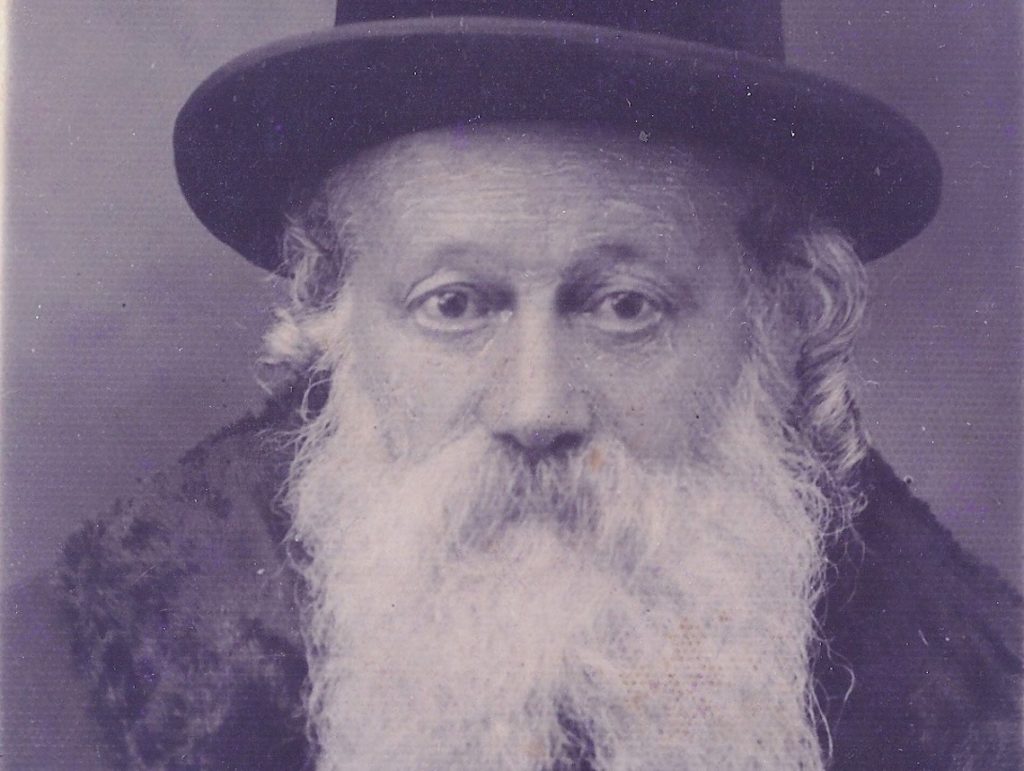
Meylakh Sheykhet was a vision from the past. I had no idea who he was when he tapped me on the shoulder in the lobby of the Hotel Dnister in Lviv, Ukraine.
Tall and bearded, with sunken eyes, he cut a jarring figure in his ultra-Orthodox garb. Around us, a conference on Jewish life was in full swing. Meylakh had overheard me saying I was an intern with The Jerusalem Post. He wanted to tell me about the deteriorating state of Jewish sites in the city — and his fight to preserve them.
Meylakh’s work is motivated by an enduring respect, a fascination even, with the dead; they are never far from his mind. Meylakh fights long odds to save Jewish cemeteries and synagogues, to uncover and preserve the burial sites of sages and to stave off destruction when developers encroach on houses of prayer or their ruins. He sleeps little and makes plenty of enemies. We sat down together in the hotel lobby, and he began to talk, quickly and frantically.
To this day, I don’t know whether to thank Meylakh or to curse him. His tap on the shoulder launched an investigation into my roots that spanned two years, three continents and five generations.
As it turned out, my trip to Lviv had brought me within 100 miles of where many of my ancestors had lived and died, just across the border in Poland. Soon after, I found myself awake at odd hours, clicking frantically from link to link as I fell deeper and deeper down digital rabbit holes on websites dedicated to Jewish genealogy.
Names and dates began to harbor an outsized significance. I found myself assaulted by a confounding rush of details, illuminating and otherwise. One figure kept emerging out of that chaos, over and over again, capturing my imagination and curiosity. It was my great-grandfather, a holy man from a rabbinical lineage who made Torah his day and night’s labor. Before long, he was the centerpiece of my frenetic journey of discovery.
I knew then I had to take my search offline. I reached out to relatives whose identities I’d learned on the internet. I pestered my dad with questions. I devoured books on life in the shtetl and on the great Chasidic dynasties of Europe.
Months into my search, I came across my first authentic relic: the calligraphic handwriting of my great-grandfather, poetic Hebrew sentences intertwined with Torah verses in letters he’d written to family in Palestine. My eyes widened. The letters were an unbearably human fragment of a vanished and tragic past. He signed with the same Hebrew spelling as my father, Asher Arom, only adding a shin, vuv, bet afterward for shochet u’bodek, ritual slaughterer. Looking at those letters, I knew I had to go back to Eastern Europe.
As Jews, we’re told that between Rosh Hashanah and Yom Kippur, God writes and seals the fate of each living soul. So it stands to reason that in September 1939, He was busy plotting against my forebears in Europe.
At the dawn of the Jewish year 5700, one small town in Poland became the crime scene where the Creator carried out His conspiracy against my great-grandfather’s family, with the Nazis as instruments. I suppose you could say I went there to collect evidence to put Him on trial.
My trip came less then two years after I first visited Eastern Europe. After two weeks of traveling with my father in Israel, I took a flight from Ben Gurion Airport to Lviv. From there, a bus took me through a foggy February morning and across the Polish border. Every once in a while, the bus swerved into an improbable clearing in the dark woods to pick up someone. My fellow passengers looked to be straight from central casting. The fat matron in the checkered frock, the cadaverous woman with suspicious eyes, the tall man reeking of cigarettes, with a pockmarked face and a jagged scar from the corner of his lip to his ear — these people all looked like they belonged here. The 22-year-old Jewish boy from Beverly Hills did not.
The bus dropped me off in Przemysl (pronounced PSHEH-meh-sheel), an old Polish city of about 65,000 on the San River, where unimaginative Soviet-era buildings fill spaces left by long-gone synagogues and study halls. The bus pulled up just outside the perimeter of the former ghetto where Asher likely was murdered.
When my guide, Maciej, met me in front of my hotel, he admitted he had been expecting a man twice my age. And indeed, the people I’ve met since who tend to take these forays into pre-Holocaust nostalgia are a generation or two my senior. But to see the degradation and neglect of Jewish heritage in Eastern Europe is to understand that time is of the essence.
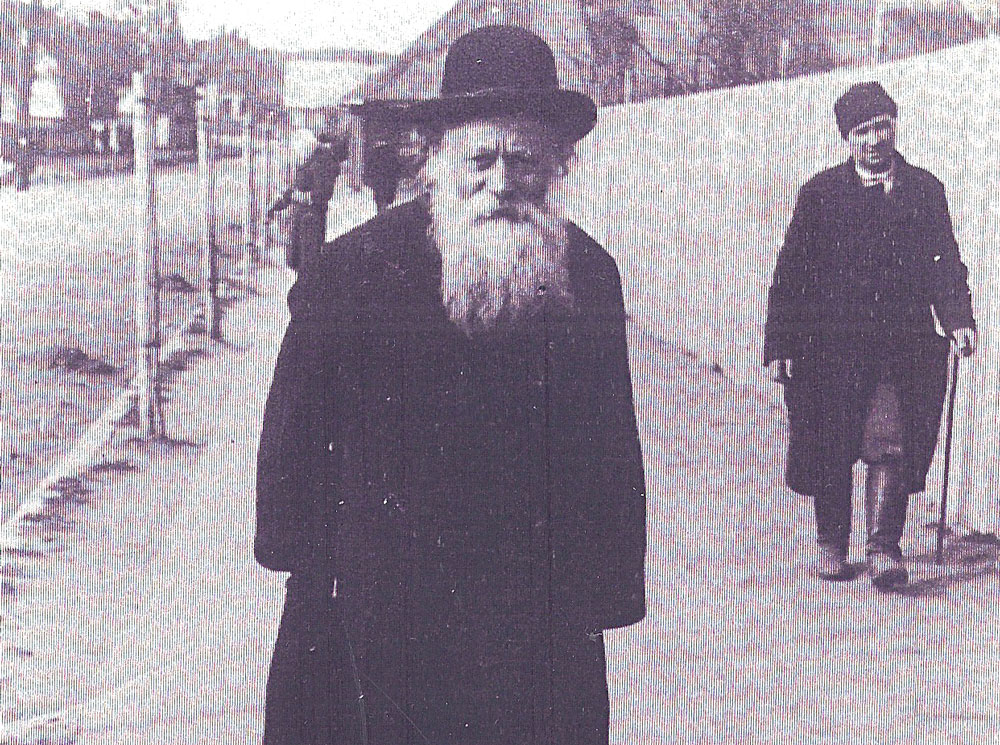
My great-grandfather’s legacy is no exception to the corrosive effect of the years. He was born in Przemysl, across the river from the Jewish quarter in a neighborhood called Zasanie, where his father, Gedalia, had been the head of a yeshiva.
Today, the synagogue in Zasanie stands abandoned and deteriorating behind barbed wire. The inn where Gedalia raised a large flock of children was long ago replaced by a blocky apartment complex, painted in primary colors. The Jewish cemetery, just down the highway from the city, has been covered for eight decades with fallen leaves and broken branches, leaving an overgrown warren of blank monuments, the inscriptions worn away by time. The only trace of my ancestors here is some cursive script in a yellowing Austrian record book in the florescent-lit reading room of the Przemysl National Archive.
Shortly after Maciej and I met, we drove 76 kilometers north through heath and woods to Lizhensk, the shtetl where my great-grandfather lived most of his life, now a drab industrial town of 15,000. A relative of mine had marked Asher’s home in red pen on a hand-drawn map of the pre-war town. We parked nearby, in an open-air lot the map indicated had once been the heart of the Jewish quarter.
A drizzle was falling as we plodded down a muddy slope toward the spot indicated on the map. There, on an unpaved path beneath a slate-gray sky was the low shack Asher had built, abandoned and ill-treated by time, its wood planks bent by years, wintery vines bursting through the eaves.
Lizhensk is best known within Poland for the brewery that took its name. To Chasidic Jews, though, Lizhensk is synonymous with Rabbi Elimelech of Lizhensk, a founding father of Chasidism and the town’s most famous resident, Jewish or otherwise.
The Nazis redrew the geography of Lizhensk’s onetime Jewish quarter, erasing the Street of Synagogues from the map. Now, a large, open-air parking lot stands in its place, ringed by a dreary neighborhood with a proliferation of seedy casinos and 24-hour bars. The cemetery is equally unrecognizable. Bulldozed by the Germans, the monuments dragged away as paving stones, it sat empty and ignored for decades. When Jews began to return in the 1980s — survivors and their families as well as Chasidic pilgrims — they dragged what tombstones they could find back to the graveyard, lining them up in arbitrary rows. Year after year, the crowds worshiping at the sage’s gravesite grew.
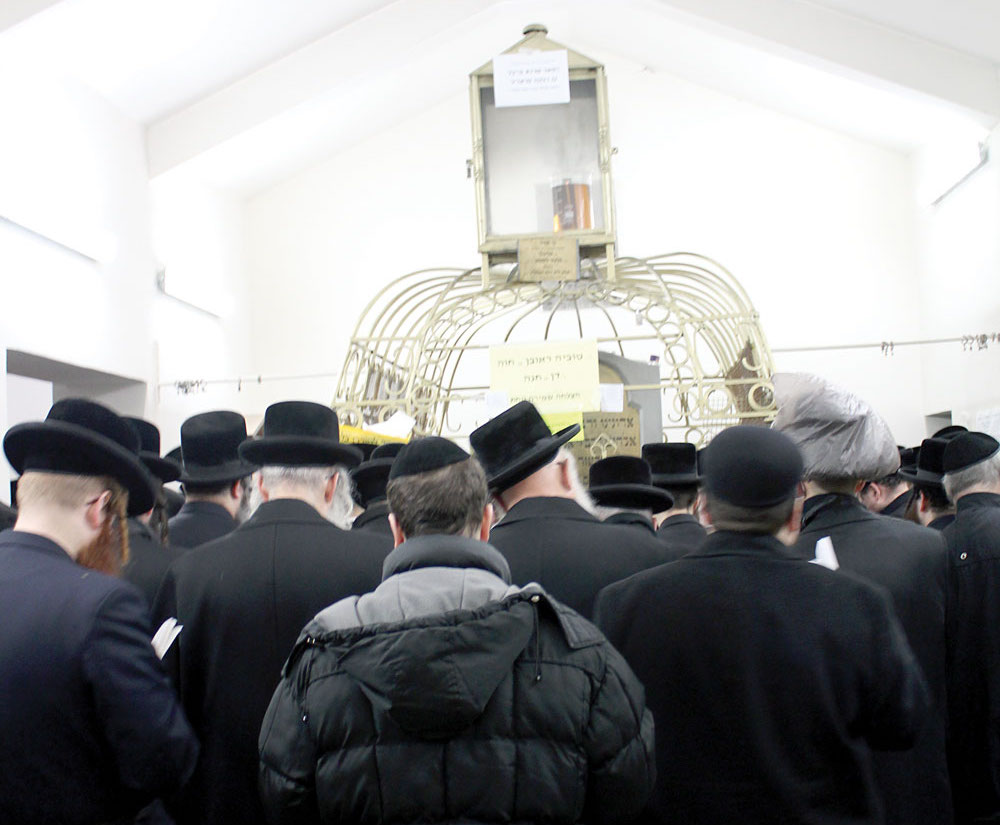
These days, in late February or early March, according to the fluctuations of the Jewish calendar, the streets fill with Jews in black hats and headscarves, from Brooklyn, Israel and beyond, in anticipation of the 21st of Adar. By the time I learned about the yarzheit, my picture of Eastern European Jewry was colored by its disappearance: magnificent synagogues reduced to rubble and cemeteries knocked over and built upon. Eastern Europe, to me, meant dead Jews. Somehow, I thought seeing some live ones there would be a comfort.
For these Jews, death was a part of life, the sadness married to their joy. It was something less than final.
On the site where Rabbi Elimelech is presumed to rest in the rebuilt cemetery, a white concrete structure, a mausoleum, of sorts. was built to accommodate prayers. Inside, a monument enclosed in a metal trellis was piled high with scribbled notes of supplication. Even some non-Jews see the site as holy: While I watched the room fill with Chasidim swaying in prayer, a Polish man with graying hair and far-off eyes entered and bared his head — an odd custom under the circumstances — then fell to his knees, clasping his hands together in silent benediction.
Over time, the town has developed an infrastructure to accommodate the annual influx. The building that had housed the mikveh, or ritual bath, somehow withstood World War II; afterward, a group of Chasidim acquired it and added a second story to form the Hachnasat Orachim of Lizhensk, a guesthouse for pilgrims. Worshipers now could find accommodations and a prayer hall — even a functioning mikveh. Soon, the pilgrimage outgrew that long, low barrack of a building, and just up the hill, a planned extension, a massive A-frame structure covered in Hebrew banners, was nearly complete. Between the two buildings was Asher’s home.
As I walked up, rabid barking erupted behind me. I wheeled around to face the largest German shepherd I’ve ever seen, howling at me murderously from behind a chain-link fence. I resisted a momentary urge to run: German shepherds always have conjured images of Nazi attack dogs for me. Instead, I scowled at the beast and turned back to the house, trying to ignore its bloodthirsty snarls.
In pictures I’d seen of the house, it was far from luxurious, but it was the type of place where you’d expect a penurious rabbi in a Polish backwater to live. At least, it looked habitable. On Google Maps street view, in a picture taken in 2012, a sedan is parked expectantly in the driveway. Seeing the place as it now was came as a gut punch.
The blemish on the doorpost where the mezuzah had once been was the only sign of its onetime inhabitants. The windows had been spray-painted white from the inside — for what reason, I can’t fathom, other than to rob descendants of the satisfaction of peering in. The place looked as if a strong gust of wind might take it down.
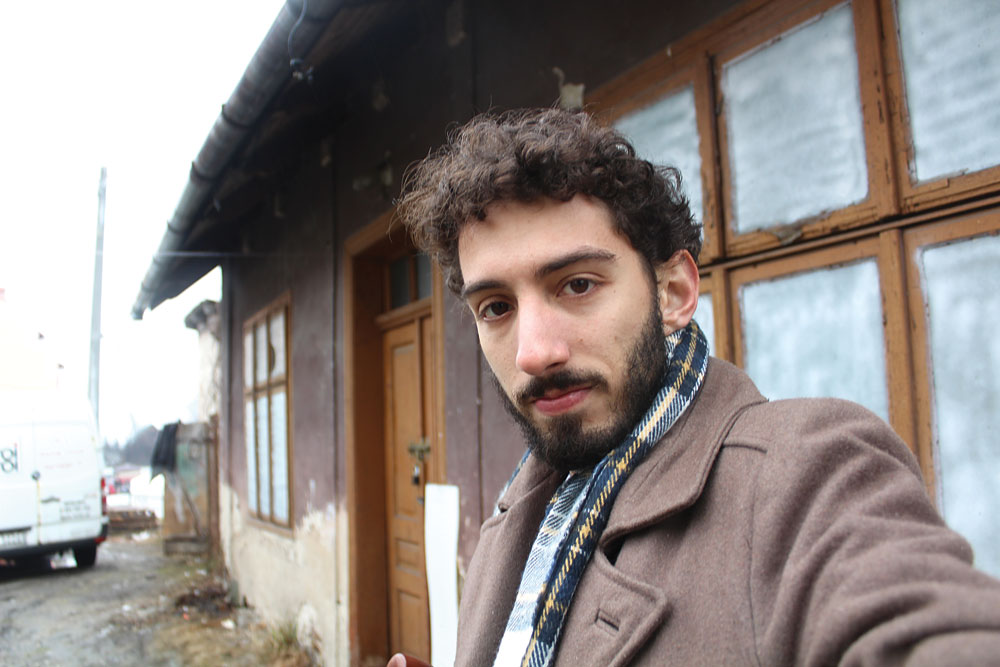
I wanted to see inside but quickly ruled out the idea of climbing through the loft window, which was missing its frame and panes. Instead, I took to the square below to see if I could learn who had the key. One by one, I sidled up to strangers who were milling about in the drizzle. My reluctant informants didn’t seem to know what to make of me. With a camera around my neck and a yarmulke pinned uneasily to my head as a form of self-identification, I fit in with neither the Chasidim nor the Poles. I managed to win some goodwill by pointing to the tumbledown shack up the hill and saying it once belonged to my great-grandfather. Soon enough, I learned the shack was now owned by the same Chasidim who operated the guesthouse. A less welcome revelation: Before long, they planned to tear it down to build more lodgings for travelers. Pilgrim after pilgrim told me to look for someone named Simha.
Simha Krakovski is a wiry man with a scraggly white beard who directs the guesthouse. I cornered him outside an upstairs prayer hall. As we spoke, sweaty yeshiva students with sparse beards and red faces crowded around to see why Krakovski — clearly a busy man at this time of year — was talking to the only non-Chasidic person in the building. As we spoke, some scholar of great importance swept by with a crowd of hangers-on, pressing us against a wall.
To see the degradation and neglect of Jewish heritage in Eastern Europe is to understand that time is of the essence.
Krakovski indulged me briefly with the story of his early days in Lizhensk, some 25 years ago. “I first came to pray, and when I wanted to use the bathroom, there was no bathroom,” he told me in Hebrew. “I had to pay a gentile woman a dollar to use hers, and it stank.”
I told him who I was and about my ancestor. He told me, yes, they’d acquired the house and were planning to knock it down to expand the accommodations — a dining room, lodgings, he couldn’t be sure, exactly. I asked if the new complex had a name, and why not name it after this pious man, this ghost of mine? He made it clear naming rights could be had — for a price. Come find him tomorrow, he said, and we could talk.
After he left, the young men closed ranks around me, questioning me in English and Hebrew. Did I have money? What did my father do? Is he rich? Suddenly, I felt the flush that was reddening their faces. I was too hot in my wool coat. I stepped outside and back into the drizzle.
Somehow, I’d thought being among these Chasidim would make me feel better about the state of affairs, the vanishing traces of Jewish Europe, the decay and neglect. It didn’t. It made me feel more alone, more abandoned, orphaned by history.
I never found Simha Krakovski again. But the next day, I was back inside the guest house, in the office of Krakovski’s colleague, Menashe Lifshitz, a Chasid from B’nai Brak, in Israel. He told me how they’d bought the shack some years back from a Polish woman who lived there, paying her what he assured me was three times the fair price.
When the guesthouse was established, he said, many of the surrounding houses still bore outlines on the doorposts where their onetime inhabitants had fixed mezuzahs. As people got the money to fix up their homes, most were painted over. The blemish where Asher had nailed his mezuzah into the threshold was the last one that remained.
Somehow, I’d thought being among these Chasidim would make me feel better about the state of affairs, the vanishing traces of Jewish Europe, the decay and neglect. It didn’t.
Lifshitz worked out of a small, cluttered office with a twin bed and a small desk on the second story of the former mikveh building. The entirety of the window in the office faces the southeastern wall of my great-grandfather’s home. Before the second story was added, Asher would have had an unobstructed view of the cemetery. He would have been able to watch as the candles burned in Rabbi Elimelech’s tomb through the night.
I asked if I could see the inside of the house. Any other time of year, Lifshitz assured me, it could be arranged. With the pilgrimage in full swing, it would be difficult. He couldn’t be too sure where the key was.
The mikveh building where Menashe Lifshitz kept his office plays a significant part in the story I’ve learned about my great-grandfather.
As it goes, when the Cossacks came during World War I, most of Asher’s family fled. Asher stayed behind so nobody with a chicken or livestock would go hungry for lack of a slaughterer to prepare it. One day, as he was walking outside, a group of Cossacks spotted him and followed. He led them to the mikveh and jumped into the depths, hiding beneath the sacred waters, where he was spared.
But his luck would run out before long. When murderers again came to his town, their fury would be greater and more destructive than the town had ever seen.
The Nazis entered Lizhensk during Rosh Hashanah 1939. On Sukkot, they rounded up the Jews in the market square. A persistent downpour soaked the crowd. The frightened townsfolk were uncertain what fate awaited them — death or deportation, bullets or banishment. Panic ruled.
And Asher was missing.
My understanding of these events is informed entirely by the adolescent memories of his granddaughter, Leah Braude. Leah’s, father, Chaskel Nissenbaum, was a slaughterer and Asher’s student. Later, when Nissenbaum traveled to Germany to ply his trade, returning only for holidays, Asher became something of a father figure to his young granddaughter.
After the war, Leah set down some of her memories from that time in what became the Lizhensk Yizkor Book, a collection of remembrances published in Israel and dedicated to the town’s martyrs. In one of the passages, she described her grandfather, who had “a smile that imparted pleasantness whenever I desired a smile.” This is the last living account of my great-grandfather — but the rest of the Yizkor Book provides a colorful recollection of a vanished world.
The last time Shabbat candles glowed in the windows of Asher’s home, it was earlier in 1939 and the forests surrounding the town were alive with the spirits of the Chasidic imagination.
The cave of Elimelech was just beyond where the town met the woods. The sage’s tomb commanded a view of the Jewish quarter, a slope of wooden homes leading up to Ulica Boznica, the Street of Synagogues.
Lizhensk was a town of a typical European mold: Sledding and ice skating in winter, and sweltering summers. Leading off the market square, where Jewish tradesmen and businessmen mixed with their Polish and Ukrainian counterparts, the synagogue street formed the heart of the Jewish quarter.
Here, Jewish homes abutted schoolrooms and yeshivas, synagogues and study halls. On Shabbat eve, the sexton would knock with his wooden hammer and call, “Jews, Jews, to the synagogue!” as the smell of fried onions and kugels filled the air.
Before the war, Jews and gentiles mixed for good and ill. The Lizhensker Jews were not spared their share of anti-Semitism; Jewish schoolchildren were regularly beaten to cries of “dirty Jew!” Sometimes, one of the nastier teachers would even join in. In spite of all that, here and there friendships grew. Gentiles dropped in on Jewish households for the lighting of Shabbat candles.
What made Lizhensk different from other shtetls, though, was the great rabbi who took its name, and who, more than a century after his death, drew mourners from across the continent to his grave. The custodians of his earthly remains, the Jews of Lizhensk, tended to be an industrious and religious lot, if poor; Asher Arom no doubt fit that mold.
Leah, barely a teenager when war separated her from her beloved Chasid, with his snowy sidecurls and white beard down to his chest, recalled in the Yizkor Book his deep devotion and fervent prayer: “My grandfather made his nights like his days, and studied Torah. His tune in the nights is woven in the depths of my dreams and adds to their sweetness.”
Shortly before death came to the rest of Lizhensk, it visited the home of the ritual slaughterer.
“May the One who consoles Zion and builds Jerusalem offer us a double portion of consolation,” Asher wrote to his son Shmuel in Palestine on the Tuesday after the reading of Parashat Bamidbar in May 1938 — he made a practice of marking the date by the Torah reading. His letters are nearly eight decades years old, but the grief they convey seems fresh, even raw.
Leah’s account had led me to her daughter, Sima Braude Marberg, a kindly woman and a distant cousin of mine who teaches tai chi in the courtyard of her apartment building on a tree-lined street in of Haifa. When I visited, she produced a binder full of old letters in plastic protectors, some of them written in Asher’s practiced, looping script.
The tales from the deathbeds of great Chasidic sages often recount a transformation as their souls hover between this world and the next. These were the terms in which Asher described the death of his wife, born Chaia Rachel Brand, my great-grandmother: “On the seventh day of the month of Iyar” — April 26, 1939 — “early in the morning at 2 a.m., her soul began slipping away from her body until she passed away at 9:30 in the morning,” he wrote to his son in Palestine. “The house was full of men and women.”
The death left her husband disconsolate.
“Rachel, the mainstay of the house, how were you taken to be buried in the ground — where finally your bones could find a resting place — but leave us to our moaning and sorrow?” he wrote. “Who will mend our broken hearts that have been torn asunder and broken into pieces?”
He delivered a eulogy. “By dint of her wisdom she was the principal force, the one who always could advise the proper path, for me and for all those who turned to her for direction,” he told those assembled. “I continued, as is my wont, to expound midrashim and Biblical verses in my eulogy, and the entire congregation broke out in tears, sobbing.”
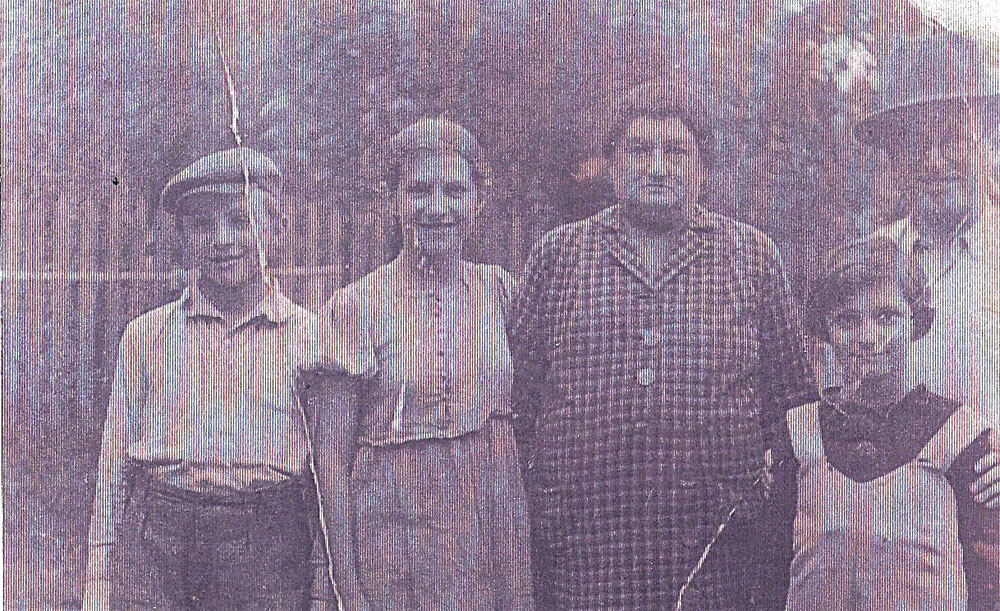
The community took Chaia Rachel to be buried, and then Asher led evening prayers. Afterward, he wrote, “I was overcome by a terrible burning sensation. The doctor was called, and I was carried to my bed, where I lay without feeling.”
It must have seemed the world was ending. Two of his sons had earlier abandoned Poland for Mandatory Palestine. Now their mother was gone. Bedridden, Asher was found to have a high fever. Death must have seemed near for him, too. But a week later, after the shiva had ended, he recovered, physically if not emotionally: “I now feel well and have returned to work,” he wrote.
“I ask of you to recite Kaddish throughout the entire year, every day without fail,” he bid his son. “And if there is someone with you in your kibbutz who can study mishnayot [talmudic tractates] with you — even just a few mishnayot — then you can say Kaddish afterward in memory of, and for the benefit of the soul of the righteous woman, Chaia Rachel bas Luria Simcha, of blessed memory. And in this merit you and your offspring be successful. May you find material success and enjoy long lives, and raise your son to every good end. Your father, signing with tears.”
The end for the Lizhensk Jews came quickly, before the townsfolk knew it.
In the martyrs’ book and in video interviews with the USC Shoah Foundation, survivors recount with bitter embarrassment a period of obliviousness, of false security, as the forces of destruction massed just beyond the town’s border. Few had radios in their homes, so a doctor who lived in the market square would place his receiver by a window and raise the volume so people could listen in the street below. One survivor, then a girl of 10, remembered standing in the square and hearing Edward Rydz-Smigły, the marshal of Poland’s armed forces, declaring, “We won’t give away even a button — nothing!” Soon, he had given away everything.
The invasion of Poland began on Sept. 1, 1939. By Sept. 3, German bombs had destroyed the railroad tracks in Lizhensk, the only link between the town and the outside world. When crews came to repair their tracks, aerial machine gun fire chased them off.
Jews left the city in droves, only to return hours or days later after finding the surrounding country in a similar state of pandemonium. Those who returned on Rosh Hashanah eve found German troops in town. The Nazis turned the holiday into a carnival of mockery, cutting beards off of men and forcing them to march in circles around a tree.
The Germans were in the mood for arson when they came to Asher Arom’s house on the second night of Rosh Hashanah. Earlier that night, soldiers had barged into the synagogues, demanding volunteers for work. In a surprising act of mercy, they allowed the congregants to evacuate the synagogues, but their intentions were clear. They brought kerosene and kindling. Then they set the buildings ablaze.
The main concern for many of these Jews, it turned out, was not preserving their property or protecting their families, but finding a place to finish praying. With the ashes of the holy places still choking the air, “it was told to them that grandfather had made his house open for the needs of prayer,” Leah recalled in the Yizkor Book.
Some two dozen Jews gathered at the ritual slaughterer’s home. The Nazis quickly learned what was going on. They chased away the prayer quorum but locked my great-grandfather inside. Soon, they returned with bundles of straw and rags soaked in kerosene. Leah’s sister Sarah, then a girl of 16, begged for her grandfather’s life, weeping. The Germans ignored her, intent on burning the 72-year-old alive. Only when a gentile woman who lived next door joined in Sarah’s protest did the Nazis relent.
“She was afraid her home would catch fire, as well,” Leah wrote. “The Germans returned the key to my sister and removed the flammable material from around the house, and grandfather was again saved from certain death.”
On Yom Kippur, we are taught, the ink is still wet in the Book of Life. Even the hosts of heaven shrink in terror as the Creator ponders fates: “The Angels of heaven are dismayed and seized by fear,” the prayer goes. “The great shofar is sounded, and a still, small voice is heard.” Was anyone fool enough, or fervent enough, to blow the shofar in Lizhensk that year? Did anybody hear the still, small voice?
By the Day of Atonement in 1939, the Jews of Lizhensk were afraid to walk in the streets for the harassment it undoubtedly would bring. Those still inclined to pray mostly stayed home and found a quiet corner to do so.
For the Chasidim of Lizhensk, the world to come must have seemed nearer than ever. Yet they were not ill-prepared to meet their end. For these Jews, death was a part of life, the sadness married to their joy. It was something less than final. When sickness or disasters struck, the Lizhenskers would climb the hill of the cemetery to ask the dead to intercede on their behalf. Orphaned brides and grooms would go there to invite their deceased parents to celebrate their wedding. The place abounded with legend.
It was to those old stones that Asher Arom would retire when he could wrest a moment from the demands of work, family and study.
“He would spend hour after hour there cleaning the gravestones and making the inscriptions clearer,” his granddaughter Leah wrote. “When the Messiah comes, each minute will be precious and holy, and it would be a shame if time would be wasted on clarifying the blurred inscriptions.”
Sometimes, he brought Leah to weed the grass around the graves. Once, he explained to her why he did it: “Death is nothing but the natural continuation of life,” he said. “And if we love a life of cleanliness and being cared for, we must give this also to the dead. We must look after the gravestones, just as we look after our home.”
The bitter irony is that his body most likely went up in smoke or was tossed in a mass, unmarked grave.
The circumstances of 1939 gave new meaning to the Yamin Noraim, the Days of Awe — more literally, the days of terror between Rosh Hashanah and Yom Kippur: “We sat with closed doors and shut windows,” survivor Shaul Spatz recalled in the Yizkor Book. “The silence outside was only interrupted by the occasional thumps of the boots of the German soldiers.”
Soon it was time to erect their sukkot, but the familiar sounds of hammers hitting nails were absent. “That year, all Jewish homes remained exposed without sukkot attached to their walls,” he wrote. “In the Jewish street, fear walks. Apprehension replaced the joy of the holiday.”
You can’t read the vanished inscription on a rain-beaten tombstone. No number of seasons and no amount of research will bring it back.
Then, the rumors of a roundup came true: The next morning, the Jews were to report to the market square.
“I don’t remember which one of our neighbors told us that we had to leave the house,” Spatz wrote. “We fearfully gathered a few of our belongings.”
Hundreds of Jews already had assembled when Spatz arrived. “It was raining,” he recalled. “Our bundles were wet and their weight increased by the moment.”
Death was the punishment for absence, and yet there was no trace of Asher.
Leah had arrived at the square with her parents and sister. Her mother, Gittel, must have been frantic: Simcha, Gittel’s only son, was away at yeshiva in Lublin. Later, Leah’s daughter Sima told me, Gittel had risked a summary execution and snuck back across the San River to see if her boy had come home to find his family, but there was no trace of him, either.
Tension mounted. Anxiety and anguish boiled like puddles in a hard rain. And still Asher was missing.
“We were unable to search for him without being shot,” his granddaughter wrote. “At the last moment, as we organized into rows for the gloomy march, he appeared next to us, calm and filled with family warmth. He was wearing his clean Sabbath clothing, and had his tallis and tefillin bag with him.”
His family scolded him, but, “He smiled and mocked us: What is all the confusion? For it is impossible to believe these murderers. However, perhaps they indeed intend to kill us. Therefore, I went to the mikveh to purify myself, and now I am ready and prepared if it is the will of our Creator, the Creator of the world who determines the fate of man.”
The march began, 2 1/2 miles to the banks of the San River. “The Jews traveled with their heads down, their eyes toward the ground, as if they were guilty of some terrible deed,” another survivor wrote in the Yizkor Book.
When they got there, the Germans unrolled a sheet and commanded the Jews to drop any valuables onto it, on penalty of death. To show they were serious, they shot one of the Jews on the spot. But when the Jews then were ordered across a makeshift bridge, suddenly they were alone; the opposite bank was Soviet territory. Two years before the Wannsee Conference and the decision to implement the Final Solution, the Nazis seemed content with banishment. “So ceased to be one Jewish community in the first days of the war,” Spatz wrote.
Leah and her family headed east, surviving deportation to Siberia and eventually making their way to Israel. But Asher seemed to resign himself to his doom.
The conclusion of his granddaughter’s recollection is as terse as the rest of it is reverent: “When we crossed the San, we continued to wander in the direction of Przemysl. Grandfather was a native of Przemysl, and he decided to remain there until the storm would pass. After we took leave of him, we never met again. He succumbed to the murderous Nazis.”
Was he murdered when the Germans rounded up and killed the entire Jewish population of Zasanie in June 1942? Was he sent to Belzec some two months later along with 12,500 Jewish residents of Przemysl? Or would he have lived to the very end and been one of the 1,000 murdered behind the Judenrat building, during the final liquidation of Przemysl’s Jews, when the shooting went on for six hours?
What became of Asher Arom remains an intractable and deeply frustrating mystery to me. The only evidence of his death is a small, yellowing scrap of paper on which his son Shmuel, my grandfather, scribbled a contradictory series of Hebrew and Gregorian dates, recorded, probably, from phone calls from family and former neighbors after the war.
But how he died doesn’t interest me quite so much as how he lived. I’m still waiting to stumble on the single detail that will bring events from Lizhensk back to life for me, even just momentarily, in a brilliant flash of transplanted memory. I didn’t find it in Poland. Most of my time in Lizhensk was spent ambling from spot to spot, possessed by a sense of detachment, the drizzle dampening my mood. Even the beards and shawls and the prayerful wailing through the night failed to conjure anything profound.
There’s a disconnect I can’t get past. The removal is too great, the violence too jarring, the years too many. Sitting in the main square in Lizhensk, brooding over a notebook and trying to figure out how to feel, it didn’t really land that this was the same square where the Jews had gathered on Sukkot, where Leah had fretted over her grandfather. Would that it had, I might have decided to hike from Lizhensk to the river, following in the path of my ancestor, letting March showers stand in for fall rain. I didn’t. I’m not sure what I would have gained from it.
My ghosts have become better defined since I went looking for them, but they remain no less puzzling, no less tiresome and my relationship with them no less one-sided. They remain ghosts, dead things, dust and forgotten secrets. You can’t read the vanished inscription on a rain-beaten tombstone. No number of seasons and no amount of research will bring it back.
To those planning a foray into their family history by buying a plane ticket to Poland, my advice is: You might want to reconsider. You will find no answers there. Seeing will bring you no more comfort than knowing. Only emptiness and grief remain for the likes of me, and faint traces of a bitter past. Soon, those too will be gone.
My ancestor vanished in the Holocaust; 80 years later, I went looking for him Read More »

Now the largest and one of the longest-running book events in the United States, the Los Angeles Times Festival of Books opens for its 21st outing over the weekend of April 21-23 on the USC campus.
Once again, more than 150,000 book-lovers are expected to join hundreds of authors and performers for interviews, panel discussions, poetry readings, storytelling, musical performances, book-browsing, food and drink, and — always the real and irreplaceable draw — the opportunity to mingle with other ardent book-lovers.
The Festival of Books opens on the evening of April 21 with the presentation of the Los Angeles Times Book Awards, now in their 37th year and emceed this year by comedian, actor and writer Tig Notaro.
The recipient of the Robert Kirsch Award for lifetime achievement by a Western writer will be presented to novelist Thomas McGuane, whose books include “Ninety-two in the Shade,” “Driving on the Rim” and, most recently, “Crow Fair.” (The award is named after my late father, who served as the daily book critic for the Times for more than 30 years, and I will be presenting the award to McGuane at the ceremony.)
Other winners will be announced at the prize ceremony, including the Art Seidenbaum Award for First Fiction, the Innovator’s Award and the newly established Christopher Isherwood Prize for Autobiographical Prose.
At 10 a.m. on April 22, the USC Trojan Marching Band will kick off the festivities with a performance by the 300-member ensemble. At the same time, former L.A. Poet Laureate Luis J. Rodriguez, author of one of the classics of Los Angeles literature, “Always Running: La Vida Loca, Gang Days in L.A.,” will mount the Poetry Stage to read from his latest book of poetry, “Borrowed Bones.” The choice between a musical extravaganza and a soaring lyrical moment represents the remarkable diversity of the Festival of Books.
Celebrity participants, literary and otherwise, will include Kareem Abdul-Jabbar (“Writings on the Wall”), Ron Kovic (“Born on the Fourth of July” and “Hurricane Street”), Cheech Marin (“Cheech Is Not My Real Name … But Don’t Call Me Chong!”), Margaret Atwood (“Hag-Seed: William Shakespeare’s ‘The Tempest’ Retold”), Francine Prose (“Mister Monkey: A Novel”), Joyce Carol Oates (“Lives of the Twins” and “A Book of American Martyrs”), Bryan Cranston (“A Life in Parts”), Tippi Hedren (“Tippi: A Memoir”), MSNBC’s Chris Hayes (“A Colony in a Nation”) and conservative radio host Hugh Hewitt (“GOP 5.0: Republican Renewal Under President Obama”).
Local authors with national reach are well represented in the schedule of events, including T.C. Boyle (“The Terranauts”), T. Jefferson Parker (“Crazy Blood”), Mona Simpson (“Casebook: A Novel”), Leslie Klinger (“Anatomy of Innocence: Testimonies of the Wrongfully Convicted,” co-edited by Laura Caldwell) and Susan Straight (“The Shipwreck Bed”).
The programming includes some surprising and illuminating moments. Rock star Dave Grohl is featured in conversation with his mother, Virginia Hanlon Grohl, about her new book, “From Cradle to Stage: Stories from the Mothers Who Rocked and Raised Rock Stars.” Best-selling author Lisa See (“The Tea Girl of Hummingbird Lane”), daughter of the late and beloved novelist Carolyn See, will be in conversation on a subject she knows well: “Everybody’s Got One: Fiction and Families.” And Leo Braudy, author of “Haunted: On Ghosts, Witches, Vampires, Zombies, and Other Monsters of the Natural and Supernatural Worlds,” is participating in a timely panel titled “What Are We So Afraid Of? The Role of Fear in Our Lives.”
Complete scheduling information and advance tickets for these and dozens of other events at the Los Angeles Times Festival of Books are available at events.latimes.com/festivalofbooks.
JONATHAN KIRSCH, is book editor of the Jewish Journal, will moderate an April 22 panel at the Los Angeles Times Festival of Books on “Biography: The Artist as Muse,” featuring Ross King, Donna Seaman and Lawrence Weschler.
A smorgasbord of literary delights at L.A. Times book festival Read More »
The difference between the Jews and the Christians,
Father said, is that the Christians believe Hell exists
in the next world. Whereas, every Jew knows that Hell
is a real place. Hell existed in Nazi Germany. It’s
always on the move. We’re not afraid of landing in it
in the next world, because six million Jews already
died there. Hell could be one dictator away. That’s why
you should vote. Dogmatists hate voting booths,
unless they can come up with a devious way of changing our votes.
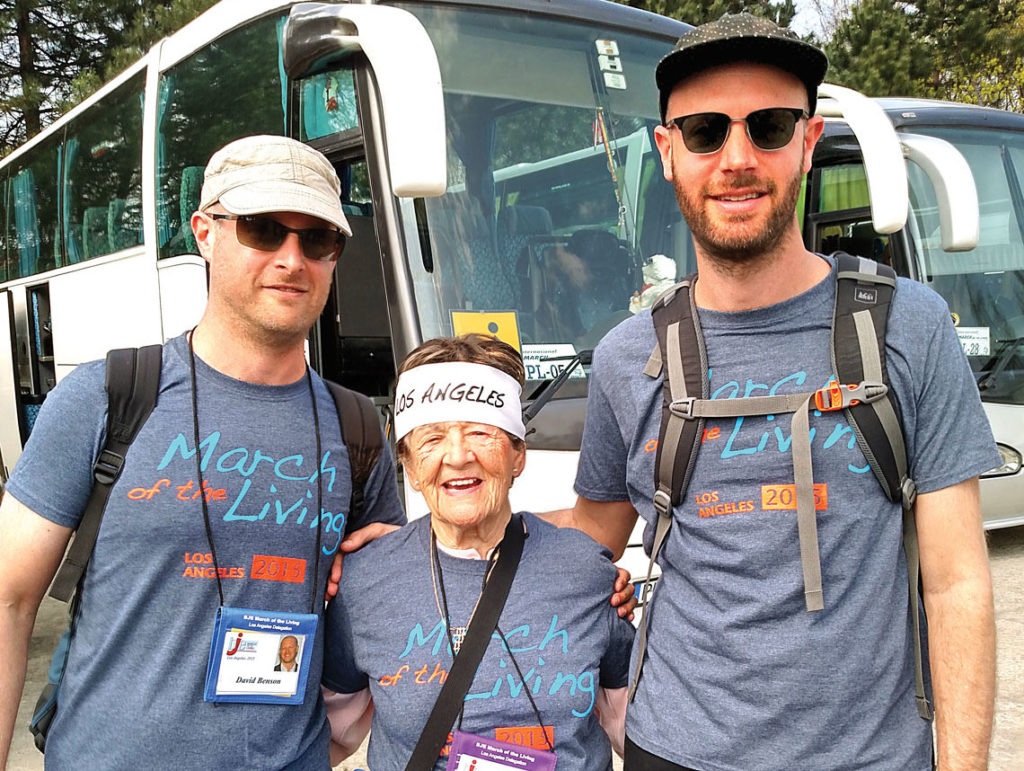
In the spring of 2011, David Benson, found himself walking with his grandmother, Holocaust survivor Sidonia Lax, down the “black path” that once led to the crematorium at the Majdanek concentration camp in Poland. It was Lax’s fifth trip with the annual International March of the Living as a survivor, with the Builders of Jewish Education (BJE) teen delegation, his first as part of a large family contingent with the BJE Los Angeles adult group.
As they headed toward the massive circular mausoleum that now stands at the end of the path, holding the ashes of some of the approximately 59,000 Jews and 19,000 non-Jews who were murdered there, Benson, then 35, found himself alone with his grandmother, then 83, for the first time during the trip. Something came over him, something that he can’t explain to this day, and he vowed, “As long as you want to come on this trip, I will come with you. And I’ll come in your stead when you can’t anymore.”
Benson’s sacred promise to his grandmother represents a welcome response to a mounting challenge facing museums, historians and educators as survivors of Nazi-era atrocities grow old and die, taking their firsthand accounts with them: How will their memories be kept alive for future generations? More and more, it is the survivors’ descendants — their sons, daughters, grandchildren and great-grandchildren — who are taking on that responsibility, and beyond them, anyone who hears their stories.
It also is spurring wider efforts to record survivors talking about their exploits for posterity, much in the way the USC Shoah Foundation videotaped more than 50,000 testimonies of Jewish survivors between 1994 and 1999 and how the United States Holocaust Memorial Museum in Washington, D.C., is continuing to expand its collection of more than 12,000 audio and video recordings of Jewish survivors.
Benson is one of the many children, grandchildren and even great-grandchildren of survivors — known within the Holocaust community as Second, Third and Fourth Generation — who are stepping up to tell the survivors’ stories as educational programs, institutions and museums worldwide prepare for a world without survivors.
For the past five years, Benson has left behind his wife, his two young children and his business for a week to accompany his grandmother to Poland. This year, after 10 March of the Living trips, Sidonia is unable to participate. And although David cannot attend this year because of preparations for Sidonia’s 90th birthday and other conflicts, he already has signed up to lead an adult group next year.
— David Benson, to his grandmother, on a march of the living trip to Poland
He knows his grandmother’s story intimately, how she and her parents had been crammed into a small cellar bunker with 35 people in the Przemysl ghetto in Poland for three months in the fall of 1943. An escape plan for her family failed, and her mother was captured and later murdered. A few days later, her father slipped out of the bunker in search of a smuggled apple for his severely undernourished daughter. He never returned.
Benson has followed his grandmother inside her former barracks in Birkenau, one of six camps in which she was imprisoned, where she’s pointed and said, “This is the bunk where I slept.”
“There’s nothing like someone, firsthand, standing there and saying that,” said Monise Neumann, director of the BJE Center for Teen Experiential Education, who has led 12 trips with the BJE Los Angeles delegation. “You can’t duplicate that.” Still, she said, “David serves as an amazing kind of figure as we transition from firsthand witnesses.”
Seven decades ago, at the end of World War II, approximately 3.8 million European Jews were alive, according to research by demographer Sergio DellaPergola of the Hebrew University of Jerusalem. Today, among Jews who were in camps, ghettos or hiding under Nazi occupation, only 100,000 worldwide are alive, including 14,000 in the United States, Amy Wexler, public relations manager for The Conference on Jewish Material Claims against Germany, said via email.
In Los Angeles, extrapolating from the 1997 Jewish Population Survey, in which survivors self-identified, demographic researcher Pini Herman estimated the current number of living survivors at 3,000, excluding child survivors, those born Jan. 1, 1928, or later.
But even among the living survivors, many are ill or memory-impaired. And others, especially those born toward the end of World War II, survivors by definition, simply were too young to consciously recall their Holocaust ordeals.
In 2016, the BJE Los Angeles March of the Living delegation had only five survivors, the smallest group since it began participating in 1988. And these were mostly child survivors. This year, six are participating, all child survivors.
Over the years, staff members have become the storytellers for the next generation. Freddy Diamond, a survivor who accompanied the group five times over 10 years, used to stand outside Block 11 of Auschwitz, telling students the story of how his brother Leo, a member of a little-known resistance group, was tortured and hanged in front of 15,000 inmates. When Diamond could no longer attend, Phil Liff-Grieff, BJE associate director, stood outside Block 11, holding a photo of Diamond and relating his story. Now Neumann tells it.
“Look, it’ll never be the same,” Neumann said. “But because of the way the stories are being told, people will tell you that they’ll always remember them.”
In more recent years, Neumann and others have recorded survivors recounting their stories at different locations in Poland. Staff members carry these narratives on their digital devices.
Neumann also enlists the help of Third and Fourth Generation survivors who are March of the Living participants. In 2015, Caroline Lowy, then an 18-year-old student at Milken Community Schools, stood near a cattle car on the Auschwitz-Birkenau tracks and talked about how her great-grandfather Hugo Lowy arrived at Auschwitz in April 1944. He was dispatched to a line of men selected to work, but he refused to part with his tallit bag, which a guard grabbed and threw to the ground. When the guard turned his back, Hugo retrieved the bag, refusing to go anywhere without his tallit and tefillin. The guard beat him to death.
Caroline had attended the dedication of the cattle car in 2010, which had been restored and donated to Auschwitz-Birkenau by Hugo Lowy’s son, her grandfather Frank Lowy. She felt honored to retell the story to her peers, though it was difficult. But, she said, “I have a duty as a young Jewish person to keep telling the stories.”
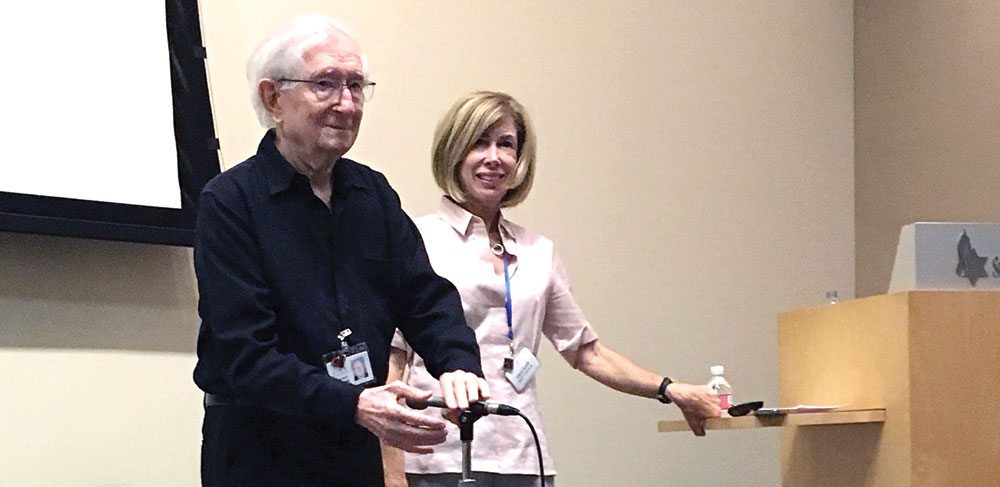
When the Simon Wiesenthal Center opened in 1977, the organization sent survivors into the community to share their stories. And survivors have been speaking at the Museum of Tolerance, the Wiesenthal Center’s educational arm, since it was opened in 1993. Currently, the museum boasts a roster of 45 survivor speakers.
“There really is a difference when it is the survivor standing up and telling their own testimony,” said Elana Samuels, director of museum volunteer services at the Museum of Tolerance in Los Angeles.
When survivor John Adler, now 93, came to Samuels more than three years ago, he said with tears in his eyes, “I can’t speak anymore. I have to retire.” Samuels suggested they approach his daughter, Eileen Eandi.
Eandi, 67, had wanted to become involved with the museum. Plus, she said, “I wanted to do this for my father. I wanted to be involved in carrying the story forward.”
Eandi researched her father’s experiences, putting together a timeline and selecting photographs, and then worked with Samuels and Emily Thompson, a Museum of Tolerance intern at the time, to present the story in a creative but compassionate way.
In her presentation, Eandi focuses on her father’s growing up in pre-Holocaust Germany as a child and teenager. Adler’s family moved to Breslau in 1933, where they lived on a main street that contained the headquarters of the local chapter of Nazi stormtroopers, who emerged every morning marching and singing. They then hung out in the cul-de-sac where the Adler family’s apartment building stood, forcing Adler to pass them on his way to school every morning.
In 1937, when Adler was 14, the Jewish school he attended closed. No longer able to use its sports field, Adler and his best friend went to a local public field, where one day they were accosted by three Nazi youths on bicycles. Adler and his friend bloodied their noses and the young Nazis hastily retreated. But several visits later, the boys were met by older Nazi youths who punched Adler, breaking his glasses and his bicycle. He limped home.
After this experience, followed by Kristallnacht in November 1938, Adler joined a hakhshara, a kind of kibbutz where he learned agricultural skills necessary for immigration to Palestine.
Adler’s parents left for Shanghai in February 1939, and Adler, not quite 16, left for Palestine on Aug. 30, 1939, two days before Germany invaded Poland. He joined a kibbutz, and at 18, he enlisted in the British army.
At the end of every presentation, Adler rises and answers questions. “The mood changes totally when my father stands up. There’s nothing like having this person in front of you,” Eandi said, adding that people want to hug him, shake his hand and be photographed with him.
Eandi doesn’t know what she’ll do after her father no longer can accompany her, unsure how effective her talk will be without him. But Adler’s plan is that his daughter will speak for him for a long time, followed by his grandson, Matthew Eandi. “I don’t ever want [the Holocaust] to be forgotten,” Adler said.
— Eileen Eandi, daughter of a holocaust survivor
Using the experience of Eandi and Adler as her model, Samuels reached out to other Second and Third Generation descendants to form a group called Looking to the Future, which first met in November 2013. And while some of the participants are working with various media to carry forward a parent’s or grandparent’s legacy — including film, photography or memoir projects — Samuels wants to make sure that storytelling remain the centerpiece of these efforts.
“Clearly, the most important program we offer is our witness to truth testimony, where every day we are open, visitors have the opportunity to sit in a room and hear primary testimony,” she said.
As the Looking to the Future group envisions a future without survivors and focuses on building the next generation of speakers, Samuels acknowledged that it’s also important to incorporate compelling video testimony, such as footage from a USC Shoah Foundation interview. “You need that emotional connection,” she said.
These Holocaust eyewitnesses, who are now revered, were shunned in the first two decades after World War II, sociologist Arlene Stein writes in her book “Reluctant Witnesses.” Even those who wanted to speak were told to keep quiet and move on with their lives. Only the survivors — and there were few — who had fought in wartime resistance were celebrated.
But by 1962, as survivors testified at the trial of Nazi war criminal Adolf Eichmann trial, revealing the enormity of the horrors they suffered, the world became more receptive to hearing their stories. Through the 1970s, the Second Generation, whose lives had been overshadowed by the Holocaust, came of age. And as they sought to carve out their own identities amid the social and political upheaval in the United States, they prodded their parents to talk about their Holocaust pasts.
In 1993, the film “Schindler’s List” opened to wide acclaim. “It made the Holocaust more accessible to the general public and it gave the average survivor greater confidence to be able to speak,” said Stephen Smith, executive director of the USC Shoah Foundation.
Today, survivors are viewed as heroes. They have taken on a mantle of moral authority as, even in their 80s and 90s, they continue to share their narratives, to testify to what really occurred, to thwart Holocaust deniers and to encourage people to love, hope and create a better world.
And Holocaust museums and organizations worldwide are stepping up their programs to provide them with speaking opportunities. Last month, the United States Holocaust Memorial Museum began a program called “First Person, Conversations With Survivors.” It includes two sessions a week with survivors and continues through Aug. 10.
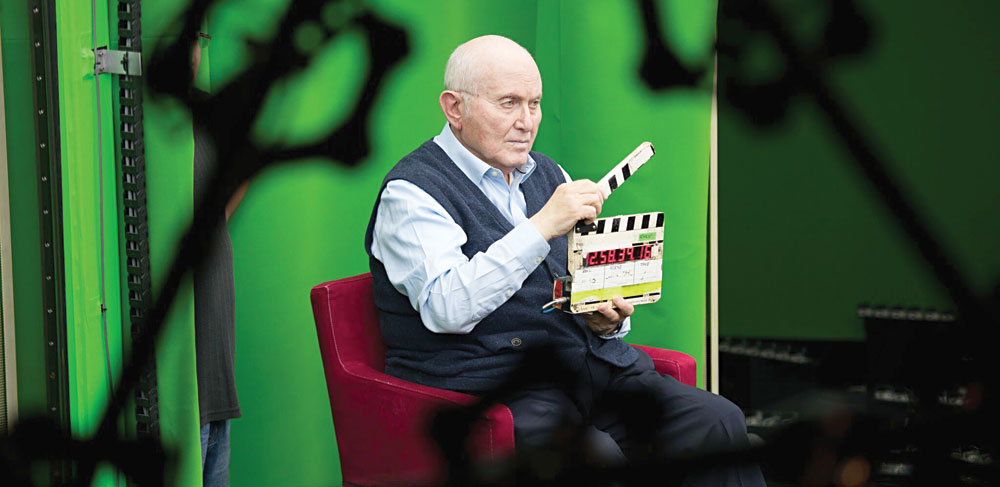
“I tell my story for the purpose of improving humanity, drop by drop by drop,” said Pinchas Gutter, an 84-year-old survivor originally from Lodz, Poland. But for decades after the war, Gutter was silent, afraid to burden his children with his sad stories. Then in 1992, historian Paula Draper approached him in Toronto, where he has lived since 1985, convincing him of the importance of giving testimony.
“I cried. I was shaking. It was very, very difficult,” he recalled. It wasn’t until 10 years later, when Gutter was the subject of a documentary called “The Void: In Search of Memory Lost,” filmed in Poland and directed by Smith before his tenure at the USC Shoah Foundation, that he could talk more easily about his time in the Warsaw Ghetto and in six concentration camps, including Majdanek, where his twin sister, at age 10, and his parents were murdered. “It was cathartic,” Gutter said of his participation in the film. Since then, he has spoken and continues to speak, all over the world.
And now, thanks to a USC Shoah Foundation project called “New Dimensions of Testimony,” Gutter will live on as an interactive survivor, in a life-size, three-dimensional video display in which he presents his story and then answers direct questions, making eye contact with the audience. “That never existed before in any other context before this project,” said Smith, explaining that the project uses automatic speech recognition software to access a databank of more than 1,500 questions that Gutter has previously answered.
But what’s missing in these interactive encounters, Smith explained, are the nuances of conversation, both in body language and in personalization. Still, Smith believes the audience engages with the witness, not the technology. “What we’re trying to create is something that is a little more natural in terms of how we inquire about the past of an individual,” he said.
The project is still in the trial phase, with the interactive Gutter, currently in a two-dimensional format, now on display at the Illinois Holocaust Museum in Skokie as well as Holocaust museums in Toronto, Houston and Terre Haute, Ind. Twelve additional English-speaking Holocaust survivors and one Mandarin-speaking survivor of the Nanjing Massacre, which occurred Dec. 13, 1937, through January 1938, have been interviewed, a process that takes days. Those videos have yet to be edited.
Gutter hopes many more survivors will be able to participate. He doesn’t want the Holocaust to become just an academic endeavor, with possible distortions and inaccuracies. “When you see a documentary, it doesn’t have the same effect on you,” he said. “I’ve watched people interacting with me [on the two-dimensional projected image] and, believe me, the effect it has on them, they will never forget it.”
The USC Shoah Foundation, always has been focused on preparing for a time when there will be no survivors. Over the years, foundation officials have learned, Smith said, to trust audiences with the stories, sharing them on social media and entrusting students and teachers with the testimony. “The more we trust them to own the story, the more likely they are to tell the story to their own generation,” Smith said.
Currently, the USC Shoah Foundation is in the second year of a five-year project called the Visual History Archive Program, in which it will share and augment 53,000 video testimonies, including survivors of other genocides, with scholars, educators, descendants of survivors and organizations. “This gives us an opportunity to work with multiple audiences on figuring out how they best want to use this content or contribute to this content in the future,” Smith said.
Currently, 1,815 USC Shoah Foundation testimonies can be accessed online at vhaonline.usc.edu, and in Southern California, the full collection can be viewed at the Los Angeles Museum of the Holocaust (LAMOTH), Chapman University and the USC campus.
Additionally, with what Smith called “a tight deadline,” the USC Shoah Foundation is continuing to work with survivors to find other ways of telling their stories, engaging them in the process so that it’s a partnership in figuring out the best ways to enable their voices to live on. “That’s very much at the heart of the mission and something we share with the survivors themselves,” Smith said.
Beth Kean, executive director of LAMOTH and herself a Third Generation survivor, is uncomfortable talking about the loss of survivors. “Yes, that’s a fact,” she said, “but there are hundreds, probably thousands, alive right now, so let’s do whatever we can to engage with them even more.”
Survivors always have been at the heart of the museum’s mission. In fact, it was a group of survivors, who were then calling themselves former German prisoners, who met at Hollywood High School while taking English classes and founded the museum in 1961. It was to be a place where they could tell their stories and a place that charged no admission.
That hasn’t changed. Today, there are about 35 core survivors who speak in the Sunday Survivor Speaker Series and whenever a school, law enforcement or teacher education group comes to visit.
Over the past several years, the museum has reached out to more survivors, particularly child survivors, and worked to connect all of their survivors with as many students as possible in a variety of what LAMOTH calls “Art and Memory Programs.” In these activities, students and survivors interact in less traditional, more informal settings.
Children and grandchildren of the survivors also play an important role in keeping memories alive.
3G@LAMOTH is a program founded in 2013 by Third Generation survivors Rebecca Katz and Caitlin Kress. The members, who are mostly in their 20s and 30s, work on ways of carrying forward their grandparents’ legacies, meeting regularly for narrative workshops, film screenings and other events.
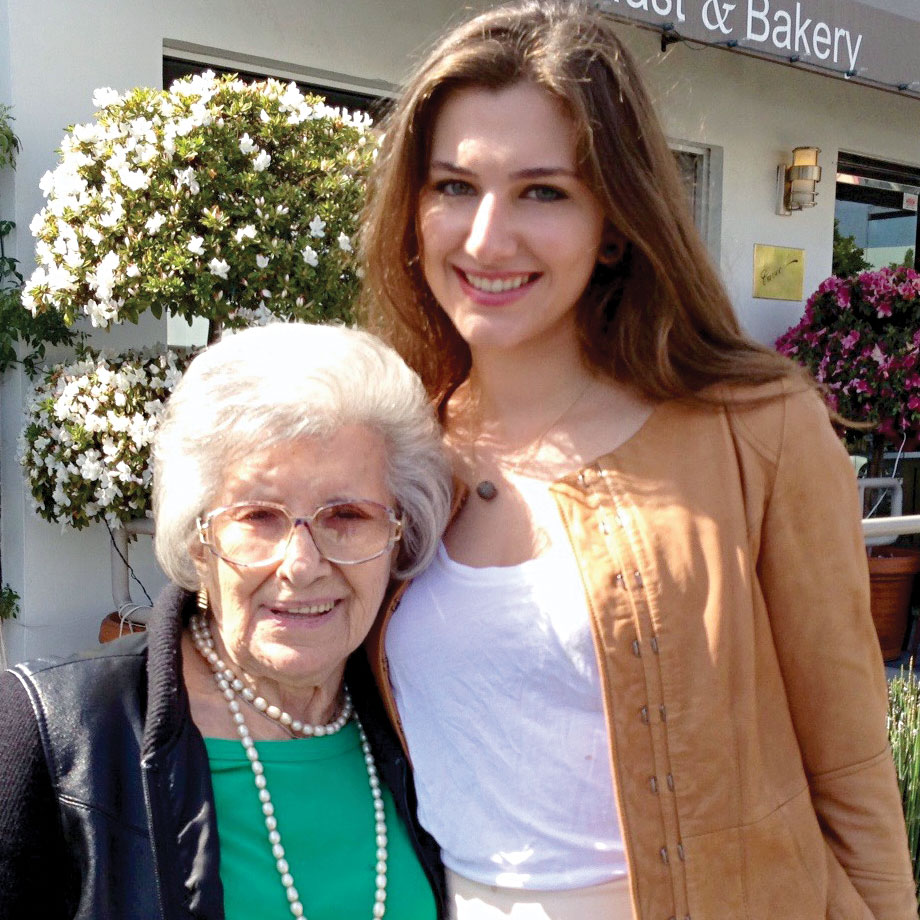
Marissa Lepor, 23, a 3G@LAMOTH board member, found strength confronting her life challenges — although not comparable, she pointed out — by learning about her grandparents’ Holocaust travails. Her grandmother, Sarah Jacobs, now 92, was 3 when her mother died in childbirth and 15 when she lost the grandmother who raised her. Three years later, Jacobs was taken to Landeshut and then Peterswaldau, both subcamps of Gross-Rosen concentration camp. After the war, in 1950, she and her husband, Max Jacobs, immigrated to Los Angeles, where they raised a family.
Now Lepor brings together 3G members and other interested millennials to an event she calls Startup Stories, which began in the summer of 2015. There, Lepor briefly recounts her grandparents’ stories and interviews two or three Holocaust survivors about how they dealt with the challenges of rebuilding their war-torn lives.
“Learning from [the survivors] is really a privilege,” Lepor said.
“It’s really important today for the 2Gs and 3Gs especially to be stewards of that history. We have this responsibility to retell our parents’ and grandparents’ history,” Kean said.
Other programs at LAMOTH are aimed at young people who may not have a familial connection to the Holocaust.
L’Dough V’Dough, launched in 2012, brings together students elementary school age and older, as well as adults, to braid and bake challah while sharing stories and sometimes personal artifacts. “It’s transformative for these students,” Kean said.
And in Voices of History, students in various high schools and colleges reflect on and retell survivors’ testimony, which they condense into short films that are used in teacher-training workshops on the Holocaust and in school classrooms.
In the summer of 2015, for example, students in a digital storytelling workshop at Harvard-Westlake School toured the museum and later filmed survivor Dana Schwartz as she related her story. The students then produced an eight-minute, mostly animated film, “The Story of Three Rings,” depicting Schwartz’s life as a 6-year-old confined with her parents in the ghetto in Lvov, Poland, in November 1941. When deportations began four months later, the family hid in a cramped hole. Then, with false papers her father had procured, Schwartz and her mother escaped to a nearby town, posing as non-Jewish Poles until the war’s end.
Students also interpret these narratives through music, photography and theater.
This year, LAMOTH teamed with students from Santa Monica High School’s theater department to present “Voices of Survivors,” in which students performed some of the more chilling scenes from the lives of four survivors. During the eight-week project, the 35 students visited the museum, where they learned about the Holocaust and then met with the survivors in preparation for scripting their scenes, with help from Writer’s Room Productions, and performing them on March 22.
“What does it mean for an elder who was a child in the worst possible moment of Jewish modern history to be connected to a child who’s living in a time and place of unprecedented prosperity?” That was the question Samara Hutman, director of Remember Us: The Holocaust Bnai Mitzvah Project and The Righteous Conversations Project, asked.
And that became the genesis of The Righteous Conversations Project, which began in 2011, connecting teenagers with Holocaust survivors. Since then, the two generations have come together at various synagogues and schools for discussions, filmmaking and other creative workshops, and social justice work, which includes relating the survivors’ experiences to current issues and filming more than 60 public service announcements on subjects such as bullying, Islamophobia and racial discrimination.
“The central piece is the reciprocity of the exchange,” Hutman said, explaining that the students then become the stewards of the survivors’ stories, finding a way to honor and carry forward the their words. “There’s love and memory that doesn’t leave.”
Survivor Helen Freeman, 95, who has taken part in Righteous Conversations Project workshops since the organization’s founding, understands the power of these intergenerational encounters.
At the culmination of a summer 2012 workshop, Freeman told participant Trey Carlisle, then a 13-year-old student at Aveson Global Leadership Academy in Altadena, something that she has continued to tell students at subsequent workshops:
“Because of the way you have listened to me and because of the work you have done hearing me,” she said, “I now feel that I can die in peace.”
Who will tell survivors’ stories when they’re gone? Read More »

If it has been a long time since you’ve waited for a bank teller, called your stockbroker or mailed a check, you can thank financial technology (fintech). And much of that innovation in how we move and protect our money is coming from Israel.
According to The Floor fintech startup hub in Tel Aviv, at least 430 Israeli fintech companies are developing products for needs ranging from digital banking to fundraising.
Israel’s reputation in deep data science has lured some $650 million in venture capital for the fintech sector. Financial institutions including Citibank and Barclays have established innovation labs and accelerators in the startup nation.
“Technology for financial institutions has to be extremely robust and that’s where Israel excels,” said Liat Aaronson, a partner in Marker, a venture capital and growth equity firm based in Herzliya and New York. “We’re far from the market and that makes it hard to do validation and proof of concept, but despite that, over the last few years, we’re seeing more and more banks and other fintech players coming here to offer open innovation projects and scouting innovation in Israel.”
Aaronson previously headed the Zell Entrepreneurship Program at IDC Herzliya, where many successful fintech entrepreneurs got their start. “I think we’re still on the cusp of something that is going to continue to grow,” she said.
Here are 18 of many Israeli fintech companies changing the finance world.
Payoneer, founded in 2005 by Israeli serial entrepreneur and investor Yuval Tal, has more than 700 employees globally across 12 offices, and recently completed a $180 million growth equity financing round. High-profile clients including Airbnb, Amazon and Getty Images use Payoneer’s cross-border payments platform to handle currency from more than 200 countries.
Headquartered in New York with a development center in Petah Tikva, Payoneer ranks in the top 100 of Inc. 5000’s Financial Services companies and has made Deloitte’s Technology Fast 500 list for five straight years.
OurCrowd launched its global online crowd-investing platform in Jerusalem in 2013 and now has 110 portfolio companies and five investment funds in which $320 million has been invested. The OurCrowd app unlocks opportunities to accredited investors worldwide. Along with Payoneer, OurCrowd ranked among the 50 leading established fintech companies on KPMG’s 100 most promising companies list for 2016 and now has seven worldwide offices.
Lemonade, started by Israeli executives formerly with Fiverr and Powermat, is disrupting the way New Yorkers buy homeowners and renters insurance. The online and mobile platform uses bots and machine learning to deliver insurance and handle claims. Started in December 2015 with a $13 million investment, Lemonade raised $34 million in December 2016 and plans expansion to other U.S. states. Lemonade won Best New Startup of the Year at the 2017 Geek Awards.
FeeX was started in September of 2012 by Waze cofounder Uri Levine as a free service that finds lower-fee alternatives for IRA, 401(k), 403(b), brokerage and other investment-type retirement accounts. The company has offices in Herzliya and New York.
The BondIT intuitive software-as-a-service platform uses advanced machine-learning algorithms to construct yield/risk optimized portfolios to match a client’s risk profile. Focusing on the Asian market, the Herzliya-based startup was founded in 2012 and has an office in Hong Kong. BondIT was chosen to take part in the Accenture 2015 FinTech Innovation Lab Asia-Pacific.
Brazilian micro-credit company Avante recently acquired Sling, an Israeli startup that enables micro-merchants to tap into mobile financial technologies via “Slings” such as bracelets or stickers facilitating customer payments by credit or debit card. The company is expanding into Latin America and has established an innovation center in Israel.
Zooz provides a data-driven payment platform for enterprise merchants to connect with multiple payment and technology providers and route transactions through the entire payment process. Zooz has offices in San Francisco and Berlin, with an Israeli research and development center in Ra’anana. It has attracted $40.5 million in investments.
CreditPlace is a peer-to-peer investment platform based in Tel Aviv that enables investors to buy outstanding receivables owed by stable Israeli companies, state-owned enterprises and government ministries. This helps companies and businesses improve cash flow while creating an alternative low-risk, high-yield, short-term liquid investment for private investors. CreditPlace raised $1.6 million last September and plans expansion to other countries during 2017.
Fundbox, with offices in Tel Aviv and San Francisco, offers a cash-flow management platform for small businesses and freelancers by purchasing outstanding invoices or giving a business-purpose loan to fill the cash-flow gap between billing and payment. The company, founded in 2013, was named to the Forbes Fintech 50 for 2016 and has raised $107.5 million.
MyCheck, founded in Tel Aviv in 2011, offers an Uber-like branded mobile payment solution for hospitality merchants (mostly restaurant chains) on three continents. Users get features including faster checkout, the ability to divide a bill and add a tip, while merchants get analytics tools and increased customer engagement.
BioCatch uses behavioral biometrics to provide behavioral authentication and malware detection solutions for web and mobile banking applications. The Tel Aviv- and New York-based company won the Global Fintech Award at the 2016 MAS’ Singapore Fintech Festival.
I Know First provides daily securities, commodities and currencies forecasts based on an advanced self-learning algorithm powered by artificial intelligence, machine learning, artificial neural networks and genetic algorithms. I Know First, based in Tel Aviv, is used by large financial institutions, banks, hedge funds and private investors.
TipRanks was among the winners of the 2016 Benzinga Global Fintech Awards and twice won “best of show” at Finovate. TipRanks was founded in 2012 to bring accurate and accountable financial advice to the general public from a comprehensive dataset of analysts, hedge fund managers, financial bloggers and corporate insiders.
TravelersBox offers a solution for travelers with leftover foreign currency. Automatic kiosks in airports in Canada, Georgia, Israel, Italy, Japan, Philippines and Turkey — with many more on the way — enable people to use that spare cash to redeem gift cards, add to their PayPal or Viber Out account, or make a charitable donation.
RevenueStream is a Herzliya company that created an artificial intelligence-based platform to detect credit card fraud in online payments instantaneously, using a relational bridge algorithm system.
Neema offers a mobile platform for unbanked foreign workers to send money home, shop and pay bills online, and purchase cellular plans. It was started three years ago in the Tel Aviv Central Bus Station to serve migrant workers in Israel. Neema recently opened a San Francisco office ahead of a U.S. launch targeting some 70 million unbanked and underbanked American residents.
Covercy has a digital system for inexpensive international money transfers in 25 currencies. Covercy recently closed a $1.5 million funding round and was licensed in the United Kingdom. A 2015 graduate of Microsoft Ventures Accelerator, Covercy was on Forbes’ list of 10 best businesses at the 2016 London Technology Week.
Rewire, launched in 2015, is a digital banking service for borderless money transfers and payments geared to Israel’s unbanked international workers. Based in Tel Aviv, Rewire has almost 1,000 deposit points across Israel and offers a web-based tool for transactions to India, the Philippines, Thailand, Nepal, Sri Lanka and Russia. The company plans international expansion.
Israeli firms revolutionizing financial technology Read More »

UCLA students will have the opportunity this spring to study with two leading Israeli artists who combine science with the movement of bodies.
Choreographer Shahar Biniamini and media artist Daniel Landau are among 14 top Israeli artists coming to major U.S. universities during the current academic year, as part of the Schusterman Visiting Israeli Artists Program.
Biniamini has danced with Batsheva — The Young Ensemble and Batsheva Dance Company during the past decade. Since leaving it in 2013, he continues to teach and produce the Batsheva repertoire around the world.
Biniamini is a teacher of the movement language Gaga, improvised dance developed by Batsheva’s artistic director Ohad Naharin that sometimes appears spastic, grotesque or even silly as a way to unlock thoughts and emotions.
Biniamini, 28, says he first became interested in dance when he was 17 years old, after seeing the Naharin-choreographed piece “Shalosh.”
“I remember the sensation I had. Not necessarily that I wanted to be a dancer, but I wanted to be part of that thing that I saw,” Biniamini said in an interview over tea at Melrose Umbrella Co. “It came out of nowhere, and my life changed completely.”
The other visiting Israeli artist, Landau, studied music composition and new media at the Royal Conservatory in the Netherlands. His artistic installations examine the relationship between the body and technology, and he’ll work with students in the UCLA Department of Media Arts using virtual reality.
The Visiting Israeli Artists program is an initiative of the Israel Institute, a Washington, D.C.-based academic institute. The program was founded in 2008 to bring modern Israeli artists and cultural leaders to North America for residencies at cultural organizations and academic centers. Since the program began, there have been 68 residencies featuring 78 artists at colleges and universities.
“There are universities that we’re interested in bringing artists to, and sometimes that university wants to bring a specific artist or an artist in a certain field. And other times I meet an artist that has the talent and the teaching experience,” said Marge Goldwater, director of arts and cultural programs at the Israel Institute. “Sometimes I describe myself as a matchmaker.”
Soon after leaving Batsheva, Biniamini co-founded a research group, Tnuda, to explore the connection between science and movement. Composed of dancers, choreographers and scientists, it is based at the Weizmann Institute of Science in Rehovot, a town south of Tel Aviv. He founded the group with Weizmann professor Atan Gross, who studies apoptosis, or programmed cell death.
“[Gross] sees a link between the process of dance, with bodies transferring information from one body to another, and it gives him inspiration for new directions in research on why cells commit suicide for the benefit of the whole unit,” Biniamini said.
As an independent dancer and artist, Biniamini choreographs new pieces for theaters and companies. In one piece, “Flat,” created for Frontier Danceland in Singapore, he covered one dancer with blue dots. In another, “Yama,” he covered Japanese dancers with red dots.
“When I work with dancers, I like to see the body. I like to see the muscles, to see the body exposed,” he said. The idea was “to create a kind of uniform without disturbing the body.”
After working with UCLA students on an original choreographed piece this spring, he plans to work with GöteborgsOperans Danskompani in Gothenburg, Sweden; followed by a collaboration with Gauthier Dance, an ensemble in Stuttgart, Germany; and a workshop in Italy’s Tuscany region.
Biniamini has also produced videos, installations and sculptures that have been presented in theaters, museums and galleries around the world.
“It’s always a running joke between us when we talk on the phone,” Goldwater said. “I say, ‘What continent am I talking to you on?’ ”
While in Los Angeles, Biniamini will also choreograph a new piece with former Batsheva dancer and artistic director Danielle Agami and her L.A.-based ensemble, Ate9 Dance Company.
Biniamini says his goal is to found a collective of choreographers and dancers and to continue bringing innovative dance to people all over the globe.
“It’s healthy, and it can save the world,” he said.
Landau, in addition to his artistic work, led the media studies department at Beit Berl Academic College near Tel Aviv from 2012 to 2016. At 43, he is a doctoral candidate at the Aalto Institute in Finland and a senior research fellow at the Interdisciplinary Centre in Herzliya. At UCLA, Landau will work alongside Eddo Stern, a world-renowned game designer and director of the UCLA Game Lab.
Landau’s work has been featured at international venues, museums and festivals. He is the founder of “Oh-man, Oh-machine,” an art, science and technology platform that has included a conference, a laboratory and 36-hour-long “durational workshops” in which researchers, meeting in an
airplane hangar, talk about and experience the relationship between bodies and technology.
While in California, Landau will conduct a public lecture and performance at UCLA, Caltech and Stanford called “Time-Body Study,” which he describes as a “virtual reality experiment.”
“A person from the audience is invited on stage, and not only is he placed somewhere else, as virtual reality does, he is being re-embodied,” Landau said. “He finds himself in a body of a 7-year-old, a 40-year-old and an 80-year-old.”
The project, he said, is meant to show how virtual reality may change our relationship with our own bodies and how our “physical identity can be shifted into something else.”
Another of Landau’s areas of interest is post-humanism, which he describes as “an amazing philosophical framework to reconfigure this relationship between nature, humans and computers.”
One output of that interest is a short film about Henrietta Lacks, the African-American woman whose cancerous cell lines have been used by researchers for decades to develop cures for various diseases.
Another of Landau’s projects is called “One Dimensional Man,” a theatrical piece that combines projections of faces onto masks with dancers performing alongside them.
There is a political component to his work as well. Landau contends that the goal to become a more connected society has resulted in a surveillance state, with major corporations controlling the flow of information online. The “power networks” at play in social and political structures remains a major theme of his work since returning to Israel in 2006, after studying and making art in The Hague, Netherlands, for a decade.
Living abroad for that long, Landau said, allowed him “to see different horizons which you just can’t from within Israeli society.”n
Israelis to teach choreography, media arts at UCLA Read More »

Have our people email your people. Share this sign up link with your friends
FIRST LOOK: Henry Kissinger writes Jared Kushner’s profile for TIME 100 List… “Transitioning the presidency between parties is one of the most complex undertakings in American politics… and the greater that gap, the heavier the responsibility of those advisers who are asked to fill it. This space has been traversed for nearly four months by Jared Kushner, whom I first met about 18 months ago, when he introduced himself after a foreign policy lecture I had given. We have sporadically exchanged views since. As part of the Trump family, Jared is familiar with the intangibles of the President. As a graduate of Harvard and NYU, he has a broad education; as a businessman, a knowledge of administration. All this should help him make a success of his daunting role flying close to the sun.” [TIME] Full list [TIME]
“The Kissinger-Kushner Connection” by Joseph Bosco: “Through his mentoring relationship with Kushner, Kissinger is once again playing the role he sought and played initially as President Nixon’s National Security Adviser—the back-door, secret channel between heads of state, while bypassing the federal department whose name encompasses government-to-government relations.” [RealClearDefense]
TOP TALKER: “Three Months Into Trump Presidency, Obama’s Israel Adviser Leaves White House” by Amir Tibon and Barak Ravid: “[Yael] Lempert is expected to leave the NSC in a few weeks, possibly right after Palestinian President Mahmoud Abbas arrives for his first meeting with Trump on May 3. As a career diplomat, Lempert is expected to return to the State Department.” [Haaretz]
Abbas in an interview with the Asahi Shimbun, a Japanese publication: “I am ready to meet the Prime Minister of Israel any time in Washington under the patronage of President Trump.” [Asahi]
HEARD YESTERDAY — WH Press Secretary Sean Spicer at the daily briefing said Trump and Abbas will use the May 3 meeting “to reaffirm the commitment of both the United States and Palestinian leadership to pursuing and ultimately concluding a conflict-ending settlement between the Palestinians and Israel.”
INBOX — WH aide Sebastian Gorka to speak at The Jerusalem Post’s annual conference in NYC on May 7. The theme of this year’s conference is: “Israel – U.S. Relations in the Trump Era.”
DRIVING THE DAY: “Haley Wants Iran, Not Israel, at Core of UN’s Middle East Agenda” by Kambiz Foroohar: “[Nikki] Haley, who holds the rotating presidency of the United Nations’ top decision-making body for April, wants to use a monthly meeting on “the situation in the Middle East, including the Palestinian question” to tackle Tehran’s role in Yemen and Syria and its support for Hezbollah… Thursday’s report will be presented by Nickolay Mladenov of Bulgaria, the UN’s special coordinator for the Middle East peace process. While Mladenov… is expected to focus again on Israel and the Palestinians, Haley can prod the discussion toward other issues. “ [Bloomberg]
White House puts Iran on notice, again… In a rare appearance at the State Department yesterday, Secretary of State Rex Tillerson questioned the viability of the Iranian nuclear deal, accusing Iran of “alarming provocations” only a day after he declared they were complying with the terms of the 2015 nuclear deal. “The JCPOA fails to achieve the objective of a non-nuclear Iran; it only delays their goal of becoming a nuclear state,” said Tillerson. “This deal represents the same failed approach of the past that brought us to the current imminent threat we face from North Korea… It is another example of buying off a power who has nuclear ambitions; we buy them off for a short period of time and then someone has to deal with it later.”
Tillerson did not offer any indication that the U.S. is ready to walk away from the deal, but emphasized that an interagency review ordered by the President would evaluate whether sanctions relief related to the nuclear deal was “vital to the national security interests of the United States.”
KEY LINE: “The Trump administration has no intention of passing the buck to a future administration on Iran.” [YouTube]
Press Secretary Sean Spicer at yesterday’s daily briefing regarding Trump’s campaign pledge to renegotiate the nuclear deal: “Part of the review — the interagency process — is to determine where Iran is in compliance with the deal and to make recommendations to the President on the path forward.” [YouTube]
A JI reader ‘in the know’ tells us… “The Trump Administration doesn’t intend to amend the deal anytime soon.”
HEARD YESTERDAY — Martin Indyk at panel with Israeli Consul General Dani Dayan on Trump’s Israel and Mideast policy at the JCC Manhattan: “Israel doesn’t want the U.S. to tear up the Iran deal, and the reason for that is because the Iran deal for all its faults – and it has faults – took away Iran’s nuclear capacity for the time being… And that gives Israel – in particular – the U.S. and all of Iran’s adversaries in the Arab world breathing space. Now, is it good to try for a better deal? Yeah. So let Trump the great dealmaker negotiate with Iran now on a better deal in terms of the sunset clause. But talking about reviewing it is, I think, a little bit dangerous because we have an interest in maintaining the deal and ensuring that the Iranians stick to the deal.”
Dayan: “Now Israel and the U.S. see eye-to-eye in their views of the situation… The U.S. is starting a process of formulating a new policy… [Israel] will be more than happy to collaborate with the United States in the reformulation of its policy… I would like very much the flaws in the agreement to be amended.” [Livestream]
BACKSTORY: “Iran Gets Tillerson’s Approval But It’s Still on Notice” by Eli Lake: “U.S. officials familiar with the interagency process tell me the White House and State Department fought throughout the day on Tuesday over the language of Tillerson’s statement… Tillerson won that battle. His two-paragraph letter to House Speaker Paul Ryan acknowledged a Trump administration review of Iran policy… When the president came into office, Iran was in the crosshairs. Trump’s first national security adviser, retired Lt. General Michael Flynn, addressed the White House press corps in early February to put Iran “on notice.” … A senior National Security Council official told me Tuesday evening that Iran was still on notice and that the jury was still out on Iran.” [BloombergView]
“Divisions Within the Administration On Iran Deal” by Michael Warren: “On Thursday, the deputies of the National Security Council will hold their first meeting to discuss the Trump administration’s review of Iran’s compliance with the nuclear deal… Without a deputy secretary of state and under secretary of state for international security (both politically appointed positions) to shape and enforce the administration’s viewpoint within a hostile State Department, the Iran deal is one area where the permanent administrative state is likely to win out.” [TWS] • Is Trump learning to live with Iran nuclear deal? [Al-Monitor]
MATTIS MIDEAST TRIP — “U.S. Defense Secretary Mattis slams Iran, says will overcome influence” by Idrees Ali: “Everywhere you look if there is trouble in the region, you find Iran,” Mattis told reporters in Riyadh after meeting senior Saudi officials. “We will have to overcome Iran’s efforts to destabilise yet another country and create another militia in their image of Lebanese Hezbollah but the bottom line is we are on the right path for it.” [Reuters]
IVANKA’S VISIT TO GERMANY — on April 25th: “In commemoration of Yom HaShoah, Ivanka will visit the Memorial to the Murdered Jews of Europe in Berlin. Ivanka will also stop by the United States Embassy in Berlin to meet Embassy staff and their families.”
HAPPENING TODAY – The State Department to commemorate this year’s Yom HaShoah (Holocaust Remembrance Day in Israel) at 12:15 pm EST. The event, co-sponsored by the Embassies of Israel, Lithuania and Japan, will honor the legacy of Chiune Sugihara, a Japanese diplomat in Lithuania who saved the lives of roughly 6,000 Jewish refugees during the Holocaust. [Livestream]
TRUMP TEAM: “Cubs’ Todd Ricketts withdraws name for Trump’s Cabinet” by Lynn Sweet: “Unable to untangle his complex financial holdings to the satisfaction of the Office of Government Ethics, Cubs board member Todd Ricketts, tapped by President Donald Trump to be the Deputy Commerce Secretary, on Wednesday withdrew his nomination.” [ChicagoSunTimes]
** Good Thursday Morning! Enjoying the Daily Kickoff? Please share us with your friends & tell them to sign up at [JI]. Have a tip, scoop, or op-ed? We’d love to hear from you. Anything from hard news and punditry to the lighter stuff, including event coverage, job transitions, or even special birthdays, is much appreciated. Email Editor@JewishInsider.com **
BUSINESS BRIEFS: Paul Singer isn’t satisfied with paint company’s spinoff idea [NYPost] • Makeup guru Bobbi Brown’s new chapter: Get customers back in department stores [CNBC] • Quogue Capital’s Rothbaum Said to Bid for MLB’s Miami Marlins [Bloomberg] • Microsoft reportedly to acquire Israeli cloud monitoring startup Cloudyn for around $60 million [VentureBeat] • WeWork Wants To Build Out Your Office And Run It For You [FastCompany] • Aby Rosen’s new Four Seasons restaurant will be ready by Thanksgiving [NYPost]
HOLLYWOOD: “Packer quits Hollywood RatPac venture” by Peter Mitchell: “James Packer has exited Hollywood. The Australian billionaire sold his stake in RatPac Entertainment, the Los Angeles-based film, television and documentary business he created in 2013 with producer-director Brett Ratner… Mr Packer offloaded his stake to another billionaire mogul, American businessman Len Blavatnik, who heads conglomerate Access Industries… RatPac became a major player in Hollywood, co-financing more than 50 films that picked up 51 Oscar nominations and earned more than $US10 billion in worldwide box office receipts… RatPac aligned itself with another mogul, Steve Mnuchin‘s Dune Entertainment, and they signed a four-year, $US450 million deal with Warner Bros to fund as many as 75 of the studio’s films.” [The Australian]
“Robert Kraft lauds President Trump during Tom Brady-less White House visit” by Cindy Boren and Marissa Payne: “Overcoming long odds … is the foundation of everything that is great about this country,” Kraft said at the ceremony from the South Lawn of the White House. “This year’s championship was achieved after falling behind 25 points … that deficit had only been overcome seven times,” he continued. “In that same [manner], a very good friend of mine for over 25 years … launched a campaign for the president … facing odds almost as long as we faced. He persevered to become the 45th president of the United States.” [WashPost]
PROFILE: “Centrist ‘Backlash’ Propels Former TV Anchor Lapid in Israeli Polls” by Yaroslav Trofimov: “The man predicted to win Israeli elections if they were held today picks a seemingly contradictory way of describing himself: “an extreme moderate.” Once dismissed as a passing fad, Yair Lapid, a 53-year-old former TV anchor, has emerged as the most serious political rival to Prime Minister Benjamin Netanyahu. And he has done so by trying to dispense with the traditional left-right divide of Israeli politics, adopting instead the vague but resonating language of ”sanity” and “responsibility.” [WSJ]
KAFE KNESSET — by Tal Shalev and JPost’s Lahav Harkov: Shabbat is back on the political agenda, following a High Court of Justice ruling yesterday which authorized a Tel Aviv municipality bylaw to open 165 businesses on Shabbat. The issue has been debated for almost three years, with various Interior Ministers stalling their approval of the local law since it relates to the sensitive issue of the religious status quo. The ruling was celebrated and welcomed warmly by Tel Aviv Mayor, Ron Huldai who said: “Tel Aviv was free and will remain free.” However, in Jerusalem, the ruling received the opposite response. The haredi parties reacted with anger and are demanding that the ruling be reversed. UTJ leader, Health Minister Yaakov Litzman, said the decision is “a continuation of a gross legal intervention in the values of religion and Jewish law.” “We will not give up or bargain away Shabbat,” a source in Shas told Kafe Knesset… On Sunday, in the weekly meeting of the heads of the coalition parties, tensions are expected to be high. Read today’s entire Kafe Knesset here [JewishInsider]
TRENDING — “You’re Too Busy. You Need a ‘Shultz Hour.’” by David Leonhardt: “When George Shultz was secretary of state in the 1980s, he liked to carve out one hour each week for quiet reflection. He sat down in his office with a pad of paper and pen, closed the door and told his secretary to interrupt him only if one of two people called: “My wife or the president,” Shultz recalled. Shultz, who’s now 96, told me that his hour of solitude was the only way he could find time to think about the strategic aspects of his job…. Around the house, hide your phone — in a backpack, a drawer or another room — for set periods of time, as Sherry Turkle of M.I.T. recommends. Or carve out a few hours each week when no one in your house can check a phone. The filmmaker Tiffany Shlain and her family do so for an entire day — a “technology shabbat.”” [NYTimes]
On a recent episode of the ReCode Media podcast, Axios co-founder Mike Allen told Peter Kafka he’s considering starting to practice a ‘phone Shabbat’ on the weekends. [ReCode]
Rahm Emanuel on Reince Priebus and being White House Chief of Staff: “When I had the role, I used to joke on Fridays, “Lucky us, just two more workdays until Monday.” It’s an all-consuming, thankless job—but walking through those gates at the beginning and end of each day, no matter how early or late, brings a tingle to your spine. The day that goes away is the day it’s time to go.” [TimeMag]
BIRTHDAYS: Swiss physicist and Nobel Prize laureate, Karl Alexander Müller, turns 90… Motivational speaker and co-founder of Harris and Schutz, previously president and CEO of Porsche (1981-1986), Peter Schutz turns 87… Chairman of the media networks division of Activision Blizzard, he previously held high-ranking roles at NFL Network, ESPN and ABC, Steve Bornstein turns 65… Immigrants’ rights activist and professor at Salem State University, Aviva Chomsky, eldest daughter of Noam Chomsky, turns 60… Television and radio host, syndicated columnist and political commentator, he is the host of The Steve Malzberg Show, a news and opinion show on Newsmax TV, Steve Malzberg turns 58… President and executive director of the DC-based Electronic Privacy Information Center, Marc Rotenberg turns 57… Entrepreneur, philanthropist, semi-professional race car driver and restaurateur, previously president and chairman of the Trust Company of New Jersey, Alan Wilzig turns 52… Television personality and game show host, J.D. Roth (born as James David Weinroth), turns 49… Israeli jazz bassist, composer, singer and arranger, Avishai Cohen turns 47… British film director Sarah Gavron turns 47… R&B, soul, pop singer and teen actress, at 13 years old she was the runner-up on the second season of “The X Factor,” Carly Rose Sonenclar turns 18… Senior Program Officer at the Charles and Lynn Schusterman Family Foundation, Yaniv Rivlin… Associate at Tishman Realty Corporation, Alex Berman… Atlanta-based Southeast Regional Director of AIPAC, Elliott G. Mendes… Political polling analyst at the DC-based Feldman Group, David Mariutto… News reporter for the Washington Examiner, Kyle Feldscher… Daniela Kate Plattner (h/ts Playbook)… Diane Kahan… Kelly McCormish… Joseph Gettinger…
Gratuity not included. We love receiving news tips but we also gladly accept tax deductible tips. 100% of your donation will go directly towards improving Jewish Insider. Thanks! [PayPal]
Daniel Aflalo died March 10 at 73. Survived by wife Nivia; daughter Sabrina (Juan Morales); sisters Paulette Green, Alyse (Jay) Roen; brothers Sidney (Marcel), Gabriel (Chantal); sister-in-law Nelda (Sheldon) Arak. Mount Sinai
Doris Frackman died March 23 at 97. Survived by daughter Susan (Janis Eells); son Russell (Myrna Morganstern); 3 grandchildren; brother Irving Wasserberg. Pacific View
Patricia Haley died March 23 at 75. Survived by daughter Barbara Hibbits; 2 grandchildren; 3 great-grandchildren. Mount Sinai
Beverly June Rubin died March 18 at 87. Survived by husband Saul; sons Michael, Donn; 2 grandchildren. Mount Sinai
Ida Selko died March 20 at 106. Survived by 6 grandchildren; 6 great-grandchildren. Mount Sinai
Bernard Vallens died March 22 at 92. Survived by wife Shirley; daughters Nita, Terry (Dave) Norton, Melinda; son Michael; 3 grandchildren; 1 great-grandchild; sister Ida Mays; brother David (Harriet). Mount Sinai
Arline Zuckerman died March 15 at 76. Survived by brother Ira (Marion) Rosenberg. Mount Sinai
Obituaries, March 10-March 23 Read More »

I envy people with spacious backyards. All I have behind my condo is a little patio. But the little space I have makes me appreciate it even more, especially now that the days are getting longer and warmer. To truly get the most from your patio, a few improvements may be in order, especially after the wet winter we’ve had. So whether you have a backyard that rivals Versailles or a tiny apartment balcony, here are some simple ways to spruce up your outdoor space.
The cushions on my outdoor chairs take a beating from the elements, but instead of buying new cushions, I re-cover them. My go-to resource for new cushion covers is slipcovershop.com. Just measure the dimensions of the cushions for your order, and in about a week you’ll be sent new custom covers in your choice of outdoor fabric. These covers are zippered, as well, so you can remove them and throw them in the washing machine as needed.
I often keep my potted outdoor plants in the plain plastic pots they come in. But what a difference it makes when you replace them with beautiful planters or even update the pots you have. A big trend right now is to take terra cotta planters — either new or used — and paint them. Crafts stores such as Michaels sell outdoor acrylic paint that will withstand sun and rain. What a great way to personalize something that’s usually so utilitarian.
One of the biggest differences you can make in your outdoor space is adding a rug, which makes the space more comfortable for bare feet and it helps define the space. Be sure to select a rug that’s designed for the outdoors. Pier 1 Imports and Cost Plus World Market have large selections of them. I bought mine at Costco.
Take the comforts of home outside. If you have furniture pieces that rarely are used or in storage, place them outside to create a more livable space. A table and chairs will give you dining under the stars. A console table makes an ideal bar. If your space is uncovered and you are concerned about the elements, apply a coat of polyurethane to protect the furniture.
Temperatures drop quickly in the Southern California evenings, so have blankets handy. Either drape them over seating or place them in outdoor storage ottomans. If you’re doing any kind of outdoor entertaining, have some extra blankets and sweaters available for guests who come unprepared for cooler evenings.
Make use of string lights you have left over from the holidays and add some citronella candles to keep away insects. And if your patio can accommodate it, treat yourself to a fire pit. After all, it’s more fun being outdoors when you can make s’mores.
Jonathan Fong is the author of “Walls That Wow,” “Flowers That Wow” and “Parties That Wow,” and host of “Style With a Smile” on YouTube. You can see more of his do-it-yourself projects at jonathanfongstyle.com.
Refresh your outdoor space for spring and summer Read More »