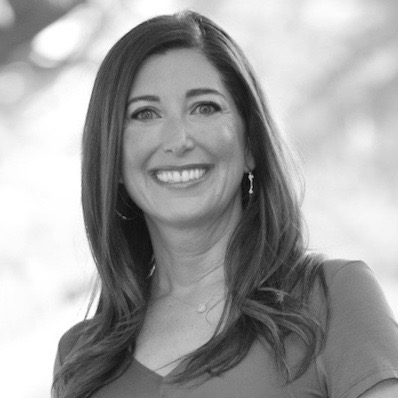
Note from Lisa Niver:
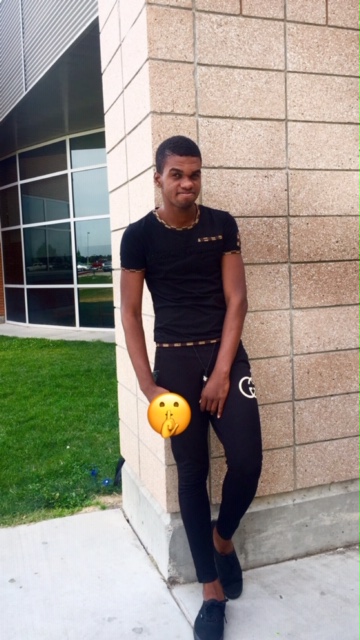
I met Enock Makasi on March 24, 2016 when he was flying from Los Angeles, California to Salt Lake City on his way to his new home in Idaho and he was 15 years old. He had already flown from Uganda to Amsterdam and then California. He “was born in a country called Democratic Republic of Congo, 🇨🇩 faced war in the Eastern part of Congo, moved to Uganda🇺🇬 and then to the USA.” I encouraged him to write his story and he recently sent me this poem from his home in Twin Falls, Idaho where he goes to Canyon Ridge high school. He told me: “I came as refugee with IOM (International Organization for Migration) who helped us resettle in America and they sent us here to Twin Falls and helped us with housing, registration for school, social security card and other things.

He is that child…. and more. The first child was born in the battle-field.
The first sounds he heard were cries from all directions, and the first things he saw were people seeking protection from gun and bomb eruption that kept bringing destruction to his homeland. His initial experiences were driven by fear; the first flavor he tasted was fear instead of colostrum. Fear – the result of war that has come home – made him a runner – not thinking of going back home but of being a survivor. The war was perpetuated by the government, through genocide, to keep the president in his position. He promised peace and justice for all; but instead, there was discrimination, suffering, and poverty among the people.
These struggles leave the young mother of this child with one question: Who will this child be?
Unlike the first, the second child was born during a short time of peace in a hospital with privileges and rights just like every citizen. He had the identity of Congolese, a culture to be proud of, dreams to be a doctor, and hopes for peace and harmony in the
 Democratic Republic of Congo. And finally, a place to call home.
All of a sudden, the number of people in the hospital decreased, the number of deceased increased, not from disease but from the common enemy known as war.
The river water this child drank was contaminated by blood and bodies of the dead.
He also stole food from those who had perished.
These conditions left mothers with no choice but to run to a different country,
whereby selling human body parts was a source of income.
Civil conflicts among the citizens were becoming commonplace, murder was easy, and again they were forced to move to another country where tolerance and acceptance were still a problem. She wondered if there would ever be an end to the running,
if they really belonged to this world; this cruel, cruel world.
Then she looked at her child and asked herself once again, “Who is this child?”
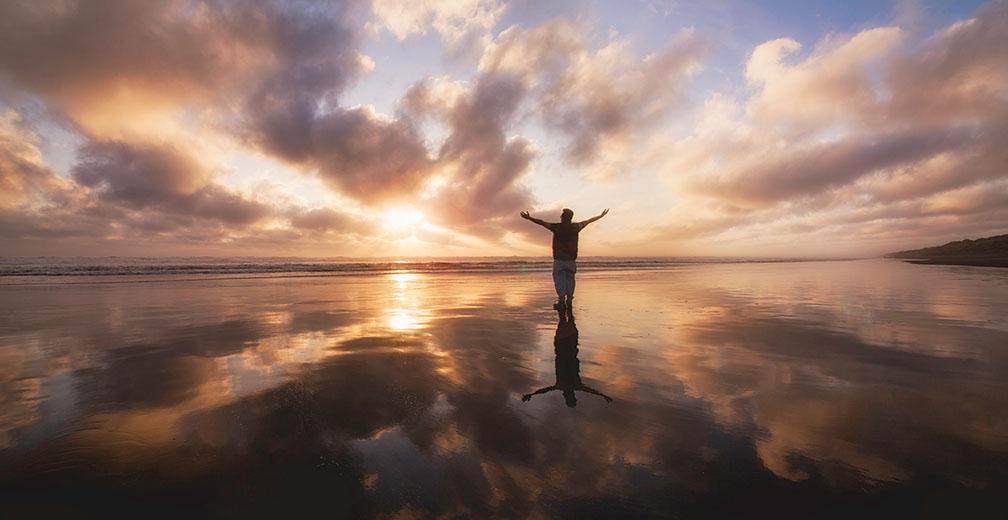
 I am that child, a child of the universe, a runner, invisible footprint in the sand.
I am a believer who believes that the day I stop believing is the day believing becomes a lie.
I am a son who comes from the deep root of misery,
where surviving is not an option but compulsory.
A child of a universe who has been trying to know his language
but will never even know how to pronounce his name.
Day by day, he remembers how his mother was slaughtered like an animal.
A nightmare from which he will never awaken.
Deep dark sorrows that will remain for eternity.
I am that child, a child of the universe, a runner, invisible footprint in the sand.