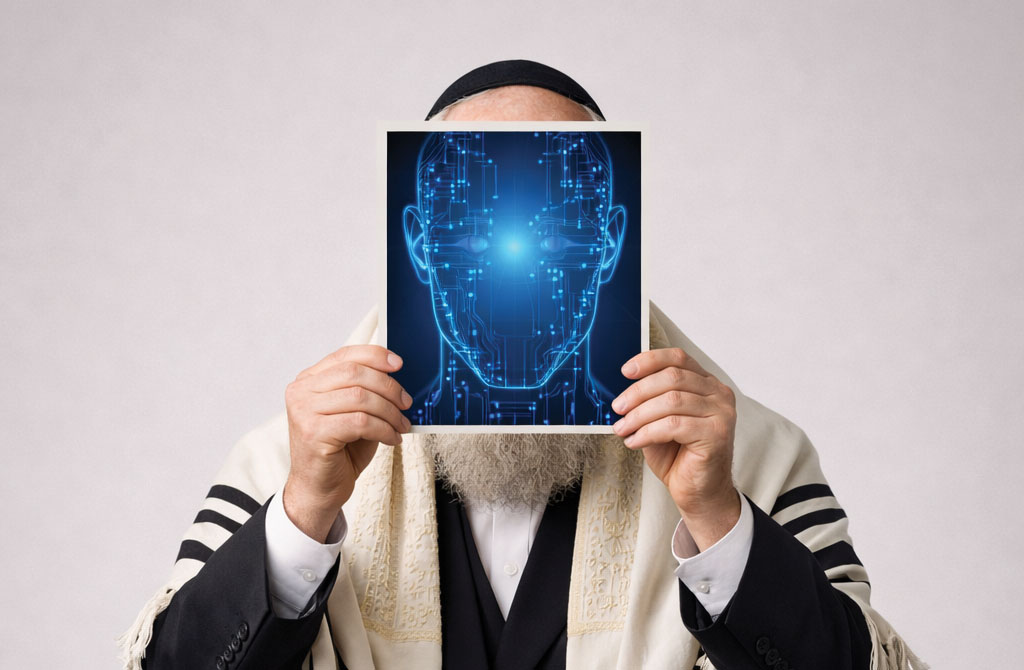
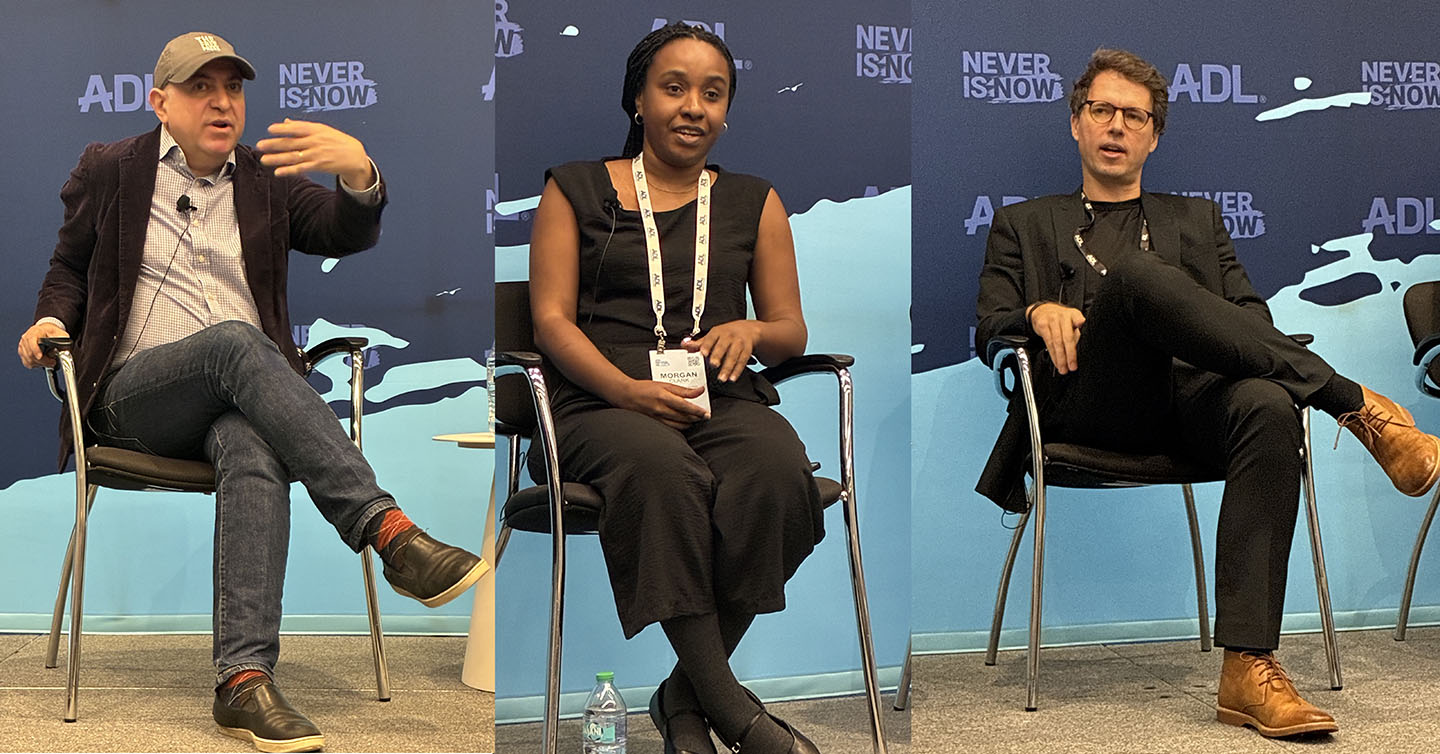
At the Anti-Defamation League’s Never Is Now conference this month, one of the most crowded sessions attempted to answer the question: Are artificial intelligence chatbots antisemitic?
In a packed breakout room at Javits Center, the panel titled “The Algorithm Knows: Antisemitism in the Age of AI, LLMs and Gaming” followed a general session that included remarks from New England Patriots owner Robert Kraft and David Rubenstein, co-founder of the Carlyle Group, both of whom have funded major initiatives to combat antisemitism.
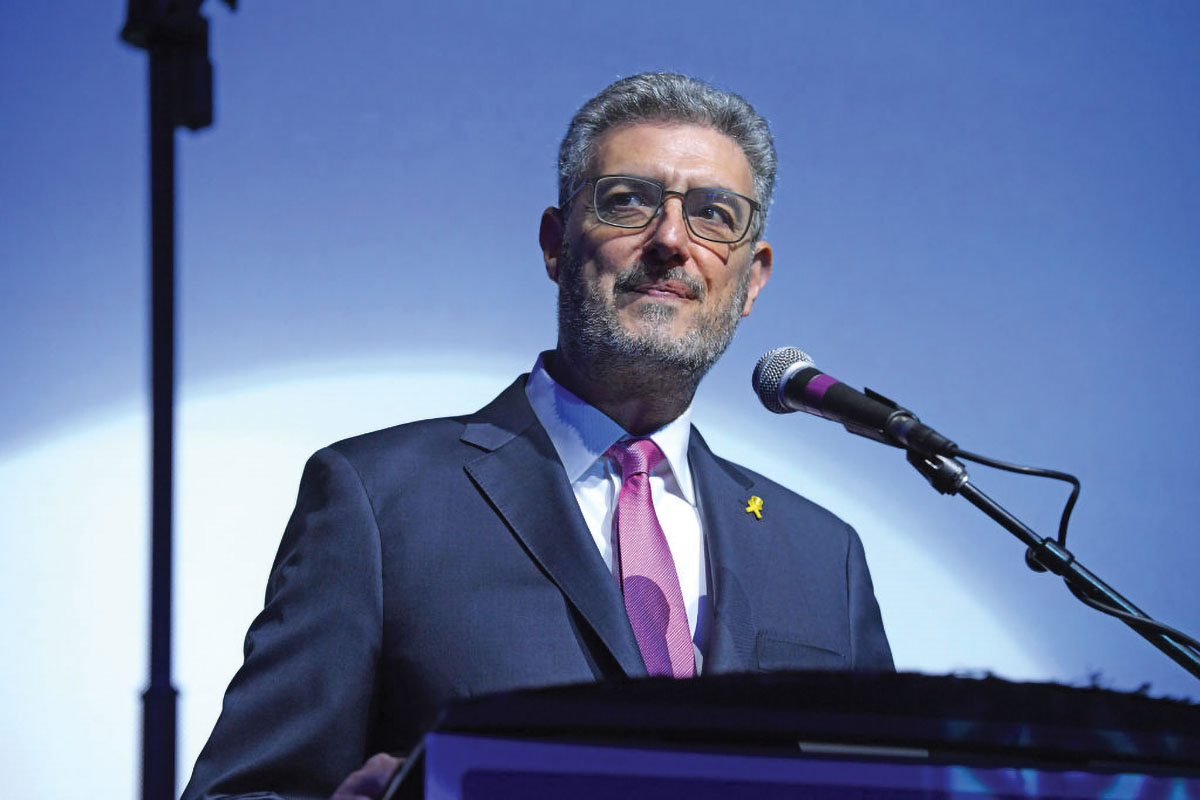
ADL CEO Jonathan Greenblatt quantified the scale of the problem, noting that over the last year, the ADL has analyzed “tens of millions” of social media posts and generated more than 1,000 alerts to law enforcement tied to antisemitic threats.
Much has already been written about how foreign state actors and special interests use inauthentic coordinated engagement campaigns on social media platforms to send antisemitic posts viral. In fact, new research from the Network Contagion Research Institute found that the scale and impact of a relatively small, pro-Iranian regime demonstration in New York City’s Washington Square Park organized by U.S.-based activists with documented ties to Iranian state media was exaggerated to generate nearly 19 million views and more than 500,000 engagements online.
But in contrast to social media misinformation, the AI panel moderated by Mark Gimein, technology and business editor at The Free Press, zeroed in on a more ominous and less understood threat. Gimein posed the question what happens when the system itself becomes antisemitic?
Dr. Alisa Feldman, director of the ADL’s Ratings and Assessment Institute, and Dr. Morgan Clark, associate director at the ADL’s Center on Technology and Society, presented findings from an evaluation of six major AI systems, including ChatGPT and Claude. Their team generated more than 25,000 interactions designed to test how well each model could recognize and respond to antisemitism and extremism.
The results were mixed. But one AI assistant, Claude, performed significantly better. Claude scored about 80 out of 100 on the ADL’s benchmark. The other systems scored around 50 or below.
Clark suggested that the difference comes down to how the models are trained. Most AI systems are designed to give users responses they find useful, agreeable or satisfying, while at the same time extending user session time with enticing promises of deeper, richer insights. In case you haven’t heard, ads are coming soon to AI chatbots so longer sessions means more inventory to sell to advertisers.
But interestingly enough, when it comes to evaluating AIs for antisemitism, Claude has a safety layer. It checks its responses against a set of principles derived from human rights frameworks.
That matters because the problem is not only whether a chatbot refuses to answer an antisemitic prompt. It is whether it knows how to push back or redirect users to more accurate sources.
Clark said that when testing, they did not give full credit to systems that simply responded, “Sorry, I can’t help with that.” They were looking for AI to debunk questions based on false premises and redirect users to trusted sources.
Dr. Matthias J. Becker, a research scholar at New York University and director of the Decoding Antisemitism project, made perhaps the most unsettling point of the session. The problem, he argued, starts long before an antisemitic trope ever appears on a screen.
The internet is a massive archive of human language. And history is rife with 2,000 years of antisemitic writings. AI systems are trained on all that content.
Becker’s point was that antisemitism is baked into world culture. It appears through insinuations, analogies, coded language, rhetorical questions and conspiratorial framing. It lives in literature, politics, news media, jokes, commentary, social posts and everyday speech.
Artificial intelligence systems learn from patterns. They analyze which ideas travel together, which words cluster around each other, and how narratives are framed. If antisemitic patterns are embedded throughout the training data, then those patterns are what the model learns, stores and retrieves.
In Becker’s formulation, AI systems are not creating antisemitism, they are inheriting it.
This insight helps explain why the problem is so hard to fix. If antisemitism were just a matter of blocking a few slurs or banning a few websites, it would be manageable. But Becker points to something much deeper. Antisemitism is not just a list of forbidden words. It is a recurring structure of explanations and beliefs. It is one of the ways human beings have made sense of uncertainty, power, crisis and change, for centuries.
Becker described antisemitism as highly flexible across political and cultural settings. It can be repackaged for the far right, the far left, nationalist movements, anti-globalist movements and anti-establishment movements. It changes form depending on the audience. That same flexibility makes it particularly hard for AI systems to recognize, especially if it appears as irony and allusion rather than easy-to-flag hateful keywords.
Clark approached the problem from a more practical direction. She focused on what can still be done, and in her view, transparency matters. Researchers need to know more about how models are trained, what data sources are weighted heavily and what internal rules shape responses. Without that, there is no meaningful way to evaluate whether the systems are improving.
Becker and Clark were describing different levels of the same problem. Clark was talking about how to keep antisemitism in check at the response level. Becker was addressing the scale of the problem at a cultural level.
Antisemitism is not a defect that can be removed from a dataset. It has metastasized into the body language, and that cannot be undone.
Last week, at a program titled Defining Antisemitism at the New York Historical Society, Deborah Dwork, a Holocaust historian and director of the Center for the Study of the Holocaust, Genocide and Crimes Against Humanity at the CUNY Graduate Center, put it even more bluntly. “If there were something that you could teach, if there was a lesson that someone could pass on to students that would combat antisemitism, don’t you think we would have done it already?”
Her question brings the harsh reality of antisemitism into focus.
The recently released film “Monument” is based on a true story about an Israeli architect who built a memorial in southern Lebanon in 1999 to honor the dead across religious lines. The monument stood for 36 hours before it was destroyed by Hezbollah, as the Israeli Army pulled out of Lebanon after Ehud Barak was elected prime minister.

After a screening of the film last Wednesday in Times Square, the architect Amnon Rechter, who designed the monument on which the film is based, said about antisemitism, “It’s very, very difficult to get rid of it,” he said. “But I think we should just continue to do what we do and hope to be accepted.”
Rechter’s stoic monument to the memory of fallen soldiers was wiped off the map. But the film, directed by Bryan Singer and produced by Jason Taylor, puts it forever on the recorded future. Artificial intelligence inherits that future, as it does all human thought, writing and ideas. And on that record is the information that AI uses to determine whether Jews are treated as an exception to equality, or part of it.
Eric Schwartzman is a narrative strategist and advisor who helps leadership teams shape how their brands are interpreted by AI systems, search engines, and the media. He is the author of two books on digital influence and the founder of a SaaS platform used by NVIDIA, LinkedIn, and Dunkin’ to manage the narrative signals that define brand authority across owned, social, and earned media.