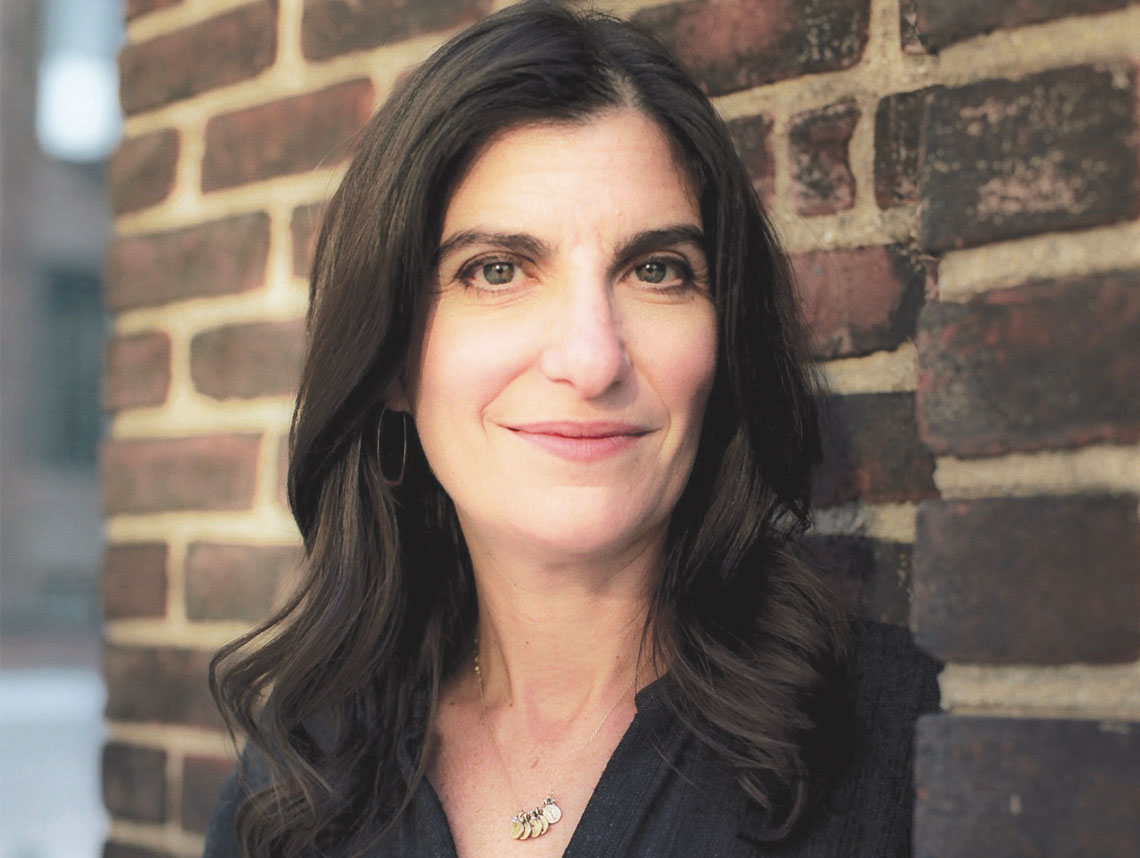
There’s a stark, modern house that hangs off a cliff in Mandeville Canyon. Growing up, novelist and Los Angeles native Ellen Umansky drove by it nearly every day on her way to school. “I knew that’s where they would live,” she said, referring to the Goldsteins, the fictional Jewish family at the center of her debut novel, “The Fortunate Ones.”
Set in Vienna, London and Los Angeles, “The Fortunate Ones” tells the story of Lizzie Goldstein, a privileged Jewish lawyer who went to high school at “Avenues” (read: Crossroads), and Rose Zimmer, a Holocaust refugee who escapes Vienna via the Kindertransport to London and eventually settles in L.A.
What binds these two women’s fates is a Chaim Soutine painting — first stolen by the Nazis from Rose’s childhood home, and later taken from Lizzie’s father’s posh house in Mandeville Canyon. The painting disappeared when Lizzie threw a party while her doctor father was out of town, and its unsolved theft has haunted her since high school.
Umansky, 47, found inspiration for the book in a real-life story from her West L.A. childhood. Her brother’s ophthalmologist was a wealthy fine art collector, and one day, both a Picasso and a Monet painting were stolen from his home. Seven years later, the works turned up in a storage locker at the Cleveland airport; the doctor, it turned out, had coordinated the heist.
Umansky was fascinated by the tale, and what stood out in her mind was the fact that the doctor had failed to destroy the evidence. “I was really compelled by the idea that if you’re going to go ahead and do something like this, you would destroy the paintings ” said Umansky, who now lives in New York City. “That’s what ensnared him.”
Meanwhile, looted Holocaust art was a hot-button issue in the late 1990s when Umansky was features editor at the Forward newspaper, where I was a cub reporter and, briefly, her colleague. Fresh out of Columbia University’s MFA program in creative writing, Umansky took note of the many tales filtering to the surface, as family members stepped forward to claim their lost treasures from private collections and museums around the country.
Several years later, when Umansky set out to write a novel, the story of the crooked ophthalmologist’s insurance fraud, and tales of families whose prized works had been pilfered by the Nazis, intertwined in her imagination.
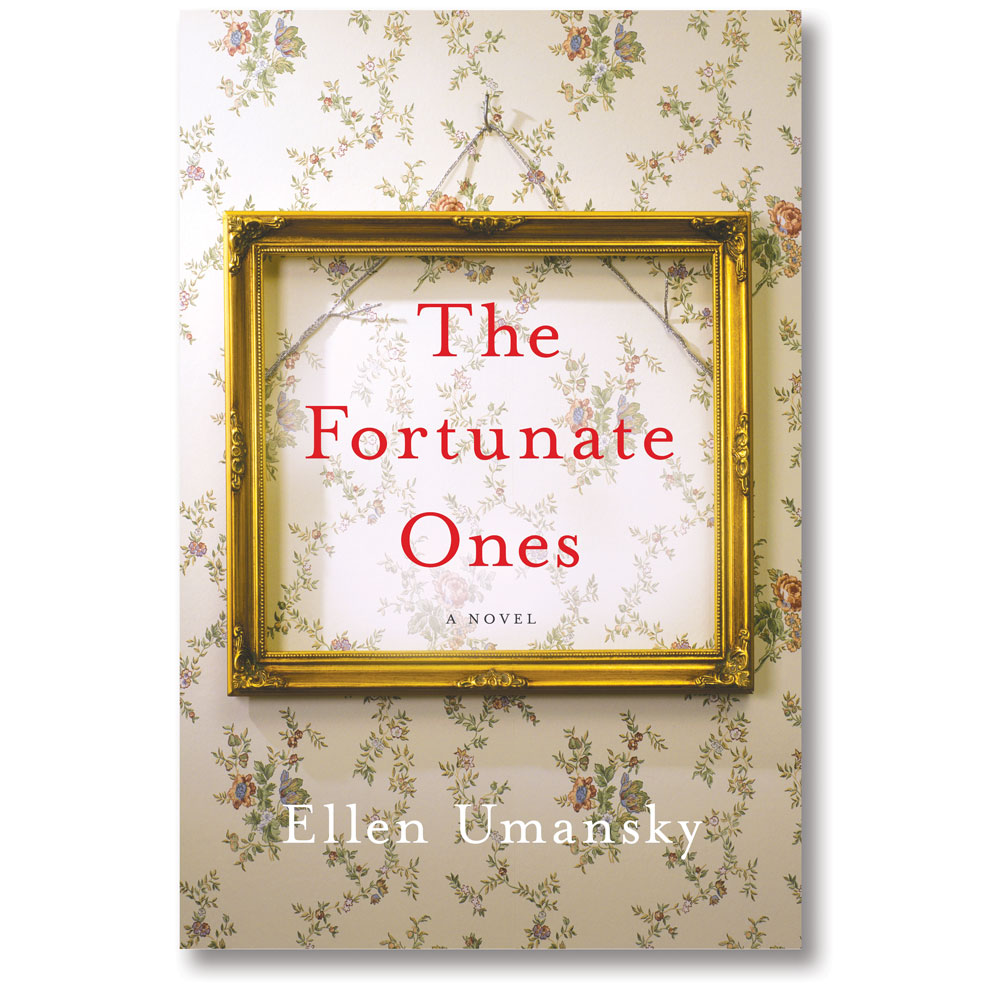 The book that became “The Fortunate Ones” took 15 years to write and went through multiple drafts (and agents), before it was finally published in February by William Morrow, an imprint of HarperCollins. But from the beginning, Umansky said she sought to portray Los Angeles as something more than just a backdrop. “I don’t live there anymore, but L.A. is still this incredibly vibrant, important, exasperating city, which has a real history,” she said. “And I wanted that to come to the fore.”
Rich with descriptions of greater Los Angeles, from Venice Beach, where Lizzie’s beau lives along the canals, to Grand Central Market, which Umansky visited as a kid, “The Fortunate Ones” reads like a paean to L.A. “My love for Los Angeles, and the fact that I miss it, rises to the surface in my portrayal,” Umansky said.
In recent years, as her mother was battling cancer, Umansky traveled back-and-forth from Park Slope, Brooklyn, to Brentwood, where her mother still lived in Mandeville Canyon. It was a period of intense writing, Umansky said, and precious time spent with her late mother. “It felt less fraught than poignant,” she said. “The time I spent there mattered.”
In fact, writing about L.A. while living in Brooklyn with her two daughters, now 8 and 11, and her psychiatrist husband, gave Umansky some comfort. “It was fun for me to conjure up, while I was sitting in New York, what the canyon was like, or what that fire that I wrote about was like,” she said, referring to an actual fire that swept through Mandeville Canyon and is recounted in “The Fortunate Ones.”
Other parts of the novel are set in wartime Vienna and postwar London, where Rose lands after her parents put her on a Kindertransport train. Umansky said she was nervous about writing the historical chapters, so she did a lot of research to make sure she had the details right.
At a certain point, she knew she’d be writing about L.A. in the 1950s and ’60s — when a Chaim Soutine retrospective was held at the Los Angeles County Museum of Art — and initially, that scared her, too. “I thought it would be hard,” Umansky said, “but it wasn’t. It was still my L.A., and I could still imagine that.”