fbpx

April 5, 2017

David Zasloff meets Goliath of Doubt in Solo Show

With his sense of humor for a shield and armed only with musical instruments — drums, shofar, autoharp and wooden Japanese flute — David Zasloff is prepared to do battle with self-doubt.

As he takes the stage for his one-man show, “David Zasloff: A Musical Comedy,” he will parry the eternal question “Am I good enough?” and hope to emerge victorious.

For the show, which he will perform at Beyond Baroque theater on April 22 and 29, “there’s an underlying theme, a huge battle going on, a psychic battle to the hilt,” Zasloff, known for his ability to play a shofar like a musical instrument, and his keen humorous observations, told the Journal.

For those who have not heard Zasloff perform in person, or seen one of his YouTube videos, you need to imagine a tall, mature man, standing with a full curvy Yemenite shofar raised to his lips, but instead of hearing the sharp tekiah blasts that we have grown accustomed to in shul, you hear “Flight of the Bumblebee,” “Hatikvah,” Cuban jazz or some flight of fancy he has composed.

Describing his theatrical performance as a “musical monologue memoir,” Zasloff intends to take the audience on a life journey through the Alaskan wilderness, into outer space, and deep into the dark forest of divorce and negative thinking. Also on the trip are planned stops at key points of his spiritual quest of reclaiming his Judaism.

“Part of the show revolves around my initially not wanting to be Jewish, and the transition I went through to become Jewish,” said Zasloff, who if asked about his Jewish roots when he lived in Seattle would tell people in a Bronx-accented voice that he was an American Indian.

Singing through his struggles with self-identification, Zasloff will present “If There Weren’t Any Jews,” a song he composed that playfully recognizes Jewish contributions. Displaying his intention to connect with other musical Jews, Zasloff will play Christmas songs written by Jewish songwriters, including “The Christmas Song” and “White Christmas.”

With an ear for “blues for Jews,” he also will perform a piece he composed for shofar called “Jumpin in Jerusalem,” as well as several jazz compositions.

The songs are “extensions of the storytelling,” said Eve Brandstein, the director of the show. She and Zasloff have known each other for more than 25 years, with Zasloff having been the musical director on a show that Brandstein performed. “He has been an adventurer in life. He took many chances. The show that we’re putting together really tells the story of that journey,” Brandstein said.

Zasloff was born in the Bronx and left when he was 17, hitchhiking to the Alaskan wilderness, where he lived until his mid-20s. To get by, he lived off the land, shooting chipmunks, squirrels and rabbits — an experience about which he will be performing a jazz song, he said. Later, living in Seattle, he learned to play drums and piano, playing in a band in a Pentecostal church. He also discovered, while working in a deli called Matzoh Momma’s, that he could play the shofar.

Living in L.A. since 1986, he has played the shofar, ritually, in temple, and not-so-ritually yearly in a Palm Sunday parade for St. John’s Episcopal Cathedral in Los Angeles.

“They really wanted someone who was Jewish,” he said.

Zasloff has found cultural experiences in so many worlds that he’s lived in, and through them, Brandstein said, he is able to essentially tell the Jewish story.

“This is going to be my third show with this flavor,” said Brandstein, who directed Monica Piper in “Not That Jewish,” now being performed off-Broadway, and Rain Pryor in “Fried Chicken and Latkes,” now at The Braid in Santa Monica. “He has a Zen Judaic sensibility,” she added, and “has accomplished a certain sense of awareness to experience and presence and has a very Jewish soul.”

That life experience has also allowed Zasloff to relate to a wide audience, from Lubavitch Chasids, for whom he has performed his shofar repertoire, to men in prison, for whom he has done stand-up. That Zasloff is a recovering addict, now 16 years in recovery, helps him through humor that is underlying his current show: “getting over not feeling good enough.”

In the past, “my whole career was inhibited by negativity, telling me I couldn’t do it, while my creative spirit is telling me I can,” Zasloff said. “I never knew I had  negative thinking until I had a positive thought.”

“I’ve been to meetings around the world, and it’s always about not feeling good enough, and that’s where the recovery is. It’s not about the drugs, or the alcohol — those are just the things people use to obliterate not feeling good enough.”

Zasloff, who married in 2006 and now is a father, “has learned how to be loved,” he said, and now accepts his talents. He also feels quite Jewish.

“I think in minor keys,” he said.

“He’s come to much more of a beautiful, revealed life at this point, and he shows that in the show,” said Brandstein, and “that’s what attracted me to work with him. He has a lot more joy than when he started this journey. He’s a sweeter man.”

For ticket information and more, visit pw.org.

David Zasloff meets Goliath of Doubt in Solo Show Read More »
Letters to the Editor: Donald Trump, Adolf Hitler and AIPAC

Trump … and Hitler

While I accept Rob Eshman’s assertion (“Abu Trump,” March 17) that Donald Trump is not another Hitler, Trump is the closest to Hitler ever to be nominated for president by a major political party.

James Kallis, Los Angeles

A Historical Perspective on Zionism

Eitan Arom (“The ‘Z’ Word,” March 24) writes compellingly of his experience as a millennial struggling with his relationship to Israel in today’s fraught political environment. But a cover article purporting to address the meaning of the word “Zionism” ought to have some historical perspective.

We might, for example, point to the great divide between the ideological movement of Zionism in the 19th to early 20th centuries and the political and philanthropic “Zionism” emerging after the establishment of Israel in 1948. The earlier movement was nothing less than a new form of Jewish identification, an answer to the pressing question of Jewish modernity, “Who is a Jew?” According to Zionism, a Jew is a member of the Jewish “people,” a national group whose history dates back to its origins in Judea (hence, “Jew”), and whose collective memory, religion, culture and language make it a “nation.” In the 19th century, this challenged the post-emancipation notion that Jews were merely another religious group in Western society, and echoed the parallel trend of European nationalism. The idea of re-establishing an autonomous Jewish homeland in Palestine came later, and the contemporary meaning of “Zionism” as support for the existing State of Israel still later.

If we are going to talk about Zionism, we really ought to know what we’re talking about.

David E. Kaufman, Visiting Professor of Jewish History Hebrew Union College-
Jewish Institute of Religion, Los Angeles

Stop Those Who Would Stop SNAP

Regarding your story “The Right Vehicle to Spread Their Message About Hunger” (Nov. 25), SNAP — not the social media Snapchat we are very familiar with but the Supplemental Nutrition Assistance Program — assisted my parents to feed my brother and me when we fled Ukraine, a country that persecuted people for being Jewish. When my family came to this country as refugees in 1995, SNAP was known as food stamps. Unfortunately, this
program is being threatened and is under attack by the Congress and the administration we have elected. I am seeking your support to prevent these life-devastating changes. Reach out to your members of Congress. Let’s stand together to stop the cuts to SNAP, which helps working Jewish families care for their loved ones.

Milena Bakalinskaya, Los Angeles

Youth Movements and IfNotNow

I am the son of a survivor of Auschwitz and Mauthausen whose extended family was wiped out there. I am also a proud former combat soldier in the Israel Defense Forces, and I would do my service all over again in a flash.

IfNotNow are arrogant little kids who have no real clue about the world, and certainly not about the Middle East (“IfNotNow and AIPAC,” March 31). They never face even a smidgen of the daily threats that Israelis face every day, yet they have the gall to demonize Israelis in their so-called name of peace. 

George Muenz via email

Thanks for defending Peace Now. That needed to be said.

It’s so disappointing that AIPAC Jews cannot keep two different ideas in their heads because all they see is conflict and can’t imagine the two notions can coexist in one brain: Israel has a right to exist as a sovereign state and the settlements are an aggressive insult to Palestinians (right or wrong) and impede the cause of peace.

Jim Ruxin via email

Rob, great column!

Your recollection of the reaction to Peace Now brought to mind an earlier example of the same phenomenon. A number of rabbis supported Breira in the early 1970s and were also subjected to ugly vituperation from the community establishment. Among them were Leonard I. Beerman, Richard Levy and me. Some traditions have deep roots.

Rabbi Sanford Ragins via email

Letters to the Editor: Donald Trump, Adolf Hitler and AIPAC Read More »

Meant2Be: After a lifetime together, a reluctant farewell

My husband lived with me for decades in our little house in the Hollywood Hills. It was supposed to be our “starter” home, but it was so cozy and full of life that we never left, as our two children were born, thrived and moved on to adulthood, and made us thrilled grandparents five times over.

At that point, it was just the two of us in that house — same as it was when we were a young couple filled with dreams for our budding life together.

Everything was fine until a few years ago, when cancer and Alzheimer’s came calling. We kept going together until the day Don fell and suffered a serious injury that required hospitalization and, eventually, the need for a place that wasn’t the home he knew and loved.

He hated that we no longer lived together.

Time passed and adjustments were made as the two of us spent hours together every day and said goodbye every evening. I missed the man I used to know, but fell deeply in love with this new, vulnerable guy who never gave up in his efforts to return to normal everyday living.

The staff at his excellent facility looked to us as an example of a loving couple with more than 50 years of a good marriage under their belt. They witnessed the devotion we felt for each other and our pain when parting each day. These caregivers were young and saw in us what they wanted in their relationships.

I tried to tell them that, in 53 years of any marriage, there are many peaks and valleys — that I could be the partner from hell when my frustrations were running the show. They didn’t believe me and fussed over the photos in his room showing a happy young couple with their smiling family. They saw our children and grandchildren visit and show so much affection to Don and me. The kids often would leave handwritten notes, drawings and even stuffed bears. 

I have been living alone in our house for more than a year now. There are so many little things I took for granted before illness took Don away from me. I didn’t realize how those little everyday things were the fabric that held us together so securely. 

He was everything around that house, including the gardener who made beautiful roses bloom for more than 50 years. Those roses faded as his days were running out. 

He was my handyman, ready to fix anything that broke with his golden hands and keen mind. He was my exterminator — if a bug appeared in the house, all it took was one scream from me and he came running.

He took care of the difficult financial matters, leaving me feeling free from worry. He was an entertainer, making our grandchildren giggle with his crazy humor.

He was the family sage, as our grown children turned to him for strength and wisdom. And he made sure I got my quota of hugs every day and told me he loved me each night.

Most of all, when I came home, he was always there. I didn’t have to experience the loneliness of an empty house. He was always waiting for me.

I wish I had fully appreciated all those little big things every moment we had together.

A few weeks ago, when my husband was put in hospice, I went to the mortuary without him to purchase our “home” for eternity — something we always planned to do together. It is about a mile away from our little house where we lived for so many years.

It gives me comfort to know that Don — dearest grandfather, father and husband — has come back home to his beloved Hollywood Hills. He died on March 27.

I don’t know what happens next, but I would like to think of him at peace, waiting for me.

Do you have a story about dating, marriage, singlehood or any important relationship in your life? Email us at meant2be@jewishjournal.com.


LYNNE GOLDKLANG is a psychotherapist, author, mother, grandmother and recent widow.

Meant2Be: After a lifetime together, a reluctant farewell Read More »

Next Year in Jerusalem

Where was that place?
Was it on the tree-lined street we drove down Sunday mornings
to look at mansions? Was it on the basement shelf,
too high for me to reach to see what was stored there?
Or was it like that horse that cantered across the white fields
when no one was watching? Or like the word death I thought about in bed
after my mother whispered the story and my body shook
and she explained it’s a place we all go?
Would it be next year?
Or perhaps it was like that diagram she drew
when I asked how I was born: the man’s part, then the woman’s:
This goes into this. When would I understand? Next year? In Jerusalem?
On Passover she gave me a piece of rock candy to suck on
as we sat through the sedar — the sugared cherry sweet on my tongue
as we sounded the words: Next year in Jerusalem, mine,
she said, as God commanded, forever.


First published in “The Torah Garden” (Autumn House, 2007 and 2011) as part of a longer poem, “Our Jerusalem.” Philip Terman is the author of “Our Portion: New and Selected Poems,” “The House of Sages,” “Book of the Unbroken Days” and “Rabbis of the Air.”

Next Year in Jerusalem Read More »

Getting organized, with Moses leading from the back

This holiday season, Jews across the globe will gather together for Passover to eat, share stories and retell the tale of the Exodus. The Passover seder is the most celebrated Jewish event all year long — even avowedly secular and disaffected Jews will try to find a place at the table.

There is something about this story, the liberation of the Israelites, that is restless in the heart. It carries no expiration date; it refuses to be a forgotten tale.  

One of the most subversive motifs of the traditional haggadah is, believe it or not, the absence of Moses. (Didn’t notice? Take a closer look this year.) The rabbis played down his significance in order to tamp down the urge to messianism that can emerge in heroic narratives.   

Moses is in many ways the messiah-warrior. He works miracles, knows God “face-to-face” and is apocalyptic in his rhetoric. Moses is the very paradigm of what the sociologist Max Weber calls the “charismatic leader” whose power destabilizes societal structures and upends cultural norms.  

Yet, there is another side to Moses, one that is equally revolutionary and powerful, yet decentralized from the core narrative of the Passover story. Moses was a prophet, true, but perhaps more importantly, he was an advocate for justice, an effective community organizer.

Here is a man who was neither the firstborn nor the secondborn of his family.  He was part of a family of Israelite slaves who were contented to be what their parents and their grandparents were: slaves who knew nothing but a system of oppression that tries to destroy their identity. As the abolitionist and former slave Frederick Douglass writes, “[T]o make a contented slave, it is necessary to make a thoughtless one … [the slave] must be able to detect no inconsistencies in slavery; he must be made to feel that slavery is right; and he can be brought to that only when he ceased to be a man.” In fact, when we meet Moses, it is through his father and mother, neither of whom have a name and who give no name to their child, thus perpetuating the internalized oppression of being a slave (Exodus 2:1-2).

Moses is in many ways the messiah-warrior. He works miracles, knows God “face-to-face” and is apocalyptic in his rhetoric.

Moses the Jew, the oppressed, grows up in the house of the oppressor, Pharaoh. It is in this space between worlds that he begins to feel the internal conflict that all changemakers feel. As he matures, so does the pain in his heart. His eyes are opened and he sees the tension of his dual identity grow until that fateful day when the Egyptian taskmaster beats the Israelite slave. Moses wakes up from the stupor of his youth and affirms for himself, years before he meets God, that the world as it is is wrong and unjust. He opens his eyes to see his conflict of identity, and into the breach he jumps.

Except he fails.

Moses saved the single Israelite slave from death, but his justified killing of the oppressor did nothing to change the political environment. One act of righteous vengeance does not bring about justice for all. Everyone needs to be brought along. They need to be organized.  

Social change comes not from a single catalytic act but from the groundswell power that follows it. Rosa Parks sitting in the front of the bus did not on its own change the lives of African-Americans. Justice was born out for her and others because she was a strategic leader in an organized movement that included a bus boycott, church sermons and marches across the country. Likewise, Ghandi’s self-inflicted protest of starvation did not give liberation to Indians, yet his act of sacrifice worked because of the planful resistance that he and hundreds of others organized to unleash the will of billions of lives who wanted independence.

Societies need symbols in the form of statues, logos and people. However, to be a symbol is to be an idol, and our God brooks no idol worship. Our God needs organizers who know they can’t change the world alone, and Moses learned that.  

Moses, like Parks and Ghandi, is not the center of the liberation story. The people woke up to their oppression and cried out to God long before Moses returned to Egypt (Exodus 2:23). When Moses does come back, he removes himself from the center of the story as quickly as possible. It is Aaron, not Moses, who is the actual spokesman for the people. Aaron and Moses assemble the elders. Moses and Aaron carry the relationships with the leaders of the Israelites.  

It was the leaders who helped to organize the slaves to be ready to leave at a moment’s notice. It was through organizing that the “Children of Israel” are finally able to call themselves the “Nation of Israel” (Exodus 5:1). It was through organizing that the oppressed masses saw a different way of being, resisted tyranny and found their identity not simply as a family but as a body politic with rights, and they demanded those rights.  Only then — after the groaning, the planning and organizing — did Moses and Aaron dare confront the oppressor Pharaoh in his own home and bring about redemption.

It is easy to see Moses as a messiah. It’s inspiring to romanticize the Exodus with its fantasia of miracles and powerful speeches. But the rabbis were right to take Moses out of the haggadah. For the true and enduring story of the Passover — the part that inspires millions worldwide to see themselves in this story — is in the ability of a once no-name slave to make it not about him, but about a sacred cause.  

The greatest teaching of the Passover seder is the eternal wisdom that the narrowness of Egypt was not just then, but now. Oppression was not just then, but now. Liberation did not end then, but must be worked out in every generation, including our own.  

Moses is not mentioned in the haggadah for good reason. He is only a man called to his people to organize them in the face of uncertainty. To wager life and limb for a better tomorrow. It is his style of leadership, to put others first and lead like a shepherd — from the back — that has inspired social revolutions for millennia.

For when leaders pull back from prophecy and push the pain of the oppressed into the public sphere in order to organize an entire nation for social change, it is then that, as the poet Seamus Heaney writes: “Justice can rise up and hope and history rhyme.”


RABBI NOAH ZVI FARKAS is a clergy member at Valley Beth Shalom in Encino; founder of Netiya, a nonprofit that promotes urban agriculture through a network of interfaith partners; and the author of “The Social Action Manual: Six Steps to Repairing the World” (Behrman House).

Getting organized, with Moses leading from the back Read More »

Hare Krishnas, Passover and a rabbi

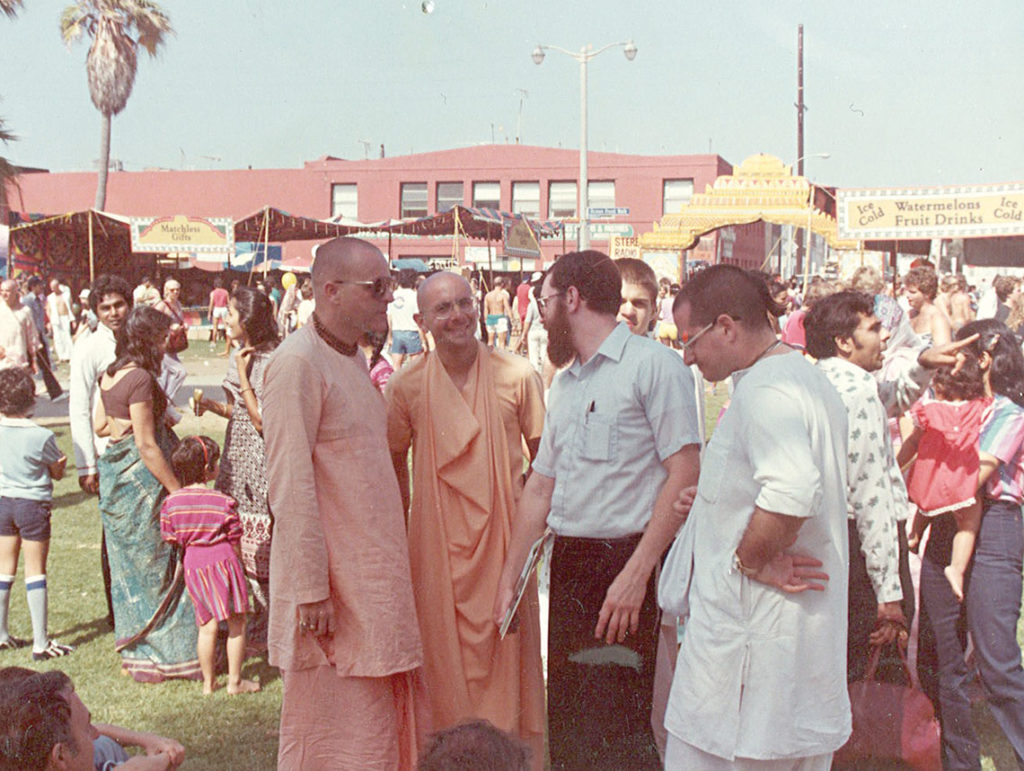
As part of my efforts to reach Jews, I often visit unconventional places. I have even visited the annual Festival of the Chariots, held by the Hare Krishna movement in Venice Beach. In 1989, I met a husband and wife at one of those festivals. They were part of a group giving away Krishna books and literature.

I am anything but bashful. So I engaged them in conversation and discovered they were both Jewish. This is not surprising because many nontraditional religious factions have a large percentage of Jewish followers.

Established in 1965, the modern Hare Krishna movement came under criticism during the anti-cult movement in the 1970s and 1980s. Former members accused them of brainwashing and child abuse.

I had many long and meaningful follow-up discussions with this couple, and we became close friends. They were in their early 30s. The husband grew up attending a Reform synagogue in New York, and his wife grew up in a secular Jewish home in Los Angeles. They were disillusioned with Judaism because it did not seem relevant and did not address their longing for something spiritual. Their search took many years until they encountered the Krishna community, which provided a sense of family and spiritual purpose.

As we got closer to Passover, my wife, Dvora, and I decided to invite them to our family seder. They were very reluctant, perhaps frightened because they are used to strangers criticizing their lifestyle. But they accepted our invitation when we assured them they could come as they were, and we would make the meal vegetarian out of respect for them. It did take some effort to convince them that we should compromise and leave the shank bone on the seder plate.
Seders are, far and away, the most widely observed ritual in Jewish life, and it’s no wonder why: the great food and wine, family and friends, amazing storytelling and inspirational themes of liberation. And of course, for the kids, a prize for finding the afikomen.

During our 39 years of working in Jewish outreach, Dvora and I always have looked to the Passover seder as an opportunity to reach out to people who might need a welcoming and unthreatening bridge into Jewish life.
As part of my Jews for Judaism efforts in outreach, I work with people facing a spectrum of spiritual challenges. Some are seeking spiritual guidance because they are battling a life-threatening illness. Others are struggling with family or financial crises. For a long time, the core of my work focused on Jewish families who were heartbroken because a son or daughter had been deceptively enticed into converting to another religion.

More recently, families committed to Jewish tradition come to us for help — not because their children have turned to another religion, but because they have turned away from Judaism, rejecting their upbringing and their family’s values. All are looking for a way back to wholeness for their families.

And the seder is a great place to start.

Because we help people who are seeking, our neighbors are used to unconventional individuals showing up at our home in the very traditional Pico-Robertson neighborhood. Still, when this Jewish Krishna couple who had not attended a seder since they were children and had never visited a rabbi’s home walked to our front door, wearing their long, traditional Hindu saffron robes, many of our neighbors walking home from synagogue did a double take.

The seder turned into an amazing cross-cultural experience. They chanted along when we sang “Dayenu” and were moved by the deeper spiritual meaning of Passover and items on the seder plate.

Commonalities in our rituals became the focus of our discussion. When we discussed the shank bone, they were impressed that I knew that some of the Hindu Brahmans ate meat for sacrificial reasons. They sat mesmerized when we discussed how Abraham ran away from the idolatry of his father, and when we delved into the Chasidic interpretation of an omnipresent God.

Over the next few years, their interest in the spiritual dimension of Judaism grew, and they studied Torah and Chassidic philosophy with me on a regular basis.

To leave a spiritual path to which you have committed your life has unique challenges. They needed a replacement. I introduced them to a Los Angeles vegetarian group, Chavurah. This small community of like-minded Jews, who gathered weekly for fellowship and exploration of Judaism, was exactly what they needed. Eventually, my friends left the ashram and restarted their life with a newfound love of Judaism. Over time, I lost touch with them. However, I did hear that they were raising two Jewish children.

There is an important lesson in this story. Our sages introduced the Passover seder as a tool to help connect our children to their ancient and meaningful heritage. In some way, we are all children who have an inner desire for a deeper connection.

The seder is a special opportunity to nurture the yearning of our soul. The spiritual journey and transformation of this Jewish couple, from Hinduism back to Judaism, can provide us with a wonderful and inspirational lesson. It shows how we can overcome negative experiences and obstacles, and return to a meaningful Jewish life and pass it on to future generations.

And if they could do it, so can we.


Rabbi Bentzion Kravitz is the founder of Jews for Judaism, International. He is an author, counselor and speaker who hosts a live broadcast each week on the Jews for Judaism Facebook page.

Hare Krishnas, Passover and a rabbi Read More »

Adding a healthy helping of humor to the haggadah

For anyone weary of the traditional retelling of the Exodus story during the Passover seder — sometimes filled with as much talk of the suffering Israelites as actual suffering by bored participants — a newly released haggadah written by three legends of laughter aims to inject some comic relief.

“For This We Left Egypt? A Passover Haggadah for Jews and Those Who Love Them,” by Dave Barry, Alan Zweibel and Adam Mansbach, is a humorous answer to Maxwell House’s classic haggadah, filled with irreverent twists on the Passover story, fart jokes and plenty of “Godfather” references.

“[The traditional Exodus story] is a lot of death and plagues. You’re wandering in a desert for what, literally, should take 11 days and it took them 40 years. … You’re incessantly washing your hands during the seder. You’re drinking enough wine or Manischewitz, whatever that is,” Zweibel told the Journal. “We just figured there’s enough there to make fun of and to tell a different version of the story. … It just seemed like it was virgin territory.”

An original “Saturday Night Live” writer with numerous Emmy and Writers Guild of America awards to his name, Zweibel, 66, said he, Barry and Mansbach came up with the idea to write the book in response to their shared frustration with traditional haggadot. Barry, a Pullitzer Prize-winning humor writer, and Mansbach, author of The New York Times best-seller “Go the F— to Sleep,” met through Zweibel, who had worked with each of them on past projects.

Although Barry isn’t Jewish, his wife, Michelle Kaufman, is and he’s quite familiar with Passover traditions, Zweibel said.

“We all felt the same way about seders — they’re interminable. You sit down with every good intention and the kids are there and the grandma and grandpa are there, and it just takes forever until you eat,” Zweibel said. “We knew there were enough people out there, enough Jews out there, who felt similarly. We also felt that, look, for 5,000 years, Jews have been hearing one version of this story. It’s about time they heard ours.”

As expected, the writers’ version dives into silliness right from the get-go. The reader is told the haggadah was named for a former Hebrew slave who drowned when the Red Sea’s walls collapsed on him after he went to retrieve a lost sandal. A list of the Ten Plagues includes Jerry Lewis and “constipation like you would not believe.” We’re told the three prayers uttered while lighting the candles are to commemorate the number of situps Moses did before the slaves escaped (he would have done more, but he was in a hurry).

The hardships of desert life are said to explain the frequent hand washing during the seder.

“After forty years under the scorching desert sun, the Israelites were totally disoriented,” the authors write. “Whenever they asked Moses, ‘Have we washed our hands?’ he invariably replied, ‘I don’t remember. Let’s wash them again, just to be on the safe side.’ ”

It’s the kind of haggadah that might have enlivened Zweibel’s seder meals as a kid. He grew up in a Conservative Jewish household on Long Island, N.Y., and his parents followed the Maxwell House haggadah. He said he always enjoyed the food part of the seder, but it never happened soon enough.

“You look forward to seeing your cousins. You look forward to eating, but you don’t get to eat for a long, long time because the old people there make you say every … word,” he said.

Today, Zweibel, who lives in New Jersey, said he still celebrates the seder annually with his three children, five grandchildren and extended family. He said he’s not sure which haggadah he’ll be using this year, since he will be a guest at another family member’s house.

Despite the book’s irreverence, Zweibel insisted the authors aren’t trying to poke fun at the rituals of the seder, just inject some lighthearted humor.

“We just want people to have a good time,” he said.  “Yeah, it’s a different kind of haggadah. Yeah, it’s funny. Yeah, it gives different explanations from the ones you’re used to, there are different discussion questions. … But it’s done with affection, and I think it can be something that’s unifying. That’s the intent here.”

Adding a healthy helping of humor to the haggadah Read More »

Obituaries: Week of April 7, 2017

Rosalie Appel died March 8 at 105. Survived by daughter Valerie (Hilly) Gordon; son Lee (Eve Beth) Simon; daughter-in-law Barbara Simon; 9 grandchildren; 12 great-grandchildren. Mount Sinai

Nader Aryeh died March 16 at 93. Survived by daughter Vivian (Faramarz Matloob); son Paul; 2 grandchildren; 1 sister; 1 brother. Mount Sinai

Elizabeth Berman died March 22 at 101. Survived by daughter Charlotte (Howard) Goldberg; sons Albert, Michael (Adele); 3 grandchildren; 5 great-grandchildren. Mount Sinai

Patrick Matthew Boyle died March 5 at 37. Survived by father Philip; stepbrothers Eric Moses, Rodney Moses. Mount Sinai

Lia Bronstein died March 2 at 78. Survived by daughter Anna; son Alexander. Mount Sinai

Max Bunshaft died March 17 at 87. Survived by wife Rena; daughters Ethel (Daniel) Ball, Janet (Wayne) Holtzman; 10 grandchildren; 13 great-grandchildren; 1 great-great- grandchild. Mount Sinai

Harriet Sue Burton died March 9 at 82. Survived by daughter Heather (Allen) Felske; son Mark (Larissa); 1 grandchild; sisters Florence Stark, Phyllis Wolf. Mount Sinai

Pearl Cummings died March 4 at 92. Survived by daughter Fran Coleman; 1 grandchild; brother Leon (Gloria) Fleishman. Mount Sinai

Sylvia Goldfarb died March 10 at 87. Survived by husband Joseph; daughters Lori (Larry Bedin), Ellen (Alan) Cohen, Sheryl; sister Pauline (Edward) Reskin-Kopelman. Mount Sinai

Sidney Gruman died March 7 at 86. Survived by daughter Vicki; sons Gary, Bruce; 3 grandchildren; sister Renee. Mount Sinai 

Phyllis Kaizer-Vernon died March 13 at 88. Survived by daughter Leah; sons Evan (Pam), Daniel; 4 grandchildren; 1 great-grandchild. Mount Sinai

Morton Murray Kay died March 11 at 92. Survived by son Kenneth (Stefanie); 4 grandchildren; 1 great-grandchild; sister Karen (Larry) Platt. Mount Sinai

Ida Gussie Keer died March 4 at 88. Survived by daughters Shelley (Sanford) Friedman, Linda (Arnold) Levin; 1 grandchild; 1 great-grandchild. Mount Sinai

Shirley Linde died March 9 at 81. Survived by sons Clinton (Barbara Lloyd) Bailey, Steven (Jacqueline) Ramirez, Joshua Ramirez, Marc Ramirez; 5 grandchildren; 2 great-grandchildren. Mount Sinai

Alfred Michaels died March 14 at 84. Survived by wife Judy; daughters Lori (Bruce) Berman, Dana (Howard) Simon, Pam Simon; 8 grandchildren. Mount Sinai

Wendie Lynn Milliken died March 17 at 69. Survived by husband Jerry; mother “Jo” Kierman; father Irving Kierman; brother Steven Kierman. Mount Sinai

Justin Meryl Purchin died Feb. 25 at 89. Survived by wife Arlene Jaron Purchin; sons Jeffery (Melissa), Andrew (Scotty) Purchin-Brookie, Marc (Steven) Purchin-Escobar; 2 grandchildren; sister Daryl Piesner. Mount Sinai

Zoltan Rados died March 15 at 95. Survived by wife Magda; daughters Judy (Rick) Richman, Angie (Bill Cloke) Rados Cloke; son Steve (Alyce); 3 grandchildren. Mount Sinai

Irving Herman Raifaisen died March 12 at 88. Survived by daughter Jill (Mike) Ackart; son Andrew (Elizabeth); 1 grandchild. Mount Sinai

Jacob Reich died March 16 at 93. Survived by daughters Evelyn (Warren Pompei) Pike, Rosalyn; 3 grandchildren; sister Frances Wendell. Mount Sinai

Grant Rosove died March 11 at 56. Survived by wife Renee; daughters Danielle, Rachel; sons Jason, Jackson; sisters Mishelle (Stewart) Wilson, Debra; mother Beverly; father Sherman (Elaine). Mount Sinai

Steve Schechter died March 9 at 70. Survived by daughter Lauren; son Justin. Mount Sinai

Sondra Schulhof died March 5 at 84. Survived by husband Armin; daughters Eva Burns, Cora Herskowitz; sons Alan Savitt, Daniel Savitt; 5 grandchildren. Mount Sinai

Barbara Schweiger died March 11 at 85. Survived by daughters Helene (Alan) Apper, Debra Kasparian, Ellen Beth; son Bruce (Amy); 3 grandchildren; brother Gerald (Nina Greenberg) Solender. Mount Sinai

Sylvia Senet died March 14 at 99. Survived by daughters Lisa (Al) Gray, Diane (Herbert) Vanhouse; sons Ted (Leslie), Steve (Patricia), Bradley (Julie); 12 grandchildren; 8 great-grandchildren. Mount Sinai

Michele Gail Steele died March 18 at 70. Survived by husband William; daughter Carly (Adam) Segers; son Cory; stepdaughters Wendy (Tracy) Cadeil, Tanya (John Grey); 4 grandchildren; mother Rose Zussin. Mount Sinai

Fred Weintraub died March 5 at age 88. Survived by wife Jacqueline; daughters Sondra, Barbara; sons Max, Zachary; 4 grandchildren. Mount Sinai

Barry George West died March 12 at 74. Survived by wife Teri Benaron; daughter Karen (Ben) Levine; son Steve (Aimee); 4 grandchildren; brother Mark. Mount Sinai n

Obituaries: Week of April 7, 2017 Read More »

‘Escape Tunnel’ digs up proof of WWII prison break

There were about 250,000 Jews in Lithuania in 1939, nearly half in the capital city of Vilna, where the population was 40 percent Jewish. Today, there are only 3,500 Jews left in the city, but the remains of 70,000 Jews lie in the burial pits in the nearby forest of Ponar, victims of Nazi bullets before gas chambers became the preferred method of extermination. Gone is Vilna’s Great Synagogue, which dated back to 1644, destroyed by the Germans and later razed by the Soviets in the 1950s.

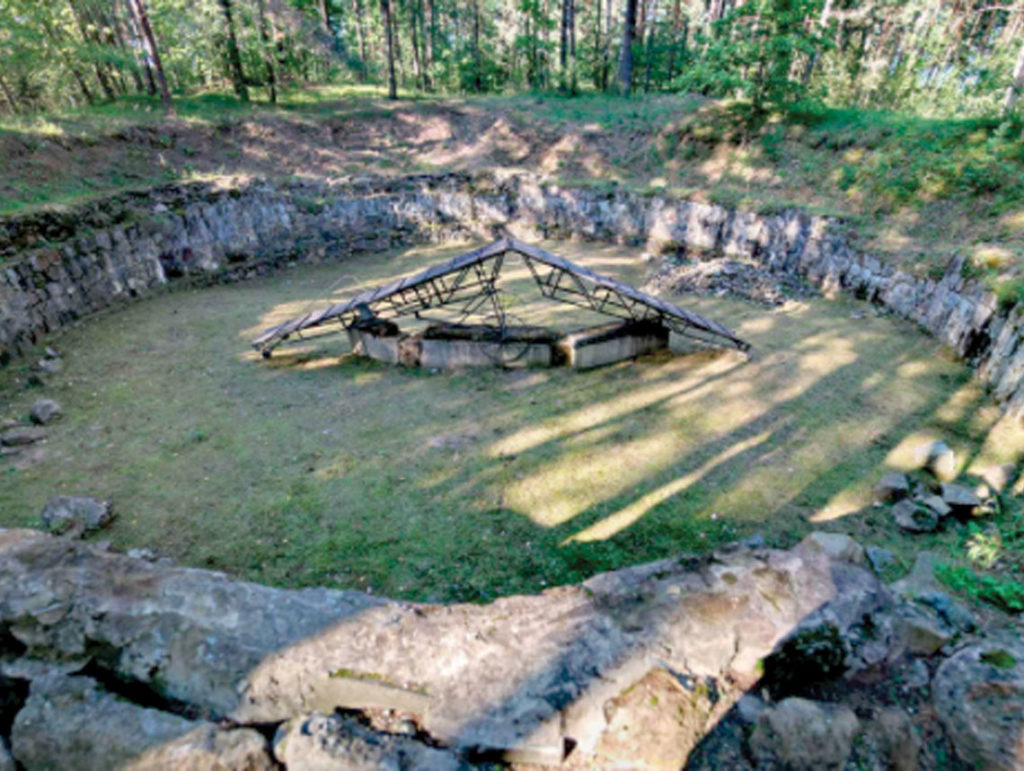
In June of last year, a team of archaeologists and geoscientists arrived in Vilna to virtually excavate both the Great Synagogue and the Ponar mass burial sites with non-invasive technology that combines ground-penetrating radar and electrical resistivity tomography. Not only did they make significant finds at both sites, they confirmed the existence of a rumored escape tunnel that a dozen of the 80 Jewish prisoners on the burial detail used to escape on April 15, 1944, the last night of Passover.

These important discoveries are the subject of the “Nova” documentary “Holocaust Escape Tunnel,” which premieres on PBS stations on April 19. It combines footage shot in Lithuania and interviews with children of the surviving escapees.

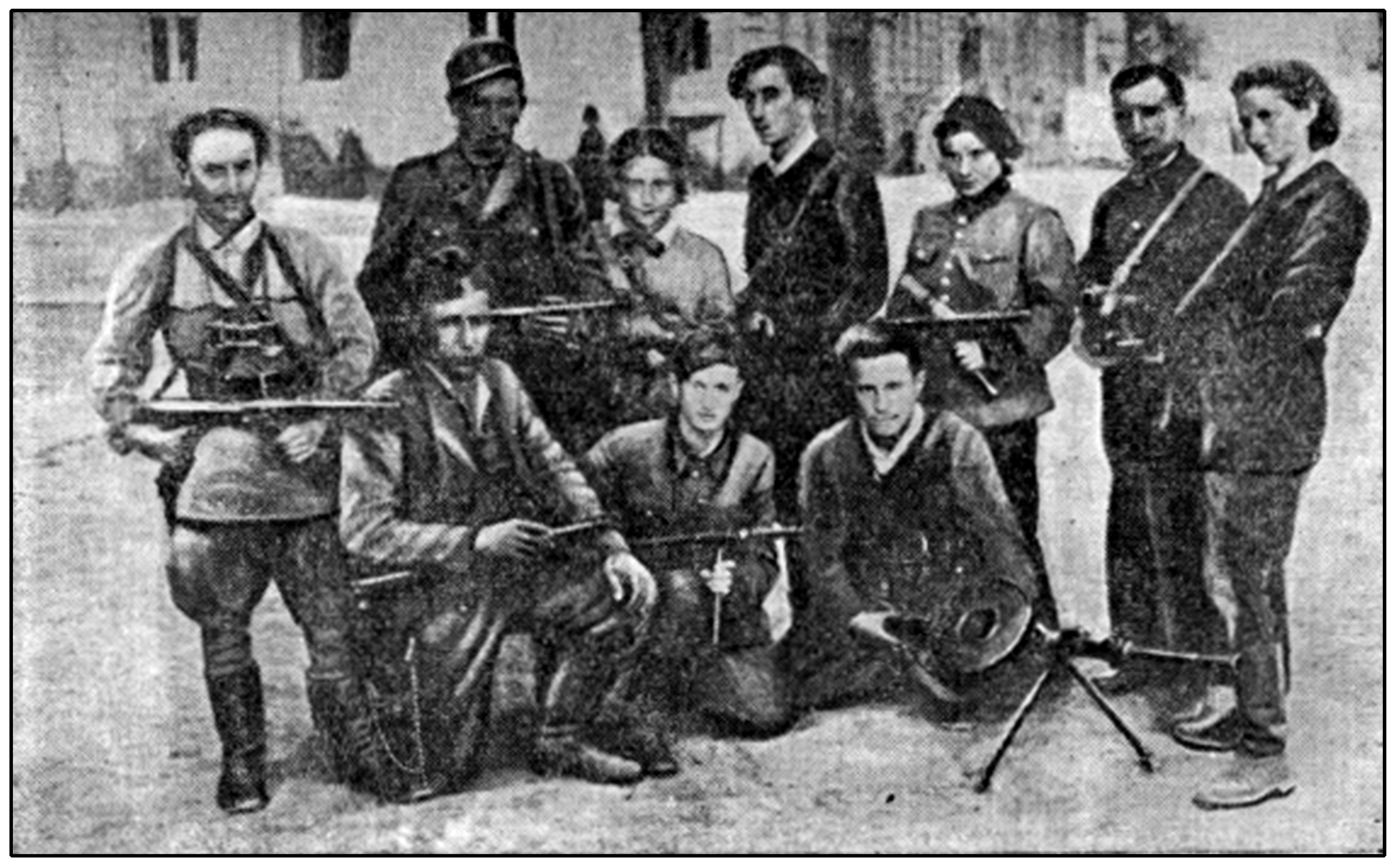
Abe Gol’s father, Shlomo, was the ringleader of the prisoners who spent 76 days digging the tunnel with spoons and their bare hands.

“The people of Lithuania and the Ponar area thought that this was a legend and, with no proof that it existed, discounted it. I knew the tunnel existed from what my father told me over the years. There was no doubt in my mind. Now the world knows it too,” Gol said in a telephone interview.

Although his father, who died in 1986, was reluctant to discuss it, Gol would hear bits and pieces of the story as a boy when some of the survivors gathered for an annual reunion on the last night of Passover. At 15, he read an account of the escape based on his father’s testimony in the book “Escape From Ponar,” published in Hebrew. “It corroborated everything I’d heard,” he said.

Shlomo Gol lost most of his family in the Holocaust, including his wife, child and a brother whose body he uncovered while burning corpses at Ponar. At a displaced persons camp in Germany after World War II, he met and married Abe’s mother; they sailed to Israel after Abe’s birth in 1948, and moved to the United States in 1962.

Shlomo had testified at the trials of two Nazi commandants in Nuremberg, bringing the ragged clothes he wore in captivity as evidence. “They were so imbued with the smell of tar and burning corpses that he couldn’t wash it out,” his son said, noting that the “bitter memories” of the ordeal also lingered. “He always told me, ‘Don’t ever forget and don’t ever forgive.’ ”

For Paula Apsell, “Nova’s” senior executive producer, telling the stories of Shlomo Gol and his fellow survivors came with a big responsibility. “You hold the memories of so many people in your hands and you want to give it the respect it deserves and communicate how important this is historically and scientifically. We knew if we told it well, it would have a lot of resonance,” she said. “The challenge was to balance the science and the history and give each its due.”

Initially, Apsell intended to focus the documentary on the Great Synagogue and the artifacts that might lie beneath the school that now sits on its former spot. Evidence of a mikveh was uncovered under the playground. But when the crew unexpectedly found the 100-foot escape tunnel while calibrating the detecting equipment, she shifted gears. “We knew we had a really important story on our hands,” she said.

Shlomo Gol (kneeling, at left) with Vilna partisans. Photo courtesy of Ghetto Fighters’ House Museum

Richard Freund, professor of Jewish History at the University of Hartford and co-leader of the team, was instrumental in telling that story with his “MRI for the ground,” using equipment, software and techniques developed by the oil and gas industries to locate underground reserves.

“Archaeology is the most destructive science on earth, the only science where you can never repeat the experiment,” Freund said. “Instead of blindly excavating, it allows us to see inside without disturbing or violating anything.”

That, he explained, is crucial at sacred sites and burial grounds.

Over the last 25 years, he has used his high-tech, non-invasive methods on 30 projects, including Qumran, Yavneh, and Nazareth in Israel; a synagogue in Rhodes, Greece, that was destroyed by the Nazis; and the death camp Sobibor in Poland.

He plans to return to Lithuania this summer to further investigate the Great Synagogue, as well as a Jewish cemetery in Kovno, several forts that the Nazis turned into killing fields, and a labor camp where the commandant Karl Plagge rescued more than 1,200 Jews.

For Freund, whose Jewish great-grandfather came to the U.S. from Vilna in 1903, the discoveries he made on this latest project had particular resonance.

“There’s not a moment where I don’t think, ‘But for the grace of God.’ If my family had stayed, where would I be?” he wondered.

In addition, he deems the find of the tunnel “fantastic, because you bring closure. There were grandchildren who didn’t believe their grandparents’ stories. In another 20 years, there won’t be anyone to tell the story, and I’m happy that science can tell it.”

Abe Gol, now retired and living in Pembroke Pines, Fla., hopes to accompany Freund to Lithuania this summer. For him, the documentary serves as both a validation for the survivors who experienced the horrors of the Holocaust and ammunition against those who insist it never happened. “This will tell the deniers that it did,” he said.

For Apsell, whose Jewish ancestors were from Russia and Austria-Hungary, the story resonates on several levels. “It gives a good picture of what European Jewry was really like, and you begin to see the even greater depth of the tragedy of the Holocaust. It killed people, but also a fantastic community,” she said, pointing out that Vilna was a “vibrant, cosmopolitan, learned” center for Jewry before the war.

“This was the darkest of all dark times in history and we can never hear enough stories about it because there’s such a danger it will be forgotten,” she said. “Not only does it shed light on a part of the Holocaust we didn’t know, it’s a story of hope and an amazing testimony to the will to survive. At a time when you have so much Holocaust denial and as survivors and memories die, it’s really important to have documented proof that this happened, to make sure that it’s never forgotten.”

‘Escape Tunnel’ digs up proof of WWII prison break Read More »

Ellen Umansky weds story of Nazi looted art with modern L.A.

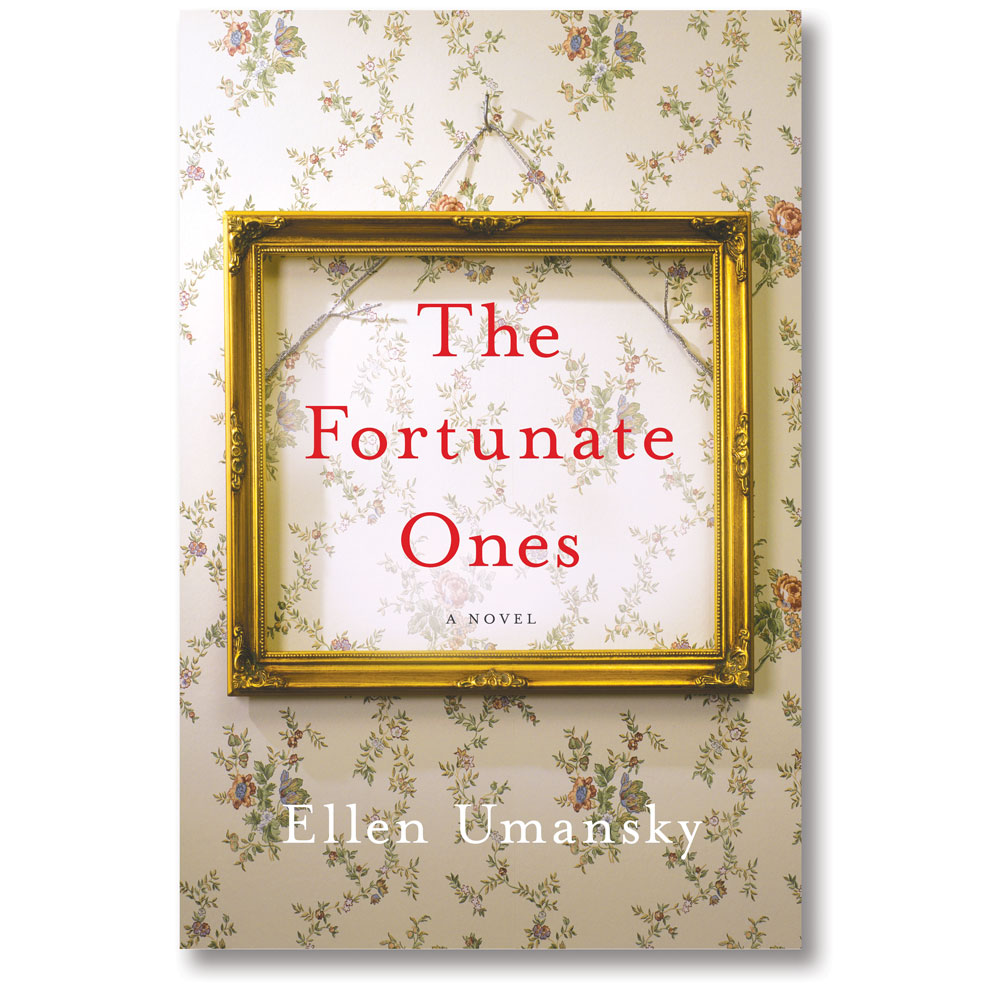
There’s a stark, modern house that hangs off a cliff in Mandeville Canyon. Growing up, novelist and Los Angeles native Ellen Umansky drove by it nearly every day on her way to school. “I knew that’s where they would live,” she said, referring to the Goldsteins, the fictional Jewish family at the center of her debut novel, “The Fortunate Ones.”

Set in Vienna, London and Los Angeles, “The Fortunate Ones” tells the story of Lizzie Goldstein, a privileged Jewish lawyer who went to high school at “Avenues” (read: Crossroads), and Rose Zimmer, a Holocaust refugee who escapes Vienna via the Kindertransport to London and eventually settles in L.A. 

What binds these two women’s fates is a Chaim Soutine painting — first stolen by the Nazis from Rose’s childhood home, and later taken from Lizzie’s father’s posh house in Mandeville Canyon. The painting disappeared when Lizzie threw a party while her doctor father was out of town, and its unsolved theft has haunted her since high school.

Umansky, 47, found inspiration for the book in a real-life story from her West L.A. childhood. Her brother’s ophthalmologist was a wealthy fine art collector, and one day, both a Picasso and a Monet painting were stolen from his home. Seven years later, the works turned up in a storage locker at the Cleveland airport; the doctor, it turned out, had coordinated the heist.

Umansky was fascinated by the tale, and what stood out in her mind was the fact that the doctor had failed to destroy the evidence. “I was really compelled by the idea that if you’re going to go ahead and do something like this, you would destroy the paintings ” said Umansky, who now lives in New York City. “That’s what ensnared him.”

Meanwhile, looted Holocaust art was a hot-button issue in the late 1990s when Umansky was features editor at the Forward newspaper, where I was a cub reporter and, briefly, her colleague. Fresh out of Columbia University’s MFA program in creative writing, Umansky took note of the many tales filtering to the surface, as family members stepped forward to claim their lost treasures from private collections and museums around the country.

Several years later, when Umansky set out to write a novel, the story of the crooked ophthalmologist’s insurance fraud, and tales of families whose prized works had been pilfered by the Nazis, intertwined in her imagination.

onesThe book that became “The Fortunate Ones” took 15 years to write and went through multiple drafts (and agents), before it was finally published in February by William Morrow, an imprint of HarperCollins. But from the beginning, Umansky said she sought to portray Los Angeles as something more than just a backdrop. “I don’t live there anymore, but L.A. is still this incredibly vibrant, important, exasperating city, which has a real history,” she said. “And I wanted that to come to the fore.”

Rich with descriptions of greater Los Angeles, from Venice Beach, where Lizzie’s beau lives along the canals, to Grand Central Market, which Umansky visited as a kid, “The Fortunate Ones” reads like a paean to L.A. “My love for Los Angeles, and the fact that I miss it, rises to the surface in my portrayal,” Umansky said.

In recent years, as her mother was battling cancer, Umansky traveled back-and-forth from Park Slope, Brooklyn, to Brentwood, where her mother still lived in Mandeville Canyon. It was a period of intense writing, Umansky said, and precious time spent with her late mother. “It felt less fraught than poignant,” she said. “The time I spent there mattered.”

In fact, writing about L.A. while living in Brooklyn with her two daughters, now 8 and 11, and her psychiatrist husband, gave Umansky some comfort. “It was fun for me to conjure up, while I was sitting in New York, what the canyon was like, or what that fire that I wrote about was like,” she said, referring to an actual fire that swept through Mandeville Canyon and is recounted in “The Fortunate Ones.”

Other parts of the novel are set in wartime Vienna and postwar London, where Rose lands after her parents put her on a Kindertransport train. Umansky said she was nervous about writing the historical chapters, so she did a lot of research to make sure she had the details right.

At a certain point, she knew she’d be writing about L.A. in the 1950s and ’60s — when a Chaim Soutine retrospective was held at the Los Angeles County Museum of Art — and initially, that scared her, too. “I thought it would be hard,” Umansky said, “but it wasn’t. It was still my L.A., and I could still imagine that.”

Ellen Umansky weds story of Nazi looted art with modern L.A. Read More »