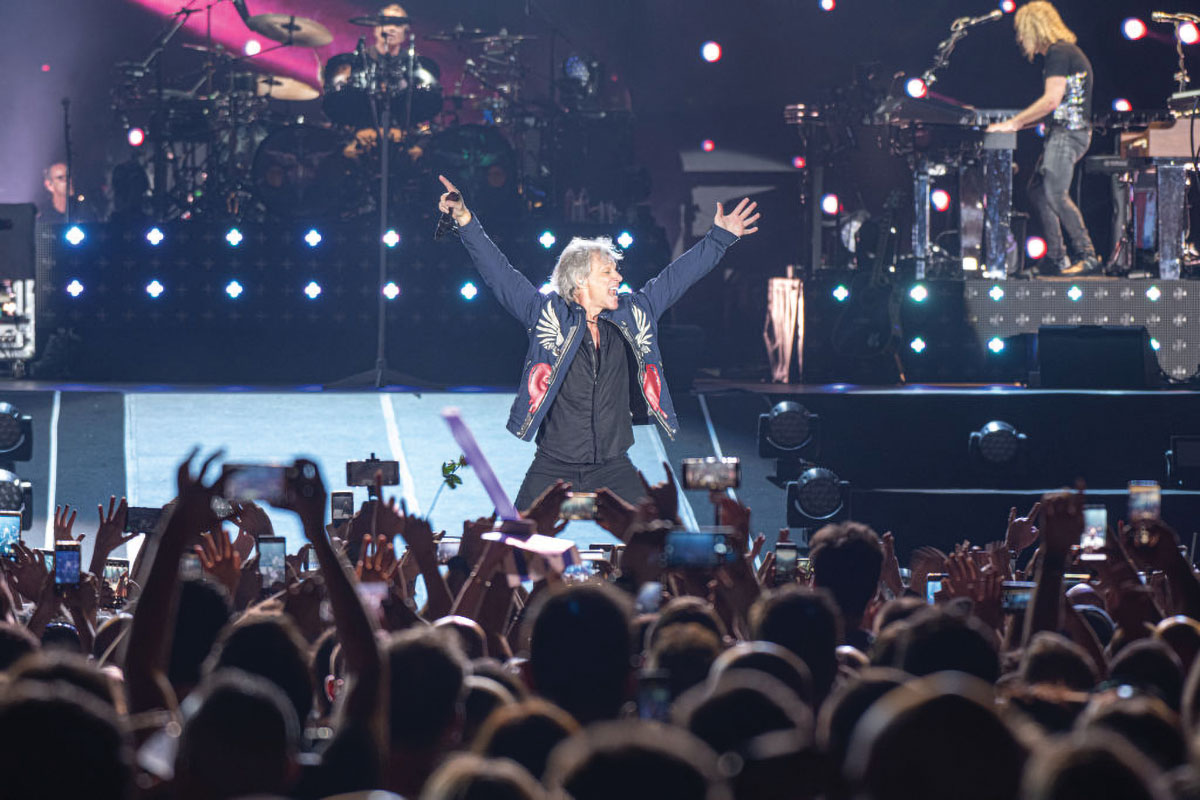
When Israeli band häMAKOR headlined the Israel Day Concert in Central Park, front man Nachman Solomon walked onstage with an Israeli flag draped around his shoulders and blue-and-white souvenir sunglasses tucked into his jeans pocket. As the band launched into their melodic rock tribute to Jerusalem, “Im Eshkachech,” the 21-year-old singer and rhythm guitarist urged the sun-baked crowd to “get moving,” and concertgoers obliged.
This infectious energy — which will be on display when the band plays The Mint in Los Angeles on June 28 — also comes through on the group’s self-produced debut CD, “The Source” — that’s häMAKOR, translated — which features a progressive mix of electronica and trance fusion. The pulsing synthesizer, steady drumbeat and distorted guitar sound like frenzied club music, and the vocals evoke Eddie Vedder of Pearl Jam.
According to Ben Jacobson, a Jerusalem Post freelance music critic and founder of jerusalemite.net, a Web site covering Jerusalem’s music and nightlife, häMAKOR occupies an unusual position in Israel’s music scene.
“There’s a real void here in Israel for alternative Jewish rock that’s creatively edgy — they’re one of the few doing it,” he said. “häMAKOR has a very outside-the-box approach to their Jewish identity. A lot of bands posture themselves to court a religious crowd and others avoid the issue. There’s a lot of spirituality in their music, a lot of liturgy and Jewish philosophy in their lyrics, but they’re not ramming it down your throat. It’s accessible to everyone, even non-Jews.”
Jacobson, who has been writing about häMAKOR from its inception in 2006, is struck by the group’s unusual sound.
“They mix all of these different things — if you describe it on paper it sounds like it should be a terrible, disgusting salad with ’90s grunge rock, trance, folk and classic rock, but when it all comes together, they pull it off, and it’s really great.”
Growing up on Moshav Me’or Modi’im, the community in central Israel founded by Rabbi Shlomo Carlebach, Solomon was surrounded by musicians. His father, Ben Zion, co-founded the Diaspora Yeshiva Band; his oldest brother, Noah, launched Soulfarm; and three other brothers — Yehuda, Yosef and Meir — formed the Moshav Band.
“I guess it was a career path,” Solomon said. “My dad being involved, we naturally took it over.”
Solomon started playing piano at age 4. “When I was 6, I had a band with a couple of my friends, and I’ve been shredding music ever since.”
He also performed with his family in a band called Ben Zion Solomon and Sons and played Carnegie Hall when he was 13.
Solomon formed häMAKOR when he was 19. “In high school I played just with my dad. I’m kind of a shy boy, so it took me awhile to push myself and do it.” Like many rock front men, he releases his timidity in performance. “When I’m onstage, I’m in my own world, doing my thing,” he said.
Aptly, the singer was named for Chasidic leader Rabbi Nachman of Breslov, who incorporated joyful song and dance into ritual observance. For Solomon, the principal songwriter, connecting to divinity is a recurrent theme. As he sings on the title track, “The lion will roar to remind us of the one above.”
This dedication to music and spirituality impressed häMAKOR drummer Jono Landon, a 29-year-old Toronto transplant who made aliyah (immigration to Israel) two years ago.
“Aside from great musicianship, I need the right intent behind the music. I believe in Nachman. He’s trying to make music for the right reasons,” Landon said.
In the bluegrass-inflected song, “Just Smile,” Solomon expresses his faith and confidence in divine providence: “I’ve got my sunburned face/And I’m looking just a little bit bluesy/Because when it ain’t my day, my week, my month or even my year/I think I’ll just sit back, cut back, relax and let God do his thing.”
Explaining how häMAKOR creates unusual sonic effects, Solomon said, “Ben Frimmer, who’s also the keyboardist, plays what’s called a Virus. It’s like a keyboard, but it gets psychedelic sounds for a trance element.”
Bassist Jonathan Fialko, who was raised in Texas and made aliyah six years ago, grew up playing in bands spanning genres from blues to country. New lead guitarist Bruce Burger, a recent oleh (immigrant) to Israel, blends seamlessly with the band’s eclectic musical personality. Also known as RebbeSoul, Burger played a mix of world beat, rock and jazz with his namesake band in the Bay Area.
Like their material, the band’s venues are wide-ranging. Last year häMAKOR played Fat Baby, a Lower East Side bar, and the Upper West Side’s Carlebach Shul. For the mixed secular and religious bar audience, they played hard-rocking tunes off their album and covered classics from The Who and Grateful Dead. At the shul, they performed a kumsitz (sing-along) style, Carlebach-heavy show.
Last Chanukah, häMAKOR headed to Poland. Chief Rabbi Michael Schudrich, who recruited the band for a 10-city tour, said, in an e-mail message, that “häMAKOR is filled with neshama (soul) and hitlahavut (enthusiasm). They excited old and young, Jew and non-Jew.”
häMAKOR: ‘Im Eshkachech’ live @ Shemeshfest 2007
Remarkably for an Israeli band, five out of the CD’s eight songs are in English. Hebrew songs include liturgical standards “Eliyahu Hanavi” and “Im Eshkachech” and an original composition, “Malachim.”
“When we started, our core audience was American kids who came to study in Israel for a year, so that’s what we aimed at,” Solomon said. “For me, it’s more natural to write in English. In the moshav I grew up in, they’re Americans that made aliyah. I only spoke Hebrew in school.”
Currently, häMAKOR plans to conquer dual markets, creating English-language songs for mainstream rock fans and Judaic music for the religious crowd. Their latest single, “Illusion,” will soon be released on Bigwheel, a new Israeli media company founded by Geva Kra Oz. “Illusion” is a classic rock tune infused with electronica that explores timeless themes of overcoming challenges and finding love.
While häMAKOR courts mainstream success, Landon says, “That’s not the most important thing. The music is a means to teach people around the world about spirituality and how to connect to their creator. If it happens, it’s all from Hashem.”