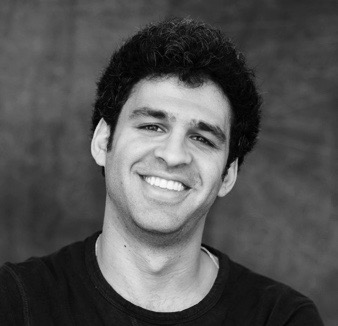
The barista working the Groundworks coffee shop in Santa Monica is a 20 something-year-old, with brown, curly hair, casual, skateboard-y clothes and black-rimmed Buddy Holly glasses. He is explaining to one of his customers, who is a tall and dark, handsome European, how his Jewish family spends Christmas.
Every year on Christmas Eve, his family has made of tradition of ordering Chinese food for dinner, he says. Fidgeting as he plays with the knobs on the espresso machine, the barista is stuttering his words as he explains that he is Jewish, how this tradition of ordering Chinese food on Christmas was started by his family—which includes his parents, and his siblings—as a joke.
“It has sort of became a tradition,” he says, “and now we do it every year.”
The European, who, with the dark features of Joaquin Phoenix and the height –and accent—of Lakers’ Paul Gasol, is about as Jewish as the Pop, nods, unsure.
Is he offended? Is he put off by the barista’s family tradition of ordering egg rolls and wonton soup on the night of Dec. 24?
It is too difficult to tell how the Euro-stud feels, but it is clear, uncomfortably so, that as our Jewish coffee man is revealing how his family spends Christmas—whether he knows it or not, ordering Chinese food during the holiday is a way that many, many Jews celebrate it; call it Christmas counter-programming, if you will—he is simultaneously apologizing for it.
We want to uphold our principals. I am 27-years-old, of the so-called Millennial generation. One principal that Millennials have is being a person who is open to people from different backgrounds, whether of a different ethnicity, sexuality, religion, etc.
Millennials also value authenticity. We don’t like being fake, dishonest. We don’t want to be poseurs.
Being anti-Christmas, pretending the holiday isn’t happening, runs contrary to our desire to be open.
But it also feels dishonest – thus, unpleasant – to embrace Christmas.
Whether we are aware of it or not, as Jews living in a predominately Christian country, this tribalism-versus-universalism dilemma is something we all cope with, at all times of the year.
Christmas time can make universalistic-inclined Millennial Jews want to resort to tribalism. The only remedy to this is for non-Jews to be as open as possible when us Jews explain the weird idiosyncratic ways we mark the holiday.
Whenever we turn the page—or press the iPhone button—on our calendars to December, it is impossible to evade a conversation about religion.
Those conversations might be with other Jews, and they might be about how the rising phoenix of Christmas decorations around the city this month reminds us that we are the minority here (or make us want to be Christian).
These dialogues might occur with non-Jews, consisting of people of opposing faiths explaining their traditions, respectively.
In the case of the latter, what is important is not what we say but how we respond to the other. We should never make the person of the other religion feel like he or she needs to apologize for how they celebrate – Euro-stud, if you are reading this, I am not saying that this is what you were doing when talking with our affable Jewish barista.
When we find ourselves in these conversations, it is good to err on the side of understanding. Let us all be aware that our personal traditions around Christmas time are personal. We all want to share about how we spend the holidays, and we need the people listening to be as open minded as humanly possible when doing that listening.
Otherwise, the sharing will stop, and likewise will the question of tribalism and universalism, because there won’t even be an option anymore. Tribalism will be something we have to choose, because universalism was always hurting too much.
Let us remember that Christmas is a holiday that means something to all of us, even to those of us who don’t celebrate it.