
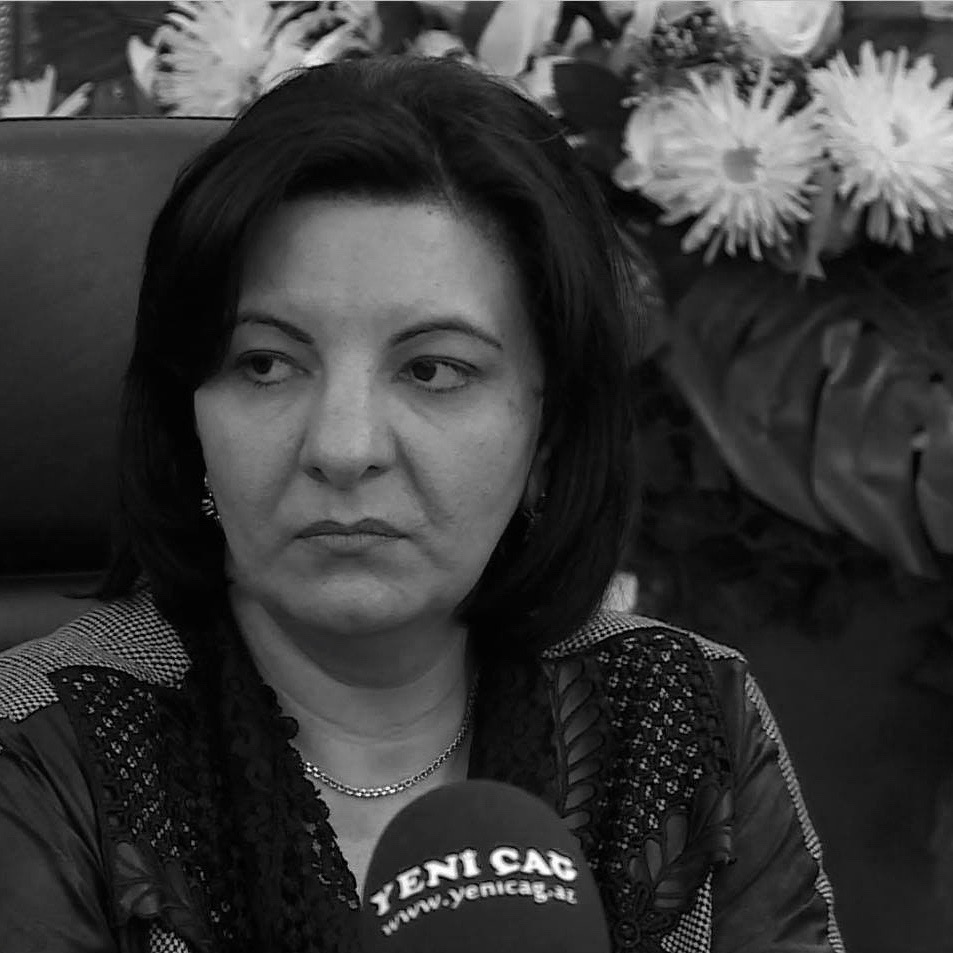
A Muslim Woman and Survivor Shares a Deep Bond with her Fellow Slain Jewish Countrywoman
Dearest Vera*,
27 years ago, we both stood at the precipice of adulthood. We were teenagers; you lived in the capital city of Baku of our homeland Azerbaijan, a Jewish student studying the violin, and I lived hours away, a Muslim student preparing to work as a telephone operator in the town of Khojaly. All those years ago tragedy struck us, in the same country divided only by distance, but our hearts and souls and hopes and dreams were as close as sisters. On that cold day in January in Baku, there were and slain bodies of innocent victims, shot mercilessly by the Soviet army. While I sat in my home only able to hear about these tragic events, it was on that day, when you hid in your apartment to avoid the violence, that a sniper caught you glimpsing out the window, and took your life. You were just 16 years old…
It was a last attempt at instilling fear and terror over Azerbaijan in the waning days of the Soviet Union. On that day of January 20, 1990, what would later be named as Azerbaijan’s ’Black January’, hundreds of innocent civilians were murdered, and over 1000 injured, as tanks, helicopters and 26,000 Soviet soldiers rolled through the beautiful city streets and unleashed sprays of bullets. It was then Soviet leader Mikhail Gorbachev’s last attempt at punishing a city and a nation for insisting on freedom from the Soviet tyranny, no matter the odds or the costs. It was an attack on unsuspecting men, women and children. It was also an assault on the impending and unstoppable notion of our freedom, as a soon-to be sovereign nation.
I lived far from Baku at the time. I grew up in the Nagorno-Karabakh region of Azerbaijan, in the town of Khojaly. And back then in 1990, I could never possibly imagine that only two years later, a different force of savagery would unleash a painfully similar warfare against my home, family, and everyone and everything I had known up until then. In February of 1992, I became a surviving victim of the Khojaly Massacre, when Armenia’s troops slaughtered 613 Azerbaijanis, including over 300 defenseless children, women and elderly in what the Human Rights Watch would later call “the largest massacre in the conflict”. I have shared before much of what happened to me in the torture camp as a young girl, and believe it holds true today and is important to remind us that evil does exist.
In the context of the tragedy of ‘Black January’, I often think of you, Vera, and I imagine we would have become close friends, had we both survived these tragedies. I see myself, just as I see our nation, from Khojaly to Baku and every town in between and beyond, as passionate witnesses to this time, and as those that have triumphed over the most reckless and cruel forms of human engagement possible. But there is hope and there is a spirit of willingness to build from what we have learned. And the same people that suffered these attacks have risen above those tragedies, as have the people of Azerbaijan, with enduring values of faith, courage, and the strength of our human spirit.
I remember hearing about what happened in Baku, and about the military curfew the Soviet leadership imposed after the ‘Black January’ over the entirety of Baku and the rest of Azerbaijan. Despite the curfew, millions of Azerbaijani people – Muslims, Christians and Jews – came together to mourn the tragic losses and flooded the city to honor the dead and to remember what had taken place. And despite the level of atrocity and the madness of indiscriminate bloodshed, everyone was more than a little inspired. Our nation wanted freedom, and we were able to push past the tragedy in 1990, just as we did the tragedies in 1992, to keep our dream alive. So much so, that in October of 1991, we regained our freedom and independence, for the second time in the 20th century, after 71 years under Soviet tyranny. I wish this was something you could have survived to witness, Vera: the independent, modern and multicultural Azerbaijan today, which tens of thousands of Jews are proud to call their homeland and share it with their Muslim and Christian sisters and brothers in dignity and peace!
So for you my Jewish sister, I want to remind the world that the crimes of war on such a level as ‘Black January’ cannot occur without leaving a lasting impact. Yet the perseverance and will to move on and move forward with a better life, a life of freedom, fairness, tolerance and peace, is something that has also left an even stronger and even greater impression. All those years ago, life was forever changed for so many people, as it was changed forever for you and your family.
Today, you are memorialized at Martyrs’ Lane in Baku, where people from all across the world visit your grave and remember your life. On this day, I will always remember your life, and how it was taken. And on this day, our triumph over the past and our unbreakable commitment to freedom as a nation will not be forgotten.
*Vera Bessantina was only 16 years old when she was killed in January 1990 by Soviet troops in Baku, Azerbaijan

































