Richard is 18, has four kids under the age of 3 and is doing time at Camp David Gonzales in Malibu for probation violations after being indicted for assault with a deadly weapon.
Today, he and eight other guys from Camp Gonzales are talking about feelings.
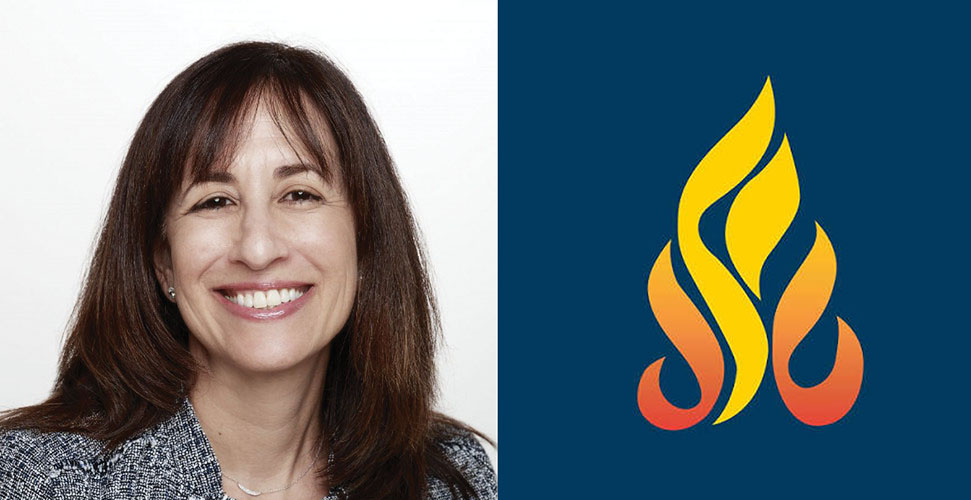
The young men, most of them gang members, are participating in theater artist Naomi Ackerman’s “Relationships 101,” a program that uses drama workshops to help young people understand how to build self-worth, engage in healthy relationships and prevent those relationships from turning violent.
Ackerman, who moved to Los Angeles from Israel in 2006, developed a one-woman show, “Flowers Are Not Enough,” with funding from the Israeli Ministry of Welfare 13 years ago. In the show, Ackerman becomes Michal, a woman who suffers under the brutality of her husband. She has performed the show more than 1,000 times all over the world — from rural India to Serbia to New Zealand.
“Relationships 101” grew out of that show, and she now teaches it all over — from yeshivas to public schools to synagogues. She taught the class at Fairfax High School and was searching for funds for more classes when County Supervisor Zev Yaroslavsky (3rd District) offered to fund a $3,500 pilot program at juvenile facilities for the County Department of Probation.
Camp Gonzales, a lush campus tucked into the Santa Monica Mountains off Las Virgenes Road, is home to 90 teenage male wards who are designated both as high risk and high achieving.
Ackerman was a sergeant in the Israeli military, and over the last two months has earned the respect of the group. Today, she has gathered them for a presentation to Yaroslavsky, representatives of other county supervisors and the Probation Department, funders and domestic violence activists.
She tosses a ball to the guys, asking them to shout out words that are harmful to relationships.
“Hate.” “Envy.” “Unfaithful.” “Unreliable.” “Dishonest.” “Cheating.”
Then she asks for words that build positive relationships.
“Faithfulness.” “Communication.” “Respect.” “Trust.” “Caring.” “Humbleness.”
Some of the young men don long wigs and use falsetto voices to play girls in scenarios they chose to present — being rejected on the dance floor, having a girl send a friend to tempt a guy and see if he gives in. They present alternate endings, using ideas they learned about communication, choices and consequences, and how to be agents of change.
Naomi Ackerman (front row left) listens as one of nine incarcerated teens reads a love letter to his girlfriend (Photo courtesy of the Office of Supervisor Zev Yaroslavsk)
Working with Operation Read, a program that teaches kids to read and write, the young men have written love letters, which they read at the presentation.
“You are the best thing to come into my life, and I never want to lose you,” one wrote.
“Your smile glows and warms my insides,” another wrote.
But when asked after the presentation whether they would send those letters to their girlfriends, the boys snorted, “No way.”
Ackerman and detention center administrators know the challenge will be how — or whether — these guys apply what they’ve learned when they get out.
“They’re smart kids, and they know a lot, but they are in these impossible situations at home,” Ackerman said. “I’m hoping to give them some tools to give them better-quality relationships,” she said.
Still, Ackerman and camp director Larry Vangor have both been amazed at how far the boys have come, from not understanding that calling their girlfriend a ho (slang for whore) was insulting, to looking for positive ways to communicate.
Yaroslavsky said the program would more than pay for itself if even one of the participants did not land in prison, where most juvenile detainees end up as adults. He hopes the county will fund more programs and eventually have this, in addition to other existing life-skills programs, become part of the probation education system.
“This is not simply about incarcerating people and locking the door and throwing away the key,” Yaroslavsky said. “It’s an opportunity to take advantage of the time we have with these young kids, to give them some tools that will last them and serve them in the future.”
And Ackerman has seen concrete outcomes when she’s presented “Flowers Are Not Enough” in other venues.
A woman in rural India marshaled all the women in the village to stand together behind her as she confronted her husband. At the Pitchess Detention Center in Castaic, an inmate stood up and cried after “Flowers,” saying he now realized that while he was in prison for assaulting his wife, he should be in instead for sucking the hope out of her.
Ackerman tells of one woman who contacted her years after she had seen the show to say that the message of self-worth came back to her when she found herself in an abusive relationship in college. She broke up with her abuser, and three months later, he killed another girl from her sorority.
Ackerman is hoping the messages she plants with the guys at Camp Gonzales will stick with them.
Corey, Richard and Alex, talking after the show, think they can use what they’ve learned when they get home.
“I have more confidence now to achieve my goals for things I want to do in life,” said Corey, 17. “This whole thing helped me a lot with how to talk to females, and how to treat her.”
“And not just females,” Richard interrupts. “Everybody. If you want to say something, you don’t always got to use cuss words. You can say, ‘I don’t like the way you’re talking to me.’”
Alex, 18, hopes to get a college scholarship to play soccer when he gets out, and he says he’ll be able to apply what he’s learned.
“Before I started doing this program, I felt kind of weird, like I don’t want people to see me like, ‘Oh, he’s weak. He has a soft spot for girls.’ Now, I’m not scared to show that I love a girl. You don’t have to treat girls bad to be hard. I’m still a man, you know. That’s what I learned.”