fbpx

Video Sculpture of Survivor Testimony to Be Installed at L.A. Museum of the Holocaust

The Los Angeles Museum of the Holocaust, which opened its new building in Pan Pacific Park in October 2010, has announced plans to install a $1 million “video sculpture” using interview footage from the USC Shoah Foundation Institute.
[additional-authors]
June 28, 2011

The Los Angeles Museum of the Holocaust, which opened its new building in Pan Pacific Park in October 2010, has announced plans to install a $1 million “video sculpture” using interview footage from the USC Shoah Foundation Institute.

Composed of 65 flat screens of various sizes, the sculpture will occupy one entire wall of the last gallery a typical visitor sees. Using the handheld audio guides that direct them through the rest of the museum, visitors will be able to listen to audio from any of the interviews being displayed at any given moment.

To make this possible, every one of the nearly 52,000 videotaped testimonies by survivors of and witnesses to the Holocaust in the archive of the USC Shoah Foundation Institute will be transferred to the museum. With the testimonies’ combined running time of about 105,000 hours, it is estimated that the 65 screens, running continuously every day the museum is open, will present the entirety of the institute’s video archive every 10 months.

Each visitor to the museum already receives a personal touch-screen audio guide, and the displays include many interactive elements. But just managing the data from the Shoah Foundation Institute — about 650 terabytes, nearly three times the data holdings of the Library of Congress — presented a remarkable technological challenge.

“The biggest trick is going to be delivering video on demand with streaming audio on demand, which is what the experience needs to be in the space,” Mark Rothman, the museum’s executive director, said.

The testimonies will be presented in their native languages, without subtitles. “That wall is going to be impressionistic,” Rothman said. “It will be an aesthetic and informational experience.” Computers placed elsewhere in the museum will be available for visitors interested in digging deeper into the institute’s archive, Rothman said.

For the USC Shoah Foundation Institute, founded by Steven Spielberg in 1994, the survivor video wall will make the archive of video content available to a wider audience. “This is the first time ever that the entire archive will be displayed in public as a whole, and we are delighted to have it here, in Los Angeles,” Stephen D. Smith, the institute’s executive director, said in a statement.

The project, expected to be up and running by spring 2012, is being funded in large part by a donation from the New Jersey-based Wilf Family Foundation. The museum is working to raise additional funds to cover the rest.


Did you enjoy this article?
You'll love our roundtable.

Editor's Picks

Latest Articles

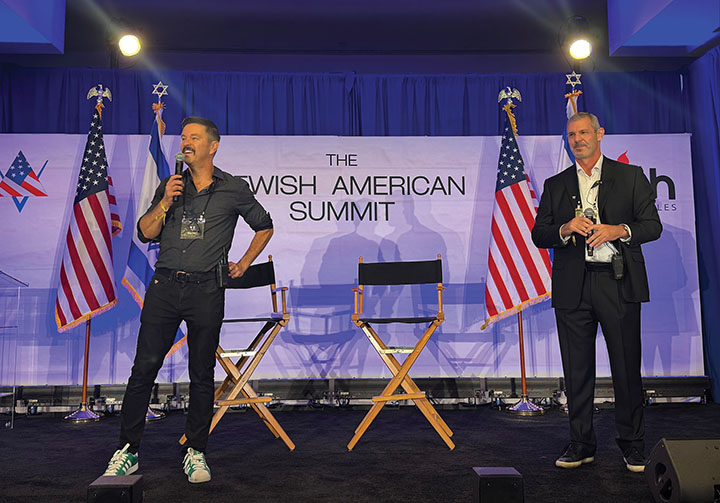
Hanging Out at the Jewish American Summit

Among the speakers, Adam Milstein, a real estate investor, philanthropist and co-founder of the fast-growing Impact Forum, urged attendees to frame antisemitism as an American issue and not just a Jewish issue.

A Festive French Roast

One of my favorite things to cook for the Jewish holidays is a beautiful French roast. It’s so very festive and is perfect to feed a hungry crowd.

The Genius of the Marx Brothers

Like the greatest satirists, such as Jonathan Swift and Mark Twain, they chose comedy over accusation to mock the folly of society and add levity to dark times. But their aim was not levity alone.

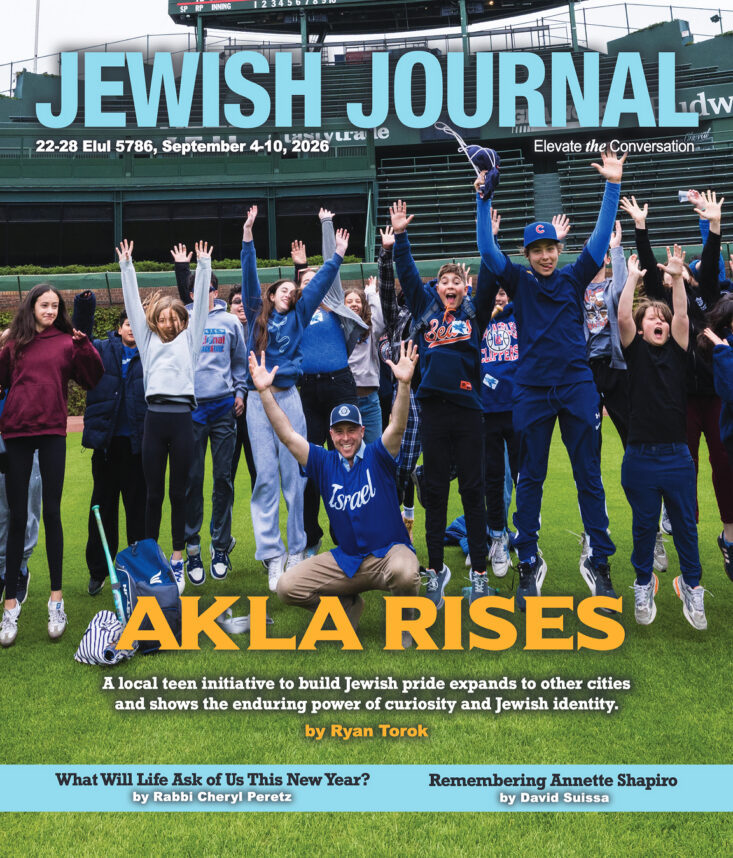
AKLA Rises

From a Local Experiment to a National Program: AKLA Expands Its Vision for Jewish Teens

Better Kisser Than a Cook

Sometimes love arrives ahead of you, in spite of you. Cooking slowly became a way of being there for the people I love. A wordless language that says: I see you. I hear you. You’re worth the onion-chopping.

Israel’s Brain-Drain Debate Is Asking the Wrong Question

If an experienced professional with rare expertise leaves Israel, the impact cannot be understood simply by adding another person to a brain-drain statistic. The more relevant question is how many people with comparable experience remain, how essential that expertise is and how easily it can be rebuilt.

A New Borscht Belt?

If renewed exclusion teaches us only to become more protective of Jewish work, we will have learned the wrong lesson from the original Borscht Belt.

Judaism as a Covenant for the Ages

Given the realities of our current time, we are more in need than ever of the depth, wisdom, and joy that Jewish tradition offers.

A Summit to Remember

Our shared stories of hatred, humiliation, oppression and slavery obligate us to show up for one another.

Old-Guard Dems Pushing Back

While it’s indisputable that younger and progressive voters are driving the party away from its historic support for Israel, the old-guard Zionist Democrats have made it clear that they will not surrender without a fight.

More news and opinions than at a Shabbat dinner, right in your inbox.