
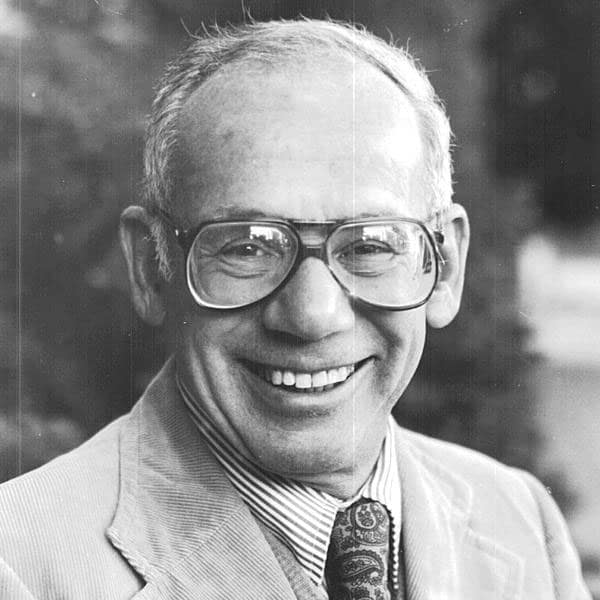
“Moving to Santa Barbara has added 10 years to my life,” testifies Ron Fox, a former Los Angeles stockbroker. “The community is close-knit but people can also find privacy.”
Fox and his wife bought a second home in Santa Barbara in 1992 and decided they liked it so much they made the move permanent six years later.
He soon became involved in the Jewish community, served as president of the Jewish Federation of Greater Santa Barbara, but wasn’t too happy with what he found.
There wasn’t much interaction among the city’s estimated 7,000 Jews, and the main synagogue was “dysfunctional,” according to Fox.
Now the picture is much brighter, Fox says. He credits mainly a flowering of Jewish studies and activities on the University of California Santa Barbara (UCSB) campus as well as the leadership of the town’s leading rabbi and a handful of university scholars, who serve as bridges between town and gown.
This reporter’s interest in Jewish life and study in the mellow Mediterranean-style city, 97 miles northwest of Los Angeles, was piqued by a letter from David Marshall, who doubles as dean of the UCSB College of Letters and Sciences and dean of humanities and fine arts.
Marshall wrote that he wanted to draw attention to the university’s “Jewish Studies Initiative, which aims to raise the profile of Jewish studies scholarship and teaching on campus and strengthen the intellectual and cultural communities beyond the campus.”
The upswing in Jewish enrollment and courses has gone hand-in-hand with the growing academic standing of UCSB.
Once known mainly as the playground of the University of California system, envied for its sun-tanned coeds and swinging Isla Vista parties, over the last two decades the Santa Barbara campus has also earned a solid academic reputation.
This development, in turn, has attracted more Jewish students and faculty, paralleling similar gains locally at USC.
Now UCSB has about 2,200 Jewish students, close to 13 percent of the total student body, according to Rabbi Evan Goodman, who recently became executive director of the campus Hillel.
He estimates that their weekly Shabbat dinner draws between 100 to 175 students, and that about 250 students participate in cultural and social programs each week.
Many of the students hail from the Los Angeles area, often ones (like my daughter Ronit in the 1980s) who want to get away from home, but not all that far away.
One of the most loyal local alumni is Harvey Schechter, for four decades the Anti-Defamation League’s Western States director and now a trustee of the UCSB Foundation.
Schechter was working as a Santa Barbara ranch hand during World War II and was enrolled at the then-Santa Barbara State College when it was transformed into UCSB. As far as is known, Schechter is the only Brooklyn-born Jewish lad to arrive at his university classes riding a horse.
UCSB has an active American Students for Israel chapter, with both Jewish and non-Jewish members, and a smaller AIPAC (American Israel Public Affairs Committee) student group. Both organizations joined Hillel recently in organizing an all-day Israel teach-in on campus.
The roots of Jewish studies on campus go back to 1966, when the initial Judaica and modern Hebrew classes were offered, says Marshall, a comparative literature scholar.
It took until 1995 to establish a more structured undergraduate minor in Jewish studies, now offering some 30 courses and taught by 25 faculty members representing a spectrum of academic disciplines, including biblical and modern Hebrew and rabbinical literature, to an eclectic selection of classes touching on many aspects of contemporary Jewish life in Israel and the Diaspora.
In any given semester, between 175 and 225 undergraduates are enrolled in six or seven Jewish studies courses, with a popular class like “Jews Across the Nations” drawing 140 students.
In other courses, such as biblical scriptures in English, the majority enrollment is non-Jewish, with a large proportion of Christian evangelicals, who also consider the Hebrew language as part of their heritage.
The largest and most diverse audiences, drawn from both the campus and the general community, participate in some eight events sponsored each year by the Taubman Endowed Symposia in Jewish Studies.
Three dialogues between experts on the Israel-Palestinian conflict attracted an audience of some 600, including many Muslim students.
In contrast to the charged atmosphere in some previous years, political discussions this semester have been “attentive and civil,” says historian Leonard Wallock, the symposia coordinator.
A similar atmosphere prevails for regular discussions among some 20 students, equally divided between Muslims and Jews. On the whole, UCSB has been spared the type of anti-Israel demonstrations and confrontations seen on such campuses as UC Irvine and San Francisco State.
An exception this year was the furor centering on William Robinson, a Jewish sociology professor. While teaching a course on the “Sociology of Globalization,” Robinson sent his students an e-mail in which he compared Israeli actions in Gaza to the Nazi eradication of the Warsaw Ghetto during World War II.
Some of his students objected strongly, the Anti-Defamation League’s Abraham Foxman appeared on campus, and a faculty committee investigated. After lengthy hearings and discussions, the committee decided that Robinson had not violated the faculty code of conduct, and no disciplinary action was taken.
One of the pinnacles of university prestige is the establishment of an academic chair, underwritten by a generous benefactor.
This year saw the establishment of the $1 million Marsha and Jay Glazer Endowed Chair in Jewish Studies at UCSB, with a faculty committee now searching for a worthy incumbent. The Glazer family has added $100,000 for student scholarships in Jewish studies.
The relationship between UCSB and the Santa Barbara Jewish community is embodied in the person of Rabbi Steven Cohen, who served as campus Hillel director from 1985 to 2004.
He is now the rabbi of Congregation B’nai B’rith, a Reform temple and the largest synagogue in the area. Santa Barbara does not have a Conservative synagogue, while Orthodox worshippers are served through the small Young Israel synagogue and by Chabad of Isla Vista.
Among the town and gown collaborations are Kristallnacht observances, a Jewish film festival and a Portraits of Survival exhibit, telling the stories of 45 Holocaust survivors who settled in Santa Barbara.
Cohen gives credit for Jewish progress on campus to the pioneer work of professor Richard Hecht and the Alpha Epsilon Pi fraternity, and currently to the impact of the Birthright Israel program.
He summed up the profile of Santa Barbara’s Jewish community as “not large in numbers, but affluent, generous, sophisticated and cosmopolitan.”
Tom Tugend is a contributing editor for The Jewish Journal of Greater Los Angeles. He also writes for JTA, Jerusalem Post and the London Jewish Chronicle.

































