Over the next five years, Hebrew Union College-Jewish Institute of Religion (HUC-JIR), the four-campus academic flagship of the Reform movement, will tighten its institutional belt by slimming down its faculty and administration, selling off real estate and instituting “electronic” classes.
On the more cheerful side, HUC-JIR will keep open every one of its campuses in Los Angeles, New York, Cincinnati and Jerusalem, balance its budget, and maintain its academic excellence, pledges Rabbi David Ellenson, the institution’s president.
An outline of the five-year plan, labeled “A New Way Forward,” emerged from a Nov. 2 board of governors meeting on the Cincinnati mother campus.
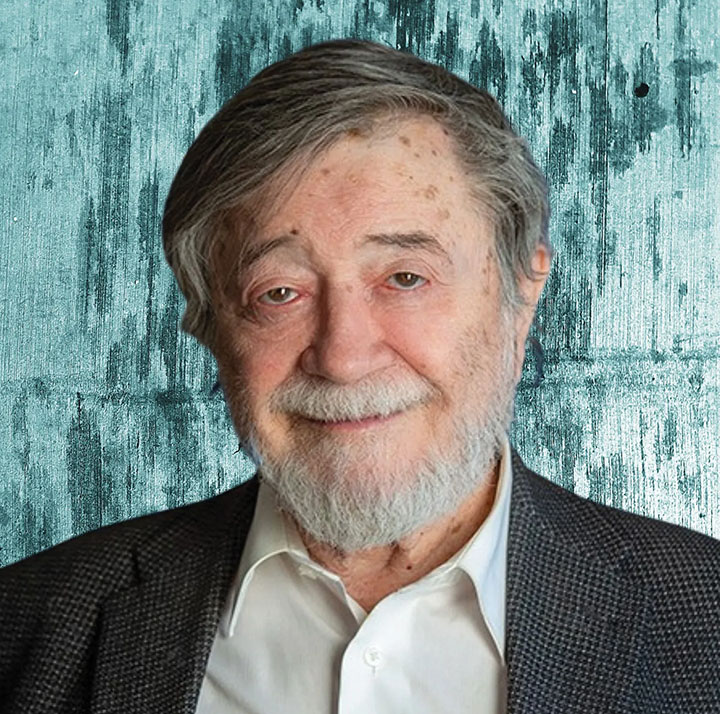
In a statement, Ellenson, 62, emphasized, “This plan provides a vision of our role as the preeminent progressive seminary of the 21st century, addressing contemporary Jewish demographic, societal and educational trends and responding to the challenges and needs of a changing Jewish world.”
In a phone interview, Ellenson, who has held the presidency for eight years following 22 years teaching on the Los Angeles campus, filled in some concrete details.
Currently, HUC-JIR’s total enrollment fluctuates between 375 to 450 full-time students, roughly equally divided among the four campuses, with the New York campus educating the largest number of future rabbis.
Faculty on the three stateside campuses totals 47 tenured and tenure-track professors. Within five to six years, it is expected that the faculty ranks will be down to between 40 to 45 professors.
Ellenson hopes to consolidate the New York campus facilities with those of the congregational Union for Reform Judaism to form a shared Center for Reform Judaism in New York. Some real estate in other cities may also be put on the block.
The institution will expand and innovate e-classrooms, in which lectures by “star” scholars, such as Reuven Firestone, an authority on Islam based in Los Angeles, will be electronically transmitted to students on other campuses.
However, Ellenson pledges that “live” professors will still teach some 80 percent of all classes.
Cooperative academic programs with secular universities, such as current ones between the Los Angeles campus and USC, will be tried elsewhere. Ellenson hopes to expand the current program between the Cincinnati campus and Xavier University to also include the University of Cincinnati.
There will be consolidations on the administrative side, with perhaps one person taking over the functions now handled separately on each of the three stateside campuses. In addition, Ellenson foresees some administrative collaboration with the Conservative movement’s Jewish Theological Seminary,
Last year’s $40 million budget for the 2008-09 fiscal year has already been cut to $33.5 million, including $2.5 million in deficit financing, for 2009-10. Regular annual reductions should eliminate current deficits by 2012 and yield a steady annual budget of between $31 million and $33 million by 2014.
HUC-JIR as an institution did not have money invested with convicted Ponzi scheme swindler Bernard Madoff, but many of its large donors were not as fortunate. Cutbacks by philanthropists and Reform congregations have sharply reduced the academic institution’s endowment.
One bright spot is the just-completed $12 million renovation on the Cincinnati campus of the Klau Library, which houses the largest collection of Judaic literature in the United States and the American Jewish Archives, Ellenson said.
Despite some of the harsh economic realities, Ellenson remains resolutely upbeat about the long-range future of his institution as the academic arm of the largest Jewish denomination in North America.
The “New Way Forward” plan, he says, “provides a vision for the College-Institute as the intellectual, spiritual and professional leadership development center for Reform Judaism and the Jewish people.”
On a final personal note, Ellenson, who now lives in New York, retains a nostalgic twinge for Los Angeles, where he lived for 22 years while teaching at the local HUC-JIR campus. On the other hand, he is eagerly anticipating the arrival of his first grandchild.