
How does Judaism remain relevant for the Los Angeles community over the next 25 years?
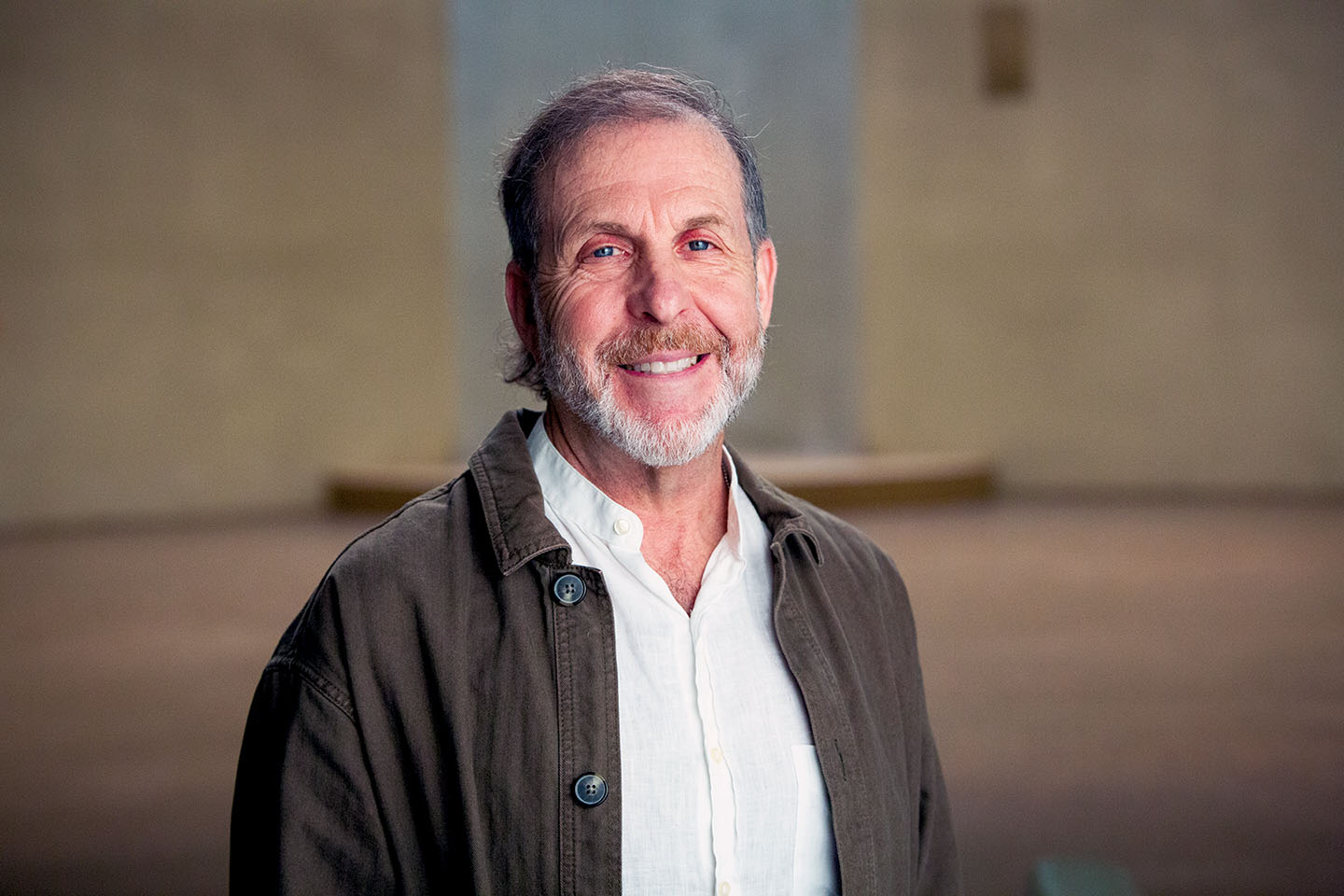
Jay Sanderson, former CEO and president at Jewish Federation Los Angeles, is asking that question as he plans to launch, with the support of American Jewish University (AJU), the 2050 Institute, a new initiative focused on long-term communal planning and transformative ideas in Los Angeles and beyond.
Sanderson, CEO of the 2050 Institute, is spearheading the initiative. Currently the only staff member, he plans to fundraise in order to support the hiring of additional staff.
The initiative, he told The Journal in a recent Zoom interview, is a “wheel with many spokes,” one that will include an annual summit — which he expected to be held in December — a robust fellows’ program offering mentorship to young Jewish leaders, discipline-directed retreats and a digital platform.
He described the summit as being “inspired by the Aspen Institute,” though its focus will be the Jewish community. Most of the programming will be held on AJU’s Brandeis-Bardin campus in Simi Valley. The inaugural summit will feature both private and public events while gathering thought leaders to address the most pressing challenges facing the Jewish community, Sanderson said.
“The annual summit will bring Jewish thinking from these people from all walks of life at the highest level together, and they will be working on different ideas and projects,” Sanderson told The Journal. “There’s never really been a communal attempt to do long-range planning for the entirety of the community and do it, in this case, for the next 25 years.”
AJU announced the 2050 Institute on Feb. 5. This followed the organization’s announcement this past November that Sanderson — who led Jewish Federation Los Angeles for 12 years, until 2021, before stepping away from the professional Jewish community — would be joining AJU as a senior advisor.
The 2050 Institute, according to an AJU announcement, will bring together influential leaders, thinkers, creators and philanthropists from across disciplines. While much of the organized Jewish community is currently focused on combating rising antisemitism, the goal will be envisioning what the Jewish community can become further down the road, Sanderson said.
“This whole initiative is about being proactive, not reactive,” he said. “It’s about playing offense, not playing defense. Right now, we’re in a defensive, reactive mode as a community.”
Along with an annual summit, key initiatives of the 2050 Institute will include discipline-specific meetings, a fellowship program for emerging Jewish leaders, a national salon series and a grant-making initiative to encourage innovative solutions for the Jewish future.
“This is a think tank that is going to be successful only if the ideas are able to be implemented to create the kind of communal transformation that I think is necessary,” Sanderson said. “I don’t want to predetermine what the ideas are. I want to find the right people and create the right setting for them to help us think about things. This is going to be an open conversation that will lead to action, that will lead to transformation, with minimal infrastructure.”
“This is a think tank that is going to be successful only if the ideas are able to be implemented to create the kind of communal transformation that I think is necessary.” – Jay Sanderson
The 2050 Institute will consider questions surrounding the affordability of being Jewish and how the community ensures synagogues, day schools and Jewish summer camps continue to hold appeal for Jewish families.
Sanderson previously served as executive vice president of the Brandeis-Bardin Institute, which subsequently merged with the then-University of Judaism to become AJU. Before leading the LA Federation, he helmed a production company that brought Jewish programming to mass audiences. He told The Journal he believes Judaism is a “consumer business” — and if Jewish communal leaders want the product to be attractive to people, they need to evolve and transform what it can be, he said.
Sanderson believes AJU is the ideal home for the 2050 Institute.
“AJU has been a place for big ideas and a place that is forward thinking,” he said. “It’s really part of their DNA as an institution.”
Jeffrey Herbst, president of AJU, said in an interview that the launch of the Institute reflects AJU’s goal of looking forward as it moves on from the recent sale of its Bel Air campus and ending of several academic programs. Doing so, Herbst said, “has allowed us to invest in new initiatives that we believe will serve the Jewish community in the future.”
“There’s that great Wayne Gretzky line that he doesn’t skate to where the puck was but where the puck is going to be — and that’s our philosophy,” Herbst continued. “And that’s why we’ve divested ourselves of programs which may have been appropriate for the past. Now we want to think about the Jewish community, where it’s going in the next 25 years.”

































