Let us now praise famous Jews.
Bless them, so smart or so accomplished, often both. It makes us swell with pride — we can’t help ourselves — to learn that Gene Wilder is really Jerome Silberman. That Sarah Jessica Parker didn’t have to undergo a reverse nose job to acquire her exquisite profile. That three-thirds of “60 Minutes” — Mike Wallace, Morley Safer, and producer Don Hewitt (originally Hurvitz) — is actually three-tenths of a minyan.
And don’t even get us started on Shawn Green. A Jew who batted .300 — Psalms were written for less.
But stick a microphone in their faces and ask them what Judaism means to them, to their children, and suddenly some of the smartest, most accomplished and articulate people in the world go numb.
That’s what happens often in Abigail Pogrebin’s new book, “Stars of David: Prominent Jews Talk About Being Jewish” (Broadway).
What’s fascinating about the 62 souls she interviews is that we know so much about them and so little about their beliefs. With notable evangelical exceptions, most Americans are more comfortable talking about their sex lives than their spirituality.
But Pogrebin, a former producer for Charlie Rose and “60 Minutes,” had the tools to push her interviewees beyond their comfort zone. When she presses former U.N. Ambassador Richard Holbrooke on the extent of his Jewishness, he finally snaps: “It’s your book. You decide.”
The book makes an interesting counterpoint to last year’s “I Am Jewish: Personal Reflections Inspired by the Last Words of Daniel Pearl”(Jewish Lights), in which more than 100 mostly prominent Jews offer their own credos. Here the editors, Daniel’s parents Ruth and Judea, tapped not just headliners, but thinkers and scholars whose insights provide a kind of road map for thinking through issues of identity.
Indeed, Jewish identification has been a hot issue in the Jewish professional world. The 2000-2001 National Jewish Population Survey counted about 3.9 million Americans who identify themselves as Jewish by religion, and about 5.3 million who identify themselves as Jewish using broader criteria such as ethnicity or ancestry. The former number represents a decline from a decade ago, from 5.5 million Jews. High intermarriage and low fertility rates among Jews are the usual suspects.
“Breed, you Sons of Abraham, breed!” the comedian Bill Maher ranted after the statistics were published. “Without Jews, who’s going to write all those sitcoms about blacks and Hispanics?”
The putative decline sparked a controversy when Jewish Theological Seminary provost Jack Wertheimer published an essay in October’s Commentary lambasting liberal streams of Judaism for not emphasizing fertility. The essay, a Hogwartian blend of social science, dogma and hearsay, also rejected the embrace of intermarried couples and alternate forms of family life.
“Might it be true,” he wrote, “that Jewish men want to marry someone more like their mother than the typical young Jewish woman of today, and that Gentile women happen to fit the bill?”
In the end, Wertheimer calls for a return to Orthodox norms despite the fact that the vast majority of Jews have voted with their feet to reject them, a resolute stand against non-standard Jewish families and intermarriage and, I suppose, for non-Jewish women to stop drinking the polyjuice that shape-shifts them into Jewish mothers.
So why am I not as scared as Jack Wertheimer?
For one, the statistics are of dubious value. On Nov. 3, a new analysis of more than 20 Jewish populations by the Steinhardt Social Research Institute at Brandeis University found that there might be as many as 6.5 million American Jews, depending on how people define Jewishness. Some researchers have put this number of people who identify, even in some inchoate, Pogrebin-like way, as Jews, at 13 million.
The point is, identity in today’s world is not fixed but fluid. It’s also maddeningly individual and it’s never unalloyed: Anyone can choose Jewishness at any point along a life path, and many, many people do. That means institutions that reach out in different ways at different life-cycle moments –preschools, synagogues, camps, mortuaries — must be able to welcome, educate and retain members of the tribe who possess only a vague sense of Jewishness.
At the same time, people are coming to Judaism outside institutions, in new, unusual and, sometimes, unrecognizable ways. Israeli journalist Yossi Klein Halevy, in town this week for a speaking engagement, told me the same phenomenon is happening in Israel.
“We are in a post-Orthodox, post-secular world,” he said.
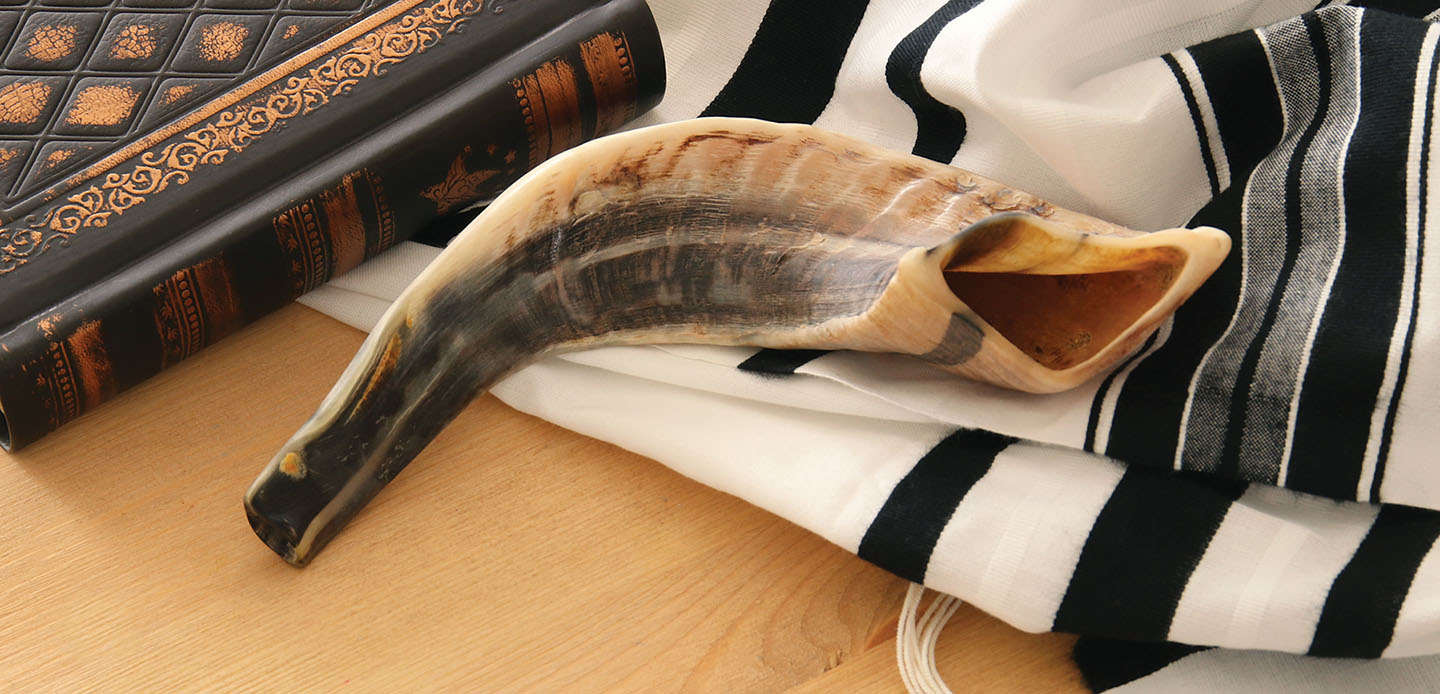
Tens of thousands of young Israelis congregate for Jewish festivals, listen to spiritual rock ‘n’roll and hip-hop, and dance and pray and blow shofars into the night. It is too early to tell where this movement may lead, what kind of Judaism may evolve from it, and how it will spread around the world.
But the message of such movements is clear, with apologies to Holbrooke and Wertheimer: “It’s our Book. We decide.”