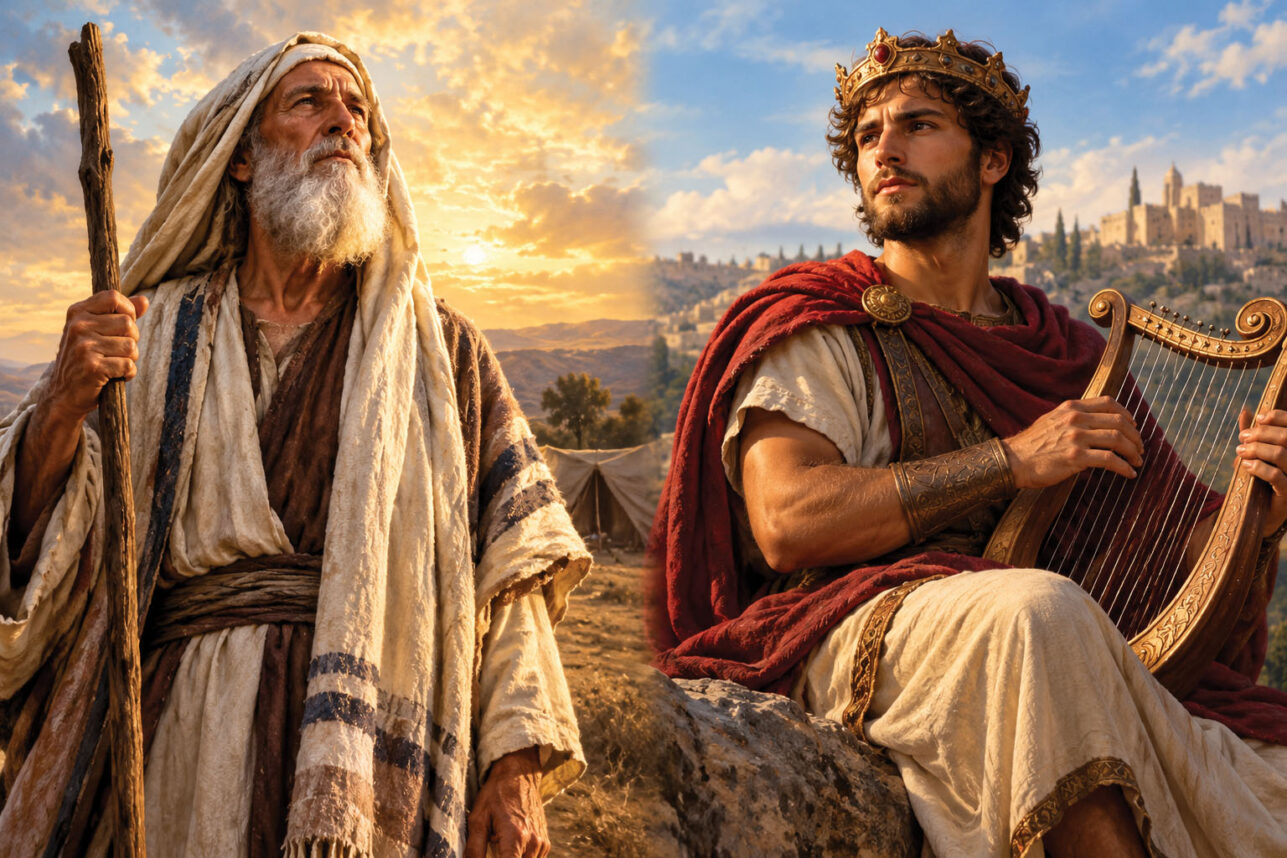
In 1968, Rabbi Abraham Joshua Heschel, one of the leading Jewish thinkers of the last century, invited Dr. Martin Luther King, Jr. to join him at his Passover Seder. We’ll never know what they would have talked about over all that matzoh and four cups of wine. But we know that the night before he was assassinated, Dr. King saw himself as Moses, viewing from the mountaintop the Promised Land that he would never enter. He presciently ended his speech by saying those famous two lines we all know by heart: “I may not get there with you. But I want you to know tonight, that we, as a people, will get to the Promised Land!”
Dr. King gave that famous “Mountaintop” speech in Memphis, Tennessee, where he had been invited to speak by Reverend James Lawson, a leading figure of the Civil Rights movement and practitioner of non-violence, who at the time was helping to lead the Sanitation Workers Strike.
Why all this history? Because I’m excited to hear Reverend Lawson speak next month about the struggle for equality at “A View from the Mountaintop: Social Justice in the 21st Century.” The event also presents a new chapter in the long partnership between Jews and African-Americans, harkening back to Dr. King and Rabbi Heschel marching together from Selma to Montgomery. Organized by the Progressive Jewish Alliance, Reverend Lawson will be joined by Rabbi Sharon Brous and USC Professor Dr. Manuel Pastor to discuss, among other things, a present-day alliance between Jewish, African-American, and many other activists to fight for food justice in Los Angeles.
The campaign for food justice is a campaign for access to healthy food and market jobs that pay middle-class wages—neither of which are to be found among the shelves of processed foods in the small convenience and liquor stores that dot the ‘food deserts’ in Los Angeles. If you look at the distribution of supermarkets on a map, you’ll notice that large sections of the city—in South L.A., East L.A. and the northeast San Fernando Valley—are largely devoid of the large grocery stores that are abundant in other, more affluent, parts of the city. These food deserts are home to rates of diabetes and childhood obesity up to eight times higher than in areas like West L.A., and grocery workers in these neighborhoods earn, on average, roughly $8,000 less per year than their counterparts on the Westside.
There are a lot of complicated issues out there but this isn’t one of them. The legacy of Dr. King and Rabbi Heschel pushes us to solve this inequality. With a positive public-private partnership we can expand the grocery industry to all parts of the city and, over time, transform the physical and economic health of entire communities.
I’m looking forward to hearing what Reverend Lawson thinks about this issue, and what we can do to help bring this change about. Oh, and if anyone out there is wondering, I take my soy gefilte fish with plenty of horseradish (organic preferred).
A View from the Mountaintop: Social Justice in the 21st Century is presented by the Progressive Jewish Alliance on March 4, 2010 from 5:00-8:30pm at the Skirball Cultural Center in Los Angeles. You can find out more and purchase tickets for this community gala on their website: www.pjalliance.org.