In the Torah, God is constantly remembering, and that remembering is followed by action. God remembers Noah and then stops the flood. God remembers the Israelites and then frees them from bondage. When we speak about the Sabbath, we say “Shamor v’zachor b’dibur echad,” that the commandments to guard and to remember the Sabbath were spoken in one Divine utterance. For God, they are two sides of one coin.
As we prepare to mark Holocaust Remembrance Day on April 28, it’s worth asking: What is the relationship between memory and action for us today?
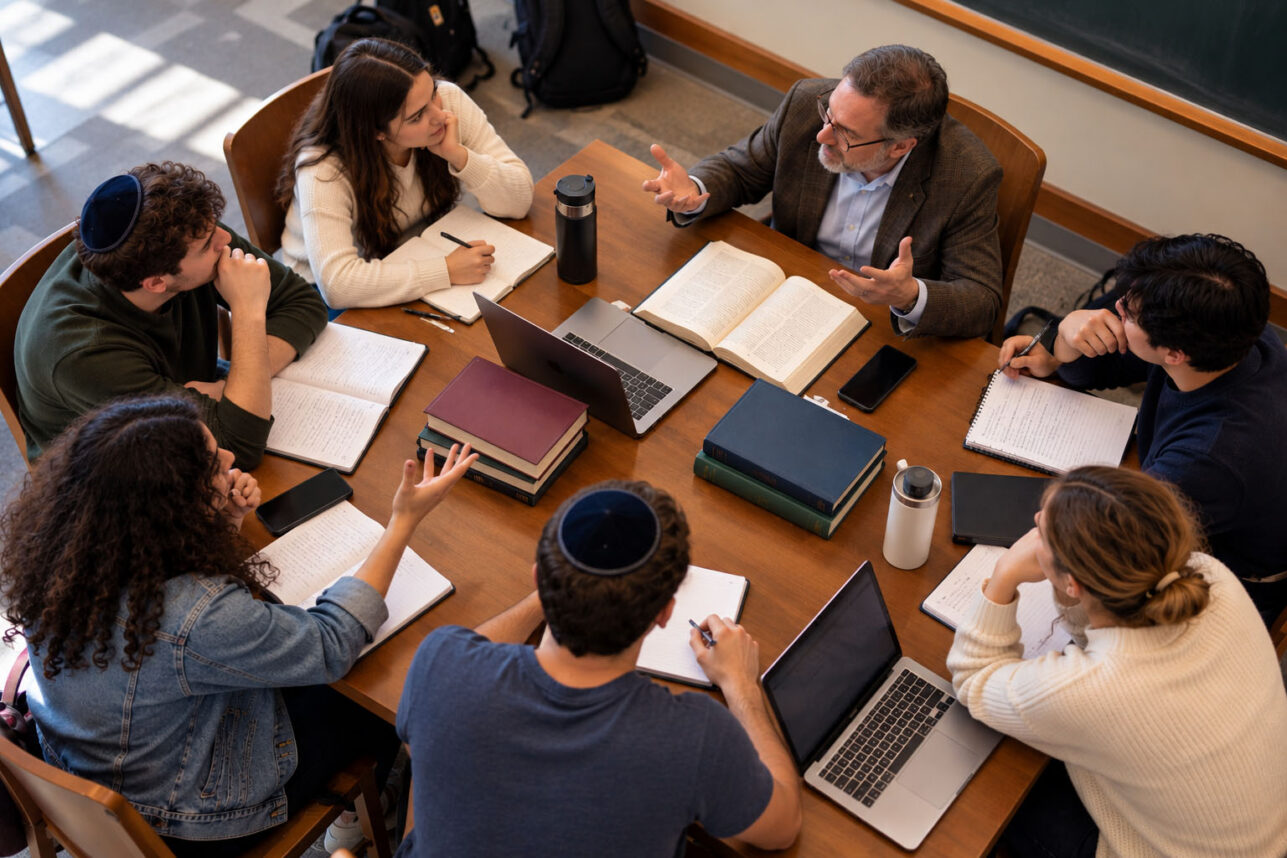
Following God’s example, the rabbis teach in the Ethics of the Fathers that study should ideally lead to action, not just more teaching. Elsewhere in the Talmud, they say study that leads to action is greater than action alone.
Surely we can understand why active memory or study might be preferable to memory or study followed by inaction. But why did God so often model the behavior of remembering and then acting? And why should the rabbis have preferred action preceded by study to action alone?
In the case of the Holocaust and other tragic episodes in Jewish history, one could argue that we don’t have a choice but to recall our painful past. Psychologists suggest that trauma lasts for seven generations, and if so, Jewish parents, in this generation as in previous ones, must give their children the intellectual and spiritual tools to make sense of this trauma and to understand our history. Further, when action is done with a deep foundation of memory, we can create layers of meaning that generates real transformational and systemic change.
Indeed, this seems to be understood in the American-Jewish community. In the recent Pew Research Center survey, the most common answer given for what it means to be Jewish was remembering the Holocaust (73 percent) followed by leading an ethical life (69 percent) and working for justice and equality (56 percent). For American Jews, remembering our tragic past and remolding a brighter future are the core priorities.
And now there’s evidence to suggest that those two elements of what it means to be Jewish are connected, and that studying or remembering, particularly as a group, can make all the members of that group more committed to collective action. In a recent study published in the Journal of Moral Education, James Youniss found that, more than the development of reasoned arguments, community identity built around a common religious and civic sense of democracy accounted for the willing participation of morally conventional citizens in civic participation and service.
In spiritual activism, we remember our collective traumas and glories and we invoke them to refine our work. When we are triumphant, we must humble ourselves as we know we have lows to come. When we fail, we must raise our heads high as we know we will climb from this rut as well.
It is why I am inspired by one of my rabbinic colleagues, a social justice leader, who just spent a week meditating on the railroad tracks at the entrance of Auschwitz, because he felt that until he really internalized and processed the pain, anger and confusion in his heart, he could not be a proper activist.
And it’s why on April 27, when I take the stage at the Los Angeles Museum of the Holocaust’s Yom HaShoah: Day of Holocaust Commemoration, I plan to mention Elie Wiesel’s words from his 1986 Nobel Prize acceptance speech, in which he explicitly connected his memories to his activism.
“I remember,” Wiesel said, “it happened yesterday or eternities ago. … That is why I swore never to be silent whenever and wherever human beings endure suffering and humiliation.”
If we are to protest the injustices that still occur today, we must stand for the Kaddish we say on Yom HaShoah year after year. It is only through memory that we can locate our deepest convictions. Action can be much more profound and meaningful when the remembrance has been authentic, deep and not done in haste. It is easy to understand how memory without action is incomplete. The greater challenge for us today is to understand how deeply action without memory is equally incomplete. This is the work of heroes who sit in discomfort and continue to teach and call upon others to remember the stories of the Shoah.
Rabbi Shmuly Yanklowitz is executive director of the Valley Beit Midrash in Phoenix, Ariz., founder and president of Uri L’Tzedek, founder and CEO of The Shamayim V’Aretz Institute, and the author of five books on Jewish ethics.