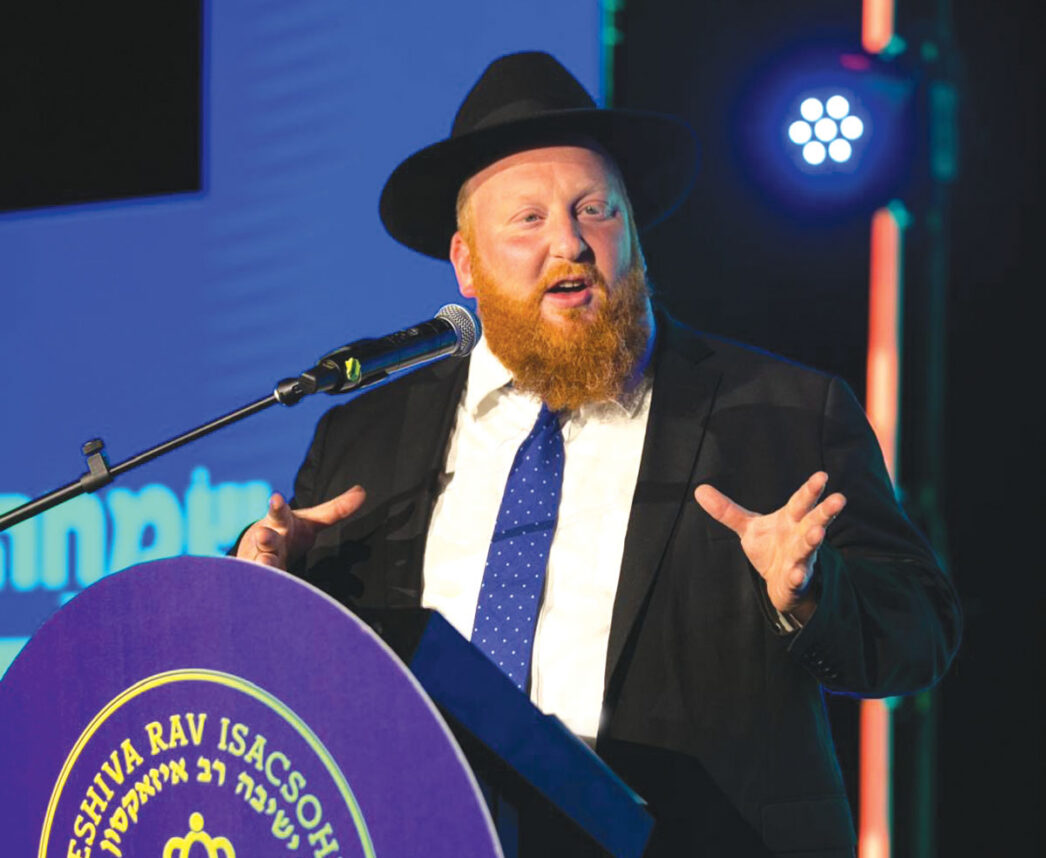

I could tell he had no idea who I was. I’m sure someone had whispered to him at some point my name and what I did, but that was it. He was interviewing me for the Chabad Telethon, not for his famous global show on CNN.
Within a few seconds, he sized me up and began using disarming phrases such as “tell me about,” or “how did you get connected” or “what do you think [of this or that].”
He had never met me before, had no notes in front of him, and yet was still able to improvise a breezy conversation with meaningful moments.
You can call Larry King, who passed away on Saturday at 87, one of the world’s great interviewers, and he certainly was.
But I also call him one of the world’s great schmoozers. Interviewer was too formal a title. King was more of an improviser. Quick on his feet, charming, open-minded, inquisitive—in other words, a classic schmoozer.
Interviewer was too formal a title. King was more of an improviser. Quick on his feet, charming, open-minded, inquisitive—in other words, a classic schmoozer.
“The less I know, the better,” he once shared, according to NPR. “Now that sounds strange to people. Like, if you wrote a book, I wouldn’t read the book before I interviewed you, because I would then know too much about the book. And I’m in the same boat as the audience; they haven’t read the book.”
In a tribute in The Hollywood Reporter (THR), Mike Barnes wrote that “The Peabody Award winner often boasted that he prepared as little as possible for each show, and King kept his questions short and to the point.”
“I don’t show off. I don’t use the word ‘I,’ it’s irrelevant in an interview. It’s only done to say what you’re thinking…I’m there to learn,” he said in another interview quoted in THR.
Connect all of these dots. King didn’t take himself too seriously. He wanted his guests to do most of the talking. He put himself in the shoes of his audience. He was a great listener. And, above all, he was there to learn.
I saw it with my own eyes: Even though he didn’t know me when we met at the Chabad Telethon, he seemed eager to learn from me.
Considering the viciously divisive times we’re living in, that schmoozy conversational style is not a bad legacy.