
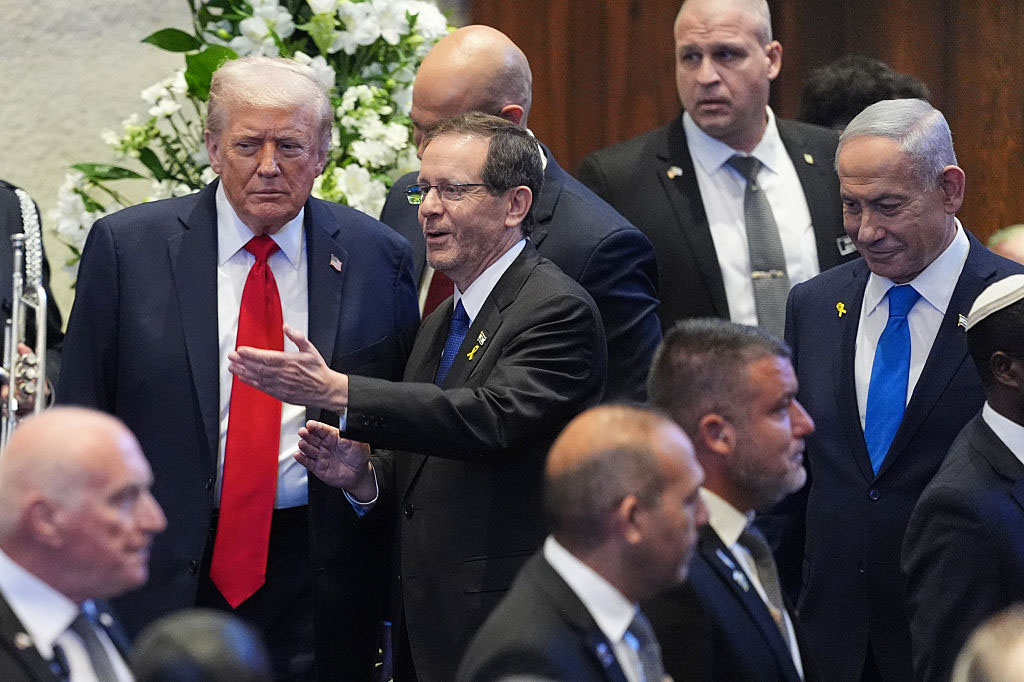
The hostages are home, at least those who are still alive. For that alone, we should be profoundly grateful. But every day that passes makes it more clear that the Gaza War is far from over. The original plan for this week’s column was to discuss the post-war challenges and opportunities in Israel, throughout the Middle East and for American and other Diaspora Jews around the world. But that was back when we thought the war was ending.
That is certainly not the case, as the steady stream of broken promises, angry accusations and continuing violence demonstrates on a daily basis. So even as we consider the possible reconstruction of Gaza, the prospects for Israel’s improved relationships with the Arab world and the difficult road ahead in the fight against antisemitism, we must also recognize that no meaningful progress can be made on any of these fronts as long as the death and destruction in Gaza continues. The lofty proclamations that marked President Trump’s speech to the Knesset and his summit with world leaders in Sharm el-Sheikh already ring hollow, and while Trump deserves immense credit for the release of the surviving hostages, there’s little question that he and most observers dramatically overestimated how much progress had been made to a broader peace.
Their hunger — and our hunger — for closure is understandable. After two years in captivity, the hostages’ release was justifiable cause for unrestrained joy and raucous celebration. But the festivities obscured the multitude of unresolved challenges. Even during Trump’s remarkable visit to Israel, it was already evident that there was critically important unfinished business still to be addressed. While progress is not the enemy of perfection, the lack of clarity on the questions of precisely when and how Hamas would be disarmed was an early warning sign that the next steps forward would be exceedingly difficult.
Henry Kissinger, who recognized the intricacies of the region better than any other international observer, was philosophical about what could realistically be accomplished there. “The key to understanding the Middle East,” he said, “is understanding and accepting that every solution is merely the admission ticket to the next problem.”
Even the most jaded and world-weary veterans of Middle Eastern politics may have underestimated how difficult the path forward would be. Within days of Trump’s departure, Hamas terrorists were already engaged in deadly firefights and ruthless executions of their opponents within Gaza. With blinding speed, they have already reestablished themselves as the rulers of the areas that the Israeli military has vacated, which vastly complicates any reconstruction efforts or movement toward a legitimate multinational security force. Not surprisingly, Hamas’ attacks on their Palestinian rivals were followed by strikes on Israeli troops, requiring a wide-ranging IDF response.
Until now, Benjamin Netanyahu has been forced to balance between the Israeli population’s hunger for the hostages’ return home against his own determination to continue fighting the war to permanently eliminate the threat of Hamas. Now the hostages are back, giving him much greater political capital should he decide to send troops back into the vacated areas of Gaza. It’s impossible to see Arab countries sending their troops into such a volatile situation and even more unlikely that meaningful rebuilding or economic growth opportunities can proceed while bullets are still flying.
The prospect for a normalization in Israeli-Saudi relations — which was originally the provocation for the Oct. 7 attacks — still represents a potentially historic breakthrough. But now Saudi Arabia is one of several Gulf states warning that failure to crack down on Hamas will lead to a return to previous levels of violence. Trump might be talking about the war in the past tense, but barring some type of rapid intervention in Gaza, Saudi Prime Minister Mohammed bin Salman’s visit to the White House next month could be much less pleasant than previously anticipated. It’s no surprise that Vice President JD Vance was rushed to the Middle East this week to try to keep the deteriorating situation from spiraling out of control.
Make no mistake, this war is still a long, long way from its conclusion.
Dan Schnur is the U.S. Politics Editor for the Jewish Journal. He teaches courses in politics, communications, and leadership at UC Berkeley, USC and Pepperdine. He hosts the monthly webinar “The Dan Schnur Political Report” for the Los Angeles World Affairs Council & Town Hall. Follow Dan’s work at www.danschnurpolitics.com.