Growing up in New Jersey, the only kind of fig I was aware of was the dried fig, which arrived in a nested clump in a round plastic package. The figs’ sweet taste were negated by the gritty innards that ground disturbingly against my teeth when I chewed and the weird feeling they left in my mouth. It was only in California that I started giving a flying fig about figs.
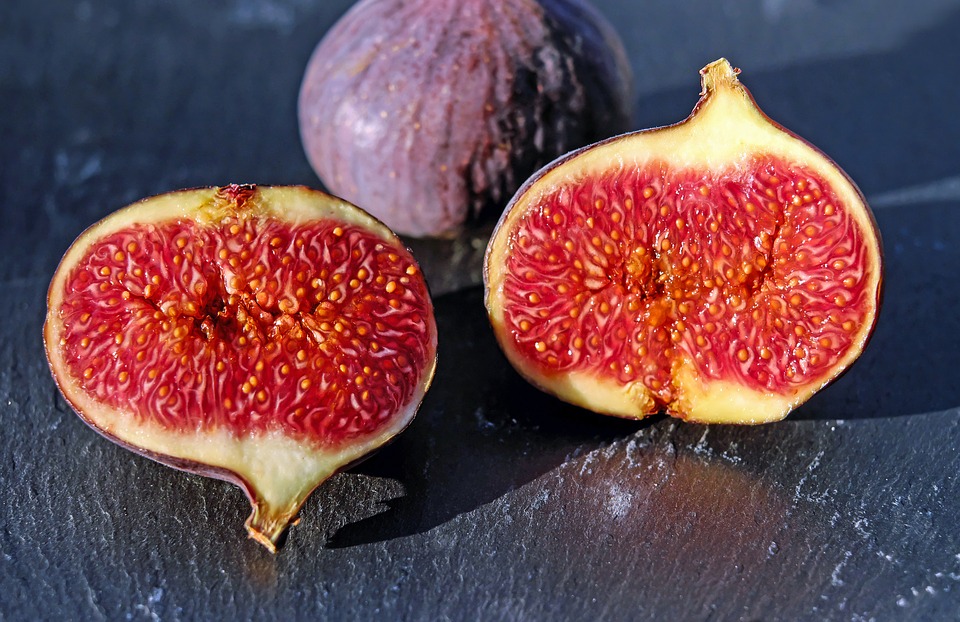
Fresh figs are delightful in salads, with any kind of cheese and balsamic vinegar; with yogurt; or as a sweet, fleshy ingredient in fruit smoothies. And they’re outstanding plain. Grip them by the stems to eat them and, as one comedy writer pointed out, they’re like “turkey legs for squirrel kings.”
This year, though, was the first time I sensed that figs could be powerful — physically and spiritually. Figs are rich in minerals including potassium, which can lower blood pressure; calcium, which aids in bone density; magnesium, iron, copper and vitamin A. A great source of soluble fiber, they are good for your intestines and act as a natural laxative. (OK, so don’t eat too many.)
Figs are Jewishly significant, as one of the seven agricultural products — two grains and five fruits — listed in the Bible as being special. Only the first fruits of these seven could be brought as offerings in the Temple. The others are wheat, barley, grapes, pomegranates, olive oil and dates (literally, “honey”). Although Canaan is known as the land of milk and honey, Deuteronomy 8:8’s list of Canaan’s plentiful products leaves out the dairy, perhaps as a precursor to current times, when many Jews are lactose intolerant, or out of respect to the marketing department, working on a new all-dairy holiday called “Shavuot.”
Figs remind us of this time after the wandering and the manna, when we landed in spiritual Oz and everything turned to polychrome: diverse, flavorful, colorful, tasty new crops to eat.
“One might extrapolate that if you persistently give a fig about what happens in the world, that’s perseverance.”
The kabbalists explain that each of these fruits corresponds to one of the sefirot, attributes that make up the Divine presence. Figs are netzach, perseverance, or eternity. One might extrapolate that if you persistently give a fig about what happens in the world, that’s perseverance. Interestingly, a horticultural support for this kabbalistic association is a type of tree called a “strangler fig,” which starts life as a seed, then wraps its roots around a host tree and “strangles” it. The original tree dies shortly thereafter and the strangler fig thrives. Talk about perseverance.
As fig season hits, I stalk neighborhood fig trees. If only their fruits were in reach and clearly on public property, I could save these poor figs from being crushed on the sidewalk. Surely I know a person with a tree that can keep me in figs during this season of plenty?
Ask on Facebook, and ye shall receive. A friend brought me some figs, which I enjoyed and put on Instagram. Then someone on social media invited me to claim her figs from her husband, who was at home with the kids. So I knocked on the door of a house I’d never visited, talked to the man who answered, met his kids and claimed the figs. I messaged my Instagram buddy to say thanks and she invited me for Shabbat dinner. I deepened my relationship with the family and reconnected with an old friend who happened to be their guest. My online request for figs reconnected me with people in the real world, for a marvelous Shabbat experience and new history to build from and renewed my well of energy for my creative pursuits.
You still may not give a fig about figs. But if you learn anything from this story, learn that speaking needs into the world allows people to volunteer items that may help. My initial request was about figs. But those bulbous little fruits also connected me back to community. Go figure.
Esther D. Kustanowitz is a Journal contributing writer.