Taking place during Hanukkah, the world-premiere play “Eight Nights” tells the story of a family who occupies an apartment over eight decades, and follows a German-Jewish war refugee haunted by her past. Written by Jennifer Maisel and developed by the Antaeus Theatre Company, it runs Nov. 8 through Dec. 16 at the Kiki & David Gindler Performing Arts Center in Glendale. Visit antaeus.org for more information.
Howard Ashman and Alan Menken’s Broadway musical “Little Shop of Horrors” is at the Pasadena Playhouse through Oct. 20. The African American cast includes “Pose” star Mj Rodriguez, and “Glee’s” Amber Riley voicing carnivorous plant Audrey II. Visit pasadenaplayhouse.org for more information.
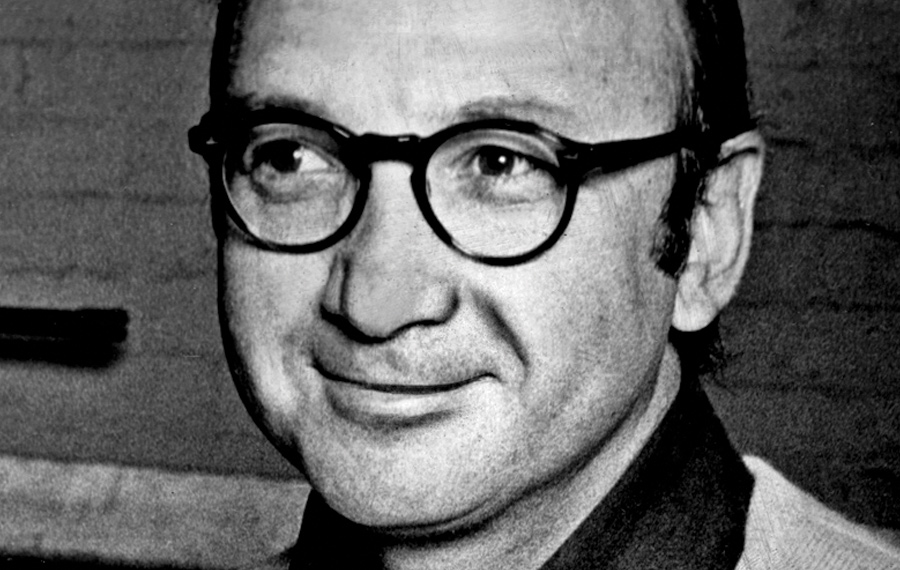
Neil Simon
Set in a Ukrainian village in 1893, Neil Simon’s comedic play “Fools” is about a young tutor who discovers everyone in town has been cursed, rendering them as dumb as doorposts. The musical adaptation of the play will have its world premiere at the Open Fist Theatre Company on Oct. 12, running through Dec. 1. Visit openfist.org for more information.
“Sisters in Law”
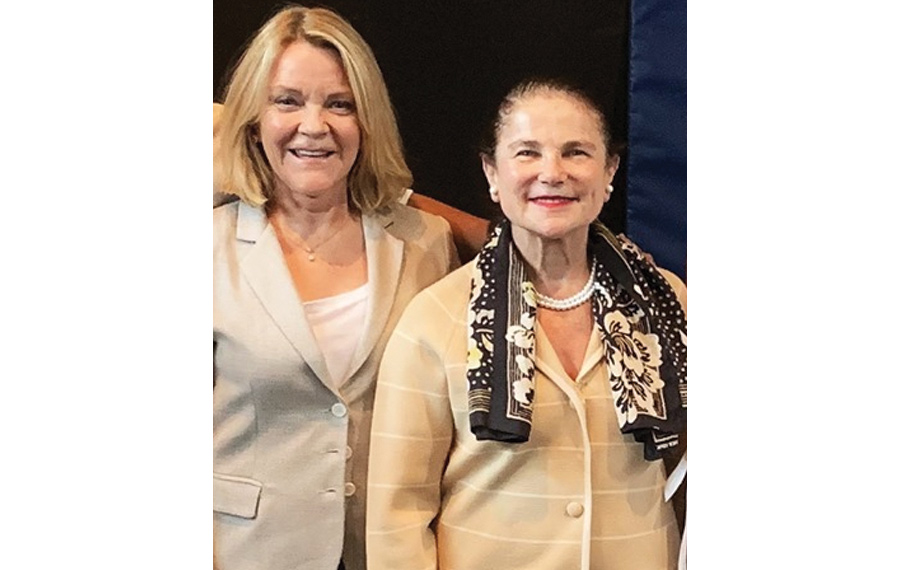
Tovah Feldshuh plays Ruth Bader Ginsburg in the West Coast premiere of “Sisters in Law,” which dramatizes the friendship and conflict between RBG and fellow Supreme Court Justice Sandra Day O’Connor (Stephanie Faracy). Written by Jonathan Shapiro and based on Linda Hirshman’s New York Times bestseller, the play runs through Oct. 13 at Wallis Annenberg Center for the Performing Arts. Visit thewallis.org for more information.
In 1944, photojournalist and humanitarian Ruth Gruber took part in a secret U.S. government mission to rescue nearly 1,000 Jewish refugees from Europe via the troop ship Henry Gibbins, which she documented in her book “Haven.” The Los Angeles Museum of the Holocaust celebrates her life and work in the exhibit “Ruth Gruber: Photojournalist,” running Nov.10 through May 10.
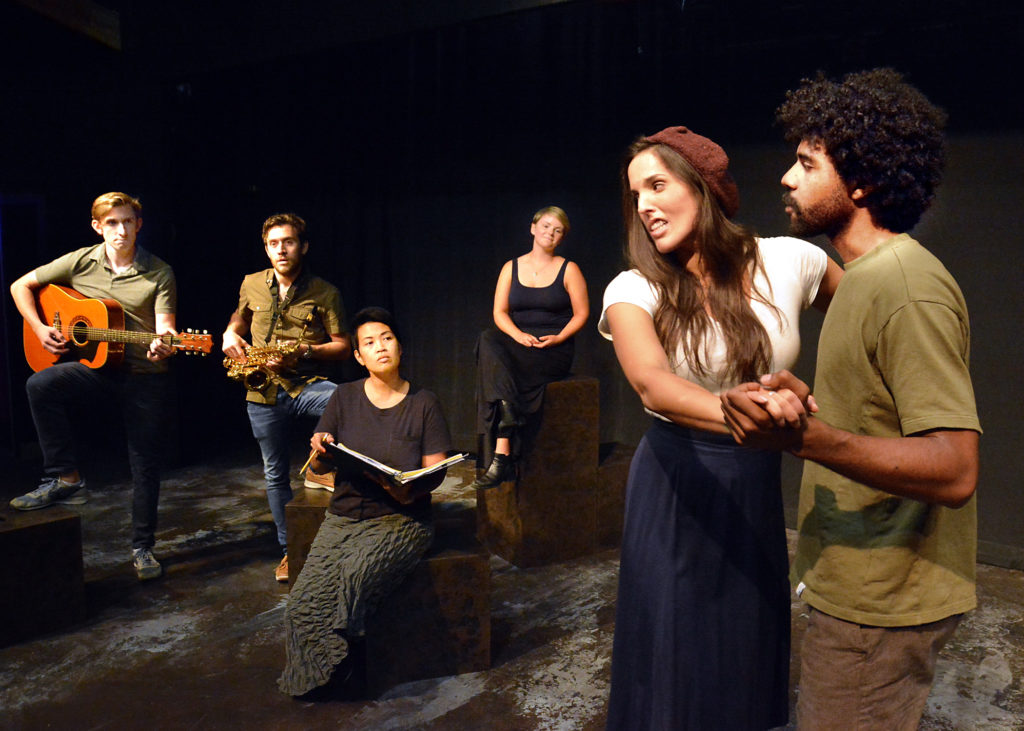
Harrowing Holocaust survivor stories are told within a chilling contemporary prism in playwright Wendy Kout’s “Never Is Now,” a world-premiere production at the Skylight Theatre in Hollywood that gives new context to her 2017 play, “Survivors.”
In the original version, commissioned by the JCC CenterStage Theater in Rochester, N.Y., six actors enact 10 stories based on local Shoah survivors’ video testimonies and interviews with their family members. The play also has been performed for middle-school grades and above.
In “Never Is Now,” a diverse cast, including a Filipina, an African American and a deaf woman with partial facial paralysis, play actors, a playwright and a director rehearsing “Survivors.” They break character to comment on the stories they’re telling as they realize there are unsettling parallels between those stories and their own lives in America today.
“There’s no comparing the Holocaust — the systematic extermination of a people — to what’s happening in our country now and the threat to our democracy now,” Kout told the Journal. “But we are comparing those connections to fascism. This was an opportunity for me to continue to tell the story of the Holocaust, which I’m on a mission to do, but do it through a modern prism. To do this work is so meaningful to all of us right now, to encourage the conversation, and certainly, action.”
Although she does not have Holocaust survivors in her Russian-Jewish family, Kout grew up with many friends who did, “and that made a particular impact on me,” she said. Living in the Bay Area, she experienced anti-Semitism at school, returning to class after the High Holy Days to find “kike” written on her locker and other anti-Semitic notes. School officials were indifferent, but her mother acted swiftly by moving the family to Sherman Oaks, where Kout was elected president of her class at Milken Middle School. Kout currently lives in Santa Barbara with her husband, a writer she calls “my bashert.”
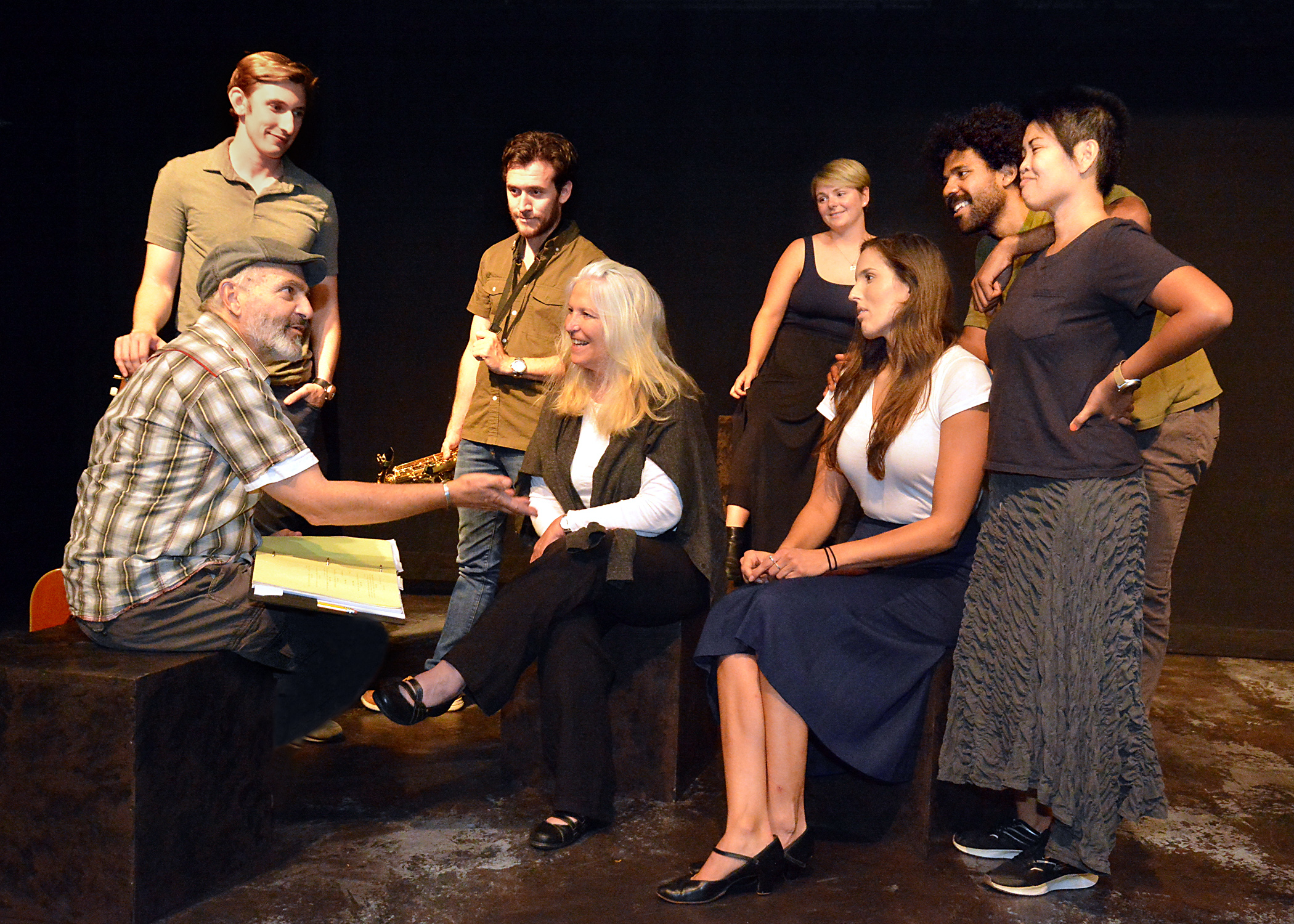
Director Tony Abatemarco and playwright Wendy Kout (seated, left) with cast members Michael Kaczkowski, Joey Millin, Eliza Blair, Sarah Tubert, Adam Foster Ballard, Evie Abat. Photo by Ed Krieger
Born in Chicago, Kout was raised in a Reform Jewish home. “I was told that I didn’t need to believe in God, that what was important [was] that I be a good person and I do good acts, and that’s what being a good Jew is,” she said. Her family often moved before ultimately landing in Los Angeles. Her parents always joined a synagogue and became active members wherever they lived.
“They’d take me to Friday night services and ask me what I learned from the rabbi,” she said. “On those Friday night drives, I was beginning to understand themes in sermons and storytelling.” She wanted to tell her own stories early on, and her parents and older brother encouraged her creativity, as did her teachers.
“When I was a child, I used to create little plays in our backyard. We had a yard full of reeds and I remember doing a babyMoses play,” she said. Years later, Kout went to UCLA, did graduate work at USC in writing and literature, and found her way into television, writing for “Mork & Mindy” and “9 to 5.”
Kout feels strongly about “bringing Jewish themes, characters, to life” on the big screen, little screen and stage. She wrote and produced the sitcom “Anything but Love,” with Richard Lewis as the Jewish romantic lead; wrote the movie “Dorfman in Love,” starring Elliott Gould as a widowed Jewish father; and wrote the play “We Are the Levinsons.” “It’s drawn from my parents’ last chapter,” she said. Now, she’s immersed in theater and loves it. “The playwright is respected,” she said. “It’s quite a gift.”
Kout hopes both “Survivors” and “Never Is Now” — the title of which is taken from the line “Never forget! Never again! Never is now!” in the script — will continue to be produced in theaters and as a teaching tool in schools and elsewhere, such as the Museum of Tolerance. “For me, it’s about how do we get to the kids, because that’s the next generation. These are themes that are so important for kids to hear about,” she said, adding that following selected matinee performances, there will be discussions on various topics. There also are plans to have a sign language interpreter at two performances.
Kout believes audience members will get different things from the play. “For some people, it can be an education about the chronology of the Holocaust. For others, it can be a warning about what is happening in our present. For others, it could ignite activism. What we hope is that it will at least encourage conversation. You begin with conversation, and that can take you in many different places,” she said. “I am ever inspired by our capacity to change: our world, our country and ourselves. ‘Never Is Now’ explores the perilous past through the prism of our perilous present as a warning for our future.”
“Never Is Now” runs Sept. 21-Oct. 27 at the Skylight Theatre. Visit the website for
reservations.
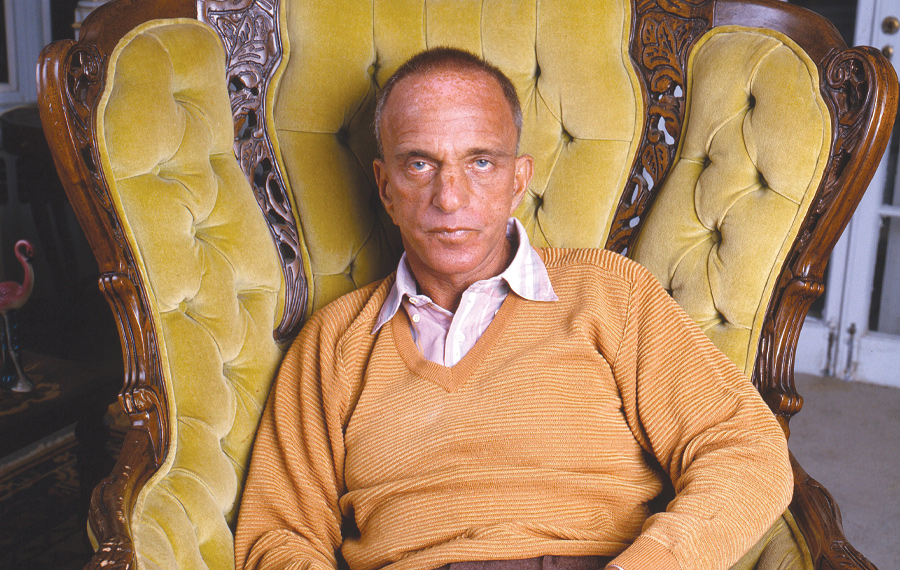
Unlike the many biographical documentaries that celebrate notable individuals’ monumental achievements and contributions to culture or society, “Where’s My Roy Cohn?” has a liar, a cheat and an all-around despicable human being as the subject.
Cohn was a brilliant, ruthless lawyer who began his career witch-hunting Communists — many of them Jews like himself — as Sen. Joseph McCarthy’s chief counsel. He pushed for and obtained the death penalty for spies Julius and Ethel Rosenberg, despite lack of evidence. He crusaded against gays in government in the Army-McCarthy hearings, although he was a closeted homosexual — something he denied until the day he died of AIDS in 1986.
He conspired to get Ronald Reagan into office and keep Geraldine Ferraro out of it. He defended mafiosos including John Gotti and Carmine Galante, and defrauded clients, for which he eventually was disbarred. But most significantly, according to filmmaker Matt Tyrnauer, “Roy Cohn is the creator of Donald Trump.”
As the documentary depicts, Cohn met the young real estate developer in 1973 and became his adviser and mentor, teaching Trump how to hide evidence, destroy paper trails and always strike back with vehemence. Trump took those tenets all the way to the White House. Three decades after Cohn’s death, Cohn has left an indelible mark on U.S. politics. The film’s title is taken from an actual Trump quote.
In 2016, during the presidential election, Tyrnauer was making “54,” his documentary about the infamous New York disco Studio 54, at which Cohn frequently was photographed. Researching further, he was intrigued by the idea of the Cohn-Trump relationship, but never thought Trump would win the election. When it came to pass, he knew he had to tell the story.
“Cohn did something no one has
ever done, which is create a president from beyond the grave.” — Matt Tyrnauer
“Cohn goes from being a very significant footnote in American history to being the Machiavelli of our time,” Tyrnauer told the Journal. “He was not afraid to transgress; break the law in the name of winning at all costs. When it came time to face whatever consequences caught up with him, he was willing to double down and hit back a hundred times harder, create diversions and rat out other people if necessary. He passed his philosophy on to Trump and gave him the methodology. Every day, you see Trump doing something that Cohn might have said or done 50 or 60 years ago. Cohn did something no one has ever done, which is create a president from beyond the grave.”
Tyrnauer knew he needed to make the movie quickly in order for a release during the 2020 election campaign process. “I believe that producing this film is a public service,” he said. “It’s not a movie about Donald Trump. But in another sense, every moment of it is about Donald Trump.” That said, he also wanted to explore other aspects of Cohn’s life and career, and emphasize the reach of Cohn’s influence “as the connector between the legitimate and illegitimate power structures of the United States — a less well-known story, but urgent to tell.”
Tyrnauer sought out rare archival footage, including obscure talk-show interviews featuring Cohn, and conducted interviews with journalists, historians and Cohn’s cousins. (Trump declined to talk.) He delves into Cohn’s family and upbringing to discover why an insecure, gay Jewish boy became so ashamed of his religion and sexual orientation that he targeted others like him. In the film, Cohn’s cousin calls Cohn “the definition of the self-hating Jew.”
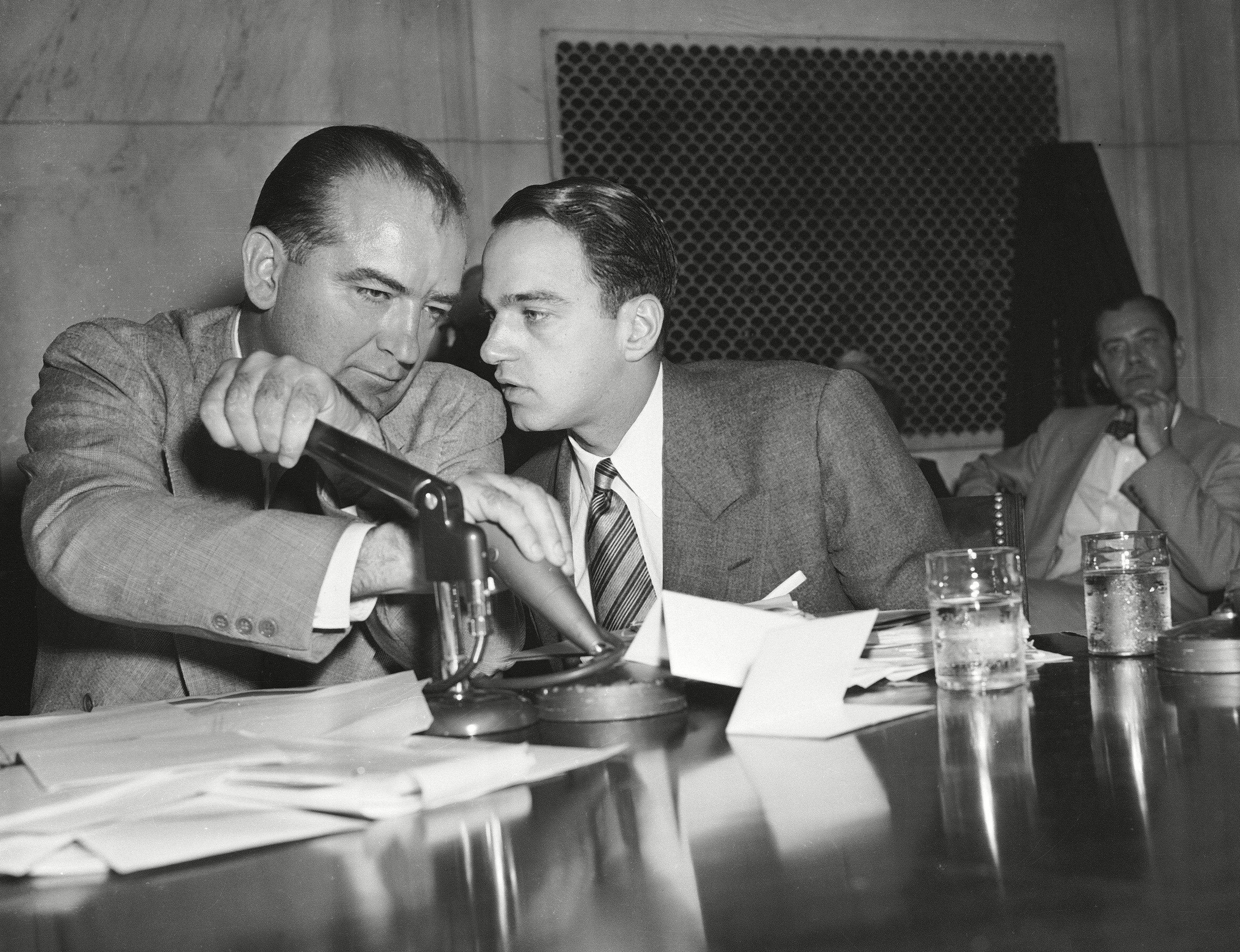
Senator Joseph McCarthy covers the microphones with his hands while having a whispered discussion with his chief counsel Roy Cohn during a committee hearing, in Washington. Photo by Sony Pictures Classics; AP/REX/Shutterstock
“At the time, Judaism and Bolshevism were interchangeable, certainly in anti-Semitic circles,” Tyrnauer said. “Certain members of the Jewish community would compensate and say, ‘Not me. I’m not like those other Jews. I’ll show you how anti-Communist I am.’ Certainly, his role in the Rosenberg case raises a lot of questions. He denied the very essence of who he was, and it was not a victimless crime. He was a dangerous hypocrite, and the film does everything it can to call that out.”
Tyrnauer was raised in Los Angeles in a non-observant family of Ashkenazic Jews but considers himself an atheist. “My stepfather, who wasn’t Jewish and who I was very close with, was an atheist. I took after him,” he said. He also followed his stepfather, a producer of TV shows including “Columbo” and “The Virginian,” into the film world.
Aside from “54,” Tyrnauer’s previous documentaries include “Valentino: The Last Emperor,” “Citizen Jane: Battle for the City” and “Scotty and the Secret History of Hollywood.” Also a journalist, he was on the masthead for 25 years at Vanity Fair, where he wrote an article headlined “Once Upon a Time in Beverly Hills,” which he’s now adapting for a scripted feature with Amazon. He’s also working on a narrative adaptation of “Citizen Jane” and “Home,” an architecture-themed docuseries for Apple+ TV.
As for his current documentary, Tyrnauer imagines his subject would be flattered. “I think he might like it because in his playbook, there was no such thing as bad publicity,” he said. He hopes audiences see Cohn for what he was. “This film debunks anything positive about Cohn that a casual observer might have concluded or misconstrued. I also want audiences to understand what a demagogue is, and how very vulnerable our society is to a clever, sociopathic narcissist who achieves the position of extraordinary power. We all have to be vigilant, educated, aware and ready to act. I hope this film serves as a primer to the public and awakens the fires of recognition in as many people as possible.”
“Where’s My Roy Cohn?” opens Sept. 20 in theaters.
Movie fans know Stanley Kubrick as the acclaimed director of “Dr. Strangelove,” “2001: A Space Odyssey,” “A Clockwork Orange” and “The Shining.” They may be less aware that a promising and pivotal five-year run as a photographer for the pictorial magazine “Look” preceded Kubrick’s illustrious film career.
Kubrick was 13 when his father bought him a Graflex camera, and three years later, the teen sold his first photo to “Look.” Over the next five years, Kubrick went from freelancer to apprentice to staff photographer, producing remarkable photo essays about the lives of New Yorkers, famous and unknown. An exhibition of these images titled “Through a Different Lens: Stanley Kubrick Photographs,” originally displayed at the Museum of the City of New York (MCNY) from April through October 2018, will open at the Skirball Cultural Center on Oct. 17.
Skirball curator Laura Mart was unaware of Kubrick’s photographic career before she learned of the MCNY exhibit. She instantly was interested. “One of the things we’re always looking for at the Skirball are stories of important Americans of Jewish heritage who’ve had pivotal roles in changing American culture,” Mart told the Journal.
Born in the Bronx in 1928, Kubrick was the grandson of Ashkenazi Jewish immigrants, and parents who were not religious or practicing Jews. “But for the focus of our exhibition and why we were interested in him, it was the weight of his contribution to American culture and filmmaking,” Mart said. “Stanley Kubrick is arguably one of the most important filmmakers of the 20th century, and although he wasn’t a particularly observant Jew, he was of Jewish ancestry.”
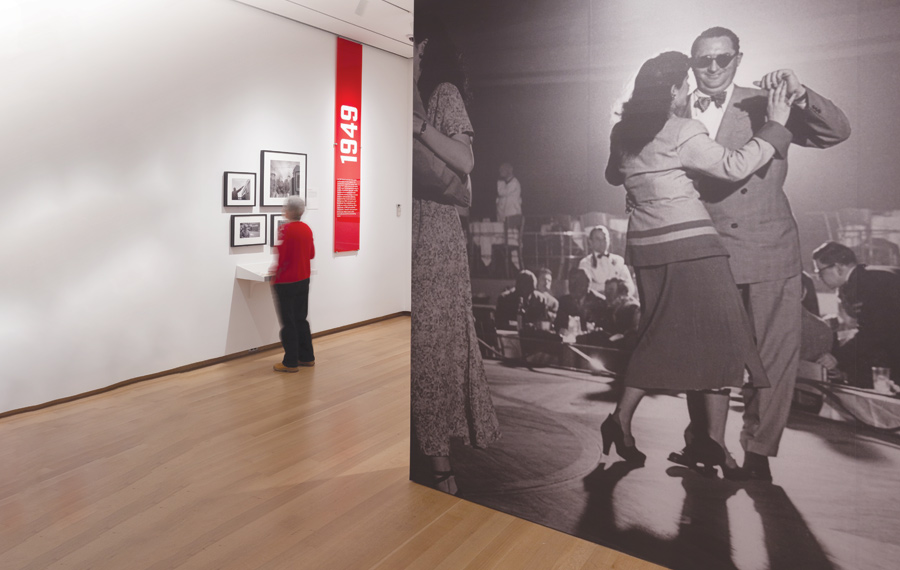
Presented chronologically, the exhibition shows each “Look” magazine layout with both published images and outtakes from the shoot. It begins with Kubrick’s first sale in 1945, depicting a dejected newspaper salesman on the day Franklin D. Roosevelt died, and ends in 1950, when he shot luminaries including conductor-composer Leonard Bernstein and boxer Rocky Graziano. In between, Kubrick’s subjects included subway riders, circus performers, showgirls and a dentist’s patients. He also photographed sporting events and street scenes.
“One of the things that interested me from a curatorial perspective was the way Kubrick looked at human interaction,” Mart said. “He photographed celebrities, but his focus was more on the human connection between everyday people that he turned into almost cinematic stories. We found it to be tremendously interesting from a perspective of looking at his formative years and how he developed his eye as a filmmaker. There are some images in the exhibition that have a very clear connection to his early film work.”
Sean Corcoran, co-curator of the original MCNY exhibition, concurred. “You see the development of Kubrick’s talent over five years that provides a window into the work he’s known for later on,” Corcoran said. “He learned lighting techniques, framing, composition — the skills of seeing. He also learned the art of observation, seeing people and knowing how to record them on film, capture human interactions and how people communicate without words. He also learned how to work within a system and how to accomplish goals — something you have to learn in order to make a film.”
Corcoran explained the MCNY acquired the “Look” archives — approximately 300,000 pictures — 70 years ago, but most of the material was in negative and contact-sheet form. Once the museum staff began digitizing the images, it realized that roughly 15,000 photos were Kubrick’s. The curators then selected representative examples, “assignments that exemplified important moments in his development as a photographer and those that would have the most public interest while representing the larger body of work,” Corcoran said. Of the nearly 150 images, Corcoran is partial to an unpublished shoeshine-boy photo essay, which he calls “a remarkable slice of life.”
“[Kubrick] photographed celebrities, but his focus was more on the human connection between
everyday people that he turned into almost
cinematic stories.”
— Laura Mart
The display also includes Kubrick’s first film, the 1951 short “Day of the Fight,” which was drawn directly from his assignment on boxer Walter Cartier two years before. The photos served as his storyboard. A clip from the 1955 film “Killer’s Kiss” also is on view, and a companion book featuring every assignment on display plus additional images will be available. “It’s meant to give a more in-depth overview of his time at the magazine,” Corcoran, the book’s co-author, said.
He imagines Kubrick, who died in 1999, would like the exhibition. “I’ve heard interviews made in the 1960s where Kubrick reflects on the time as a photographer, and he says his years at ‘Look’ were his college education, and if he had gone to university, he never would have become a director,” Corcoran said. “He looked back on those years as formative and instrumental.”
Mart thinks it would “interest [Kubrick] to know that his reputation in pop culture has grown to such a stature that they want to know what his early work was like. I think most people will enjoy these works, which are compositionally beautiful and fascinating, subject-wise, with a beautifully framed film-noir aesthetic. They’re quirky and fun and offbeat,” she said. “People who love photography will love this show.”
“Through a Different Lens: Stanley Kubrick Photographs” runs from Oct. 17-March 8 at the Skirball Cultural Center.
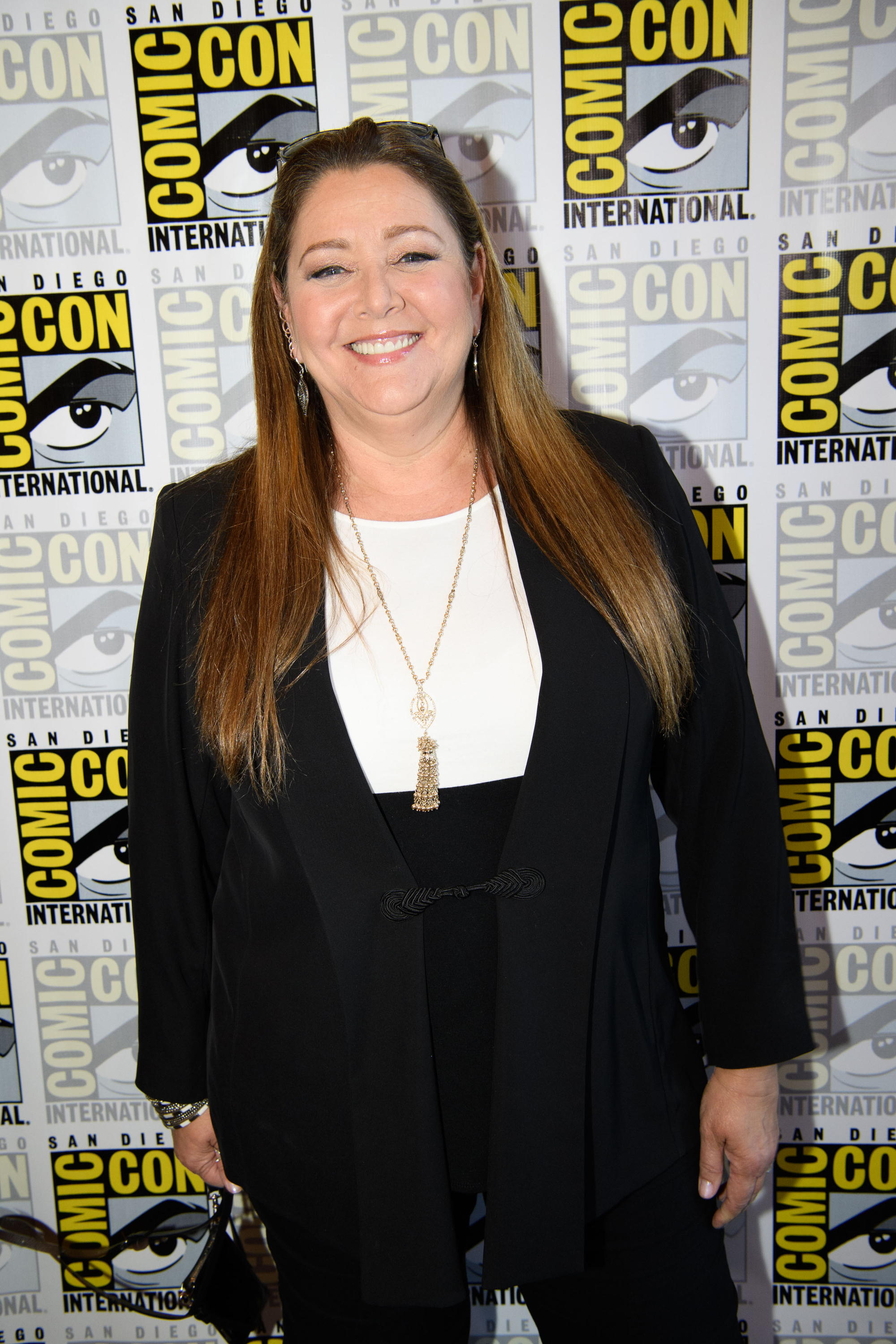
Camryn Manheim has had a very busy summer. In addition to shooting the new ABC series “Stumptown,” she sent her son to college, remodeled her mother’s kitchen and was just elected secretary-treasurer of SAG-AFTRA, the actors union.
“I think my mother is more proud that I’m running for union office than any acting I’ve done,” Manheim told the Journal in an interview before the election, and that says a lot. Her long and impressive list of credits include “Elvis,” “Waco,” “Ghost Whisperer,” “The L Word,” “Person of Interest” and “The Practice,” which earned her Emmy and Golden Globe awards for playing attorney Ellenor Frutt. She portrayed the same character on three other series: “Ally McBeal,” “Boston Public” and “Gideon’s Crossing.”
Her new role in “Stumptown” casts her as Lt. Cosgrove, a Portland police officer who has a challenging relationship with rule-breaking, PTSD-afflicted private investigator Dex Parios (Cobie Smulders), who is both an asset and a thorn in her side.
“She’s a sassy, smart, capable lieutenant and good at what she does. She’s an honest and honorable person,” Manheim said. “She sees Dex as a threat.”
Manheim applauds the series for having strong female characters and giving them more life than a procedural normally allows. “We never get to know their story. We don’t get to see their flaws. Here, we’re going to see what makes them tick,” she said. She described the show’s setting as “a very gritty and dark world, but it’s funny at the same time — and we need that. In so many of these procedurals, the humor and the pathos is not evident.”
Manheim, whose family owns property along the Columbia River outside Portland, has been to Portland many times. “I love the town, but there’s a very dark underbelly there, including neo-Nazi white supremacists, contention between different groups,” she said. “I hope our show will tap into those issues.”
Manheim obtained her master’s in drama from NYU and regularly has worked in theater, film and TV since the early 1990s. When she was asked to play a part in a summer camp production of “The Lion, the Witch and the Wardrobe,” “everybody stood up and clapped for me and I felt like the entire camp was now my friend,” she said. “Theater found me. It was bashert.”
The daughter of educators, Manheim was born in New Jersey but the family moved often as her math-professor father secured new positions. They lived in Michigan and Illinois before settling in Long Beach when she was in sixth grade. Her parents were liberal, cultural Jews, social activists who donated to the ACLU and Southern Poverty Law Center. She happily follows that path. “Being an actor gives you a platform to try to effect change,” she said. “Being involved in social justice is the most amazing byproduct of what I do.”
Camryn Manheim.(ABC/Image Group LA) CAMRYN MANHEIM
Of German and Polish Jewish heritage, Manheim recently went to Poland, seeking her grandmother’s birth certificate as proof her family has a right to claim land in Israel that her great-grandfather purchased. She didn’t find it, but she did discover she had two great-aunts who were murdered at Auschwitz.
She visited Israel, and it was there she changed her name from Debra to Camryn during a multi-country, post-college graduation trip with her sister. After trying on a different name in each place, practicing signatures, she was convinced she heard someone whispering “Camryn” in her ear, validating the choice. “Camryn was born in a hotel in Tel Aviv,” she said.
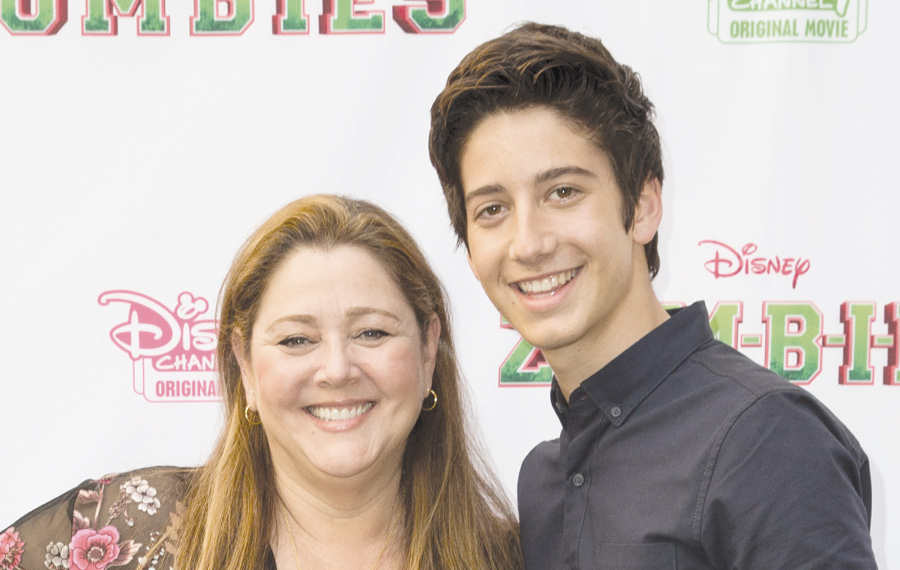
She is the mother of actor Milo Manheim (“Z-O-M-B-I-E-S,” “American Housewife”), who was the runner-up on “Dancing With the Stars” last season. She beamed with pride watching him perform, and although she thought “he was robbed, he got as much as he could out of that experience. He was remarkable from start to finish and whether you go home with the trophy or not has no bearing on how incredible it was.”
As someone who feels strongly connected to her Jewish heritage, “It was important to me that [Milo] was educated in that world,” Manheim said, noting he had a non-traditional bar mitzvah at the progressive secular Sholem Community five years ago. “The topic of his bar mitzvah was why he felt Jewish, and it was beautiful, soulful and funny. He brought in history and humor. It’s one of a million reasons why he’s a mensch,” she said, adding, “I don’t know if there’s a secret to raising a mensch, but I feel there are things I did that put him on a positive road. I think it’s very important for parents to get involved with the parents of kids who are your kid’s age, and create a community of like-minded parents with the same values and morals.”
In addition to “Stumptown,” Manheim will appear in the dark comedy “Killing Eleanor” in a role she describes as “an ethereal modern-day angel,” and in the anthology series “Dolly Parton’s Heartstrings,” playing a midwife in a story based on Parton’s song “Down From Dover.” She had a bestseller with her book “Wake Up, I’m Fat” in 1999, based on her one-woman show of five years earlier, but isn’t sure she’ll write another book.
“Writing is so isolated, and I’m a people person. But I’m really glad I wrote it. If I do write a book, it might be based on the lectures I give to NYU graduate students,” she said. “Every year, I give a master class on how to get along in the real world and how to make the times between [roles] matter by doing service. It’s really meaningful to me to prevent young actors from going into a really dark place because the industry is so difficult.”
Manheim is proud of her accomplish-ments, “but the thing that stands out to me is that I’ve been able to use the work that I’ve done for social change and use my voice in arenas that would have been otherwise unheard, and give a voice to people who don’t have one.”
She said she is happiest “when I’m being the Gertrude Stein of the West Coast. My favorite thing to do is have actors and singers and songwriters at my house. I’d love to work with my son at some point, but who wants to work with their mom when they’re first starting out?”
Manheim feels fortunate to have led “one of the most blessed lives a person can have. Even though I have goals, I don’t want to wish for too much more than what I have. I’d feel selfish because it’s been such an amazing journey for me. And now, I’m on an exciting show that I’m so proud of. My life is full. I count my blessings every day.”
Last season, “The Marvelous Mrs. Maisel” took us to the Catskills. In Season 3, we’re going to Miami and beyond as comic Midge (Rachel Brosnahan) and her manager, Susie
(Alex Borstein), hit the road on a comedy tour. Returning on Dec. 6, the Amazon Prime series, which won eight Emmys last year, will vie for 20 more this time around. Tune in Sept. 22 on Fox to see if they — and other MOTS, including Henry Winkler, Eugene Levy, Julia Louis-Dreyfus, Sacha Baron Cohen and Rachel Bloom — take home
Emmy gold.
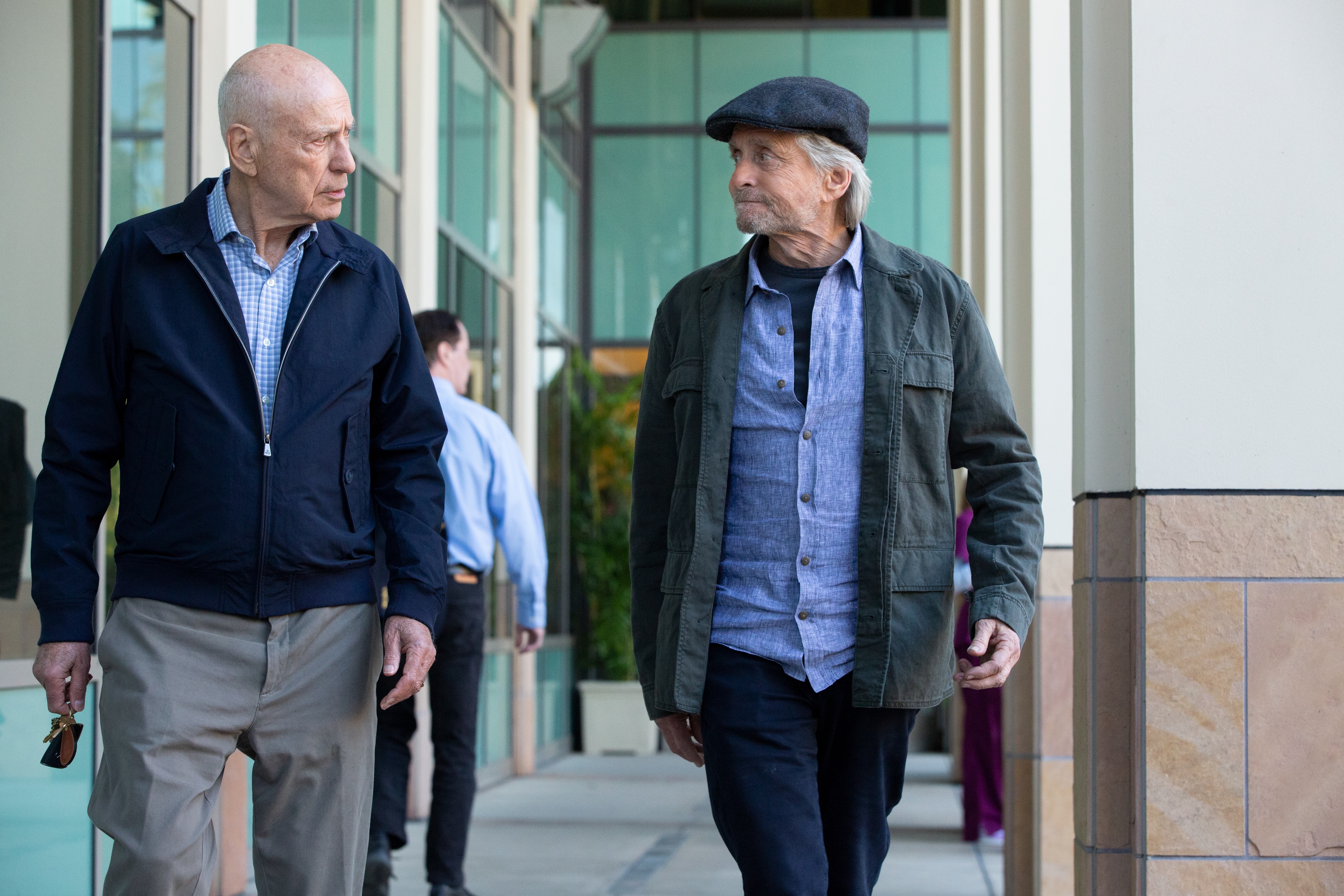
Aging may be a pain in the tuchis, but it’s funny and touching as played by Michael Douglas and Alan Arkin as Sandy Kominsky and Norman Newlander in “The Kominsky Method.” The Emmy-nominated stars of Chuck Lorre’s hit comedy return to Netflix on Oct. 25 for an eight-episode second season. Jane Seymour comes aboard as Norman’s old flame, and Paul Reiser — whose “Mad About You” reboot is coming to Spectrum Nov. 20 — plays a love interest for Sandy’s daughter.
Alan Arkin and Michael Douglas in “The Kominsky Method.” Photo by Michael Yarish/Netflix
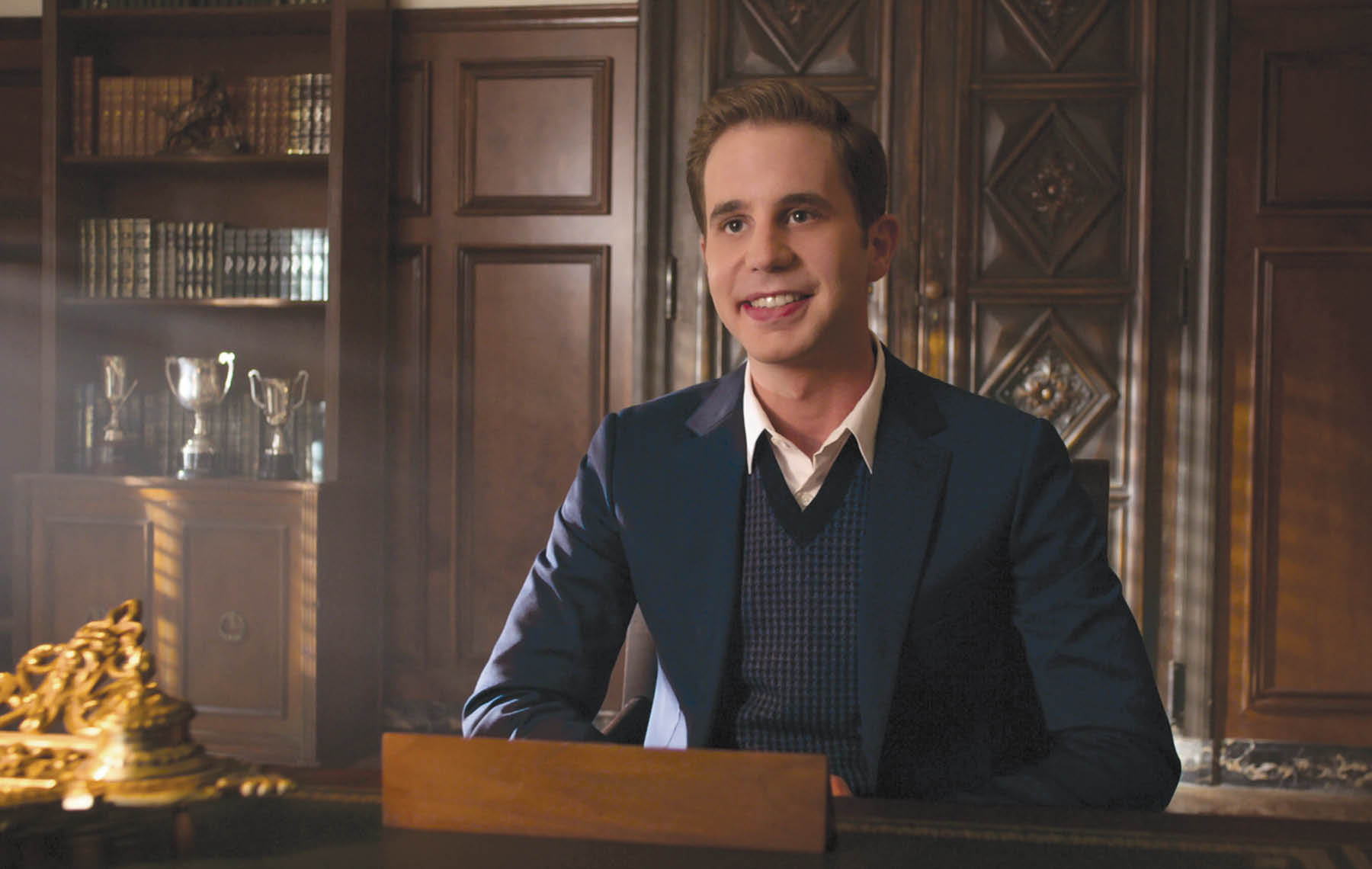
A Santa Barbara high school student Payton Hobart (Ben Platt) intends to be president one day, and will do anything to get to the White House. But for now, he’s practicing his campaign strategies by running for student-body president in the dark comedy “The Politician.” Premiering Sept. 27 on Netflix, the series also stars Gwyneth Paltrow and Zoey Deutch, with Bette Midler and Judith Light in guest roles.
Ben Platt in “The Politician;” Photo courtesy of Netflix
Among all the superheroes on the CW, Batwoman is unique. She’s not only a lesbian, she’s Jewish. Introduced on episodes of “Supergirl” and “Arrow” and played by gay Australian actress Ruby Rose, she will fly solo on this series, although crossover episodes can be expected. “Batwoman” premieres Oct. 6.
Ruby Rose as Kate Kane/Batwoman Photo: Kimberley French/The CW
When lifelong friends make a nostalgic visit to their old Jewish neighborhood in the Bronx, it becomes an exploration of community past, present and future as they meet some remarkable high-school students in the documentary “The Bronx, USA.” From George Shapiro and Danny Gold (“If You’re Not in the Obit, Eat Breakfast”), the film includes interviews with Robert Klein, Melissa Manchester, Carl Reiner and Rob Reiner. It premieres Oct. 30 on HBO.
The Resistance becomes a full-on rebellion against the Nazi and Japanese regimes in the fourth and final season of Amazon Prime’s alternate-reality drama “The Man in the High Castle.” The 10-episode season premieres Nov. 15.
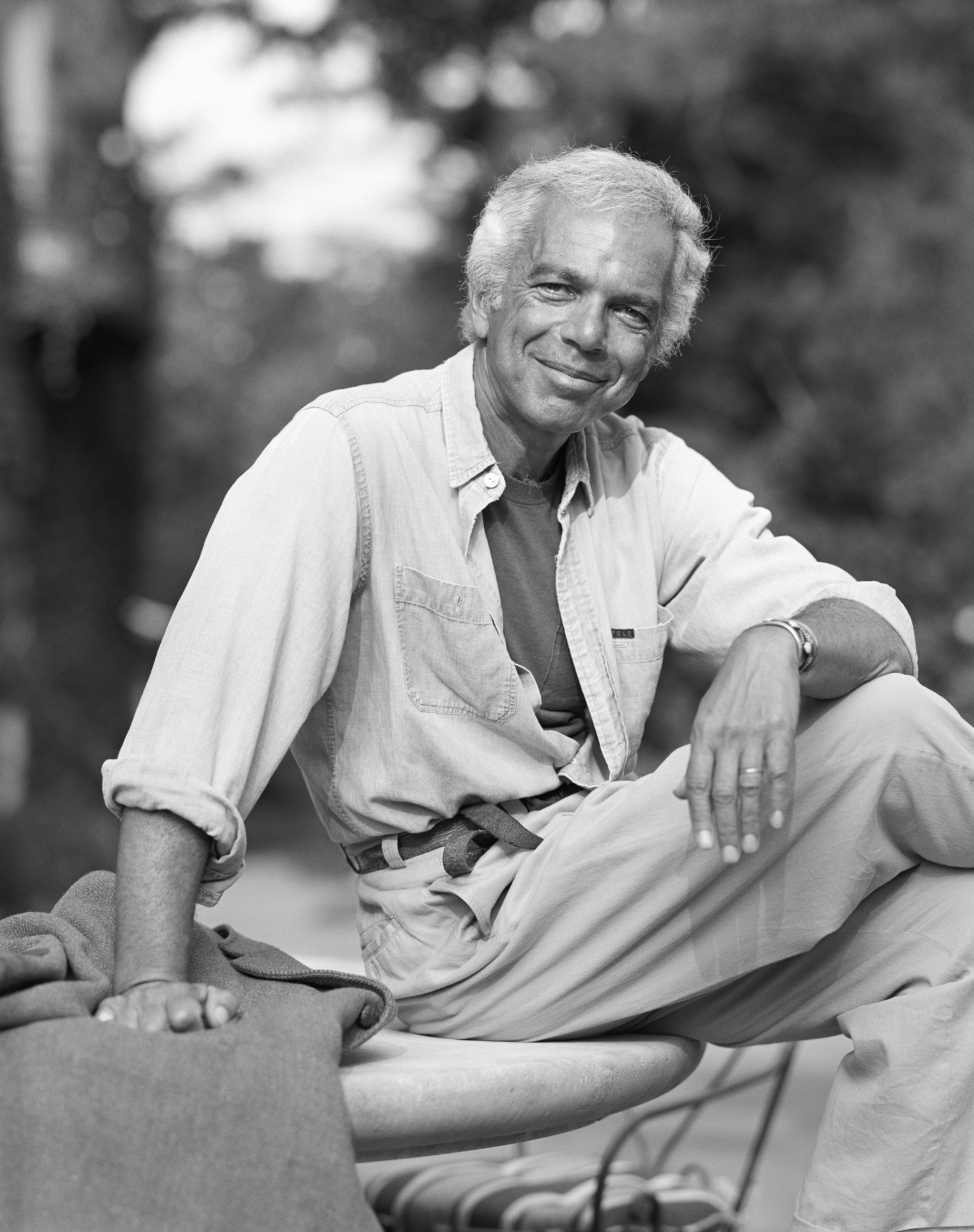
Ralph Lauren in “Very Ralph;” Photo by Paul Lange/HBO
In the HBO documentary “Very Ralph,” premiering Nov. 12, filmmaker Susan Lacy (“Spielberg”) turns her camera’s lens on fashion designer Ralph Lauren, exploring how the ambitious and visionary Ralph Lifshitz from the Bronx became a great American success story.
Paul Rudd plays a dual role in the comedy series “Living With Yourself,” about a man who undergoes a spa treatment to become a new and improved version of himself — then his doppelganger moves in and takes over his life. It premieres Oct. 18 on Netflix.
“Finding Your Roots With Henry Louis Gates, Jr.” returns to PBS for its sixth season of celebrity genealogy investigations on Oct. 8 with an episode that includes a surprise for actress Anjelica Huston: She discovers she has a Jewish ancestor and a connection to Bernie Sanders and Larry David.
Most of the new episodes air beginning in January and next fall, with designers Diane von Furstenberg and Zac Posen, Nobel Prize-winning oncologist Harold Varmus, NPR host Terry Gross, and actors Marc Maron and Jeff Goldblum unearthing their Jewish roots.
Goldblum does a different kind of search in his new documentary series “The World According to Jeff Goldblum,” in which he seeks the science behind and the connections between ordinary things, such as ice cream, balloons and toilet paper. It premieres on the new Disney+ streaming service Nov. 12.
Hailee Steinfeld in “Dickinson;” Courtesy of Apple
Hailee Steinfeld plays the rebellious young poet Emily Dickinson in “Dickinson,” a modern millennial take on coming of age in the 19th century. It will debut on the new Apple+ TV streaming service starting Nov. 1.
Jewish talent shines on camera and behind the scenes this fall in dramas and comedies, modern tales and period pieces, and stories factual and fictional.
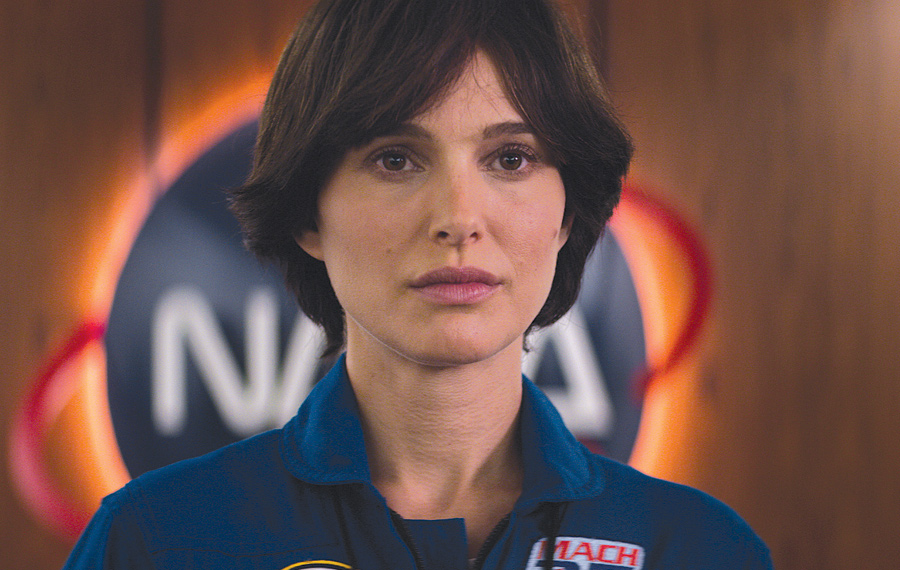
Natalie Portman plays an astronaut who slowly unravels and loses touch with reality after returning from a space mission in “Lucy in the Sky,” also starring Dan Stevens as her husband and Jon Hamm as a fellow astronaut with whom she becomes involved. (Oct. 4)
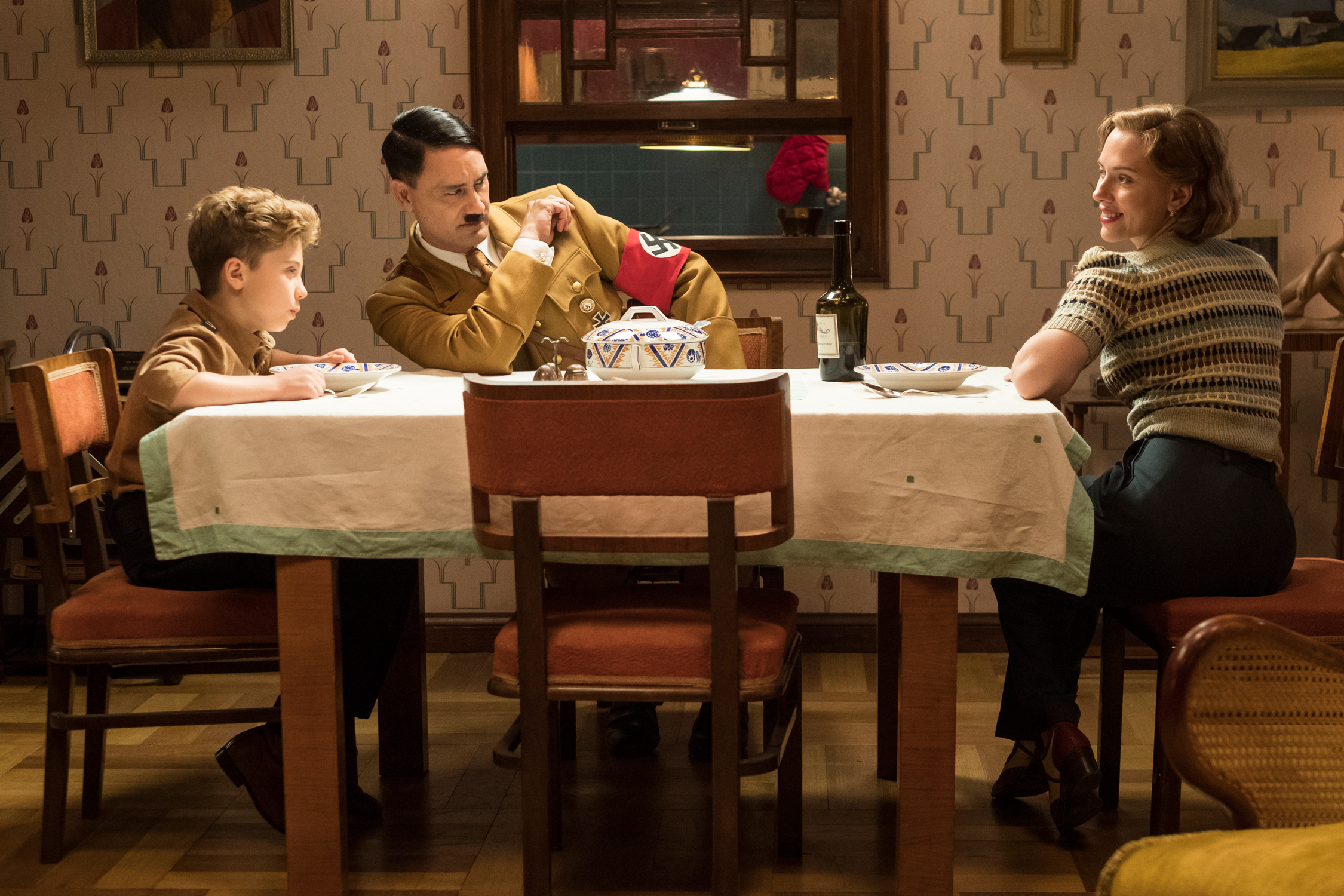
Maori-Jewish director Taika Waititi (“Thor: Ragnarok”) wrote, directed and stars as Adolf Hitler in his latest film, “Jojo Rabbit.” Set in Nazi Germany, it’s about a lonely, bullied boy who conjures up the Führer as his imaginary friend. When he discovers that his mother (Scarlett Johansson) is hiding a Jewish girl in their attic, he begins to question the political propaganda he’s been taught. (Oct. 18)
(From L-R): Jojo (Roman Griffin Davis) has dinner with his imaginary friend Adolf (Writer/Director Taika Waititi), and his mother, Rosie (Scarlet Johansson). Photo by Kimberley French. 2018 Twentieth Century Fox Film Corporation
Johansson also stars (with Adam Driver) in writer-director Noah Baumbach’s “Marriage Story,” about the disintegration and end of a couple’s relationship and the effect it has on their family. (Nov. 6, Netflix Dec. 6)
Cartoonist Charles Addams’ ghoulish clan gets animated in “The Addams Family,” with Bette Midler as Grandma Addams and Nick Kroll voicing Uncle Fester. (Oct. 11)
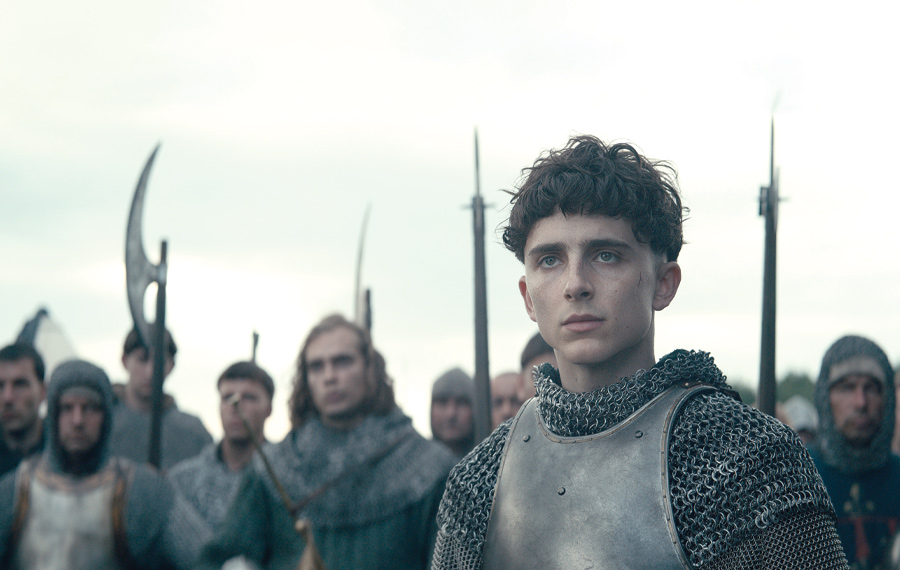
Inspired by Shakespeare’s “Henry IV” (Parts 1 and 2) and “Henry V,” “The King” stars Timothée Chalamet as the young, rebellious Prince Hal who is forced to accept his royal responsibility (and deal with war and palace politics) after the death of his father. (Oct. 11, Netflix Nov. 1)
Timothée Chalamet in “The King;” Photo courtesy of Netflix
Nature director and cinematographer Louie Schwartzberg, acclaimed for his time-lapse documentaries, focuses his camera on the fascinating world of mushrooms in his documentary “Fantastic Fungi.” (Oct. 25)
David Schwimmer and Melissa Rauch are in the all-star cast of Steven Soderbergh’s “The Laundromat,” adapted from the Jake Bernstein bestseller about a global money-laundering scheme. Meryl Streep stars as the woman who uncovers the scam. (Sept. 27, Netflix Oct. 18)
Elizabeth Banks directs and plays one of a triumvirate of Bosleys in the latest reboot of “Charlie’s Angels,” which stars Kristen Stewart, Ella Balinska and Naomi Scott as the titular undercover trio. (Nov.15)
In the behind-the-scenes documentary “Making Waves: The Art of Cinematic Sound,” directors including Steven Spielberg and Barbra Streisand sing the praises of sound designers, mixers and technicians who explain exactly what they do and how they do it. (Oct. 25)
“Frozen II” Photo courtesy of Walt Disney Pictures
Jesse Eisenberg and Zoey Deutch continue to battle the walking dead as
they travel across America in the horror comedy sequel “Zombieland: Double Tap.” (Oct. 18)
Playing an actor and a director respectively, James Franco directs and stars with Seth Rogen in the punk rock meets cinema saga “Zeroville,” a comedy-drama set in Hollywood in 1969. (Sept. 20)
Shia LaBeouf wrote and stars in “Honey Boy,” an autobiographical drama about a troubled child actor and his difficult relationship with his alcoholic father. Israeli director Alma Har’el directs. (Nov. 8)
In “Frozen II,” the sequel to Disney’s animated blockbuster, the quest is on to discover the source of Princess Elsa’s (Idina Menzel) powers and save the kingdom. Josh Gad returns to voice Olaf. (Nov. 22)
After four groundbreaking, critically acclaimed seasons, and surviving the shock of a sexual harassment scandal involving its star, “Transparent” bids farewell to the Pfefferman family with a musical movie that’s celebratory, healing and very Jewish.
Created by Jill Soloway, whose own parent came out as transgender, the series starred Jeffrey Tambor as Maura Pfefferman, until harassment allegations led to his firing in 2018. Soloway opted to kill off the character with a “Musical Finale” episode that allows Maura’s loved ones to deal with the loss and reflect on living — in song.
“After everything happened with Jeffrey, we were looking for a way to surprise ourselves, try something different and go in a new direction. And from the ashes arose this thing we never would have expected,” Soloway told the Journal after a screening of the film. “My sister Faith is a songwriter, and we have always wanted to write a musical together. This was our chance to have fun together and make all of our dreams come true.”
Maura’s death and the ensuing arrangements and memorial are cause for much discussion about Jewish ritual, guilt and the Holocaust, and sets up the return of Rabbi Raquel Fein (Kathryn Hahn). “It’s very Jew-y. There’s a lot of Jewishness in there,” Soloway said, noting the perfect timing of the movie’s Sept. 27 premiere. “We come out at the end of September so people are talking about it during the High Holy Days.”
Jill and Faith Soloway and several cast members subsequently participated in a panel at the Television Critics Association press tour, where Jill further elaborated on their journey with “Transparent,” calling it “a kind of thrill ride for neurotic people.”
“We could have just said ‘goodbye’ and backed away and waved and been grateful for the love and the transformation around trans liberation. But as storytellers and as artists, I think this was actually not just the finale, but it was our chance to heal together,” Soloway said. “I think making it into a musical in some ways just rescued it from being overly serious. We didn’t want to tell a story of Maura’s death that was a complete mourning, a sad farewell. We had to find our way back to joy, and the musical allowed us to do that.”
“I’ve been writing songs about our family, my gender expression, my sexuality, Jewishness and my family all my life, and I’m in my 50s,” Faith Soloway said. “To get the chance to do this is a dream come true.”
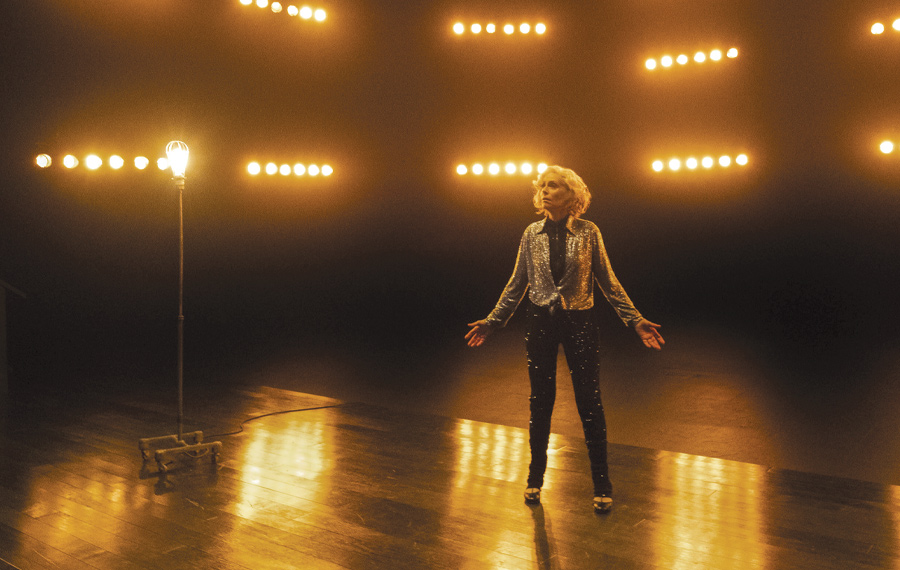
Judith Light in “Transparent.” Photos courtesy of Amazon Prime Studios
But the actors weren’t exactly thrilled about the prospect of singing, especially at (first. “[Sarah] sings first, which scared the crap out of me. I don’t have musical theater experience,” Amy Landecker said. “I was full of fear, but I had courage because I was supported. I would literally bring Faith next to me and make her sit in the studio while I sang.”
“We had to express ourselves in a whole new way, and it totally made sense,” added Jay Duplass (Josh). “Not that we weren’t kicking and screaming and terrified the whole way, but that’s what makes the show what it is.”
Although she has a musical theater background, with shows including a Los Angeles production of “Company” and a European tour of “Guys and Dolls” on her resumé, Judith Light (Shelly) was similarly apprehensive about singing. “Like Amy, I had Faith standing next to me at the microphone when I was laying down the tracks. I wanted to make sure that I was going to give everything I had, my best self,” Light said. “Facing this fear and being able to do this in this way with this kind of safety changed everything for me.”
In the movie, Shakina Nayfack, a transgender Jewish woman, plays the actress Shelly casts as Maura in the play she’s producing about her family. An actor best known from “Difficult People” and founder of the Musical Theatre Factory in New York, Nayfack embodies a spiritual guide to the Pfeffermans. “We were looking for our new North Star, and Shakina guided us in believing that we could believe in something again,” Jill Soloway said. “We always seem like we’re on this kind of spiritual journey here at ‘Transparent.’ It feels like so much more than a TV show for us.”
Gaby Hoffmann (left) and Kathryn Hahn in “Transparent.” Photos courtesy of Amazon Prime Studios
After the presentation, Light confided she will miss “Transparent” and Shelly, “But the arc is completed now in a very beautiful way. I will miss being in this space with these people. They have become my family and I’m trusting our relationships will continue. That’s dearly important to me,” she said.
From the outset, Light studiously avoided making Shelly a Jewish-mother cliché. “It was always my and Jill’s intention to never make her a stereotype or a caricature in any way,” Light said, noting she has “always felt connected” to her own Jewish heritage.
Light, who next will play the mother of Richard Jewell, the wrongly accused suspect in the Atlanta Olympics bombings in Spectrum’s “Manhunt: The Unabomber,” will sing on the “Musicale Finale” cast album.
As for the Soloways, plans are underway for a Broadway version of the movie, and Jill is writing and will direct the superhero movie “Red Sonja” and is “working on some new TV projects for Amazon.”
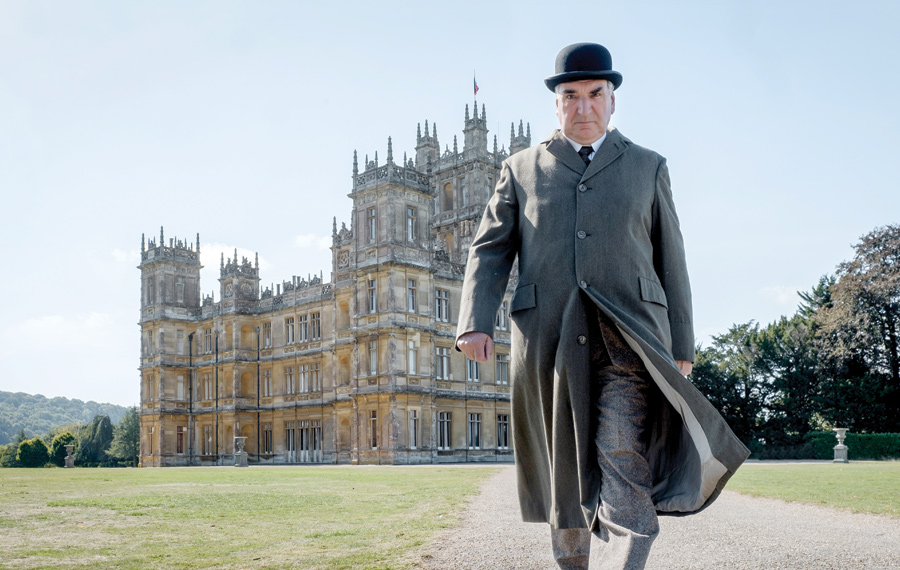
For six seasons, “Downton Abbey” enthralled audiences with its captivating saga of aristocrats and their servants at a British country estate, amassing 15 Emmys before PBS aired the final episode in December 2015. Since then, fans have clamored for a feature film continuing the saga, and four years later, that has come to pass with a grand-scale story centering around a 1927 royal visit to the Abbey.
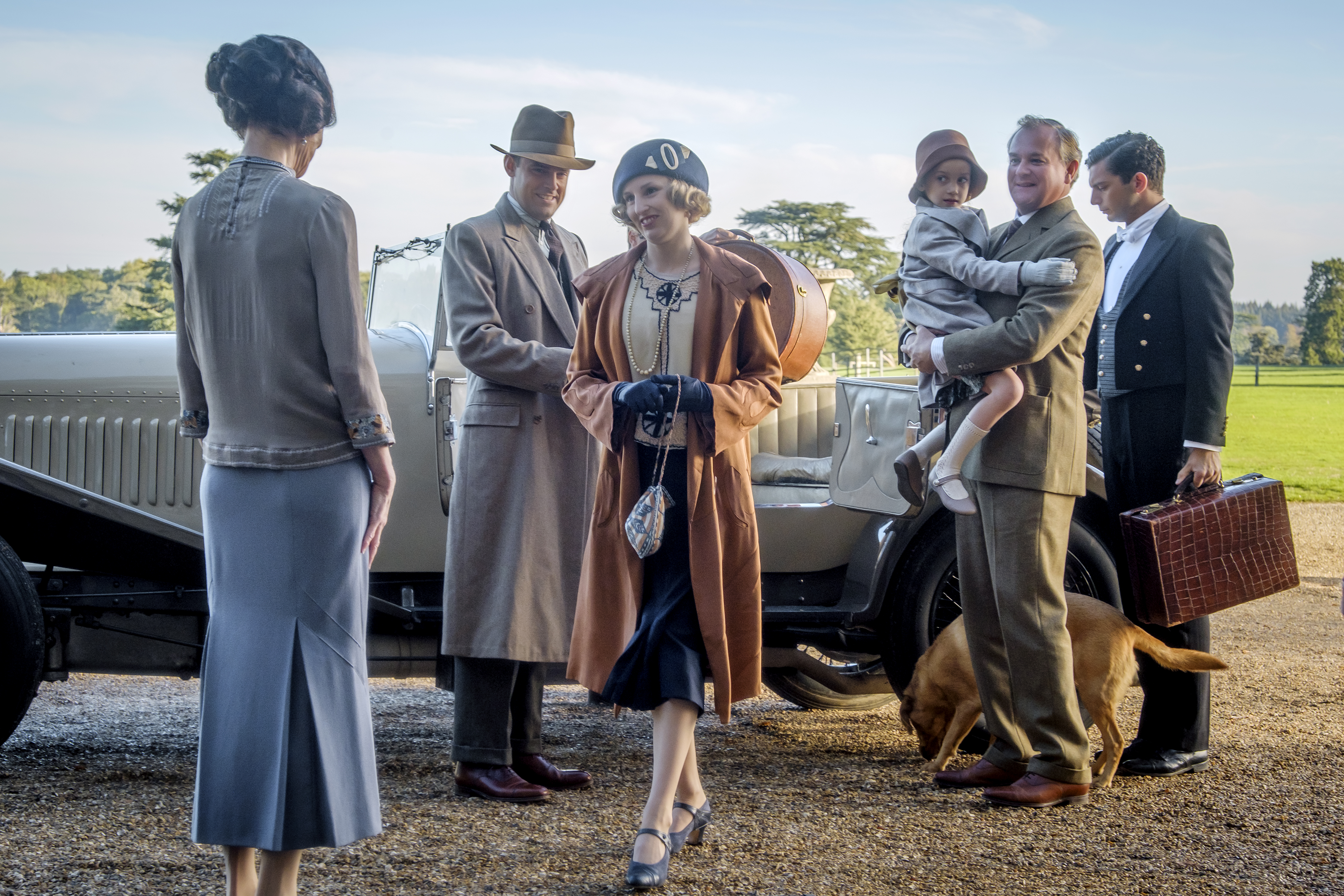
The occasion comes with all the pomp and pageantry you’d expect, including a parade and a formal ball and dinner. There are new romances, a pregnancy, an inheritance issue and a below-stairs war of wills between the Downton staff and the supercilious royal entourage. With more than 20 principal characters, there’s a lot of plot to service — but everyone gets a moment, however brief.
Stage and TV director Michael Engler, who directed four episodes of “Downton Abbey,” was tasked with the assignment to bring creator Julian Fellowes’ script to the big screen, with a considerably bigger budget and more time than television production usually allows. “We had time to work out things and definitely had more resources to go all out with costumes and cars and more complicated shooting,” Engler told the Journal. “We didn’t have to work as quickly, which allowed us to do things on a grander scale; scenes with a lot of people in them to account for multiple stories going on simultaneously.”
Familiarity was another advantage. “Usually when you do a film, there are so many unknowns. You have to figure it out as you’re going. ‘How does this character come off? How should this be played? Is this relationship going to work?’ Here, so many of those questions were already answered,” Engler said. A few new exceptions aside, “The actors already know so much about their characters. And we had so many of the locations and sets already determined and understood. It was exciting and daunting. We knew we had to bring it to a new level, but we had such a foundation that we knew we could.”
Nevertheless, the enormity of the undertaking “kind of snuck up on me,” Engler admitted. “I knew there were big pieces in it that were going to be tricky, like the parade. You think, ‘How do we get this done?’ ‘Where will the sun be?’ ‘What angle should we use?’ ‘Where should we put the cameras?’ You’re doing so much logistical planning that it’s easy to lose track of what the real power of the spectacle is,” he said. “But every day, the royal troupe would show up, ready to go — horses and cannons and soldiers. Everything went pretty smoothly.”
Elizabeth McGovern stars as Lady Grantham, Harry Hadden-Paton as Lord Hexham, Laura Carmichael as Lady Hexham, Hugh Bonneville as Lord Grantham and Michael Fox as Andy in DOWNTON ABBEY. Photo by Jaap Buitendijk / Focus Features
Although the weather can be rainy in autumn in Yorkshire, the director said they “got incredibly lucky. We kept joking that God must be a ‘Downton’ fan because every time we needed sun, we got it.”
As in the series, scenes in the kitchen, servants’ quarters and some of the bedrooms were filmed on studio soundstages. But more than two-thirds of the film was shot on location at Highclere Castle and at other locations all over Great Britain, including Wentworth Woodhouse and Harewood House castles, and the train station at Pickering in Yorkshire. Returning to Highclere was like a homecoming for everyone involved.
“I think we all felt the same kind of sentimental rush when we arrived there,” Engler said. “When you walk up that walkway toward the castle, it’s so iconic, but we’re so used to it. It’s so grand and glamorous but when you spend time in the rooms, they’re really quite warm and cozy and not particularly overwhelming. The austerity of them doesn’t feel alienating. We know the people who live there and work there, and they’re part of the ‘Downton’ family. They’re there to help us get it done.”
“The popularity of ‘Downton Abbey’ has a lot do with the wish-fulfillment aspect of a world that’s lush and beautiful and well ordered. But Ithink it mostly has to do with
the fact that it feels like aunified world.”
— Michael Engler
With high expectations for the movie from “Downton Abbey” fans, Engler acknowledged the pressure. “But only in the sense that we knew we needed to give them something special. It had to be as recognizable and familiar as the show so it would feel like a homecoming, but it also had to feel like it had moved on and grown to earn its position on the screen,” he said. The response from devotees “has been my biggest concern. I wanted it to appeal to everybody, but it was so important to me that the fans felt like they got what they were coming back for, and more.”
Audiences can expect a love story for Tom Branson (Allen Leech); scathing zingers from Violet Crawley, the Dowager Countess (Maggie Smith); and a plotline involving butler Thomas Barrow (Robert James-Collier), who is gay and closeted in an era when homosexuality is a crime.
“I was so proud that we were able to show it with such subtlety and how it would have been at the time,” Engler, who also is gay, said. “It showed the difficulties and complications of how it would have been at the time, but not that people like him couldn’t find meaningful relationships and ways to connect. I was happy with the way it was done. It wasn’t done with rose-colored glasses.”
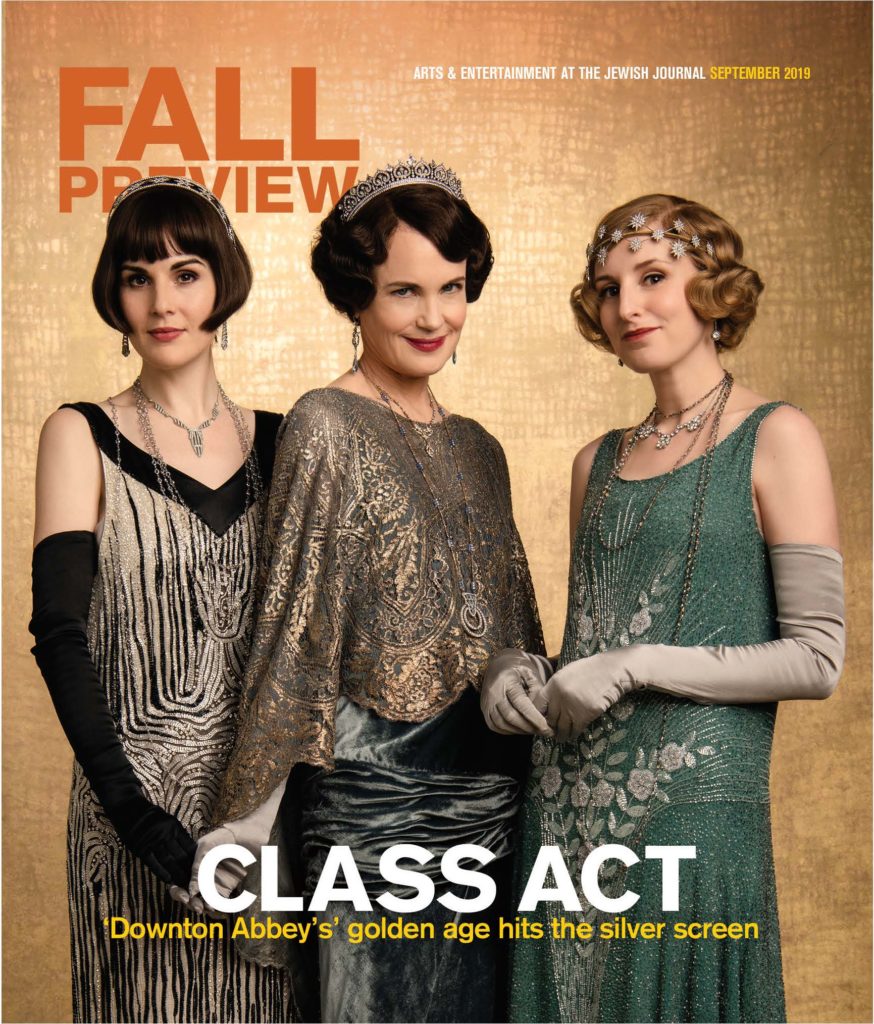
4127_D031_00073_R Michelle Dockery stars as Lady Mary Talbot and Matthew Goode as Henry Talbot in DOWNTON ABBEY, a Focus Features release. Credit: Jaap Buitendijk / Focus Features
Engler thinks the popularity of “Downton Abbey” has a lot do with its glamour, “the wish-fulfillment aspect of a world that’s lush and beautiful and well ordered. But I think it mostly has to do with the fact that it feels like a unified world,” he said. “The servants seem as much like family as the family does. And the family members are servants to the estate, too. Everybody is invested and is working together in something that’s larger than themselves. Wherever they stand in the social order, they appreciate each other’s necessary contribution to it.”
If there were to be a second movie, “I would be honored and delighted to be a part of it. I think it’s possible,” Engler said. “It’s just a question of whether Julian has more stories he wants to tell in that world.” Meanwhile, he’s collaborating with Fellowes on another project, producing and directing the HBO series “The Gilded Age,” which begins shooting in March for a late-2020 debut. “It’s set in New York in the robber-baron era, the beginning of the great industrial wealth, and the explosion and intersection of new big money and old New York society,” he said.
Engler, a Yale drama school graduate whose directing credits include “Deadwood,” “The Big C” and “Unbreakable Kimmy Schmidt,” was nominated for an Emmy three times — for “30 Rock,” “Sex and the City” and “Downton Abbey.” In 2018, he made his feature debut with “The Chaperone,” written by Julian Fellowes. But his career began in the theater. He tried acting in high school, liked it and went to NYU to study it. “But people always said, ‘You should be a director.’ My feelings were very hurt. I took it as ‘You’re not good enough to be an actor,’ ” he said. “Then a fellow student brought me a play and asked me to direct it, and I understood what everybody meant. It combined all my interests in theater and psychology and sociology, architecture, art history and fashion. I thought, ‘This is a much more interesting use of all parts of myself.’ ”
Descended from Russian-Jewish pogrom refugees on his mother’s side and German-Jewish immigrants on his father’s, Engler grew up in Evanston, Ill., in a Reform home. “I went to Hebrew school, Saturday school and was bar mitzvahed,” Engler said. “We attended Friday-night services sometimes, but we were much more Jewish culturally than religiously.” That’s still the case. “If I go to a wedding, bar or bat mitzvah, a funeral or any kind of service, I’m always happy to be part of it and participate in that way, but I don’t feel connected in a religious sense,” he said.
In the future, Engler hopes to teach at the college and graduate level, working with young directors and actors. “I feel like I’ve learned a lot about not just what we do but how to get good at it,” he said. “Mostly, I want to continue to do things that have an interesting intersection of entertainment and social relevance.”
He has optioned and adapted “Remembering Babylon” by David Malouf and plans to direct it. It’s about white settlers and Aborigines in Australia, “and has a lot to say [about] how we treat strangers, the less fortunate and what our responsibility is to each other, and how tribal we all can be,” he said.
Meanwhile, Engler is looking forward to seeing how his current film will be received. “Imagine if you went back to your favorite vacation spot and stayed in the nicest hotel and best restaurants,” he said. “That’s what this is like: the updated experience of ‘Downton Abbey.’ ”