fbpx

September 18, 2019

What’s Happening: Bari Weiss; Post-Election Discussion

FRI SEPT 20

“Dirty Bomb”
The award-winning short film “Dirty Bomb,” a true story of Nazi resistance about a group of concentration camp prisoners conspiring to sabotage the construction of the deadly V-2 bomb, opens today at the Laemmle Town Center in Encino. A Q&A session moderated by entertainment journalist Sandro Monetti and featuring the film’s director, Valerie McCaffery, along with cast and crew members follows the Sept. 20 screening. The film will be shown daily at 1 p.m. for one week. $7.50. Town Center 5, 17200 Ventura Blvd., Encino. (310) 478-3836. .

Camp Shabbat
School may be back in session, but Valley Beth Shalom extends the joy of summer by celebrating Camp Shabbat, featuring services on the field, a catered kosher dinner, a camp jam and Israeli dancing. Participants include song leaders Charlie Kramer from Camp Hess Kramer, Jared Stein, formerly of Camp Alonim, and Brianah Caplan from Camp Ramah along with Israeli dancing teacher Orly Star. 6:30-10 p.m. $28 for ages 13-and-older. $18 for ages 5-13. Valley Beth Shalom, 15739 Ventura Blvd., Encino. (818) 788-6000.

Trading Pulpits
A unique exchange in Woodland Hills involves Temple Aliyah Rabbi Stewart Vogel trading pulpits with the Rev. Michael Evans, pastor of neighboring St. Bernardine of Siena. Members of the two communities are invited to attend both services. Both clergymen speak on “Making Sense of Evil in Our Times: Human Nature or Societal?” Evans’ talk is Friday night during Temple Aliyah’s Bluegrass Shabbat service; Vogel’s is during Sunday afternoon Mass. Friday, 8 p.m. Sunday, 5 p.m. Temple Aliyah, 6025 Valley Circle Blvd., Woodland Hills. St. Bernardine of Siena, 24410 Calvert St., Woodland Hills. (818) 346-3545.

SAT SEPT 21

Selichot and Screening
In time for Selichot, a service of forgiveness, Congregation Kol Ami screens the award-winning film “Never Again Is Now,” about anti-Semitism, and welcomes the two filmmakers for a Q&A session. In the film, one of the filmmakers relates her parents’ story of being liberated by the Allies during the Holocaust in 1945 and her fight to keep this dark chapter of history from being repeated. Selichot services follow the screening. 7-10 p.m. Free. Congregation Kol Ami, 1200 N. La Brea, West Hollywood. (323) 606-0996.

Coastal Cleanup Day
Everyone is welcome to join volunteers from Kehillat Israel (KI) in Pacific Palisades and participate in International Coastal Cleanup Day, one of the largest volunteer events in the world. To prevent litter from polluting the ocean, KI volunteers are cleaning trash from the park, sidewalks and gutters along Temescal Canyon Boulevard. 9 a.m.-noon. Call (310) 459-2328.

“From Hatred to Zionism”
Born 30 years ago in Egypt, Hussein Aboubakr Mansour grew up hearing endless tales about “bloodthirsty Zionists.” Reclusive and skeptical, early on he began a verification project of his people’s supposed Jewish enemies. During his talk, titled “From Hatred to Zionism,” he discusses events he experienced at Cairo University, where he rejected the anti-Israel curriculum. He gained asylum in the United States in 2014 and now is an educator with StandWithUs. 7-9 p.m. Free. San Fernando Valley Arts and Cultural Center, 18312 Oxnard St., Tarzana. (818) 697-5525.

SUN SEPT 22

Walk4Friendship
Friendship Circle of Los Angeles, which provides social, educational and Jewish experiences to Jewish children with special needs, holds its annual Walk4FriendshipLA fundraiser. Participants gather at Shalhevet High School for an opening ceremony before beginning their 2K walk. When walkers return, the indie pop band Distant Cousins performs in concert. The 4½-hour event includes concessions, games, inflatables, a puppy party and a Lego party. 1:30-6 p.m. 1:30 p.m. registration. 2:45 p.m. opening ceremony. 3 p.m. walk. 4 p.m. live concert. Shalhevet High School, 910 S. Fairfax Ave. (310) 280-0955.

Bari Weiss

Bari Weiss
Bari Weiss, an editor and writer for The New York Times opinion section, has gained prominence as a respected Jewish voice on causes and responses to anti-Semitism. She brings her story — and her new book, “How to Fight Anti-Semitism” — to the Skirball Cultural Center. In conversation with Matthew Weiner, creator of the TV series “Mad Men,” Weiss explains how her book was spurred by last October’s Shabbat massacre of 11 Jews at Pittsburgh’s Tree of Life synagogue, her childhood congregation. In her book, Weiss suggests ways to address anti-Semitism politically and in the media. 7:30 p.m. $20 general admission, $36 for the Weiss book and admission. Skirball Cultural Center, 2701 N. Sepulveda Blvd. (310) 440-4500.

Schmaltz

Schmaltz Concert
Featuring one musician from Los Angeles, one from New York City and two from Eastern Europe, the klezmer band Schmaltz performs at the Pacific Resident Theatre in Venice. Gathering from their far-flung origins, violinist Yvette Devereaux, Joellen Lapidus on accordion, Igor Kogan on upright bass and clarinetist Leo Chelyapov all are seasoned musicians who have embraced the quaint sounds of Eastern European Jewish folk music. The band returns next month on Oct. 13. 7:30 p.m. $20. Pacific Resident Theatre, 703 Venice Blvd., Venice. (310) 822-8392.

MON SEPT 23

“Elections in Israel: What Happened and What’s Next”
Exploring the aftermath of Israel’s second round of elections in 2019, the Israel Policy Forum (IPF), Temple Beth Am, the New Israel Fund (NIF) and IKAR hold a panel featuring David Halperin, executive director of the IPF, and Tamara Cofman Wittes, a senior fellow at the Brookings Institute. Rabbi Ephraim Pelcovits, director for Southern California and Los Angeles at the NIF, moderates the discussion. A young professionals reception follows. 7 p.m. Free. Temple Beth Am, 1039 S. La Cienega Blvd. (212) 315-1741. Register by clicking the link above.

TUE SEPT 24

“Beyond the Headlines”
A TED-style evening of inspiration in Pico-Robertson features a panel of community trailblazers reflecting on what it means to be Jewish. “Beyond the Headlines: Why We Are Optimistic About the Jewish Future” features David Suissa, publisher and editor-in-chief of the Journal; Mary Bauer, an Auschwitz-Birkenau survivor; Judea Pearl, president of the Daniel Pearl Foundation; Jacqueline Rafii, director of music for Shomrei Torah Synagogue in West Hills; and Noam Weissman, senior vice president of education at Jerusalem University. Organized by 30 Years After, a voice for America’s Iranian-American Jews. Light refreshments served. RSVP required.  7-9:30 p.m. $18. The Light House, 1026 S. Robertson Blvd. (424) 262-6613.

WED SEPT 25

Preventing Suicides
Shomrei Torah Synagogue com-memorates Suicide Prevention Month by holding a discussion with Rebecca Zeitlin, a marriage and family therapist. Parents and teens are a special focus for Zeitlin, assistant program director of the Suicide Prevention Center at Didi Hirsch Mental Health Services. She speaks about how suicide indiscriminately affects young and old, rich and poor. 7 p.m. Free. Shomrei Torah Synagogue, 7353 Valley Circle Blvd., West Hills. (818) 854-7478. RSVP at sisterhood@stsonline.org.

THU SEPT 26

Mark Schiff
Comedian-actor-writer Mark Schiff provides entertainment when the Conejo Valley chapter of Brandeis University holds its Fall Luncheon and Boutique. Schiff, a frequent Journal columnist, has toured with Jerry Seinfeld and starred on HBO and Showtime specials. All proceeds benefit medical research at Brandeis University to find cures for neurodegenerative diseases including ALS, Alzheimer’s and Parkinson’s. Reservations required. 10 a.m. $85. North Ranch Country Club, 4761 Valley Spring Drive, Westlake Village. (818) 991-2667.

Mary Leipziger, “India Through a Jewish Lens”

UCLA Hillel Art Opening
Three exhibitions highlight the fall art opening at UCLA Hillel Dortort Center for Creativity in the Arts: Donn Delson’s “Holy Land,” featuring 20 aerial photographs shot in color from an open helicopter in Israel capturing the landscapes of the historic country; Canadian photojournalist Mary Leipziger’s “India Through a Jewish Lens,” a visual diary of India’s chaotic splendor; and Lili Sigel’s meditative wall sculptures of found objects, “Mixed Media in Harmony.” 7-9 p.m. Free. Hillel at UCLA, 574 Hilgard Ave. (310) 208-3081, ext. 108.


Have an event coming up? Send your information two weeks prior to the event to ryant@jewishjournal.com for consideration. For groups staging an event that requires an RSVP, please submit details about the event the week before the RSVP deadline.

What’s Happening: Bari Weiss; Post-Election Discussion Read More »
Movers & Shakers: APN Luncheon, Cancer Fundraiser, AJC Leader

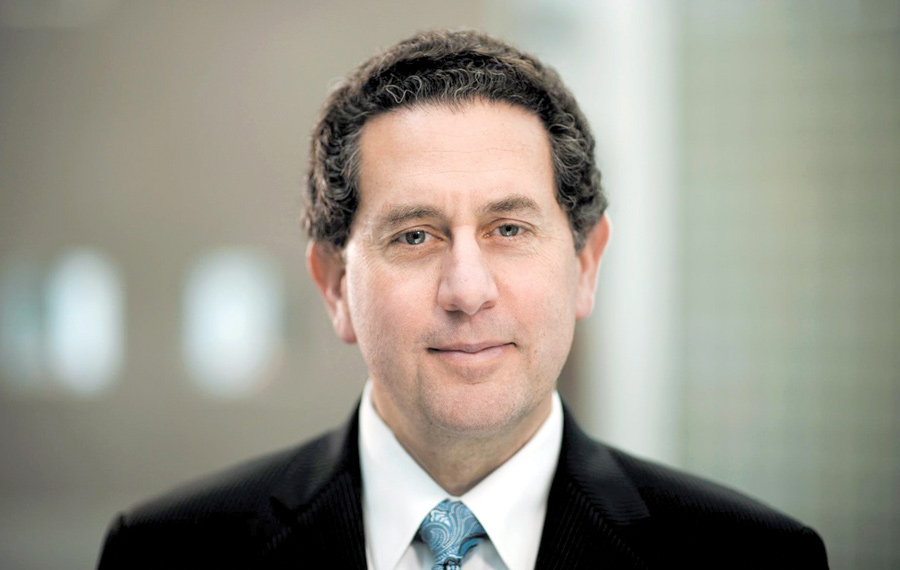
Richard Hirschhaut, American Jewish Committee’s new L.A. director. Photo courtesy of American Jewish Committee

The American Jewish Committee (AJC) named civil rights advocate and communal leader Richard Hirschhaut as its Los Angeles director, effective Sept. 3.

 “We are thrilled to welcome Rick as our Los Angeles Director,” AJC Los Angeles Board President Scott Edelman, a partner at the law firm, Gibson, Dunn & Crutcher, said in a statement. “He is a transformational leader who has served both the Jewish community and the broader American public with passion and integrity for over three decades.”

AJC CEO David Harris echoed Edelman’s enthusiasm.

“We are excited that Rick Hirschhaut will be bringing his depth of experience and passion for the well-being of the Jewish people and Israel to AJC,” Harris said in a statement. “A strong and vibrant AJC Los Angeles is crucial to advancing our global mission and we look forward to Rick’s leadership in achieving these important objectives.”

Hirschhaut served as the founding executive director of the Illinois Holocaust Museum from 2004-14. He worked at the Anti-Defamation League for 21 years, including a decade as the Midwest regional director in Chicago. He also has worked at American Jewish Joint Distribution Committee and American Friends of Rambam Medical Center, all the while helping to secure the well-being and security of Jews in the United States, Israel and around the world, according to AJC.

Hirschhaut, who, with his wife, Susan, are the parents of two adult children, graduated from Tulane University in 1982. He also studied at the Hebrew University of Jerusalem. 

“I am humbled by the trust that has been placed in me to lead AJC Los Angeles,” Hirschhaut said. “We are reminded of the urgency of AJC’s mission every day. With dedicated leadership and talented professional staff, we will confront the incivility of our times by standing with communities facing the sting of intolerance.” 

— Staff Writer Aaron Bandler contributed to this report


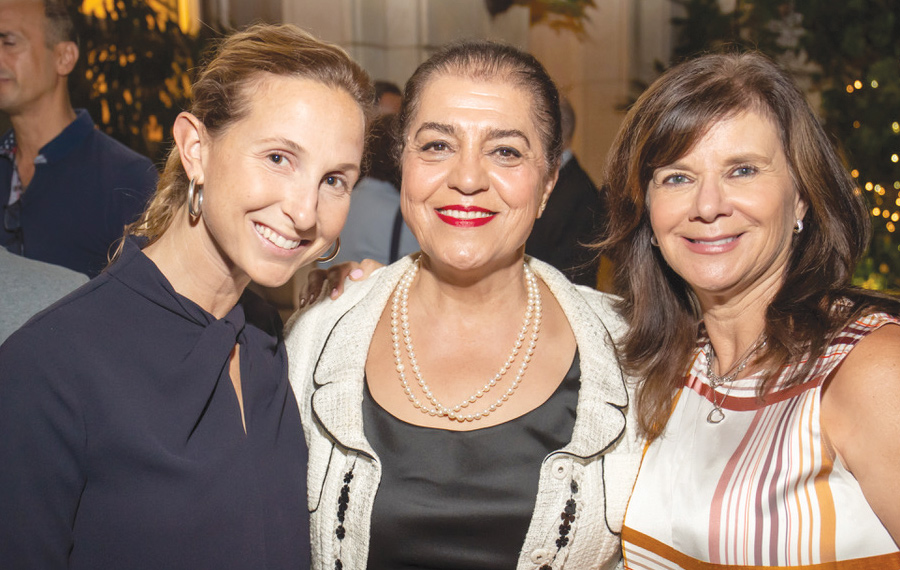
From left: Friends of Sheba Medical Center Executive Director Molly Soboroff, Parvin Djavaheri and Janine Winkler Lowy. Photo courtesy of Friends of Sheba Medical Center

Friends of Sheba Medical Center’s newest chapter, the Daughters of Sheba, held a kickoff event on Aug. 28 at The Peninsula Beverly Hills.

The evening was dedicated to mental health awareness and overcoming the stigma associated with mental illness. Professor Mark Weiser, head of psychiatry at Israel’s Sheba Medical Center, Tel HaShomer, and Nick Holton, director of positive psychology at Milken Community Schools, engaged in a panel discussion that addressed the community’s questions around the rise in depression, autism, cannabis use and much more.

Daughters’ leadership includes Daphnah Nazarian, Sharona Soofer Veiseh, Shoshana Djavaheri Zar, Julie Darwish, Rachel Kuluva Roth and Shani Weltsman Moran.


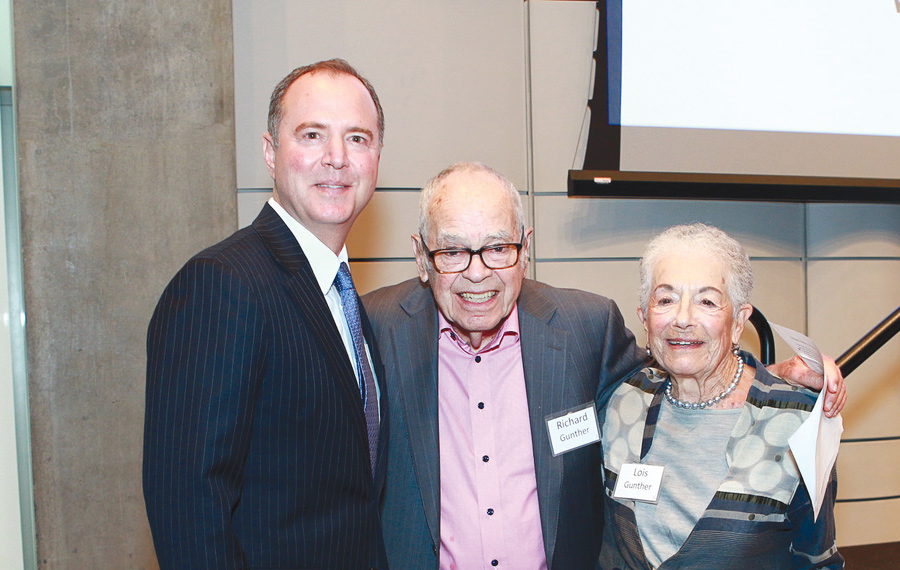
Congressman Adam Schiff (left) and Richard and Lois Gunther attended Americans for Peace Now’s award luncheon. Photo by Jami Ferreira

Some 250 West Coast stalwarts of Americans for Peace Now (APN) turned out at the Skirball Cultural Center on Sept. 8 for tributes to its pioneers, political updates from the halls of Congress, some lively music and a hearty luncheon.

The event opened with the blowing of the shofar, after which the center stage was ceded to Richard and Lois Gunther as joint recipients of the Arthur P. Stern Leadership Award for a “lifetime of activism and leadership” in Jewish and secular institutions from Los Angeles to Israel.

The couple met and married when Richard was in the Army and Lois was 19 years old and, her husband testified, just as beautiful after 72 years of marriage. Their formula, according to Richard, is to lead a “life of adventure, service and love,” including vigorous mountain climbing.
David Myers, president of the New Israel Fund, lauded the Gunthers’ devotion to peace between Israeli Jews and Arabs, a goal which would require “national leadership in the Middle East,” which at this point was lacking on both sides.

As the closing event, former Congressman Mel Levine interviewed Rep. Adam Schiff, (D-Calif.) and chairman of the House Intelligence Committee. Schiff warned of “current threats to liberal democracy” emanating both from Moscow and Washington, a threat to which Jews must pay attention,  “for we know how it will end.”

Americans for Peace Now seeks to educate the public and its leaders on the need and possibility for a comprehensive political settlement of the Arab-Israel conflict, including a two-state solution with the Palestinians, consistent with Israel’s long-term security needs and its Jewish and democratic values.

APN partners with Shalom Achshav (Peace Now) and was founded in Israel in 1978 by 348 reserve officers and soldiers of the Israel Defense Forces. Regional APN director David Pine and his staff organized the event.

­— Tom Tugend, Contributing Editor


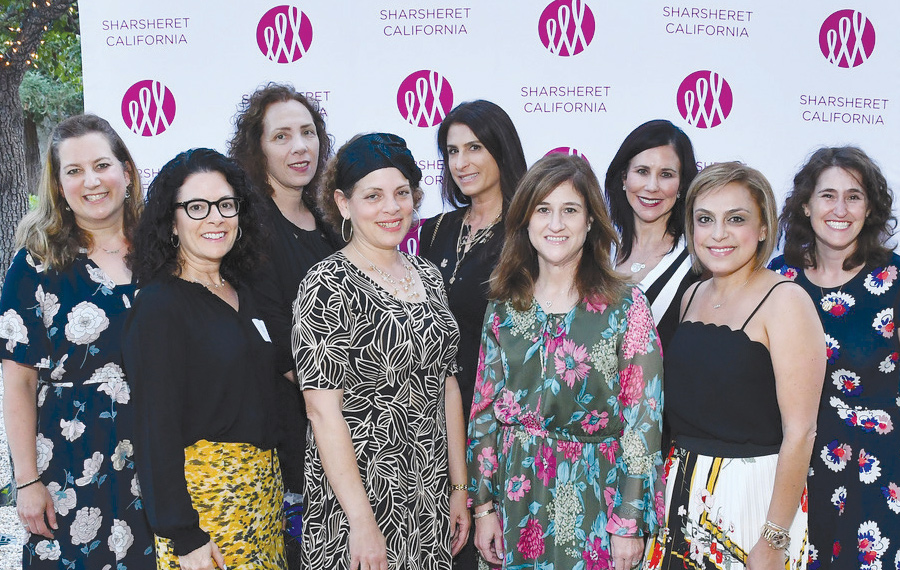
Sharsheret event committee (back row, from left): Shuli Bendheim Steinlauf, Debi Pomerantz, Abbi Hertz, Courtney Mizel, Jenna Fields and (front row, from left) Kathi Barnhard, Sari Abrams, Elisa Schoenfeld and Dr. Sarah Farzan. Photo by Louis Raynor

More than 200 people attended Sharsheret California’s annual benefit on Sept. 8 at the Beverly Hills home of Lisa and Joshua Greer. 

The event, which raised more than $125,000, featured survivor stories and celebrated three years of California-based programming designed to increase lifesaving cancer awareness and provide prevention information to the Jewish community. 

Since the Sharsheret office opened in 2016 nearly 11,000 people have participated in 235 community education programs in California, and 762 women and family members in the state have received direct support from Sharsheret’s team of social workers. Cedars-Sinai Medical Center is also partnering with Sharsheret to expand high-impact cancer education and prevention programs for the Jewish community in Los Angeles.

“You never think you’re going to be the one,” said Annie Spar, who was diagnosed in 2015. “Sharsheret was a place to go to ask questions, receive support and somewhere I felt I had a community that understood what I was going through. Now I, too, am a link in the Sharsheret chain (Sharsheret means chain in Hebrew).” 

Her husband, Elon Spar, credited Sharsheret’s Spungen Family Focus program with helping him to support Annie and their kids through treatment. “When you think of the toll cancer takes you, don’t only think of the toll it takes on the patient, but the toll it takes on the family,” he said.

Aviva Walls said that her strong-willed, opinionated mother, grandmother and great-grandmother taught her “the importance of community, of connection and of family,” but that she also inherited their breast cancer mutation. 

After watching her mother go through breast cancer treatment, Walls took control of her own health and underwent a prophylactic mastectomy and reconstruction. She now speaks on college campuses on behalf of Sharsheret, about understanding one’s genetic history and making informed health choices. “I am lucky to use that strong, inherited voice for good,” she said.

“It was incredible to see how the Los Angeles Jewish community has come together to support Sharsheret over the last three years,” Courtney Mizel, national board member and California advisory committee co-chair, said.

After the event, Sharsheret California Regional Director Jenna Fields told the Journal that several attendees had noted “how specific the Jewish experience is when it comes to cancer and intergenerational trauma. At Sharsheret, one of our main goals is to provide the support and resources to women and men who are facing this issue head on.”

— Esther D. Kustanowitz, Contributing Writer


Want to be in Movers & Shakers? Send us your highlights, events, honors and simchas.
Email ryant@jewishjournal.com.

Movers & Shakers: APN Luncheon, Cancer Fundraiser, AJC Leader Read More »

Netanyahu to Skip UN General Assembly Due to ‘Political Circumstances’

JERUSALEM (JTA) — Israeli Prime Minister Benjamin Netanyahu will not travel to New York to deliver a speech to the United Nations General Assembly due to “political circumstances,” his office said.

It will be the first time in eight years that Netanyahu will miss the meeting. He has attended every year since he became prime minister in 2009, except for 2010.

Foreign Minister Israel Katz will represent Israel, several Israeli newspapers reported.

Netanyahu was scheduled to speak on Sept. 26, the third and final day of the Assembly. The day before, however, the Central Elections Committee is scheduled to present the final certified results from Tuesday’s election to President Reuven Rivlin. Rivlin will then announce who he has chosen to try to form a government — a difficult time for Netanyahu to be away from the country.

Netanyahu also is scuttling a meeting on the General Assembly sidelines with President Donald Trump. Trump tweeted Saturday that he would meet with the prime minister to discuss a potential mutual defense treaty with Israel.

Palestinian Authority President Mahmoud Abbas will speak on the same day that Netanyahu was scheduled to address the world body.

Netanyahu to Skip UN General Assembly Due to ‘Political Circumstances’ Read More »

Trump Names Hostage Negotiator Robert O’Brien As National Security Adviser

WASHINGTON (JTA) — President Donald Trump named as his new national security adviser Robert O’Brien, until now his chief hostage negotiator.

In 2005, O’Brien was a member of the U.S. team to the United Nations and called out the world body for singling out the Palestinians for special consideration and Israel for condemnation.

“Endorsing resolutions that condemn Israeli actions but that fail to address Palestinian actions or inactions have real consequences,” he said at the time, adding that one-sided resolutions “undermine the ability of the United Nations to play a constructive role in furthering peace.”

President Donald Trump fired John Bolton, his third national security adviser, last week over differences on Afghanistan and Iran. Bolton had counseled a tougher posture against Iran, while Trump is open to sanctions relief as a means of moderating the Iranian regime.

“I have worked long and hard with Robert,” Trump said Wednesday on Twitter. “He will do a great job!”

O’Brien, a lawyer and a longtime veteran of the Republican Party’s foreign policy establishment, helped negotiate the release of Americans held in North Korea and Turkey. He also observed proceedings in Sweden in the case of A$AP Rocky, a rapper charged with assault in that country.

Along with his U.N. post, he served in a number of foreign policy posts in the George W. Bush administration.

Trump Names Hostage Negotiator Robert O’Brien As National Security Adviser Read More »

Steven Rajninger: The Architect of Sacred Spaces

Steven Rajninger, a principal at San Francisco-based Herman Coliver Locus Architecture, specializes in designing sacred spaces and affordable housing. The firm’s designs include the recently renovated Ganzberg Sanctuary at Temple Beth Am. 

Rajninger spoke with the Journal about architecture, becoming an honorary Beth Am member and his mission-driven work of designing synagogues and supportive housing.

Jewish Journal: How did the Temple Beth Am project come about?

Steven Rajninger: We were invited to compete for it with other architects, as is typically the case, and to do that architects typically do some measure of conceptual thinking in advance of being awarded the project: How is an auditorium different from a sanctuary, or how is a sanctuary different from an auditorium? 

They were longing for this question to be answered and we wrote a responsive reading on the contrast between auditorium and sanctuary: Things like, an auditorium is a black box and a sanctuary is a light box. An auditorium is meant to be a world in and of itself and a sanctuary is meant to explain the world. 

These projects take time. You have to be patient, and it’s a good thing because it provides an opportunity for us as architects to get to know the community. You get to have lots of conversations and it always starts really by listening. 

JJ: Are you Jewish?

SR: Yes, very. 

JJ: Does that help when designing a synagogue?

SR: Absolutely it does. It’s why I love it so much. I think there is so much about the work [that is] so connected to who I am — my roots, my family and the history of the people — that it does feel like the work is flowing through generations. That’s a nice feeling.

JJ: Your work also appears to embrace the Jewish concept of tikkun olam – repairing the world.

SR: [Our] work is completely mission-driven. We only do two kinds of work: sacred space [architecture], which is almost entirely in the Jewish community, and that’s about 40% of our work. The other 60% is supportive housing for very low-income people: families, seniors, people who are formerly homeless. One hundred percent of our clients are nonprofit organizations. That’s a very intentional choice we made in our practice — to be architects for the people and for the work to be mission-driven. 

JJ: Why did you decide to work exclusively with nonprofits?

SR: It’s just the ability to work alongside people of like mind. As an architect, you can work for people who are just thinking about the bottom line; you can work for people who are interested in branding; and, of course, there are many ways you can do good. Our passion is to do what’s right and what’s good and to work with people and to help people who are less fortunate and challenged by a variety of things. 

Whether you are building housing for people who are less fortunate, or you are building sacred space, you are building space that hopefully lifts people up and elevates their well-being. 

JJ: Do you design spaces around the country or only in California?

SR: The jobs are all over California. California has a real crisis in housing. There’s a need. I was waiting until my kids went off to college before I went on planes around the country and spent days away from home, but I’d like to expand our work beyond California. 

JJ: Did you always know you wanted to be an architect?

SR: I didn’t discover architecture until I was an undergrad at [UC] Berkeley. I always loved to draw. As a young Jewish boy, I thought I had two choices: doctor or lawyer, and I had no intention of ever being a lawyer. A doctor, maybe. I contemplated being a veterinarian, maybe because I loved animals, but as I grew up that didn’t seem to be the right fit. I took an architecture class at Berkeley, and the first class was almost completely a drawing class. They just touched on architecture at the end. 

It was a class that made you think about space, three dimensions, about volume, light and shadow. It was a way to teach you how to see and was, I thought, fascinating, and it was called, Architecture 11A, and I thought if this has the word “architecture” in it, this is good, and I fell in love with it, and after taking that first class, I couldn’t imagine doing anything else in life but what I am doing. 

JJ: Will you continue to be involved with the Beth Am community even though you are finished with the project? 

SR: It’s interesting. Many times when we are finishing a project like this, the people who led the process come up to us and say, “You know us better than we know ourselves.” It’s really humbling for someone to hear that — and oftentimes they’ll tell us, “You are an honorary member of the congregation,” and we sort of feel that way, too.

Steven Rajninger: The Architect of Sacred Spaces Read More »

Pomegranate Napkin Holders for Rosh Hashanah

I’m often asked if all the little details at a dinner party like place cards and napkin holders are really necessary. After all, people are coming for food and conversation, not your table settings. But I’m a big believer in these extra touches. When people come to my home to share a meal, they’ve probably had to fight traffic to get there. Maybe they had to hire a baby-sitter. Or even had to give up a night of Netflix. Putting in the extra effort honors their presence and shows my gratitude. So it’s not about “Look what I did,” but “Look how much I appreciate you for coming.”

Of course, who has time to worry about these things when they’re also cooking? That’s why these easy napkin holders topped with paper pomegranates are so great.  They take very little time to put together, and it’s a fun task to delegate to the kids. 

What you’ll need:
Construction paper or cardstock
Scissors
Glue stick

1. Cut a 1 1/2-by-6-inch piece of construction paper or cardstock. While you can choose red paper, feel free to use creative license and make your pomegranates in various colors. With a glue stick, adhere the ends together to create a ring. 

2. Cut a 6-by-6-inch square using the same paper. Fold the paper in half and then in quarters. You’ll then have four 3-by-3-inch squares stacked on top of each other. Fold one more time, and you’ll have a 3-by-1 1/2-inch stack.

3. On the folded edge, cut out half a pomegranate shape. This will be similar to cutting out a heart shape, but on the bottom instead of being pointed, it will be rounded. You will now have four pomegranate shapes that are folded in half.

4. Glue the backs of the your pomegranate cutouts to each other. Your pomegranate will have four sides, each with a fold in the middle.

5. Cut out a crown shape that is about 3/4ths of an inch wide with the same paper. Choose which side of the pomegranate will be the front and which will be the back. Glue the crown to the top of the pomegranate that will be the back. 

6. Glue the pomegranate to the ring with the crown on the inside, pressing the two halves of the back pomegranate onto the ring to secure it. Wait until the glue is dry before inserting a rolled napkin into the ring.


Jonathan Fong is the author of “Flowers That Wow” and “Parties That Wow,” and host of “Style With a Smile” on YouTube. You can see more of his do-it-yourself projects at jonathanfongstyle.com.

Pomegranate Napkin Holders for Rosh Hashanah Read More »

Obituaries: Sept. 20, 2019

Rochelle Berman died Aug. 23 at 82. Survived by daughters Jill (Russell) Neuman, Jodi (Marc) Schwartz; sons John (Eileen), Bradeley James (Julia); 7 grandchildren; 2 great-grandchildren. Mount Sinai

Stephen Braverman died Aug. 25 at 71. Survived by sister Patti; brother Bruce. Hillside

Francine Lenore Bregman died Aug. 17 at 85. Survived by daughter Debbie (Michael) Teplinsky; sons Mitchell (Robin) Freed, Steven Freed; 3 grandchildren; sisters Harriet Heller, Sandra (Julian) Memed; brother Nathan Dubler. Mount Sinai

Myron Corenman died Aug. 25, at 83. Survived by sons Joel, Jerry (Barrie) Corenman; 3 grandchildren. Mount Sinai 

John Damavandi died Aug. 22 at 80. Survived by wife Lili; daughters Jessica, Rebecca; 2 grandchildren; brothers Fred, Jim, Frank. Hillside

Linda Delevitt died Aug. 20 at 76. Survived by cousins Fern, Leon. Hillside

Jerry Epstein died Sept. 3 at 96. Survived by cousin David. Hillside

Karl Frankel died on Aug. 31 at 93. Survived by wife Shirley; daughters Rosalie (Fred Mednick), Susan (Moshe Maler); sons Craig (Brigitte), Jeff (Sophie); 9 grandchildren; 9 great-grandchildren; sister Luba Rotter. Mount Sinai 

Steven Friedman died Aug. 22 at 72. Survived by wife Gail; daughters Taylor (Bryan Bergman), Dina (Sean Hogan); sons Lane, Marcus (Stacey); 3 grandchildren; sister Deborah (Steve) Schrier; sister-in-law Stacey Sahlein; brother Rick (Lanel). Mount Sinai

Sandra Golden died Aug. 22 at 82. Survived by daughter Tamie; son Steve (Kim); 2 grandchildren; sister Lynda. Hillside

Vera Holzman died Aug. 30 at 79. Survived by daughter Aileen (Tim) Candlish; 2 grandchildren. Mount Sinai

Rona Kaufman died Aug. 4 at 73. Survived by husband Jack; daughter Jamie (Alex) Grossman; sons Eric (Shana), Andrew; 3 grandchildren. Mount Sinai

Anita Klajner died Aug. 31 at 80. Survived by daughter Rosana; sister Sara Maduena. Mount Sinai

Donald Kranze died Aug. 24 at 93. Survived by wife Bebe; daughters Lori (Scott), Deborah (Gary); 4 grandchildren; brother Barry. Hillside

Herta Leman died Aug. 23 at 94. Survived by son Bernard; 2 grandchildren. Hillside

Norma Lookofsky died Aug. 19 at 95. Survived by daughter Nancy; sons Louis, Brian; 7 grandchildren; 1 great-grandchild. Hillside

George Lubow died Aug. 22 at 93. Survived by wife Roslyn; daughters Zvia (Brian Krieger) Hempling, Bonnie, Elana Moses; 3 grandchildren. Mount Sinai

Aimee Mizrahi died Aug. 19 at 82. Survived by daughter Brigitte (Yehuda); sons Eric, Patrick; 4 grandchildren; sisters Yvonne, Rosette; brother Michel. Hillside

Marsha Nash died Aug. 22 at 88. Survived by daughters Renee (Alan), Debbie (Jeff); son David (MaryJane); 5 grandchildren; sisters Barbara, Gloria. Hillside

Isaak Olshanetskiy died Aug. 27, at 93. Survived by wife Susan Olshanetskaya; daughter Lana Kogan; son Boris (Isabella); 4 grandchildren; 1 great-grandchild. Mount Sinai

Grace Pardo died Aug. 23 at 86. Survived by daughters Marsha (Walter) Bakly, Garri Lynn Pendleton; 3 grandchildren; sister Dora Matalon; brother Leon (Rozlyn) Matalon. Mount Sinai 

Lori Gottlieb Peterssen died Aug. 21 at 64. Survived by son Jessie; 2 grandchildren; mother Dorothy Gottlieb; sister Eileen Gottlieb. Mount Sinai

Jack Rofe died Aug. 19 at 71. Survived by wife Margo; daughters Jessica (Dimitri Charles), Brandi; 4 grandchildren; sister Sarah Feinberg; brothers Albert (Marlene), Joseph (Starr). Malinow and Silverman 

Laura Russo died Aug. 30 at 99. Survived by daughters Leslie, Joanne “Marina” (Michael) Muhlfriedel, Carol; 3 grandchildren; 3 great-grandchildren. Malinow and Silverman

Frank Salter died Aug. 20 at 99. Survived by daughters Merle (Harvin), Lori (Joel); son Arthur (Judithe); 7 grandchildren; 4 great-grandchildren. Mount Sinai

Ronald Michael Schulkin died Aug. 25 at 74. Survived by wife Michele; sons David, Steven (Wilda); sisters Linda Lanfear, Marcia (Doug) Arents; brother Terry (Patricia). Chevra Kadisha

Melvin Selzer died Aug. 27, at 94. Survived by wife Judy; daughter Bela; sons Aaron, Noah (Yuriko); stepdaughters Stephanie (Josh) Goldstine, Deborah Robinson; stepson, Bennett (Caron) Robinson; 8 grandchildren. Mount Sinai

Amy Jessica Jackson Shapiro died Aug. 11 at 39. Survived by mother Freida Jackson; father Curtiss Jackson Jr.; half-brother Alex Edward Jackson. Mount Sinai

Helen J. Slatkin died Aug. 24, at 98. Survived by daughter Wendy; 2 grandchildren. Mount Sinai

Isadore Smith died Aug. 23 at 95. Survived by sons Michael (Barbara), Mark; 2 grandchildren; 1 great-grandchild. Mount Sinai

Warren Stanley Steinhauser died Aug. 24, at 94. Survived by daughter Susan (Daniel) Stein. Mount Sinai

Ludmila Stopchak died Sept. 2 at 83. Survived by husband Grigory; daughters  Larissa (Felix) Gushansky, Mariana; 2 grandchildren; brother Larry Gilman. Mount Sinai 

Estelle Weis died Aug. 27 at 99. Survived by daughter Lauren (Peter Birnstein) Weis Birnstein; sister Mimi Langer. Mount Sinai

Rose Weiss died Aug. 22 at 98. Survived by sons Brian, Cary (Kristin); 1 grandchild; 2 great-grandchildren; brother Ray. Hillside

Daniel Joel Woodard died Aug. 26 at 65. Survived by wife Joanne; daughters Hannah, Jessica; sister Durenka (David) Robie; brother Breck (Helene). Mount Sinai

Marlene Zinkow died Aug. 17 at 88. Survived by daughters Cheryl, Dale; son Martin. Hillside 

Obituaries: Sept. 20, 2019 Read More »

A Lyrical Retelling of the Joseph Story

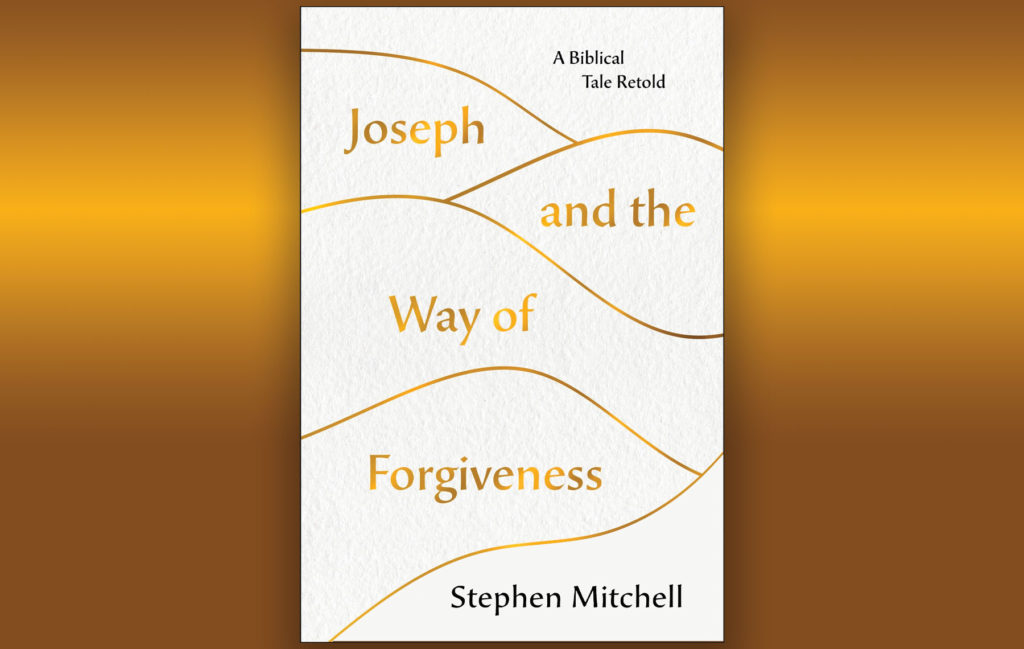
The story of Joseph, as we find it in the Book of Genesis, was called “the most beautiful story in the world” by  Tolstoy. So Stephen Mitchell, author of “Joseph and the Way of Forgiveness: A Biblical Tale Retold” (St. Martin’s Essentials), feels obliged to explain why he has “reimagined” the story in his latest book.

Mitchell’s answer is perhaps the best description of what he has accomplished in his retelling of the Joseph story. He points out that the biblical author writes “in a style of extraordinary concision, so spare that it can compress pages of characterization into a single phrase.” He likens the ancient text to “Japanese paper flowers, which unfurl when we place them in the water of the imagination.” His own book, then, is the bowl of water in which he places the ancient text, and it is through his imagination that we, his readers, see it flower.

Mitchell is a poet, translator and scholar whose readers have followed him into the religious texts of China (“Tao Te Ching”), India (“Bhagavad Gita”), Mesopotamia (“The Epic of Gilgamesh”) and Greece (“The Iliad” and “The Odyssey”). He has authored fresh translations of the Book of Genesis and the Book of Job, in their entirety, and he extracted from the New Testament a text that he titles “The Gospel According to Jesus.” The inspirational books that he co-wrote with Byron Katie, “Loving What Is” and “A Thousand Names for Joy,” were bestsellers.

With the gift of a storyteller and the knowledge of a Bible scholar, Mitchell engages in an extended work of midrash that breathes new life and meaning into familiar characters. We know that Joseph was Jacob’s favorite child, but he suggests that “Jacob loved him because Joseph was the child of Rachel, the beloved” and imagines that “[t]he boy looked just like his mother, except that his beauty was male, like a melody transposed into another key.” Drawing on the wordplay of the Hebrew Bible, he writes that Joseph “laughed the way [Rachel] laughed,” an allusion to the laughter of the matriarch Sarah when God revealed to her that she would bear a son at an advanced age. That son, of course, was Isaac, who was Joseph’s grandfather and whose name meant “I laughed.”

“With the gift of a storyteller and the knowledge of a Bible scholar, Mitchell engages in an extended work of midrash that breathes new life and meaning into familiar characters.”

Mitchell’s narrative voice boldly intrudes into the story itself, and he invites us to join him. When he describes the life of Jacob as a nomad in the Hebron Valley, for example, he writes: “If we were to visit the camp, you and I, we might find Jacob sitting before his tent in the cool of the day.” Since the laws of kashrut have not yet been revealed to the Israelites, Jacob (like Abraham welcoming his divine visitors) might offer us a meal of roasted lamb “along with a generous supply of milk and yogurt.” And then he cautions us: “But it’s better not to disturb him. So let us go as invisible presences. Come. I’ll guide you.”

The author is less interested in theology than in morality. In that sense, he is following in the footsteps of the original biblical author of the Joseph story: “Significantly, God does not appear in it,” Mitchell points out. When Mitchell imagines that Jacob told Joseph stories of the Garden of Eden, “where Yahweh walked in the cool of the day,” he drops in a footnote: “[Yahweh] is a name for the ‘God’ character.” That’s why, when Joseph’s brothers drop him in a well, Mitchell offers a short sermon on learning how to be humble: “The stone cistern where Joseph lay was the womb of his transformation,” Mitchell writes. “Then he had to find his way through a world of paradox, where exile is homecoming, slavery is freedom, and not knowing is the ultimate wisdom.”

Now and then, Mitchell honors the diversity of his own sources as a writer and a teacher by invoking other faiths and traditions. Musing on parents who pick favorites among their own children, as Jacob did with Joseph, he invokes Taoist and Buddhist texts: “I’m not very interested in a world without preferences,” Mitchell writes. “Even a buddha, when asked if she’d like vanilla or chocolate for her ice-cream cone, might say vanilla, though on a different day she might give a different answer.” He cites a Zen poem for the proposition that “[t]he Great Way isn’t difficult for those who are unattached to their preferences.” 

Mitchell is both a poet and a translator of poetry, and his prose sometimes bubbles up into a poem. The chapter that describes Joseph’s arrival in Egypt, for example, consisting of only two short paragraphs, is best read and understood as a poem: “Red boats are sailing under a turquoise sky. In short, in the high-walled gardens, cats doze in the sun, skinny from eating lizards, and in rosemary and honeysuckle the bees labor like slaves,”
the chapter begins, and in the next paragraph: “This is the land of mud, where the dead are planted feet upward. How it will all turn out he cannot guess. He is free only to watch, to listen, to let his mind
find its equilibrium in the pitch dark of itself.”

Of course, the reader knows how it will all turn out, and it is a measure of Mitchell’s achievement that he sustains our curiosity in spite of our foreknowledge. Thomas Mann is another author who was inspired to retell the Joseph story. Mann’s trilogy, “Joseph and His Brothers,” was his magnum opus, if only measured by the sheer number and density of the words between the covers. Mitchell, by contrast, takes a lighter hand with the pen, which explains why “Joseph and the Way of Forgiveness” is such a pleasurable, enlightening, lively and lyrical book. 

“Joseph and the Way of Forgiveness: A Biblical Tale Retold” is available on Amazon.


Jonathan Kirsch, author and publishing attorney, is the book editor of the Jewish Journal.

A Lyrical Retelling of the Joseph Story Read More »

Swastika Found on Tufts Jewish Student’s Door

A swastika was found attached to a Jewish student’s door in a Tufts University dormitory on the evening of Sept. 15.

Tufts University President Tony Monaco said in a Sept. 17 statement, “I condemn this cowardly act of hatred and ignorance. It is a direct attack on our Jewish community and an affront to our values as an institution.”

He added that university police are investigating the matter and encouraged community members to attend Holocaust scholar Deborah Lipstadt’s anti-Semitism lecture later that day.

It is not publicly known which specific dorm the swastika was found in.

Tufts Hillel Director on Initiative for Innovative Community Building Rabbi Jordan Braunig told the student newspaper Tufts Daily, “Anti-Semitism is strange in the way that … you can get gas-lit enough times where you’re made to question your experience enough that you start to do that on your own. My feeling in hearing about this particular event was just a real deep sense of sadness that the type of vitriol and hatred that’s symbolized in the swastika would have found its way onto this campus.”

Tufts Friends of Israel said in a Sept. 17 statement that they were “incredibly dismayed and hurt” about the swastika and called it “an act of targeted discrimination” against an “openly Jewish” student.

“This is not an isolated event, but yet another incident attacking the Jewish community at Tufts,” the statement read. “This is part of a pattern of anti-Semitism and a continued environment of hostility towards Jewish students that has persisted for years.”

They urged “Monaco and the Tufts administration to outline concrete steps they are going to take to protect Jewish students and combat anti-Semitism.”

https://www.facebook.com/TuftsFOI/photos/a.1882425682012775/2445137942408210/?type=3&theater

Anti-Defamation League CEO Jonathan Greenblatt tweeted, “Disturbing that a @TuftsUniversity student found a swastika on their door. #AntiSemitic attacks are appalling on any campus, but it hits close to home to see such blatant bigotry at my alma mater.”

Swastika Found on Tufts Jewish Student’s Door Read More »

An Accidental Archive Is Revealed in ‘From Cairo to the Cloud’

According to the Talmud, when sacred Jewish texts are worn and no longer usable, they must be buried in a Jewish cemetery. This sacred storage is called a geniza. 

In the 2018 award-winning documentary “From Cairo to the Cloud: The World of the Cairo Geniza,” filmmaker Michelle Paymar tells the story of these ancient documents and how they were transported from Cairo to the internet. 

The Cairo geniza manuscripts — which span almost 1,000 years from 870 C.E. to the 19th century — first captured Paymar’s imagination back in 2011 when she discovered two books about the manuscripts and learned that Cambridge University was in the process of digitizing the documents so anyone could read them with the click of a mouse. 

“It was like this remarkable time capsule,” Paymar told the Journal. 

Paymar decided to go to Cambridge and shoot a brief trailer about the documents for the Taylor-Schechter Geniza Research Unit there, which is how she came up with the idea for the film. 

Paymar’s documentary follows the geniza, which actually didn’t have any sacred texts in it, but did have half a million love letters, marriage contracts, business reports, grocery shopping lists and children’s drawings. It also included hand-written drafts from 13th-century Jewish philosopher Moses Maimonides (the Rambam). 

Forty geniza scholars, computer scientists, archivists, librarians, rabbis and writers from around the world provided insight into the documents for the film, sharing that this discovery may actually be more important than the discovery of the Dead Sea Scrolls, which were found from 1946 to 1956 in caves near the Dead Sea in Israel by Bedouin shepherds and a team of archeologists. 

Paymar, who grew up in a Reform Ashkenazi household, always had a passion for Jewish studies but the Cairo geniza opened her eyes to an entirely new side of Jewish history. 

She spent seven years gaining permission from three different Egyptian regimes to even enter the Ben Ezra Synagogue, the home of the original documents. In 2017 she was able to enter the sacred space after receiving the official ‘OK’ to shoot from the Museum of Antiquities, national police, tourism police and the press office.

“I was amazed and thrilled to realize that in a short time I was able to recognize and identify Maimonides’ handwriting. … He’s this nearly mythical figure and there are his writings.” — Michelle Paymar

“It was the first time in decades anyone had been allowed to film in there,” Paymar said. “When I first drove up to the synagogue, it literally took my breath away. It was an amazing moment. Seeing this building in various states of disrepair and studying it, even from the outside, it was kind of an overwhelming experience. When I got inside, it was a jewel box. It was quite lovely and quite small.” 

Of the half-million fragments first discovered by Solomon Schechter in 1896, Paymar asked the geniza scholars to share their favorite artifacts and incorporated those moments into the film. 

“I was amazed and thrilled to realize that in a short time I was able to recognize and identify Maimonides’ handwriting,” Paymar said. “It is breathtaking. He’s this nearly mythical figure and there are his writings, there are his scratch-outs, notes on the margins, just like we do.”

Throughout the film, scholars note that the way people acted then is similar to how we act now. Harvard University Jewish Studies professor and author Dara Horn compared the findings with a “medieval Facebook.” 

“We have this idea that everybody has this pious path and everyone practices Judaism in a practical way,” Paymar said, “but with [one of the amulets discovered], we see people still wanted their amulets, they wanted to wear it around their neck. Daily magic didn’t die out. At least from the evidence of the geniza.”

Paymar said the manuscripts in the geniza bring life to so much history but they were not supposed to be found. They considered these notes disposable. She said the geniza documents are “an accidental archive.”

Paymar also wanted to convey the beauty of the discoveries because she was making a documentary about documents. She decided to include illustrations of what she felt Cairo looked like at the time. She wanted to provide vibrant color for the Arabic-Jewish-speaking culture she grew up not knowing much about.

Perhaps the biggest discovery was the immense documentation of coexistence between the Jewish, Muslim and Christian communities. Paymar said it was easier to be a Jew in Cairo than to be an Ashkenazi Jew in Europe. 

“It’s really important to recognize that although it was a very rich period in Jewish history, it was a time when, for the most part, Jews were able to flourish [but] they were still second-class citizens. Not because they were Jews but because they were not Muslims,” Paymar said. “It was a situation they shared with their Christian neighbors. They knew one another, they visited each other on their holidays, they bought presents for each other. This idea that ‘hatred between Jews and Muslims is as old as Jews and Muslims’ isn’t necessarily true.” 

Paymar hopes that people all around the world have an opportunity to view the documents now that they are available in various languages.

“It’s really overwhelming. … It’s an amazing, amazing resource,” she said. “The geniza is reunited digitally in the cloud. In actual life, it’s dispersed in 70 libraries around the world and in private collections we never have access to.”

American Jewish University will host a screening of “From Cairo to the Cloud: The World of the Cairo Geniza” Sept. 22. A Q&A with Michelle Paymar will follow. For more information, please visit AJU’s website. To view the Cairo Geniza archives, click here.

An Accidental Archive Is Revealed in ‘From Cairo to the Cloud’ Read More »