There’s one word to bear in mind regarding current tensions in the Persian Gulf: Hormuz.
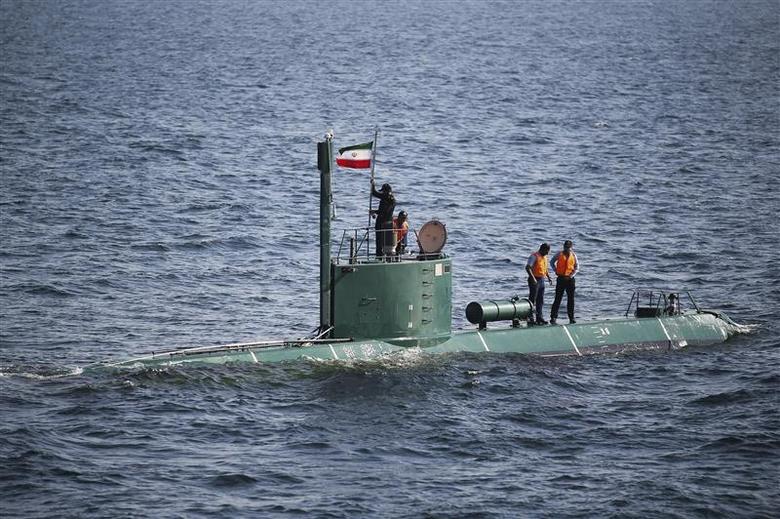
The Strait of Hormuz is the narrow passage between the Persian Gulf and the Gulf of Oman. Without it, Iran’s post-revolutionary theocrats probably would have lost power decades ago because 20% of the world’s oil passes through the strait.
That’s one-fifth of global oil, mostly in the hands (and ships) of an oppressive regime that sees itself as a unilateral protector of the waterway, which at its narrowest is only 21 nautical miles wide. One-third of the world’s liquified natural gas also passes through the strait.
Oh, to be a British or American oil tanker in the Strait of Hormuz, with Iran more belligerent than ever. It’d be safer to stroll through San Francisco with a “Make America Great Again” cap and matching onesie.
God help us if Iran decides to close the strait. The United States would sooner invite Syrian President Bashar al Assad to tea than to let that happen.
Last month, after Iran shot down an American surveillance drone in the Persian Gulf, President Donald Trump said he canceled a retaliatory attack against Iran 10 minutes before it was set to launch, but tweeted that the U.S. was “cocked & loaded to retaliate.”
On July 19, the Islamic Revolutionary Guard Corps (IRGC) seized a British oil tanker in the strait on charges that included … pollution. Persian mullahs complaining about pollution is like Hezbollah complaining about violence. (Iranian authorities alleged that the tanker collided with an Iranian fishing vessel, but never produced evidence of that.)
Given Iran’s behavior, one might have expected a harsh response from the British but their reaction can be described only as well-intentioned impotence.
The British seem obsessively dedicated to maintaining the 2015 Iran nuclear deal at any cost. That deal, which Trump pulled out of in 2018, empowered the Iranian regime to wreak havoc across the Middle East in return for promises to slow its nuclear ambitions for a decade or so.
“Oh, to be a British or American oil tanker in the Strait of Hormuz, with Iran more belligerent than ever.”
Last week, outgoing British Foreign Secretary Jeremy Hunt attempted to issue a warning to the Iranians by lamenting that Britain would deploy its navy to the Persian Gulf with a “heavy heart.”
I almost spit out some feta cheese when I read this.
Since when does the West respond to an Iranian seizure of an oil tanker (sailing under a British flag) with a “heavy heart”? We’re talking here about Iran.
Iran, the world’s biggest sponsor of terrorism. Iran, which hosts Holocaust denial conferences. Iran, which has aided murderous insurgencies from Iraq to Yemen.
I certainly don’t want war, and I don’t think most Iranian Americans do, either. But perhaps announcing that it pains your heart to deploy your navy in the face of Iranian aggression was a choice of words that could hardly deter further aggression.
Despite the fact that the IRGC rappelled onto the oil tanker from a helicopter, screaming, “Allahu akbar!” Britain still wants to play nice. Hunt announced that Britain will attempt to form a coalition of European Union (EU) partners to monitor the strait, which is ironic because Britain voted in 2016 to leave the EU.
Hunt also assured the House of Commons that Britain “will not be part of the U.S. maximum pressure policy on Iran because we remain committed to preserving the Iran nuclear agreement.”
As a persecuted Jew who escaped Iran, I can’t offer any alternative to dealing with the country other than applying maximum pressure. But I have a feeling that somewhere in London, a top Iranian official is being invited to tea.
Iranian leaders are desperate, thanks to American-backed sanctions and rejection of the nuclear deal, and emboldened, thanks to European appeasement and separation from stricter U.S. policy.
Can we find a middle ground between the U.S. being “cocked & loaded” and the U.K. suffering from a “heavy heart”? Perhaps.
But recently Iran announced it had arrested 17 Americans charged with being “CIA spies,” and has sentenced some to death.
Would war render my heart heavy? Of course. But I also know that appeasement often makes war more likely. So, do I believe that the U.S. needs a bipartisan policy of non-appeasement with Iran?
Yes, straight outta Los Angeles.
Tabby Refael is a Los Angeles-based writer and speaker.