fbpx

Parenting

An Unconventional Holiday Season

Last Passover, my mom, my sister and I sat at our kitchen table and ate thick slices of New York pizza.

“We are bad Jews,” my mom said, taking a bite of the forbidden crust. We laughed, but this statement was nothing new to us. She had voiced similar comments before, at other unconventional dinners, on other unconventional holidays.

My parents separated when I was 12 years old, a few days before Thanksgiving. I remember eating dinosaur nuggets on our cold kitchen floor with my older sister and her best friend, wondering what the holiday season would look like with this new severed version of our family.

At the time, I was the only kid in my sixth-grade class whose parents were not together. In our tight-knit Jewish community, the pressures of convention still reigned supreme.

There were many holiday seasons after that where my family would play make-believe — squeezing into button-up shirts and navy dresses, stuffing stale kugel and sour cranberry sauce into our mouths in order to fit into some other family’s picturesque Hannukah or Thanksgiving.

The holidays are about celebrating family and fullness, so I understand and appreciate what prompted my parents to fit into the version provided to us. But of course, those gatherings always felt forced — tense and unnatural — and I began to dread the string of weeks between Thanksgiving and New Year’s.

The “holiday blues” has now become a known phenomenon — WebMD and the national suicide prevention line seasonally put out articles on how to cope with holiday-related depression and anxiety. They warn against behaviors like over-eating and over-drinking. But it runs so much deeper.

The longstanding traditions associated with the American holiday season are exclusionary by nature. Through holiday rituals, society continually affirms that being in a conventional family structure is what makes people happiest. So many of these rituals also imply the need for travel, limitless leisure time and a disposable income in order to fit in. Anything short is criticized — no family holiday card? No celebratory thanksgiving meal? No fancy presents? No Christmas vacation? Always a faux paus.

For many reasons this year, these larger societal traditions are being tested. What are the holidays about when stripped of the giant family reunions and fancy getaways?

This will be my first holiday season without my mom. I’ve avoided writing that sentence for months. Last Thanksgiving, my sister and I sat in a cold hospital waiting room with protective gowns and plastic masks on so that we could visit her one last time.

This year, I’m thinking of the many other people that will be in sterile hospital waiting rooms, chilly cemeteries or alone in their overheated studio apartments, unable to get on a plane to see friends or family.

I keep going back to last year in the hospital waiting room that I sat in. I felt like I was 12 years old again — waiting for some holiday magic to erase my reality, only to be met with disappointment and then shame as I scrolled through the collages of happy families on Instagram.

Of course, I’d rather have been anywhere than in that hospital for the holidays last year. Of course, I’ve done everything I can to avoid the overwhelming emptiness this year that will surely come with no longer having my mother and my spiritual home. Of course, so many of us are frantically scrambling to carry on some sense of tradition during such an uncertain time. Sometimes those traditions can serve us, but they can also make us miss something.

Sometimes those traditions can serve us, but they can also make us miss something

After those years of play-pretend with my parents before my mom got sick, something quite wonderful began to happen — my mom started to create new, odd traditions, just for us.

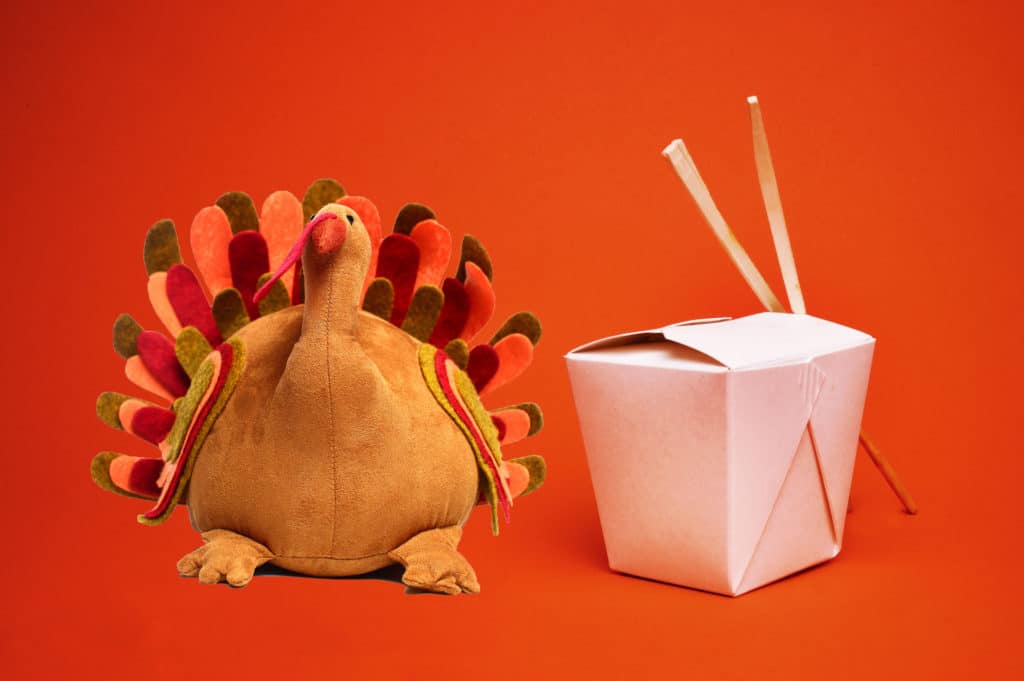
I think the first time was a Thanksgiving when I was in high school, when only my mom and I lived at home. We decided to skip the dinner we’d been invited to and instead order Chinese food and watch romcoms in her bed late into the night. It was chilly, pitch-black by six o’clock, but warmth streamed into our house. I remember my mom was oddly giddy, child-like. Looking back, I see this as the first time she could really release those societal pressures and just do as she pleased.

With her new sense of freedom came a new light.

After that, there was the Christmas that my older sister, my mom and I got drunk on margaritas and gossiped about our burgeoning love lives. The Hanukkah where we ate flaming cheese and danced, uninhibited, at a Greek restaurant. There was the Friendsgiving where the women drank wine and ate cheese, while the men waited on us — preparing meatballs and pastas and chocolatey desserts.

Even though I had some lingering sense telling me that these events were not the “right” way to celebrate, those unconventional moments were the fullest I’ve felt during a time where there is so much pressure to feel and be a certain way.

I know that my mom was always insecure about the non-traditional way we did things in our family, comparing us to the rest of our community. But those odd memories are the ones that I cherish most. They were most emblematic of my mother at her core — authentic, fun-loving, whimsical, wacky.

In order to sink into what the holidays should really be about — inclusion, compassion, love — we need to shed traditions that don’t work for us and accept that there is no “right” way.

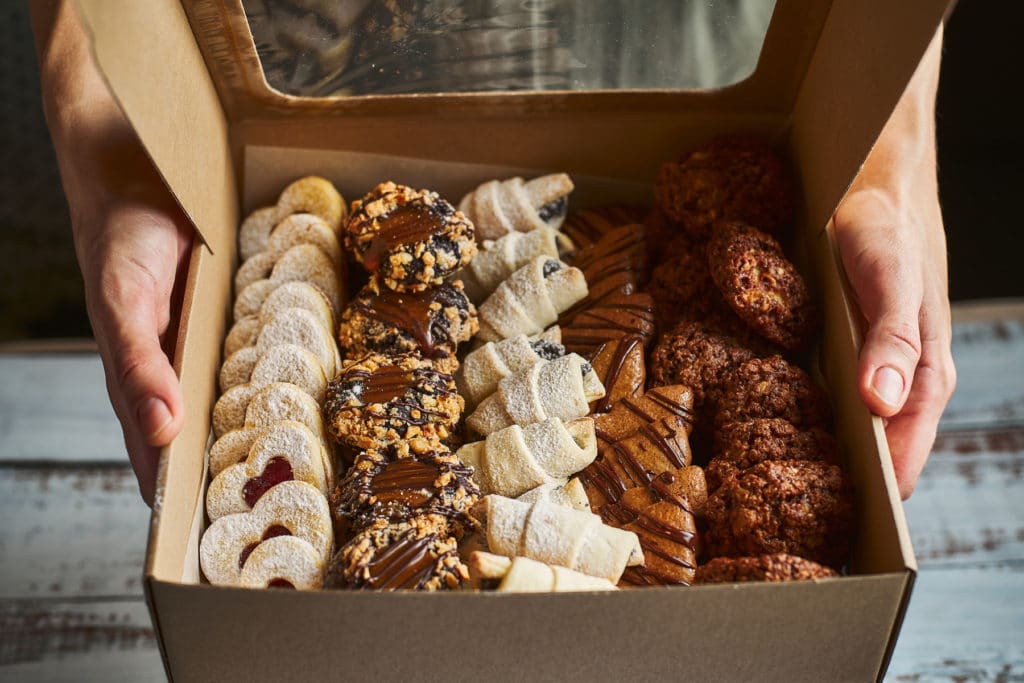
I’ve already begun to feel bouts of grief as the holidays approach. It’s all the little things — seeing the cornbread mix my mom used on the display shelves at Trader Joe’s, hearing “Love Actually” come on the TV, baking compost holiday cookies in our kitchen without her.

It is easy to sink into the simple devastation of all that’s been lost this holiday season. It is easier still to try to push loss away and force old conventions. But as I move through the natural waves of sorrow and joy and then sorrow again, I find that the answers always lie somewhere in between.

Perhaps this holiday season, we can accept what is missing and also throw out conventions that didn’t serve us to begin with. Find something unexpected in the nooks and crannies of tradition.

… Maybe even go get some Chinese food on Thanksgiving. And simply appreciate that we are here.


Rebecca Katz just received her master’s in Journalism from USC Annenberg. She works in audio journalism and is in the works of starting her own podcast. twitter:@rebeccaerinkatz.

An Unconventional Holiday Season Read More »
My Mother’s Warfare Against Aesthetics

Picking out the outfit to bury my mother in was hardest for two reasons: One, she owned a lot of clothing. Two, she had very picky taste.

Of course, the task was difficult for all of the reasons one might imagine — a welling of grief and anguish, the palpable emptiness in the wake of loss.

But standing in my mother’s closet a mere two days after her passing, I hadn’t processed much of anything. I was still half-expecting to hear the distinct clack of her high-heeled boots coming around the corner.

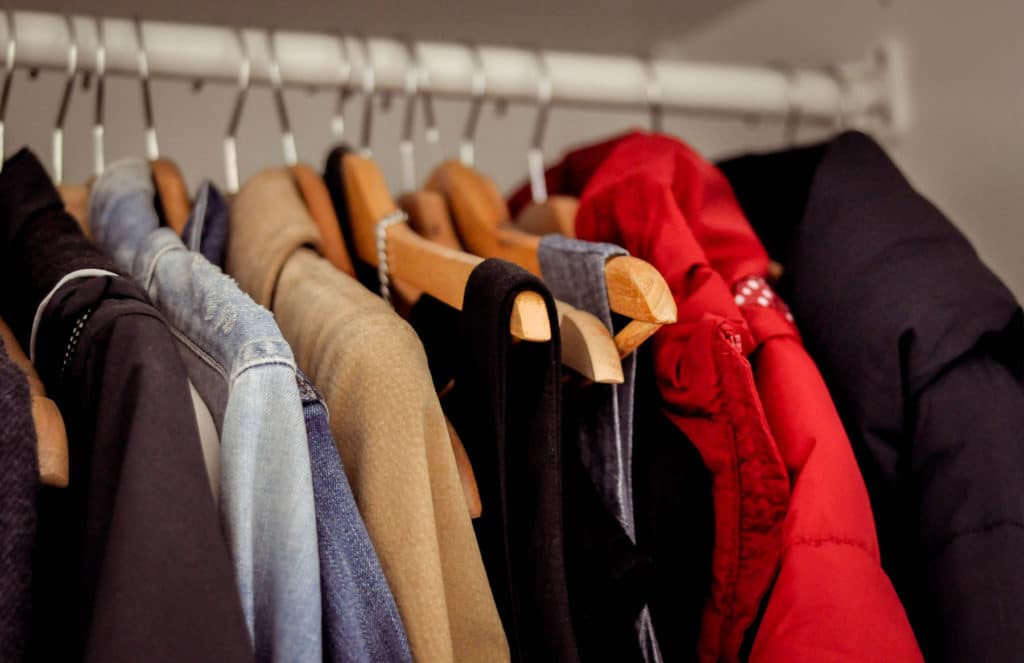
Sifting through the hangers of olive-colored skirts and beaded tank tops, all I could really think was: would she want a jean or leather jacket?

Like many mother-daughter relationships, ours often revolved around clothing and makeup. My mother had always been interested in fashion and aesthetics. I found a picture of her when she was about my age in the 1980s, clad in a bold neon top, flare jeans, and dangling earrings.

From a young age, I remember us bonding through trips to the mall, trying on accessories in her bathroom, and strutting through the house for first-day-of-school fashion shows.

But our connection went far beyond bracelets and brooches. As I grew up, we shared our career aspirations, political opinions, and our deepest fears and anxieties.

My mother was a fierce, stubborn, hard-working woman. She was also a woman who cared about her appearance and deeply internalized the aesthetic pressures on women.

A materialistic woman is not seen as a “desirable” woman by society. Yet, the worldwide beauty industry is an almost $600 billion production based on selling women the belief that they are not enough. From the time that we are girls, billboards, commercials, and Facebook advertisements hardwire us to believe that certain material items are key not only to our happiness but also to our success.

In high school, I began to notice how much my mother tied her sense of self to how she looked. I judged her. I resented her. But I also related to her. Hasn’t every restless woman once asked herself: would I be happier if I were prettier? Skinnier? More youthful?

Hasn’t every restless woman once asked herself: would I be happier if I were prettier? Skinnier? More youthful?

As long as women are objectified, their physical appearance will function as a core value and the absence of their beauty will be perceived as something to fix.

I could judge my mother all I wanted, but the pressure to look a certain way is even greater for aging women. As Susan Sontag puts it in her essay, The Double Standard of Aging, “For women, only one standard of beauty is sanctioned: the girl.”

If aesthetic pressures are intensified for aging women, they become even more complex for sick women. When my mother’s chronic cancer turned terminal at age 59, the way that she related to aesthetics took on a new layer of significance.

 If aesthetic pressures are intensified for aging women, they become even more complex for sick women.

When you are sick, you are stripped of yourself. I saw this firsthand as my mother lost her appetite, her hair, and then her desire to get up in the morning. A woman, who once took so much pride and joy in getting ready and being out in the world, felt too ashamed and ostracized even to leave her own bedroom.

In her 1980 book, The Cancer Journals, the Black feminist poet Audre Lorde begs readers to confront the intersection between feminism and illness. Sickness robs women of their selfhood in a particularly insidious way. If women are taught to internalize their worth through their physical self, Lorde argues, then sickness is the ultimate threat to their personhood.

When my mother first got sick, I couldn’t understand why her aesthetic deterioration seemed to be the most agonizing part of all of it for her. I wished so badly that she would be a woman who would boldly buzz off all of her hair and fight societal standards as she fought the disease.

But when you are a sick woman, you are up against even more societal stigma than before. People kept telling my mother to fight — “keep fighting,” “you’re so strong” — as if her strength was dependent on enduring a never-ending pain.

Our medical system reinforces this pressure to no end. Not only are toxic treatments pushed at all costs, but in the hospital, your particular body becomes the body — converted into a test tube.

My mother decided to stop treatments when it was clear that they would only prolong a painful quality of life. She could no longer be the devoted mother, loyal friend, or fierce workhorse that made up her identity.

Instead, she put all of her energy into getting a wig. In her final days, she put on lipstick in the hospital mirror. She didn’t want to be pumped with more poison, she wanted us to paint her fingernails.

The idea of beauty as a site of resistance rather than capitulation circles back to Lorde and her fight with breast cancer. In 1988, she wrote, “Caring for myself is not an act of self-indulgence, it is self-preservation, and that is an act of political warfare.”

I came to see my mother’s desire to maintain her aesthetic as her form of warfare in a battle that had suddenly and brutally stripped her of her identity, motherhood, and womanhood at a young age.

My mother literally wore a wig on the day she died. Silly as we thought it was at the time, I now see this as my mother reclaiming herself in a world that had taken so much from her.

Sometimes I look at that wig — sitting in her closet — and its long, beautiful, blonde locks. They were not her own. But they gave an important piece of herself back to her when nothing else quite could.


Rebecca Katz just received her master’s in Journalism from USC Annenberg. She works in audio journalism and is in the works of starting her own podcast. twitter:@rebeccaerinkatz.

My Mother’s Warfare Against Aesthetics Read More »

My Not-so-Typical Jewish Mother

My mother was not adept in the kitchen.

There was always a ruckus of noise before dinnertime — a cacophony of clanking and clattering.

I remember lots of nachos for dinner as a child — tortilla chips with melted cheese on a baking sheet, slimy tomatoes and dry, shredded chicken on top. There was pasta and microwaved Trader Joe’s eggplant cutlets. My personal favorite was when we got to order Panda Express.

My mother would roll over in her grave if she knew that I was sharing her secrets of frozen veggies and fast food Thursdays with the world.

In eighth grade, I was in charge of baked goods for my dance company’s party. I remember catching my mom placing salted caramel brownies she’d bought at the grocery store on a platter in an attempt to present them as homemade.

I’ll never forget the look in her eyes when I caught her: utter embarrassment, with a twinge of devious satisfaction.

I think that was the first time I realized that my mother was more than a mother. She was a human being — imperfect, unsure, a little bit rebellious.

Like all of us, she was just taking a shot in the dark.

It takes most of our early adolescence to grasp the fact that our parents are people, too. Mothers, however, have been confined to a very specific category of subhuman.

In 2014, the American Greetings card store ran a Mother’s Day ad that went viral with a series of interviews with applicants for a job called Director of Operations. The duties of the job were described: unlimited work hours, no breaks, no pay. And then, the big reveal: billions of people already have this job. MOMS!

I am not a mother, and surely there is nothing new about advertisers exploiting the myth of the ideal woman, but I have never seen an ad quite so cringeworthy.

Watching this commercial gave me a glimpse into the unending list of impossible standards we place on mothers. Mothers are expected to form intense, emotional bonds with their children, but they are also warned against coddling and “over-mothering.” Mothers must always be available to their kids — preparing snacks of celery and peanut butter and playing with Polly Pockets — yet they are expected to shift into the role of loving wife and then sexy seductress on a dime.

This unachievable depiction of motherhood does real damage to women of all races and socioeconomic status. It especially harms low wage workers, where taking time off work to “be a mother” in this very particular way can mean risking your job and your livelihood.

Now, mothers are meant to be supreme multitaskers. You can be a successful career woman, but only if you sacrifice enough to make those homemade brownies for your child’s dance show. No store-bought treats allowed.

You can be a successful career woman, but only if you sacrifice enough to make those homemade brownies for your child’s dance show. No store-bought treats allowed.

My mother worked in the male-dominated sports world for over 20 years.

People were always shocked when they found out that my 5-foot-2, 100-pound mother was a sports producer, but could not bake a homemade pie to save her life.

My fondest memories of my mother are of visiting her in her office — this little woman at a giant desk. There was always the low hum of sports radio on and men coming through her door, cracking jokes, asking her how she managed to book some seemingly unattainable sports star.

Even at a young age, it was obvious to me that she felt most in her element at work. It was as if she grew six inches in spirit — confident, lively, present.

We’ve come incredibly far with women’s rights in the past five decades, yet we often still devalue women’s achievements outside of the home and make assumptions that the natural route to female satisfaction is domestic.

Like many women of her generation, my mother internalized the role of “mother” and constantly harped on what she lacked.

As a mother, you are told again and again that you are not enough. Working mothers especially must constantly dodge judgments and questions, always having to prove themselves.

I grew up in an insular Jewish community in the suburbs of Los Angeles, where making a perfect brisket for Rosh Hashanah dinner was a point of serious pride. My mother did not fit the mold.

On car rides to other families’ homes for Shabbat dinner, my mom would waver and then ask me something like, “Do you want me to host one of these dinners?” I’d catch her mumbling to herself, “I should probably teach you how to cook that chicken dish some time …”

Since my mother passed away in December, I find myself turning over her anxieties and insecurities in my mind.

I am 24 years old, yet I find myself seized in my kitchen, mind racing: Oh my god, how do you cook a piece of meat? What does one make for a dinner party? People will think I’m incompetent. Should I change my clothes? …

These anxieties feel outdated for a woman of my generation. Today, it is the norm for women to resist conventions of domesticity thanks to women serving in the Senate, playing professional sports and becoming CEOs. But I think all women can attest that sometimes those deeply entrenched insecurities, perpetuated by unrealistic standards, still rear their ugly head.

In my clearer moments, I think about all of the things my mother taught me without even trying — how to break the mold, persist, resist and be deviant and adventurous, a mover and shaker.

My mother taught me that there is no specific way for a woman to be. She had a knack for making anyone in her presence feel like just being was enough.

How I wish I could reassure her one last time that she, too, was enough.

She was always more than enough.


Rebecca Katz just received her master’s in Journalism from USC Annenberg. She works in audio journalism and is in the works of starting her own podcast. twitter:@rebeccaerinkatz.

My Not-so-Typical Jewish Mother Read More »

Oh baby, baby: Five options for dealing with babies on the High Holy Days

New parents have a lot to figure out: how to get their baby to sleep through the night; when to introduce food; how to binge-watch Netflix while being sleep deprived. The High Holy Days present one more thing for new parents to figure out: how to atone for your sins while taking care of your baby.    

While most synagogues offer a plethora of childcare options for children who can walk and talk, most new parents are trying to decide what the best option may be for their babies. Here are just a few helpful suggestions for new parents to consider.

Find services made for young families

Many synagogues offer High Holy Days services specifically designed for young families during which crying, nursing and screaming not only are tolerated, but expected. These services are often under an hour and free. For instance, Temple Judea in Tarzana offers a “Tot High Holiday” service where clergy appear in costume and put on “a fun and wild show,” according to Ellen Franklin, Judea’s executive director. “It’s entertaining but with some traditional prayers.”

At Sinai Temple, there is a 45-minute volunteer-organized “Shofar Blast” service that is “by kids, for kids,” according to Rabbi Nicole Guzik. The service features a “highlight reel” of prayers including Avinu Malkeinu and the mourner’s Kaddish and leads into the synagogue’s “Torah-in-the-Round” family-friendly service for those who choose to stay for a fuller High Holy Day experience.

During Shofar Blast, “you’ll get a message from the rabbi and a puppet show,” said Guzik, who noted that the service is not designed for parents to chitchat but really to connect to their kids and to the spirit of the holiday.

Be there but be flexible: Go to adult services

For many parents with babies, attending regular adult services is still an option. While some synagogues explicitly discourage babies from adult-only High Holy Days programming, others are fine with infants so long as parents follow the implicit rules of High Holy Days decorum.

When Betsy Uhrman’s children were babies, she would transport them in a carrier and follow her synagogue’s  “unspoken etiquette” of sitting in the back or near an exit.  If her baby started making noise, Uhrman simply stepped out, which happened often. “I was happy to have them there but I wasn’t actively present in services,” she said.

This year IKAR, the spiritual community located in Mid-City, is setting up a “Pray-ground” with toys for children younger than 4 in the balcony overlooking the space where their main services are being held. There will be a closed-circuit feed for parents to hear the full service, including the sermon. 

“We are trying to create space that makes parents feel part of the service even if they are not in the room,” IKAR Executive Director Melissa Balaban told the Journal.

It takes a village: Attend services with family and friends

Childcare doesn’t need to be a one- or two-person task during the High Holy Days. Many new parents choose to attend services with their support networks to divide the childcare responsibilities.

Last year, Tova Leibovic Douglas, a rabbinic student at the Ziegler School of Rabbinic Studies at American Jewish University, wanted to spend some of her time in services actually praying — not just watching over her 18-month-old daughter, Eve.

For the High Holy Days, Tova and her husband, Austin, split their time between their home shul and the synagogue where Tova’s extended family was attending services.

“It made it easier for us,” she said. “Instead of Austin or me being the ones to have to watch Evie, we got to split the responsibility among ourselves, my parents and my sisters.” Austin added that in addition to being helpful, “going to services with my in-laws was a good opportunity for them to spend time with Evie,” adding that “it made services more enjoyable for everyone.”

Stephanie Steingold Bressler’s village of support wasn’t family members but other congregants at her synagogue. “When my kids were too young to go to official child care, I let rebellious teens, who were already in the lobby, take turns hanging with my kids,” she said.

Parents’ night out: Get a baby sitter

For some parents, the important work of accounting of the soul is more easily done when the kids are not around at all, so they choose to hire a baby sitter. 

Betsy Uhrman, who does attend most services with her children, always hires a baby sitter on Kol Nidre. “It is really rare that my husband and I carve out time for our own spiritual reckoning,” Uhrman told the Journal, “so on Kol Nidre, it’s important that we are both present.”

Uhrman chose Kol Nidre as the time for a baby sitter because of how “powerful” the service tends to be as well as for the importance of maintaining bedtime for her kids.

Synagogues on occasion make accommodations for baby-sitting young children. Wilshire Boulevard Temple offers baby-sitting to member families that preregister for children at least 3 months old, and at Sinai Temple families can request caregiver passes — which enables nannies to enter the building to watch over children without having to purchase tickets.

Bowing out: Staying home

For some new parents, the right answer for their High Holy Days experience is to stay home with their children and observe the holidays in other ways.

For Jenny Platt, taking her 16-month-old son, Sawyer, to services last year was going to be too big of an ordeal.

“I read Rosh Hashanah books with him and he watched a video of shofar blowing on the computer,” she said. An unconventional solution, but Platt said she was grateful that she could still celebrate the holiday with her son.

For some parents with young kids, staying home feels like the only option. “When you have an infant and a 2-year-old that wants to run around and there is no programming for them, you stay home,” according to Tamar Raucher, whose husband, Noam, is the head Rabbi at Pasadena Jewish Temple & Center. When her kids were too young for formal programming, she said, “the day became about celebrating with friends afterward at Rosh Hashanah lunch.”

Oh baby, baby: Five options for dealing with babies on the High Holy Days Read More »

Dad steps into unexpected role after tragedy strikes

Nothing can prepare you for fatherhood. Sure, Amazon has an endless supply of books, and there are a million websites dedicated to the topic. Beyond all that, there is no shortage of friends and neighbors willing to lend an opinion.

And yet, despite all that, little could prepare me for the three versions of fatherhood I experienced before my first child became a teenager.

I went from your typical dad with two kids, to a single dad with three, to a stepdad with a blended family of five in a dizzying period of my life that challenged me in ways I never could have imagined, but ultimately shaped me to become a better, more patient man, and hopefully, a better, more patient dad.

But, as we dads know, when you first hold that baby, or when you first wake up to a plaintive wail, or when you play your first game of catch, there is no preparing for that.

Dads are, by and large, the butt of the joke, the bumbling father who can barely make it out the door with his briefcase and coffee, struggling to get to the recital without embarrassing his daughter or angering his wife. We try and we fail.  I was — and am — no different. 

During my first six years of parenthood, I had an amazing wife who booked the doctors’ appointments, enrolled in all the right classes, made sure our kids had sufficient “tummy time” and knew just when to start potty training.  It was as if she had memorized the entire “What to Expect” canon. Sure, she had her moments of insecurity and failure, but those paled compared with my daily entreaty: “Please don’t let me screw up.”

In hindsight, those were the easy years. I was the classic suburban dad — more useful on weekends, trying to be present during the week. I was never where I was supposed to be, whether at the office or at home, but I was muddling through, and my wife loved me enough to want a third child. So we decided to forgo the man-to-man defense; we were prepared to play zone with three kids.

But then, one day I woke up and found myself a single father of three. The painful details are not important, but 21 hours after our third child was born, my wife died. In an instant, it became a three-on-one fastbreak. This, I hadn’t signed up for.

I learned early on that life isn’t fair. But in my sadness, I was not afforded the opportunity to lament this injustice, or wallow in self-pity. I had a 6-year-old, a 2-year-old and a newborn. They needed their dad — not some shell of a man but someone who was present, available and accountable.

I was lucky. I had two sisters who were there at the drop of a hat; friends who could be counted on for any need; a temple community that rallied to the cause; a mother-in-law reeling in grief but up to the task; a father who lent a shoulder more times than can be counted; colleagues who acted like family; and a nanny who took on extra responsibility without gripe or groan. It was never “Why me?”; it was always “Why not me?” Add to that my preternatural son who internalized the loss of his mother and quickly moved into “this is my new reality” mode. My girls were too young to understand. In my darkest moments, I thought how much worse this would have been had it happened 10 years later.

The gravity of it all hit home a few weeks on when my son was home sick. I saw him on the couch, and I knew what he needed more than anything in the world — his mom’s cuddle. No matter what I did, I wasn’t her. But I adjusted; I adapted; and most important, I grew — as a father and as a man. I took on the dual role of father and mother and did what I could to provide my kids with what they needed. I failed. A lot. But I tried. And I was present.

My wife had instilled in me the importance of “being there,” and I made sure that I was. Some things, such as work and friendships, suffered — but people gave latitude, and I took full advantage.

Fast forward a few years, and I became a stepdad. Now I was really in the fire. I had met a wonderful woman with two kids; it was a package deal, and I was up for the challenge, or so I thought. To be candid, being a single dad of three was considerably easier than being a stepdad to two. The learning curve was — and remains — steep.

Stepdads are a dime a dozen; being one doesn’t make me special. What makes our situation unusual is that even though all five kids live with us, my stepkids still have two biological parents, and my kids have one. As stepparents, we try to fill the void, but you are, at best, a reasonable facsimile. That’s OK, but it means I retain the vestiges of being a single dad.

When my kids wake in the middle of the night, they come to my side of the bed. When it’s time for their annual physicals, I make the appointments and take them. When they give their biography presentation at 11 a.m. on a Tuesday, they want me there. None of this is an indictment or even a judgment on my new wife — she is a terrific stepmom. It is just our reality. As a parent — as a father — you give your kids what they need, and my kids need me. And that couldn’t make me happier.

All of my three phases of fatherhood have been different, and yet all quite similar. The journey has been fraught, and it certainly hasn’t been what I envisioned when my first wife looked at me at the top of the Target escalator and said: “Let’s have a baby.”

Every dad celebrating Father’s Day has his own story, some more harrowing than others. But whether we are single dads, stepdads or just plain, ol’ garden-variety dads, we all have the same goals: provide for our kids, be there when they need us, guide them on their way and hope like hell they take care of us in old age.

Happy Father’s Day to all.


Dan Freedman runs business affairs for the independent film company Good Universe. In his free time, he writes a blog about his first love, baseball. When not trying to keep up with his five kids and their activities, he enjoys spending time with his wife, Karen.

Dad steps into unexpected role after tragedy strikes Read More »

Two online parenting resources provide community and more

Being a new parent can be isolating and overwhelming, feelings that don’t always disappear as kids grow older.

For Los Angeles-area parents, two online forums, Peachhead and Jen’s List, are easing the burden, helping to navigate the challenges and provide a sense of community.

com-linda-perry-peachtreePeachhead got its start 20 years ago, when its founder, Linda Perry, 51, had her first child, a daughter. After completing a three-month “mommy and me” program, she found that some of the moms wanted to stay in touch and continue getting together. Perry, a Reform Jew, got their email addresses.

With a daughter who was not content to chill at home, Perry was constantly out and about. She started emailing the group on a regular basis, telling the moms about different neighborhood activities and where she and her daughter would be at a particular time. Her friends forwarded the emails to their friends. The list rapidly grew.

Today, with about 16,000 members, Peachhead (peachheadfamilies.com) has become a vibrant forum — mostly for moms, although dads are welcome — to share advice on a wide array of subjects. Every month, there are upward of 1,000 posts.

Joining the Yahoo-supported group is free, and subscribers have several options, including a daily digest, typically one to four daily emails that aggregate approximately a dozen posts into easy-to-read collections. One recent digest included an appeal for homeopathic remedies for reflux, a reader seeking a recommendation for help assembling a trampoline and a call for a Sunday-night sitter. Perry generates revenue from ads priced between $100 and $200.

“This group is for anything you would ask a friend or neighbor, not limited to parenting stuff,” said Perry, who also works as a legal assistant. But subjects related to parenting tend to be the most discussed. Among the most popular topics are sleep issues, nursing challenges, tantrums, how to handle kids when they talk back, computer use and at what age kids should get cellphones.

“This group is for anything you would ask a friend or neighbor, not limited to parenting stuff.” – Linda Perry, peachhead founder

Only politics is strictly off limits. And if things ever get too heated, which they do on occasion — around the topic of vaccinations, for example — Perry moves the conversation to a debates and discussions subgroup.

Why the name Peachhead? It’s not a reference to the super-soft pates of newborns, Perry said. Rather, her husband was a fan of the Allman Brothers, and one of their early albums was called “Eat a Peach.” Fans were known as Peachheads. Mystery solved.

Like Perry, Jen Levinson did not set out to create a business. In 2005, as a mother of one boy and 19 weeks pregnant with twins, she was put on strict bed rest.

“I’m a total Type A personality,” said Levinson, 46, now the mother of five, all boys. “I do much better with a lot to do. I could not just sit there.”

So she devoured newspapers and magazines. When she saw a cute baby product or read an article that resonated with her, she sent it to a handful of other mom friends.

Soon, her emails grew more elaborate. And Levinson, whose family worships at Valley Outreach Synagogue in Chatsworth, started hearing from people she didn’t know, asking to be added to her email list. Turns out, her friends were sharing her emails with other moms. Four years later, she was sending her daily email, which the community named Jen’s List, to 6,000 people.

“It was strictly a labor of love,” she said — at least it was at the beginning. With another set of twins on the way, her husband, Mike Levinson, encouraged her to continue the project, and they brainstormed ways to monetize the operation.

She started selling daily sponsorships for $195, a price she has maintained. And she no longer publishes on weekends.

Though Jen’s List (jenslist.com) does not have the dialogue exchange of Peachhead, it does have a conversational feel. The emails reach about 20,000 subscribers throughout Los Angeles, more than half in the Conejo and San Fernando Valleys, and include such personal recommendations from Levinson as a summer camp, a bar mitzvah tutor and a plumber. There is also a “Today in History” section. And Levinson allows subscribers one free post a month.

Levinson and Perry say the most satisfying aspect of their respective forums is helping people.

“Without sounding corny,” Levinson said, “it brings me joy.”

Two online parenting resources provide community and more Read More »

Q&A with Betsy Brown Braun — Hollywood’s go-to parenting guru

Betsy Brown Braun has become known as a parenting guru to the Hollywood elite and beyond. In fact, this child development specialist and mother of 30-year-old triplets earned her credibility serving as site director of Stephen S. Wise Temple’s preschool and founding director of Wilshire Boulevard Temple’s early childhood center, as well as teaching her own parenting classes. On Nov. 16, she’ll discuss her new how-to tome, “Just Tell Me What to Say: Sensible Tips and Scripts for Perplexed Parents” (HarperCollins, $15.95), on “The Today Show” at the Los Angeles Jewish Community Library.

Jewish Journal: U.S. News & World Report dubbed your book a ‘handy parent cheat sheet … when the kids whine, say this. When they throw food, say that.’ How did you come up with the premise?

Betsy Brown Braun: I’d met so many parents who are talented career people, but can be humbled to their knees by a 4-year-old. They’d say, ‘Betsy, what do I say? What do I do? Help!’—so I offer actual scripts that can be a starting point for parents.

JJ: One of your suggestions for dealing with a child who won’t come to the dinner table is to tell him that unless he comes ‘right now,’ he won’t be having dinner—ouch! That won’t go over well with my relatives who are children of Holocaust survivors.

BBB: That’s why I offer several approaches to the same behavior. Your choice may be to say, ‘If you don’t come to the table immediately, you’re going to be eating alone in the kitchen, or eating later, away from the family.’

JJ: Food can be a very loaded issue for parents. That’s like the definition of the Jewish mother.

BBB: I think the Jewish mother thing is a stereotype, but parents do freak out about picky eaters—and it’s no coincidence that picky eating often comes at the age when children are learning to assert themselves. It’s, ‘I’m not going to eat even that delicious chocolate éclair because it feels much better to say, “No.”’ The best thing to get a child to eat is to stop talking about it. Sit down at the table and talk about squirrels, because when it crosses the line to a control issue, you’re going to have trouble. 

JJ: What differences do you see in ways parents raise their kids now as opposed to when you were raising your triplets? 

BBB: I see people tackling parenting in the same way that they would a career—they read every book and end up micromanaging everything. You would plotz—parents come to me and say, ‘Just tell me what’s the best nursery school that will get him into the best elementary school that will get him into the best college’—and the rest is obvious.

JJ: But if you’re not doing those kinds of things, you can feel like you’re a not-good-enough mommy.

BBB: Parents need to develop what I call a ‘Teflon coating,’ meaning: don’t absorb what your friends are doing. Just because your friend is putting her 18-month-old in a soccer skills class doesn’t mean it’s right for you. How about just playing in the dirt or throwing rocks?

Then there is the danger of giving your child too much.

I teach a class called ‘Affluenza: The Perils of Overprivilege,’ which I’ve changed to ‘Gimme, Gimme Gimme’ in light of the economic downturn—but it’s not so much about ‘stuff’ as about how we interact with our kids. Parents need to build lessons that help children learn how to tolerate frustration, disappointment and to delay gratification, and in doing so, cultivate gratitude and the importance of longing.

JJ: What’s one key thing you recommend for dealing with difficult issues, such as death and divorce?

BBB: Forget euphemisms. I think parents don’t keep in mind that children take things very literally, so when you say Grandpa’s in a better place, they’re like, ‘Well, where? I wanna go see him,’ and ‘why did he leave me to go there?’

JJ: When a client is powerful in Hollywood, is it a role reversal for you to be telling them what to do?

BBB: I’m careful. I don’t say, ‘You’ve got to do this. I say, ‘I think such-and-such will really help.’ For example, the head of a major agency once came to me because one of his children was having separation issues. I knew that a breakthrough was going to come when the dad drove the child to school, because kids have a harder time separating sometimes from mommy than from daddy. So I said, ‘You have to drive your son to school every day for three weeks, and he said, ‘I can’t do that!’ And I said, ‘Here’s the deal. You can do this or that, but this is liable to work and that isn’t.’ So he drove the kid.

Q&A with Betsy Brown Braun — Hollywood’s go-to parenting guru Read More »

Iranian American Jews mentoring new generation of leaders

“It’s amazing. It’s awesome,” Nicole Lavi said. “I have an older ‘sister.'”

Lavi, 17, a senior at Beverly Hills High School, reached over to Donna Pouladian, 23. “She’s the best. I love her,” Nicole said.

The two were meeting in person for only the second time, but already they’d discovered many common characteristics — both are outgoing and energetic, both have an older brother and both want a career that will help people.

And most pertinent, both are Iranian American Jews born in the United States and assimilated into American society but raised by parents steeped in the culture and traditions of Iran.

Pouladian, who is finishing her doctorate in occupational therapy at USC, and Lavi are part of a pioneering Young Iranian Jewish Leadership Program developed to give motivated Iranian American high school students the direction, encouragement and skills needed to shine as professional and community leaders.

This is a project of 30 Years After, an organization founded a year ago to engage the Iranian Jewish community more intensely in American civic life and the broader Jewish community, in partnership with Jewish Big Brothers Big Sisters of Los Angeles and Beverly Hills’ Nessah Synagogue.

On this night, the two young women are one of 11 pairs of mentees and mentors — Los Angeles area high school students matched with successful young professionals in their 20s and 30s — who have gathered at Berri Good on South Robertson Boulevard in Beverly Hills to chat, play board games and feast on frozen yogurt, competing against a background of piped-in hip-hop techno music.

Some, like mentee Aaron Eslamboly, 17, and mentor Sam Yebri, 27, sit together at a table, swapping life histories and aspirations.

For Eslamboly, a junior at Santa Monica High School with dreams of becoming a journalist, lawyer and/or entrepreneur, it’s an opportunity to explore those options one-on-one with Yebri, an attorney.

“My parents are not as immersed in American culture as Sam and the other mentors,” Eslamboly said, adding that he and other Persian American high schoolers feel pressure from their parents to be successful.

The genesis of the Young Iranian Jewish Leadership Program can be traced to Nessah member Fariba Behnam, who helped organize a Career Day panel for students at Milken Community High School. “This is something the Persian community needs,” she thought at the time.

Later, in April 2007, Behnam convened two panels of young professionals at Nessah Synagogue to speak to an estimated crowd of 350 high school students and their parents, allowing them to see that different professional paths — such as careers in entertainment, engineering and psychology — were available, in addition to the standard occupations in business, law and medicine.

Afterward, the panel participants, most of whom had not previously met, remarked about how they wished they had had someone to help them navigate the challenges and decisions regarding colleges, careers and community involvement.

But what the panel discussion couldn’t do was provide meaningful opportunities for individual mentoring, according to Yebri, co-founder of 30 Years After.

Thus, a series of discussions ensued between Morgan Hakimi, a psychologist and president of Nessah Synagogue, and representatives from Jewish Big Brothers Big Sisters and 30 Years After. And the Young Iranian Jewish Leadership Program, which Hakimi said is revolutionary for the Iranian Jewish community but generally welcomed, took form.

Hakimi sees the program as an effective means to bridge the gap for a generation going through an identity struggle.

“It will help these kids cherish the traditions and identity of their parents, but meanwhile practice and live as American Jews,” she said, ideally resulting in what she calls the “Iranian American descended community.”

Nessah is providing meeting space, food, public relations and some financial support, while 30 Years After is creating activities and coordinating the overall program.

For Jewish Big Brothers Big Sisters, it is “important to reach populations in new ways,” according to Dan Witzling, director of communications. Thus the organization, with its long history of mentoring and administrative expertise, interviewed potential mentors and mentees, conducted background checks, trained the mentors and made the matches.

Eleven mentors were chosen, receiving an initial one-and-a-half-hour group-training session that was facilitated by Ze’ev Korn, director of school-based mentoring at Jewish Big Brothers Big Sisters.

The training helped the mentors understand that they are not therapists, parents, classroom teachers or occasional ATMs, said Korn, who explained that ideal qualities in a mentor include “listening, empathy and curiosity as to who this [mentee] uniquely is and uniquely wants to become.”

Korn added, “The gift they give to the young person is themselves, with all their limitations.”

To give mentees a full range of possible opportunities, mentors and mentees are not matched according to specific career goals but rather by common interests, needs and strengths and personality characteristics.

The inaugural group has committed to the program for a full year and met for the first time on April 8. The long-term goal is to come together as a group twice a month, with one event or workshop focused on a substantive topic such college or social justice and another purely social, such as bowling, where mentors and mentees can continue to forge deeper relationships.

Additionally, optional activities will be offered such as “You, Me & the Troops,” a community service event sponsored by Nessah and Jewish Big Brothers Big Sisters, which took place on Sunday, May 25. Mentors and mentees were invited to help assemble care packages for American soldiers serving in Iraq.

The current program has openings for two mentees. And next fall, according to Yebri, the Young Iranian Jewish Leadership Program will expand to include a second contingent of two-dozen mentors and mentees, who will also sign on for a full year.

In the meantime, the Young Iranian Jewish Leadership Program gives successful twentysomething and thirtysomething professionals a grass-roots, cost-free opportunity to give back to the Jewish and American communities and to inspire and guide a new generation of Iranian American Jews.

Many of the mentees already expect the program to extend beyond a one-year relationship.

“I’m building a friend for life,” said mentee Lavi.

For those interested in becoming involved, contact Jewish Big Brothers at C323) 761-8675. For more information:

30 Years After,
Jewish Big Brothers Big Sisters of Los Angeles and
Nessah Synagogue.

Iranian American Jews mentoring new generation of leaders Read More »

Dark currents surface in surfing clan’s idyllic life

I first met the amazing Paskowitz family in 1978, when I was a writer/producer with “Two on the Town,” a KCBS-TV magazine show anchored by Connie Chung before she left Los Angeles for greener pastures.

Theirs sounded like the perfect, upbeat if slightly wacky, Southern California story: Dorian “Doc” Paskowitz was a Stanford Medical School graduate who had rejected the world of Mercedes and mega-mansions to take his nine children and his Mexican-Indian wife on a nonstop surfing pilgrimage from beach to shining beach.

So we headed to the waves in the shadow of San Diego County’s San Onofre Nuclear power plant to film the tale of a passionate surfer dropout and his large surfing brood.

The entire 11-person family lived in a tiny, 24-foot camper, foraging for food and making do on what they could make by teaching surfing. Doc also took occasional small jobs helping out as a physician in deprived communities, but only to keep the family from starvation.

Oh, and by the way, I was told by our producer, Joel Tator, “the Paskowitzes are Jewish.”

This did not compute. What was a Jewish doctor doing with nine children in the sort of beaten-up camper that looked like it might be used for smuggling people over the nearby Mexican border?

When we met on that sunny day, the entire family, tanned, bright-eyed and photogenic, climbed out of their camper to greet us, announcing their names in order of age: David, Jonathan, Abraham, Israel (Izzy), Moses, Adam, Salvador Daniel (in honor of his mother Juliette’s Mexican heritage), Navah — a beautiful little girl among all the boys — and the baby, Joshua.

Their father did most of the talking, describing his philosophy and the family’s strict itinerant lifestyle. They followed a rigid diet, eating only organic and raw foods. Sugar was banned. Doc had decreed that they could only eat like animals in the wild, though when our director took them out for dinner after the shoot, he reported it was steaks all round.

None of them had ever attended school, though daily surfing was mandatory. They were not accorded any say in any part of their lives, including their education or lack of it.

The Paskowitzes didn’t have bills to pay or taxes, and the truant officer never caught up with them because they were never in the system to begin with.

Mother Juliette was statuesque and friendly, with a permanent tan and a wide, even white-toothed smile. She was self-deprecating, making fun of her family and her lifestyle. Her Jewish sister-in-law, she informed me, called her a “squaw.”

My 6-year-old son, Gideon, whom I had brought along for the ride, was entranced by the whole performance. What youngster wouldn’t think it was paradise to live permanently on the sand and surf all day. And they didn’t even have to go to school. And when the older kids demonstrated their teaching skills that day by getting him up on a surf board for the first time, the Paskowitzes became his heroes.

Doc told me he laid great emphasis on his Jewish heritage, which he was passing on to his kids. The family lit candles in their tiny camper every Friday night, and several of the children wore Magen Davids.

There was much, I thought, that was admirable about their life. Their devotion to one another was obvious. Their healthy disregard for “stuff” stood in admirable contrast to the growing Californian materialism.

So it was with great interest and anticipation that I sat down to view “Surfwise,” a documentary about the clan that opens May 23 in Los Angeles. The film was produced by, among others, son Jonathan, age 47, and directed by Doug Perry, whose last documentary, “Infamy,” focused on illegal graffiti writers.


‘Surfwise’ — Episode 1

However, the film quickly reveals that all was not sunshine and waves in the Paskowitzes’ Swiss Family Robinson lifestyle.

The story that vividly emerges is more like a Southern California version of the “Poisonwood Bible,” in which a megalomaniac father forces his family to live out his dream, even as that dream retreats further and further from reality.

Doc, now 87, took great pride in his Stanford medical degree, but denied his sons the option of having any such achievement for themselves.

One of the saddest notes is when one son talks of his ambition to follow his father into medicine, which he couldn’t realize because of his lack of formal education.

Seventh son Salvador notes, “Most parents say, ‘Go to school. Don’t go swimming with sharks, that’s dangerous. Our parents said, ‘You can go swimming with sharks, but you’re not f—-ing going to school. That s—‘s dangerous.'”

By refusing to make money — it becomes clear in the film the family often did not have enough to eat — Doc ensured that his kids would grow up to think of little else.

Navah , the sole Paskowitz daughter and now 39, laments the sexism of her father toward both her mother and herself; she also recalls that since clothing was recycled from child to child in the family as she grew up, she never had any girl’s underwear.

And in some of the most painful footage, she talks about the psychic and sexual damage she suffered as the only girl sleeping with eight brothers in a tiny camper with parents who noisily made love every night.

“We were like small monkeys in a weird monkey cage,” she says.

Perhaps the most obvious sacrifices the film clearly shows were made by the mother, Juliette, who met the twice-divorced Paskowitz, 11 years her senior, in a bar on Santa Catalina Island and gave up her life and artistic ambitions — at one point she sang with the Roger Wagner Chorale — to marry him and raise his children.

The camper, she reveals, was actually a step up for the family. They raised their first son, David, for the first two years of his life in an old Studebaker.

Dark currents surface in surfing clan’s idyllic life Read More »

Our family’s journey to make sure our special son was included

As soon as they put him on my belly, I knew. I looked at his eyes, and they were a bit puffy, as is normal after a regular delivery, but I knew.

My husband, Mark, said he looked perfect, with all fingers and toes accounted for. I kept asking if he was all right; he was our second child, after all, and I knew he wasn’t, because a mother knows.

Mark kept believing everything was OK until he followed the nurses down to the nursery, and they asked for pediatricians to come in. Nurses attended to our first born, Jason — not doctors.

The pediatricians started looking closely at some of Michael’s features, and phrases like “genetic testing” started to fly. Mark said his heart stopped in his throat then. But the doctors still weren’t saying what exactly it was they were wondering about. They suspected something but did not want to say what. This is, after all, litigious Los Angeles.

It was 2 a.m. on Oct. 5, 1996, and all they wanted to say was, “We’ll see after the genetic tests come back.”

When would that be, we asked.

About two weeks, they said.

Then I got angry. Just what is it you suspect? You have a strong feeling it’s something, don’t you. It was not a question.

Yes, they did, they said. They had already contacted our pediatrician to order tests.

We finally got them to admit that they strongly suspected Down syndrome.

Those first 24 hours were devastating. We were overwhelmed and felt so terribly alone. By 3 a.m., it was finally just Mark and me together in a hospital room, crying, unable to stop, unable to comprehend.

What had happened to us? To this baby? To our world? We grieved for the baby we had hoped to have and feared for the future of the one who had arrived. We didn’t know any better, and there was no one to talk to, no one at that point who wanted to talk to us about it.

Within the first 12 hours, our pediatrician had assembled two medical geneticists, a pediatric cardiologist and a neonatal nurse to confirm the initial suspicion, without the keratype results.

It pays to be living in a big city. Experts checked our baby from head to toe, and we found ourselves to be extremely lucky. Michael was a very healthy boy, with none of the heart or other gastrointestinal problems common in many children born with Down syndrome.

I wanted nothing more than to get home as quickly as possible. I needed my things, my bed, my 4-year-old son, Jason, my parents; I needed my normal life to surround me. We left the hospital less than 36 hours after Michael was born.

The bris: I wasn’t ready for it, and yet, I think now that it saved me in that first week. It gave me a million details to focus on and allowed me to go out and pretend that my world had not fallen apart. What to serve, how to decorate, cleaning the house, who to call. A million tiny details that kept me sane.

And Mark, darling Mark, telling everyone that what we wanted most was the support to beat the odds. Tell us what the odds are, he said; Michael’s going to beat them. Everyone cried.

That same week, our rabbi at Temple Israel of Hollywood, John Rosove, came to visit us with the head of the nursery school. They wanted us to know that they were already waiting for Michael with open arms, waiting to welcome him into the community, into the schools, that we as a family would always be a part of the temple community, including Michael.

It was our first feeling of acceptance, of still being a part of something. It would come to mean so much more.

Then everyone went away. We are by nature doers. We started accumulating information: organizations, Web sites, contacts, the material from a family member who had just found out her son was autistic. Books, articles, more contacts, support group information. Within weeks we were getting all the services we needed for Michael because he was in very good health and as he grew seemed to be exhibiting age-appropriate behavior.

At the same time, I just wanted to be left alone, to love my baby. I knew everything I needed to know about DS right then, and the anguish I experienced talking to or meeting anyone with a child with DS far exceeded the benefit I might reap.

Their children were not Michael. Their experiences were not mine. Their encouragement only made me feel that I needed to be encouraged, while I did not feel discouraged in my own day-to-day existence with Michael.

One woman said, “Put this information in a drawer and leave it there. Somewhere [along the way] … , you may find yourself wanting something from that drawer. That is when you should approach it again.”

Some important help for us came from a different part of the Jewish community: Jewish geography led us to an Orthodox woman who has a daughter with Down syndrome. Holly Magady, whose daughter, Danielle, is now 17, brought us a foot-high stack of research and notes and contact information. She led us to an inclusion program at UCLA for young children with varying disabilities and introduced us to a strong philosophy of full inclusion in the community and in education that guided us through the next few years.

Meetings with developmental pediatricians and regular pediatricians and therapists of every specialty turned into a schedule full of appointments. Thank goodness for our home videos: they show us rhyming and signing and climbing and encouraging and rolling and sitting in front of mirrors and computers, and always, always talking or singing to Michael. I can’t remember a quiet minute in all that time, in the hope that he would copy us, answer us, some how respond to us.

And he did! He did!

Our family’s journey to make sure our special son was included Read More »