
I read hundreds if not thousands of essays a year, on all kinds of subjects. Many of them fascinate me, but this year, one in particular stood out.
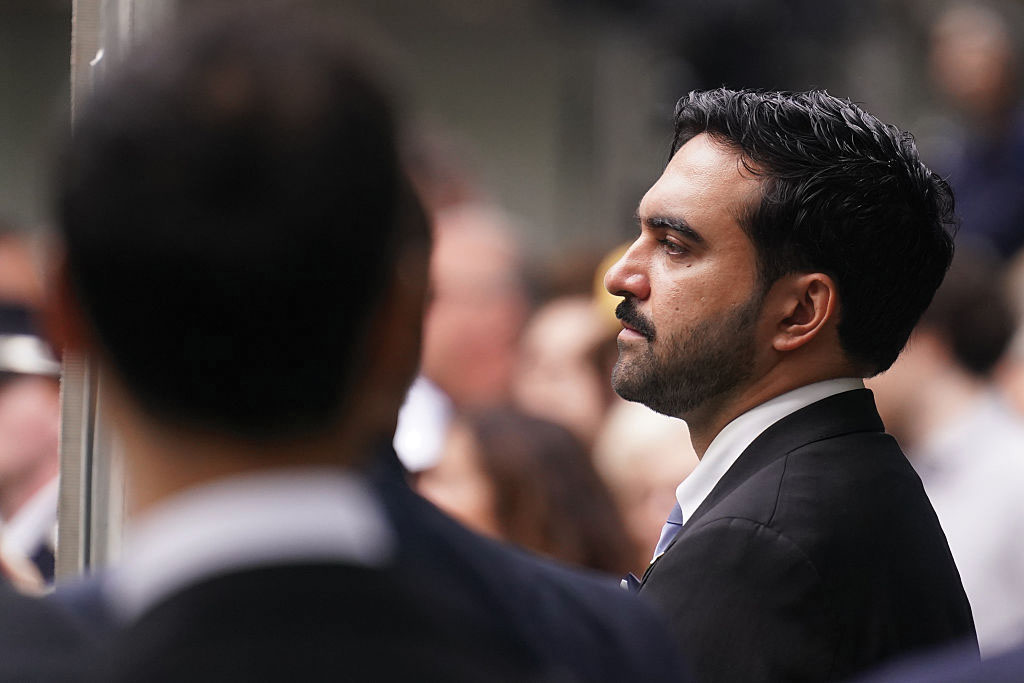
It was written earlier this month by Ahmed Fouad Alkhatib, a senior fellow at the Atlantic Council, in The New York Times.
“When I was 11, Hamas’ founder, Sheikh Ahmed Yassin, arrived unannounced at the mosque next to my family’s home in Gaza City,” Alkhatib begins. “It was 2001 and the Islamist terrorist group, which had not yet taken control of Gaza, had turned the el-Yarmouk mosque into a base for proselytizing and propaganda.”
Alkhatib goes on to chronicle the devastation that Hamas has inflicted on its own people:
“Hamas, from its inception, behaved like a mob of gangsters, brutalizing Palestinian women who violated its fanatic sense of morality, torturing and killing those who were suspected of opposing them and carrying out grisly suicide attacks against Israeli civilians.”
He concludes that “for Gaza to recover, Hamas must be expelled.”
This is such a logical observation, why would I pick it as the essay of the year?
That’s just it. Because it is so rare.
The collective assault against Israel has gone so broad and deep this past year it’s been hard finding anyone in the mainstream press who will dare criticize the Hamas murderers who massacred 1,200 innocent souls on Oct. 7, 2023.
Even worse, not only did Alkhatib’s reasonable essay earn him no kudos, he’s been the target of the nastiest attacks from the antizionist crowd.
Historian and pro-Palestinian activist Zachary Foster launched a personal attack on Alkhatib, calling him the “darling of the American Jewish-Zionist establishment” while describing Zionism as a form of “brain cancer.”
Mehdi Hasan complained to his more than two million X followers that some of the platform’s “worst,” “most dishonest” and “most fanatical pro-genocide” users were sharing Alkhatib’s article.
Alkhatib posted his own reaction to Hasan:
“Imagine reading a piece that calls for Gaza to become the pride and joy of the Palestinian people and a hub of compelling Palestinian national identity by rejuvenating the territory, embracing peace and rejecting a terror organization that admitted to refusing Gaza development offers worth billions, including an airport and seaport, only to proclaim that the op-ed is ‘pro-genocide.’
“And how was this brilliant conclusion reached? Because the article I published in The New York Times didn’t do the ubiquitous ‘everything has to be Israel’s fault’ that seems to be the only line of thinking within the supposed ‘pro-Palestine’ camp. Speak to Palestinians in Gaza who aren’t Hamas or making content for the pro-Palestine community abroad, and you hear the same thing again and again. They describe, plainly and without theatrics, how Hamas halted Gaza’s development and crippled the broader Palestinian national project since its founding in 1987. They do not need to mention Israel in every sentence to sound authentic to outsiders, including other Palestinians or non-Palestinians alike.”
That’s another crucial reason why the essay stood out: Alkhatib actually cares for the Palestinians.
“Hamas should have no role in Gaza’s future but, appallingly, so many in the West who consider themselves allies of the Palestinian people still see the group as honorable resistance fighters,” he writes. “Their support for, or failure to denounce, the group only helps perpetuate the degradation of Gaza.”
So little of this is new. For anyone’s who’s been paying attention, we’ve always known that the worst enemy of the Palestinians has been the terrorists who spend money on rockets and tunnels rather than schools and hospitals.
But how often do we hear “pro-Palestinian” activists talk about making Palestinian lives better?
It doesn’t happen because just like Hamas, the antizionist movement cares little about building anything. Its only goal is to take down Israel.
That’s why they get spooked when a credible Palestinian like Alkhatib talks about a better future for the Palestinians and how Hamas will always get in the way of that better future.
As Alkhatib says: “It is time to delegitimize, call out, resist, and dismantle the current ‘pro-Palestine’ movement and build an entirely new apparatus that rejects the hateful, bigoted, racist, homophobic, Jihadi, violent and antisemitic voices that have become mainstream within this failed environment.”
Those are words of hope for Palestinians, but for antizionists, they are words of despair.
That is why it’s my essay of the year.