American musical legend Leonard Bernstein was a well-known insomniac who did some of his best composing — and most energetic socializing — long after bedtime. He’d invite friends to his home, with its two grand pianos in the living room, and talk and play music late into the night.
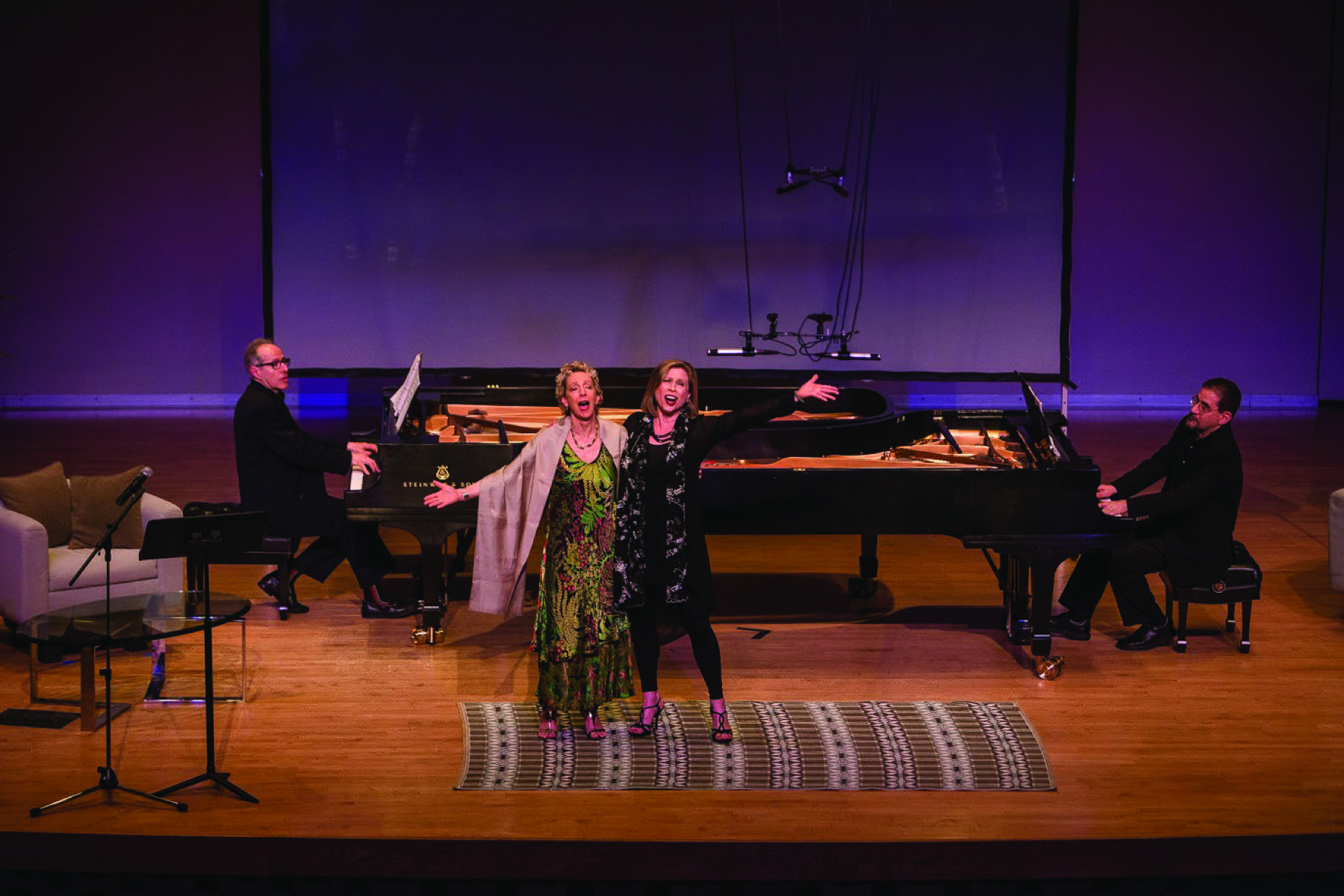
The charming, insightful cabaret show “Late Night With Leonard Bernstein,” which drew a capacity crowd to the Skirball Cultural Center’s auditorium on June 24, takes as its conceit the idea that we’re all guests at this late-night salon.
The show is narrated by Jamie Bernstein, Leonard Bernstein’s oldest daughter and author of the humorous, intimate book “Famous Father Girl: A Memoir of Growing Up Bernstein.” She shares the stage with pianists Michael Boriskin and John Musto, and soprano Amy Burton, all members of New York City’s Copland House ensemble.
The set design referenced Leonard Bernstein’s elegant living room, with two Steinway grand pianos facing off with each other. A leather club couch sat at an angle to one side of the pianos; and two gray, upholstered armchairs sat on the other side, each accented with a scarlet pillow. Oriental rugs in that same deep red covered the floor, and a few large potted plants added to the intimate, homey vibe.
As she introduced the musical pieces, Jamie Bernstein shared glimpses of her father’s process and personality. She then sat in one of the gray armchairs to listen as the musicians performed Bernstein’s compositions as well as selections from some of his favorite works by Aaron Copland, Franz Schubert, Edvard Grieg, Zez Confrey, Noël Coward and Ernesto Lecuona, among others. The evening also included an old, scratchy recording of her father playing a composition-in-progress, and a short video clip of him singing.
The composer, who would have been 100 years old this August, is known for writing the music for “West Side Story,” “On the Town,” “Peter Pan” and “On the Waterfront,” among others. He wrote in many styles and collaborated with some of the best musicians of his day. He was also the musical director of the New York Philharmonic, and lectured about classical music on television from the mid-1950s until his death in 1990.
In the Skirball show, Jamie Bernstein shared details about her father that might be new to his casual admirers, such as the fact that Bernstein composed little ditties for friends, and often later built entire shows around these musical riffs.
A version of this show has toured the country for a few years, but because Jamie Bernstein now has a book out, it felt partly like a musical tribute and partly like a super-augmented book reading.
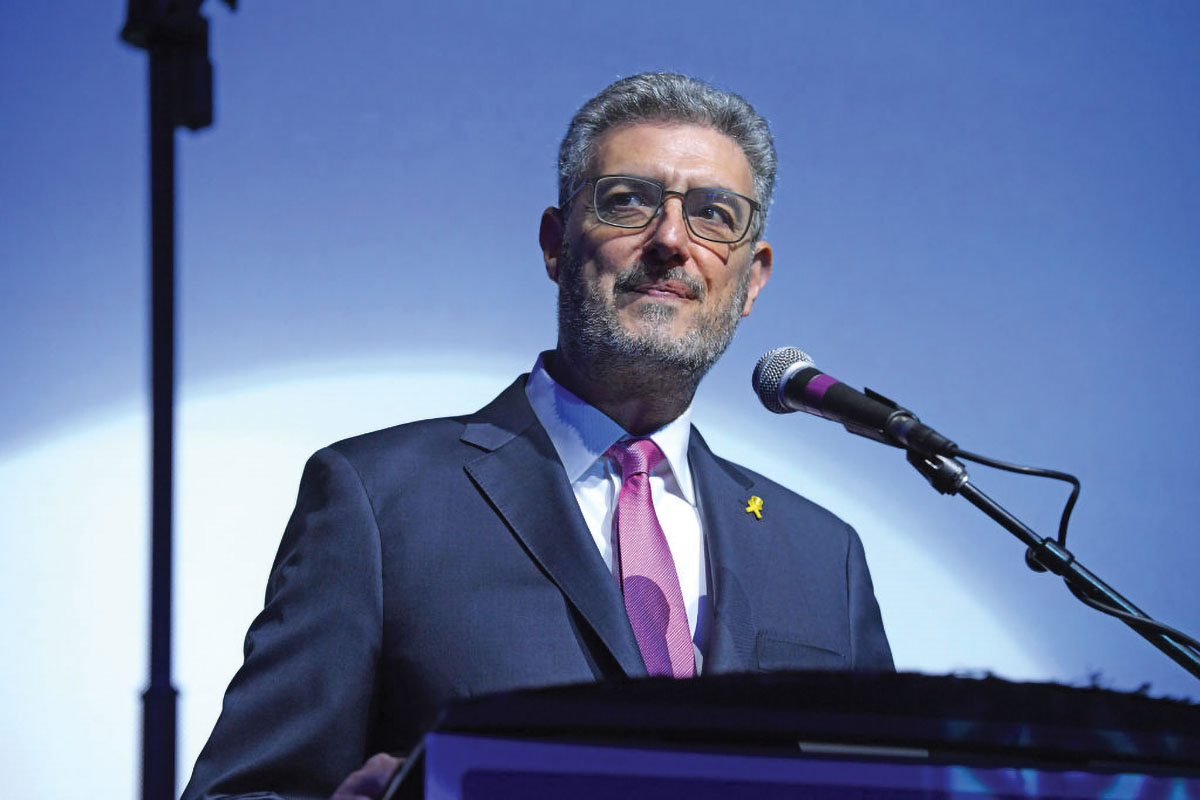
Uri Herscher, the Skirball’s founding president and current CEO, introduced the show as a look at the legacy that Jamie Bernstein inherited from her father. While inheritances are often valued in terms of dollars, Herscher said, we inherit much more from our parents than money. We also inherit a cultural heritage, and telling stories is a way to narrate what we’ve inherited and ensure that it lives on, he added.
Jamie Bernstein shared a deep love and appreciation for her father’s work and spirit. She spoke in a glowing, tender, slightly ribbing way about his home life, his dedication to music and his very public creations. As she sat listening to the musicians, she nodded her head and smiled, and then applauded with gusto when they finished. You could imagine her as a young girl staying up late, engrossed in the joyful sounds, experimentation and playfulness on display in her home.
Her book-reading-cum-cabaret is a lovely way to honor her family and her legendary father’s cultural legacy.
The exhibition Leonard Bernstein at 100, organized by the Grammy Museum, is on view at the Skirball Cultural Center through Sept. 2.
Wendy Paris is a writer living in Los Angeles.