It’s a mark of how argumentative Jews can be that we can even argue the merits of raising a Jew-hating flag in a Jewish summer camp.
The side that thinks it’s a good idea appeals to our sense of welcoming strangers and making them feel at home. The importance of being kind to the stranger is a major Jewish value.
So, when Palestinian kids showed up at a Jewish summer camp in Washington state a few weeks ago, under an initiative from the Israeli NGO Kids4Peace, they were greeted with their own flag. The leaders at Camp Solomon Schechter felt it would be a warm gesture of hospitality to greet them with something familiar.
The side that thinks it’s a bad idea complained vehemently, and the camp eventually took down the flag and apologized.
I’m in the camp that thought it was a bad idea. I’m not against being welcoming to strangers, I’m just against using a Jew-hating symbol to provide that welcome.
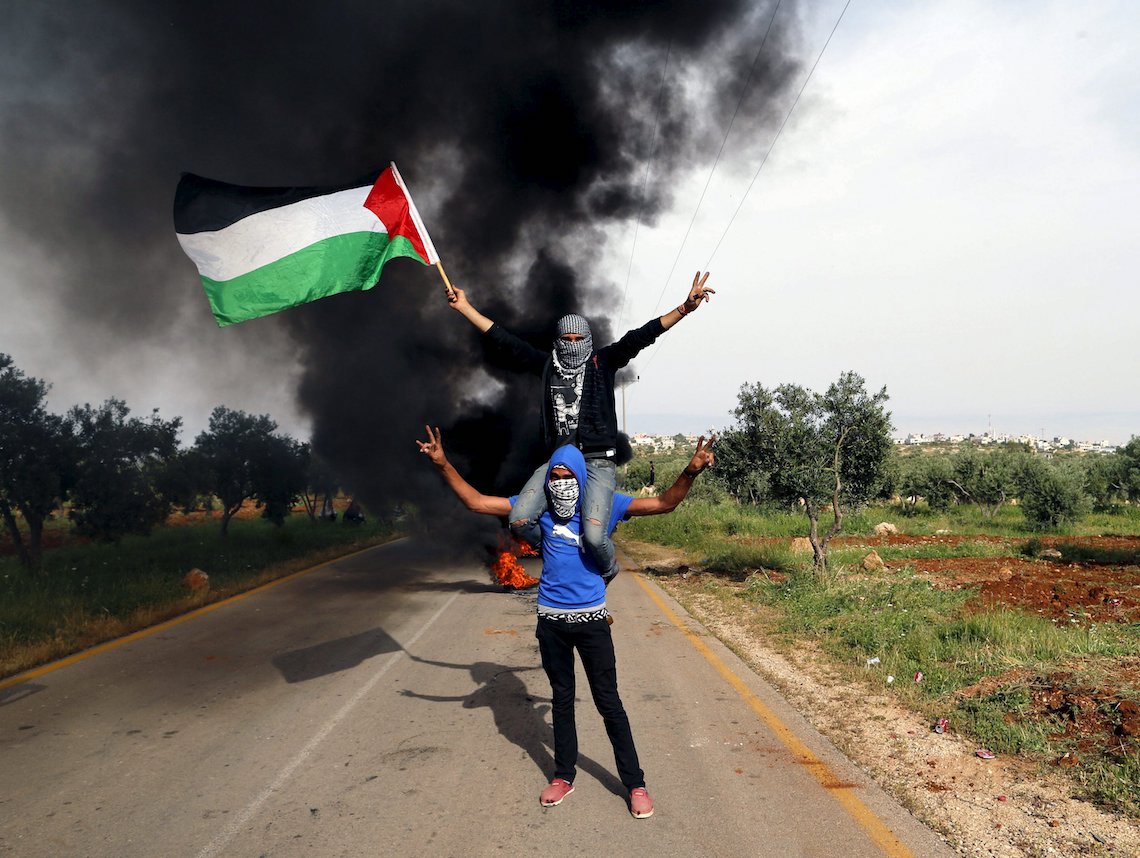
Few things are more divisive in the Middle East than power symbols. Palestinian society is littered with them— the ubiquitous maps of Palestine that eliminate Israel, the posters of martyrs who murder Jews, the cartoons that demonize Jews, the schoolbooks that teach Jew-hatred, the public squares that honor terrorists, and so on. In all of those places, the Palestinian flag is right there.
When Palestinian preachers deny any Jewish connection to Jerusalem, the Palestinian flag is there. When Palestinian leader Mahmoud Abbas says our Jewish “filthy feet” desecrate the holiest site in Judaism, the Palestinian flag is next to him. When Palestinian leaders inaugurate a stadium named after a terrorist who murdered Jews, hundreds of Palestinian flags fly proudly.
So yes, the flag that was raised at the Jewish summer camp is associated with Jew-hatred and violence against Jews.
But there’s a more relevant and simpler point to be made: Why do we even need a flag to make people feel welcome?
If I ever visited a Palestinian summer camp, I wouldn’t expect to be greeted by an Israeli flag that I know would rub them the wrong way. Their hospitality would impress me, not their forced use of a divisive symbol.
If you want to make Palestinian kids feel at home, you can have Jewish kids greet them by singing a song in Arabic, or serve them food from their tradition, or have a Sephardic cantor sing Jewish liturgies that sound just like the melodies in a mosque.
The point is, you make people feel welcome not with symbols but with real stuff– with great food, great music, great bonding activities and plenty of love. If I ever visited a Palestinian summer camp, I wouldn’t expect to be greeted by an Israeli flag that I know would rub them the wrong way. Their hospitality would impress me, not their forced use of a divisive symbol.
Did the Jewish camp leaders show daring when they first raised that Palestinian flag? Was it courageous of them to challenge the status quo? Of course. In the Jewish tradition, challenging the status quo has a long and noble pedigree. The rebels are the heroes.
But being courageous doesn’t mean you’re right. Elevating a symbol of division and hate, even with the best of intentions, does not mitigate that hate. There is no need to patronize Palestinians and pretend that we can honor a flag that has been so drenched with Jewish blood and Jew-hatred. To honor such an icon so we can feel courageous and hospitable is to invert morality for the sake of self.
More importantly, it’s not necessary. There are plenty of decent ways a Jewish camp can welcome Palestinian kids without having to resort to a radioactive symbol.
And if you ask me, that’s a fact, not an argument.
David Suissa is president of TRIBE Media Corp./Jewish Journal and can be reached at davids@jewishjournal.com.