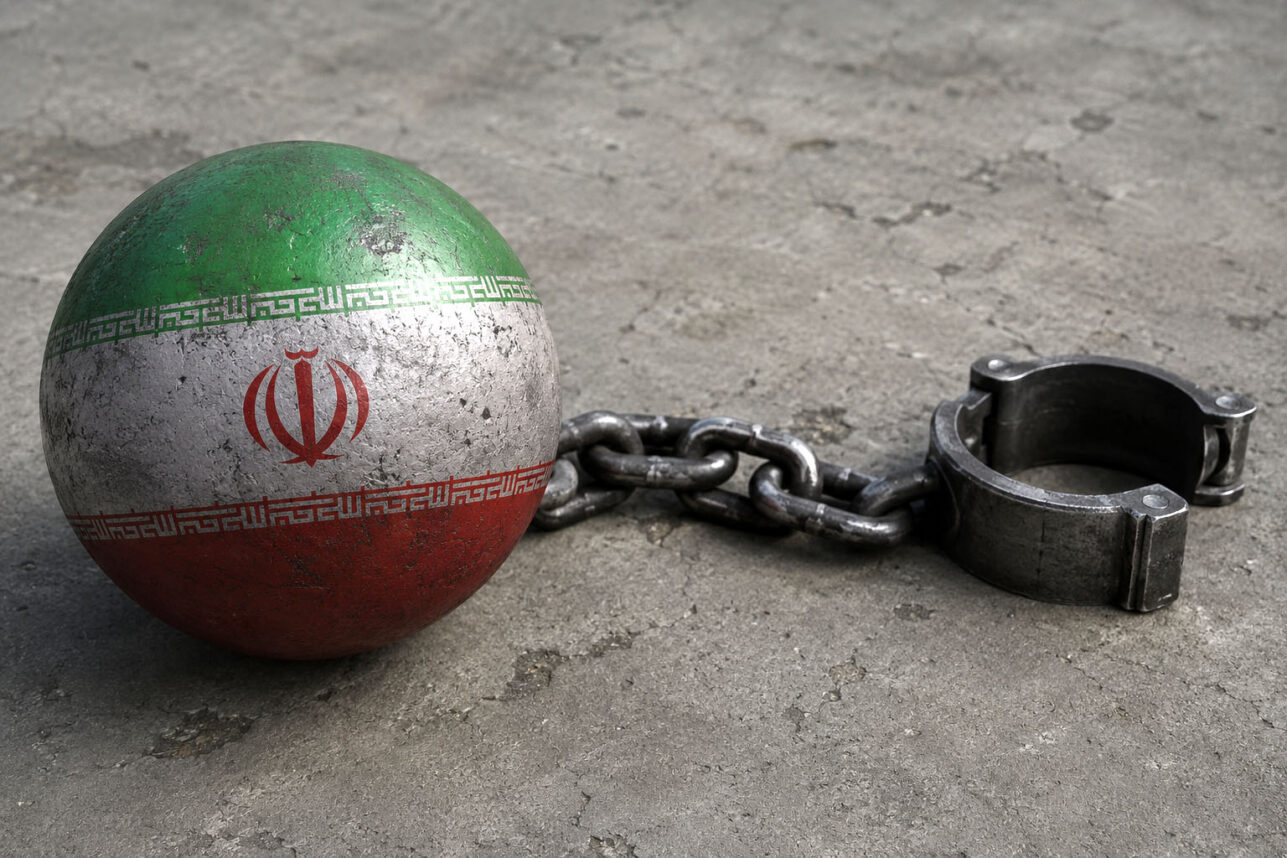
Like so many millennials, I bear my student debt like an albatross branded with the lifetime shackles of an Ivy pedigree. Time has not shrunken my debt but rather quadrupled what my initial principal once was. Homeownership is no sooner in my future than my two-decades-long dream of one day trekking across the vast landscape of Iran wearing my Jewish identity with pride.
To date, on both sides of the Mason-Dixon line, the presidential candidates offer little in the way of mitigating this trillion-dollar paradox of the label “First World nation.” I have shed many tears over the financial situation I am in, brought about by the best intentions of procuring an education that could open the right doors for me. Yet, as we move into what is likely the most polarizing presidential election this nation has ever seen, neither the Clinton nor the Trump campaign seems to offer much in the way of making this nation solvent again, let along great again.
For this reason, I think we need to look deeper into our historic teachings to solve a contemporary polemic: In order to engage in tikkun olam, or repairing the world, we must begin with the healing of the individual.
My suggestion is to allow recent college graduates with student loan debt to pay off a significant portion of that debt by working with Americans in need who may benefit from their education. This might include students in need of tutoring and language support, people in need of legal advice who can’t afford to seek legal counsel, veterans who need guidance and mentorship, people in need of counseling and therapy, etc.
Specifically, for each verified hour that an eligible college graduate provides pro bono assistance to another American, he or she would receive a $50 credit towards their student loan principle (as an example). Assuming a five-hour maximum per week, in theory a graduate could receive as much as $1000 credit per month and $12,000 over the course of one year. Given an average student loan debt of $37K (see studentloanhero.com/student-loan-debt-statistics-2016), a graduate would have the opportunity to “work off” their federal loan in a few short years, all while providing invaluable assistance to other Americans.
Under this approach, reliance on government services such as supplemental education, job training, free legal aid, and free mental health could be significantly reduced. In addition, at-risk youth would have much more meaningful mentorship and tutorial programming available, since those providing the assistance wouldn’t be government bureaucrats. With one high school student dropping out every 26 seconds (see dosomething.org/us/facts/11-facts-about-high-school-dropout-rates), the effect of such a program could be profound. As waves of graduates successfully absolve their debt and provide an invaluable public service, new waves would likely follow in their footsteps, thereby creating a new public service paradigm. While there would obviously need to be limits as to how much could be repaid and appropriate measures to protect against abuse, it would certainly be a start to build bridges between those educated and those in need of the benefits of that education in the real world.
Finally, to provide an incentive for families to help new graduates reduce their student loan debt, family members of the graduate could receive a sizable income tax credit for housing them. This would be for the first four years after graduation from a properly accredited school, and would enable graduates to pay money to their student loan that would have otherwise gone toward rent.
These suggestions won’t end the student loan debt crisis, but I believe they will make a difference for many graduates who, like me, are drowning in insurmountable debt and for the communities that stand to benefit from the knowledge and expertise of these graduates.
Lisa D. Ansell is the assistant director at the USC Myron and Marian Casden Institute.