






fbpx

David: Great Leader or Damaged Hero?

\"The Life of David\" by Robert Pinsky (Schocken Books, $19.95). Every morning, pious Jews pray to God that \"the offspring of Your servant David may speedily flourish ... for we hope for your salvation all day long.\" The hope of future redemption and a return to ancient glory has long been a staple of Jewish life, based upon God\'s promise to David that \"your house and your kingship shall ever be secure before you; your throne shall be established forever.\"
[additional-authors]
September 22, 2005

“The Life of David” by Robert Pinsky (Schocken Books, $19.95).

Every morning, pious Jews pray to God that “the offspring of Your servant David may speedily flourish … for we hope for your salvation all day long.”

The hope of future redemption and a return to ancient glory has long been a staple of Jewish life, based upon God’s promise to David that “your house and your kingship shall ever be secure before you; your throne shall be established forever.”

Through exile and persecution, Jews have held fast to that promise, waiting and praying for the Messiah, who will descend directly from the house of David. Not just a figure of hope for the future, though, David himself has played a role in our collective imagination as a great king, a giant-killer, a musician and poet. Legend says that David himself authored most of the Psalms.

But David’s story is far more complex, and far more interesting. He was, though various rabbis have tried to deny it over the centuries, a deeply flawed — and so fully human — character.

It is the complexity of the character that Robert Pinsky, the former poet laureate of the United States, examines in his new book, “The Life of David.” Brought up on a cheder education, Pinsky has been familiar with the figure of David his whole life, and has been drawn to him, because, as he put it in a phone interview (followed up briefly via e-mail), “This is one of the most manifold and interesting lives ever lived. Great writer, great leader, great killer. His family life, his sex life, his political life, his life in art. All richly complicated and enigmatic.”

Indeed, most people know details of the legend of David — the young shepherd who killed Goliath with nothing more than a slingshot; the young king who spied Bathsheba bathing on a rooftop and committed adultery with her.

As Pinsky writes, “It is an essential part of David’s meaning that he is visible at so many stages of life. Not for David to die young like Achilles, nor to endure old age offstage and out of our sight like Odysseus, nor to go down as a grizzled warrior like Beowulf charging into the cold twilight a final time to kill and die for his people … David’s drama is that of a life entire.”

Pinsky bases his treatment of David in the firm belief that he had to have existed, if only because no people would have created a hero so damaged. As the author intended, the book is “not a traditional biography nor an historical novel,” with the result that the telling dips liberally and idiosyncratically into the realms of biblical scholarship, literary criticism and midrashic exegesis to build its vision of a man who emerges as fascinating and very, very dangerous.

Pinsky writes as a poet, which may be difficult for some readers to follow. The later chapters are more solidly chronological, but generally speaking, the text is not organized sequentially, but associatively, looping back and forth, returning to potent images in a sort of refrain. Ultimately, though, the somewhat elevated style parallels the larger-than-life quality of the story it tells.

And what a story it is. David is by turns pious, loving, brutal, coldly calculating. In Pinsky’s hands, the world in which David flourished is revealed as full of “violence and swagger,” with David the master of that world. Although Pinsky never tries to whitewash David’s character — on the contrary, he revels in the contradictions that David presents — the king remains exemplary. Despite dealing with a character who could be thuggish in his dealings with friends and foes alike, Pinsky accepts the Bible’s attitude toward him, resulting in the outline of a man to be admired more than condemned.

David is the great biblical hero, toward whom the text of the Bible inexorably builds and after whom it never quite recovers. So few of us actually read David’s story from start to finish. We have grown accustomed to viewing the Bible through a veil of sacredness, which often obscures the insights it reveals into psychology and politics. As Pinsky noted, “We think we know these figures and their stories, then we understand how we do not, and then in that strangeness, we find something like ourselves in a new way.”

The “Life of David” returns David to where he belongs, not merely in prayer, but to life.

On Tuesday, Sept. 27 at 7 p.m., Robert Pinsky will read from “The Life of David” as part of ALOUD at the Central Library. For more information, call (213) 228-7025 or visit

Did you enjoy this article?
You'll love our roundtable.

Editor's Picks

Latest Articles

Chametz Is More than Crumbs in the Corners of our Homes

Chametz is also something that gathers in the corners of our being, the spiritual chametz that, like the physical particles we gather the night before Passover, can infect, wither, influence and sabotage us as we engage with others.

Alpine Flavors—a Crunchy Granola Recipe

Every Passover, I prepare a truly delicious gluten-free granola. I use lots of nuts and seeds (pistachios, walnuts, almonds and pumpkin seeds) and dried fruits (apricots, dates and cranberries).
Pesach Reflections

How does the Exodus story, Judaism’s foundational narrative of freedom, speak to the present? We asked local leaders, including rabbis, educators and podcasters, to weigh in.

Rosner’s Domain | Be Skeptical of Skeptics, Too

Whoever risks a decisive or semi-decisive prediction of the campaign’s end (and there is a long list of such figures on the Israeli side as well as the American side) is not demonstrating wisdom but rather a lack of seriousness.
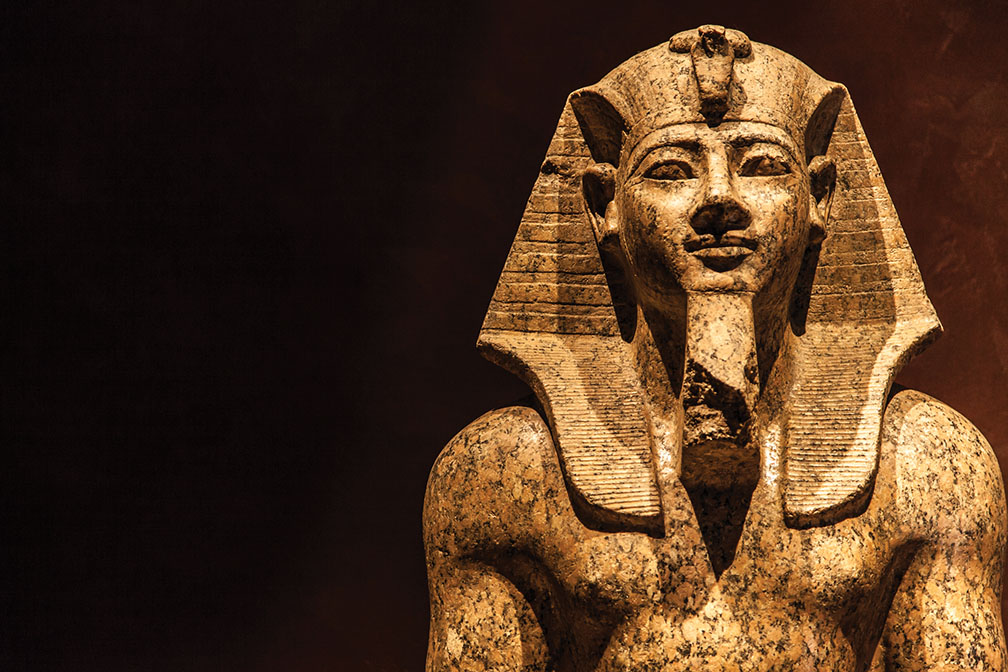
When We Can No Longer Agree on Who Is Pharaoh

The Seder asks us to remain present to the tension between competing fears and obligations. It does not require choosing one lesson over the other, but rather, it creates space for us to articulate our concerns and listen to the fears and hopes that shape others’ views.
Pesach at War. Leaving Fast, Leaving Slow.

Freedom, it would seem, is erratic; it happens in fits and starts, three steps forward and two steps back. Freedom is a leap into the unknown, driven by a dream. We will figure it out in time.

Making Our Impossible Possible

The holiday of Passover reminds us that we can break from our self-imposed reality and redeem ourselves to achieve the greatness we know we possess.

More news and opinions than at a Shabbat dinner, right in your inbox.