fbpx

Paul Newman — Hollywood’s most famous half-Jew — dies at 83 [VIDEO]

[additional-authors]
September 28, 2008

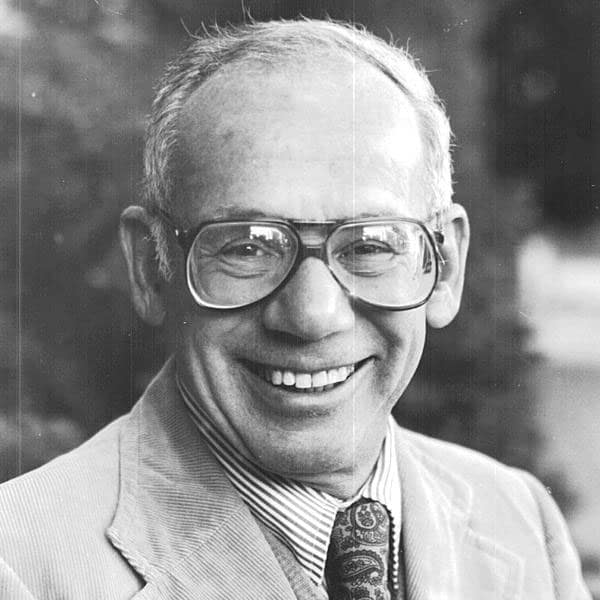
Paul Newman, superstar, director, race car driver, liberal activist, philanthropist and Hollywood’s most famous half-Jew, died Friday at 83.


He passed away at his farmhouse near Westport, Conn., following a long battle with lung cancer.


Over a half-century career, Newman acted in 59 movies and received 10 Oscar nominations. He won the best actor Academy Award in 1987 for his role as a pool hustler in “The Color of Money,” and two honorary Oscars.


To many Jewish viewers, Newman’s most stirring role was as Haganah leader Ari Ben Canaan in the 1960 film “Exodus,” depicting the struggle for Israeli independence.


Director Otto Preminger reportedly picked the classically handsome, piercingly blue-eyed Newman for the lead role because he wanted an actor of Jewish background, but one who didn’t “look” Jewish.


Paul Leonard Newman was born in the Shaker Heights suburb of Cleveland in 1925, the son of Arthur and Theresa Newman.


His father, the owner of a prosperous sporting goods store, was Jewish, and his mother Catholic. Both were descendants of East European immigrants.


His mother later became a Christian Scientist, but Paul always identified himself as a Jew, because, he said, “It is more of a challenge.”


Comedian Adam Sandler celebrated Newman’s background and good looks in his classic 1994 “The Chanukah Song,” with the lines:

Goldie Hawn, half-Jewish

Paul Newman, half-Jewish, too

Put them together, what a fine-looking Jew

Among Newman’s other most memorable films were “Hud,” “Cool Hand Luke,” “Butch Cassidy and the Sundance Kid,” “The Verdict,” “The Sting” and “Absence of Malice.”


Newman gave millions to charities through his food company and set up camps for severely ill children. He was a passionate civil rights and anti-Vietnam war activist, and always expressed his pride that he had made President Nixon’s “enemies list.”


He is survived by his second wife, actress Joanne Woodward, five children and two grandsons.


Exodus trailer

Did you enjoy this article?
You'll love our roundtable.

Editor's Picks

Latest Articles

A Ka’ak By Any Other Name

A symbol of hospitality, families bake batches for holidays, family celebrations and visits with friends and relatives.

The Story That Never Goes Away

Rachel Goldberg-Polin, mother of slain hostage Hersh Goldberg-Polin, can’t stop speaking about her pain and the public love her body cannot always receive. She talks to the Journal about her son’s legacy and her new book.

Rosner’s Domain | A Dime-Store Abe: The Karhi Crisis

This week’s “Constitutional Crisis” is typical of the way the government operates. It issues a statement, or a tweet and then walks it back. Oops, we did not mean it. Or rather, we did, but we also meant to deny that we did.

Why Can’t We Be Friends?

If we want to see a less polarized society, both internally and beyond, we must emphatically reject the idea that political alignment is the predominant commonality for friendship.

Ruth-less, the Enigma of a Name

Jews spoke in two voices about Ruth, a kind of national schizophrenia, one with joyous chanting on Shavuos as the Book of Ruth was read; the other, removing her name from the chain-link of repeated names throughout the generations.

Honoring My Father: Saying Kaddish with Men

Saying kaddish every day tested my faith and commitment. It made me realize that there is no room for excuses. It taught me how to show up. It taught me that my voice can be heard, even when not expected.

The Yiddish Letter of American Liberty

Phillips’ letter – with its faith in Congress’ Declaration – now sits in display not far from the Liberty Bell and its inscription from the biblical book of Leviticus.

Searching for the Red Heifer

While there’s nothing wrong with keeping your eyes on the horizon for that magical heifer to appear, be sure to appreciate what you already have.

Broadening the Fight

If we agree that antisemitism is only one example of a widespread and pernicious instinct toward division and “other-ization,” then it becomes clear that we can only eradicate these animosities as part of a far broader effort.

More news and opinions than at a Shabbat dinner, right in your inbox.