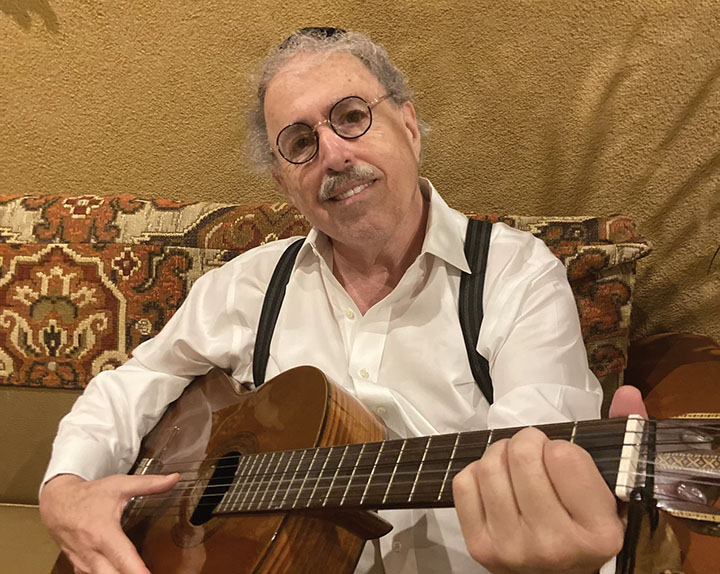
“Everyone came here tonight for a reason,” said Dr. Michael Held,
Founder and Executive Director of the Jewish special needs non-profit
Etta Israel, “whether you are a parent, a potential resident, or a
sibling or other relative of a Jewish adult with developmental
disabilities.” The 70 participants, some wearing head coverings and
many not, looked around the room exchanging knowing glances, a
collective sense that we are all on the same quest to find a “home”
for our loved ones with special needs when it is time for them to
leave the nest.
A new innovative independent housing program called J-CHAI was
launched by the Etta Israel Center Tuesday night in the boardroom of the Los Angeles Jewish
Federation, funded in part by a $200,000 three-year Cutting Edge grant from the
Jewish Community Foundation of Los Angeles.
Dr. Held explained that this new housing model was based on four years
of research and discussion (including input from the Federation’s Task Force
on Housing for Jews with Special Needs) ,and took into account many current trends.
First of all, more adults with developmental disabilities and their
families are seeking a higher level of independence than afforded in
traditional group home settings (Etta Israel also operates 3 Jewish
group homes in North Hollywood and a fourth is in the works). This
desire for greater autonomy is accompanied by the fiscal realities of
California –- more people are now diagnosed with developmental
disabilities- and the average costs of each client is increasing as more
of the state caseload reaches adulthood along with the mounting
So what exactly is J-CHAI?
It probably helps to begin with what it is not. It is not a building.
It is not a kibbutz-style arrangement. And it will not be the same for
every participant.
J-CHAI will help families find regular market-value apartments
clustered in the Pico-Robertson area, as well as finding an
appropriate roommate, and then with its staff, establish both
independent living and Jewish life goals for each resident. As Dr.
Held joked, “J-CHAI keeps the ‘J” in your child’s Chai (life).” For
the first time in their lives for many of these Jewish adults,
targeted at ages 18-35 (and older, on a case-by-case basis),
They will have the ability to exercise control
over their lives in such areas as community, communication,
empowerment/independence and Jewish values.
Each participant’s schedule will be individualized, with most
residents either engaging in vocational training, educational
opportunities or working, depending on their abilities and skills.
Through the state-funded Regional Centers, many will receive ILS
(Individual Living Skills) or SLS (Supported Living Skills) in such
areas as money management or travel training. Those with more
significant behavioral or physical challenges may get IHSS hours (In
Home Supportive Services) funded by the state, provided the program is
still available.
With this innovation and higher level of independence come costs.
Families will have out of pocket costs –the costs of rent (shared by a
roommate), a sliding scale J-CHAI fee of $1,200-$2000 month, and
everyday costs of food, utilities, etc. Government funding such as SSI
(Social Security Income) can help defray some of the costs. The
estimated range is $2,300-3,600 a month, with the hope of attracting
other funders down the line.
The program is designed to provide ongoing support, year after year,
All participants are asked to commit for a minimum of one year to be
accepted into the program; this commitment will help create with the central goal of building
a strong sense of community among the residents.
One of the parents who spoke during the presentation said that her
son, now 30 years old, lives in one of the Etta group homes and lives
a “full and wonderful life”. Most of all, she said, she is filled with
gratitude and peace of mind.
Isn’t that what every parent wants for their grown children?
For more information/applications, go to www.etta.org or send an email
to Claudia Wenger, Coordinator at 818 985-3882, ext. 238 or{encode=”j-chai@etta.org” title=” j-chai@etta.org”}