
Your locks are iron and copper, and the days of your old age will be like the days of your youth. ~ Deuteronomy 33:25
All of Jacob’s descendants are getting blessings.
Dan gets to be a young lion. I’m a little jealous.
They’re so cute at that age.
Naftali gets the entire sea which I would love,
but I’m not sure where I would put it.
Jeshrun gets to ride the skies. I do too, sometimes
but it costs a lot of money and doesn’t
feel like a perk.
I think I got what Asher got.
I’ve always looked younger than I am,
and I’ve often acted the part.
Like him, I’ve been blessed with the good genes.
Just yesterday at a poetry reading filled with
poets I’ve known for a hundred years, one of them
told me I was timeless.
My Rabbi (I actually have a lot of Rabbis but
this one is my neighbor and he lets me
sing whatever I want in front of the people)
is only a handful of weeks older than me
and last week at Rosh Hashanah,
a congregant asked if I was his son.
My dad is the fitness king and
I do what he tells me to maintain all this.
I have his hair. I think he wants it back.
I’m going to ride this youth like a
baby-faced Beatle. Keep on keeping on
like the end of my time isn’t coming faster
than the end of this book.
Like Moses’ clock hasn’t run out.
This is the gift I’ve been given.
I can show you my ID, if necessary.
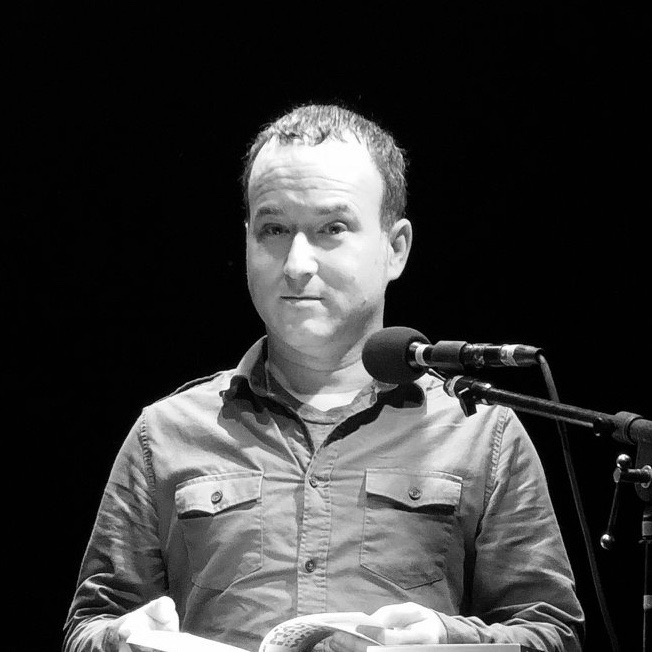
Rick Lupert, a poet, songleader and graphic designer, is the author of 27 books including “God Wrestler: A Poem for Every Torah Portion.”