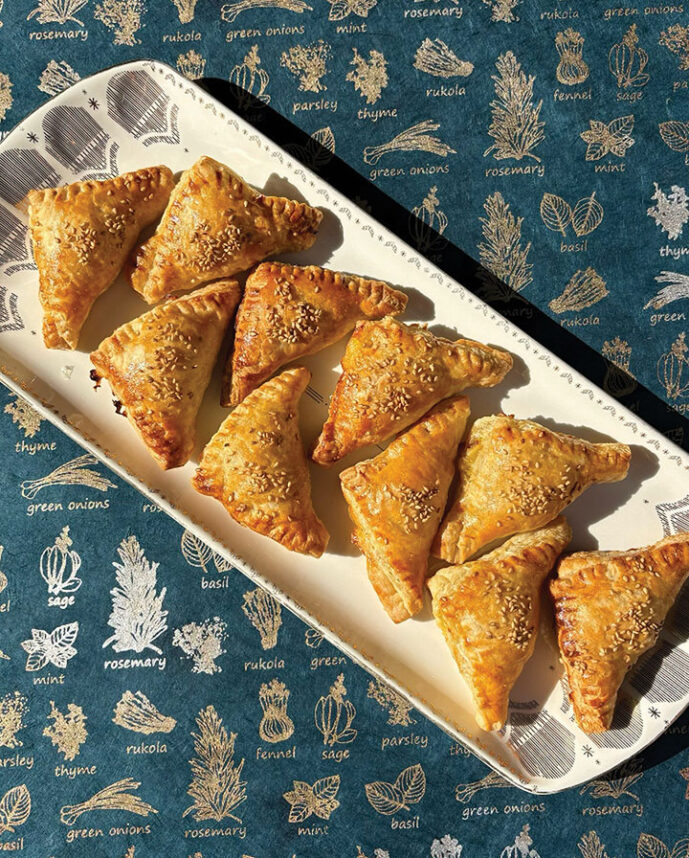
A sign on a Kosher butcher shop in Tustin reads: “We carry South African biltongs. “A man with a South African accent hears a man with a New York accent at a service of an Orthodox congregation in Irvine and asks, “What are you doing here?”
Biltongs are cold cuts, and the Orthodox congregation – Beth Jacob – has a large percentage of South African members. The welcome mat for South Africans is different – and yet somehow the same – as the one set out for the Jewish immigrants of 100 years ago. “Siblings follow each other. Then the parents come. Then people run into people they know from their school days. Pretty soon, there’s not enough room around the dining room table for the whole extended family.”
That, according to Hazel Dyer, is the way it goes with the South African community. Although there have been minor inconveniences, such as learning to drive on the right side of the road and understanding American slang, the steady flow of 35,000 South African Jews to Orange County during the past 20 years has been a relatively smooth transition, Dyer says.
While grandparents such as Dyer spent their entire lives within neighborhoods of South African cities, violent outbreaks of crime in those cities have made daily living dangerous enough to lead to a mass exodus of the Jewish population. What was a thriving community of 250,000 Jews has dwindled to 60,000, according to Max Sklar, an 83-year-old great-grandfather who came to Irvine from Johannesburg with his wife, Sylvia, seven years ago.
“Without discussing the political ramifications, I was no longer willing to live in terror,” Sklar says. “I decided thatthis would be our home, because I just didn’t want to live there anymore.”
Both Sklar and Dyer cite the fact that people who left South Africa were forced to leave most of their wealth behind and start all over again. Many had grown up with servants and “the best of everything,” according to Dyer. For some people, the move to the United States has meant changing careers and making do with less, in a financial sense. Sklar, who had been an entrepreneur, knew it wouldbe a “first-class adjustment.”
On the other hand, being surrounded by family and, often, old friends, makes life good, according to Sklar. “We jumped right in and became American citizens, and we always have something going,” he says. “I did meals on wheels for a Jewish organization in South Africa, and now I do it for a community organization.””The reason we’ve adjusted so well is that we stick together,” Dyer, an employee of the Jewish Community Center of Orange County, explains. “We have a ghetto mentality. People say we’re cliques,’ but we’re not unfriendly. We’re just more comfortable with other South Africans, because we know each other from our school days.”
On the other hand, being surrounded by family and, often, old friends, makes life good, according to Sklar. “We jumped right in and became American citizens, and we always have something going,” he says. “I did meals on wheels for a Jewish organization in South Africa, and now I do it for a community organization.””The reason we’ve adjusted so well is that we stick together,” Dyer, an employee of the Jewish Community Center of Orange County, explains. “We have a ghetto mentality. People say we’re cliques,’ but we’re not unfriendly. We’re just more comfortable with other South Africans, because we know each other from our school days.”
Bar Mitzvah ceremony next year. “I was Orthodox in South Africa, but this is a different atmosphere entirely, and we’ve made many American friends.”