Spewing anti-Israel vitriol was one of Saddam Hussein’s
specialties. Of all the leaders in the Arab world, Saddam seemed to have the
most to say against Israel, and he seemed to say it the most often.
Now that he has been captured and faces possible trial,
experts are asking whether the Jewish State will again be his target of choice.
“It will be interesting to see if he chooses to attack Israel
this time, not with Scuds but verbally,” said Martin Kramer, a research fellow
at Tel Aviv University’s Dayan Center. “Historically, when he found himself up
against the wall, his usual method was to divert and deflect attention to Israel.”
After attacking Israel in the 1991 Gulf War, Saddam became
fond of saying that the Iraqi people represented 22 million missiles against Israel.
It was Saddam’s rhetoric against Israel that “was the main
glue for the Iraqis for developing national Iraqi feelings and remained so
until the very end,” said Ofra Bengio, a professor of Middle East history at Tel
Aviv University. “Hussein wanted to be able to mobilize the population around Israel
as the symbol of evil.”
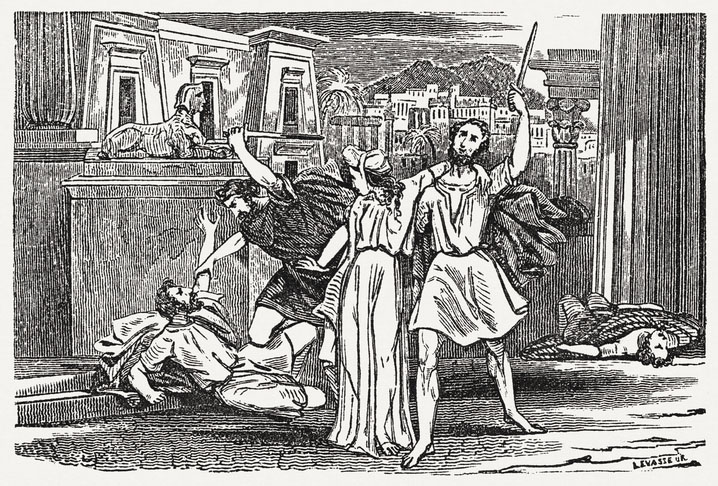
In 1969, soon after Saddam was appointed Iraq’s vice
president, the government hanged 17 alleged spies, 11 of whom were Jewish, in
what is perceived as Saddam’s first message to Israel that he was a force with
which to be reckoned. The animosity continued in the 1970s, when Israel
provided covert military training and support for Iraqi Kurds in their struggle
against the regime in Baghdad.
The enmity intensified in 1981, with Israel’s air strike on Iraq’s
nuclear facility at Osirak, outside of Baghdad. Israeli officials defended the
strike in the face of worldwide condemnation, arguing that Saddam’s regime was
attempting to develop nuclear weapons. Years later, some of the same voices
that condemned Israel in 1981 said the strike had been the correct move.
Out of all the Iraqi-Israeli recriminations, Saddam was
proudest of Iraq’s firing of Scud missiles at the Jewish state. Casualties and
damage from the attacks were minimal, but the rain of missiles caused Israelis
trauma.
For the first time in the country’s history, Israel did not
strike back when attacked. Instead, the Israelis, many of them survivors of
persecution elsewhere, hid in their sealed rooms with gas masks, while the
government heeded a request by the United States — which was trying to keep
intact its alliance with the Arab world against Saddam — not to counterattack.
Saddam’s power lay in part in his image and forceful
rhetoric, said Bengio, author of “Saddam’s World.” Saddam “managed to put
Israeli society into a panic for more than a decade. There was no basis for
such hysteria, but he managed to do it,” she said.
However, a serious Iraqi military threat never materialized,
she said, because Saddam was on such bad terms with the Syrians and Jordanians
that he was unable to establish a common cause.
Making Israel the focus of his diatribes was politically
profitable for Saddam. Presenting himself as a leader of the Arab world,
Hussein could use anti-Israeli sentiment to rally Arabs behind him.
He was seen by many in the Arab street as a hero for taking
bold stands against Israel and the United States. While other Arab nations
entered into peace talks with Israel and acceded to U.S. pressure, Saddam stood
firm with his belligerent stance.
The Palestinians cheered Saddam for supporting them, even
when the Scuds he fired at Israel endangered them as well. Most recently,
Saddam enraged Israel during the current intifada by sending substantial
monetary rewards to the families of suicide bombers who perpetrated attacks
against Israelis.
There was, however, a brief period in the 1980s, under
Yitzhak Rabin’s government, when high-level contacts took place between Israel
and Iraq. Led by Moshe Shaval, an Iraqi-born Israeli Cabinet minister, the
secret talks aimed at securing minimal relations between the two countries and
permitting return visits to Iraq by Israeli Jews from Iraq. The talks collapsed
shortly after they began. Â