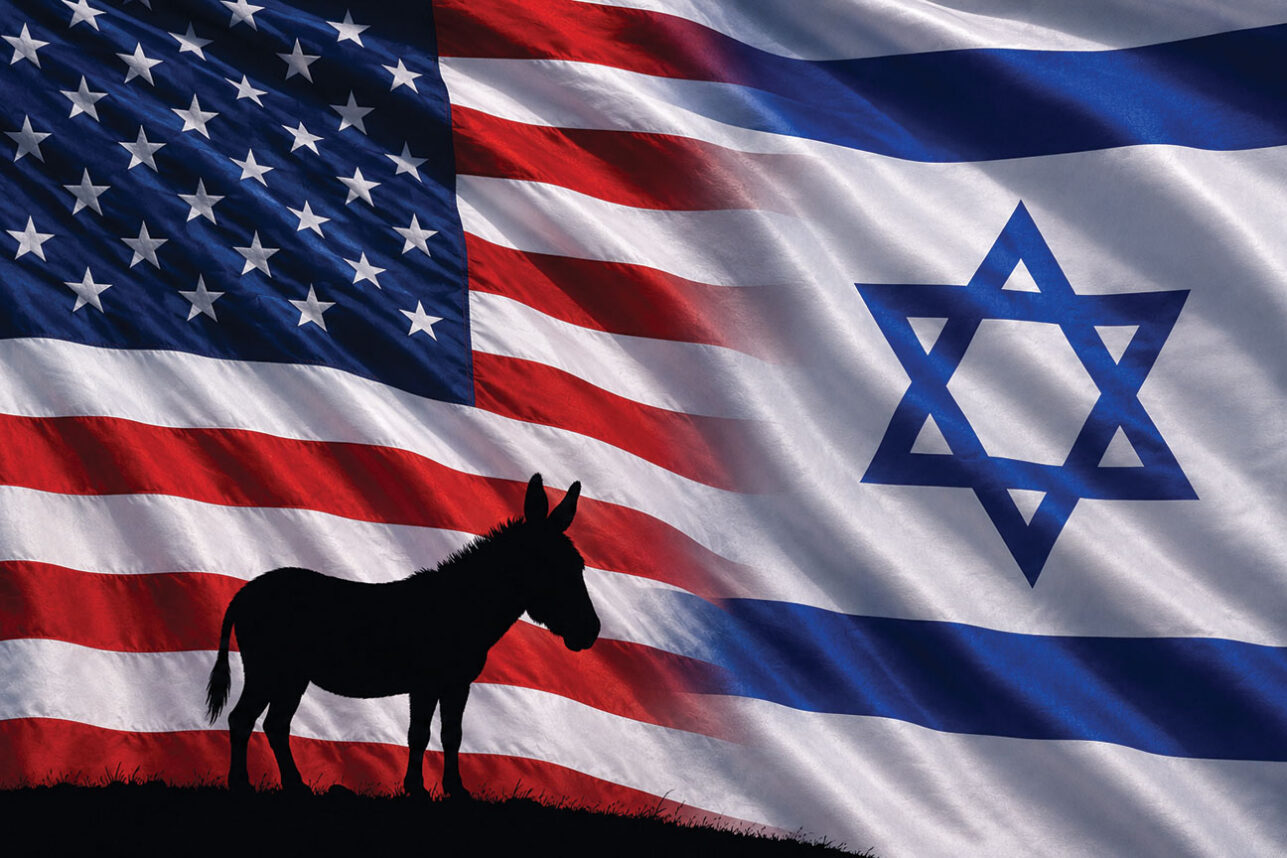
As the Bush administration seeks international support for an attack on Iraq, Jewish organizations are also crystallizing their positions.
In the next few weeks, Jewish groups are expected to meet with foreign leaders arriving in New York for the opening session of the U.N. General Assembly and anniversary commemorations of the Sept. 11 terrorist attacks.
The American Jewish Committee (AJC) is planning to meet with leaders of more than 50 countries, including the foreign ministers of China, Russia and France. The Conference of Presidents of Major American Jewish Organizations is expected to meet with the Indian prime minister, as well as with leaders of Jordan, Argentina and the European Union. B’nai B’rith International will be meeting with foreign leaders as well.
American Jewish officials will seek international support for the war on terrorism and pressure for Palestinian reform. But many conversations are expected to delve into the major issue of the day: whether to attack Iraq to head off President Saddam Hussein’s efforts to develop weapons of mass destruction.
President Bush was slated to address the General Assembly on Thursday, and was expected to make the case for a U.S. attack. But most American Jewish groups have not yet decided where they stand on Iraq.
"Our policy is not to try and detail policy or recommend strategy," said David Harris, AJC’s executive director. "Our position is to hammer away that Saddam Hussein represents a clear danger to the rest of the world and something has to be done about it."
Harris said he does not want his organization to get ahead of the Bush administration by offering advice on what should or should not be done, but will express the need for some action.
Malcolm Hoenlein, executive vice chairman of the Conference of Presidents, said his meetings would focus on other subjects, and that Iraq was not at the forefront of the Jewish community’s agenda. The Conference of Presidents’ members probably will not push a specific agenda on Iraq during their meetings with foreign leaders, but will gauge international opinion, Hoenlein said.
"We’re going to talk about it and we’re going to hear what they have to say," he said. He also will highlight the threat that Saddam poses, he said.
In the boardrooms and offices of most American Jewish groups, debate is continuing as to what should or should not be said on the Iraq issue. "This is a big one," Harris said. "This is not one you want to wing."
Hoenlein said he has engaged member organizations in small-group discussions about what the umbrella organization should say on the Iraq issue, and will hold a conference call with members after Bush’s U.N. speech. Hoenlein also has urged groups to have discussions within their own leadership and bring their thoughts to the table.
This approach toward formulating the Conference of Presidents’ position is unusual for the organization, which at times has been accused of taking stands without reaching a consensus of its membership, and of ignoring the viewpoints of more dovish members. Jewish leaders say the change in tactic reflects the seriousness of the issue at hand.
Rabbi Eric Yoffie, president of the Reform movement’s Union of American Hebrew Congregations (UAHC), said he agrees that "something needs to be done" about Hussein, but is not sure what exactly. The UAHC national leadership has not taken a formal position on the issue, and broach the subject when it meets in a few weeks, he said.
It is expected that many Jewish groups ultimately will support a U.S. attack on Iraq. Many analysts believe regime change in Iraq would reduce the security threat to Israel and remove a key Palestinian ally.
The Israeli government has expressed strong support for American efforts, which is likely to boost American Jewish support. But there is considerable concern that Iraq will hit Israel with biological or chemical weapons in retaliation for any attack by the United States, and Jewish groups may be hesitant to enthusiastically support military action that puts Israelis in immediate danger.
There also is concern among Jewish groups that Israel will be pressured to restrain itself and not respond to an attack from Iraq, as the United States demanded in the 1991 Gulf War. This time, however, Israel has been adamant that it will respond if attacked.
There also is a debate as to how vocal American Jewish groups should be if they support a war. Some contend that outspoken support could lead critics to describe a U.S. attack on Iraq as a fight on Israel’s behalf — as some critics did in 1991 — and that the Jewish community would be wiser to keep quiet during the debate.