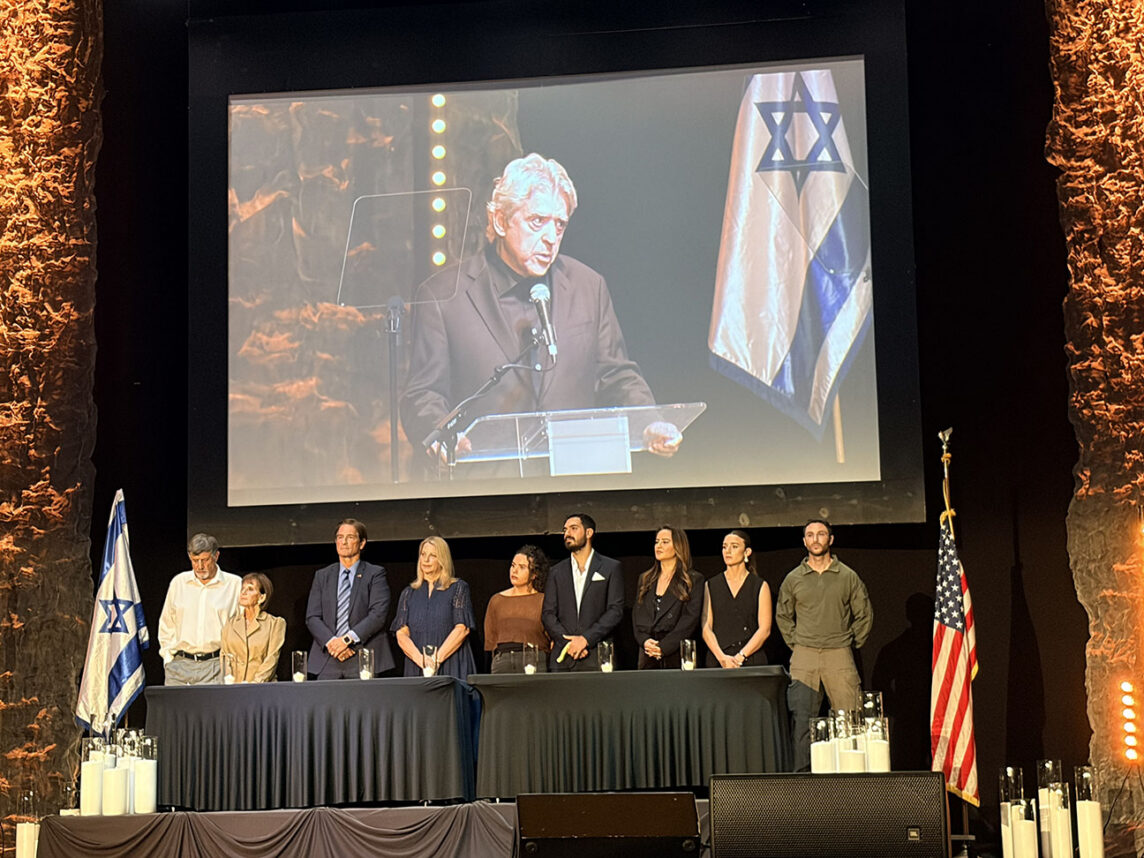
It took the Dead Sea to breathe some life into Arab-Israeli cooperation. On Sunday, at the U.N. World Summit on Sustainable Development, which ended Wednesday, four Israeli and Jordanian government ministers presented a collaborative venture to save the Dead Sea, which has been shrinking at an alarming rate.
Under the plan, a canal would be dug to divert water from the Red Sea to the Dead Sea. Funding for the project, which could cost up to $1 billion, would come from the World Bank. Construction is expected to begin within 12 to 18 months and take at least five years.
An additional $3 billion to $4 billion — expected to come from private sources — would be needed to construct desalination plants, which would provide water to Israel, Jordan and the Palestinians.
Hassam Nassar, Jordan’s minister of water and irrigation, said the level of the Dead Sea is dropping by over three feet a year. It already is the lowest point on the surface of the earth, 1,350 feet below sea level. Stabilizing the level of the water would help maintain the heritage value of the Dead Sea, which has archaeological, tourism, ecological, historical and cultural value for the region and for all three of its major religions.
In recent years, U.N. conferences often have become playgrounds for Israel-bashers. But with international support required for the Dead Sea project, both Israel and Jordan believed the summit was the correct venue to inform the international community of the plan.
Initial investigations by a special binational technical task team have so far not shown any real environmental obstacles to the plan. A $10 million study of the project is planned and will take around 18 months to complete.
The "Red-Dead" project faced fewer ecological difficulties than the previously proposed "Med-Dead" concept of bringing water from the Mediterranean Sea. "Maybe this time the Dead Sea will bring life and peace to the region," Israeli Environment Minister Tzachi Hanegbi said.
Although Israel and Jordan are officially at peace, public announcements involving ministers from the two countries are rare. However, Bassem Awadallah, Jordan’s planning minister, said this was an environmental issue, not a political one.
"We are trying to keep the project out of politics," he said. "The project will save us all — Palestinians, Israelis and Jordanians — from an ecological disaster."
Awadallah added that this was an urgent environmental problem that could not wait for peace between Israel and the Palestinians. "We have to start now," he said. "This is a natural disaster in the making, and we will be criminals if we ignore it and watch the Dead Sea disappearing before our eyes."