fbpx

Rosner’s Torah-Talk: Parashat Shemot with Rabbi Sybil Sheridan

[additional-authors]
January 9, 2015

Our guest this week is Rabbi Sybil Sheridan, Chair of the Assembly of Reform Rabbis UK at the Movement for Reform Judaism. Rabbi Sheridan studied theology and religious studies at Cambridge. After graduation she began studies at Leo Baeck College and spent two years in Jerusalem, receiving semichah (ordination) in 1981. Her first post was at Ealing Liberal Synagogue and she joined Wimbledon and District Synagogue in 2003. Rabbi Sheridan has written and edited books including 'Hear Our Voice: Women Rabbis tell their Stories' and, with Rabbi Sylvia Rothschild, 'Taking up the Timbrel: the Challenge of Creating Ritual for Jewish Women Today'. She has a long experience of interfaith dialogue and is an advisor on Catholic Jewish relations for the Bishops Conference for England and Wales. She has presented Muslim Jewish text study seminars with Sheikha Halima Krausen for the last ten years and was Jewish Chaplain to Roehampton University. Rabbi Sheridan is also the founder of Meketa, a British based organisation working on behalf of the Jews in Gondar.

This week's Torah Portion – Parashat Shemot (Exodus 1:1-6:1) – features the beginning of the epic story of Moses and the exodus from Egypt. The portion features a description of the oppression of the people of Israel by Pharaoh, the birth of Moses, his flee to Midian, the story of the burning bush, and Moses' return to Egypt. Our discussion focuses on the decline of status of the Children of Israel in the first chapter of Shemot – noting the famous commentary of Ramban – and examines the actions of the midwives as a powerful biblical example of civil disobedience.

If you would like to learn  some more about Parashat Shemot, take a look at our discussion with Rabbi Amy Eilberg.

 

Did you enjoy this article?
You'll love our roundtable.

Editor's Picks

Latest Articles

The Joy Within

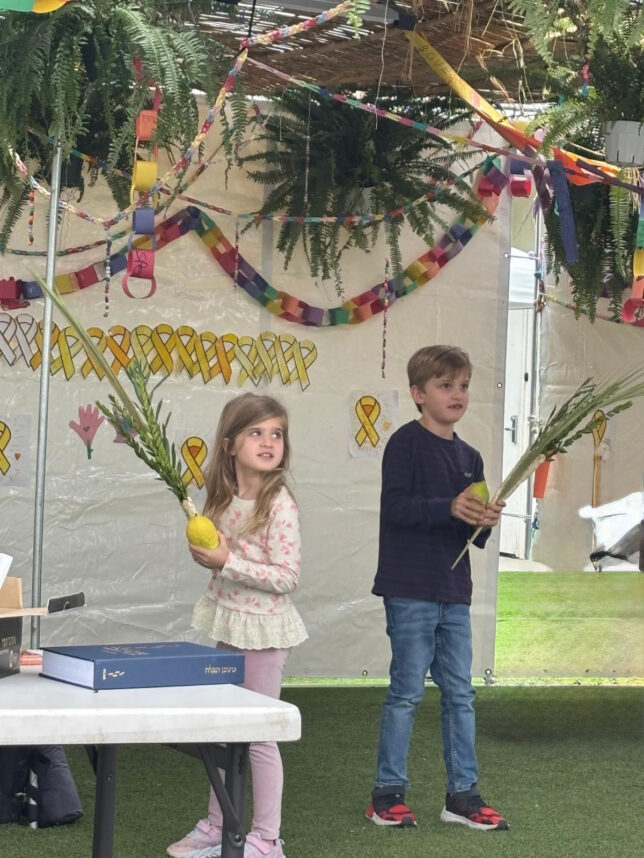
Sukkot asks us to receive the harvest that has actually come in—not the one we imagined or wished for.

A Bisl Sukkot ~ Don’t Be Afraid, Go Outside

The sukkah reminds us to go out into the world, especially when the comforts of insularity beckon us closer—to explore paths we have yet to take and seek journeys ready for wandering.

A Harira Hug in the Sukkah

I love making soup for this holiday because even if the days are still warm, the cooler evenings make you start craving something warm and comforting.

The Beat Goes On

While so much of the world seems obsessed with and consumed by its hatred of Israel and Jews, Israelis continue to build, create, work, celebrate, argue, raise families, and plan for the future.

Viral AI Video Targets Jewish Comedian

“The biggest concern is that people now have a pathway to shut down Jewish voices through complete falsities that people will believe. … For the future of Jewish entertainment, it’s very scary.”

Yiddish Historians: Writing in Their Own Language for Their Own People

Mark Smith has compiled an important anthology of Jewish history using 49 works by Yiddish historians to recreate or at least open the door to a world of Jewish thought that was once almost mainstream, but which no longer exists, except in the minds of too few specialists.

The Everlasting Melody

Most Jews who have sung “Eitz Chaim” over the past half-century probably never knew Portnoy. They did not know when he wrote the melody or how young he was when he composed it. They simply knew the song.

More news and opinions than at a Shabbat dinner, right in your inbox.