US
Aaron David Miller and David Sokolsky write about the futility and danger of trying too hard to promote democracy in other countries:
Between the two of us, we have almost sixty years of experience working for Republican and Democratic administrations. And one lesson we’ve learned is that U.S. interests and values, particularly when it comes to transforming the governance and political institutions of other countries, are almost always at odds with one another. Not only does America lack the capacity to reconcile them, but it also may not always be prudent to try.
Ian Bremmer analyzes the possible foreign policy effects (and dangers) of a Trump Presidency:
A Trump foreign policy will undermine U.S. exceptionalism, the consensus-based conviction that America will fight for more than its self-interest and is therefore worthy of emulation. That idea has sustained plenty of damage in recent years. It will sustain more. But the biggest risk posed by a Donald Trump foreign policy is that he will destroy this worthy aspiration once and for all.
Israel
Liel Leibovitz believes Israel's uninspired leadership is a bigger problem than its security issues:
Of course, Israel’s security challenges are very real, and they demand very real responses, not to mention very real budgets that might’ve otherwise been allocated to a variety of other worthy causes. And of course, no country is without its imperfections, Israel having no less and no more than its share. Neither of these conditions are new, but Israeli leadership’s grim absence of any vision of the future may be: For the first time since it declared its independence, the Jewish State seems to have absolutely no idea what it wants to be when it grows up.
Yakir Englander writes about the violent mobs that terrorize the Arab citizens of Jerusalem on Jerusalem Day:
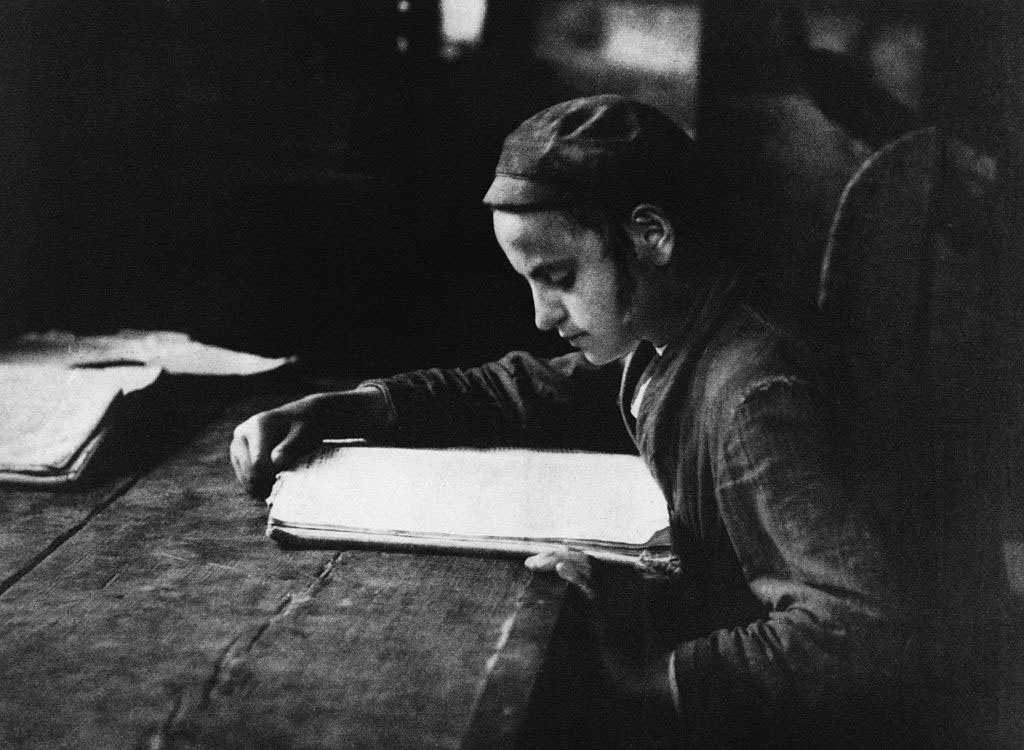
On Jerusalem Day, Palestinian residents of the Old City, like my Hasidic ancestors in the European ghettos, are forcibly confined to their houses until the enraged mob outside has passed by. In their hearts, they perceive that this day demonstrates the “truth” about what sovereign Jews think of them, as Palestinians and as Muslims. The fact that a small minority of Jews march like this through the Muslim Quarter makes no difference, because the Jewish sovereign majority enables this violent behavior by not raising any objection.
Middle East
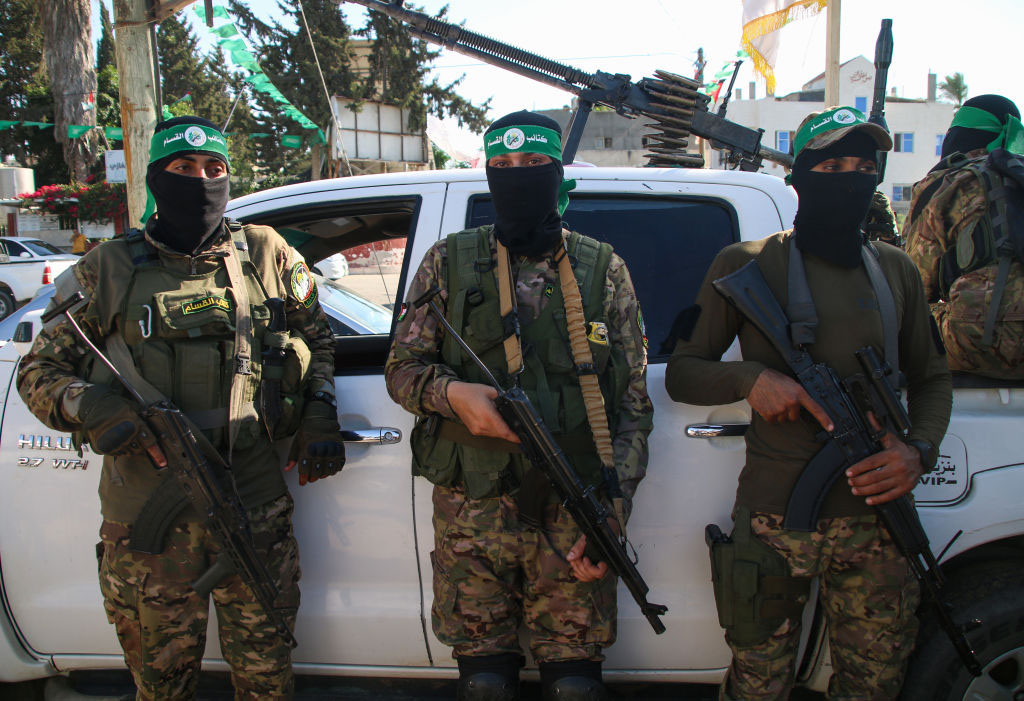
Max Boot points out that the expected victory against ISIS at Fallujah will be an Iranian one:
The Obama administration and the American military will tout this as a big victory for the United States, the government of Iraq, and the anti-ISIS cause. In fact, it will be more of a victory for Iran than for anyone else, because of the prominent role played by Iranian militias in this offensive.
Giordano Stabile writes about how al Qaeda and ISIS are competing for the hearts of Egypt’s Jihadists:
Al-Qaeda is launching a new bid to dethrone the Islamic State (ISIS) as the world’s pre-eminent jihadist terrorist group, and Egypt is the primary target. As al-Qaeda asserts its influence across North Africa in open competition with the self-proclaimed “Caliphate” of ISIS, the battle for supremacy between Osama bin Laden’s Egyptian-born successor Ayman al-Zawahiri and ISIS leader Abu Bakr al-Baghdadi is now moving to the Arab world’s most populous country.
Jewish World
Apparently, Muhammad Ali had a Jewish grandson, and was far more Jew-friendly than people assume:
Crowning this new-won mellowness was Ali’s attendance in 2012 at his grandson Jacob Wertheimer’s bar mitzvah at Philadelphia’s Congregation Rodeph Shalom, At Rodeph Shalom, the oldest Ashkenazic synagogue in the Western Hemisphere, Ali “followed everything and looked at the Torah very closely,” his daughter Khaliah Ali-Wertheimer. told Ali’s biographer Thomas Hauser. The bar mitzvah boy’s father Spencer Wertheimer is Jewish, and identifying with that religion and culture, Jacob elected to participate in the ceremony. Of his grandson’s choice, Ali was “supportive in every way,” according to the boy’s mother.
Etta Prince-Gibson takes a look at Mount Zion, Jerusalem’s “wild and sacred backyard”:
“This is the backyard of Jerusalem,” says Ami Meitav, a Jerusalem official who headed a municipal committee tasked with conducting a survey of the buildings and residents on Mount Zion about a decade ago. But it’s a backyard “without clear ownership,” he adds, one that “no one cares enough about to take control.”
Into that power vacuum have stepped ultra-nationalist religious Jews who are transforming it into a microcosm of all that is both fearsome and hopeful in Israel, as well as a small group of Jewish activists who believe they can bring peace to Mount Zion, and perhaps through it, to all of Jerusalem.