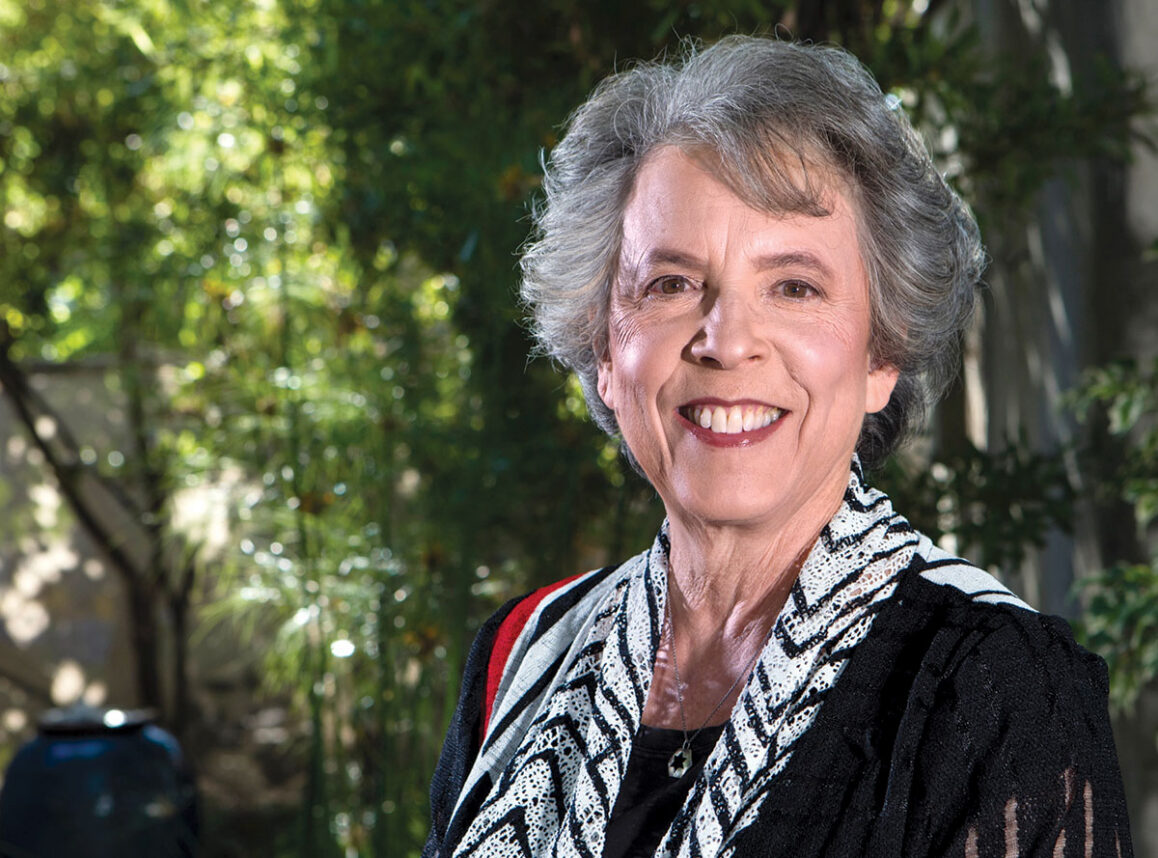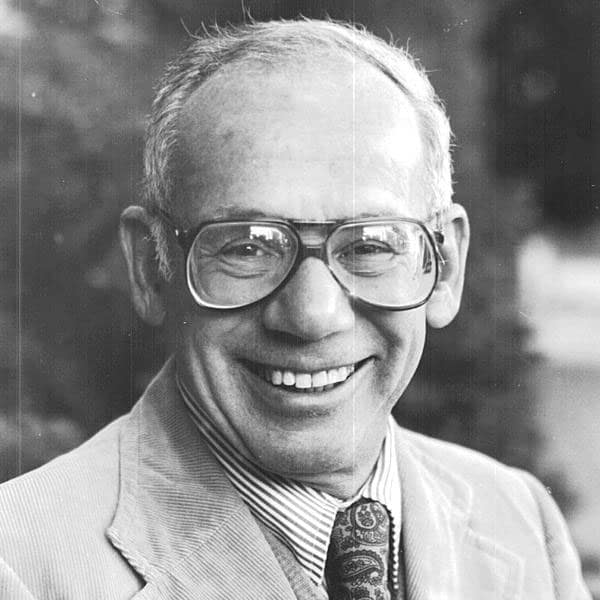
For a woman who says she has never been much involved in the Jewish community, Ruth Seymour has probably introduced more people to an appreciation of Jewish stories and music than any other Los Angeles media figure.
But not only Yiddish aficionados mourned when Seymour announced last November that she would retire from her post of 32 years as general manager of radio station KCRW-FM (89.9) at the end of February.
Listeners, however, hope that her spirit and sensibility will continue through her successor, Jennifer Ferro, who had served as assistant general manager since 1997.
Ruth Epstein (the first of Seymour’s three surnames) was born in the East Bronx to Russian-Polish immigrants, who transmitted their secular, socialist and Yiddish worldview to their daughter.
She deepened and broadened this ideology and culture at the Sholem Aleichem Folk School and, later, at the City College of New York, where she studied under the great Yiddish linguist Max Weinreich.
When she joined KCRW as a consultant in 1977 under the name Ruth Hirschman (her husband was poet Jack Hirschman, whom she would later divorce; she adopted the name Seymour in 1993 in honor of her paternal great-grandfather, a rabbi), the station was housed in two old classrooms at John Adams Junior High School. Later, it moved to more modern quarters at Santa Monica College.
In slowly transforming KCRW into one of the country’s most innovative public broadcasting outlets, Seymour reached back to her roots to create “Philosophers, Fiddlers and Fools.”
The three-hour program became an instant Chanukah hit, serving a bilingual mix of folk music, Isaac Bashevis Singer stories, old Second Avenue songs and a memorial tribute to Holocaust victims.
“I always broadcast the program on Friday evenings, so I could bid my listeners a gut yontif,” Seymour recalled in an interview.
The Chanukah potpourri was complemented by the program “Jewish Short Stories From the Old World to the New.”
After 28 years as host of “Philosophers,” Seymour abruptly shut down the program but followed it with “Only in America,” a series on American Jewish history.
In parallel, Seymour created a host of general cultural, musical and political programs, which appealed to her predominantly liberal Westside audience and brought to the station such notables as Tom Schnabel and Warren Olney.
Such Seymour legacies as “Which Way L.A.?,” “To the Point,” “Left, Right and Center” and “The Politics of Culture” all have established faithful followers who can be counted on to pitch in during annual fundraising drives.
When big news broke, KCRW showed that it could cover the stories as well as, and usually in more depth than, the commercial stations.
In 1992, when a jury acquitted four Los Angeles Police Department officers accused in the beating of African American motorist Rodney King, KCRW covered the ensuing riots around the clock. The radio station showed the same tenacity in reporting the Sept. 11, 2001, terrorist attacks on the New York World Trade Center.
Seymour’s announcement of her retirement triggered an avalanche of reminiscences and tributes by listeners and the media, but she took the watershed event in her life quite calmly.
“At 75, I don’t want to go through the rest of my life regretting what else I could have done,” she said. “I am committed to living inside the moment.”