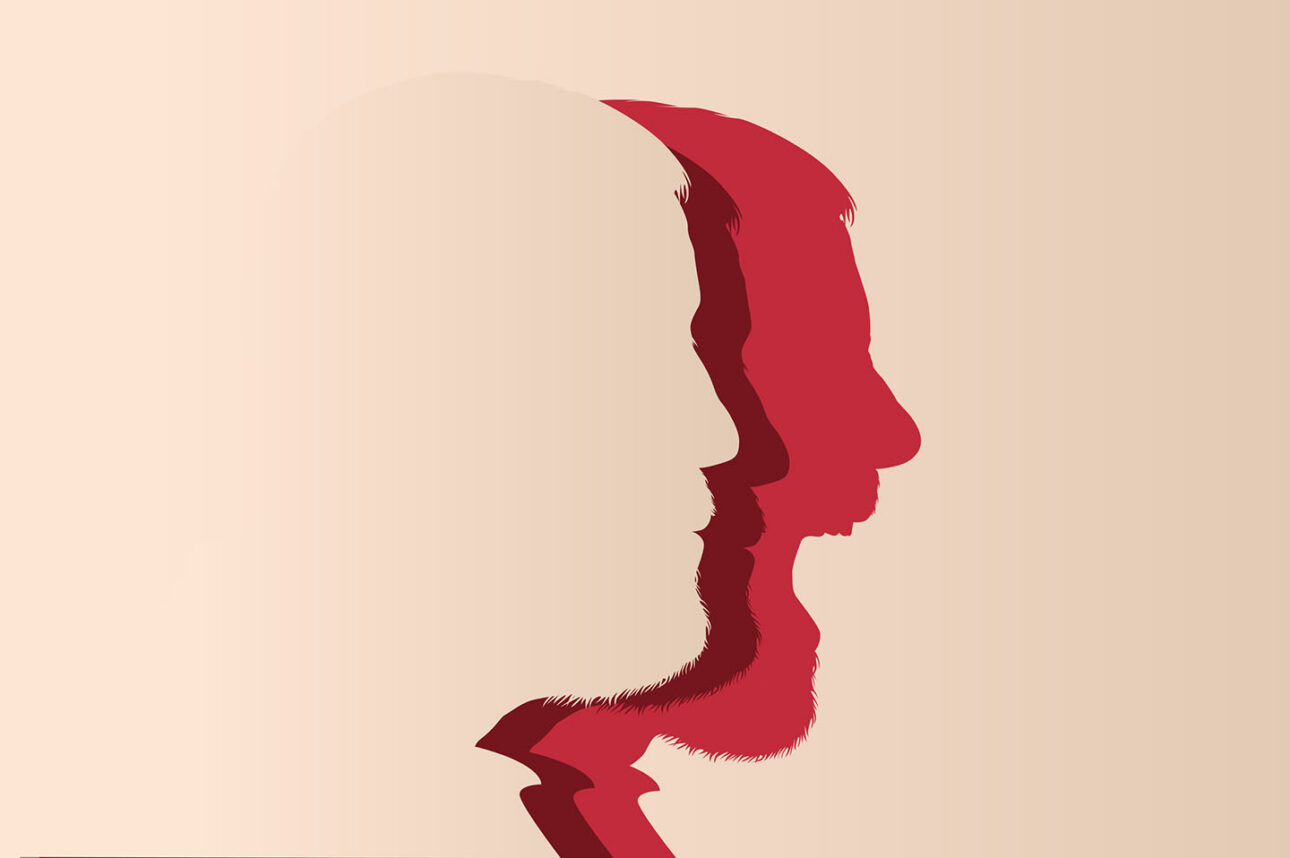
The hardest words to lip are “I’m sorry.”
The hardest plan to enact is to forgive.
Forgiveness is the ultimate test of love: It is more difficult to forgive someone we love than someone we don't care about.
The exchange entails seeing the Face of God in the other. When we say “I’m sorry” we must remain humble in front of the person judging. When we grant forgiveness, we emulate God’s Mercy- one of the Thirteen Attributes read twenty six times on Yom Kippur.
Forgiving someone we’ve loved, who has wronged us, becomes the ultimate act of love, akin to letting them live again just before an execution.
A husband and a father who was unfaithful, a longtime business partner who has stolen, a best friend who has divulged an essential secret, a son who has been oblivious to his father's sweat- all snap a bond, cut a cord of trust that shatters families and destroys a lifetime.
When faced with a terminal illness, with precious finite time, “I’m sorry” becomes facile, forgiving even easier.
On Yom Kippur, we wear white, we stop eating, and for but a day, we imagine our own death. But before we die, we beg “I’m sorry.” We yearn to be forgiven, so that even if we die, our memory is not tarnished, so that we may live in the utterances of good words.
But one day, it will be too late. One day, there will be no father to thank for all the hard work shouldered, there will be a mother whose speech is so interrupted like the wavering sounds of the Shofar as to make communication difficult, there may no longer be that lover whose embrace was once our sole reason for getting up in the morning, or that friend who once knew all our deepest thoughts but whose remnants are scattered torn photos in a dusty album.
Our tradition gives the upper hand to the one asking for a pardon, not to the one granting it.
If we are fortunate, there is a live operator answering that heartfelt “I’m sorry.”
If we are lucky, there is still enough love at the end of that dark tunnel to generate warmth for our souls again.
Let’s not throw away all we had together. There was a time, we were close, and we were pure.
Let us return to that time again.
Before we die, let's mend what is broken in our relationships.
Let us say “I’m sorry.”
Let us forgive.
Let us love.